Feeds:
Posts
Comments

merminSOUNDTRACK: THE AMOEBA PEOPLE Kickstarter Campaign (2013).

amoebaIf you don’t know Kickstarter, it is a site for creative types to raise money for projects.  On the whole, the site seems to work, although of course there have been failures as well.  For a detailed look into Kickstarter, check out this Fast Company article, the crux of which says that artists’ projects like films and CDs seem to work quite well, whereas more technologically sophisticated projects seem to be prone to glitches.  I have funded three projects on Kickstarter–I have not seen results from them yet, because none of them are due before the end of the year.  Thus I can’t guarantee the success of any of them (most of my pledges were quite small).

All of this is a caveat that while I am endorsing this campaign, please don’t take my word for its awesomeness or its reliability or anything like that–if you don’t think it’s a good idea I won’t try to persuade you otherwise.  But if it seems like a worthwhile investment (and they don’t charge you unless the whole thing is funded), then I’m happy to point this out.  And, the nice thing is that unlike some campaigns, in this case the “gift” you get for pledging is a CD, something they already have, so there’s no issue with the items not being made.

So what the hell is it?  To quote the campaign:

We are creating the greatest MUSICAL SCIENCE PROGRAM ever produced on Earth. We are asking for your help to fund PHASE ONE.

We are trying to raise $4,000 dollars to help us shoot a 10-minute “sizzle reel” which we will use to pitch our TV show idea to humanoid programming executives.

We have already recorded the music, enlisted the help of musical thespians to fill all the roles, built a massive computer console for the set and now all we need is some human currency to shoot and edit it. We are calling this first step toward television PHASE ONE.

Our series will have a strong emphasis on geology and the earth sciences as well as cosmology, biology, and the stories behind some of the greatest scientific discoveries in human history.

The premise: The Amoeba People, musical ambassadors from the planet Crouton, have been sent to Earth to investigate the source of radio signals sent from that planet. Their mission: to gather scientific data about Earth and its inhabitants and to transmit that data back to Crouton in the form of über-awesome and highly danceable songs.

Not heard of The Amoeba People?  Well, that’s hardly surprising.  They are a children’s music band from California, whose song “Cosmology, Your Futon and You” is wonderfully smart and funny.  I’m a fan of their stuff and I’m excited at whatever this sizzle reel might result in.  So check out their campaign, and if it sounds appealing, chip in.  And if it sucks, I apologize, but they should apologize more.

<iframe width=”480″ height=”360″ src=”http://www.kickstarter.com/projects/997214944/the-amoeba-people-phase-one/widget/video.html&#8221; frameborder=”0″ scrolling=”no”>

[READ: October 10, 2013] Mermin: Book One

I brought this book home for the kids and wound up enjoying it quite a lot myself. It was only after reading it that I realized it was from the awesome Oni Pres.

The story starts with a squat green amphibian-looking creature waking up on the beach.  Some humans find him and start wondering what he is . But before he can answer them he is excited to feel that he is on dry land!  The excitement is short-lived because the kids really need to know what he is.  We learn that he is named Mermin.  He seems friendly enough so the kids start playing with him.  But when he punches the beachball it goes rocketing up into space.  Which the kids think is awesome.

Shortly after, when one of the kids goes in for a swim, a shark chases after him.  Mermin sees this and comes to the rescue, kicking the shark in the snout. Before swimming away the shark talks to Mermin—he knows who he is–and says that the whole village is looking for him. Continue Reading »

witmis2SOUNDTRACK: CÓDIGA DE GUERRA-“Wittgenstein Song” (2013).

codigoCódiga de Guerra is from Hidalgo in Mexico.  They have one album out (called Peyote).  I am having a devil of a time finding anything out about them.  You can stream the album on YouTube and you can even buy it from iTunes, but I can’t get any kind of band home page.

It should be apparent that I’d never heard of them before I saw they had a song called “Wittgenstein” and so here they are.

They sing entirely in Spanish, so I don’t really know what this song is about, but i really like it.  Indeed I like the whole album.  They have an indie rock feel–buzzy guitars and good melodies.  Some of the early songs on the album are even kind of mellow which made me think of R.E.M. for some reason.

“Wittgenstein” is the heaviest song on the album.  It opens with some echoed guitars (not unlike Kiss’ “Black Diamond”) but when the other guitars kick in, it is much louder (not heavy heavy, but louder).  The chorus gets kind of heavy again, but the song fades out entirely at around two minutes.  Then a buzzy bass comes back in and the echoed guitar plays the intro and the song starts again.  I heard the word logico in there so it may indeed be all about Wittgenstein.

Check out the song

or the whole album

[READ: October 16, 2013] Wittgenstein’s Mistress p. 1-60

Typically for a group read like this (especially the longer, harder books) I like to be a kind of touchstone–noting significant things that happen and trying to wrap my head around the book by summarizing it, without really speculating wildly about what will happen.  Well, Wittgenstein’s Mistress seems to studiously resist that sort of approach.  I am not typically a “solve it” kind of reader.  I don’t usually try to figure things out ahead of time.  If the book is well written, I just like to let it flow over me so I can think about it afterwards.

But this book more or less demands you to try to figure out what is going on right from the get go.

The cover image above shows the opening sentence:

“In the beginning sometimes I left messages in the streets.  Somebody is living in the Louvre, certain of the messages would say. Or in the National Gallery.”

followed soon by

“Nobody came , of course.  Eventually I stopped leaving the messages.”

Weird, right?  And then comes:

“I have no idea how long ago it was when I was doing that. If I was forced to guess, I believe I would guess ten years.”

Whoa.  And then the kicker:

“And of course, I was quite out of my mind for a certain period too, back then.” Continue Reading »

SOUNDTRACK: PHISH-Live Bait 04 (2011).

bait04This Live Bait free sampler is compiled of songs from some of their summer tours (all songs are from June-August).  And it’s a fun collection of mostly long jams.

“Scent of a Mule” dates from 1996 and has a very “old” quality, like the band doesn’t sound as full as normal (the vocals also have an unexpected country feel). There’s a bit of “Sunshine of Your Love” from the guitars while Page is doing an elaborate solo.  Indeed there’s a lot of piano on this track—much more than usual (and some of it is crazy).  There’s a Jewish music section done on both guitar and voice which abruptly ends when the song returns to “Scent”.

“You Enjoy Myself” is one of my favorite Phish songs.  This version clocks in at almost 25 minutes.  At around 21 minutes the song devolves into them making a bunch of silly rhythmic noises, which must be very fun to see.  The next track is “The Landlady” (from 1993), a wonderful instrumental that morphs into “Tweezer” which has a pretty wild and raucous jam component.  There’s also a repeated guitar motif (which I don’t recognize) that seems to be a cue for the band to do things (play loud and fast or really slow—including their impossibly slow rendition of The Simpsons theme song.  It’s a neat trip.

The next track is “Mike’s Song.”  It opens a 36 minute jam that devolves at around 18 minutes into real silliness with spacey effects and controlled laughter.  At about 20 minutes, it morphs into the simple song “Contact” and eventually into “Weekapaug Groove.” Which starts in an unusual way—instead of Mike only playing the bass, the band joins the song in progress.

“Split Open and Melt” has some loud bass—I hadn’t really noticed the bass so much before, and in this version in particular Mike seems like maybe he’s mixed a little louder and he’s playing some really funky stuff (and making quite a few errors, it must be said).  Next comes the silly “NO2” (from 1999), which duplicates the effects of the record pretty well, and the guitar solo at the end of very pretty.  “My Friend My Friend” is a pretty dark song but it starts with the very pretty guitar work until the minor keys take over.  It slowly morphs into “McGrupp and the Watchful Hosemasters,” a lyrically insane but musically great song.  Page gets a lot of solo time in this song, too.

The next song is “Twist” always a fun and energetic live track.  There’s a very slow jam in the middle of the song (which in total is 29 minutes) before it turns into a very echoey “Slave to the Traffic Light.”

The next song is a nearly 20 minute, joyous “Free”.  It morphs into a beautiful “What’s the Use” yet another or f Trey’s gorgeous rising melodies.  “Axilla” is a fast almost punky version as is the near barbershop quartet riot of ”My Sweet One” which is the fastest I’ve heard it done.  And “Run Like an Antelope” is as frenetic as I’ve heard it—the pace of this segment (from 1993!) is insane.

“David Bowie” begins but then pauses as Trey sings “Catapult” a short piece that I don’t think I’ve ever heard played before.  Then “David Bowie” resumes for the remaining 10 or so minutes and it is a fast and furious cut as well.  This great free set ends with a 15 minute “Divided Sky,” which sounds as good as ever.

Phish releases a lot of concerts, so it’s nice that they throw these free compilations to us once in a while.

[READ: October 15, 2012] “Puppy”

This story is included in George Saunders’ new collection Tenth of December.  But since I was able to find it at the New Yorker, I figured I’d read it now (this means that of all of the stories in the collection I have only not read two).

This story is dark.  Although it doesn’t seem so at first.

The story begins by looking at a married woman who has their two kids in the car with her.  She is trying to get them interested in the beautiful autumnal day but they have heard it all before.  And besides, her son is deeply engrossed in his video game Noble Baker “Not now, Mom, I’m Leavening my Loaves” (ha).  Which is better than the game he wanted, Bra Stuffer.  We go into the woman’s head and (at least in my case) pity her a little bit for trying so hard with kids who clearly aren’t interested.  Like when she read the instructions to her son’s video game so she could offer him tips while he played (and he swats her away, but at least it is “affectionately”).

She keeps her spirits up.  But every example seems more sad than nice.  When she thinks about her husband who says “Ho HO!” to anything that comes up.  Like all of the animals that they own, and how few of them are actually played with by the children.

The other day she spoke of their dog as a puppy and her daughter cried because she didn’t remember it.  So of course she had to get them a new puppy.  She saw an ad for a puppy and decided to go check it out. Continue Reading »

dec2004SOUNDTRACK: AWAY-Cities (2013).

awayAway is Michel Langevin, the drummer for metal band Voivod.  But on his first solo album he eschews all conventional music.  Rather, he has created an exercise in found sound and released it on the small label Utech Records.

The album is described as

Strong field recordings capture more than just the sound of an area, they capture a mood and spirit of the place and people. On Cities, local color and nature recordings clash with riots and discord, capturing the full human experience across the world. Literal and metaphorical “found music” appears: the booming stereo of a passing car or distant church bells, as does the rhythmic engine hum of a bus or the chirping of birds. This tour is a fast paced one, rapidly weaving through the geographic locations building a diverse, yet consistently engaging experience. The audio journey captured here perfectly reinforces the fact that, regardless of one’s location, the presence of music is never far, nor should it be.

What we get is a collection that sounds like a tour through the streets of the respective cities (nothing more specific than Europe is given, sadly).  We hear street noise and buskers playing (interestingly just about every type of music I have heard in Boston subways as well).

I only wish more information was given about just what Away was up to.  Where he was and, more importantly, how he recorded these sounds. The recording quality is amazing—the panpipes and harmonicas sound crisp and clean with no other ambient noise.  Did he ask the performers if he could record?  How did he get them so pristine especially since I assume they are in the streets?  And for the Europe ones, was there any given order to the way they were edited?  Is it the progression of their Voivod tour, or is it just random?  The mixing and sequencing is quite good, especially in the shorter pieces which really take you on a journey.  Not knowing what’s happening is maddening and part of the fun as you try to picture (especially if you use headphones) exactly what you are hearing.

“Montreal 2010” opens with the sound of travel until we zoom in on panpipes (for a few seconds).  This switches to a lurching shanty (sung, I suspect in French—it’s a little hard to hear).  Then from the shadows comes the sound of someone playing Leonard Cohen’s “Hallelujah” on the harmonica.

“Europe 2012” opens with someone playing what I suspect is a hammered dulcimer (exactly the kind of thing that buskers play in subway stations), it shifts to a jazz trio (sax, bass, drums) wailing away with traffic noises in the background.  After some busses and an accordion solo, there are delicate chimes.  Finally a bagpipe melody leads us away from the delicate chimes until we hear announcements in what sound like Russian and then French.  The track ends with fans chanting “Voivod Voivod.”

Montreal 2012 returns Away to near his home city.  This time the scene is much nosier—it could be joyous, it could be angry—there are whistles and horns, and by the end it seems like a joyous parade.  The noise diminishes as an operatic voice pierces through briefly until the drums return.  More street noises, including police sirens, French chanting and a train passing by as we return to yet more street drumming.  If this track had more context for the title it would probably be more enjoyable. And yet as the parade (for surely that is what it is ) marches past you feel like you’re there.

“Mexico City 2012” opens with a truck honking and street noise until we hear what sounds like an indigenous band playing, then some more flute music and church bells pealing. Then there are announcements in Spanish (by both a man and woman presumably in the church) and church organ music.  Pan pipes and drums bring us back into the street and what sounds like a market scene which ends with some Mexican music playing.

“Europe 2011” opens with some beautiful guitar or perhaps an Indian stringed instrument playing and some traditional Indian singing.  There’s some more music playing and cheering and then some peace as birds take us out of this short track.

“Montreal 2011” opens with banjo music (!).  And then the more typically French sounding violin moves us along.  More pan pipes and traffic noise progress us through the city.  Then two very different examples of accordion music meld until the noise of the train wipes them out.   The track fades out with a band playing a  jaunty accordion inspired track.

“Chicago 2012” ends the disc with a symphony orchestra tuning up (I presume) for a few minutes.  It’s a shocking cacophony.  Until someone shushes the noises and the birds return, playing us out of this aural tour.

You can stream, download or buy the CD  here.  Buying the CD gets you some of Away’s cool art (although I wish there was more).

[READ: October 8, 2013] “War Wounds”

Since I’ve been enjoying Tom Bissell’s book reviews, I thought I’d see what else he had written in Harper’s.  He seems to have a storied career with the magazine as a traveling journalist.  And this article dates back to 2004.

It is a personal article about himself and his father.  What I found fascinating about this is that his father was a Vietnam veteran, and I don’t know too much in the way of writing that concerns being the child of a Vietnam veteran.  There are a lot of books and films about the Vietnam experience for the soldiers, but not so much about the families that they returned to (as far as I know).  So it was interesting to read Bissell’s account of growing up with his father–who was a hard man and who wasn’t afraid to fight with his children (especially when drunk).

The man that Tom grew up with had a temper and didn’t much approve of Tom’s chosen profession.  But unlike many people of his generation, Tom didn’t feel that he had a particularly estranged relationship with his father.  What on earth possessed him to invite his father on a trip to Vietnam–to visit the sites where he lost friends and was himself wounded, is the stuff of journalism. Continue Reading »

harper septSOUNDTRACK: THE AVETT BROTHERS-“Open Ended Life” (2013).

AvettBrothers_CVR-560658fd89bf96b9dd1bf2b2be57013e64cb38cd-s1The folks at NPR love The Avett Brothers, and while I can see the appeal of their live show, their studio output just sounds like typical Americana to me.  Not bad by any means, but nothing all that special–honky tonk swing, occasional harmonica and expected harmonies.

The album was produced by Rick Rubin, which would have surprised me a few years ago but after his work with Johnny Cash it makes a lot of sense.

This song is a pretty rollicking good time (and the pretty ooohs are something of a surprise) especially by the end when everybody joins in–I’ll bet this is a hoot live.  The melody is certainly catchy.  I just want to like it more than I do.

[READ: October 1, 2013] “The Two Davises and the Rug”

Even though I recently complained about flash fiction, there is one author who does a very good job with it.  And that author is Lydia Davis.  She can generate an entire story out of a very simple concept . And while some of her flash fiction falls into that “it’s just a sketch, not a story” world, her longer short stories pack a lot in.

Like this one.  The entire premise of this story is that two people are interested in the same rug.  And they are both named Davis (bt are unrelated).

This Davis purchased the rug many years ago and has grown tired of it.  When her apartment complex has a sale for charity she puts in the rug and asks $10 for it.  But the sales people mark it up to $50 (it’s for charity after all).  No one buys the rug but another tenant across the way (also named Davis) is interested in it. But that Davis doesn’t buy the rug.  And when the sales is over this David takes the rug back home while that Davis wishes he had bought it.

The fun part of the story is that both Davises are indecisive.  So, this Davis wonders if she should sell the rug to that Davis and if so, for how much.  But if he really wanted it, maybe she should keep it, maybe it’s better than she realized.  And that Davis is unsure how well it will go in his house and he wonders if may be he could try it for a time first.  But this Davis is reluctant to give it up in case he really likes it or in case she really likes it.  And maybe she should give $50 to charity since she didn’t sell it.

And the story goes on like the, with insecurities running rampant. Fortunately it’s not a very long story (this is one instance where the short version pays off handsomely). And after we have gone through the various permutations, it may be hard for even us to know what those Davises should do.

april 2013SOUNDTRACK: RICHARD THOMPSON-Electric (2013).

electRichard Thompson is remarkably consistent in his albums.  Especially his most recent ones.  The songs are all solid—both musically and lyrically.

Despite the name Electric, this album is no more or less electric than his other records.  Indeed, while this name may imply a much faster, heavier album, there are a number of ballads (and acoustic guitars) as well.  But if you like Richard for his amazing solos, you won’t be disappointed.

“Stony Ground” and “Sally B” are dark rockers (both mention gutters) with great fast solos.  “Treadmill” is one of RT’s class/money songs which are always spot on, even if he’s singing about sheet metal rather than playing guitar (great riff on this one too).

“Salford Sunday” is a more gentle rocker and “My Enemy” has a wonderful circular-feeling delicate melody and a gorgeous solo.  Both songs have female harmonies from Siobhan Maher Kennedy.  Indeed, Siobhan sings backing vocals on “Where’s Home” (an acoustic guitar ballad complete with violin solo), “Straight And Narrow” (a rocking song with aggressive guitars) and “Saving The Good Stuff For You.” “Good Stuff” Is a beautiful album ender, a sweet and tender ballad which I enjoyed even more live.

Alison Kraus sings backing vocals on “The Snow Goose,” a slow, somber song–the kind of which RT does so well.  “Good Things Happen to Bad People” is so unfailingly catchy, practically an earworm, that if there were any justice, this song would have been huge.  It’s got a great melody, cool lyrics and a really rocking solo.  “Another Small Thing in Her Favour” is a mellow acoustic/country song.  The end of the album goes a little too mellow.  Even though I like the songs individually, as a record it kind of trails off, which is a shame since “Good Stuff” is such a beautiful song.

I enjoyed this album tremendously and hearing him play some of those songs live was a treat.

[READ: October 10, 2013] 3 book reviews

This month Bissell reviewed three novels.

grossmanyouThe first is YOU by Austin Grossman.  Bissell explains that this is a book about a middling video games company circa the 1990s (Grossman was born in 1969 so he knows the territory well).  Bissell really enjoys the philosophical attitude of the book, specifically the narrator’s thoughts on making and playing games, although he fears that some of the characters are rather two-dimensional (and can’t decide if this is a flaw or if it’s intentional since the book is about video games).

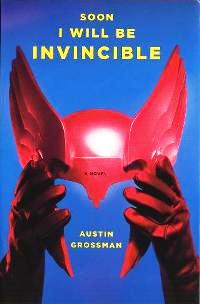
grossman soonBissell is largely very positive about the book although the excerpt he quotes about human duality and videogames was not terribly exciting to me.  However he casually raved about Grossman’s first book Soon I Will Be Invincible (which is a literary work about superheros) which I think I’d be more inclined to read. Continue Reading »

febSOUNDTRACK: BEN FOLDS FIVE-The Sound of the Life of the Mind (2013).

bffThe first Ben Folds Five album in over a decade opens with a big noisy sound and then quickly shows the diversity of the band by pulling back and showing a mellow verse with Ben’s piano and occasional bass.  But then the chorus comes in and Robert Sledge’s bass is once again masterful.  While Ben is clearly the leader of the band, there is something about the BFF’s bass that is so notable.  And this album rocks in BFF’s unique way–rollicking piano, and noisy buzzy bass.

“Michael Praytor, Five Years Later” has some great harmonies (the kind that BFF do so well).  “Sky High” is the kind of social commentary ballad that Ben excels at. And the title track is a fast moving rocker that has more great harmonies.

“On Being Frank” is a Sinatra inspired song with strings.  While “Draw a Crowd” continues Ben’s humorous vulgarity in a very unexpected way: “if you’re feeling small, and you can’t draw a crowd…draw dicks on a wall.”  “Do It Anyway” the single, which inexplicably wasn’t huge, gets more and more fun with each listen–to scream along with “OKAY!” is very cathartic.

“Hold That Thought” is one of those mellow but speedy numbers that I love from Ben.  And when then bass plays that high solo bit near the end (oh that bass), the song kicks into new levels of excellence.  “Away When You were Down” is another string-filled mellow song.  The final track “Thank You for Breaking My Heart” reminds me of “Boxing”, a mellow piano ballad which is, obviously, heartbreaking.

This is a great return to form.  There’s some heavy rockers and some pretty ballads. It’s nice to hear the Five back together again.

[READ: October 5, 2013] 3 book reviews

This month Bissell reviewed three books.

The first book is a biography of Flavius Jospehus called A Jew Among Romans jar by Frederic Raphael (who also wrote the screen play for Eyes Wide Shut).  I had never heard of Flavius Jospehus but evidently without him we would have no historical accounts of time from around the beginning of the Common Era.  His writings are pretty much the only works that have survived.

And his story itself is interesting too. In 70 A.D. the Romans destroyed Jerusalem. This attack has had more impact on current life than can be explained.  Judaism lost the Second temple, Jewish Christianity soon disappeared beneath the waves of Gentile Christianity, even Islam was shaped by this because a Mosque now stands where the Second Temple was.  And nearly all modern forms of anti-Semitism can be traced back to this attack in some way.  Flavius Jospehus chronicled this time as a Jew in a reasonably impartial way (which led many to call him a traitor).  His books Jewish Antiquities and The Jewish War are the sources for almost all of our knowledge of that era, including about Pontius Pilate. Continue Reading »

corin SOUNDTRACK: THE DISMEMBERMENT PLAN-“No One’s Saying Nothing” (2013).

IDismembermentPlan_CVR-a71cdf7d3b8dde6270c3a01bb56278949eddb5fa-s1 thought I knew The Dismemberment Plan, but I must have them confused with someone else, because this song doesn’t sound anything like what a band called The Dismemberment Plan ought to sound like (which is noisy and chaotic and probably death metal).  This song has big vocals, organ and piano.  Nevertheless, it is rather raucous and is quite fun (and has what sounds like a drill sound effect in the beginning and middle).

Lyrically, the song is odd–“If you press the space bar enough, cocaine comes out.  I really like this computer.”

But it has a very fun devil-may-care, throw in everything attitude that I really like it.  The entire album was streaming on NPR, and I’m looking forward to hearing more from them–including their back catalog work, to see if they ever sounded like what I thought they sounded like.

[READ: October 1, 2013] One Hundred Apocalypses and Other Apocalypses

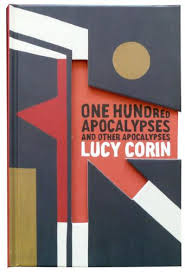
I was excited to get this book because I thought the title was quite intriguing (and the crazy way the cover is cut out was also interesting).

There are four “stories” in the book.  The first three are about twenty pages each while the fourth is over 100 and is comprised of the titular 100 apocalypses (I didn’t count them).

“Eyes of Dogs”
This story contained marginalia (which is sort of like footnotes but not attached to anything specific). In this story a solider meets a witch and she tells him how to get money—climb down a hole and encounter three dogs.  He must wink at the first, blink at the second and hold his eyes closed for the third.  The story seems to be going along sensibly like a fairy tale but then it grows introspective and stops.  I was disappointed in this one.

“Madmen”
This story was utterly bizarre and yet by the middle of the story the bizarreness was explained and by the end I enjoyed it very much.  The premise of this story is that when children grow old they are given a madman to take care of (it is told matter of factly which makes you have to wonder if madman is code for something else.  When boys reach a certain age and when girl;s have their first period (which is an unfair division of genders) they get to go to the asylum and pick which madman (or woman) they want to bring home and care for.  The bulk of the story is at the asylum with the girl “interviewing” the candidates and her mother being mad at her choices.  Ultimately the story turns onto a nice moment between the girl and her dad, who may or may not have married his own madman.  As I said very weird, but satisfying.

“Godzilla versus the Smog Monster”
This was the most “real” of the four stories and it was my favorite.  A fourteen year old boy is watching “Godzilla vs the Smog Monster.”  He found the unlabelled video of it in his father’s sweatshirt drawer and assumed it was porn.  He’s bummed that it turns out to be this Godzilla movie.  In a parallel story, when the boy goes to school his class is watching live footage of California burning—and this burning is uncontainable.  The whole state is slowly engulfed in flames.  This fire, which seems to be some kind of attack obviously changes the minds of everyone in the story, including Sara, a girl who Peter thinks is pretty but who never talks to him.  But when she crashes her car in front of his house, he helps her and they go for a ride to a cave.  Images of the smog monster crop up in interesting ways.  Things get weird and less tangible, but because the beginning was so real it made the ending okay.

“A Hundred Apocalypses”
So this selection disappointed me because it proved to be 100 (I assume) flash fiction pieces.  And I have more or less come down against flash fiction these days.  Especially the kinds of stories that make an interesting “sketch” but aren’t really stories The other problem is that all 100 seemed to be about “apocalypses” which is a useless words when tossed around so much and which loses all meaning when there are 100 that seem to be about actual apocalypses.  Or something.  I also just learned that apocalypse means un-covering or revelation, not really the end of the world, but whatever.

There were probably 6 out of the hundred that I really enjoyed.  Sadly, I didn’t mark them and I don’t remember which ones they were.  The rest were okay or worse.

I am ready for flash fiction to go away.  And I fear that my beloved McSweeney’s is one of the prime generators of the genre, so perhaps they could knock it off for a bit.

[JOINED: October 15, 2013] Wittgenstein’s Halloween

witmisWittgenstein’s Mistress is a largely unknown book.  However, fans of David Foster Wallace should know of it as it was one of the books that DFW often recommended.  He even wrote a formal book review about it (which you can read here).

The book has sounded challenging if not difficult, and while I can’t say I was chomping at the bit to read it (even in my post about DFW’s review of the book I said I wasn’t compelled to read it), but I have always sort of assumed I would.

It felt daunting although when I saw that it was only 240 pages, some of that daunt went away (I don’t mind reading a big book, but a big dense daunting book is another thing, at least at this time–because I have just started John Sayles 900+ page book A Moment in the Sun).  So when I saw that this group read was starting up and I decided it was pretty much now or never. Continue Reading »

 harper juneSOUNDTRACK: FUZZ-“Sleigh Ride” (2013).

fuzzHow can some 3 minute songs seem like they take a long time and others feel like they are about a minute long.  “Sleigh Rode” is one of those songs that is over before you know it.  With a big old fuzzy guitar riff opening the song it sounds straight out of classic rock.  Then the verses come in with faster riffing (like a less heavy Black Sabbath) and a sleazy kind of vocal.  It reminds me of a more garage band/sloppy Queens of the Stone Age.

This is (yet another) band from Ty Segall. Robin Hilton from NPR says that Segall had put out some 6 solo albums and is in a half a dozen bands as well (and he’s only 26).  he normally sings and plays guitar, but he plays drums in this band.

While I don’t actually know anything else by him, I really enjoy this piece of fuzzy distorted sleaze pop. and may need to see what he is other releases are like.

[READ: September 20, 2013] “Living Deluxe”

Diane Williams wrote Vicky Swanky is a Beauty which I did not really like.  It was experimental and flash fiction which I am growing to like less and less.  This short piece (which is actually longer than anything in Vicky Swanky, I believe), is from a collection in progress.  I’m not sure if that means that this is finished or not (it’s hard to tell with her).

This story deals with a woman who has taken money from her mother (and sister and brother) because her mother “knew I needed to be a person with flair” (I liked that line).

The thing about the rest of the story is that the narrator acts like a five year old telling a story.  The details that are added are not necessarily relevant to the story.  So we get two paragraphs on a man sneezing, a few paragraphs on her cat, and a couple of paragraphs about Leonard da Vinci.  These details might be relevant to the story.  But interspersed with these details are things that impact the taking-money storyline—that her sister took something that was hers (the Da Vinci bit is about a present she gave to her sister). Continue Reading »