Feeds:
Posts
Comments

[ATTENDED: November 5, 2014] Hollywood Studios

hollyFor our final day in Disney, we decided to do the most “teen friendly” place, as I like to think of it.  There’s some big time intense rides here–Tower of Terror and Rock and Roller Coaster.  We figured that after the big rides of the last few days, our kids might like to do one of these even bigger rides.  And then C. threw up during the night.

Yup, two stomach bugs marring our Disney trip.  C. was less intense than T.’s but he was still wiped out.  And it really put the kibosh on us doing anything crazy fun.  And yet, there’s no resting if you are sick.

So, we decided to do some of the more mellow events today.  We had some FastPasses, and they were in the middle of the day, so we had some time to explore. Continue Reading »

[ATTENDED: November 4, 2014] Magic Kingdom

magicFor day three we planned our biggest, longest day–Magic Kingdom.  We have since decided that you could easily spend two days there. Especially since poor T. still didn’t feel great.  C. , on the other hand, was raring to go.

Even if you’re not totally swept up by the Disney Magic, it’s hard not to be excited when your kids turn the corner and see The Castle for the first time.  Even T. who wasn’t feeling great was pretty excited.  And, as far as Disney Magic goes, it was great that they have people in costume–no one “famous,” just random costumed people–walking around to make chit chat.  And we met one such lady who was very funny and was quite charming with T. and it really set the day up nicely.

Our FastPasses were for the mid-afternoon, which meant we couldn’t leave at lunch time like we’d have liked to have done.  So, rather, we made a path for some fun things that we didn’t get to do last time we were there.  Like the Swiss Family Treehouse Continue Reading »

epcot[ATTENDED: November 3, 2014] Epcot

For day two we planned to go to Epcot.  We figured there is a lot of walking (the World Showcase is apparently a one mile loop in and of itself).  And we figured we would go in the morning and do a few things, return to the hotel in the afternoon and then go back to the park at night.

And then T. threw up.  She had a stomach virus that started at 1AM.  We felt terrible.  But at he same time, we also knew that we had paid a lot of money for this trip.  So, we pressed on to Epcot anyway.  Clark was especially looking forward to seeing the big ball (not even sure if he knew what it was), so we made poor T. schlep out to Epcot.  And she repaid us by getting sick in the park twice.

We didn’t have a lot planned for Epcot.  We knew we wanted to do Soarin’ (which we had never done because the lines are always so long).  We had just read about the people dying and getting sick on Mission: Space, so we quickly nixed that.  We had a FastPass for the Nemo show, but opted against it.  So, it proved to be a pretty quiet day after all. Continue Reading »

animalking[ATTENDED: November 2, 2014] Animal Kingdom

This past week we went on a Florida vacation.  We have never gone during the NJEA Teacher’s Convention (when the kids have literally one half day of school during the week).  And while I missed out on a few things locally that I would have liked to have done, the trip was super fun.

We did four days in Walt Disney World and two days at Universal Studios.

We had to decide what order to do the parks in.  And we decided that Animal Kingdom would be a good place to start–not too intense and lots to see.

With that in mind, we also knew that we wanted to go on Dinosaur first because there are always super long lines at that ride.  As it turned out, we all got up really early (it was the weekend of the time change) and we got to the park as it opened.  We got over to Dinosaur and there was only a 5 minute wait.  And then we got to ride it again because the line was short again. Continue Reading »

krausSOUNDTRACK: THE FLAMING LIPS-The Terror (2013).
terror After the distortion heavy and heaviness of At War with the Mystics and Embryonic (to say nothing of their other experimental releases), I wasn’t sure what to expect from an album called The Terror.  Yet with a title like that the album is far more invested in psychological terror than in pummeling you with scary noises and music.  The album is more unsettling and spooky with existential dread.

Wayne Coyne has always been a pretty optimistic guy–weird, sure, dealing with feelings of dread, sure, but never so dark and insular.  But I learned that before recording this album and most likely as an impetus to record it,  Coyne separated from his partner of 25 years, Michelle, and Lips multi-instrumentalist Steven Drozd temporarily relapsed into addiction.

In an interview, Drozd says the album is like a crisis of life confidence.  He also says that the uniformity in sonic style was intentional: “Instead of writing songs and then figuring out sounds, we’d write the other way around: create sounds then make songs out of those sounds.”

So the vocals are quite low in the mix, and there is not a lot of “music” in the album.  Rather there are layers of sounds–swishing synths, spiraling noises, percussion effects that seems to almost cover up the vocals, giving it a very claustrophobic effect.  “Look… The Sun Rising” opens the disc.  It is primarily percussion with some noisy sounds and really sharp piercing guitars (that play noisy counterpoint to the soothing chorus of Oh Oh Ohs).  And yet after all of that noise and chaos, the very lovely “Be Free, A Way” surfaces as a quiet introspective song.  There are gentle keyboard notes (not unlike on Yoshimi) that propel this song along.  “Try to Explain” is a pretty song with some unusual sound effects swirling around it (The Lips can’t so straight up pretty, right?).  And yet lyrically, this song, along with the rest, is very dark indeed.

“You Lust” is a 13 minute (!) invocation about various forms of lust.  It opens with the couplet: “You’ve got a lot of nerve/A lot of nerve to fuck with me.”  The middle of the song is a kind of Pink Floydian keyboard workout.  It’s a  lengthy jam that’s kind of samey, but I’ll bet if you can really sit (with headphones) and close your eyes and focus it’s pretty intense.  After about ten minutes of that repetitive claustrophobia, some lightening occurs with sprinkled keyboard notes.

“The Terror” is primarily in Coyne’s falsetto, and it seems gentle until the mechanized noises come bursting forth.  “You Are Alone” is the shortest thing here, under 4 minutes of squeaking noises.  And again, a lovely melody despite the title.  I feel like this song summarizes the album pretty well.  In it, Coyne sings “I’m not alone” while a deeper voice replies, “you are alone.”  Whose voice will ultimately win?

  “Butterfly, How Long It Takes to Die” returns to that abrasive guitar of the earlier tracks, but the main body of this 7 minute song is just bass, keening keyboards and Coyne’s whispered voice.  There’s a recurring synth line that is magical and/or creepy depending on your frame of mind.  It, along with many of the other songs, have a kind of coda that links the songs.  This one is mostly just choral voices, but it twists the ends of the songs in a different direction. “Turning Violent” is a quiet track, in which Coyne sounds nearly defeated until the second half of the song grows louder and more animated with layers of vocals.  The disc ends with “Always There…In Our Hearts” which seems to offer some hope…maybe.  There’s signs of uplift in the melody, and when the drums kick in at the end, it seems to propel the song into a more intense frame of mind.

And lyrically, despite all of the darkness that is always there in our hearts, there is a light peeking out: “always therein our hearts a joy of life that overwhelms.”

Although most reviewers find this album unremittingly bleak, I find the music to be beautiful in an aching sort of way–a beautiful way to deal with pain (better than getting the same tattoo as Miley Cyrus, anyway).

[READ: October 31, 2014] The Kraus Project

The title page of this book read: The Kraus Project: Essays by Karl Kraus translated and annotated by Jonathan Franzen with assistance and additional notes from Paul Reitter and Daniel Kehlmann.

So just what is this thing anyhow?  Well Karl Kraus was a German writer (1874-1936) whose main contributions to letters were some essays and a newsletter Die Fackel (The Torch).  The authors compare the newspaper (favorably) to a blog (while also complaining about what blogs have done to letters).  He started Die Fackel in 1899 and he continued to direct, publish, and write it until his death.  He used the paper to launch attacks on hypocrisy, psychoanalysis, corruption of the Habsburg empire, nationalism of the pan-German movement, laissez-faire economic policies, and numerous other subjects.  For the first ten or so years, Kraus was the editor, accepting contributions from around the German speaking word.  But in 1911, he became the sole contributor to the newsletter.

He also wrote many essays (he did not care much for fiction), including the two main ones that compression this book: “Heine and the Consequences” (1910) and “Nestroy and Posterity” (1912).  The book also includes two follow up essays: “Afterword to Heine and the Consequences” and “Between Two Strains of Life: Final Word to Heine and the Consequences” (1917) and a poem: “Let No One Ask…” (1934).

The essays themselves are quite brief.  Despite the first coming in at 135 pages, note that the left pages are all in German (so reduce 135 by half), nearly all of the English pages are filled with footnotes (reduce by half again) and some of the footnotes run for several pages.  So the essay could be said to be about 25-30 pages.

The same is true for all of the pages in the book.  The left sides are in German (except the footnotes) and most pages are split in half because of the footnotes.  Which means that Franzen and friends write far more than Kraus did.  Ultimately, this book is actually three things: It is a collection of Kraus’ essays with Franzen’s fine translation; it is an explication of Kraus’ attitude and about life in Germany during Kraus’ life and finally it is an insight into Franzen as a young man living in Germany and why Kraus was so appealing to him.

The first part: Kraus’ essays. Continue Reading »
 qwikpSOUNDTRACK: THURL RAVENSCROFT AND DISNEY FRIENDS-“Grim, Grinning Ghosts” (1960s).

hauntThis song is the theme to Disney’s Haunted Mansion.  I’ve been to the Haunted Mansion perhaps a dozen times and I recognized a line from it (when the ghosts appear next to you in the ride), but I can’t say I ever paid attention or even thought about to this song before.

It was brought to my attention by John Congleton during his excellent interview with Bob and Robin on NPR.  The whole interview was outstanding–I learned so much from him–but I wanted to focus on this song because he raves about it (and because it is Halloween).  And because I absolutely wanted to type the name Thurl Ravenscroft.

  He loves the vocals by Thurl (who was also the singer of The Grinch songs) and the bizarre chord progression: Am, B, Am, B♭, Am, F, Am, F7, Am, E7, Am.  And about the song, he says:

When I was a kid, I was so attracted to this song, but I was scared of it. The record would sit with my other records and I would see it in there, and I would be like, ‘Do I have the bravery to listen to it right now?’ And sometimes I would, and I was mesmerized by it. But the then I grew up, and I went back and listened to it, and was like, ‘This is brilliant. This is really, really well done.’ I never in my entire life heard background vocals that sounded as tight as that. Never in my life. The harmonies are the tightest harmonies I have ever heard ever. And it’s like, this is for a silly kid’s record — but they were committed to making something special. Everything about that song is incredible to me.

So yes, it’s a goofy song, and if you don’t pay too much attention to it, it’s just a not very scary ghost song, but there’s a lot going on (hand it to Disney for being really into their production values).  Like this note from Wikipedia: “the organist actually played the song backwards to achieve the discord that the composer intended.”

Not bad for a song you only hear if you go on a ride.

[READ: October 19, 2014] Poop Fountain!

I have enjoyed just about everything that Tom Angleberger has written (interestingly, he is famous for his origami Yoda series, which I actually like less than his other books).  This book was actually his first book published.  But he published it under the name Sam Riddleburger and it was called The Qwikpick Adventure Society.  It has clearly been republished since he is now famous.

I brought the book home for Clark but he said he didn’t really like the way it was written (it is typed with handwritten comments).  I actually found it very easy to read and thought it was a super fast read–two hours at most.

So the book starts with a note from Tom Angleberger in which he says that before he wrote books he was a reporter and one of the stories he wrote was about a sewage plant in Crickenburg, Virginia (which is not a real town).  His original article was about how the local sewage plant was getting over-burdened by all the new residents and so it would need to be enlarged.  He went to interview the manager and man did it stink.

He says that many years later a guy called him up to say that he had found a bunch of papers (including his article) in a Qwikpick gas station.  And that’s how he came across this first person account of an adventure to the same sewage plant.

He then tells readers that this was in 2000, before kids had cell phones or the internet, when kids basically just did stuff outside.  And that is how the Qwikpick Adventures Society’s trip to see the Fountain of Poop came about–thre bored kids looking for something to do. Continue Reading »

dumbSOUNDTRACK: WALT DISNEY-Chilling, Thrilling Sounds Of The Haunted House (1964).

hauntedJust in time for Halloween, I link to Disney’s 1964 LP Chilling, Thrilling Sounds Of The Haunted House.

I was unfamiliar with this record, but I gather a lot of people grew up being frightened by this.  The premise is simple–the narrator talks to you, yes you, as you are prepared to be scared by, well, everything you can imagine.  For 26 minutes, various sound effects are designed to scare you.

You go into a haunted house…and never come back.  Although despite the title, that’s all there is of a haunted house.  For there are more things to scare you….

There’s screams and creaks.  Gunpowder and dogs barking. A trip to Mars.

Tree limbs falling, cats going crazy.  A racist Chinese segment.

The back half of the disc is sound effects–I have no idea what that’s supposed to be around 20:49, though.

Basically every fear a kid could have (Disney was quite the sadist, huh?)

I imagine that if you were a kid (in 1964) this could be pretty darn scary.  Enjoy the whole thing…if you dare!

[READ: October 25, 2014] The Dumbest Idea Ever

I was pretty excited to see this book from Jimmy Gownley, creator of Amelia Rules, one of my favorite kids comic books.  I see that the books have been reissued, and that some new ones have been published since I last checked, so I’ll have to look for those.  He also has a new comic strip called Gracieland.

Anyhow, this book is a memoir about Jimmy growing up as a kid obsessed with comic books in a world where comic books were not appreciated (specifically: Catholic School).

It opens with young Jimmy being interviewed on TV–a seeming fantasy for any writer.  But this happens to be true (it’s local TV coverage of this young boy who has self published a comic book).  But before we get ahead of ourselves, we jump back two years earlier.

Jimmy lives in Girardville, PA.  He’s a great basketball player, an excellent student and a budding artist.  Sadly Girardville, PA is not the place for an artist–there’s not even a half way decent art store.  So, Jimmy relies on the few stores that carry comic books as his sole outlet for creative fun.  Even a good student can’t convince his teachers that a comic books is appropriate in school.  He even volunteers to do an oral report on the value of comic books.  He gets an A on the report but is still forbidden from having them in school. Continue Reading »

bungSOUNDTRACK: BEN FOLDS FIVE-Live (2013).

bfflThis is the first official live record from Ben Folds Five.  They reunited after a decade or so away and put out a great album and this documented their tour of that album.

It’s a fun collection of songs that spans their career and also includes a solo Ben Folds song.

To me, one of the best things about BFF was Robert Sledge’s bass (yes, I know BF is the man and his piano and songwriting are stellar, but the sound that Sledge gets on his bass just brings those songs to new heights of coolness).  And that bass does not disappoint here.

The setlist is taken from a number of different venues over the course of 2012 and 2013, with a lot of shows in San Francisco, but also some from across Europe.  And the songs really span their career, opening with a song from their debut (“Jackson Cannery”) and then following up with one of their most recent songs “Erase Me”).  They even play “Tom and Mary” from their Naked Baby Photos collection.

About midway through the disc, Ben plays an improvised One Chord Blues (which turns into “Rock This Bitch”) in which he makes up “some bullshit” and this segues into part of “Billie’s Bounce” by Charlie Parker.  This is followed by “Do It Anyway” into which he throws a verse from Jesus Christ Superstar.  On the liner notes of the disc he talks about how throwing these verses onto a live album will cost you “a lot.”

For the song “Draw A Crowd” they play a synth opening, but when Ben switches to piano, he messes up and sings “the piano player can’t play…but keep the party going.”  He is amusingly self-deprecating both in his banter and in his song lyrics.

The disc ends with the awesome “Song for the Dumped” which includes great audience participation.  Amusingly as the crowd cheers, he asks them “Would you like us to play one more?” And as they cheer for one more, the disc ends.

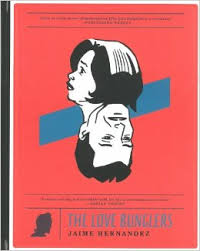
[READ: October 28 2014] The Love Bunglers

Jaime Hernandez is one half (with his brother) of the duo who create the cool graphic novel series Love and Rockets.  I have read (and own) some issues of the book, but I haven’t really kept up with it all that much.

But I really like his stuff, so I was delighted to see this book, which was originally printed in Love and Rockets: New Stories 3 and 4.

This is a complex story, written in a back and forth style which only makes the narrative that much more compelling.  As the story opens we see some men playing chess on a street corner.  A woman, Maggie, walks by.  She is older but still curvy and the men size her up.  One of the men, the “new guy” gets up and follows her then hides in the bushes watching her.  Next we see Maggie, naked, lying on a leaf.  But she is actually talking to Reno and relating this recurring dream.

Then we see that she is a landlady and is also friends with a man named Ray.  Ray is an artist who is showing at a local gallery.  Maggie agrees to go with him. By the end of the first section it’s not entirely clear what Maggie’s feelings are about either of these men, but they both seem to like her. Continue Reading »

elmer SOUNDTRACK: R.E.M.-Collapse into Now (2011).

R.E.M._-_Collapse_into_Now“Discoverer” opens this disc with ringing guitars–not exact R.E.M. replicants, but familiar.  And then Stipe comes in and the refresher course in R.E.M. begins.  Collapse Into Now proved to be R.E.M.’s final album, and while some of their latter albums weren’t great, Collapse seems to revisit everything that was great about R.E.M. and tries to spread it all over this album.

The blueprints for classic R.E.M. songs form the structure of a lot of these songs, with chiming guitars, and Stipe’s recognizable vocals.  “All the Best” sounds like classic R.E.M. (although Stipe’s delivery is more current sounding).  It also fits in well with the faster songs from Accelerate and is only 2:46.  But it’s “Überlin” that really sounds like a classic R.E.M. song.  That notable guitar style with Stipe’s very specific delivery style.  And then come Peter Buck’s harmonies.  It sounds like a good outtake from, say, Automatic for the People.

Stipe tends to do a lot of his sing-speaking on this album (and i think the one thing I don’t like that much about the album is that early R.E.M. seemed to obscure Stipe’s vocals and lyrics a little bit, giving them an air of mystery.  Whereas the newer records are all pretty well laid bare).  So “Oh My Heart” has Stipe almost speaking his poetry.  It’s got mandolin and Buck’s mildly annoying backing vocals (I’ve never thought that about his backing vocals before).

An Eddie Vedder cameo is utterly wasted on “It Happened Today,” you can barely hear him as all he does is backing crooning near the end of the song (and frankly the “hip hip hooray” chorus is lame).  “Every Day is Yours to Win” is a pretty slow song.  It doesn’t amount to much but the melody is really beautiful.  “Mine Smell Like Honey” is a crazy bad title, but it’s a great rocking song, really hearkening back to classic R.E.M.–ringing guitars and Stipe’s vaguely disguised voice.  “Walk it Back” is another slow ballady type song and is really pretty.  While “Alliagtor_Aviator_Autopilot_Antimatter” is a rocker with Peaches singing and speaking backing vocals.  “That Someone is You” follows up with another speedy track.

I tend to dislike the really slow R.E.M. songs, so “Me, Marlon Brando, Marlon Brando and I” doesn’t do much for me.  The disc ender, “Blue” reminds me of Out of Time‘s “Country Feedback” (I keep waiting for him to say “I need this”).  And the Patti Smith backing vocals recall “E-Bow the Letter.”  “Blue” is meandering and unfocused but Buck’s atmospheric guitars are quite effective, even if the song itself is nothing special.  I don’t quite get the coda of tacking the opening chords of the album on to the end, but whatever.

So basically this album feels like some mostly great outtakes from earlier R.E.M. albums. And there’s really nothing wrong with that (well there would be if R.E.M. was still trying to release a lot of new music).  But since the band was ready to call it quits anyway, it’s a nice recap of their career.  True, I’d rather listen to their earlier records, but you could definitely throw most of these songs into a mix with the earlier ones and they would sound perfect.

[READ: October 25, 2014] Elmer

Elmer has a  chicken on the cover.  It also features this quote at the top of the book: “It’s the Great Filipino Novel, with chickens.”  What to expect from this book?  Well, chickens, obviously, but I never would have guessed what this book contained.  Indeed, this book is pretty mind-blowing (in a good way).

It has a simple premise, which seems comical but is actually taken very seriously: what if chickens became “aware” and learned to speak?  It sounds funny, right, but Alanguilan really explores this issue seriously–if a species of animal that we normally eat suddenly talked to us en masse, how quickly would we deal with this, and what would humanity’s reaction be?  It tackles issues of slavery and racism and pushes them further.  And while the “change” takes place in 1979, it addresses contemporary society with an inquisitive glare.

While there is some humor in it, this is a serious book.

Jake Gallo is a modern chicken (the book is set in 2003–two decades after chickens became “human”).  He has just been rejected for a job, and he pulls the race card (this would be the hilarious reveal that our main character is a chicken).  While he’s feeling sorry for himself, he gets word that his father, Elmer, is dying and he returns home to be with his mother and family.  On the way home he runs into Farmer Ben, the farmer who helped to raise Elmer’s family.  And he is genuinely glad to see Jake.  Jake seems somewhat put off by Farmer Ben and declines his offer of a ride. Continue Reading »

movingSOUNDTRACK: BEACH HOUSE-Bloom (2012).

bloom  I loved Beach House’s previous album–the way it was magically lighter than air with swelling melodies and the unearthly vocals Victoria Legrand.  Bloom opens with “Myth” which continues the magic–the simple but beautiful opening melody and then a soaring chorus which is just amazing.

But something happens after that first song, and the album suddenly comes down to earth.  Perhaps it is the fairly conventional guitar and drum sound that opens “Wild” (it’ sa very cool 90’s ear guitar sound, but I feel like it doesn’t quite work with her voice.  The song is still pretty, but I kind of lose interest before it ends.

Similarly, I like the simple synth opening to “Lazuli” and her voice soars nicely here, but I’m not compelled to pay attention all the way through.  As I’m writing about the songs, I want to say that they are all pretty with nice melodies.  And as each song opens, I smile with recognition at the quality of the song.  But I keep drifting away from the song before each one ends.  Is it because each song is nearly five minutes?  Maybe.

The more I listen to the album the more I like most every song–there’s something about each one that I find engaging, and yet overall the album just doesn’t grip me as much as the previous album did.

It still sounds magical, but something is missing, and I’m not quite sure what that is.

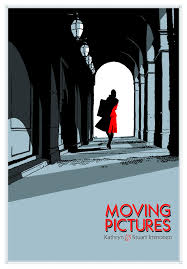
[READ: October 24, 2014] Moving Pictures

This graphic novel was simply fantastic.  It was one of the most powerful and moving stories I’ve read in graphic format in a long time.  I loved everything about it (even if some of the details of the story were a wee bit confusing–see below).  The story explores the relationships that formed during the Nazi occupation of Paris.  Specifically between a Canadian museum curator and a German soldier.

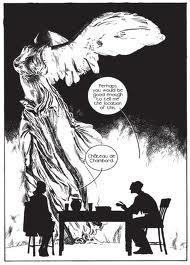
Primarily, I loved the artistic style of this book.  It is black and white with some very dark sections–especially in the interrogation room where harsh shadows obscure so much. As the book opens, we see a woman sitting at a table under a harsh lamp.  It is only when the POV shifts to her profile that we see the very fine and delicate lines that comprise her face.  And that balance of fine lines and huge swaths of black is really stunning.

mobing2There is then a flashback.   The woman from the room, Ila, is speaking to another woman who looks more or less like her (it is hard to tell the women apart as they are both blonde, with such think lines for features).  They are at a train station and Ila is encouraging the other woman to take Ila’s papers and flee.  She says she won’t be needing them.

Then we return to the room, where a man, who we learn is Rolf the soldier, enters and begins interrogating her.  He asks her questions, but after a few, she asks him if he has been drinking–something is clearly unusual about this interrogation.  In the course of the questions, we learn that Ila is the curator at a museum.  And he begins asking her the locations of certain works of art. What is gorgeous here is that the two remain silhouetted, but the artistic pieces are blown up to full size as background images.  And they are wonderfully rendered.

Then he asks about some small things “hidden” in the basement.  And then he asks if she is still mad at him.  This interrogation seems more personal than political.  We also learn that he asked her to keep one small artifacts and that she can’t remember where it is. Continue Reading »