Feeds:
Posts
Comments

kurt-cobain-montage-of-heck-psterSOUNDTRACK: FOO FIGHTERS-Foo Fighters (1995).
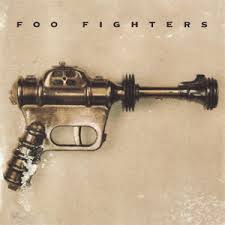
ffDave Grohl was like the anti-Kurt Cobain.  How many photos do you see of him with a big stupid grin on his face.  He seems to be silly and fun all the time (despite some apparent angst in his life).  And how surprising was it to find out that not only could he bang the hell out of the drums, he could also write songs (and play guitar).  Of course we all looked for songs “about” Kurt, on this record, but I realize that Dave only knew Kurt for a couple of years, he likely didn’t even really know him that well.  Dave has other things on his mind.

And somehow, despite the really aggressive often heavy metal feel  of Foo Fighters albums, they are always popular.  Foo Fighters have gotten so big, it’s easy to forget that Grohl was even in Nirvana, which is saying something.

The Foo Fighters debut album was written and performed entirely by Dave Grohl.  I remember when it came out (well, after it was revealed to be Grohls’ album–it was a secret for a little while) listening to it in an apartment in Boston.  I must have listened to it a lot because I know the whole thing so well.

Grohl uses some of the loud/quite format of Nirvana, but mostly he just writes songs with simple lyrics (easy to sing along to even if you don’t know what he’s saying (bridge to “I’ll Stick Around” anyone?) and big catchy choruses.

If you like loud rocking songs, this album is fantastic.  “This is a Call” and “I’ll Stick Around” are super catchy heavy songs.  “Alone + Easy Target” is a bit less catchy, although the chorus has a very cool riff in it.  “Good Grief” is super heavy with an aggressive chorus.

But it’s also git some sweet songs.  “Big Me” is quite tender and it makes me laugh because the drums are so incredibly simple and gentle for a basher like Grohl.  “Floaty” is a really pretty song with some cool fuzzy guitars and a cool riff that goes from bridge to chorus.  The chorus has an aggressive punk riff which complements the rest of the song in an interesting way.

“Weenie Beenie” (I had no idea that’s what the song was called) is loud and aggressive with a massively distorted vocal. It’s kind of a throwaway but shows Grohl’s love of punk.  “Watershed” is a similarly fast punk track and is only 2 minutes.

“Oh, George” is a mid tempo song, with some very catchy moments and a classic rock style guitar solo.  “For All the Cows” opens with a kind of jazzy guitar and drum sound and then really rocks out.  It was released as a single but never did anything, which is a shame because it seems like a joke but is actually quite good.

Even though Grohl did everything on the album, he had a little help from Greg Dulli who played guitar on “X-Static.”  I would never have noticed it was Dulli, although knowing that it’s someone else playing, you can hear a different style in the guitar.  The disc ends with “Exhausted,” a song which sets a kind of trend of longish more meandering songs near the end of Foo Fighters albums.  I don’t love it but its a fine ending.

So many things could have been wrong with this album–a drummer writing songs, and an ex-famous drummer at that.  He even initially wanted to record it with Krist Novoselic, but was afraid that people would think it was a Nirvana band (and he’s very right about that).  Despite all of that, it turned out to be pretty great.  And it was the start of something of a phenomenon.

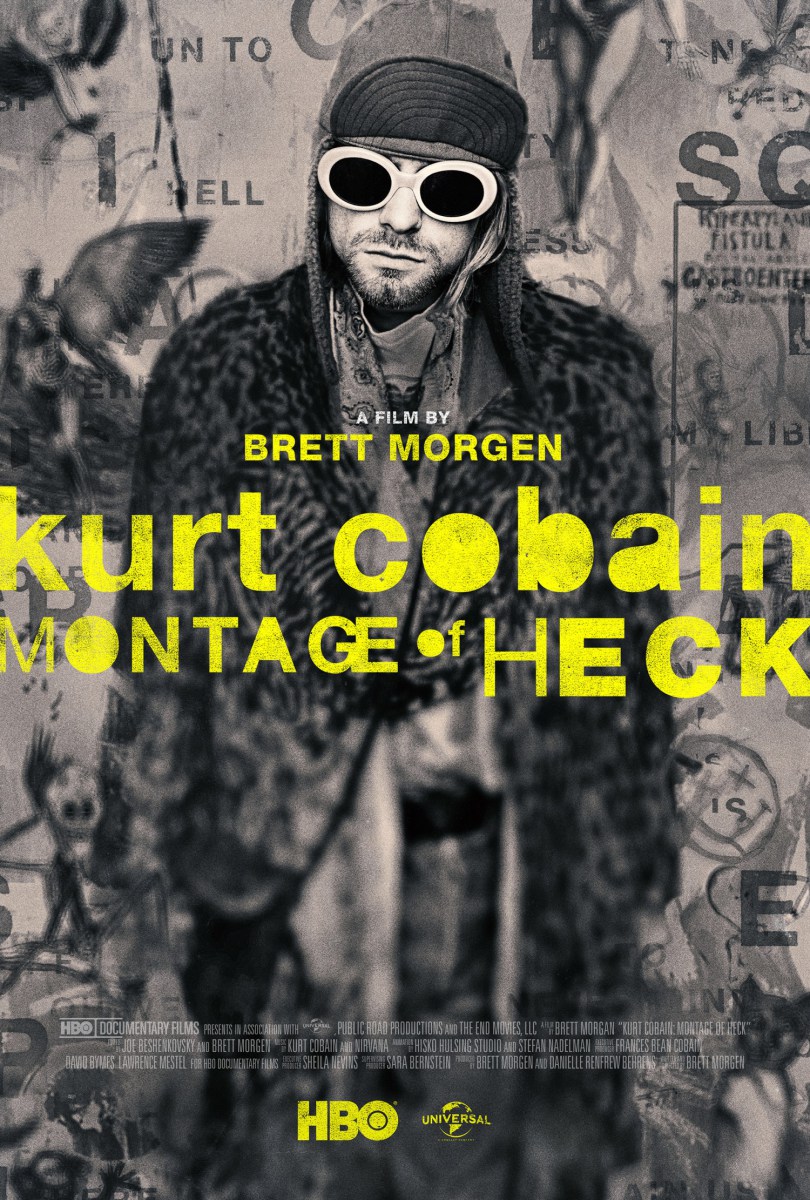
[READ: May 20, 2015] Montage of Heck

So I was a huge fan of Nirvana (like the rest of the world) when they came crashing forth on my speakers.  And yes, I knew that they saved rock.  But by the time Kurt killed himself, I was bummed but not distraught.  I was never going to have a poster of him on my wall or anything like that.

I was intrigued when I heard this documentary was coming out. But I didn’t have any plans to see it.  And then NPR played an audio excerpt from the movie in which a drugged up Kurt is getting yelled at by Courtney while their infant baby is lying next to them.  And I decided I didn’t need to see that film–it was brutal just to listen to.

Then I saw this book at work and thought it might be an easier dosage than the film.  (Although my friend Eugenie has seen it and says it’s excellent).

It turns out the book has a lot more stuff that the film does (although I can’t say what as I haven’t seen the film).  It consists entirely of interviews and illustrations (very cool ones by Hisko Hulsing and very creepy ones from Stefan Nadelman.   There’s lots of photos and a few excerpts from Kurt’ diaries and the like.

The interview subjects are listed on the page 18-19 spread of the book.  Each has a photo.  There’s Don Cobain and Jenny Cobain (Kurt’s father and stepmother).  Then there’s Wendy O’Connor, Kurt’s mom and she looks exactly like Courtney Love WHAT IS UP WITH THAT?  In her early younger photos she doesn’t.  It is creepy. Continue Reading »

unicornSOUNDTRACK: LIONEL LOUEKE-Tiny Desk Concert #56 (April 26, 2010).

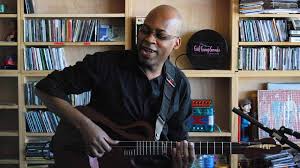
louekeI had never heard of Lionel Loueke.   He is a West African jazz player with a wonderfully unique way of playing.  He uses low tuning, nylon strings electric guitars (the particular guitar he uses here is beautiful), and paper in his strings (to create a cool buzzing sound).

He also sings (but that’s not the right word), he makes sounds with his mouth–sometimes singing what he is playing, sometimes just making sounds.  He seems like he is having the best time up there.

According to the blurb, Loueke usually plays with a trio (with the bassist and drummer contributing to songs and shaping the direction of the band).  For this Tiny Desk only Loueke and drummer Ferenc Nemeth play.  Nemeth plays bells, bundle sticks and a little rig set up around a hand drum and a jangly tambourine–it’s a very cool percussive sound that perfectly matches Loueke’s guitar style.

They begin with of “Vi Ma Yon.”  It’s a five-minute traditional song that appears on Loueke’s album Mwaliko.  This is such a fun and interesting song, with Loueke’s voice floating above the interesting guitar styling he lays down (with that paper buzzing away).

The second song, “Merci,” feels more traditional–with what sounds like actual words done in a melody.  Although his guitar playing isn’t as interesting (the paper is gone), his skill is readily apparent as he flies around the neck.

This is yet another interesting Tiny Desk with a performer I’d never heard of who really impressed me.

[READ: May 29, 2015] Always Be Yourself.

The second bad book of the weekend is this one.  I have to admit I love the title of this book.  I don’t know exactly where it comes from (some Tumblr feed no doubt) but I think it’s very funny.  And that’s what attracted me to it.  But the book itself is really rather lame.

It’s always weird when a book tries to capture an online sensation.  Especially one that is completely of a time and basically ephemera.  So here we get this book about Tumblr.  Notice there is no “author” for the book.  Although on the inside we see that the text is by Perille Kok-Jensen and Els Dragt.

My guess is that it is striving to be like a Douglas Coupland book (the font is very similar) with pictures and pithy slogans designed to describe all that is Tumblr.  The blurb says this book is designed to look at today’s Tumblr generation who are “bold, dreamy and unfazed by the grim context in which they’re coming of age.”  And that it is written “to all the unicorns out there: perhaps you could buy the book for your parents so that they will understand that you are in fact not a freak but part of a greater movement.”

Okay, fine, but how is Tumblr (Tumblr? really?) a great movement?  And are people actually defining themselves by using Tumblr?  Because I can tell you that all kinds of stodgy places use Tumblr, too.

Anyhow, it starts with a pithy comment:  “The nineties called, they want their individualism back.”  Which seems like a direct contradiction to page 61: “Blending in is the new standing out.”  Whatever.

And then it quotes Farrell’s “Happy.”  In fact it quotes lots of song lyrics and other famous quotes (with no attribution, actually). Continue Reading »

roofSOUNDTRACK: DAVID RUSSELL-Tiny Desk Concert #55 (April 19, 2010).

russellDavid Russell is a classical guitar player (or “god,” as they call him).  Although I am unfamiliar with his work, apparently he is huge.

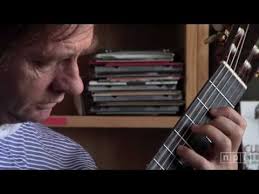
And deservedly so. When he started playing the first song I assumed he was looping the low notes while he soloed the high notes.  But no, he is playing the low notes slowly with his thumb while he speeds along the nearly pizzicato notes with the rest of his fingers.  And that’s just his right hand.

His left hand doesn’t move fast–he’s not shredding–but man, the elaborate chords, the expanse of his hand covering so much of the neck at once–are really stunning to watch. The chords are complex and the way he can play solo notes and low notes at the same time is amazing.

The Couperin piece absolutely blew my mind–there are two melodies going at once.  And the Albeniz piece is simply lovely.

It’s also fun to listen to his Scottish accent when he describes what he loves about the guitar he is playing (and his unexpectedly baudy joke about why he doesn’t name it).

The set list includes:

  • Augustin Barrios: “Una Limosna por el Amor de Dios”
  • Francois Couperin: “Les Silvains”
  • Isaac Albeniz: “Granada”

You can watch it here.  It’s amazing.

[READ: May 27, 2015] Dog on the Roof

I usually try to only read books that I’ll enjoy,  but every once in a while you get a stinker.  So this weekend is devoted to two recent stinkers.

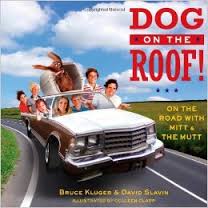
I saw this book on a pile at work.  And I thought why on earth did we get this completely out of date book in 2015?  I see now that it was donated to the library. My goodness, thank you random person.

So perhaps you remember that in the 2012 campaign, Mitt Romney put his dog on the roof of his car or something. It was a minor scandal (or a major scandal if you love dogs).  And it was a jokey talking point for a little while.

Well, as happens in political cycles, some people decided to make a jokey book about it.  Kluger and Slavin are satirists who work for All Things Considered.  And, as the blurb on the back of the book says (not too overstate what was a minor incident) “It is the inside look at the Man Who Would Be President and the wild ride that’s sweeping and bewildering the nation.” Continue Reading »

april6SOUNDTRACK: REGINA CARTER-Tiny Desk Concert #54 (April 11, 2010).

reginaRegina Carter is a (jazz mostly) violinist (although I am unfamiliar with her).  Her then new album, Reverse Thread, was a collection of African melodies played via Carter’s jazz sensibilities.  She had been playing with a larger group on tour, but she decided to strip down the band to just herself on violin, Will Holshouser on accordion and Yacouba Sissoko on kora.

They only play two songs, although since the set is 12 minutes, they are long songs (about 6 minutes each).  And they are beautiful and meandering with many solos.

I have to admit that for the first s9ng, “N’Teri” (written by Habib Koite) I feel like the kora comes across as the main instrument.  I could listen to Sissoko play that all day.  Although by the middle of the song Carter and Holshouser trade off solos, violin to accordion, which is pretty cool.

“Kanou” (written by Boubacar Traoré) is a bit more upbeat and almost dancey.  In this song all three musicians get equal billing and its really cool the way each instrument seems to come to the fore a little.  I also enjoyed that even though this is Regina Catrter’s show, she puts her violin down for a bit while Holshouser takes a long accordion solo.  But mostly they all work together perfectly–a wonderful combination that I’ve never heard before.

[READ: April 14, 2015] “Musa”

This is a simple story of loss and how it can affect everyone around them.

Musa is the narrator’s older brother.  He is a strong figure in the family and the narrator respects him like no one else.   Their father had disappeared long ago and Musa was more or less the man of the family.

And then Musa was murdered.  The narrator was upset of course, but he was also offended by this because he imagined his brother was invincible and even worse, the way he died was so insignificant.

But it hit his mother even harder.  She acted as if she were widowed and she treated the narrator as an insignificant afterthought.  Her whole life was soon dedicated to mourning Musa and to finding his killer. Continue Reading »

march30SOUNDTRACKJAKOB DYLAN-Tiny Desk Concert #53 (April 2, 2010).

jakobI was not a fan of the Wallflowers–I had an unfair dislike of Jakob Dylan.  But I can appreciate his songwriting skills and that, although he looks and sounds a ton like his dad (especially with sunglasses on) he holds his own very well.

But for me the most interesting part of this solo band is his backup singers–Kelly Hogan (whom we just saw touring with The Decemberists) and Neko Case (!–there’s no photos available, so you’ll have to watch the video to see her awesome hair).  Joining Dylan on guitar is Paul Rigby.

There’s something old school about “Nothing But The Whole Wide World” (probably the refrain of practically spoken “nuthin”) that I really like.  I enjoyed the way the backing vocalists don’t do as much as you might think–their restraint is really infectious.

“Everybody’s Hurtin'” is a nice minor key song (obviously a downer) and the backing singers contribute a lot more to this one.

The final song, “Holy Rollers for Love” features Hogan and Case doing different things which really fill out the song.

I guess I’m not sure how successful he would have been had his name not been Dylan, but this is an enjoyable concert and makes me reevaluate Dylan’s career somewhat.

[READ: April 13, 2015] “This is an Alert”

Here’s yet another story from Thomas Pierce that I really liked.

The story is set in some future time (although it doesn’t seem that distant) in which there are wars going on in the upper atmosphere.  And it has a trope that I rather enjoy in short stories (although I would find annoying in a novel).  Pierce gives us no details about the war or the future or anything.  We are thrown into the story and we just have to deal with it.

It is written in first person and the narrator assumes we know what is going on. So, as the narrator (a mom) and her family are driving to her mother in law’s house.  They are all crouched down on the side of the road with gas masks on.  They are hot and cranky and they will definitely be late for lunch.  And all of this because of the speaker yelling “This is an Alert.  This is an Alert.”

She wonders whose voice it is coming out of those speakers and how he was chosen for the job.  But when the alerts stop, they pile back in the car and continue on their journey. Her husband, Neal, is sick of the drills, of the gas mask, of the constant interruptions.  They seem to have gotten worse lately–especially today.  And perhaps the most annoying thing of all is that you can’t see anything of this war–from the earth you have no insight into what is happening or what has caused the latest round of Alerts. Continue Reading »

2015_03_16-400SOUNDTRACK: RHEOSTATICS-Snooks Pirate Radio: Raise A Little Band (2003).

snooksThis is one of the more unusual items on the Rheostatics Live site.  It is an evening of pirate radio by a guy named Snooks.

This is the explanation directly from Snooks as to what this is:

Hello,
In 2003 I had this hair-brained idea to run a radio station out of my bedroom. Two years previous, I attended Acadia University where I became the program manager of a thing called Radio Acadia nestled in the beautiful Nova Scotia Annapolis Valley, and was well aware of how to operate an online station. So, I set things up and ended up producing a show in my kitchen all about my favorite band, the Rheostatics. I had done numerous shows on them before, and I think I did a pretty good job with this one. I advertised the show on the Rheostatics yahoo list, but ended up with just one listener in Ontario I think.

Sadly, due to my rather busy work schedule, plans to take over the world with a pirate radio station that would change every music listener, and crush every commercial radio station into oblivion, had to be scrapped. Enjoy.

So this is 2 hours of Rheostatics music with some introductions by Snooks.  Snooks provides general information about the band, some chronology and band member lists.  But I think the best part is when he talks about meeting some of the guys and some personal anecdotes (especially about Tim Vesely).

I like the way he groups the songs thematically: History (songs from their early days and about the record industry), Acoustic Times (their more mellow numbers), Tim and I (songs by Tim), Bruce Willis and the Rheostatics (a great title if ever there was), Art (their more outlandish songs) and Reflective (their more reflective songs).  I am surprised that “Horses” didn’t make it, though.

There’s nothing new here–it’s all songs from the albums (including Double Live)–but it’s fun to hear them played in this order.

[READ: March 25, 2015] “All You Have to Do”

It’s 1972 and Sid Baumwell, aged sixteen,  is looking for more from his small town.  He was handsome and had a lot of potential (his teachers said so).  He genuinely believed he could be president.

One day at the grocery store he saw a card table offering a contest.  The man at the table asked him if he felt like a winner and Sid said yes.  The contest was for a lifetime supply of aluminum foil.  And the man at the table, Bill Baxter, said that Sid looked like winner. Bill smiled at him.  He gave him some sound if clichéd advice about school and made a slightly suggestive sexual joke.   And then Sid left.

On the way home, Bill pulled up next to him in his car and offered him a ride home.  Sid said sure.  They started talking about cars.  Bill laughed about his own car and after a few comments, Bill said that if Sid played his cards right the car could be his.  Sid is confused and Bill doesn’t really clarify.

As Bill drops him off, he suggests that Sid will want to get out of this town.  When Sid says it’s a nice town, Bill snidely remarks that nice is the kiss of death.  Sid if offended, but it makes him think about his town. Continue Reading »

march9SOUNDTRACK: RHEOSTATICS-Hillside Festival 20th Anniversary, Guelph ON, July 7, 2003 (2003).

hillUntil recently this was the only Rheostatics show listed on the live website for 2003 (a bunch have recently been added).  And there are none for 2002.  I don’t actually know if they didn’t tour much in 2002 or what.

But this is a fun set (and is just barely over an hour) with lot of guests and an interesting selection of songs.

The start with “Self Serve Gas Station,” and then “Song of the Garden” (since Kevin Hearn is with them and later “Monkeybird” too) and “P.I.N.”  Then they play “Marginalized,” the first time I’ve heard them play it live.  Tim says he wrote it the night George W. Bush was elected.

Since Kevin is therer, they play a Group of 7 medley.  I recognize “Wieners and Beans,” “Blue Hysteria” and “Yellow Days Under a Lemon Sun.”  Lewis Melville guests “on the ocean” for “California Dreamline,”  There’s a nice referential moment when the line “all the naked ladies” makes Dave comment “Steve, Ed, Kev, Tyler.”

More guests come out for”Claire” Chris Brown and Kate Fenner offer backing vocals.  And there’s a mellowish version of “Stolen Car” that is pretty cool.

“Horses” is a fun version since every guest gets to take a solo.  And at the end, Dave asks Martin to “ride the wild donkey” so instead of making horse sounds from his guitar he makes donkey sounds. How??

The set ends with a rollicking encore of Jane Siberry’s “One More Colour,” a rare treat.  This is a great show.

[READ: April 10, 2015] “A Death”

I loved this story.  King sets it in the past (the location they are in is soon to become a state: “although we are not one of the United States just yet, we soon will be”), in a place which I assumed was Maine since he writes so much about Maine, but which I see mentions Fort Pierre which is in South Dakota, so which makes more sense.

It is a deceptively simple story.  A girl has been killed.  The sheriff has a suspect.  The townsfolk assume the suspect did it.  So what’s the problem?

As the story opens, Jim Trusdale is working in his yard when the sheriff comes up to his house and  arrests him. Jim says he ain’t never heard of the girl who was killed.  The sheriff asks where his hat is and Jim can’t account for it.  That’s enough for the sheriff.

Turns out it was the girl’s birthday.  She was given a silver dollar.  Later that day she was found dead and Jim’s hat was found on her person. Continue Reading »

harp janSOUNDTRACK: PHISH-Live Bait 10 (2014).

bait 10The last time I checked, there hadn’t been a new Live Bait release for quite some time.  I wasn’t even sure if there were going to be any more.  And then, when I was browsing the Phish site I saw that this had come out a few months ago.  It’s so hard to keep up.

This is yet another great selection of live songs.  There’s eleven songs in over three hours with most of them clocking in around 20 minutes.

“What’s the Use” opens this set.  It’s an amazing instrumental and one I haven’t heard them play very often.  It comes from The Siket Disc and is really stellar in this live setting (from 1999).  One of the great things about the Bait discs is they way the songs jump around from different years  So, the “Stash” from 1994 with its wild raging solos butts up nicely to the 30 minute “Tweezer” from 1995.  The band seems to have been really fun back then with the jam section of the song being really wild.  Right after the “Uncle Ebeneezer” line, they go nuts banging on their instruments.  The jam proceeds along until it comes to an almost staggered halt which morphs into The Breeder’s “Last Splash” (sort of).  The jump to 2010’s “The Connection” is only jarring because I haven’t heard too many live shows with this new song on it.  But it sounds great.

Disc Two (if you burn this to disc) starts with a great 24 minute version of “Down with Disease” from 2011, and then jumps back to 1998’s “Bathtub Gin” which is also kind of wild and zany.  I gather that their shows may have mellowed some over the years.  I like the way the jam section of this song returns to the melody of “Gin” since most of the time the jams just kind of fade out.  1992’s “My Sweet One” is a lot of fun.  There’s a really long intro before the lyrics (almost 3 and a half minutes) during which they play the Simpsons theme and Fish shouts “oh fuck” but who knows why.  There’s also thirty seconds of silence as they try to find the “pitch, pitch, pitch” before the final “name.”  “The Mango Song” is 18 minutes long.  The jam section starts around 5 minutes in and the first five minutes still sound like the Mango Song (because of the piano) then the last 8 are really trippy with lots of echoes.

Disc 3 opens with “Fee” which I always love to hear and assume they don’t play much anymore (based on nothing, really).  There’s a 5 minute jam before the start of “The MOMA Dance” which you can kind of tell is “The Moma Dance” but not really.  The song merges into “Runaway Jim.”  And the final song is a great version of “Chalk Dust Torture” from 2012 (as the liner notes state: Fans of recent performances will also find the “Chalk Dust Torture” played during the iconic “Fuck Your Face” set at Denver’s Dick’s Sporting Goods Park.)

Glad to have the Bait back.

[READ: March 21, 2015] “In a Waxworks”

This piece was translated from the Romanian by Michael Henry Heim and comes from Blecher’s Adventures in Immediate Irreality.  I don’t know what the full book is about and I found this excerpt to be more than a little puzzling.  Perhaps most fascinating though is that Blecher was born in 1909 and died in 1938 from tuberculosis of the spine.

It is a series of thoughts about the infinite and how thinking about things in reality would impact his thoughts about the infinite shadow–of birds in flight, the shadow of our planet, or even the vertiginous mountain chasms of caves and grottoes.

As he was a youngish man, thoughts turn to sex, and there’s some connection to a wax model of the inner ear.

But primarily the story concerns the world as a stage–as if life was some kind of artificial performance. He felt that the only person who could possibly understand the world the way he did was the town idiot. Continue Reading »

[LISTENED TO: May 24, 2015] The Penderwicks at Point Mouette

penderwicmouMy family loved the first Penderwicks book.  We listened to the second one but I missed a large part of it so I didn’t write about it.

In this third book, which is set but one year after the events of the first book, quite a lot has changed.  And the main characters are somewhat different in this book.

It is summer time and the Penderwicks are headed to Point Mouette, Maine for a vacation.  Except that Mr Penderwick is away in England [I won’t say why, I don’t want to spoil the part I know from book two] and Rosalind is vacationing in New Jersey with friends.  We don’t get to see Rosalind at all (I’d like to hear a bit more about her time in Ocean City), and we only get occasional phone calls from her (it’s as if Rosalind grew up and didn’t want to be part of the show anymore, so she was “written out” of the script).

That means that 12-year-old Skye is the O.A.P. (Oldest Available Penderwick) and she will look after 11-year-old Jane and 6-year-old Batty.  Fear not, they will have some adult help–Aunt Claire will be there too.  Although she is quickly taken out of the action when she twists her ankle and is on crutches for most of the book.

The one major problem I had with this book is that as O.A.P., Skye is annoyingly insecure in this book.  In general, Skye is a major bad ass.  She’s tough, she takes no guff from her sisters (even though she loves them dearly) or from boys.  And yet for this whole book she is petrified of being O.A.P.  And she comes across as a bit whiny.  While this does work to humanize her a bit, it also seems excessive.  Of course, this may also be the decision of audio book reader Susan Deneker to make her sound quite so frantic, but it’s weird to think of Skye as being so insecure.

On the other hand, she is the one who is mostly in charge of everyone and she is only 12, for crying out loud.  So her concern is understandable, it’s just that her reaction seems out of character.  Indeed, the whole premise of these books–that these kids make pretty big decisions on their own–is just crazy (but that does it give it a cool retro feel too). Continue Reading »

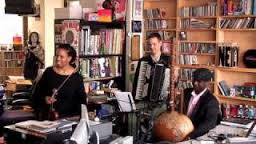
may11SOUNDTRACK: WYE OAK-Tiny Desk Concert #52 (March 29, 2010).

wye oakI don’t know Wye Oak that well, except for some shows from NPR.  So this Tiny Desk Concert is a good closeup look at what they’re all about.

Wye Oak is just two people: Jenn Wasner and Andy Stack.  Wasner plays a wonderfully loud acoustic guitar.  She has great fingerpicking skills and there’s something about the way she uses her open low strings that adds a great percussive quality–she really wails on those chords!  It’s fun to watch her hands fly along the fretboard.

Stack plays a couple of drums with a mallet and bare hands (the percussion is subdued but effective), although evidently they are generally much louder in concert. But Stack also sings, plays keyboards and guitar.

“My Neighbor” comes from their then new EP My Neighbor/My Creator.  It’s a great song that showcases all of Wasner’s skills.  She has a great voice and I love the way she sings along to her playing. 

“Civilian” was, at the time, unreleased.  It is minor key and a bit darker.  Stack plays keyboard and drums simultaneously (something he evidently does in concert to amazing effect).

“Regret” comes from their first album. For this song, Stack takes over guitar (and the seat where the guitar is played) while Wasner sits behind the drums (to play keyboards).  This song is about not having health insurance.  It is a much more somber song and I don’t like it as much, even though it is pretty and Stack a has a nice voice.  I just like Wasner’s stuff better.

For the final song, they switch positions back.  It also comes from My Neighbor/My Creator and is called “I Hope You Die” (which she promises isn’t as dark as the title suggests).

I really enjoyed this show.  You can check it out here.

[READ: May 11, 2015] “My Life is a Joke”

I simply don’t get Sheila Heti.  And I assume that’s my fault.  But everything I read by her seems just so nebulous that I feel like I’m, missing something.

I liked the way this story started out: “When I died, there was no one around to see it.”  So the narrator is dead. Cool.

She says that her high school boyfriend wanted to marry her because he wanted to have a witness to his life (he eventually got married so he wound up okay).  The narrator never married and was hit by a car–she was not witnessed by anyone.  Well, at any rate the driver didn’t get there before she took her last breath, “So I can say I died alone.”

I even liked that the next paragraph started, “Now you can probably tell that I’m lying.”  About what?  Everything?  No, “If I really am O.K. with the fact that no one I loved witnessed my death, why did I come all he way back here from the dead?” Continue Reading »