Feeds:
Posts
Comments

milos moo2SOUNDTRACK: MILOŠ-Tiny Desk Concert #138 (June 30, 2011).

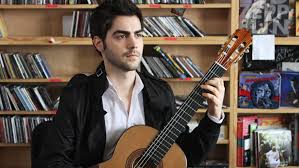
Miloš is Miloš Karadaglić, a 28-year-old from Montenegro.  He says he wants to bring classical guitar to a younger audience–to make it cool.

The first piece is a lovely ballad called “Romance” although the author is anonymous.  It is sweetly pretty and everything you might expect from a slow classical guitar piece.  It rings familiar to me, although it’s hard to know if I’ve heard it before or not.

The second piece is where his guitar really comes to life.  Asturias by Isaac Albeniz which Miloš describes as most flamenco and most familiar.  Interestingly, eh says that this was originally written for piano. The introductory riff should indeed be familiar and Miloš plays it passionately.

For the final piece he plays the first movement of a piece by Carlo Domeniconi: “Koyunbaba – moderato.”  This piece has a strange tuning: C sharp minor.  It’s a Turkish song with extraordinary techniques.  He says it reminds him of home–the song is about the sea and the waves by his home.  Whether it’s the tuning or the structure of the song, it is enchanting and exotic and really lovely.

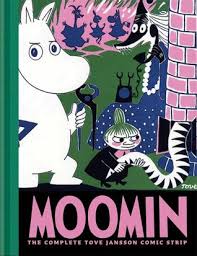
[READ: January 13, 2015] Moomin Volume 2

I enjoyed Moomin volume 1 so much that I was excited to read vol 2.  And it did not disappoint.  This volume was full of the same whimsical, often bizarre stories that were sweet and funny (and a bit cruel, which makes them funny).  It also added some new characters.

This book contains the strips: Moomin’s Winter Follies, Moomin Mamma’s Maid, Moomin Builds a House and Moomin Begins a New Life.  Each one seems to tackle a big idea and pushes it to crazy conclusions.

These stories originally ran in the Evening News, London 1953-1959. Continue Reading »

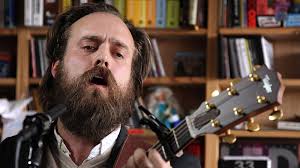
1182016SOUNDTRACK: DAMIEN JURADO–Tiny Desk Concert #114 (February 28, 2011).

damienI had always assumed that Damien Jurado was someone else entirely.  I had no idea that he was (as the blurb describes him) “a big dude playing sad songs.”

And he is.

For this Tiny Desk it’s just him and his guitar.  He keeps his eyes closed tightly as he sings these sad songs.  His guitar playing is simple–just strummed chords and his voice is simple as well–there’s no tricks.  It’s all about his songwriting.

I liked all four of these songs: “Cloudy Shoes,” “Newspaper Gown” (that was my favorite), “Arkansas,” and “Beacon Hill.”

The strangest thing about him was how uncommunicative he seemed to be–almost nervous.  He barely spoke and when he did it was hard to hear.  And as soon as the set was done he immediately stood up to leave.

Although he does say it’s “nice.”

His songs were lovely although I don’t think I’ll be seeking him out anytime soon.

[READ: January 12, 2016] “The Story of a A Painter”

This story was translated by Anna Summers and, as the title suggests, it is about a painter.

But this story delves into surreal territory pretty quickly.  It may even be a fairy tale as the opening line is “There once lived a painter….”

This painter has had some bad fortune as of late.  His landlord promised to get him a lot of money if he would sell his large apartment.  But the landlord sold the place and kept the money (a lawsuit is pending).  Then the landlord offered him a place under the stairs–no running water–which the painter accepted.  But he can’t pay the landlord, so the landlord gives him grief every day.

On another day a man asked if he would rent him his “apartment.”  The painter said yes for money up front.  The man gave him the money then moved his entire family into the tiny, below-the-stairs place and planned to never leave.  Now the painter was destitute and homeless. Continue Reading »

karlove SOUNDTRACK: ESPERANZA SPALDING-Tiny Desk Concert #110 (February 12, 2011).

esperanzaI didn’t know who Esperanza Spalding was before this show.  But she defied my expectations by being a fairly tiny woman who sings while playing an upright bass (not a very common combination for anyone).

For the first song, “Little Fly,” she plays a kind of jazzy bass, but has a string accompaniment–violins, guitars etc.  But it’s clear that the bass is the star.   And while her playing is very good (she has some great vibrato), it’s her voice that is mesmerizing–she’s hunched over playing the bass and still manages to sound strong and powerful.  “Little Fly”‘s lyrics come from a poem by William Blake.

“Midnight Sun” is a solo performance–just her voice and bass.  I loved the beginning where she sang notes along with what she played.  Then when the lyrics come in she sings in a very jazz voice (with eyes closed the whole time).  Turns out this is a Lionel Hampton song that only appears on the Japanese release of her album which make explain her singing style.

Because on the final song she sounds very different.  “Apple Blossom” is her own composition.  It’s her singing with the string section playing along (there’s no bass).  The song is lovely, but I prefer it when she plays bass in the song, too.

I enjoyed this performance and how delightful Spalding was.

[READ: January 9, 2016] “My Saga: Part Two”

Speaking of not finishing multi part essays, I ended my post about Part One of this essay by saying I couldn’t wait for part two.  And then apparently I forgot all about it because here it is almost a year later before I read part two (which was published two weeks later).

In this second half of Karl Ove’s journey he spends most of his time realizing that he hasn’t really learned very much for his assignment.  I can’t imagine anyone else being able to write endlessly about how he has nothing to write about (and still make it strangely compelling–his stress produces good sentences).

He does make some interesting connections though. Continue Reading »
popmechSOUNDTRACK: NATALIE MERCHANT-Tiny Desk Concert #500 (January 12, 2016).

nat merch Natalie Merchant was supposed to appear on a Tiny Desk show in 2014, but she was ill on that day (she even tells the story of going to the hospital).  She had to cancel the entire tour.  Turns out we saw her on that tour a couple of days before she got sick!

When Sarah and I saw her we both remarked on how great her voice still sounded.  And it sounds great here too.  The same instantly recognizable voice from her albums with all of the power and inflection that she’s always had.

Although I still don’t understand where her speaking voice accent comes from (she’s from upstate New York after all).

“Motherland” (a 2001 song) she dedicates to the staff of NPR.  Her accompaniment is an acoustic guitar, upright bass and accordion and it works very well for this slow, rather sad song.

“Texas” is another pretty, slow song from her 2014 album which she was supposed to pay at the Tiny Desk show.  She says he most regretted missing the Tiny Desk show when she had to cancel her tour.  She had no idea the desk was not so tiny and that it could fit 1000 people standing around watching.

Then she plugs her new album, Paradise Is There: The New Tigerlily Recordings.  It is a reworking of her songs from Tigerlily (and there was a documentary that accompanied it (which they were filming when we saw her).  She plays “Cowboy Romance” from that album.  I don’t know the original (or I don’t recognize the song) but it sounds fine in this stripped down format.

Even though her songs are rather serious, she’s quite silly with the band and crew.  She emphasis “CONfiguRAtion of muSICians” before introducing “Cowboy Romance.”

Everyone assumes she will play only three songs (the standard), but she has a special treat planned.  She says that she heard a story on NPR about how office workplaces would benefit from singing together.  And they are all trapped with her.  So she says they are going to sing a Protestant hymn that she recently found in a songbook in the library.

She says that she and the guitarist are Catholic, the accordionist is Jewish (from Israel) and the bassist has no religion.  he says he’s from the West Coast (she jokes that he’s from a cult in Oregon).  Then when she asks the guitarist what key it’s in and he says, “What song? ” to which everyone laughs because she never mentioned the title.

It’s a lovely old song which she teaches to the whole room.  After the first verse, she says she approves of the group sing-along and says it should be a weekly thing.  I love the way they split the screen to show the whole staff singing along. It’s quite lovely and the staff’s accompaniment is really pretty.

This is a delightful show and a very intimate performance by Natalie Merchant.

[READ: January 12, 2016] “Learning to Fly Part 2”

I really enjoyed Part 1 of this essay, but as often happens to me with broken up pieces, I forgot about the next part until long after.  So here it is over six months since I read Part 1 finally getting around to Part 2 (but at least I have Parts 3 and 4 with me so I’ll be finishing them up soon). Continue Reading »
1282008SOUNDTRACK: MARIACHI FLOR DE TOLOACHE-Tiny Desk Concert #499 (January 8, 2016).

florI enjoyed Mariachi El Bronx not too long ago.  I guess I didn’t expect much more from Mariachi Flor De Toloache.  But wow, they blew me away.

I compared them to Mariachi El Bronx because they also wear the traditional Mariachi outfit and they use the somewhat comically over sized guitarron (played by Lisa Maree Dowling).

But about a minute through the first song, “Let Down” when the three women sing harmony (a wonderful three-part harmony)–it’s already amazing.  And it just gets better.

“Let Down” is a slow song sung (in English and Spanish) by Shae Fiol who also plays vihuela (which has a great sound for a tiny four-stringed guitar).  The trumpet solo (by Anna Garcia) is great and interesting and the pizzicato violin notes really add character.  But when the song suddenly picks up tempo half way through it gets really fun.  And then Shae sings the first of several beautiful and amazingly long notes.

The second song is a cumbia called “Dicen.”  This one is sung by the violinist Mireya Ramos who says “dont be shy, shake you shoulders “.  There’s group harmony and then she gets the audience to sing the chorus “Ay Ay Ay.”  The song merges into a verse of “Blue Skies” which makes the song even more fun.  Shae sings this part and once again shows off her vocal skills with some more amazingly powerful high notes.  And then Mireya really shows off her fiddling skills with a great solo and some dexterous bow work.  And then she shows off her own amazing vocal notes–holding an incredibly long note through several octaves with great control.

After those first two songs (16 minutes worth), they do yet another one.  This one straight from Mexico (the roots of mariachi) called “Guadalajara.”  It opens with great harmony vocals and a cool vihuela strumming until the trumpet announces a good old mariachi song.  Shae once again amazes with her high shrieks and calls.  And by this time the entire audience (even those of us listening at home) are totally into it.

How do they hold these notes for so long?  (Some are around fifteen seconds). It is truly a wonder to behold.

This was only a fraction of the band and apparently when they are all together live they are really something to see.

[READ: January 9, 2015] “The Reptile Garden”

With a name like “The Reptile Garden,” this story did not do anything that I thought it was going to. In fact, when I finished I had to rethink the story to remember why it was even called that.  That’s pretty cool (since it works).

The story is set in the fall of 1972.  The narrator is a half Native American woman who is going to study at the University of North Dakota.  She is very smart but she knows she doesn’t fit in.  She chose to study French because she dreamed of going to Paris some day.

She says the white girls listen to Joni Mitchel and grow their hair long, while other girls–Dakota, Chippewa or mixed blood like her were less obvious on campus.  Aside from a few who swaggered and had American Indian Movement boyfriends.  Continue Reading »

S2008_01_21OUNDTRACK: BASIA BULAT-Tiny Desk Concert #106 (January 24, 2011).

basiaFor some sad reason, this video cuts off about half way through the second song, so you need to watch it on YouTube instead.  Basia Bulat is a Canadian singer of Polish descent.  She’s adorable and plays weird instruments.  What’s not to like?

The first song “The Shore” is done entirely on a pianoette–she may be the only singer to play one.  The pianoette is a zither-like instrument with a strummed section and a hammered section.  Her voice is low and breathy.  And when, during the second verse, her backing band’s harmonies come in, it’s quite breathtaking.

The second song is done on guitar. It’s a Polish folks song–she says it was a big hit in the 60s in communist Poland.  She sings it in Polish and says it was a great way to learn her Polish words and pronunciations.  “W Zielonym Zoo” means “In The Green Zoo.”  It’s cute how happy and smiley she is as she explains this song.  It begins with just her on guitar and it’s quite a delight when Holly Coish on ukulele, Allison Stewart on viola and Ben Whiteley on bass join in.

pianoetteHer brother Bobby Bulat joins her on percussion for “Heart Of My Own.”  This song is louder and more dramatic and a lot of fun. The final song  “In The Night” is one she normally plays on the autoharp (see, unusual instruments) but she didn’t have it so she plays a rollicking guitar version with the full band (there’s some great violin solos in it).  Just before it starts she says that if it sucks, don’t use it.  It doesn’t suck at all.

I really like Bulat’s music a lot and this is a great way to witness it up close.  And here’s a picture of a pianoette.

[READ: January 8, 2015] “Ash Monday”

I wasn’t sure how much I would like this story (same old intro from me) because I didn’t like the main character (or one of the two main characters).  Dill is a delinquent.  He’s 13 and with a car (well, he has the car, he just cant drive it).  And hes loves the smell of gasoline.

When his mother tells him to goes outside to light the grill (as he does most nights–his mom doesn’t cook in the house apparently), he puts gasoline in it to light it up.  On this night he discovers a rat in the grill, so he takes the opportunity to dose the rat with the gasoline and set it on fire.  (If you’re squeamish, there is also the death of hundreds of chinchillas although that is from natural causes).

We don’t learn much about Dill’s mother except that her husband is gone and she is looking to date someone new.

The scene cuts to the next door neighbor, Sanjuro Ishiguro (Dill calls him “Itchy-goro” and once called him a motherfucking gook).  Ishiguro is a respectable businessman.  He works long hours often getting to work before everyone else.  And although he gets along with his workmates, he is definitely not one of them.  They like to ask him about sports when they know he knows nothing about it. Continue Reading »

1.14.2008 SOUNDTRACK: IRON & WINE-Tiny Desk Concert #105 (January 21, 2011).

irionwineI have enjoyed Iron & Wine, but not extensively.  I knew that it was more or less a Sam Beam project (until recently, as the band has since grown in size).  And I knew that he sang beautiful folk songs. I did not know that he was such an amiable and sweet fellow.

For this Tiny Desk, Beam plays four songs.  Three are from his then new album, Kiss Each Other Clean, and they are great.  Beam’s voice sounds fantastic and his playing is excellent too.

After the first song, “Half Moon,” Bob Boilen asks him when he has time to write songs and Beam replies that he has less and less time.  He has to get up early to take the kids to school, so he works like a day job for song writing.

For the second song, “Big Burned Hand” he begins with the capo on fret five and then switches it to fret four apologizing that it’s early.  It’s another beautiful song.  At the end he apologizes for the word “fucking” in the final line (“the lion and the lamb are fucking in the back row”) but says that no other word would have had the same impact.  He doesn’t use words like that lightly in his songs.

He says that “Tree By The River” is a song he had been writing for ten years.  He was afraid it was always turning out saccharine, but thinks he finally got it.

Before playing the final song, Robin Hilton requests an old song (I can’t hear it) which Beam says he will butcher.  Robin says he will die happy if Beam plays it, but Beam says he’ll die unhappy if he plays it badly.  So instead, the final song is an older one, “Naked As We Came,” which has become a set-ender for the band.   Stephen Thompson says it’s great to hear this in this stripped down acoustic format instead of the full band version that has been common now.

And speaking of the full band, when Kiss Each Other Clean came out, the full band of Iron & Wine performed it live on WNYC (you can hear all four of these songs with the full band). And NPR has archived that performance, which you can download here.

[READ: January 7, 2015] “Wakefield”

I have always intended to read more from Doctorow, but he always seems to fall off my radar.  So I don’t know how this compares to his other works.  I really enjoyed it even if I felt like I had to suspend my disbelief a number of times in what was otherwise a somewhat realistic story.

Realistic or not, I really loved the conceit behind it.  The narrator and his wife of many years have had a fight about something stupid.  He went off to work as usual, but on the way home strange things happened.  First there is a problem with is train and he winds up arriving home much later than usual.  And then he finds there’s a power failure (it was interesting to read this right after Updike’s power failure story last week).

He gets out of his car and sees that there are raccoons behind the garage so he chases them away.  When he goes upstairs in the garage he sees that there are baby raccoons there too.  He chases them away and, since the power is still out and he is mentally taxed, he sits in a tattered rocking chair.

He only wakes up the next morning.  And he knows that his wife will never believe the truth. Continue Reading »

SOUNDTRACK: BALLAKE SISSOKO AND VINCENT SEGAL-Tiny Desk Concert #104 (January 17, 2011).

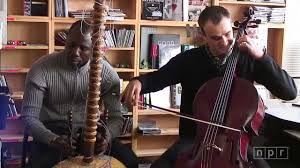
moomin 1sissokoBack in April 2010, another kora player with the same last name (Yacouba Sissoko) played a Tiny Desk Concert with Regina Carter.  Sissoko plays the kora and he is mesmerizing to watch (and to listen to).  Vincent Segal plays the cello and he does things with that instrument which I’ve never seen anybody do before.  It’s a great duo.

Together, the play some beautiful music.  On the first song, “Chamber Music,” Sissoko provides both the lovely backing music as well as some fast plucking.  And Segal keeps up and often outplays his partner.

For the second song, “Balazando,” Segal plays the cello like an upright bass and even plays a little bass solo (including some harmonics).  Then when Sissoko starts playing Segal, plays such high notes that it sounds almost like a flute and even has a Chinese feel to it.

Before the third song starts watch as Sissoko tunes the kora (by twist ting the ropes that hold the strings in place).  “Niandou” opens with Sissoko playing a fast melody (with an up close camera to really show his fingers).  Then Segal play a lovely riff of high notes on the cello.  The song ends with a very fast section–some quick bass playing on the cello followed by some very fast bowing before returning to the slow opening.

The fourth song features some cool harmonic bowing, the likes of which I’ve never seen on a cello before.  The end of the song sees Segal strumming the bowl like a guitar–he can do it all.

Together, they make some beautiful music.

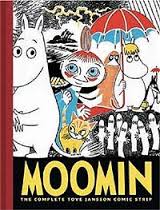
[READ: January 5, 2015] Moomin Volume 1

Inspired by reading the D&Q 25th anniversary book, I decided to check out the books that have been sitting in the children’s section of my library every time I go–Moomin!  They are oversized and lovely books and since I’ve paused on Peanuts I thought I’d read some Moomin–which I have never read before.

It was fascinating to read in the D&Q 25th Anniversary book that Moomin started because Jansson tried to draw the ugliest creature she could think of.  And it eventually morphed into the adorable round creature that we know as Moomin.

This book contains four stories.  I feel like the strips are printed like an every day four panel strip.  Each four panel strip is signed and numbered (but not dated) and most of them (but not all) read like they have a punchline at the end.  So I’m not entirely sure what to make of the publishing run.  Although the front pages state that it originally ran in the Evening News, London 1953-1959.

The four stories are Moomin and the Brigands, Moomin and Family Life, Mooim on the Rivera and Moomin’s Desert Island. Continue Reading »

july2015 SOUNDTRACK: THE GHOST OF A SABER TOOTH TIGER-Tiny Desk Concert #92 (November 17, 2010).

goastt  The Ghost of a Saber Tooth Tiger is a band created by Sean Lennon and Charlotte Kemp Muhl.  I really liked their most recent album so I was pretty interested to hear this much earlier Tiny Desk Concert.

I love this acoustic pairing.  Lennon plays the acoustic guitar (and sings and sounds a bit like his father’s more delicate side.  Meanwhile, Charlotte plays a ton of instruments and sings as well.

The show starts with them talking about tambourines and how they are unavoidably loud (so Sean’s is on the floor).

“Jardin du Luxembourg” has some great chord changes and Charlotte’s lovely accordion (with a kind of French flair).  As with all of these songs, there’s interesting lyrics like, “people say your brain is like cream cheese it takes the shape of anything you please.”  At the end of the song, Charlotte comments that she tried to play the accordion quietly but if she does it sounds like it has emphysema.  Sean says that she just learned to play it ten days earlier.

For “Schroedinger’s Cat” she switches from accordion to melodica and xylophone.  Charlotte sings harmony along with Sean.  There are more interesting lyrics here too (trippy ones, of course).  It references Socrates, Aristotle, Dorian Gray and many more cultural touchstones.

On “Dark Matter, White Noise,” Charlotte plays bass (and sings lead on alternating verses).  The chorus is gorgeous again, with a sort of minor key tone.

“The World Was Made For Men”  is the first song they ever wrote together.  Again, they sing together and sound fantastic.

At the end of the show, he threatens to do a 2 hour tambourine solo.

GOASTT is really something.  I am bummed that they opened for a band I wanted to see this summer but was unable to attend.  I hope the two bands tour again together this year.

[READ: January 6, 2015] “Nice Insane”

This was the second short piece in this issue of Harper’s.  I don’t know Seth Price.  This is an excerpt from his novel Fuck Seth Price.

Generally, I dislike reading excerpts, although sometimes they make you want to read the full novel.  That did not happen in this case, though.

This excerpt focuses on the “moment of inspiration that had rejuvenated his [presumably Seth’s] painting career, making him rich but ultimately leading him to reject contemporary art.” Continue Reading »
july2015 SOUNDTRACK: THE HELIGOATS-Tiny Desk Concert #98 (December 15, 2010).

heligoat I thought that I would have written about all of 2010’s Tiny Desk shows last year, but it turns out that I missed two.  This was one and tomorrow’s will be the second.

According to the blurb, Stephen Thompson says that this was the 100th Tiny Desk Concert.  I have counted all the shows (twice) and using my counting method, I found this to be the 98th show.  So either this was aired out of order or they never aired two shows.  I have noticed that I’ve been off on all of their milestones, so something is up (and I’m pretty sure it’s not my counting).

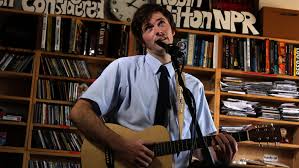
Chris Otepka is the Heligoats. He has another band called Troubled Hubble, but Heligoats are his acoustic unplugged band.

In addition to singing unusual songs (he’s a songwriter for whom lyrics are very important (if not always comprehensible)), he tells some elaborate stories between songs.  His stories seem spontaneous, although I expect that they are not (especially the cremation story)

“Goodness Gracious” is a slower song (although he somehow makes a really full sound with just his (small) acoustic guitar).  There’s some great lyrics and twists of phrase in this song.  And his voice is quite nice, too.

“I’m Pretty Sure I Can See Molecules” is a song he says he started writing when he was 8 years old.  He says he liked pushing his fingers back into his eye sockets to see what kind of fractals appeared.  He gives a lengthy explanation about this phenomena which he says is the cause of floaters.  All of this is an introduction to this uptempo song.  I really like the somewhat “off” chord he plays between chorus and verse.

Before “A Guide to the Outdoors,” he talks about cremation and the metal parts in his body.  And about having his will explain about his robotic existence.  The song seems to be a letter written to the person who has found his dead body?  It’s surprisingly upbeat though.

The final song, “Fish Sticks,” is my favorite.  It is about a man named Carl Beakman who gets a grant to protect a wetland for migratory birds (I suspect all of this is nonsense, but whatever).  I like the way the song has super fast strumming and the bouncy chord progression in the verses.

The Heligoats require close listening, and the songs are worth it.

[READ: January 6, 2015] “A Little Bottle of Tears”

As part of last year’s push to read a lot of books, I blew off most of my magazines.  So this year I’m going to get back to all the issues I missed and I’m going to try to keep up with my subscriptions going forward.

I’m starting with the Harper’s that I hadn’t read in 2015 and then I’m going to move on to the errant New Yorkers.

I’m starting with this story.

I haven’t really liked any of Diane Williams’ stories.  I find them maddeningly elliptical.  She has some excellent sentences and turns of phrase but as for an entire story, I’m always left wondering what I just read.

This is a short piece about how people could have better friendships if they weren’t so old. Continue Reading »