Feeds:
Posts
Comments

[ATTENDED: September 6, 2018] Judas Priest

My friend Al told me he was going to this double bill of Deep Purple and Judas Priest.  I had just seen Judas Priest back in March and didn’t really feel like I needed to see them again (there was one song I ‘d wanted to hear which they didn’t play, but otherwise the set was great).

Then my friend Armando clarified something I’d often wondered about PNC.  He said that if you bought lawn tickets to a PNC show, you could get an upgrade to a really good seat for $20.  It didn’t happen for all shows, but any show that hadn’t sold out was fair game.  This seemed like a great opportunity to test this theory.   Then I received an email from Live Nation the next day that gave me $20 off my next concert.  Well, the lawn seats to this show were $20.  So I had to pay the stupid fees.  But that meant I bought my lawn ticket for $8.  A couple days before the show I was able to upgrade my ticket to row K (as in 11 rows from the stage) for $20.  So great seats for $28!

I realized that since both K.K. Downing and Glenn Tipton were no longer in the band and since the drummer was a revolving door for most of the band’s history, the only two “original” members were Halford and bassist Ian Hill (and technically Halford isn’t original, but he is the real thing).

Like last time, there was a large red curtain at the front of the stage. This time, I was able to catch footage of it as it was pulled away. Continue Reading »

[ATTENDED: September 6, 2018] The Temperance Movement

I love that this band named themselves The Temperance Movement.

I looked them up before the show and got the gyst of their music: a British blues rock band formed in 2011.

It seemed like they might sound a lot like the band that opened for Judas Priest the last time I saw them.  I wasn’t all that interested in them because I assumed it would be very loud and sound very bad (the opening bands are never hooked up to the sound system correctly and they always sound ear-piercing).  Plus they were going on at 7PM, so I just assumed I’d never make it there in time to see them.

Well traffic was light and it turned out they started playing more or less as I arrived at the arena. Continue Reading »

SOUNDTRACK: KALBELLS-Tiny Desk Concert #783 (September 5, 2018).

The opening of the first song “Craving Art Droplets” was kind of promising, with the backing singers (Angelica Bess on keys, Sarah Pettinotti on bass) all “yeahing” at the same time and their rather strange chord progressions (and synth bass).  But once the song started, I realized it wasn’t going to get any better.  Just layer upon layer of cheesey synths.  The only thing that saved it was the live drums (Zoey Brasher), even though they don’t add a lot.

Just before the break, the song builds in an interesting way with everyone chanting louder and louder. And just when I thought there was hope, it devolved into the worst thing ever–lead singer Kalmia Travera’s long cheesey sax solo.  Oh dear.

She introduces the next piece: “The next song we’re gonna play is a medley.”  That’s a strange intro for songs no one knows.  Wordless chanting starts “123456/Bodyriders” (along with a cowbell).  The lyrics… are puzzling at best “Six was the rest, six was everything” (?)  When it segues into “Bodyriders,” the Travera singing high notes over the chanted background is promising, but those synth sounds again…. (even when she bends the notes, it’s still cheesey). .

“Droolerz” is a new song and has an amusing lyric: “We could play drums and eat lobster at the opera.”  And the way the delivery comes across is enjoyable.  The chorus also wants to be fun

Dance in the back yard, lets party
Let out all our demons, in the heat
Hang out on the lawn, in the dark
Naked in the shower, till dawn

But the way it’s sung is such a downer I can’t stand it.  Maybe its the synths–but I feel like the song is struggling and failing to be bigger than it is.  It all feels really sad to me.

[READ: April 15, 2016] “Distant Relations”

Sometimes it’s easy to tell that a piece in the New Yorker is an excerpt.  And sometimes you just hope it is.  And in this case, my hope was founded.  “Distant Relations” is a chapter from Pamuk’s book The Museum of Innocence, (like this excerpt, it was translated from the Turkish by Maureen Freely).

The main reason I assumed it was an excerpt was because of one or two lines in the early section of this story.  The ending, while ambiguous, could have been a (relatively unsatisfying) ending, but those hints that there was more really made me want there to be more.

The story begins with the narrator talking about his fiancée Sibel.  It was 1975 and she had just noticed a purse in a shop window (by Jenny Colon).  He made a note to go back and get the purse.  Although they are in Turkey, both protagonists have been abroad,  He studied in America, while Sibel studied in Paris.

The next day he decided to go to the shop and buy the purse.  It was owned by a distant relative.  She wasn’t there when he went in, but instead there was a beautiful young woman there.  Before the transaction was finished, he recognized who it was.  It was his “cousin” Füsun.  I put cousin in quotes because it turns out that she is very very distantly related. Continue Reading »

SOUNDTRACK: GEORGE LI-Tiny Desk Concert #782 (August 31, 2018).

Is it a showstopper if it is your first song of the Concert?  That’s the question I asked while I marveled at George Li playing every single note on the piano at the same time (it seemed) during the opening piece by Horowitz.  The show did not stop, and he played two more beautiful pieces.

George Li is a 23-year-old American pianist.  He began lessons at age 4, and at 10 gave his first public concert. Five years later, he snagged the silver medal at the prestigious Tchaikovsky Competition in Moscow. Last fall, he released his debut album on a major label and these days he’s playing with many of the world’s major orchestras while touring the globe. He just graduated from Harvard where he studied English literature and piano, in a hybrid program with the New England Conservatory.

That first piece was by Li’s idol Vladimir Horowitz: Horowitz: Variations on a Theme from Bizet’s Opera Carmen.  

To honor Horowitz, Li begins his Tiny Desk recital with the master pianist’s electrifying reboot of a theme from Bizet’s opera Carmen. Li describes it as an “insane knuckle-buster.” Just watch his hands blur during the fiendish interlocking octaves at the explosive climax.

The camera zooms in on his hands and it’s still impossible to see what chords or notes he is playing.  But it is very impressive to see how high he lifts his hands between notes.  Wow, what a piece.

He then moves onto Liszt.  Liszt is also a composer who makes pianists tremble.  Although the first piece by Liszt is quiet and beautiful, the second one shows off more of Li’s amazing chops.

Then it’s two pieces by the ultimate monster pianist, Franz Liszt. The Consolation No. 3, with its gently flowing, long-lined melody and diaphanous ornaments, reveals the poetic side of the composer….

Liszt: Consolation No. 3 is just lovely the way it floats and soars through the melody.  Although even a fairly “simple” opening does involve using his right hand to play the bass notes.  I love that his left hand is playing this soothing melody while his right hand is constantly seeking out new variations on that melody.

But that’s nothing compared to Liszt: La Campanella in which from the angle of the camera it’s impossible to see what his right hand is doing the way it moves so quickly.  He borrowed themes from the Caprices of Paganini, “they’re all extremely difficult, of course.”  La Campanella means the bells and you can hear the high notes that keep repeating.

the rip-roaring La campanella begins with a single tinkling bell that multiplies into a wild cacophony of trills and scales, ending in what Li calls “a big bang.”

He talks about the bells building and building, adding new notes and octaves over the course of the four minutes.  And you can hear those high notes (I imagine it sounds amazing on a grand piano).  And just as you get 12:38 he starts doing this trills up at the higher register of the piano.  He gets both hands involved and it’s nearly 30 seconds of massive finger workout.

It’s exhausting just watching him.

Li is no doubt used to playing grand pianos, and the blurb wonders…

when Li revealed his Tiny Desk setlist, one thought came to mind: How will these powerhouse showstoppers sound on an upright piano? The music he intended to play, by Franz Liszt and Vladimir Horowitz, was designed for a real, 7-foot concert grand piano – the kind they used to call “a symphony orchestra in a box.”

Turns out, there was nothing to worry about. Li’s technique is so comprehensive, so agile, so solid, that instead of making our trusty Yamaha U1 quake in fear, he made the instrument sound several sizes larger, producing glorious, full-bodied colors and textures.

While I love seeing musicians shine while playing impossible pieces, technical virtuosity is nothing without feeling.  And Li’s music is full of feeling as well.

[READ: January 3, 2016] “A Gentleman’s Game”

I always think that I like Jonathan Lethem’s stories, but I’m not really sure that I do (I’ll have to read back and see what I thought of previous stories).  But he always writes about things that I don’t expect.

Like this story.  It is set in Singapore and is about an American who has settled there and becomes a very good backgammon player.

The exotic setting is enticing, I suppose, but the story is really about two men who knew each other who engage in a contest to see who can win.

Bruno grew up in Berkeley, CA.   But when he was old enough he left and has never been back to the States.  He has been in Singapore for a long time and he is shocked one day to see Keith Stolarsky, a former schoolmate, walking up to The Smoker’s Club, a typically underground and unknown-to-tourists-club. Continue Reading »

SOUNDTRACK: TECH N9NE featuring KRIZZ KALIKO-Tiny Desk Concert  #780 (August 29, 2018).

I am constantly amazed at how many rappers this show has on that I have never heard of even though they’ve been around for decades.  I’m not really a rap follower, but you’d think I’d at least have heard of them.  Tech N9ne has 20 albums out and he’s got a number 9 in his name.  I’d think I’d have heard of him at least.

During a career nearly three decades in the making, Tech N9ne has dodged the fickle rap industry while surfing his own wave, stylistically and professionally. The Kansas City native has been a beast for years now, a musical misfit who laid a track record of underground success and struggle before building his own independent empire with Strange Music.

Especially since he is awesome.  He and Krizz Kaliko performed the best rap Tiny Desk Concert I’ve seen. [“Together, they’ve carved out an unorthodox niche: chopper-style speed rap that often plumbs dark, emotional depths”].  The band is awesome.  The two of them are awesome and they have a great rapport with each other and the audience.

Their playful banter between songs personifies that creative connection, as Krizz delivers backing vocals and guest verses from the soul. Backed by a guitar, drums and bass for their Tiny Desk, the trio brought out the rock-tinged hues of such definitive Tech N9ne songs as “Dysfunctional,” “Aw Yeah? (interVENTion)” – dedicated to his mother who died from lupus in 2014 – and “Fragile,” originally assisted by Kendrick Lamar, Mayday and Kendall Morgan.

I also love both of their deliveries which is often fast (yet comprehensible) with excellent inflection to really let the words flow (is that “chopper-style speed rap”?).  It’s a great fun set (with some great metal-inspired guitars).  These start off with the first song, “Dysfunctional.”  There’s inspired lyrics, there’s funny lyrics.  I particularly enjoy this couplet

[They both rap] Listen they call me genius, I run the show
[Then Tech N9ne demurs shyly so Krizz can sing, with emotion] Women on my penis…. it’s wonderful

Krizz sings the chorus with a great heavy metal riff.  He also takes lead on the second verse with Tech N9ne supporting him.

After the song Tech N9ne says, Oh yea, the boy can sing.  He can rap too.
Krizz: I learned it from him.  he taught me something like this: “Dommmmmm inae.” which is a lead into

“Aw Yeah? (interVENTion)” this song has some great lyrics, powerful and political with a very cool Middle-Eastern-ish guitar riff running through it

They gotta suffer the penalty cause of our education
Nobody wanna say nothing but I gotta call it abomination
Pissed off thinkin’ what this cost
What these babies blood drippin’ for?
So I say in Latin, listen Lord!
Audire DOMINE! (Audire DOMINE)
Only way people are gonna be able to kill off a demon is
Pick up a gun and be ready to put it between him
My nigga be screamin’
Audire DOMINE! (Audire domine)

Who the hell a brother gonna trust when it’s always dishonor
Hate me like Obama
And I ain’t even gotta run and askin’ you the question: God what about my
Mama!

Tech N9ne asks for a moment, says he’s shaky.  Krizz explains: he lost his mom on my son’s birthday.  She’s been sick all of his life.  That’s a super emotional song

Tech N9ne segues: “That’s why I’m so “Fragile.”  This song is also excellent with some rapid fire delivery.  I also love hoe exposed he is:

Amateur writer dissin’
He’s a beginner and hopes for your demise, folks some may despise
Never do try to listen
It’s real, I’m mad
Clueless when you scribble on your pad
How you gonna criticize with a chisel on your nads sizzling your ad
You don’t really get why I’m so pissed? Understand this (Understand this)
I’m an artist, and I’m sensitive about my shit, yes I’m Fragile

To close the set, Tech and Krizz performed “Speedom (Worldwide Choppers 2),” a song inspired by folk rocker Richie Havens’ original classic “Freedom.” They laugh over Krizz’ excellent Richie Havens’ delivery.  It’s an excellent conclusion to a fantastic Tiny Desk.

Now off to investigate these guys some more.

[READ: August 31, 2017] “The Metal Bowl”

Miranda July writes strangely personal (but who knows if they are actually personal) and introspective pieces that are often overtly sad graphically sexual.  But she’s also not all that vulgar, even in a story about amateur porn.

It even made me laugh as the story begins.

He cupped the two halves of my tush and spoke directly to them.  “Run away with me, girls,” he whispered. She doesn’t understand our love.”

Continue Reading »

SOUNDTRACK: THE McCRARY SISTERS AND THE FAIRFIELD FOUR-“Rock My Soul” (Field Recordings, September 20, 2015).

Hearing these eight voices intertwine so beautifully is wonderful (I especially love the bass voice).  Knowing how the voices are connected is pretty cool, too.

The original Fairfield Four was founded nearly 95 years ago in Nashville, and has remained relevant into the present day; many current listeners know the group from its appearance in the Coen Brothers’ 2000 film O, Brother, Where Art Thou? The McCrary Sisters are the daughters of the now-deceased longtime Fairfield Four lead voice, Samuel McCrary; together, they’ve made a major impact as that rare thing in a mostly masculine preserve, a female gospel quartet. To hear these voices perform “Rock My Soul” together is to feel the power of living history and the timelessness of family connection.

“Rock My Soul,” powered by their persistent clapping is just wonderful.  Their voices sound amazing, their harmonies are wonderful. It’s a joyful three minutes.

[READ: August 29, 2018] “The Wind Cave”

This is a somber story from Murakami.

It concerns a boy and the death of his younger sister when she was 12.  She was born with a malfunctioning heart valve and although she was never robust, it was still a surprise that she died so young.

His parents told him to watch over her, to look after her because she was so delicate.  The fact hat he couldn’t save her from death (no one could) has hung over him.

He hated seeing her in the coffin and he grew claustrophobic even thinking about her in that tiny box.  The symptoms didn’t start right away but occurred after he had been locked in a box truck.  He was working a part time job and was accidentally locked into the back of the truck when people wanted to leave early.  (Frankly I would think that might trigger claustrophobia more than anything having to do with his sister).

But now he can no longer ride in elevators or watch movies about submarines. Continue Reading »

SOUNDTRACK: JESSE BOYKINS III-“4 U 2 B Free” (Field Recordings, October 8, 2014).

This Field Recording [Jesse Boykins III Breaks It Down] starts with a lot of ambient noise–a giant overhead fan–which I thought might be an interesting component to the song.  But once Boykins starts singing, it’s just his voice. And that’s all–it’s a lovely a capella performance.

The day after playing a set at the Superdome during the Essence Music Festival this summer, eclectic R&B singer Jesse Boykins III wandered into Mardi Gras World — an expansive, airy warehouse packed wall to wall with floats used in New Orleans’ infamous parades. The floats are built from the ground up in-house, so Boykins found himself surrounded by unfinished works and spare parts.

It’s creepy and unsettling to see these giant heads–eyeballs at eyeball height, but just a head–staring at you.  It’s also surreal with the various colors and shapes and the head of Abraham Lincoln looking on as Jesse sings.

He sang one of the most emotional tracks from his latest album a cappella. While singing “4 U 2 B Free,” Boykins pulled back the layers of his own creation, matching his performance to the exposed, oddly vulnerable characters surrounding him.

But Boykins’ performance is really powerful especially at the end as his wonderful high notes as if no no one is watching.

[READ: October 4, 2017] “Enter the Ford: Lost Chapters from A Death in the Family”

I knew nothing about this book, so I had to look it up.

The first chapter sees a young by, Rufus, waking up wearily with his dad.  The boy is very excited and the father seems pretty delighted to be awake with his son so early.  They try their best not to wake the baby girl or the mom.  Of course the mom wakes up and asks for the dad to do some things before he leaves.  The dad makes breakfast–with stern admonitions to the boy not get burnt by the coffee pot, bacon or stove–and then he helps the boy with the difficult buttons.

We don’t know too much about the dad yet, but this exchange is interesting:

“You’re getting pretty good, buttoning yourself.” he said.  Rufus said nothing.
His father thought damn fool thing to tell a child; dumb as a fish.

In the second chapter they head out to Chilhowee Park and the entire chapter is given over to the most exquisite descriptions of this amusement park through the eyes of Rufus.  Everything is amazing and wonderful and the language is of a person taking everything in–from the color of the lake to the swans on the water to the roller coaster and the fairy’s wheel.

And then came the merry-go-round.  We learn how first Rufus rode only on the bench.  And then was allowed to ride the horses that did not go up and down.  And then on the up and down horses only if his dad was holding on.  And finally, today, to ride the up and down one by himself.  The amount of detail about the merry-go round is wonderful.

The only thing more wonderful than the merry-go-round was the little train.  We hear his father’s kind words about how amazing the train is.

Then things go sour a little because there’s also the arcades–where adults play games of chance.  There’s games that one never won–like the seventeen jewel watch.  But the worst was a place where there was “a darky with his head through a hole.”  And the people were meant to, as the carny said, “hit the nigger in the head and you get a cigar.”

Rufus’ mom hated this game.  And Jay wasn’t too keen on it either.  The one time they were there, Jay conceded that the man’s got to make money some way.  Jay tried to ease his wife’s concerns by showing her that the ball wasn’t that hard.  He lifted it up but she refused to even touch it.  The carny got mad at him for touching the ball. And Jay got huffy back.  She calmed him and he walked away.

But on this visit, he did not back down. the carny did. And that made Jay’s day even better.

Chapter 3

This chapter opens with Jay and his wife, Laura, talking about something extravagant.  She wants it, he doesn’t seem to want it and he seems to twist her words against her.

It comes out that he wants to get a car so that they can visit the in-laws once in a while.  She is nervous that cars are dangerous.  He admits they are but sometimes living in a house is dangerous.  But he says that having a wife and kids means he will be even more careful than everyone else out there who has nothing to be careful about.

She agrees to the car.  But in the middle of the night she has a premonition of something bad happening to the family in the car.  He says that they won’t get one.  Then later she gets over the premonition and agrees that they should go ahead and get one.

Chapter Four.

And then daddy drove home in a gas buggy–a new ford  Rufus is thrilled.  Laura can’t believe he drove it there all by himself.  And the neighbors all come out to gawk.

“Course they got an awful name for breaking down… But where Ford’s ahead, he supplies you the parts.”

They go for a before-dinner ride.  Jay drives very well and everyone is enjoying themselves.  Laura is nervous and says so, but he is careful and considerate of them.  He pulls over when another car comes by and he is very cautious around a horse and buggy–the horse is not spooked at all.  But their joy ridge is somewhat ruined by a speed demon who comes buzzing by them scaring them all half to death.

As the excerpt ends, Jay and Rufus take the car out for a spin and Jay really lets the speed fly.  They almost have an accident but Jay is able to handle it and he confides in the boy that they must never tell their mom that they went fast.  He agrees.

I don’t actually know much else about this story.  Between the title and what kind of tension a scene like this builds I expected something bad to happen.  It never did (hooray), but i assume it does),

The writing in this story was exceptional.

[LISTENED TO: August 2018] Tuck Everlasting

Normally when we go on long car rides we listen to many audio books.  This summer, we drove to Chicago (12 hours each way) and listened to only two!  Two!  And this one was only three discs long.

I actually didn’t know anything about this story when we started it (somehow this classic children’s book written during my childhood totally escaped me).

What’s fascinating about this story is how little there is to it.  This is not a criticism.  It’s a remarkably compact plot.  Although there is an awful lot of description.  And while Peter Thomas did a great job with the action of the story, the descriptions tended to drag on a bit (you could blame Babbitt or Thomas I suppose).

The story focuses on the Tuck family.  Tuck, whose first name is a rarely used but is Angus, is the father.  Mae is his wife.  They have two children, Jesse who is 17 or so and Miles is 22 or so.

There is also Winnie Foster, a ten-year old girl.  Her family is the oldest family in Treegap, New Hampshire. Continue Reading »

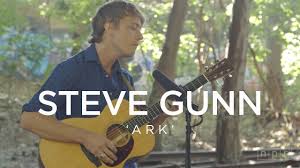
SOUNDTRACK: STEVE GUNN-Plays Between the Ties of an Abandoned Railroad (Field Recordings, October 12, 2016).

I don’t know Steve Gunn and I am surprised to see that he has released fourteen albums and has worked with Kurt Vile.

For this Field Recording, Gunn headed out to the woods to play three beautiful songs.

 In Forest Park, Queens, N.Y., an old relic suits Gunn’s sound. The Long Island Railroad’s Rockaway Beach Branch used to run through the park. It’s been abandoned for over a half-century, and trees have grown between the ties, skewing the rails and jarring the lines. Late this past summer, Gunn stood on the tracks of this worn American symbol and sang three songs off his latest album — songs about meandering, home and the crooked paths that take us wherever we’re meant to be.

Once again I am really impressed by the quality of the sound.  His guitar is absolutely clear and his voice is perfectly mic’d, but you can also hear ambient sounds–birds and such–making this recording unique.

Gunn has a pretty picking style (using thumb and fingers independently to get strums and picked notes simultaneously).  This enables him to keep the song moving forward while he plays the pretty guitar melodies.

“Full Moon Tide” has a great melody and a delightful chorus.

He walks further into the woods to play “Night Wander.”  It has a kind of circular feel in which the chorus feels like a part of the verse.  I’d say that Gunn’s voice is nothing special, but I like the deeper resonances he gets on this song.

For the final song, “Ark” he walks further down the tracks to a bridge.  Whether it is having the surface above him or just the style of his playing, this song feels warmer, and quite different from the others.

It’s a great introduction to this excellent guitarist.

[READ: January 9, 2017] “The Apartment”

This story is a fascinating look at a woman convincing herself that something must be true.

The apartment across from hers has been vacant for sometime–since the woman living there died.  But recently there was movement inside.  The person’s last name was Jahani.

Louise knew a man named Jahani when she was studying at Stockholm University.  Arman Jahani was the second man she’d slept with (her husband Martin was the first).  Martin, did not know about Arman.

While she is having lunch (sushi) with her adult son Jonas, she intersperses his conversation with memories of Arman.  The two most resonating thoughts are that he died in the early nineties and was survived by a son and a daughter.  Or so she believed.

She tells Jonas that the vacant apartment has been filled.  Jonas hasn’t lived at home for quite some time.  He wasn’t there when the woman died.  “You can;t imagine the smell” she tells him.  It was actually her husband who discovered her and was shocked that no one has mentioned the smell. Continue Reading »

SOUNDRACK: T.I.-Tiny Desk Concert #780 (August 27, 2018).

Sarah asked me to describe trap music and I couldn’t.

So Wikipedia tells me:

Trap music is defined by its ominous, bleak and gritty lyrical content which varies widely according to the artist. Typical lyrical themes portrayed include observations of hardship in the “trap”, street life, poverty, violence and harsh experiences that artists have faced in their urban surroundings.

It’s interesting that the music isn’t really mentioned in this description.  Because it was the music that I was most attracted to in this Tiny Desk Concert.  The riffs and melodies are really interesting–especially in this concert in which he brought along high school students from a non-profit Atlanta Music Project, who put a classical twist on his street anthems, adding strings and brass in place of 808 bass.

Tip “T.I.” Harris has lived the last 15 years of his life on the big stage. Fans have watched him rise, fall and ascend to new heights again, remaking himself each step of the way. From dope boy to dope emcee. From inmate to activist. From reality star and box-office draw to real estate developer and film producer.

Rapping along to a group of high school string players instead of his classic tracks. Without his usual audio prompts, he kept lyric sheets close at hand while running through the definitive street hits “Rubber Band Man,” “What You Know” and the Billboard 100 chart topper featuring Rihanna, “Live Your Life.” He may have stumbled a few times, but when you’ve successfully reinvented your career as often as Tip has had to it’s probably hard to stick to the same old script.

This Tiny Desk Concert is barely 8 minutes long–one of the shortest I can think of and certainly the shortest for a major act like this.  I didn’t know any of his songs before this, so I was puzzled why each song appears to be barely a minute long (he is either using only his verses because he has guests on the record, or he is only doing a verse and chorus).

The first song, “Rubber Band Man” has a great melody–made even better by the live instruments.  But he seriously plays it for one minute (the band plays it for two).  After a verse or so he

kept his set funky with off-the-cuff stories of the drama behind his music — like the time when he found out, after shooting the video for “Rubber Band Man” with Puff Daddy, that his home had been raided by police. “This music was about the elements that people have to endure in their lives every day and find a brighter side and make a way out of no way,” he said. “That’s what this music represents.”

I love the melody of “What You Know” (I listened to the recording and like this version much better).  The crowd really responds to him as if he were a preacher.  Again, this is a short song, just a verse, and at the end he says he goes into the studio to  bring some soul and funk to get you through the day–to reach the best side of yourselves.

He is super polite and friendly and is very kind to the kids:  “That’s a true example that really says that you’re never defined by your environment unless you want to be,” Tip said, crediting the youngsters for their commitment to craft.

Introducing “Live Your Life” he says that Rihanna ain’t here so…and the crowd responds “we got you!”  It’s fascinating that his original songs are some 4 or 5 minutes long.  This one is reduced once again to a minute or so.

[READ: January 22, 2018] “Thirteen Dreams”

This is indeed a list of thirteen dreams.  They were translated from the Arabic by Raymond Stock.  The full book is described that in his final years, Egyptian Nobel Laureate Naguib Mahfouz distilled his storyteller’s art to its most essential level. Written with the compression and power of dreams, these poetic vignettes… telescope epic tales into tersely haunting miniatures.

I’m not sure why they chose these 13, but I’m summarizing without the endings.

Dream 105
All men get their beard trimmed at Uncle Abduh’s salon by a beautiful woman.  One day he was walking down the street and she came close to him.  He had to stare, but she soon turned into a block of wood.  When he turned around…

Dream 106
There was a coup d’etat and an older man said he’d heard such a thing once in his youth.  The dreamer said he knew who started the coup and he laughed with pride.  But the old man said he once laughed with pride about such things…. Continue Reading »