Feeds:
Posts
Comments

SOUNDTRACK: HANNI EL KHATIB-“Save Me” (Field Recordings, August 7, 2013).

I love when Field Recordings like this one [Hanni El Khatib Gets Saved In The Desert] are filmed outside.  For this one Hanni El Khatib and his bandmates head to the Mojave Desert where it is getting cold pretty quickly.

I’ve never heard of Hanni before, and his music is generic enough that I don’t imagine I ever will.  The acoustic guitar plays a simple back and forth chord structure to the rhythm of hand jive.  Hanni plays a series of solos on the electric guitar in between simple verses (although the line about boys in the desert seems apt).

After a misfire with the maraca–it is so loud that Hanni can’t hear himself–the other guitarist suggests he should play it more nonchalantly–like business casual.

There’s nothing bad about the song, it’s just , well, bluesy garage rock, a fairly uninteresting style.  But the setting is sure pretty

The Los Angeles singer-songwriter, on a break from touring in support of his latest album In the Dirt, gamely stripped down his loud, bluesy garage-rock sound and let the stunning backdrop of Joshua Tree National Park provide the drama.

[READ: January 9, 2017] “The Gospel According to García”

This story was short and was packed full of so much.  Especially since Garcia wasn’t even present.

The story is told in second person past as a classroom full of kids watch a man come in.  There are 12 students on the verge of failing.  Seven are seniors.  The man seemed to falter a he walked into the room.

The kids knew this was his first mistake–allowing them to size him up.

He sat down where García used to sit, just like that, as if he had the right to do so.

He tried to get them to speak–maybe we should introduce ourselves–but they said nothing.  He tried to make a joke about breaking the ice, but no one responded. Continue Reading »

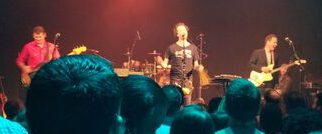
[ATTENDED: November 1, 2018] Guster        

It had been over two years since we’d since Guster and we were going through some withdrawal.  So it was pretty exciting that they were starting their latest tour at out favorite club in Jersey City.

We’d never seen them at the beginning of a tour before and I have to say the rest does them well.  They seemed energetic (which they usually are) but more importantly everyone’s (especially Ryan’s) voices sounded amazing–best I’ve ever heard them.

They have a new album coming out in January so we thought it might be a show of all new songs . But it wasn’t.  They played two brand new songs (and none of the singles that they’ve released so far).  The rest of the show (all 23-2 songs + two improvs) were familiar and more than welcomed.

When we saw them last time, we had seen them three times in 14 months and during those three shows they had played a ton of songs that we hadn’t heard before (or not since a decade earlier). So this show was a lot more songs that we’ve heard (which is still fine).  But with a few that were more or less new.  And of course those wonderful improvs. Continue Reading »

[ATTENDED: November 1, 2018] Zac Clark

Thursday nights are bad music nights for us.  C. and I have a Boy Scout meeting.  During Field Hockey season, T. has practice (or in this case a party).  So arrangements must be made.

We thought the Guster show started at 8:30, which would have given us just the right amount of time to drop of T and get to the show.

But then they moved the show up to 8.  (Irritatingly, Guster had malfunctions with their gear so they didn’t go on until 9:30 anyway).  If there was easy parking we would have made it fine.  But Jersey City on a Thursday night was something of a zoo and it took us fifteen minutes to find a spot (there was a potter’s wheel in the garbage which I seriously considered taking).  Then we had to walk the 8 or 9 blocks (and we had a delicious slice form a gourmet pizza place on 5th) and after security and bathrooms, we basically walked in and heard two and a half songs from Zac Clark. Continue Reading »

SOUNDTRACK: ELI KESZLER & SO PERCUSSION-“Archway” (Field Recordings, July 12, 2013).

This Field Recording [Eli Keszler & So Percussion: Making The Manhattan Bridge Roar And Sing] takes place under the Manhattan Bridge. Installation artist and drummer Eli Keszler wonders, When does an instrument become a sculpture?  Or can it become something architectural?

I didn’t know Eli, but I know his partners Percussion [Eric Beach, Josh Quillen, Adam Sliwinski and Jason Treuting] from a fantastic Tiny Desk Concert.  But this was my first exposure to them in the real world.  Their combination of crotales and big strings is at once bizarre, otherworldly, interminable and very cool.

There is magic in pure sound. And few know that truth as well as the quartet called So Percussion and the installation artist and drummer Eli Keszler — artists who, before this spring, had never met. We thought that they might find kindred spirits in each other.  So as a matter of artistic matchmaking, we at NPR Music decided to invite them to meet and collaborate on a new work that would have its world premiere at Make Music New York, the annual summer-greeting festival of free outdoor concerts across the city. And along the way to creating a world premiere, they brought a New York landmark in as a sixth instrumental partner: the Manhattan Bridge. They named their piece Archway.

So Percussion says that they wrote this piece just for the installation.  The drummers are present at their drums, but what about the rest?

Using a scissor lift, Keszler and an assistant began the long process of fastening piano wires attached to two large weighted boxes to the tops of lampposts near the DUMBO Archway beneath the bridge. More wires stretched from one of the lampposts up to the Manhattan Bridge itself.

The piece juxtaposes light otherworldly rings and deep resonating, almost mechanical lows.   Complete with occasional drum smacks.

By the time that their performance rolled around at 6:30 PM, Keszler and So Percussion created fascinating layers of sound. The shimmering, nearly melodic lines produced by bowing small cymbals called crotales offset sharply articulated snare drums and the grunting roars, squonks and groans of the piano wire installation. It was urbane and thoroughly urban music for a signature city setting.

And so for about 11 minutes you get a combination of low grunting sounds–the engines or the wires?–and chiming crotales.  Occasional snare hits punctuate the sound.

It starts with the mechanical sounds and the sounds of the crotales reverberating.  About 3 minutes into the piece a snare drum and rhythm is added, but very minimally and only for a instant.   Around 4 minutes the drummers start adding more percussive and less tonal sounds, but that is brief and soon enough everyone is doing his own thing, while Keszler plays a very jazzy style of drum on the drum and crotales.  Others are hitting snares and sides of drums.

But by the 10 minute mark it is a full-on drum solo with the gentlest/flimsiest drum sticks around–making little taping sounds (but a lot of them).

I feel like not enough is made of the piano wires –I would love to hear more from them.  I assume that in a live setting all of the cool sounds (ones that become more audible around the 10 minute mark are just reverberating around and around the arch–something that even the best mic’s can;t pick up adequately.

It’s still neat to watch, though.

[READ: January 28, 2008] “The Only Sane Man in a Nuthouse”

This is an excerpt from And the Hippos Were Boiled in Their Tanks, a novel he wrote with Jack Kerouac.  They alternated chapters.  It was written in 1945 but unpublished until 2008.

On a Wednesday night, he went out with Al, Ryko and Phillips.  Agnes didn’t want to join them–she was broke–some people have some pride.  He joked at Philip that he was an artist so he didn’t believe in decency, honesty or gratitude.

They went to diner and a movie and then went to MacDonald’s Tavern, which is a queer place and it was packed with fags all screaming and swishing around.

The rest of the story is a tale of an older gay men checking out the younger men, straight men howling for women, and men hitting on anyone that moves. Continue Reading »

SOUNDTRACK: THE CIVIL WARS-“Kingdom Come” (Field Recordings, November 8, 2012).

I discovered The Civil Wars after they had broken up.  Which is such a shame as they make such beautiful music.

They were Joy Williams and John Paul White and

the two [had] built a gentle, harmony-rich folk-pop sound in which warm chemistry more than counteracts the tension under the music’s surface. Though not a couple themselves — each is married, and Williams just had a baby — they convey many hallmarks of a loving union, particularly in the way she stares at him sweetly as they sing.

That staring is really uncanny–she seems so happy with him.  So it is amazing that at the time of this airing

Williams and White announced that they’ve canceled all of their tour dates in response to “internal discord and irreconcilable differences of ambition.” This, naturally, has fueled talk of a breakup — the assurance that “our sincere hope is to have new music for you in 2013” doesn’t specify whether that music would be made together or separately — which is a pretty crummy development

This Field Recording [The Civil Wars: A Song Of Loyalty, Before It’s Tested] was done in (presumably) happier times — during the Sasquatch! Music Festival in George, Wash.

The pair sing in a field of grapevines.  Just as John Paul arrives, the wind picks up incredibly, almost comically.

Amazingly, given the setting, this song sounds fantastic.  I love that you can hear whistling wind faintly (it might even be cooler if the wind was a bit louder).  But you can see the grapevines (and their hair) blow as the wind picks up.  But their voices and guitar sound perfect.

This song, like every song from The Civil Wars is wonderful.  Their voices are just magical together.  Even if there’s not a lot going on musically (it’s a single guitar although the melody is great), it’s the way they loop their voices together that is just out of this world.

I love them on record, and they sound even better here–White just lets his voice soar at one point and it’s fantastic.

[READ: January 12, 2017] “Back the Way You Went”

I was really puzzled by this story.  I couldn’t tell if it was one story with three parts or three separate stories.  I hoped it was three separate stories because the three pieces don’t seem to go together at all.  But at the same time, the internal parts of each story isn’t entirely coherent either.

Garland
D and F take a woman with them on a weekend getaway.   The woman’s mother recently died.  They go to a honeycomb.  Bees stream through the streets and the night.  D and F are bees too.

But they aren’t, of course.  Because the next day they ride bikes (the woman never learned and is quite bad at it).

Years later she wonders “what it was like for D and F to be thugging her around.”  Thugging?

The next paragraph is a flashback and is a good one.  But each paragraph seems to be separated from each other.  The title appears in the body.

Mexico
In this part “they” go to visit Dad in a home.  He is  in a room with a man whose eyelids don’t close–doctors don’t want to touch them in case they stayed permanently closed.

One Sunday they were coming home from visiting Dad–it was no different from any other visit. but her insides had gone bleak and dangerous. She sat in the back of the taxi thinking about an art work she saw in Mexico

The title of this piece appears in this section as well.  And, again, I enjoyed the part about the art piece and I enjoyed the way her dad tells her this bon mot, but I don’t see how they connect

Trouble in Paradise
Her mother in law Verna is four feet nine.  She feels big and bestial hugging Verna.  Her own mother was also short, but otherwise unalike. She is unlike her own mother except that they both think she needs to shop for clothes because they don’t like the way she dresses.

Vera is telling stories about her best friend Mildred who died.

But the narrator is thinking back to drying dishes with her own mother.

And then the narrator snaps out of it and asks Verna a question about Mildred which she finds quite surprising.  The ending in which she mentions the filmmaker Lubitsch, is just as puzzling as all the rest f the story(ies).

SOUNDTRACK: JOHN CARPENTER-“Halloween-Main Title” (1979).

This song is so wonderfully creepy.  Even some 40 years after it was made, it still can give you shivers.

It opens with that piano melody in 10/8 time.  It adds minor key synth chords.  And it keeps going–morphing, changing slowly but never straying far from the original.  It adds intense strings as it progresses.  And all along it has this ticking metronome that is going very fast–much faster than anything else in the song, like a ticking time bomb.

Somewhere in the middle of the song a drum beat is added.  But it’s not so much a drum beat as it is a footstep.  It’s subtle at first–you kind of feel it in there.  You don’t really notice it.  But when the music all drops away at 2:30 to just the piano and the ticking, that footstep is there with you.

Don’t settle for covers or samples.  Don’t accept the version that has the thumping drum right from the start.

Take that late-1970s recording, that old quality, the weird drum footstep sound, it’s all perfect.

It’s the original or nothing.

[READ: October 31, 2018] “The Pale Man”

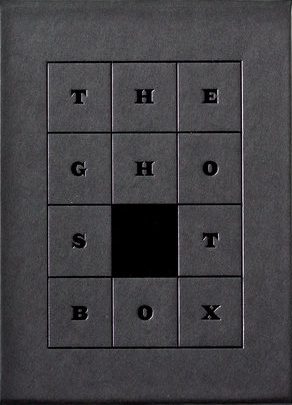
Just in time for Halloween, from the people who brought me The Short Story Advent Calendar and The Ghost Box. comes Ghost Box II.

This is once again a nifty little box (with a magnetic opening and a ribbon) which contains 11 stories for Halloween.  It is lovingly described thusly:

The Ghost Box returns, like a mummy or a batman, to once again make your pupils dilate and the hair on your arms stand straight up—it’s another collection of individually bound scary stories, edited and introduced by comedian and spooky specialist Patton Oswalt.

There is no explicit “order” to these books; however, Patton Oswalt will be reviewing a book a day on his Facebook page.

Much respect to Oswalt, but I will not be following his order.  So there. Continue Reading »

SOUNDTRACK: AMIR ELSAFFAR & TWO RIVERS-“Hemayoun” (Field Recordings, July 3, 2013).

I was pretty excited to see the start of this Field Recording [Amir ElSaffar & Two Rivers: Golden Sound In A Gleaming Space] because it begins with hammered dulcimer and oud.  I have never seen these two instruments used in jazz before.

But once the band starts the jazz pushes out he Middle eastern instruments somewhat.

The oud is certainly drowned out by the horns, but you can hear it plucking away.  And the hammered dulcimer is hardly used at all.

I had never heard of the participants although apparently

The session had the feeling of a reunion. ElSaffar — a trumpeter and santur (hammered dulcimer) player who was born near Chicago to an Iraqi father and an American mother, and who grew up immersed in both cultures — had recently moved from New York to Cairo to pursue his work with Arab classical music. But this group with Ole Mathisen on saxophone, Zafer Tawil playing oud, Carlo De Rosa on bass and Nasheet Waits on drums shifted into Two Rivers gear immediately.

At 3:49 when the sax solo starts the minimal oud is used more to keep the beat than anything.  At 5:10 the trumpet returns playing a riff with the sax.  By around 7 minutes its all trumpet and drums (some good improv) with the bassist adding rhythm but playing very hard and being barely heard.  At around 8 minutes there’s a minimal oud solo that runs through to the end of this song.  This is particularly cool, although I kind of wish the other guys didn’t drop out entirely–I’d like to see the oud share the stage with the traditional jazz instruments.

I love that the music has non-Western instrumentation but I feel like it is underutilized.  But maybe that’s not the point

 ElSaffar has found a beautiful and singular way of pairing the sibling spirits of jazz and the classical maqam system of the Arab world, with their shared spheres of improvisation, deep knowledge of tradition and urge to keep innovating. Two rivers, but they lead to the same ocean.

[READ: October 22, 2017] “The Sinking of the Houston”

O’Neill has a way with making stories amusing despite the tension underneath.

It begins with a defense of sleep. The narrator says when he became a parent of young children, he became an opportunist of sleep: “I found myself capable of taking a nap just about anywhere, even when standing in a subway car or riding an escalator.”  But when the boys grew up into “urban doofuses neurologically unequipped to perceive the risk incidental to their teenage lives,” sleep became much harder to get.  He would lie awake until they were all home, and then every sound in the house would be meaningful.

Then comes the phenomenon of Dad Chair, a black leatherette armchair which he has designated as his haven.

It has worked pretty well except when the boys disrupt the peace.

The middle son asks if he’s heard of Duvaliers, the dedicators of Haiti.  The dad says he knows all about them–they were horrible.  When the boy tries to tell him more details, he retorts: “I lived through it ! I don’t want to discuss it!”  The boy logically says you didn’t exactly live through it.

Another son asks where East Timor is.  They all want to talk about atrocities.  But he has a new philosophy–Cest la Vie–it works pretty well. Continue Reading »

SOUNDTRACK: BAUHAUS-“Bela Lugosi’s Dead” (1979).

This was Bauhaus’ first single–a nine minute ode to being undead.  It’s considered the foundation of Goth music.

“Bela Lugosi’s Dead” starts with noises and feedback–echoing guitar scratches and atmospherics.

After about a minute and a half the simple three note bass line begins–slow and menacing.

Another minute later the vocals begin–Peter Murphy’s low voice reciting the lyrics.

White on white translucent black capes
Back on the rack
Bela Lugosi’s dead
The bats have left the bell tower
The victims have been bled
Red velvet lines the black box
Bela Lugosi’s dead
Undead undead undead

The guitars are primarily high notes as the chords change and for a brief moment in the chorus, the three-note melody goes up in stead of down.

The remainder of the lyrics:

The virginal brides file past his tomb
Strewn with time’s dead flowers
Bereft in deathly bloom
Alone in a darkened room
The count
Bela Lugosi’s dead
Undead undead undead

Around five-minutes the song quiets down to just drums and echoing scratched guitars.  Around seven minutes, Murphy starts wailing “Bela’s undead.”  The last minute or so returns to the beginning with echoed guitars sounds and scratches.

Lo-fi creepiness.

[READ: October 29, 2018] “Uncle Tuggs”

Just in time for Halloween, from the people who brought me The Short Story Advent Calendar and The Ghost Box. comes Ghost Box II.

This is once again a nifty little box (with a magnetic opening and a ribbon) which contains 11 stories for Halloween.  It is lovingly described thusly:

The Ghost Box returns, like a mummy or a batman, to once again make your pupils dilate and the hair on your arms stand straight up—it’s another collection of individually bound scary stories, edited and introduced by comedian and spooky specialist Patton Oswalt.

There is no explicit “order” to these books; however, Patton Oswalt will be reviewing a book a day on his Facebook page.

Much respect to Oswalt, but I will not be following his order.  So there. Continue Reading »

SOUNDTRACK: BILL CALLAHAN-“Small Plane” (Field Recordings, November 11, 2013).

Many episodes in the Field Recordings series travel far and wide to exotic locations.  For this Field Recording [Bill Callahan Sings ‘Small Plane’ In A Serene City] Bill Callahan travel to exotic downtown New York City.

When we first approached Bill Callahan to do a Field Recording in New York City, we asked him if he had any special place in mind. His reply surprised me: “A community garden.” I guess I’d stereotyped him in my head, because after all those years of dark, thoughtful songwriting — first as Smog and then on the pensive records he’s made under his own name — I’d imagined a library, someplace quiet and dark.

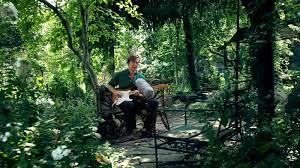
The video starts with the hustle and bustle of the city and then slowly moves into a quiet, peaceful garden, complete with a pond (and turtles jumping into it), birds, tomatoes, and a microphone.

As it turned out, the brightly lit 6th & B Community Garden, with its lush greenery and mellow wildlife, provided just the right setting. The noise of cabs, buses, trucks and the occasional siren wound up punctuating Callahan’s calm, deep baritone, but he makes it easy to ignore.

He sings about being a lucky man flying this small plane.  And he setting compliments his contentment.  It’s just him and his quiet electric guitar and all is well.

[READ: October 26, 2018] “Waugh”

Last week’s New Yorker story was called “Flaubert Again.”  This week’s is called “Waugh.”  The last one was tangentially about Flaubert but this one is (as far as I can tell) not about Evelyn Waugh at all.

This was one of those fascinating stories that was very simple but in which all of the details about the story were so vague that I couldn’t figure anything about it for many many pages.

This is a story of five unrelated boys who live together–they all pull tricks to make rent.  Rod was their defacto leader–not their pimp exactly, because he tricked too, but more like an elder watchmen.  He was tough and very strict.  You could be kicked out of the house for many infractions, and at the first sign of Sickness.

I assumed that this story was set in the 1970s in San Francisco.

Then one of the boys is named Google, so clearly it can’t be set in the 70s. Continue Reading »

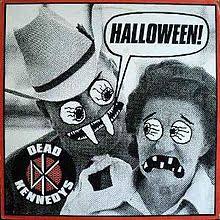
SOUNDTRACK: DEAD KENNEDYS “Halloween” (1982).

This Halloween song is also about Halloween.  It comes from Dead Kennedys’ final album.

It’s breakneck paced, snarky and full of socio-political commentary, as you might expect.

Because you’re still hiding in a mask
Take your fun seriously
No, don’t blow this year’s chance
Tomorrow your mold goes back on
After Halloween, after Halloween
You’ll go to work tomorrow
Shitfaced tonight
You’ll brag about it for months
“Remember what I did, remember what I was, back on Halloween?”

The body of the song is pretty simple musically (although the guitar gets to go a bit nutty here and there).  But it’s as the song reaches the end that it gets pretty intense.

Much like the way Ministry’s “(Everyday is) Halloween” mocked those for conforming, this song takes it one step further.

Because your role is planned for you
There’s nothing you can do
But stop and think it through
But what will the boss say to you?
And what will your girlfriend say to you?
And the people out on the street they might glare at you
And whadaya know, you’re pretty self-conscious too?
So you run back and stuff yourselves in rigid business costumes
Only at night to score is your leather uniform exhumed
Why don’t you take your social regulations, shove ’em up your ass?

So yea, this one is a but less suntle than Ministry (who would’ve’ thought anything could be?)

[READ: October 28, 2018] “Abraham’s Boys”

Just in time for Halloween, from the people who brought me The Short Story Advent Calendar and The Ghost Box. comes Ghost Box II.

This is once again a nifty little box (with a magnetic opening and a ribbon) which contains 11 stories for Halloween.  It is lovingly described thusly:

The Ghost Box returns, like a mummy or a batman, to once again make your pupils dilate and the hair on your arms stand straight up—it’s another collection of individually bound scary stories, edited and introduced by comedian and spooky specialist Patton Oswalt.

There is no explicit “order” to these books; however, Patton Oswalt will be reviewing a book a day on his Facebook page.

Much respect to Oswalt, but I will not be following his order.  So there. Continue Reading »