Feeds:
Posts
Comments

Archive for the ‘Word usage’ Category

SOUNDTRACK: BROKEN BELLS-Broken Bells (2010).

When I first played this disc I was really disappointed by it.  I’ve grown to expect crazy magic from Danger Mouse, and I assumed that this collaboration with James Mercer of The Shins would be crazy awesome.  But it seemed very mellow to me.  Mellow in a way that just kind of sat there.  So I put it aside for a while.

Then I listened to it again a little later and I found that I really liked it this time.  In fact, it rapidly grew into one of my favorite releases of 2010.

The disc is a wonderfully paced mixture of acoustic guitars, interesting keyboard sounds and, often, downright bizarre electronic choices (subtle, yet bizarre).  The weird sounds that open the disc, a kind of backwards keyboard, are disorienting but also very catchy.  And the song itself is instantly familiar.  It’s followed by “Vaporize” a simple acoustic number that bursts out with some great organ and (very) distorted drums.  It also features a fascinating horn solo!

“Your Head is on Fire” settles things down a bit with a mellow track which, after some cool introduction, sounds like a  pretty typical sounding Shins track (ie, very nice indeed–and more on this in a moment).

“The Ghost Inside” feels like a ubiquitous single.  I’m not sure if it is or if it’s just so catchy (with dancey bits and hand claps and a great falsetto) that it should be everywhere.  “Sailing to Nowhere” reminds me, I think, of Air.  And the great weird drums/cymbals that punctuate each verse are weird and cool.

One of the best songs is “Mongrel Heart” it opens with a western-inspired sound, but quickly shifts to a quiet verse.  The bridge picks up the electronics to add a sinister air (and all of this is accompanied by nice backing vocals, too).  But it’s the mid section of the song that’s really a surprise: it suddenly breaks into a Western movie soundtrack (ala Morricone) with a lone trumpet playing a melancholy solo.  And this surprise is, paradoxically, somewhat typical of the disc: lots of songs have quirky surprises in them, which is pretty cool.

Having said all this, there are a few tracks where it feels like the two aren’t so much collaborating as just playing with each other.  And that may have been my initial disappointment.  I was expecting a great work from a combined powerhouse, and I think what we get is two artists writing great stuff while seemingly respecting each other too much to step on each others toes.

There is another Broken Bells disc in the works.  And I have to assume that they’ll feel more comfortable with each other and simply knock our socks off next time.  But in the meantime we have this really wonderful disc to enjoy.

[READ: October 21, 2010] The Broom of the System

It dawned on me sometime last summer that I had never read DFW’s first novel.  I bought it not long after reading Infinite Jest and then for some reason, never read it.  And by around this time I had a not very convincing reason for not reading it.  DFW seemed to dismiss his “earlier work” as not very good.  I now assume that he’s referring to his pre-Broom writings, but I was a little nervous that maybe this book was just not very good.

Well I need not have worried.

It’s hard not to talk about this book in the context of his other books, but I’m going to try.  Broom is set in the (then) future of 1990.  But the past of the book is not the same past that we inhabited.  While the world that we know is not radically different, there is one huge difference in the United States: the Great Ohio Desert.  The scene in which the desert comes about (in 1972) is one of the many outstanding set pieces of the book, so I’ll refrain from revealing the details of it.  Suffice it to say that the desert is important for many reasons in the book, and its origin is fascinating and rather funny. (more…)

Read Full Post »

[LISTENED TO: Week of October 10, 2010] David Foster Wallace interviews

There will soon be a group read of Consider David Foster Wallace, a book of essays about, yes, David Foster Wallace.  In a sort of preparation for the group read, I decided to immerse myself in the available audio files online.

The David Foster Wallace Audio Project hosts quite a vast collection of audio files, including interviews, readings and eulogies.  Even the Howling Fantods points to it.

I started with the interviews.  They cover the period from Infinite Jest to Consider the Lobster.  For the most part, the interviews took place on various NPR stations.  There are not a lot of details given about the items on the site (which is the only flaw that I can see with the site), but you can more or less tell from the titles given what book is the cause for the interview.

I know that DFW was not a fan of interviews, yet I can’t help but be surprised at how few interviews actually seem to be extant (or at least preserved online).  You can see a list of all of the interviews on the site.  I’m listing and giving very brief notations for some of the longer interviews, but I just don’t have the time/inclination to go into great detail. (more…)

Read Full Post »

[LISTENED TO: Week of September 20, 2010] Ulysses 17-18

The final two Episodes of the Ulysses audio book were a mix of nothing new and massive revelations.

Episode 17, the catechism, doesn’t reveal all that much in the reading.  It’s a fairly straightforward Episode, so there’s not very much in the actual reading that would impact it.  One or two things do become somewhat clearer with the audible emphases but questions like this one are still a beast to unpack:

What counterproposals were alternately advanced, accepted, modified, declined, restated in other terms, reaccepted, ratified, reconfirmed?

Although in Episode 18, Molly says:

he says hes an author and going to be a university professor of Italian and Im to take lessons what is he driving at now

So I guess the Italian lessons plan is settled?  Which gives us some account of Stephen’s future.

But back in 17, this time through I became more aware of the

interment of Mrs Mary Dedalus, born Goulding, 26 June 1903.

So Stephen has been “in mourning” for almost a year.  Is that standard for Ireland at the time?  And how interesting it is that

Rudolph Bloom (Rudolf Virag) died on the evening of the 27 June 1886.

Their parents died on almost the exact same date (different years, obviously).  This is another interesting similarity that is not directly mentioned in the Q&A. (more…)

Read Full Post »

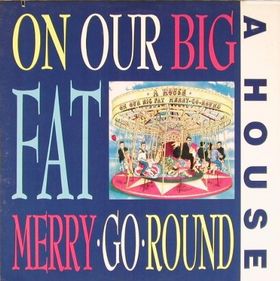
SOUNDTRACK: A HOUSE: On Our Big Fat Merry-Go-Round (1988).

I first heard of A House when “Call Me Blue” came on a Sire records sampler (Just Say Yo).  This was a good sampler of college rock music circa 1987, and “Call Me Blue” stood out for me.

I had kind of forgotten about them until I Am the Greatest came out, which I enjoyed very much.  I have since gone back and bought their back catalog.  This first album sounds so very much like college music circa 1987.   It’s not anywhere near as weird as I Am the Greatest.  In fact, it’s almost quaint in its college (or Modern as they called it back then) rock sound.

I think that if I had gotten it back then, it would have been a favorite of mine.  Listening to it today, it brought back memories of that era, even though this album wasn’t part of that era for me–it just evokes that time so perfectly.

“Call Me Blue” is still a great track.

[READ: August 20, 2010] The Mezzanine

I learned about this book from my friend Rich.  He raved about the minimalism of it. (1)

(1. My copy is dated from 1994.  Clearly back then I thought it was a great idea to sign and date all of the books I bought.  Since then, while working at a library, I find the practice kind of foolish.  However, I do appreciate the fact that I know when I bought it.  In some ways I wish that I had put a post it note with the date of purchase on all of my books).

I read it back in 1994 and enjoyed it. And since I am in the middle of Ulysses, I thought it would be a nice chaser. (2)

(2. In the comments for Ulysses here, the other readers mention that they are reading other books, too.  And I like the idea of the word “chaser” in describing it).

The reason I thought it would make a good chaser is that it is only 135 pages long.  And as I remembered, the action of the book takes place entirely on an escalator ride from the ground floor to the mezzanine of the narrator’s office. (3).

(3. Although that is literally true, the narrator reflects back upon many many events in his life, and almost all of them have taken place some time in the past–going back as far as to when he was a kid). (more…)

Read Full Post »

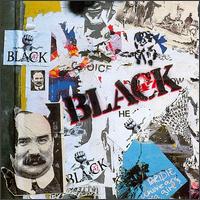
SOUNDTRACK: BLACK 47-ep (1992).

The name Black 47 comes from the Irish famine (and it’s mentioned in Episode 12 of Ulysses.  I saw Black 47 on tour in Boston just before this EP came out.  They played a fantastic live set and had a ton of energy.  I was really excited to ge the EP.  And I liked it very much.

Then I got a new roommate who was from Ireland, staying in the US for school.  And man did he hate Black 47.  He hated the “fiddle dee diddle dee” and the “Bridie!” and oh so much about the band.   And now when I listen to it I hear all of his complaints and I like the disc a bit less.

It’s true, the single “Funky Ceili” is pretty over the top with the Irishyness, and having a chorus of fiddle dee diddle dee didley dee is kind of obnoxious.  But the song still stands pretty strong.

I am much more taken with “James Connolly” a rousing rocker with historical awareness.  I can do without the over-earnest bit about “Lily” but the rest is pretty great.

Overall the disc has a bit too much in the wailing saxophone department.  I don’t dislike the saxophone in general, but there’s a bit too much of it on here.  Larry Kirwan’s voice tends to veer into some weird whiny territory (once or twice I thought he sounded like Robert Smith), but his main singing voice is just fine, especially when he’s rocking out.

The band is still playing today and in fact released an album this year, although I haven’t listened to them much since the 90s.

[READ: Week of August 2, 2010] Ulysses: Episodes 10-12

Much like last week’s reading I really didn’t enjoy this week’s very much on the first read through.  On my second skim through the chapters, I got a lot more out of it.  It feels like there’s a lot of “noise” in the chapters–he’s including little bits of everything–but if you can cut through the chatter, you can find the meat.

Episode 10, which was from many different perspectives, was a nice break in the stream of consciousness.  But Episode 11 was a dry slog about music and Episode 12, while often kind of funny was (I assume deliberately) long-winded with many man lists and all kinds of esoterica about Ireland. (more…)

Read Full Post »

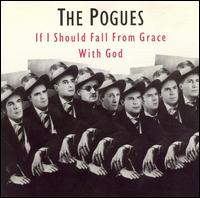
SOUNDTRACK: THE POGUES-If I Should Fall From Grace with God (1988).

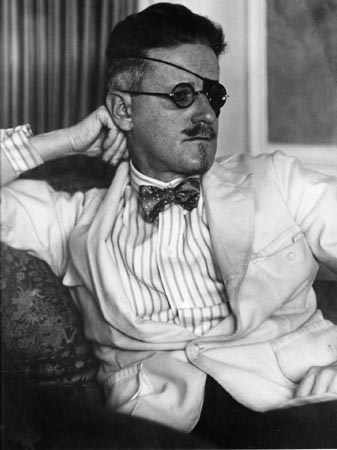
So the cover of this album has James Joyce on it (and a hilarious pastiche of the rest of the band).  I guess we know what we’re in for, then.  This is the Pogues third album and the one that tamed the wildness of their first shambling discs into a (somewhat) presentable collection of songs.  And, jaysus, it’s fantastic.

The Pogues seamlessly blended punk and traditional Irish music (and on this disc they expanded into latin & middle eastern motifs too).  The first track opens with a fast paced Irish whistle playing what is pretty darn close to a jig.  And then Shane MacGowan (whose teeth are not to be believed–or if you are lucky, not to be seen) sings his slurred, fantastic lyrics.  MacGowan always presented such a contradictory figure for this band of well dressed resctable players.  And it’s often confusing wondering how he became the front man of this band.  But he adds that certain something to make the band unforgettable.

“Fairytale of New York” is one of the most gorgeous, sad Christmas anthems ever.  It’s a duet with the much missed Kirsty MacColl and it’s moving and charming, even with the lyrics: “you scumbag, you maggot, you cheap lousy faggot, happy Christmas me arse, I pray God it’s our last.”

Then you get a crazy instrumental, “Metropolis” fast paced, manic energy and a great riff (and of course, let’s not forget the quoted musical passage too).

What’s surprising is when you get a tender ballad like, “Thousands Are Sailing.”  Lyrically it is stunning, and you wonder why is Shane singing it with that slurry voice of his.  And then you realize it works perfectly as a drunken lament.  And then you get to the chorus, and you stop caring and just enjoy the song.

They even throw in a couple of traditional songs, like “South Australia” and “Medley” (which incorporates “Rocky Road to Dublin.”)  But after “Fairytale,” I think my favorite track is “Fiesta” which is a Spanish/Mexican sounding song with loud horns and absurd faux Spanish lyrics.  Ole!

And, just so we know, it’s not all drinking and rollicking, Shane also wrote “Birmingham Six.”  “There were six men in Birmingham / In Guildford there’s four / That were picked up and tortured / And framed by the law / And the filth got promotion / But they’re still doing time / For being Irish in the wrong place /And at the wrong time / In Ireland they’ll put you away in the Maze
In England they’ll keep you for seven long days”

The Pogues would release two more albums before Shane MacGowan took off. And they’re all pretty darn good, but I’ve always been partial to this one.

[READ: Week of July 12, 2010] Ulysses: Episodes 1-3

This is my third time reading Ulysses.  The first time I was a freshman or sophomore in college and I signed up for a James Joyce class because, get this, the Canadian band Triumph had released a CD called Thunder 7 which was supposedly based on the 100-letter words in Joyce’s Finnegans Wake (which I had bought and found impenetrable).  Our teacher was intense and tried to scare everyone off (which worked for some, but not me).  The class was hard (first assignment : read The Odyssey over the weekend for a quiz on Monday).  I enjoyed Dubliners and Portrait of an Artist as a Young Man, but I thought Ulysses was pretty daunting.

I read it again when I re-took the class with the same teacher (not for credit this time, but because I wanted to, imagine that).  And that time I learned to really appreciate what Ulysses had going on for it.  I was also inspired by it to try to write challenging fiction, paying careful attention to every single word, and even possibly using different writing styles in the same book.  (The world appreciates that that never panned out).

But so the careful attention thing: Joyce spent seven years working on Ulysses.  Every single word was charged with meaning.  He even made up his own words.  And it’s very apparent that he was the inspiration for countless modern authors (for better or worse).

I’m excited to pick the book up again.  In part, because it was ranked number 1 on the MLA list of books, but also because for twenty-some years I’ve felt the book was fantastic.  And I wanted to see if I would enjoy it without guided instruction.

I was curious about which edition to read.   Since my class, when there was only really one edition available, many many editions have been published.  There’s a great discussion about this at Infinite Zombies, and I considered getting the third one Judd mentions.  But when I consulted with my old professor, he said the Gabler edition is still the best, so I went with that one.  And that edition is littered with all the notes I took from class and from the supplemental resources.

I decided not to read the supplemental resources this time (although I can;t help but look at my notes), to see what I can get from the story AS A STORY.

I remember a bunch from the class, but one thing that I distinctly remember is that to get everything out of Ulysses, you need to understand Catholicism (the mass in particular), The Odyssey, European history–especially Irish history, and popular Irish culture circa 1920.  It also helps to know Latin.  And these are all things that Joyce would have known and his audience probably would have known.  Every year we move away from its publication, means we know less about what he was writing about.  But that’s all the little details and jokes and blasphemies.  I wanted to see (with some background, which certainly gives me an advantage) if I could enjoy the story without all the help.

So… (more…)

Read Full Post »

SOUNDTRACK: MASTODON-Leviathan (2004).

This is the CD that started it all.  Well, for me and Moby Dick- related music, anyhow. My friend Andrew asked if I would be reviewing it along with Moby Dick.  And, yes I am.

Leviathan is sort of a concept album about Moby Dick. I say sort of because it’s not entirely about Moby Dick.  The opener, “Blood and Thunder” features the chorus: “White Whale.  Holy Grail.  And it also features lyrics that seem to come straight from the book: “break your backs and crack your oars, men.”  There’s also the tracks “I am Ahab” and “Seabeast,” the latter features the lyrics: “Dear Mr Queequeg you have been informed your life’s been saved”

And yet, not everything is about Melville’s saga: “Island” bears no resemblance that I can see and the final track, a slow instrumental is called Joseph Merrick (who was the elephant man).

Musically the disc runs from bludgeoning metal (“Island”) to complex and intricate bludgeoning metal (“Iron Tusk,” which features a stereophonic drum solo opening).  “Blood and Thunder” has some great catchy riffs with some vocals that demand a lyric sheet for clarity.  “I am Ahab” features some extended vocal notes!  But there’s more to it than that.  “Seabeast” has a great slow intro guitar solo and features a two different vocalists to very good effect.

And the whole disc is chock full of time changes, crazy drum fills (how can he play so many different drums so quickly?).  “Megalodon” has a great odd guitar riff in the middle break section (and has nothing to do with Moby Dick at all).

As you near the middle of the album you get a couple of amazingly complex tracks.  “Naked Burn” features a great melodic middle section (coupled with really catchy vocals, too).  And the highlight is the thirteen plus minute “Hearts Alive.”  It begins as a very pretty acoustic guitar piece.  After about two minutes the heavy guitars kick in and there’s several different middle sections with varying degrees of melody.  By the midway point we’ve heard a few more very beautiful picked guitar sections, until it ends with some strong heavy guitar chords that slowly fade away.

So it’s a super heavy progressive rock/speed metal concept album for people who don’t like real concept albums (but who like their metal literate).  Who would have guessed it would have made so many best of the year lists?

[READ: Week of June 28, 2010] Moby-Dick [Chapters 111-End]

The end is here and BOY did I not see that coming.  I honestly had no idea how the book ended (how is it I knew the basics of the story but didn’t know the ending?  Talk about everyone agreeing to the spoiler alert!).  The other thing that surprised me was how damned exciting those last 70 pages were.  Now it could be a simple build up from the slowly paced early chapters–we were all lulled by the waves and the diversions–but man, when Melville wanted to, he produced the goods.  If you want young people to read this book, just assign them the last 70 pages.  I realize that all the art and such will be lost, but if they read just the end parts, they’ll come away with a much better perception of the book, and maybe they’ll want to read the rest later.  [I’m not a fan of abridged things of course, so I’d want them to read the original full text, just the end of it].

And I absolutely cannot believe [spoiler alert–okay the whole post is a spoiler, even if I didn’t know, the book is over 150 years old, so chances are you may have heard…] (more…)

Read Full Post »

SOUNDTRACK: BBC Sessions (various).

Many many bands that I like have recorded tracks for the BBC.  And after several sessions, they tend to get released as BBC Live or BBC Sessions discs.  In the last few years, I’ve gotten discs from the Cocteau Twins, Tindersticks, The Beautiful South, Belle and Sebastian and Therapy?  One of the first ones I’d every gotten was The Smiths’ Hatful of Hollow.

I’ve always loved these releases.  The recordings are “live,” even though they’re not in front of an audience.  For the most part they don’t vary greatly from the originals (that’s not always the case, mind you, but most of the time it’s true.)

What makes these releases so great is that by the time the bands do these recordings for the BBC, the original album has been out a while and the band has toured a bit.  So, they know the song backwards at this point, and they usually record a version that’s faithful to the original but a little more playful.  I always thought that the Hatful of Hollow versions of songs were better than the originals.  It was many years before I understood why there were two “official” releases of the same songs.

There are so many BBC recordings out there (this is an incomplete list).  If you like a British band, chances are they recorded some sessions.  And I don’t know if the BBC is hard pressed for money or what, but they seem to be releasing them by the handful lately.  The biggest problem of course is that most of them are not available in the States (at least for a reasonable price).  And that’s a drag.  So find them used and enjoy!

[READ: May 19, 2010] Girl with Curious Hair

This is DFW’s first collection of short stories.  I clearly bought this copy soon after finishing Infinite Jest.  I was delighted to find as a bookmark an old stub from a sub shop that I used to go to all the time when I worked in Cambridge, Ma.  I wonder if that sub shop is still open.  It was in Brighton, was more or less on my way to work, had a predominance of Irish products and had delicious subs that were almost cheaper than buying the stuff yourself.  I had checked off a few stories in the table of contents (most of the shorter ones) but that stub brought back more memories than the stories did.  I didn’t even recognize the ones that I had apparently read.

And the stories are pretty memorable.  So I wonder if I didn’t read them at all.

The first story is “Little Expressionless Animals” (or, the Jeopardy! story).  In fact, if I may back up, the whole collection is really rife with pop culture, especially television references.  In David Lipsky’s book, Although of Course You End Up Becoming Yourself , DFW states matter-of-factly that he has an obsession with TV and pop culture, so this shouldn’t be surprising.  But for me it was disconcerting to have the pop culture not incidental or as a set dressing, but absolutely central to the stories. (more…)

Read Full Post »

SOUNDTRACK: THE BEATLES-A Hard Day’s Night (1964).
Despite my CD player trying to eat this disc, I still managed to listen to the whole thing.

This album came out just a few months after their second disc.  But it is quite a leap forward musically.  Rather than the simple rock and roll sound of the first two discs, there’s more depth of sound (attributable to George’s 12 string guitar?)  Perhaps also because of the use of the 4 track, rather than the 2 track mixer.  Also, Lennon and McCartney wrote all of the songs, so they weren’t bogged down by covers,

At first I thought that I had gotten to my first Beatles disc where I knew all the songs.  But that turned out not to be true.  I knew the first half of the disc (the songs that are in the movie).  But when we got to the second half (and I learned that the US version was different in that in included George Martin’s score for the movie (!)) there were a couple of tracks I didn’t know at all.

With the tracks sequenced as they are, you don’t get a big crunching finale at the end of the disc, like on the first two.  However, those first few songs are pretty classic (even if “Can’t Buy Me Love” completely contradicts the sentiment of “Money” from the previous album.  This is a really enjoyable fun disc from start to finish, even the songs I didn’t know.

I was pretty certain that after this disc, I’d recognize all of the songs.  But I had one more surprise waiting for me.

I also brought the movie home from the library one night but I couldn’t get through most of it.  Guess you had to be there.

[READ: May 13, 2010] “The Flight Album”

This is a memoir of the a Vancouver author’s stay in New York City.   I wasn’t really sure how interesting this story would be, I mean, there are a million stories in the City, so why should this transplant’s story be worth reading?

The piece starts with the author’s awkward assimilation to New York (and the almost offensive Dave Chapelle joke she relates to a cabbie).  His mild reaction lets her know that maybe she can make it there.

For me the best part was the author’s insert of Shit: A Guide to Canadian Usage.  The most notable difference between Canadians and Americans, she has found, is that Canadians use the word “shit” all over the place, and in many ways that Americans do not (in fact it is more all purpose than fuck.  The things that started it all was her use of the phrase “What the shit.”)  It is quite a funny section. (more…)

Read Full Post »

When I started reading 2666, I didn’t know anything about Bolaño.  I didn’t even know any of his other books (except I had heard The Savage Detectives was excellent).  But I didn’t know anything about him, personally.

You shouldn’t need to know an author’s biography to appreciate a novel.  And that’s the case with Bolaño, certainly.  However, knowing his biography adds a new dimension to his work that explains why he writes what he writes.

So, the brief outline: (more…)

Read Full Post »

« Newer Posts - Older Posts »