Feeds:
Posts
Comments

Archive for the ‘Word usage’ Category

earnestSOUNDTRACK: THE SILVER MT. ZION MEMORIAL ORCHESTRA & TRA-LA-LA BAND-Born into Trouble as the Sparks Fly Upward [CST018] (2001).

Born_into_Trouble_as_the_Sparks_Fly_UpwardNotice that the band’s name has gotten longer.  That could be because they have added three new members (which means they are slowly growing to be the size of GYBE anyway). In addition to Efrim, Thierry and Sophie, there is now Becky Foon on cello, Ian Ilavsky on guitar and organ and Jessica Moss on violin (all Constellation stalwarts).

The first song is the nine minute “Sisters! Brothers! Small Boats of Fire Are Falling From the Sky!”  Echoed drum sounds slowly grow louder before a slow violin plays a mournful melody.  But with the new members, there is now a cello to accompany the violin, making this album sound even more classical.  Three minutes in, the piano takes over (and the strings slowly fade).  The piano is a bit prettier and more accomplished sounding (even if it has only been a year since the last album).  Despite the addition of all of the extra instruments, the song still veers pretty far from GYBE territory.  It feels very acoustic (what with the piano), and while the song is repetitive it never feels like it is epic or building towards something–it just grows bigger and more beautiful as more instruments enter the mix.

“This Gentle Hearts Like Shot Bird’s Fallen” opens with what sounds like bird noises, but may actually be a child.  The song is primarily echoed guitars which lay a foundation over which the violins and cellos play slow mournful notes.  The song grows as more instruments  play along, including some gentle percussion, and it all seems to end too soon.

“Built Then Burnt [Hurrah! Hurrah!]” is a spoken piece.  Efrim doesn’t recite the words–it sounds like a child (but may be a young woman).  The reading is dramatic and works very well with the slowly building strings that comprise the bulk of this song.

some lines:

Why are we all so alone here
All we need is a little more hope, a little more joy
All we need is a little more light, a little less weight, a little more freedom.
….
Good words, strong words, words that could’ve moved mountains
Words that no one ever said
We were all waiting to hear those words and no one ever said them
And the tactics never hatched
And the plans were never mapped
And we all learned not to believe
And strange lonesome monsters loafed through the hills wondering why
And it is best to never ever ever ever ever ever ever ever ever ever wonder why

As that song fades, the aggressive strings of “Take These Hands and Throw Them in the River” take over. This song features Efrim singing in full voice–the recognizable voice of SMtZ.  On this song his voice is processed and echoed and so the strange timbre of his voice doesn’t quite register because it sounds so…unusual anyway.  I really enjoy the way this song sounds so much bigger than the rest.  At around 4 minutes, while the song begins to build –both instrumentally and vocally, new strings bring more intensity until the whole thing just fades away to the sounds of actual birds which chirp for about 2 minutes.

“Could’ve Moved Mountains…”is eleven minutes long and shows incredible restraint, especially in the vocals.  It opens with slow bass notes.  The whispered spoken vocals return and the song is kind of ominous..  About three minutes in quiet harmony vocals accompany him and soon after, strings are added and continue to grow louder.  The instrumental section is quite pretty although still melancholy.  Around 8 minutes in, a guitar riff begins playing a similar melody to the strings. It plays for a bit and then the strings rejoin the song, playing a more hopeful melody.  The song ends with some kids talking and singing as the song melds into….

“Tho You Are Gone I Still Often Walk W/You”  This song opens with piano and cello, a sad intro indeed.  I like that after a minute the song jumps keys unexpectedly while keeping the rhythm otherwise the same.  The song doesn’t vary much from this simple piano and strings feel although it ebbs and flows in intensity.

“C’monCOMEON (Loose An Endless Longing)” breaks the melancholy of the previous son with a big buzzy electric guitar chord.  Strings eventually come in and the song builds and builds, complete with interesting percussion.  This song is probably the closest to a GYBE song with a dramatic build and very satisfying chord progressions.  When the fast bass notes kick in around 3 minutes it seems like the song is going to grow even faster, but instead, it fades away to some ringing chimes–what sounds like a giant echo chamber (a really neat effect).  That calm is broken by a series of horns playing one note at a time, louder and louder (this whole middle section reminds me of the middle of “Atom Heart Mother” by Pink Floyd–in fact I have found a number of comparisons to some of Floyd’s trippier moments on this and other albums).  And then the drums come crashing back in.  It’s a very different song that resumes–loud bass, lots of drums and everything mixed loud enough to distort the sound.

The final song is “The Triumph of Our Tired Eyes.”  It opens with guitar harmonics and Efrim’s disatnat voice.  It’s a pretty and delicate song, joined by strings and a genuinely pretty vocal melody: “There’s beauty in this land, but I don’t often feel it.”  And as the strings swell and swell, the voices sing the refrain: “musicians are cowards” over and over.  The song and disc end on a surprisingly quiet and beautiful note.

When the songs ends, there’s a few seconds of children singing lyrics to the “Twinkle Twinkle Little Star” melody although the words don’t fit like: “when we finally cross the barricade…”

I really like the way this album plays with the new style of music the band has embraced but also admits some of the strengths from pretty much everyone else’s other band.

[READ: April 4, 2016] The Importance of Being Earnest–The Graphic Novel

This play is one of the great plays in English literature.  Oscar Wilde is at his best, writing witticism upon witticism–each line is a funny rejoinder to the previous one and the wit is infectious.

The story is fairly simple, but he adds so many twists that it’s almost easy to get lost in the story.  In fact, it’s entirely possible that reading the play is a sure way to get lost in the deceptions.  And that’s why this graphic novel is so excellent.

I’ve always maintained that it is difficult to “read” a play, especially if there are dozens of characters.  The short, one act plays that I’ve been reading over the last years are fairly easy to follow, but when you have 20 named characters in three acts, it’s not always easy to keep people straight.  And that’s why to really appreciate Shakespeare you need to see it.  Well, this graphic novel effectively performs the play for us.  The dialogue is exact and there are no changes from the original (except for any stage directions, which are left out of the text, but are presumably addressed in the art).

What’s (intentionally) confusing about this play is that the two main characters are trying to deceive other people about their identity.  Algernon Moncrieff and John Worthing are two gentlemen–well off, single, clever.  Algy talks about how he likes to go Bunburying.  Which means he has “invented an invaluable permanent invalid called Bunbury, in order that I may be able to go down unto the country whenever I choose.  …If it wasn’t for Bunbury’s extraordinarily bad health, I wouldn’t be able to dine with you.”  This comes up because John has informed Algy that he “has always pretended to have a  younger brother of the name Ernest, who lives in the [city] and who gets into the most dreadful scrapes.”

They have lies in common: each man lies to a group about a phony other person whom they use as an excuse for bad behavior. (they are old friends as well, of course). (more…)

Read Full Post »

mixeduop[LISTENED TO: December 2015] From the Mixed-Up Files of Mrs. Basil E. Frankweiler 

I was sure that I had read this book.  I have a copy of it and I knew the premise, but clearly, after listening to this audio book (at Sarah’s suggestion) I learned that I had not.  And the book was awesome.  All four of us enjoyed it a lot.

The story was great, but it may have had to do with Jill Clayburgh’s reading.  I don’t really know anything about her and at first I wasn’t convinced that two kids from suburban Connecticut would have such strong New York accents, but they really worked.  Especially when the kids started fighting and she had subtle distinctions between Claudia and Jaime.

Of course, the book itself is masterful.  But there’s some really unusual choices in the book, which made me wonder how good it would be.  It begins with a letter from Mrs Frankweiler to her lawyer, Saxonberg, (a rip-roaring intro to a kids book, eh?).  This introductory device sets up the story in which Mrs Frankweiler tells the story of Claudia and Kincaid’s adventures in New York City.  And it works wonderfully. (more…)

Read Full Post »

lizzie SOUNDTRACK: BLACK DUB-Tiny Desk Concert #89 (November 8, 2010).

black dubBlack Dub is the collaboration between Daniel Lanois and Trixie Whitley (daughter of Chris Whitley).

I think I might have been more excited about this if I hadn’t seen Daniel Lanois’ other performance on Tiny Desk, where he came across as kinda jerky.  I also had not heard of Whitley (who was 23 at the time).

Whitley has a huge voice (especially given how tiny she is).  It’s big and brash and bluesy in a Janis Joplin sorta way.  And she’s really passionate about what she’s singing–look at her face, for crying out loud).  But it’s actually too bluesy for my liking.  And it almost seems over the top given Lanois’ simple acoustic guitar strumming.

They play four songs, “Surely” which pushes five minutes; “Silverado” which has a nice duet between Whitley and Lanois to start (and then I feel like she adds too much during her section); “I Believe in You.”  For the final song, Whitley straps on an electric guitar and plays a rocking riff (I enjoyed the accidental feedback that Lanois created).  Her voice works a little better with the extra volume of the guitar.  Although the song builds and buildups and never really goes anywhere.

I just never got into this Concert.

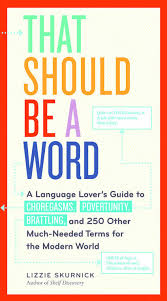
[READ: July 1, 2015] That Should Be a Word

I heard a big hyped review of this book, so I was really excited when Sarah brought it home.  But I wound up being a little disappointed by it.

I imagine that since these items come from her newspaper column, it might be more fun to read a few at a time rather than all at once.  Because while I enjoyed the premise, I got tired of the punny schtick after a few sections.  And that’s a shame.

The one major gripe I have is that nowhere in the book does it ever acknowledge the pioneering work of Rich Hall and Sniglets, the guy who really spawned the idea of creating words for every day things.  Skurnick does things differently of course, but I feel like at least a nod to the man would have been nice (especially since she is–admirably–so into the whole retro thing).

The premise behind this book (and the column is that Skurnick (and readers, I gather) create words for things that don’t exist.  But the real premise is that the newly created words are sort of punny based on two other words (which Sniglets didn’t do). (more…)

Read Full Post »

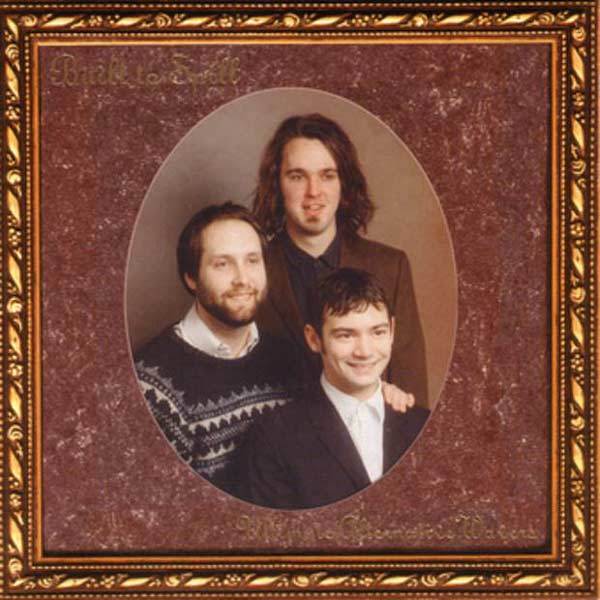
dfwSOUNDTRACK: BUILT TO SPILL-Ultimate Alternative Wavers (1993).

Bts I am going to see Built to Spill this Friday.  I was supposed to see them back in 2001, but then some bad things happened in New York City and their show was cancelled (or I opted not to go–I see on Setlist that they did play that night).  Since then, I have enjoyed each new album more than the previous one, so I am really excited to see them.

I thought it would be interesting to revisit their earlier records.  In reading about the band I learned that Doug Martsch was in Treepeople (which I didn’t know and who I don’t really know at all).  I also learned that his plan for BtS was to have just him with a different line up for each album.  That didn’t quite work out, but there has been a bit of change over the years.

Their debut album is surprisingly cohesive and right in line with their newer material.  It’s not to say that they haven’t changed or grown, but there’s a few songs on here that with a little better production could easily appear on a newer album.  Martsch’s voice sounds more or less the same, and the catchiness is already present (even if it sometimes buried under all kinds of things).  And of course, Marstch’s guitar skill is apparent throughout.  The album (released on the tiny C/Z label) also plays around a lot with experimental sounds and multitracking.  When listening closely, it gives the album a kind of lurching quality, with backing vocals and guitars at different levels of volume throughout the disc.

But “The First Song” sounds like a fully formed BtS song–the voice and guitar and catchy chorus are all there..  The only real difference is the presence of the organ in the background.  “Three Years Ago Today” feels a bit more slackery–it sounds very 90s (like the irony of the cover), which isn’t a bad thing.  The song switches between slow and fast and a completely new section later in the song.  “Revolution” opens with acoustic guitars and then an occasional really heavy electric guitar riff that seems to come from nowhere.  The end of the song is experimental with weird sounds and doubled voices and even a cough used as a kind of percussion.

“Shameful Dread” is an 8 minute song.   There’s a slow section, a fast section, a big noisy section and a coda that features the guys singing “la la la la la”.  Of course the most fun is that the song ends and then Nelson from The Simpsons says “ha ha” and a distorted kind of acoustic outro completes the last two minutes.

“Nowhere Nuthin’ Fuckup” is one of my favorite songs on the record.  There’s a sound in the background that is probably guitar but sounds like harbor seals barking.  I recently learned that the lyrics are an interpretation of the Velvet Underground’s “Oh! Sweet Nuthin.”  They aren’t exactly the same but are very close for some verses.  The rest of the music is not VU at all.  In fact the chorus gets really loud and angular.  I love the way the guitars build and then stop dramatically.

“Get a Life” opens with a wild riff that reminds me of Modest Mouse (who cite BtS as an influence), but the song quickly settles down (with more multitracked voices).  I love how at around 4 minutes a big swath of noise takes over and it is resolved with a really catchy noisy end section.  “Built to Spill” starts out slow and quiet, and grows louder with a catchy chorus.  In the background there’s all kinds of noisy guitars and superfuzzed bass.

“Lie for a Lie” is pretty much a simple song with s constant riff running throughout.  The verses are catchy, but the middle section is just crazy–with snippets of guitars, out of tune piano, a cowbell and random guitar squawking and even shouts and screams throughout the “solo” section.  “Hazy” is a slow song with many a lot of soloing.  The disc ends with the nine minute “Built Too Long, Pts 1,2 and 3”  Part 1 is a slow rumbling take on a riff (with slide guitar and piano).  It last about 90 seconds before Part 2 comes in.  It has a big fuzzy bass (with a similar if not identical riff) and wailing guitar solos.  Over the course of its five or so minutes it get twisted and morphed in various bizarre ways.  With about 30 seconds left, Chuck D shouts “Bring that beat back” and the song returns, sort of, to the opening acoustic section.

While the album definitely has a lot of “immature” moments (and why shouldn’t the band have fun?) there’s a lot of really great stuff here.

btstix

[READ: September 26, 2015] Critical Insights: David Foster Wallace

It’s unlikely that a non-academic would read a book of critical insights about an author.  Of course, if you really like an author you might be persuaded to read some dry academic prose about that author’s work.  But as it turns out, this book is not dry at all.  In fact, I found it really enjoyable (well, all but one or two articles).

One of the things that makes a book like this enjoyable (and perhaps questionable in terms of honest scholarship) is that everyone who writes essays for this collection is basically a fan of DFW’s work.  (Who wants to spend years thoroughly researching an author only to say means things about him or her anyway?).  So while there are certainly criticisms, it’s not going to be a book that bashes the author.  This is of course good for the fan of DFW and brings a pleasant tone to the book overall.

For the most part the authors of this collection were good writers who avoided a lot of jargon and made compelling arguments about either the book in question or about how it connected to something else.  I didn’t realize until after I looked at the biographies of the authors that nearly everyone writing in this book was from England or Ireland.  I don’t think that makes any difference to anything but it was unexpected to have such an Anglocentric collection about such an American writer (although one of the essays in this book is about how DFW writes globally).

Philip Coleman is the editor and he write three more or less introductory pieces.  Then there are two primary sections: Critical Insights and Critical Essays. (more…)

Read Full Post »

atwq3SOUNDTRACK: YES-Tales from Topographic Oceans (1974).

Tales_from_Topographic_Oceans_(Yes_album)After the huge success of Fragile and Close to the Edge (with its 18 minute suite), what could Yes do next?  Well first they would release a triple live album, which I’ll get to later.  And then?  Why they would release a double album with only 4 songs on it!  That’s right 4 songs each around 20 minutes long!  And it would be ponderous and pretentious and it would be reviled by everyone!

The album shipped gold (because their previous records were so popular) and then sales plummeted.  The album is much maligned and, frankly, deservedly so.  Now, I love me a good prog rock epic.  So, four 20 minutes songs is pretty heavenly for me.  But man, these songs just don’t really have any oomph.

My CD’s recording quality is a little poor, but I don’t know if the original is too.  The whole album feels warm and soft and a little muffled.  You can barely hear Anderson’s vocals (which I believe is a good thing as the lyrics are a bunch of mystical jiggery pokery).  But despite the hatred for the album, it’s not really bad.  It’s just kind of dull.

Overall, there is a Yes vibe…and Yes were good songwriters–it’s not like they suddenly weren’t anymore.  There are plenty of really interesting sections in the various songs.  It just sounds like they have soft gauze between them.  Or more accurately, it sounds like you get to hear some interesting song sections and then the song is overtaken by another song that is mostly just mellow ambient music.

Without suggesting in any way that this album influenced anyone, contemporary artists are no longer afraid to make songs that are super long (see jam bands) or songs that are just swells of keyboards (see ambient musicians).  Yes just happened to put them all in the same song–way before anyone else did.

The album is very warm and soft—rather unlike the last couple of Yes albums which were sharp and harsh.  There are washes of keyboards and guitars and Anderson’s echoing voice. But what you’ll notice is that I haven’t really mentioned Chris Squire.  He’s barely on the album at all, and when he is, it’s usually to provide very simple bass notes–bass notes that anyone could play–it’s such a waste!  And while Alan White is no Bill Bruford (who was off rocking with King Crimson then), he’s also barely there.  In fact, Rick Wakeman himself is barely there–the king of elaborate classical riffs is mostly playing single notes at a time.  According to Wikipedia,

Wakeman took a dislike to the album’s concept and structure from the beginning. He made only minimal musical contributions to the recording, and often spent time drinking at the studio bar and playing darts. [During the recording session] he played the piano and synthesiser on the Black Sabbath track “Sabbra Cadabra”.

Evidently Anderson wanted a pastoral feeling in the studio

According to Squire, Brian Lane, the band’s manager, proceeded to decorate the studio like a farmyard to make Anderson “happy”.  Wakeman described the studio, “There were white picket fences … All the keyboards and amplifiers were placed on stacks of hay.” At the time of recording, heavy metal group Black Sabbath were producing Sabbath Bloody Sabbath in the studio next door.  Ozzy Osbourne recalled that placed in the Yes studio was a model cow with electronic udders and a small barn to give the room an “earthy” feel. Anderson recalled that he expressed a wish to record the album in a forest at night, “When I suggested that, they all said, ‘Jon, get a life!'”

So we have an earthy pastoral album.  But what about the four sides?  Steve Howe describes it:

“Side one was the commercial or easy-listening side of Topographic Oceans, side two was a much lighter, folky side of Yes, side three was electronic mayhem turning into acoustic simplicity, and side four was us trying to drive the whole thing home on a biggie.”

Despite Wakeman’s complaints, he did have some nice thing to say about it.  he said that there are

“very nice musical moments in Topographic Oceans, but because of the […] format of how records used to be we had too much for a single album but not enough for a double […] so we padded it out and the padding is awful […] but there are some beautiful solos like “Nous sommes du soleil” […] one of the most beautiful melodies […] and deserved to be developed even more perhaps.”

And if Rick Wakeman says an album is padded, you can just imagine what the rest of the world thought!

The lyrics (and mood) are based on Jon Anderson’s vision of four classes of Hindu scripture, collectively named the shastras, based on a footnote in Autobiography of a Yogi by Paramahansa Yogananda.  So if I read this correctly–he wrote 80 minutes of music based ona  footnote!

The four songs are

“The Revealing Science of God (Dance of the Dawn)” [which Howe says is the commercial or easy-listening side] builds slowly and eventually adds vocals.  And then come the drums and a decent keyboard riff.  There’s some noodling on the keyboards.  The riff is catchy but not immediate (which might be the subtitle for the album).  At nearly 4 minutes a faster section kicks in and there’s a catchy vocal part, which seems like where Anderson might normally soar but he holds back.  The “must have waited all our lives for this moment moment moment” is catchy, but again I can’t help but feel it would have been much more dramatic sounding on an earlier record.  At 7 minutes there’s a nice jump to something more dramatic—good drums, but the bass is mixed very low (poor Squire).  There’s some good soloing and such but it is short lived and things mellow out again.  It resolves into a new riff at 9 minutes, but resumes that feeling of washes and noodling guitars.  At 11 minutes there’s an elaborate piano section and the song picks up some tempo and drama. Especially when the bass kicks in around 12 minutes.  The most exciting part happens around 17 minutes when the whole band comes to life and adds a full sound, including a good solo from Wakeman.  And while this doesn’t last, it recycles some previous sections which are nice to hear.

Track 2 “The Remembering (High the Memory)” [which Howe described as the much lighter, folky side of Yes] has a slow, pretty guitar opening with more harmony vocals.  The whole first opening section is like this—layers of voices and keys. Then come some keyboard swells and more vocals.  Some bass is added around 6 minutes. And then around 8 minutes the tone shifts and there is a lengthy slow keyboard solo that reminds me of the solo in Rush’ “Jacob’s Ladder” (released 6 years later).  At around 9 minutes there’s a more breezy upbeat section with a cool riff.  At 10:40 a new section comes in with some great bass lines and guitars and an interesting vocal part. It could easily have been the structure for a great Yes song (vocals are singing “relayer” which of course is their next album’s title). But this is all too brief (it thankfully returns again) and then it’s back to the gentle keyboards.  At 12 minutes there’s a new medieval type section with some great guitar work.  When the “relayer” part returns around 13 minutes there’s a whole section that is great fun.  And even though it doesn’t keep up, the song feels rejuvenated. By around 17 minutes there some interesting soloing going on and then the band resumes to bring it to the end (with a reprise of an early section). And the final section is quite lovely.

Track 3 “The Ancient (Giants Under the Sun)” [Howe: electronic mayhem turning into acoustic simplicity] is probably the most interesting.  It opens with some clashing cymbals and then a fairly complex percussion section and mildly dissonant guitar riff.  There’s even some staccato bass line. The vocals come in around 4:30 and the song shifts to a less aggressive sound, but the big bass continues throughout the beginning of the song until a fast riff emerges around 6 minutes. But more unusual Yes-type riffage resume briefly before segueing into the next part with lots of percussion.  While the staccato bass and drums continues, Howe solos away.  Then around 12 :30 the whole things shifts to a pretty, slow acoustic section with a classical guitar and vocals.  This entire end section sounds like it could easily have been its own song and it is quite lovely.  Howe’s acoustic work is great and there’s even a lengthy solo.

Track 4 “Ritual (Nous Sommes du Soleil)” [Howe: us trying to drive the whole thing home on a biggie] is also quite good.  It’s probably the most fully Yes track of the four, with many sections of “full band” material.  There’s a noodly guitar intro switching to an interesting dramatic minor key movement.  There’s a pretty, if simple, riff (done by guitar and voice) that is quite lovely.  Around 4:30 the guitar solo brings in a riff from a previous Yes song. By 7 minutes, the song settles into a fairly conventional sounding Yes song (with actual bass and drums and…sitar!).   Around 11 there’s a bit of Wakeman soloing (he did show up for some of the album after all) and then some wild guitar and bass work.   The crazy percussion resumes and there’s a wild keyboard solo on top of it. The end of the guitar solo even has a bit of “Born Free” in it.

I hadn’t listened to this record in probably 25 years.  And so I listened to it 4 times in the last few days.  And I have to say that I thought it was bloated and awful at first, but it slowly grew on me.  I found some really interesting sections and some very cool riffs.  If these pieces could have been truncated into individual songs they would be quite good.  The biggest problem for me is that so much of it is so slow and mellow–like it’s building up to a big climax which never arrives.  On previous albums, Yes had made quite a show of being insane musicians, and that just isn’t here.

So even though I have come around on these songs, they certainly aren’t my favorites.  But if you’re at all interested in Yes, there’s some gems hidden away in these monstrosities (just don’t think too much about what Anderson is talking about).

Since almost every Yes album had different personnel, I’m going to keep a running tally here.  The band stayed together after Close to the Edge, but this was too much for Wakeman who left after the recording:

Chris Squire-bass
John Anderson-vocals
Alan White (#2)-drums
Rick Wakeman (#2)-keyboards
Steve Howe (#2)-guitar

[READ: June 20, 2015] Shouldn’t You Be in School?

I am finding this series to be ever more and more confounding.  And I know that is its intent, but it is still a challenge.  Whenever anyone asks a question someone else replies that it is the wrong question.  But they never say what the right question should be (deliberately confusing!).  There are also so many threads and confusing characters, that if Snicket didn’t make the story funny and strangely compelling, it would be incredibly frustrating.

In this story, Hangfire, having been thwarted in his previous endeavor to capture children (for what end we do not know) is back with a new plan to capture children.  Also, the mysterious (and presumably wicked, but who can be sure) Ellington Feint has returned as well to help or hinder as she sees fit.

The other characters are back too, of course: Moxie is back taking notes, Jake Hix is cooking delicious foods at Hungry’s (in fact there are even some recipes that sound pretty yummy–Snicket himself makes a passable tandoori chicken).  S. Theodora is still his mentor (and the pictures by Seth of her are hilarious).  Late in the book Pip and Squeak show up.  And naturally the policemen and their bratty son Stewie are there too.  And we are still wondering what in the heck is going on with the bombinating beast.

There’s also some new characters, like Kellar Haines, a young boy who when we first meet him is typing up something in the offices of the Department of Education (with posters all over the walls that say Learn! Learning is Fun, etc).  And his mother is also becoming quite chummy with S. Theodora.

The danger in this book is fire.  Building after building is being burnt down.  The Stain’d Secondary School is engulfed.  Even the library is at risk!  And that’s when S. Theodora solves the crime!  She gets the library Dashiell Qwerty arrested for setting the fires.  And even though it is quickly determined that he did not do it (a building was burnt down while he was in custody), that doesn’t stop S. Theodora and her new friend Sharon Haines (in matching yellow nails) from partying.  It also doesn’t stop Qwerty from being taken to prison.

This story is a bit darker than the other ones (which were admittedly pretty dark).  Every kid is being drugged with laudanum which makes you sleepy.  We’re unclear exactly what they are being drugged for, but Snicket has a plan to stop it.  Snicket himself winds up getting beaten up–pretty badly–from Stew and others.

And for the first time, S. Theodora is kind to Snicket (more or less) and apologizes for her behavior (sort of).

By the end of the book a plan is hatched, a bunch of people join the V.F.D. (as seen in A Series of Unfortunate Events) and someone is taken to jail. There’s even a mysterious beast who is living in the fire pond.

As in previous books there is ample definition building–either from people saying they don’t know what a word means so that it can be defined or from Snicket himself simply defining a word.  As in “my brother and I played an inane game” “inane is a word which here means that my brother and I would pretend we couldn’t hear each other very well while we were talking.”  This game actually sounds fun:

What do you think of the weather this morning?
Feather? I’m not wearing a feather this morning.  This is just a hat.
Just a cat? Why would you wear a cat on your head?
A Bat in your bed etc etc.

The artwork by Seth is once again fantastic and noirish.

And the end of the book has a fragmentary plot “a great number of people working together, but they plotted together in such a way that nobody knew exactly what the other people were doing”  And finally we learn what the right question is, but it’s the unsatisfying: “Can we save this town?”  We’ll have to find out in the concluding book 4.

You can also check out the website for some fun.

Read Full Post »

2014-07SOUNDTRACK: SLOAN-Commonwealth [Spade Side–Andrew Scott] (2014).

commonFor Sloan’s 11th album, the four members of the band each wrote the songs of a side.  I originally thought that they recorded all of the music alone, but that seems to be wrong–and would hardly be a Sloan album).  In conjunction with the album, each guy was given a suit of cards (and an actual deck was made as well).  While this doesn’t necessarily mean the album is very different from their others (it still sounds very Sloan), it seems to have given the guys a bit more room to experiment.

The final side of Commonwealth is by drummer Andrew Scott.  Scott has written three singles for Sloan over the years: “500 Up”, “People of the Sky”, and “I’ve Gotta Try.”  But for this album, he has created a 17 minute and 49 second epic called “Forty-Eight Portraits.” This makes it seem like it could be 48 small songs which it isn’t.  But it also isn’t one long song exactly.  There are, by my count 15 sections–although there could be more or fewer depending on how you break it up.

So my demarcations:

  1. The song opens with a dog barking.  There’s complex percussion and a smattering of piano seemingly searching for a melody.
  2. At 3 minutes the first real song proper starts.  We’ll call it “You say you’re going with me.” There’s acoustic guitars and a bouncy melody.  It’s a great song with a neat guitar riff that overlays around 4 minutes in.  But
  3. At 4:23 the song changes dramatically.  It grinds to a slow pensive section, call it the “Don’t ask for a second chance.”  But it doesn’t last long,
  4. At 5:16, the next part jumps in, it’s a bit faster and feels like it could be an extension of the previous section.  Call it the “Do the things I do” section.  It speeds up
  5. At 5:41, to a similar style as the “first song.”  It has a sing along starting “How Does It Feel?”  It’s got one verse before a time signature change and instrumental break.
  6. At 6:40 the next section comes in.  Aggressive guitars and spoken word lyrics “There’s something happening here.”  It also has one of the few uses of the word “fucking” in a Sloan song.
  7. At 7:25 it shifts to a falsetto style and higher pitched guitars.  It’s vaguely Beach Boys-like for a verse “Do you think she loves you?” until
  8. At 7:48 it’s back to a reprise of the “How does it feel” section.
  9. At 8:15 it shifts to a new slow piano section.  This feels like the most fully realized song section of the epic.  “I can’t believe you never told me the truth.”   It leads into a big chorus sounding section (two lines) around 8:40 (“What it is us unsustainable”).  There’s even a repeat of this “verse” and  “chorus” as well.
  10. At 10:26 a new guitar section is introduced.  It works as a transition “You said you’re coming with me.” It morphs
  11. At 10:52 into a very cool slowed down section “I asked for a proper glass.”  And then
  12. At 11:22 the song again returns to the “How did it feel” section.
  13. At 12 minutes the song transitions with a “ba ba ba” and horns which move into the “Sometimes I feel like I’m slipping away” section.  The song feels like it might end at 13 minutes as the last notes seem to ring out.  But
  14. At 13:21, the song rebuilds again with the “inside a cloud” section.  This feels like the final section of the song is built around a similar construct. It’s a guitar riff that introduces a children’s chorus at around the 14 minute mark.  There’s a slow guitar solo and pizzicato strings that keep this section from being to easy, but that guitar riff and children’s section reunite the end which concludes with the spoken “W.W.L.R.D.?” (which I assume the L.R. refers to Lou Reed).
  15. At 16 minutes, the chaos of the beginning returns with a dog bark, but the concluding riff is strong and seems to really draw out the end.

I really haven’t listened to the lyrics that carefully to know exactly what’s going on, but I really enjoy the “choruses.”  While a 17 minute song is not everyone’s cup of tea, there are so many parts and so many interesting and catchy sections, that it feels like a whole collection of short songs rather than one long song.  It’s a cool experiment and one that I find myself singling out as I try to parse it a bit more.

[READ: October 11, 2014] “Part of the Main” and “Watching the Cop Show in Bed”

The Walrus’ summer reading issue presents three stories and two poems in which: “The Walrus presents fresh takes on old crimes.”  Each story is about a crime of some kind, but seemed from an unexpected way.  I rather enjoyed the way the writers played around with the crime genre to make them something very different.  These were two poems.

I’ve don’t normally review the poetry in The Walrus, but since I had four sides and only three stories it seemed worthwhile to throw the two poems in as well 9especially since the finally song was so unusual).

The first one “Part of the Main” is written with wonderfully evocative language as it talks about something so base.

The first stanza talks about the inevitability of the tide, of life.  With beautiful language like: “the contours of the and effaced by the saintly patience of the tide.”  But the second stanza shifts gears.  In it, the narrator says that you can show him dire things on the television: “bloated bellies…bomb blasts” and he will weep and clench his fists “but otherwise do nothing.”  It is sadly an uncomfortably relatable attitude. (more…)

Read Full Post »

june23SOUNDTRACK: MONTY PYTHON-“Rock Notes” (1980).

mpThis skit (more of a monologue) comes from Monty Python’s Contractual Obligation Album, the first Python album I ever bought.  It’s not my favorite bit from them, but it’s short and wedged in the middle of the rest of the album which means that I know it by heart.  Now, the skit is most famous for naming Toad the Wet Sprocket (Eric Idle says he tried to come up with the most absurd name he could think of and there it was).  The band featured Flamboyant Ambidextrous Rex who fell off the back of a motorcycle.

What I tend to forget is that the rest of the joke is all about one band Dead Monkeys who have just broken up again.  They were together for ten years, but for nine of those years the band had other names.  Primarily, the names are fishy: Dead Salmon, Trout, Poached Trout in a White Wine Sauce, Dead Herring.  Then they ditched the fishy references for Dead Loss, Heads Together, Dead Together and ultimately Helen Shapiro.

This extended riff is rather silly and I’m not even sure it’s appropriate for a joke on bands.  I can’t think of many bands who have broken up and reformed under new names (I mean, yes, there’s a couple, but not enough to warrant this extended joke).

And yet, I still remember the joke, so it must be something, right?

What do I think of Dead Duck? or Lobster?

[READ: September 16, 2014] “Liner Notes”

This Shouts & Murmurs piece begins so strongly that I was super excited to read it.  Saunders riffs on liner notes in albums, specifically failed albums.  His liner notes are for the album 2776: A Musical Journey Through America’s Past, Present & Future which is just another attempt to “engage with the vast sweep of American history” via the musical epic.

The best joke is citing Meat Loaf’s “Ben Franklin Makes Love in a Foggy Grove of Trees” (which failed to translate to live performance).  [I would totally listen to that song].  He then talks about a Tim Rice-Andrew Lloyd Webber production of “Johnny Tremain” which was too intellectual for a nineteen-seventies audience.  But I feel like Saunders goes off track when, instead of staying with the slightly absurd realism, he jumps the shark by saying that the songs were too risqué “for a staid culture that, at that time, still believed that babies came when you left a pastel turtleneck rolled up in a wad overnight.”  It broke me right out of the exaggerated realism into the realm of outrageous farce.

Which is a shame because returning to real artists like Tom Waits making a biography of Jesse James called “A White-Trash Rambling Christ Figure Just Shot Your Brother, Amigo” is pretty darn funny. (more…)

Read Full Post »

CV1_TNY_03_17_14Liniers.inddSOUNDTRACK: YASMINE HAMDAN-Tiny Desk Concert #359 (May 24, 2014).

Yysamineasmine Hamdan is a Lebanese singer-songwriter.  The three songs she plays here are sung in Lebanese (I assume).  Sung with just the accompaniment of one guitar, Yasmine sings and sways her way through these beautiful songs.  It’s actually fun to just see her move while she sings, she’s so loose and relaxed and yes, sensuous.
The most interesting thing is that Hamdan had only just met guitarist Gabriel Gordon when they traveled down together from New York that morning. They’d never rehearsed together, so the interesting guitar lines he’s playing sound great even though they might not be what she intended.  (I wish there was a little more information about this partnership in the blurb).

“Beirut” is a song form the 1940s and she does some interesting vocal things by using her hands around her mouth.  “Deny” and “Shouei” are beautiful songs that Hamdan has written and the two of them sound just great together.

[READ: May 27, 2014] “Long Story Short”

I have been one of those readers who doesn’t really know what to make of Lydia Davis, so I found this article very interesting and helpful.  It allowed me to appreciate her super short stories a lot more.  For yes I have mused about why “she doesn’t call them poems or fragments.”  The answer: “She prefers the deeper associations of the word ‘story’.”

I was interested that she is considered “one of the most original minds in American fiction today,” and I tend to agree that she is because no one else really writes like her.  Her Collected Stories has “some two hundred pieces” in just over 700 pages.  This is thirty years worth of work.

But I also liked seeing the succinct comment “like many things that Davis writes, [a letter] had started out sincere and then turned weird.”  In this case the letter she wrote to a frozen peas manufacturer was published as the story “Letter to a Frozen Peas Manufacturer.”

I didn’t know much if anything about Davis, so this article acted as a biography as well.  She dated writer Paul Auster and while he write his traditional stories, Davis struggled to do the same.  Her stories never came together or seemed to be about normal things, as her mother commented: “Why don’t you write about your travels or something more cheerful?”  But it was when she started reading very short stories by the poet Russell Edson (of whom I’ve never heard), that she hit upon the idea of writing very short stories and “The Thirteenth Woman” was her first successful attempt. (more…)

Read Full Post »

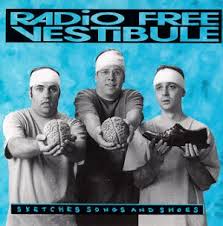
xubingSOUNDTRACK: THE VESTIBULES-“Boulbous Bouffant” (1995).

rfvThis is a fantastic comedy bit of euphonics.  It starts out a bit slow–without a clear point.  But once it picks up, it is outstanding.  And you’ll find yourself saying…oh all kinds of things for no reason.

[READ: May 15, 2014] Book from the Ground

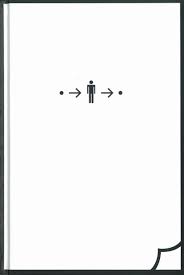
Xu Bing is a Chinese artist.  He caused some stir several years ago with his exhibition Book from the Sky, a set of books, panels and scrolls on which were printed thousands of characters resembling real Chinese characters, but which were nonsense. Xu spent years hand carving the typesetting blocks used to make the prints according to traditional Chinese block printing methods. Each block was embossed with a unique but meaningless symbol and then used to make the prints for the exhibit.  It was controversial and he even lost favor with the Chinese government.

That project was conceived as a “book” that no one could read.  With Book from the Ground, he has attempted to create a book that literally everyone could read.

The entire story of this book is told with icons.  There are no words at all.

It is the story of a man as he lives his day from the time he wakes up until he falls asleep late that night.

The icons are mostly but not entirely universal–they depend upon the reader being familiar with contemporary technological life (icons for Amazon and GMail for instance might confuse some–or maybe they have saturated the market enough that they are universal by now).

The story opens with us zooming in on the man as he sleeps.  It is 7AM and he is awoken by a bird and by his alarm.  We see him wake up, use the bathroom, make (and ruin) breakfast and then head to work. (more…)

Read Full Post »

13SOUNDTRACK: JACK BLACK-The Goodbye Song (2009).

jbI love that Jack Black is a terribly terribly profane man, and yet he has also made a huge career out of doing kids shows and movies.  True Tenacious D are practically child men anyhow, but to think that the guy who sang some of those really dirty songs is also Kung Fu Panda?  Or the sweet guy saying goodbye to everyone in Yo Gabba Gabba land?

This song is, like most Yo Gabba Gabba songs, incredibly simple and repetitive (it’s mostly chorus singing goodbye) but each verse has one of the characters from the show singing a simple verse and JB saying something in return.

There’s nothing especially great about this song (you want it more for the visuals), it’s just always fun to hear Jack be funny and silly–and to rock out at the end.

[READ: May 9, 2014] File Under: 13 Suspicious Incidents

I knew that his book was coming out and I was pretty sure it was Book 3 in the All the Wrong Questions series because, well, because it came out during the series and it was illustrated by Seth.  But it is not part of the series at all.  Well, that’s not true.  It is sort of part of the series.

It is set in Stain’d by the Sea.  Lemony Snicket is there with his mentor S. Theodora and all of the characters we have met so far in the series are here as well.  But this is a series of unfortunate incidents in which Lemony Snicket helps to solve some crimes or, if not crimes, at least possible crimes.  Thing of it as a short story interlude from All the Wrong Questions.  And yet, even though that seems dismissive, it is a great and fun read.

So despite being a little disappointed that this wasn’t the next book in the series (I’m quite hooked) I really enjoyed these short “cases.”  It also turns out that the “bonus” story that came in the Barnes & Noble edition of Book 2 is one of these incidents.  I didn’t enjoy it that much as a “bonus” story, but I found it far more enjoyable this time in the context of Snicket trying to figure things out here. (more…)

Read Full Post »

« Newer Posts - Older Posts »