Feeds:
Posts
Comments

Archive for the ‘War’ Category

SOUNDTRACK: THE TRAGICALLY HIP-Music @Work (2000).

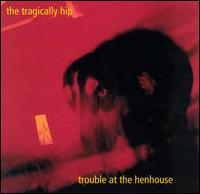
I tend to dismiss this Hip record for two reasons: the cover is pathetic and I don’t like the title.  Of course, the title track is catchy as anything, and, in reality, the whole record stands up quite well.

Music @Work rocks harder than Phantom Power did, although clearly The Hip are in a new mode of music making–no longer lengthy emotive tracks, now the make shorter, poppier tracks that explore what would have to be called their gentler side.  “Stay” is a very simple acoustic guitar track with maybe a bit of keyboards, but Downie’s voice is mixed so high it’s practically like a spoken word track (only catchy).

There’s a lot of songs that, while not brilliant, are catchy and very toe tapping like “The Completists.”  As I described their earlier stuff, this disc is above average rock, and this is a more adult-alternative rock than their earlier raw rock.    But there are a few louder rocking songs too: “Freak Turbulence” is a fast rocker  that comes in at under 3 minutes.  “Train Overnight” is a return to a somewhat rawer sound and “Wild Mountain Honey” has a great opening riff and some unexpected stops and starts.

Despite my negative thoughts about this record, listening to it again made me realize just how good it is.

[READ: February 15, 2011] “Warlords”

This story continues with The Walrus‘ flash fictions.  Again, I don’t see this story as being in the tradition of Flash Fiction so much as just being a very short story.  Of course, as with any good flash fiction, this story packs a ton of information in to a half a page.

The story is all about Warlords.  Duh.  But rather than looking at the warlord himself, Atwood looks at the people who live under a warlord.  Those who can work for him or those (women, bankers, writers) who will never be able to.  She then peels away the layers of the warlord’s minions until we reach the inner circle.

And what happens to the inner circle when a warlord is deposed?  Is that guy sweeping garbage a former member? (more…)

Read Full Post »


SOUNDTRACK
: THE TRAGICALLY HIP-Trouble at the Henhouse (1996).

After the major high of Day for Night, The Hip followed it up with Trouble in the Henhouse.

It opens with “Giftshop” which sounds like it could have come straight from Day for Night.  “Springtime in Vienna” is a marvel.  The opening is quiet with Downie’s almost whispered voice telling a compelling story until it blasts out with a wonderful chorus.  “Ahead by a Century” opens with a catchy acoustic intro.  Again, the harmony vocals add wonders to the verses.

But overall the album feels like the Hip exhausted their angst and anger on Day for Night and have chosen to go with a more mellow sound here.  It almost seems like Day for Lite.  Songs like the final track, “Put It Off” dabble with intensity, but have more atmospherics than powerful guitar and verses.  It’s like the come down after a big party.

The most peculiar song on the disc is “Butts Wigglin” which was used on the Kids in the Hall Brain Candy soundtrack.  It doesn’t really fit on this disc, but it’s such a great song that I understand them not leaving it off.  It’s very silly and musically groovy with  almost no guitars and all keyboards.  It’s a goof, but nice to see the lighter side of the band.

I find Trouble to be really enjoyable in itself, but it kind of pales in comparison to the previous two.  Nevertheless, these three albums are a wonderful trio of discs released by a great Canadian band.

They celebrated this era of the band with a live album the following year.

[READ: January 26, 2011] “An African Sermon”

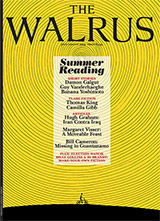
Of all the stories in this Summer Reading Issue of The Walrus, this one was the most powerful.  (It wasn’t my favorite because it was rather distrubing) but it had a strong impact on me.

The bulk of the stoiry is set on a train in Africa.  Two white men introduce themselves to each other; the older one confides that he hopes no Blacks come into thier car.  Of course a Black does come into thier car and the younger man, who is a preacher, tries to embarass the racist man but immediately shaking the black man’s hand.

The black man is hostile to the young man’s advances, more or less shutting him out entirely.  Indeed, when the young man follows him to the dining car to talk (he is genuinely sympathetic to people, but he’s also very curious about the man and wants to pry a bit) the black man (whose name is Leonard Sagatwa) listens briefly and then, claiming a headche, returns to the cabin  room and goes to sleep.

During the night, the train stops because of a malfunction and it will be some time before it is fixed.  The priest goes out to the landing to find something to occupy himself when Leonard comes down.  He says to the priest that he wants to tell his story.  He wants to tell it once, to a complete stranger so that he can unburden himself and then be done with it.  The priest is tickled to hear the story.

But the story is one of Rwandan genocide:  Hutu vs Tutsi, brothers who turn  against each other; Leonard’s brother turning on him and his family.  Killing family members slowly, cruelly, calling them cockroaches.  It is harrowing and the priest is taken aback by the brutality.

But at the end of the story, the priest is resilient and insists that Leonard can forgive his brother.  Never, says Leonard.

The priest is able to use this story for his very first sermon in Africa.  He pretties up the story somewhat and makes it moral, and it works.  The new congregation accepts him and he feels welcomed to Africa.

When, several months later, the priest sees Leonard again, everything has been turned upside down.  And I’ll just leave it at that.

It is a great story.  Wonderfully powerful.

Read Full Post »

SOUNDTRACK: TAME IMPALA-“Lucidity” (2010).

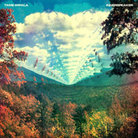
I heard this song on the NPR’s 5 Artists You Should Have Known in 2010.  The album, Innerspace, is only available in Australia (imported on Amazon for big bucks) but I guess that’s why people download music.

This song is really cool. It feels very My Bloody Valentine to me.  However, inevitable comparisons to The Beatles abound, but that’s mostly in the vocals (which is kind of funny since they are Australian).  But it’s really a very sixties British vocal sound–not unlike early Who).

The big difference comes in the music which is psychedelic and wild in ways that The Beatles never quite managed.  There are great big washes of noise, and the sound quality sounds retro, even though it obviously isn’t.  Comparisons to the great Swedish band Dungen are not misplaced either.

I’ve listened to a few more tracks by them on YouTube, and I think this album could easily be one of the best of 2010 if only more people could hear it!

[READ: January 3, 2010] The Return

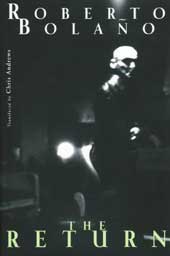
With the completion of this collection of short stories, I have now caught up with all of the published works of Roberto Bolaño (in English of course).  [The next book, Between Parentheses, a collection of nonfiction, is slated for June].

So The Return contains the 13 short stories that were not published in Last Evenings on Earth.  That collection inexplicably took shorts stories from his two Spanish collections Llamadas telefónicas (1997) and Putas asesinas (2001) and combined them into one collection in English.  It wasn’t quite as evident in Last Evenings, but it seems more obvious here that the stories in Putas asesinas are grouped together for a stylistic reason.  So, to have them split up is a bit of a bummer.  And yet, having them all translated is really the important thing.  And, again, Chris Andrews does an amazing job in the translation

This collection of stories was very strong.  I had read a few pieces in Harper’s and the New Yorker, but the majority were new to me.  Bolaño is an excellent short story writer.  Even if his stories don’t go anywhere (like his novels that never quite reach their destination), it’s his writing that is compelling and absorbing.

This collection also had some different subject matter for Bolaño (it wasn’t all poets on searches). (more…)

Read Full Post »

SOUNDTRACKPEARL JAM-Unplugged (1992).

The video of this nearly twenty year old concert came with the remastered version of Ten.  I hadn’t had a chance to watch it until now.  While watching I was pretty certain that I had seen the show either when it aired or sometime right after.  Some of the scenes, maybe from “Alive” looked familiar.  And when “Porch” was ending I had this vague memory of Eddie climbing on the stool and writing something on his arm (he writes “Pro-Choice”).

This is a seven song set of tracks from Ten (Dave Abbruzzese is drumming with them).  And, as advertised, it is unplugged.  Except that it really isn’t.

This set was recorded in 1992 (Unplugged started in 1989).  In my estimation, “Unplugged” shows were a chance to really strip down, play all acoustic and get really mellow (the Nirvana one (1993) is quite a good example) .  But here, we get Mike McCready and Stone Gossard (and all of their hair, holy cow!) playing acoustic guitars.  But Jeff Ament (and his crazy hat) is playing an electric bass (which is funny since in recent years he has been playing a standup bass).  Dave Abbruzzese is banging the crap out of his full set.  I mean, really the only thing that makes this unplugged at all is that the guitars are acoustic, but McCready still plays his rocking solos full tilt.

Nevertheless, the set sounds great.  Eddie barely talks (something about a love song to his surf board and a mumbled line about “State of Love and Trust”), and it’s pretty much all business.

“Oceans” works well in the Unplugged setting…Ament’s watery bass is the real star.  But difficulty sets in with “State of Love and Trust.”  It is just too fast, too loud, and too rocking to really be considered “Unplugged.”  So from then on, we’ll throw the Unplugged label out the window and just rock.  Of course, when the solos kicks in and you hear this really distant acoustic guitar instead of McCready’s ripping electric, you think, well, maybe I’d rather have it plugged.

“Alive” opens kind of in an unplugged state, but again, but the end, it seems like McCready is fighting against the other “plugged” guys.

Title criticisms aside, the set is great.  The band sounds in fantastic form and by the end (when Eddie is falling off and climbing onto his stool) even Ament is getting silly and jumping on the drum set.  It’s a good view (and a good listen too).

[READ: November 10, 2010] “Under the God Gun”

I honestly didn’t think I would like this article and I wasn’t looking forward to it.  I didn’t quite understand the subtitle (Battling a fake insurgency in an imitation Iraq) and in general I don’t enjoy articles about military training and the Iraq war, etc.

And when it started, I was confused by what was happening until I got to the third paragraph where he mentions a prosthetic arm being applied to an amputee.  Then I re-read the beginning and I was pretty well hooked.

The article looks at the fake governance of Talatha and its small villages like Mosalah.  All of this exists within the borders of Louisiana at the army training based called Fort Polk.  It shows how these fake villages were created from the ground up to look just like an Iraqi city.  They even pay citizen extras to be Iraqi citizens (they get paid about $220 a day and are required to speak no English).

In these fake towns they run military training exercises that are designed to replicate the actual conditions in Iraq (hence the prosthetics, fake blood, explosions and lack of English).  It’s a fascinating look at something that I had no idea existed. (more…)

Read Full Post »

SOUNDTRACK: SUPERCHUNK-1,000 Pounds (2000).

This EP has four tracks: an acoustic version of the title song and, for the first time that I’m aware of, a cover track.

“1,000 pounds” is another great Superchunk single.  It’s boppy and catchy and there’s more and more instrumentation thrown into the mix–acoustic guitars, more strings, a crazy sounding guitar solo with effects I don’t recognize.  It’s also another song where the title is sort of thrown into the chorus without making it sound like the focus of the chorus–another fun Superchunk trick.

The acoustic version subverts the original somewhat with a strange swing vibe.  And speaking of vibes, there are actual vibes in the song.  It almost sounds like a different song entirely.

The second song, “White Noise” is a no longer novel twist to a Superchunk song (they’ve been throwing in so many twist to their sound that it’s impossible to pin them down to anything).  There’s a cool guitar and bass line that sound, somehow, unlike anything else they’ve done.  The soloing is also pervasive, running throughout the verses.  It’s a very cool song.

The big surprise comes in their cover of David Bowie’s “Scary Monsters.”  Their version is noisy and feedback-filled with crazy guitar solos throughout some of the choruses.  It’s full of reckless abandon and is one of their craziest track in some time.  And really it sounds almost nothing like the original.

It’s a great EP and worth tracking down.

[READ: October 10, 2010] “The Volunteers”

Chang-rae Lee is the next writer in the New Yorker’s 1999 20 Under 40 collection.

This story is set during World War II.  However, unlike most WWII stories that I have read, this one is told from the point of view of Japanese soldiers (specifically, it is narrated by a Korean-born, Japanese-raised medic).

The narrator, Lieutenant Kurohata, is friendly with an inferior soldier, Corporal Endo.  He and Endo are from the same town so they have a friendship which, when they are alone, supersedes their ranking differences (although Kurohata is a little uncomfortable about that).  Endo, like many soldiers, is somewhat obsessed with a series of photos of naked women.  He is constantly trading for new ones and then showing them (surreptitiously) to Kurohata.  Kurohata is not terribly impressed with the behavior–he seems more mature in general–although he also implies that he is not very sexual–and he finds the whole proceedings somewhat beneath him. (more…)

Read Full Post »

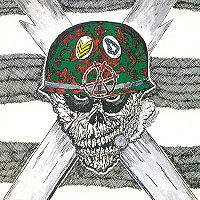
SOUNDTRACK: STORMTROOPERS OF DEATH-Speak English or Die (1985).

S.O.D. was a side project of Anthrax.  It was an over the top (and hilariously un-PC) collection of super fast (and super short) punk songs.  A lot of the “mosh” sound that Anthrax was experimenting with around this time is in place here (“Milano Mosh” for instance).  So it’s an interesting mix of speed metal and punk.

The lyrics were, as they say, designed to piss everyone off.  And they do.  Song titles like “Speak English or Die,” “Pre-Menstrual Princess Blues,” “Pussy Whipped,” “Fuck the Middle East” and “Douche Crew” pretty much give you a taste of the music.

And yet, Anthrax are silly.  So you know that the band is a parody (even if people took them seriously).  And the best way to tell about the serious intentions of the band are by other songs (and their duration): “Anti-Procrastination Song” – 0:06, “Hey Gordy!” – 0:07, “Ballad of Jimi Hendrix” – 0:05 (entire lyrics: “He’s dead”) and of course “Diamonds and Rust” (Extended Version) – 0:05.  There’s also a song about “Milk” which laments the fact that all of the milk in the fridge has been drunk.

My favorite track is “What’s That Noise.”  The band plays the opening chords of a song and this static crackles in.  Billy Milano slowly goes absolutely insane screaming about the noise, yelling at the band to stop playing.  It still makes me laugh, 25 years later.

[READ: Week of August 20, 2010] Letters of Insurgents [Last Letters]

Yarostan’s final letter is a long one, but it is justifiably long. And in some ways it makes up for all the weird incest stuff that I had to read.   Although really nothing could make up for that.

The beginning of the letter is taken up with Mirna and Yara’s “prank” at Jasna & Titus’ engagement party. There so many details to include that I’m just going to summarize. (more…)

Read Full Post »

SOUNDTRACK: THERAPY?: Music Through a Cheap Transistor: The BBC Sessions (2007).
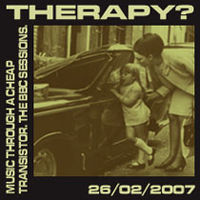
I enjoy the title of this disc quite a bit.  Fortunately, I also enjoy the music quite a bit.  This is a collection of BBC recordings from Therapy?

It’s a strange collection in that they recorded songs on five separate occasions and yet there is a lot of duplication of tracks (the liner notes deal with this issue).

John Peel Sessions (and there’s much made in the liner notes about the fact that they thought they’d be meeting Peel himself when they went in, when in fact it was just a random engineer) are essentially live recordings done in the studio.  They tend to be slightly more experimental (done after a band has toured and messed around with the songs some) and for some bands (like Therapy?) they tend to be more raucous.

This collection was recorded from 1991-1995 with a final show in 1998.  Obviously the band isn’t thinking about the future CD release of the sessions when they recorded these sessions, so it probably didn’t seem strange to record “Totally Random Man” 3 times.  But it does seem strange to listen to it like that.

The songs are definitely rawer than the studio versions.  Even their more poppy tracks from 1998 are a bit harsher.  However, their first EPs were really raw, so these songs sound much better (much cleaner).  They also include a lot of fun/weird unreleased tracks and covers.

My only complaint is that neither version of  “Teethgrinder” features that awesome drum sound that is my favorite part of the track.  Otherwise, it’s a great collection.

[READ: June 1, 2010] Lost in the Funhouse

I checked out this book so I could read the title story.  I enjoyed that one quite a bit so I decided to read the whole collection.  The Author’s Note says, “while some of these pieces were composed expressly for print, others were not. For instance: “‘Glossolalia” will make no sense unless heard in live or recorded voices, male and female, or read as if so heard.”  Um, yeah.

The first story: “Frame-Tale” consists entirely of this: “Cut on dotted line, twist end once and fasten AB to ab, CD to cd.” The cut part is a strip of paper that reads: “Once Upon a Time There/Was a Story That Began.”  It’s cute.

The next story, “Night-Sea Journey” is a proper story of a night sea journey. The secret to the story is gradually revealed, and is rather amusing. (more…)

Read Full Post »

SOUNDTRACK: QUIET RIOT-“Cum on Feel the Noize” (1983).

I heard this song on  the radio the other day.  When it came out, I rushed out to buy it…it was one of the first metal albums I was going to buy.  I went to the local Pathmark (!) and the total of the album came to $6.66 (!).  How cool! How metal!

I loved this song so much.  But now 26 years later (!), it’s just kind of embarrassing (although not as embarrassing as their outfits in the video!).

By the way, who was the first band to have a clap along drum and vocals only part in a rock song anyhow?  They have a lot to answer for in the 80s metal department.

[READ: August 12, 2010] “In the Line of Duty” [excerpt]

Yes, this is General David McChrystal, who gave the unprecedented interview in Rolling Stone which got him fired.

McChrystal was managing editor of The Pointer, the literary magazine of the United States Military Academy at West Point, where this was published in 1974. I admit I would not have read this if it weren’t McChrystal (I don’t really like military fiction).

This was  a really good piece.  It concerns an officer named Gewissen (a fascinating name which means either Conscience or Certain, depending on the part of speech) in an unspecified country where there are Arabs (but not oil-rich Arabs like he’d expected). (more…)

Read Full Post »

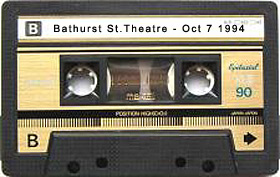
SOUNDTRACK: RHEOSTATICSBathurst Street Theatre Toronto ON October 7 1994 (1994).

I have been listening to a bunch of the Rheostatics live downloads as of late.

This is one of the first concerts they have available on the Rheostatics Live website (there’s a 1991 show as well).  But what’s especially nice about this one is that it was broadcast (and taped) on the radio, so the sound quality is quite good.

The show is from just before the release of Introducing Happiness, so the band is trying out some of those tracks.

I’ve never seen the band live (and of course, now I never will) but these recordings show how much fun they had live.  They were never afraid to experiment or to make jokes in their chatty sections (original drummer Dave Clark was also a lunatic–it often seemed like he wasn’t taking things seriously at all, and yet he never missed a beat).

The shows from 1996 & 1997 also showcase a lot of these songs too, but having the crisp recording of the radio (and the reasonably short set) makes this a good place to start if you want to hear some Rheostatics live.  Some of those other early shows are recorded in the audience, so the fidelity isn’t always 100%.

All of the shows are available at the Rhesoatics Live site (thanks all contributors).  This show is available here.

[READ: July 27, 2010] “The War Between Sylvania and Freedonia”

Your enjoyment of this story depend a lot on whether or not you have watched (and enjoyed) the Marx Brothers’ Duck Soup.  The reason is that this is a retelling of Duck Soup–sort of from the perspective of the mayor of Sylvania and sort of from an impartial observer who is on the side of Sylvania, or more specifically, anti-Firefly.

What Coover does is simply present the audacity and insanity of Groucho’s character, Rufus T. Firefly, as if it were a historical account.  Any reasonable person could see what a terrible mayor he would make.  And this accounts for the amusement in the story. (more…)

Read Full Post »

SOUNDTRACKDEAD KENNEDYS-Fresh Fruit for Rotting Vegetables (1980).

Punks often marry politics to their music.  And none moreso than the Dead Kennedys.  I found out about them around the Frankenchrist album, but it’s this one that introduced Jello Biafra to the world.

What I loved about the Dead Kennedys is that they set out to offend everyone–unless you actually listened to their lyrics. The first track, “Kill the Poor” seems like it a horrifying encouragement to do just that, but if you read the lyrics: “Efficiency and progress is ours once more/Now that we have the Neutron bomb/It’s nice and quick and clean and gets things done/Away with excess enemy/But no less value to property/No sense in war but perfect sense at home.”   As was recently commented, Dick Cheney may have seen the sarcasm there.

“Let’s Lynch the Landlord” is a song that Sophia and Yarostan could get behind: “I tell them ‘turn on the water’/I tell ’em ‘turn on the heat’/Tells me ‘All you ever do is complain’/Then they search the place when I’m not here.”

The biggest track of the disc was “Holiday in Cambodia,” a song so catchy that Dockers actually asked to use it in a commercial (!).  Cause nothing sells jeans like: “Play ethnicky jazz/To parade your snazz/On your five grand stereo/Braggin’ that you know/How the niggers feel cold/And the slums got so much soul.”

The thing that I especially liked about the DKs was that although they played hardcore (some brutally fast and crazily short songs), they didn’t limit themselevs to just that.  They had actual guitar riffs, they tinkered with styles and genres (surf and rockabilly among others), and they even slowed things down from time to time (all the better to hear the lyrics).

Even if the band disintegrated into lawsuits, it’s fair to say that they inspired plenty of kids to take an interest in what was going on around them.

Pol Pot.

[READ: Week of June 25, 2010] Letters of Insurgents [Yarostan’s Fifth Letter]

Because Sophia’s letter is very long, this week it’s only Yarostan’s letter for Insurgent Summer.  It opens with Yara annoyed about the tone of Sophia’s letters and her surprise that Yarostan is so quick to want to open the latest one.   But indeed, Yarostan feels compelled to apologize for “the way I treated your earlier letters.  I did treat you as an outsider, as a person with whom I couldn’t communicate about my present situation.  I was wrong” (283).  [It’s very nice of him to admit that he was wrong].  But that doesn’t mean that he is going to lighten up in his discussions with Sophia: “it seems to me that …critical appreciation is not an expression of hostility but is at the very basis of communication and friendship” (285).  Mirna also chimes in (with rather high praise):

Sophia is a born troublemaker, just like Jan and Yara.  She shares Jan’s recklessness as well as his courage.  I’m glad for her sake that she was taken away from here even if her emigration caused her some pain.  There’s no room here for people like that.  If she’d stayed she would have disappeared years ago in a prison or concentration camp (283). (more…)

Read Full Post »

« Newer Posts - Older Posts »