Feeds:
Posts
Comments

Archive for the ‘Violence’ Category

CV1_TNY_06_10_13Schossow.inddSOUNDTRACK: ScHoolboy Q “Collard Greens” (2013).

colalrdgreens-f7ef9a5569c897652952a2688c4af9911361663a-s1NPR opened their summer preview show with two rap songs.  This was the second.  The bass line is very neat—propulsive and continuous and there’s this little keyboard sprinkling across the top.  This is West Coast rap style and I like the music quiet a bit.

The rapping is unusual—some amusing voices and nonsense words, but I admit I didn’t really get into it until about half way through when the rapper (ScHoolboy Q or guest Kendrick Lamar I don’t know) comes in with an unusual-sounding voice—sped up and goofy.  And he does one of my favorite rap things—singing really fast in a high voice then ending with a low word (Gawd).

The song feels atmospheric, although overall, I’m not a fan.  The DJ who introduced the song says that he is part of the “supergroup” Black Hippy, along Ab-Soul, Jay Rock and Kendrick Lamar.  She describes ScHoolboy Q as the darkest of the bunch, which makes me think I should check out the rest to see what other kinds of things they do.  [I did, and I didn’t like them–lyrically they are remedial at best].

[READ: June 18, 2013] “Rough Deeds”

This story is set in New France, (also known as Canada).  Duquet is a timberman, seeking his fortune by amassing the largest area of woods to be exported both to the Americas and back to Europe.   He connected with a man named Dred-Peacock (I included him mostly for his name) who set him up with a connection in Scotland.

Duquet wasn’t exactly sure about trading with the enemy, the English, but money is money and they had lots of it and need for lots of wood.  And soon a fortune was made.

Then Dred-Peacock encouraged him to head to Maine where thousands of acres were there for the asking.  Indeed, Duquet was able to buy twenty thousand acres at 12 cents an acre.  But when he and his man Forgerson went to investigate, they found a crew cutting down trees on his property!  When he accosted them, they fled.  The youngest member of the thieving team had a limp and fell behind–which gave Duquet the opportunity to hurl his tomahawk at him, felling him instantly.

When the boy won’t talk, Duquet cuts off two of his fingers (Duquet does not mess around) and the boy reveals that he works for McBogle.  The boy already had an infected leg and Duquet had no intention of healing him, so he allowed the boy to die, ultimately killing him and burning his body in McBogle’s makeshift mill.

While Duquet was doing this, Forgerson was off scouting a new way to get the timber to the mill and finding people to work with them.  When he returned, he wondered where the boy had gone, but said nothing.

And there were no consequence for Duquet. (more…)

Read Full Post »

speakSOUNDTRACK: STONE GOSSARD-“I Need Something Different” (2013).

stonegossardmoonlanderStone Gossard is the rhythm guitarist for Pearl jam.  He’s also one of their major songwriters.  He has one or two songs that he sings with the band.  This is a solo effort which indicates that he might be a heavier influence on the band.

Stone Gossard last released a solo album 12 years ago.  There’s a new Pearl Jam album in progress and Stone’s other band Brad put out an album not too long ago, so why not release a solo album?

I don’t know how much Gossard does on this song, but I rather imagine he plays everything (the solo is fine but not amazing and the drums are solid but don’t really standout).  And while that sounds dismissive, it’s not meant to be.  Gossard creates a solid sound of simple rock.

The guitars are loud and bouncy.  Stone’s voice is rough and workmanlike—there’s a reason he’s not a lead singer.  But his voice works great for this aggressive slice of rock.

The riff is continuous and non stop, while he sings I need something different.  And then at the mid way part the keyboards start—perhaps this is the something different.  The keys break the propulsion with a poppiness that you wouldn’t expect in the song.

Then the song returns to its original style.  It’s not a terribly original song, but it would be a fun bar anthem.

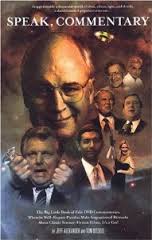
[READ: June 10, 2013] Speak, Commentary

When this book first came out I was pretty delighted.  What a funny concept—overblown writers and political pundits do DVD commentary about films they had nothing to do with.  It seemed like it would be very funny indeed.

And here’s the thing.  It is. For a few pages. But each one of these things feels as long as the actual movie they are commenting on.  Alexander and Bissell have done their research—they know what these figures will say.  And say.  And say.

As I said the premise is awesome, check out these wonderful combinations:

  • NOAM CHOMSKY & HOWARD ZINN on The Fellowship of the Ring
    ANN COULTER & DINESH D’SOUZA on Aliens
  • TERRY DWIBBLE & STEVEN McCRAY on Start Trek II: The Wrath of Khan
  • JERRY FALWELL & PAT ROBERTSON on Planet of the Apes (1968)
    WILLIAM BENNETT & DICK CHENEY on Star Wars Episode I: The Phantom Menace

[Terry Dwibble & Steven McCray are (presumably) fictional characters—die hard Trekkies who are thrilled to be able to add this commentary and, frankly, this is the best one of these pieces.]

I think part of the problem with the book is the sequencing.  The first piece is incredibly dry.  I recall reading this when I first got it.  I don’t know if I read all the way through Chomsky and Zinn.  And I know I didn’t make it through all of the second one (Coulter and D’Souza)—my d0g eared page failure still lingers to this day.

But I finished this time. (more…)

Read Full Post »

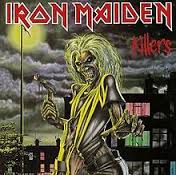
43SOUNDTRACK: IRON MAIDEN-Killers (1981).

killersKillers picks up right where Iron Maiden left off–indeed many of these songs were written at the same time as the first album.  The difference is new guitarist Adrian Smith.

It opens with the great (but simple) instrumental “Ides of March” which segues into the blistering “Wrathchild.”  And it’s on this song that you can tell some of the rawness has been removed from the recording.  The guitars sound a wee bit more polished.

And you can tell the band are getting a bit more symphonic with the bass harmonics that intro the wonderful “Murders in the Rue Morgue” a song that feels long but actually isn’t.  It has several parts that all seem to signal the end until Clive Burrs drums come pounding in to restart the song.  Very cool.  “Another Life” is another fast punky song, and while I like it, it is probably one of the weaker songs on the album.  But that’s okay because it is followed by one of Maidens greatest instrumentals–“Genghis Khan” which has beautiful symphonic soaring solos over a cool propulsive beat.

“Innocent Exile” opens with another great noisy slappy bass riff that only Harris was doing at the time.  “Killers” is a classic track: fast and yet complex, with a very cool riff.   “Twilight Zone” sees Di’Anno reaching for higher more operatic notes.  He makes it, but you can just tell that the band needs more from their vocalist.  “Prodigal Son” opens with a pretty acoustic guitar intro.  I used to like this song quite a bit (whatever Lamia is), but I can see that it’s actually quite long and meandering (maybe this one is more like “War Pigs”).  It’s pretty but could probably be a bit shorter.  “Purgatory” sounds like track off the first album–fast raw and punky with screaming riffs.  “Drifter” ends the disc with a cool bass line and some more thrashing.  It’s a solid ending for an album that overall works pretty well, but which kind of shows that the band had to either do something big on the next album or get stuck in a rut.

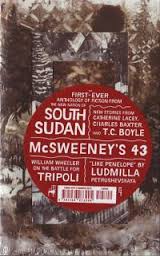
[READ: June 1, 2013] McSweeney’s #43

And with this issue I am almost all caught up with my McSweeney’s.  More impressively, I read this one only a few days after receiving it!

This issues comes with two small books.  And each book has a very cool fold-out/die cut cover (which is rather hard to close and which I was sure would get caught and therefore ripped on something but which hasn’t yet).  The first is a standard collection of letters and stories and the second is a collection of fiction from South Sudan.  Jointly they are a great collection of fiction and nonfiction, another solid effort from McSweeney’s.

Letters (more…)

Read Full Post »

gidwitzSOUNDTRACK: “WEIRD AL” YANKOVIC-“Headline News” (1994).

HeadlinenewsThis single was released to coincide with Al’s box set Permanent Record (the only other place the song appeared at the time).  It’s a parody of Crash Test Dummies’ “Mmm Mmm Mmm Mmm.”

The song was very funny in 1994.  Now, twenty (holy cow) years later, it loses some, well, really all of its topicality.  If people even remember the subjects [Singapore caning American delinquent Michael Fay, figure skater Tonya Harding’s then-boyfriend attacking her rival Nancy Kerrigan, and Lorena Bobbitt severing her husband’s penis with a knife] that just goes to show that al was right in joking that he “wanted to write a song about these people because [he didn’t] think they’re getting quite enough media attention.”

The second track is an “Alternate Mix” of “Christmas at Ground Zero,” one of Al’s better Christmas songs.  I’m not sure what is Alternate about it, and I was really hoping that it would include the voice of Ronald Reagan, like it did in the video, but I suspect even Al has limits of access.  Nevertheless, the song sounds a lot better than the original, so there’s nothing wrong with that.

[READ:April 20, 2013] A Tale Dark and Grimm

Sarah gave me this story to read because she loved it.  It’s a re-imagining of Hansel and Gretel.

The narrator tells us that we we don’t really know the original story all, that’s it (and many fairy tales) are much much darker than one expects.  I know that Grimm’s stories are more violent than the versions we tell our kids, but I don’t know exactly how different these stories really are.  As such, I don’t know how much of the this Gidwitz is making up.  In many respects, that doesn’t matter at all because the story is great either way, but it is a point of curiosity wondering whether or not these stories really did say this back then.

Anyhow, this story begins with bold print, bold print in which the narrator talks to the reader directly: “Once upon a time fairy tales were awesome.”  And he prepares to tell us about Faithful Johannes, the precursor to Hansel and Gretel.  We learn how Hansel and Gretel’s parents met (primarily through thievery and greed) and were eventually married (despite the literal curses against them).  It turned out that Faithful Johannes, their servant, stayed with them all along, as all of the curses came true.  But then Johannes died, and then it was revealed that if the king cut off Hansel and Gretel’s heads their blood would restore Johannes to life.  So he did.

Hansel and Gretel came back to life (obviously) but they were so distraught when they overheard what had happened to them (they didn’t remember and of it) they ran away.  And that’s how they met the witch. (more…)

Read Full Post »

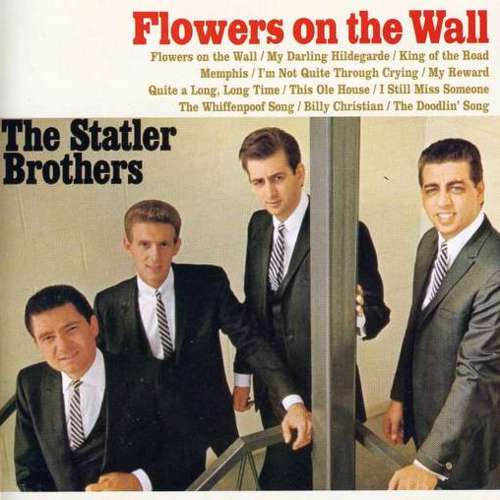
200px-FatesWorseThanDeathSOUNDTRACK: THE STATLER BROTHERS-“Flowers on the Wall” (1965).

flowersonthe Vonnegut mentions this Statler Brothers song in Palm Sunday as well.  I know this from Pulp Fiction–a song that I found very amusing and never would have guessed was a classic country song.  Country music was very different in 1965 than it is now.  I don’t even know if there was a folk or bluegrass category back then, and this song, with its banjo and bouncey acoustic guitar is a great example of the kind of country music I like.  And those harmonies!

This song certainly seems to be about insanity–about a man counting flowers on the wall, playing solitaire with a deck of 51 cards, smoking cigarettes and watching Captain KAN Kangaroo.  Don’t tell him he’s nothing to do.  What a weird little song.  And man is it catchy.  No wonder it was a #1 hit.

[READ: May 31, 2013] Fates Worse Than Death

After reading Palm Sunday I learned that Fates Worse Than Death was a kind of autobiographical sequel to that non fiction book.  I also learned that the two essays that make up Nothing is Lost Save Honor which is impossible to find (and for which I can’t even find a cover) are available in FwtD.  However, since there is no real contents or index, you do have to read the whole thing to find out which chapters contain the essays.  Or you can just look here and see that “The Worst Addiction of Them All” (which was published in The Nation) is in Chapter XIV and “Fates Worse Than Death” appears in Chapter XV.

The last time I read a bunch of Vonnegut together I got a bit burnt out on him and the same thing happened here.  The problem with Vonnegut’s nonfiction is that he tends to repeat himself.  A lot.  And while this book is ostensibly about the 1980s, he talks an awful lot about his family and his friends from the war and his other literary acquaintances., like he did in Palm Sunday.  In a number of places, he says that he doesn’t like to read himself in English, and it would seem that he doesn’t proofread to see if he said something already either.

This is not to say that the book is not worth reading.  Indeed, if you read Palm Sunday in the 80s and then this one in the 90s, you might not remember all of the details that pop up again, but when you read them days apart…well. (more…)

Read Full Post »

PalmSundayFrontandBackSOUNDTRACK: THE STATLER BROTHERS-“Class of ’57” (1972).

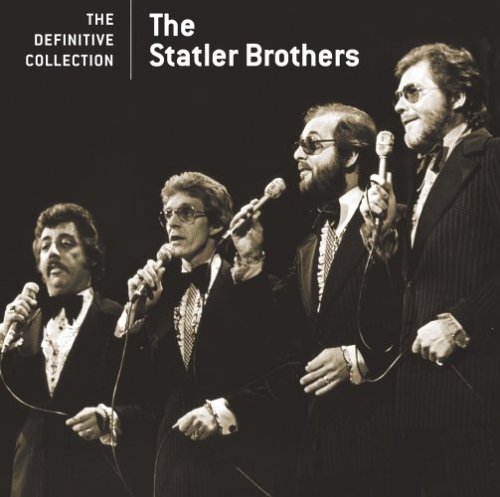
stalerI don’t know much about The Statler Brothers.  They are considered country, although this song is hardly country–it’s more folk with some bluegrass and, the real selling point–great harmonies (especially the bass singer with the big mustache).

The song is a wonderful coming of age song, sad and funny with a list of what happened to everyone in the class of ’57.  Like:

Betty runs a trailer park, Jan sells Tupperware,
Randy’s on an insane ward, Mary’s on welfare.
Charlie took a job with Ford, Joe took Freddie’s wife,
Charlotte took a millionaire, and Freddie took his life.

John is big in cattle, Ray is deep in debt,
Where Mavis finally wound up is anybody’s bet.

But the kicker comes at the chorus:

And the class of ’57 had its dreams,
Oh, we all thought we’d change the world with our great words and deeds.
Or maybe we just thought the world would change to fit our needs,
The class of ’57 had its dreams.

And then at the end:

And the class of ’57 had its dreams,
But living life from day to day is never like it seems.
Things get complicated when you get past eighteen,
But the class of ’57 had its dreams.

Vonnegut quotes the entirety of this song in the book and I’m glad he did, it’s a very moving song and really captures American life.

[READ: May 26, 2013] Palm Sunday

After writing several successful novels, Vonnegut paused to collect his thoughts.  And Palm Sunday begins: “This is a very great book by an American genius.”  It is also a “marvelous new literary form which combines the tidal power of a major novel with the bone-rattling immediacy of front-line journalism.”  After all the self praise, he decides that this collage–a collection of essays and speeches as well as a short story and a play which is all tied together with new pieces (in TV they would call this a clip show)–this new idea of a book should have a new name and he chooses: blivit (during his adolescence, this word was defined as “two pounds of shit in a one-pound bag.”  He proposes that all books combining facts and fiction be called blivits (which would even lead to a new category on the best seller list).  Until then, this great book should go on both lists.

This book is a collection of all manner of speeches and essays, but they are not arranged chronologically.  rather they are given a kind of narrative context.  What’s nice is that the table of contents lists what each of the items in the book is (or more specifically, what each small piece is when gathered under a certain topic).

Chapter 1 is The First Amendment in which he talks about Slaughterhouse Five being burned and how outraged he was by that–especially since the people so anxious to burn it hadn’t even read it (and the only “bad” thing is the word motherfucker).  The first speeches included are “Dear Mr. McCarthy” to the head of the school board where his books were burned and “Un-American Nonsense” an essay for the New York Times about his book being banned in New York State.  The next two are “God’s Law” for an A.C.L.U. fund raiser–it includes his confusion as to why people don’t support the A.C.L.U. which is working for all of our own civil liberties. (more…)

Read Full Post »

PlayerOne_Coupland

SOUNDTRACK: THE TRAGICALLY HIP-Now for Plan A (2012).

hip man

This is the latest Tragically Hip record and it bounces back from the more country feel of We Are the Same and provides eleven solid rocking songs (two of which are actually ballads and not rocking at all but are still good).  “At Transformation” starts with a big bass notes and some feedback, like an alternative indie rocker, but as soon as Gord Downie’s voice comes in it is unmistakably Hip.  This is one of their rockier songs and shows that they are back in fine form.

I recently wrote about “Man Machine” and “Now for Plan A” but I think they both work better in the context of the record.  “Man Machine” contrasts nicely with “At Transformation” and “Plan A” gives the album a chance to relax before the more rocking second half.  “The Lookahead” is the other duet with Sarah Harmer, although I fear she may be a little underutilized here.  It’s a great big chorused song that The Hip do so well.

“We Want To Be It” has a recurring “drip drip” section that I find mesmerizing.  I like the way drip drip turns into click click and then cricket and how it is alternately whispered and screamed.  I’ve never really heard a song where words were used in this way before.

I love the way “About This Map” starts slow but adds a great bridge/chorus that adds a lot of tension.  Take Forever” is a straightforward rocker which along with “The Modern Spirit” and “Streets Ahead” really exemplify the modern sound of the Tragically Hip–simple rockers with big choruses and thoughtful lyrics.  On the other end of the spectrum, “Done and Done” is a simple ballad that works nicely as the song before the closer.  “Goodnight Attawapiskat” (an aboriginal settlement in Northern Ontario) is the kind of amazing minor key, could-be-an epic that Hip fans always love.  It’s scaled down to 4 minutes, but it lets us know that they still have this kind of song in them.

The Hip will never release another record like Fully Completely or Day for Night and while there is something sad about that, it’s nice to see a band evolving and modifying their sound.  This album isn’t going to blow anyone away, but it is a solid collection of great songs.

[READ: May 15, 2013] Player One

I didn’t really understand what a CBC Massey Lecture was.  It was kind of explained, but I was confused how his lecture would have been a full length novel.  And while it is described as a novel in five hours, I doubt his lecture lasted five hours (the story takes place in real time over five hours, but surely no one would have listened to him read for five hours).  Well, thanks to Wikipedia: Each of the book’s five chapters was delivered as a one hour lecture in a different Canadian city: Vancouver on October 12, Regina on October 14, Charlottetown on October 19, Ottawa on October 25 and ending in Toronto on October 29. The lectures were broadcast on CBC Radio One’s Ideas, November 8–12.   Coupland felt that “a narrative seemed like the most efficient and accessible way of putting forth a large number of propositions about life in the year 2010.”

So this turns out to be a story that takes place over five hours, although like many stories with this conceit there are flashbacks (how could there not be).  There are five main characters: Karen, Luke, Rick, Rachel, and Player One.  Although Player One is a confusing character who may or may not really exist.

Karen is a divorced mom and has decided to travel across the country (from Winnipeg to Toronto) to meet a man in an airport bar for a possible fling.  She’s not proud of it but she thinks, why the hell not–she still feels good about herself.  In fact, on the airplane a boy takes some pictures of her with his phone, because she looks pretty hot.  And in the last one she gives him the finger.  (The whole reality of that–that someone may take a picture of you anywhere for any reason is pretty bizarre).  She arrives in the airport bar where she meets Rick, the bartender. (more…)

Read Full Post »

sign4SOUNDTRACK: GOAT-“Run to Your Mama” (2012).

goatI was intrigued to hear this song by Goat (whom I don’t know) because of the picture below.  Now that is a band photo!

Goat are a Swedish band and, like a bunch of Swedish bands recently, their guitar sound is very retro–a big open clean guitar sound.  But the riffs that they play are also very retro, this song sounds incredibly 70s–classic rock/heavy metal 70s.

The lead singer is the female of the trio, and she has a great raspy voice (and I assume she does the backing vocals as well).

The song feels like it could be an epic workout (especially when the solo kicks in and it is lengthy and, apparently, on a xylophone).  But right after the solo (at just under 2 and a half minutes), the song just ends.  It’s fantastic and I’m looking forward to hearing more from the album.

Goat

[READ: May 12, 2013] The Sign of (the) Four

I recently found out that the Sherlock Holmes book that I was supposed to have read in high school (from a reading list that I know I read at least some of) was actually not by Sir Arthur Conan Doyle.  Rather The Seven Per Cent Solution was a relatively recent (1974) book by Nicholas Meyer.  The only thing I remember from the book was learning that Holmes was an addict (and passing that news along to my mother with a tone of “see people have always been bad”).

Anyhow, in The Sign of (the) Four, the book opens with Holmes shooting up a seven per cent solution of cocaine.  The reason being that the cocaine kept his brain active when he had nothing else to do.  Holmes is bored, just waiting for something new to come along.  But Doyle doesn’t keep us waiting long.  A young woman, Mary Morstan, calls on Holmes for help with a case.  Or actually more like a series of interesting puzzles.  The first is the disappearance of her father, Captain Arthur Morstan in December 1878.  He came home from the war and then disappeared.  Holmes asks if he could be hiding, but she says no, he was very excited to come home and see her.  Since he has been gone, she has been employed as a governess and the family she assists have more or less taken her in as a member of the family.

The second puzzle is that she has received in the mail one very expensive pearl a year since 1872.  It always comes on the same date and the sender has remained anonymous.  This all started when she answered an anonymous newspaper ad that asked about her.  With the last pearl she received a letter that said she has been wronged and the sender asks to meet her.  He also says that she shouldn’t come alone.  So she asks Holmes and, by extension, Watson to accompany her.

Through a series of vehicles, they meet Thaddeus Sholto, a friend of Captain Morstan, who confirms that the Captain died in 1882.  Sholto’s father and Captain Morgan were in the war together.  Six years ago they had a fight over a treasure.  During their argument, the Captain suffered a heart attack and died.  Sholto’s father totally freaked out and hid both the body and the treasure.  Some time later, in declining health, his father confessed his sins, but on the night he died, he saw a man out the window who later broke into the house and left a note that said The Sign of Four (incidentally, the title of the book is variously The Sign of The Four and The Sign of Four; Doyle himself had written it both ways).  Thaddeus and his brother Bartholomew take over the treasure.  Well, Bartholomew takes it over and allows Thaddeus to send Mary the annual pearl as a payment for what happened to her father.

On the night that the story takes place, they travel to Bartholomew’s because he is in declining health.  But when they arrive, they find him dead–from a poisoned dart.  And the treasure is missing. (more…)

Read Full Post »

wim SOUNDTRACK: GIRAFFES? GIRAFFES!-“Fucking Ants Man! Where They Coming From? (Let’s Hang The Carroll Footnoteitsists)” (2005).

girafI just learned that there is a band named Giraffes? Giraffes!, which is the name of a silly book published by McSweeney’s.  I was so delighted to find out about this band, that I immediately went to their band camp site, where I was further delighted to find out that they are an instrumental post-rock kind of band with some great tunes.  And, of course, when your songs are instrumental, you get to make up the best titles.  Like this one.

There’s only two guys in the band which must mean overdubs (I hope so, otherwise they defy physics).  This song starts out with a riff in what I think is 5/4 time which discombobulates for a while until it becomes a wild guitar riff (and the drums come more to the fore).  While that speedy riff is going on, another more pleasant solo plays over the top.  Then the song plays some really fast drums with chords that sound like mid 70s Who, which is followed by another pretty guitar solo.  The end resorts back to some mild chaos and fun until it ends very prettily.

If you like post rock, give Giraffes? Giraffes! a try.

This song comes from their debut album, Superbass!!!! (Black Death Greatest Hits Vol. 1).  Which you can hear here.

[READ May 5, 2013] Places, Strange and Quiet

This is a book of photographs by Wim Wenders, filmmaker extraordinaire.  What I fouond very interesting about this book is that it is not a book of art (as far as I define it).  It is rather a book of documentation.  These pictures are not beautiful, they are not artistically arranged, they are not profound.  Rather, it is the combination of picture and text that really makes the story.  In some ways this becomes a book of stills from a never-to-be-made film.  And as such, it’s very cool.

The first one is a picture of a family in front of a dinosaur (which looks like it is from the 1970s—huh turns out to be 1983).  It is under-lit and not very impressive.  Until you read the sidebar: “A picture is defined twice.  When you see the whole at first glance: “A dinosaur!  A family!” And then when you find a detail that changes everything…Mom reading in the backseat.  He’s absolutely right.

I loved “Sun Bather” with a crazy scene of polka dotted sun benches in Palermo.  Wender’s text: “Nothing exists without its opposite…But what could the opposite of this be?”  To me the most profound pictures are the series Ferris Wheel from two different angles. His comment “Sometimes only the reverse angle tells the truth” is really powerful, because from one angle the Ferris Wheel shows one scene and yet from the other the background is entirely different.

I loved the wall with sink and the Armenian alphabet—although the Armenian cemetery was even more impressive.  And the gorgeous gorgeous (this one is art) pictures of the islands off of Japan is simply beautiful. (more…)

Read Full Post »

#20SOUNDTRACK: SUGAR-File Under: Easy Listening (1994).

fuelI  always thought File Under: Easy Listening was a very funny title.  But it’s possible that people took it too literally as it didn’t sell all that well. And in Mould’s autobiography he says he didn’t have much time to write songs for this disc and he thinks it suffered.  Of the three Sugar discs, this is definitely the weakest, although there are some great moments on it.

The disc opens with “Gift” which has some ragged distorted guitars. It’s got some noises and grungy sounding solos showing that FU:EL was a joke.  Although, the overall sound is kind of a cleaner version of the angry songs on Beaster.  “Company Book” is kind of a pounder, until the voice comes in and you realize…it’s not Mould!  It’s got a catchy chorus, but after the kind of underwhelming opener, it’s a strange place for a song that’s also not so dynamic.  Especially when it’s followed by “Your Favorite Thing” another great pop song from Mould—not top tier but a really strong second tier (although that bright, simple guitar solo is a real winner).  “What You Want It To Be” is a another decent song (the addition of that extra guitar playing the melody line really makes the song shine.  “Gee Angel” is also a high point.  A catchy song, but which never quite reaches the heights of the previous albums.

“Panama City Hotel” has the same feel as the opening of Beaster: bright acoustic guitars and a similar riff.  But it never really goes anywhere, and the 4 minutes seem.  The “do do do do’s” that open “Can’t Help You Anymore” are certainly the brightest spot on the album, and a big pop song as well.  “Granny Cool” has a nicely abrasive riff although it seems kind of mean spirited.  It’s funny that he tucked “Believe What You’re Saying” at the end of the album.  It’s a minor song but it sounds so bright on this album after the other songs. It’s really quite pretty.

And the closer, “Explode and Make Up” is one of Mould’s great angry songs.  Unlike Beaster, this one has a happy acoustic field—bnright guitars with that raging distorted guitar underneath.  It’s a great slow burner of a song and at five minutes it ends a somewhat lackluster album in a great way.

[READ: March 31, 2013] McSweeney’s #20

McSweeney’s #20 is an issue that I have read before.  At least I think I have.  My recollection is that it was the last one I read before I started writing about them on this blog.  I was hesitant to read it soon again, which is why I waited until now.  And while I remember the issue itself (with all of the art), I didn’t remember the stories.  So who knows if I actually read it six years ago.

Anyhow, this issue comes jam-packed with art.  Every fourth page has full-color artwork on it–many of them are quite famous.  It makes for a very beautiful book.

In between these artworks are a number of stories–ranging in size from 2 pages to 30-some pages.  There are no letters, and the explanatory and copyright information is on the cover of the book–which would be fine, except that it is covered up by a kind of 3-D artwork.  I wonder if the whole text is available anywhere?

The book also comes with a separate pamphlet–an excerpt from Chris Adrian’s Children’s Hospital.  I intend to read the novel eventually so I didn’t read the excerpt–although maybe if I put off the novel for six years I should just read the excerpt now. (more…)

Read Full Post »

« Newer Posts - Older Posts »