Feeds:
Posts
Comments

Archive for the ‘Violence’ Category

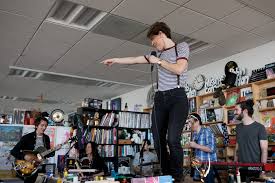
maha SOUNDTRACK: MASHROU’ LEILA-Tiny Desk Concert #543 (June 24, 2016).

mashrouMashrou’ Leila is a band from Beirut.  And because I love this kind of thing, here is their name in Arabic script: مشروع ليلى

They are on their second ever tour in the U.S.  They sing in Arabic but their music is full of rock and indeed dance motifs.

There are five members of the band: singer and lyricist Hamed Sinno, violinist Haig Papazian, keyboardist and guitarist Firas Abou Fakher, Ibrahim Badr on bass and drummer Carl Gerges.  And the band make up is rather diverse:

Sinno is openly gay, and Mashrou’ Leila is well acquainted with the targeting of LGBT people. The band has faced condemnation, bans and threats in its home region, including some from both Christian and Muslim sources, for what it calls “our political and religious beliefs and endorsement of gender equality and sexual freedom.” And yet, when Mashrou’ Leila performs in the U.S., its members are often tasked with representing the Middle East as a whole, being still one of the few Arab rock bands to book a North American tour.

Their set took place on the morning after the dead club murders in Orlando (June 12), and since the band has had direct experience with this, they modified their intended set list.

I want their music to speak for itself, because it’s really good.  But since it’s sun in Arabic, some context helps

“Maghawir” (Commandos), is a song Sinno wrote in response to two nightclub shootings in Beirut. In the Beirut incidents, which took place within a week of each other, two of the young victims were out celebrating their respective birthdays. “Maghawir” is a checklist of sorts about how to spend a birthday clubbing in the band’s home city, but also a running commentary about machismo and the idea that big guns make big men.

It begins with a low menacing bass (keyboard) note and some occasional bass (guitar) notes until the echoed violin plays some singularly eerie notes.  Sinno’s voice is really interesting–operatic, intense and not really sounding like he’s singing in Arabic exactly.  He has rock vocal stylings down very well, and the guttural sound of Arabic aids the song really well.  I’m really magnetized by his singing.  And the lyrics:

“All the boys become men / Soldiers in the capital of the night,” Sinno sings. “Shoop, shoop, shot you down … We were just all together, painting the town / Where’d you disappear?” It was a terrible, and terribly fitting, response to the Florida shootings.

For the second song, “Kalaam” (S/He),Sinnos says it’s about the way “language and gender work in nationalism.  In Arabic, words are feminine or masculine and it’s about being in between while trying to pick someone up at a bar.”

Sinno dives deep into the relationships between language and gender, and how language shapes perception and identity: “They wrote the country’s borders upon my body, upon your body / In flesh-ligatured word / My word upon your word, as my body upon your body / Flesh-conjugated words.”

There’s interesting percussion in this song.  And more of that eerie echoed violin.  But it’s when the chorus kicks in and there’s a great bass line (which comes out of nowhere) that the song really comes to life.  There’s a cool middle section in which the keyboards play a sprinkling piano sound and there some plucked violins.  All along the song is catchy but a little sinister at the same time.

The final song, “Djin,” is based on Joseph Campbell’s archetypes.  Sinno describes the comparison between Christian and Dionysian mythologies but it’s also about just about “getting really messed up at a bar.”

“Djin,” is a perfect distillation of that linguistic playfulness. In pre-Islamic Arabia and later in Islamic theology and texts, a djin (or jinn) is a supernatural creature; but here, Sinno also means gin, as in the alcoholic drink. “Liver baptized in gin,” Sinno sings, “I dance to ward off the djin.”

It has a great funky beat and dance quality.  The way the chorus comes in with the simple backing vocals is great.

There’s some pretty heady stuff in their lyrics, and that works on the level of their band name as well:

The most common translation of “Mashrou’ Leila” is “The Night Project,” which tips to the group’s beginnings back in 2008 in sessions at the American University of Beirut. But Leila is also the name of the protagonist in one of Arabic literature’s most famous tales, the tragic love story of Leila and Majnun, a couple somewhat akin to Romeo and Juliet. Considering Mashrou’ Leila’s hyper-literary bent, it’s hard not to hear that evocation.

I hope they get some airplay in the States. Sadly their album is only available as an import, but it is downloadable at a reasonable price.

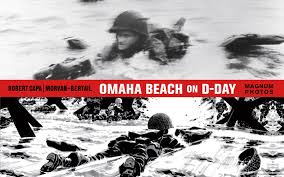
[READ: June 10, 2016] Omaha Beach on D-Day

Nobody picks up this book for fun.  I mean, look at that title. You know this isn’t going to be a laugh.  But it is an amazing book and I think  perhaps the title does it a bit of a disservice.

This book is not exactly about the massacre that was Omaha Beach on D-Day.  It is about that certainly, but the book is really about Robert Capa, the photographer who took the most iconic photos of Omaha Beach on D-Day.  This book is far more of a biography of him than an account of the war.  And in typical First Second fashion, they have made a gorgeous book full of photorealistic drawings that really exemplify the work that the book describes.

The book opens in Jan of 1944 with Capa carrying bottles of champagne amid the burned out wreckage of war.  He is bringing the celebratory drink to his fellow reporters who have been hiding out for a few days. Capa says he is leaving for London. (more…)

Read Full Post »

zahraSOUNDTRACK: WEAVES-Tiny Desk Concert #539 (June 10, 2016).

weaves There’s been quite a few mellow bands on Tiny Desk as of late so this rocking quartet from Toronto are a fun change of pace

And boy do they stand out.  Lead singer Jasmyn Burke is wearing a psychedelic dress and has a pretty wild afro.  She sings in a way that seems like maybe she could be doing something else, but always with a wry smirk.  And her voice is unusual–almost talking, but sometimes hitting slightly off-sounding notes (and at times seeming almost childish) but it all works really well within the songs.  And then there’s the music.  A bass, guitar and drum, and Morgan Waters, the guitarist, playing as if he’s doing several different songs at once.

“Coo Coo” features some picked guitar parts, some distorted chord parts, a part that mirrors her vocals (during the delightful chorus of “You’re so coo coo / I’m so coo coo  / I’m so crazy.”  And then there’s the part during the final chorus which features him playing something different after each time she says “I’m so coo coo” –trash metal guitar, simple guitar lines, then squeaky fractured notes.   It’s hard to know who to watch more.  And the bassist is no slouch either, as he keeps up pretty nicely with the wild playing.

As they start the next song, “Shithole,” the drummer starts the wrong one but they correct him and say that they are gong to play “Shithole” in this nice building.  It opens with a delicate guitar riff and a pulsing bass line.  The song is surprisingly mellow until the middle section when a noisy solo kicks in, but this song is primarily bass and vocals with a really abrupt ending

“One More” is a fast punky song which is again mostly bass and drums until the loud distorted guitars check in to accompany the vocals. I get a kick out of the odd way she sings “One more” (accompanied by a suitably squeaky guitar).

Mostly Jasmyn doesn’t seem to be singing all that hard until portions so this song when all four are going a little crazy.

They are fun band that I need to explore some more–I’ll bet they are a lot of fun live.

[READ: March 1, 2016] Zahra’s Paradise

This book is a fierce indictment of the Iranian Islamic revolution and the questionable election that took place in 2009 which brought Mahmoud Ahmadinejad to power.

It was written (by Amir) and drawn (by Khalil) pseudonymously so that they could avoid prosecution (or worse) in their home country of Iran.  In fact, while the story was amazing and really powerful, it was the afterword that I found so important.

But the story first.  And the part that will make no one want to read this book–a bag full of puppies is killed.  Yup, getting that out of the way right from the start.  And in fact, there doesn’t really seem to be a lot of justification for it.  It gets referenced a few times in the story, but nothing else is quite as graphic as the prologue (so you can skip that if you don’t want to see an image that you won’t be able to get out of your head). (more…)

Read Full Post »

lilychen SOUNDTRACK: BARRY DOUGLAS-Tiny Desk Concert #537 (June 3, 2016).

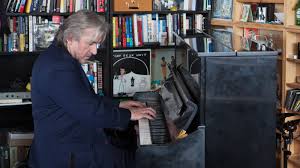
barryBarry Douglas is a “classical” pianist from Ireland.  I’ve put classical in quotes because although what he plays is classical in sound, the music actually comes from Celtic tradition rather than the classical canon.

“The Coolin” (An Chúileann) translates to “The Fair-Haired Girl” and dates to around 1641.  His arrangement has a very baroque feel (he is actually a classical pianist, too), which gives the traditional song a more regal air.

He follows that lovely delicate song with “Planxty Dylan.”  Planxty is an Irish dance.  He says that harpists would travel around Ireland and people would look after them.  The harpist would then thank the homeowner by writing a song named after the home where they stayed.  This romp of a dance (at only about 1 minute long) was dedicated to the house of Dylan.

From playing a planxty to the band Planxty.  Douglas has arranged the Planxty song “Raggle Taggle Gypsy” for solo piano.  It has been around since the 18th century.  Planxty made it more famous as a vocal song (which I know) but Douglas’ piano version has a lot of fun with the melody as well.  The melody is also known as “Black Jack Davy.”

“My Lagan Love” is about the River Lagan in Donegal (there are actually four Lagan Rivers in Ireland).  The melody and poem were written by unknown persons.  Douglas arranged this without words in an attempt to make it more timeless.  I know the original and this is a really lovely in this instrumental version.

I can say that I was pleasantly surprised to hear this was the kind of solo music that Douglas was going to play.

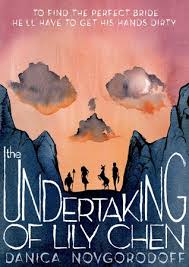
[READ: April 2, 2016] The Undertaking of Lily Chen

The whole premise behind this story is disturbing and apparently true.

Novgorodoff includes a section of an article from 2007 which says that parts of rural China have seen the rise of “ghost marriages.” In this situation, when an unmarried an dies, his parents procure the body of a woman, hold a wedding and then bury them together.  This has led to a black market in corpse brides.  EW!

This story explores that revolting concept. (more…)

Read Full Post »

chester SOUNDTRACK: ROBERT ELLIS-Tiny Desk Concert #534 (May 23, 2016).

robellisRobert Ellis is a singer-songwriter who I was unfamiliar with (a familiar refrain in recent Tiny Desk Concerts).

Ellis is from Texas and his voice rings of country singers.  But his guitar playing and song styles sound more Americana or singer-songwritery than country.  he walks a fine line, which probably means he is loved by neither faction.

He plays three songs.  The first sees both men (him and Kelly Doyle) on electric guitar, with a catchy riff and fun chord progressions.  (Their suits are pretty spectacular too).

After the first song, Ellis says, “I’d like to take this opportunity to introduce my favorite guitar player on the planet, Kelly the Telly Doyle.”  After a pause he smiles and says, “There’s only two of us up here so there’s only two things I could have said” to much laughter.

“Driving” was written about being in Nashville TN and going nowhere. But it is a masterful piece of guitar work with him (on acoustic) and Doyle (on electric) playing these wonderful fast lines that overlap and intertwine and sound amazing together.  The vocal melody line is fast and familiar, but it’s those recurring fast guitar lines that are really wonderful.  And indeed, Doyle does some wonderful pyrotechnics on his electric guitar, including a nice harmonic at the end.

For the final song, “California,” Ellis switches to piano with some more nice guitar harmonics from Kelly.  His voice sounds very familiar on this song–it’s a slower more expansive piece that allows him to sing bigger.  I like the way the chorus seems to work as a continuous melody after it seems like it ought to have stopped.  There’ a real 70s vibe to this song.

I’m always curious to see if I’ll hear more from someone like Ellis after seeing him on the Tiny Desk Concert.

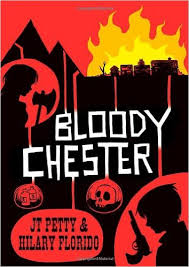
[READ: February 19, 2016] Bloody Chester

This is a story of the Old West.  I don’t especially care that much about the Old West.  It seems so totally unreal that I never know what actually happened.

This story starts out especially dark with a boy named Lady Kate getting beaten up in a bar.  We back up on the story a little and realize that this boy is Bloody Chester.  He was a feared tough guy based on reputation. True, his last name was Kate, but Bloody Chester suited him well.  Until he had an unfortunate experience with a lady of the evening and his reputation changed from Bloody Chester to Lady Kate.  And that’s when the abuse came.

Trying to get by in town is now pretty tough.  He drinks a lot and all he has left is his horse.

The one major problem I had with this story is that Chester looks like he’s about 12 years old–like the other young people.  While I’m not doubting that young kids did horrible things in the Old West, they seem too young for everything that happened (especially the lady of the evening). (more…)

Read Full Post »

slowstormSOUNDTRACK: ANDY SHAUF-Tiny Desk Concert #533 (May 20, 2016).

shaufI was unfamiliar with Andy Shauf although once he started playing, I thought his songs sounded familiar.  One of the more interesting thing about him is his singing enunciation (which reminds me a bit of SOAK for a recent comparison–although she is from Northern Ireland and he is from Saskatchewan).

It’s interesting to me that Shauf plays only rhythm guitar–all of the melody lines and solos come from his keyboardist.  It’s also interesting how motionless Shauf is.  He stands quite still and doesn’t even really move as he sings (his voice is mellow but not exactly quiet).

“The Magician” has as some great riffs from the keyboard and some interesting chord changes as the song draws to and end.  And of course, Shauf’s calming, delightful voice (complete with do do do dos) make the song quite lovely.

“To You” sounds similar to the first–same basic tempo and tone, with nice little fills that elevate the song from a simple chord structure.

His final song, “You’re Out Wasting” is “an older song” from his last album.  There’s another great melody running through this song and it’s a bit more uptempo.

I’m not sure if it’s his hair or his posture but he looks uncomfortably hunched-over while playing.  But that doesn’t stop his voice from sounding great and his songwriting from being really enjoyable.

[READ: February 2, 2016] Slow Storm

I really like the way Novgorodoff works with watercolors to create cool backgrounds. However, I don’t really like the way she uses her pen–I don’t care for the look of her characters.  And I don’t love the hand lettering all that much either.

This story is one that I wouldn’t read if it weren’t a First Second book.  And while I’m glad I read it and I found the convergence s of characters to be really interesting, it was a rough road getting thee.

The story begins with no words, just a series of images that juxtapose a tornado/storm and the Kentucky Derby.  The storm is hitting a barn where horses are kept, so these horses are also running, but hey are frightened of course (I especially didn’t like the style of the frightened horses).

Then we see a man get hurled by the tornado into a barn. (more…)

Read Full Post »

divibne SOUNDTRACK: DAYMÉ AROCENA-Tiny Desk Concert #531 (May 13, 2016).

daymeDaymé Arocena is a Cuban singer with a powerful voice and a great sense of fun.

“Madres” opens the set. This may be the first song I’ve ever heard that uses a rain stick (or box in this case) as a prominent source of percussion.  After a minute and a half of beautiful a capella singing (in Spanish, I believe) the six-string bass comes in with a very unusual syncopated riff.  And then comes the staccato piano–it has a very jazz feel.  After a minute of this, the song settles into a groove and gets really catchy. The music is very jazzy (the piano especially) with some really complex bass lines.

And it’s amazing to watch Daymé smile big as she sings (and shakes her maracas).  It’s even more amazing to read that she is only 24!

She ends the song by singing a thank you to everyone for being here today, and then thanks President Obama for going to Cuba (this was around March 25, 2016).  Then she is so cute introducing the second song, “Crystal,” written for a boy “the kind of boys you get in your life who give you nothing.”  It opens with jazzy pianos and her powerful voice (singing in English this time). There’s some wild bass soloing in the middle of the song.  The end of the song features her scatting and improvising and making some fascinating vocals sounds.  It’s really fun.

She says that in the 1970s it was obligatory for Cubans to study Russian.  She is only 24 so she never did, but she wrote this groovy song “El Ruso” about that time.  This story is very jazzy with a catchy riff and more cool scatting.  The blurb talks about how since the U.S. has opened up communication with Cuba, that we may be getting more Cuban music here. And that’s no bad thing.

[READ: March 10, 2016] The Divine

This is an ugly story.

It was inspired by the AP photo of 12-year-old Thai warriors smoking cigarettes (see bottom of the post). These twins, Johnny and Luther Htoo, held 800 people hostage in 2000.  They led a group called “God’s Army” and fought the Burmese army.  It was said that the twins  had magical powers.

And that is the basis for this story.

It opens with a very ugly American, Jason.  He is a soldier who describes the joy he received in shooting animals from his helicopter: zebras, parrots, etc. Until he wound up shooting a dragon.  A dragon, man!

We see this soldier trying to convince his coworker Mark (in some kind of science lab) to return to Quanlom–it’s a ton of money for only two weeks’ work.  The ostensible job was to explode volcanoes to try to get the minerals out of the mountains. (more…)

Read Full Post »

feynman SOUNDTRACK: LARA ST. JOHN-Tiny Desk Concert #530 (May 9, 2016).

laraWhen Lara St. John released her first CD it made ripples because of the way she appeared on it (presumably topless).  But if that was a stunt to get people to listen, it was a good one because the music on it was phenomenal (and the disc sold very well).  St. John is masterful on the violin and has released a dozen or so CDs of herself playing.

I have never seen her play before and it is a marvel watching her fingers  fly (and slide) all over the neck of the violin (including some absurdly high and fast notes).

The first piece is “Czardashian Rhapsody.”  It is an amazing mashup of two songs by Martin Kennedy: Czardas, the most familiar Hungarian melody for violin and Hungarian Rhapsody No. 2, the most familiar Hungarian melody for piano.  He merged them into a real barnstormer.  It’s 6 minutes of switching back and forth between the familiar melodies and very gypsy-esque sections (and some very long held notes).

The song is 6 minutes of musical acrobatics.

Although this is billed as St. John’s show, much recognition must go to her pianist Matt Herskowitz who is also magnificent.

St. John clearly has a sense of humor since she named her new album Shiksa.  She says the album actually has ten different titles because every culture has a word for “big Canadian chicks” like herself.

The second piece is “Sari Siroun Yar” by Serouj Kradjian.  She says it was the first song she heard when she went to Armenia in the lat 1980s.  It is a bittersweet Armenian troubadour song.  While this song is much more mellow than the first, it still showcases some amazing playing on both musicians’ parts.  The opening notes she plays high on the fret board which gives the violin a very different sound–almost breathy.  And the main melody is quite lovely.

The final song is once again a wild one.  “Oltenian Hora” is one that St. John arranged herself.  It plays off a catalog of violin tricks, St. John explains, practiced by traditional Romanian gypsy fiddlers: rapid-fire whistles, bird calls and slithery harmonics, all in a variety of off-kilter rhythms.  I’ve never seen some of the things she does on the violin (those bird calls are amazing).  And by the end she is bowing so hard the bow seems about to break.  It is way intense and really awesome.

I’m not sure I’ve ever seen a violinist get out of breath from playing so hard before, but she deserves all of the applause.

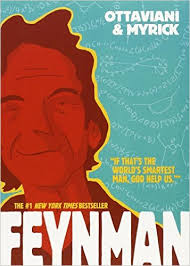
[READ: March 15, 2016] Feynman

This is a graphic novel biography of Richard Feynman.  Ottaviani worked as a nuclear engineer, programmer and reference librarian, so you can trust him.

I have respected Richard Feynman for years.  I have a few of his books, although I can’t say I have read them intensely.  I knew that he was considered an amazing professor–making really intense subjects easier for the layman to understand.  And many of his lectures are available as audiobooks.

But there was so much about him that I didn’t know.  And this biography (which runs nearly 300 pages and is jam packed with information) covers nearly all of it.  Including excerpts from his own publications and attaching a massive bibliography for more works by and about Feynman. (more…)

Read Full Post »

mikesplace SOUNDTRACK: MONIKA-Tiny Desk Concert #529 (May 6, 2016).

monikaMonika is a superstar in her native Greece (her full name is Monika Christodoulou).  She is a charming woman with a big voice and a bigger stage presence.  She incorporates theatrical notions in her performance too (the fact that she has a shirt that looks like a mime’s kind of encourages that idea): “throwing” stars, flying, sleeping.

It is hard to believe that the blurb says used to sing sad songs, as she is so fun and bouncy.  But there’s this biographical note:

her recent transition from singer of sad songs to purveyor of upbeat jubilance came after she nearly lost her life in a boat fire; she had to swim eight hours in the dark to safety without food or drinkable water. These days, it’s all about a great band grooving, her joyful voice, and that infectious smile.

Wow.

She sings four songs.  The first, “Yes I Do,” opens with what I assume is a lyric about the then current moment: “24th of March has arrived and I think it’s Thursday?  Washington is beautiful out there but we don’t really care.”  It has a kind of circus opera feel.  And Monika’s voice is a marvel–powerful and beautiful with a good range.

monika2For the second song, “Shake Your Hands” she asks if everyone is ready to dance a little.  She climbs up on the desk and as she sings the slow opening, when she gets to the “I love you” moment, she sings without the mike and is as loud as when she uses it.  Once the song kicks in, it has a big disco beat: wah wah’d guitars and a funky bass line.  She encourages everyone to sing along: “Even if you don’t understand, just repeat, okay.”  The song ends with a very fun extended ending of staccato chords.

“Hand in Hand” has a kind of gospel quality (a big group sing along of the opening lines), although it is a brief, transitional song before “Secret in the Dark” begins.  She straps on a guitar for this final song which has a discoey riff and a fuzzy keyboard sound.  It’s really fun.

I’d never heard of Monika, but she seems like the kind of pop/dance star that would be really fun to see live.

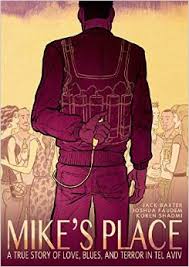
[READ: April 1, 2016] Mike’s Place

Somehow I missed that word in the subtitle: True.  I didn’t realize that this was a true story until the very end.  The story was really good before I knew that and it makes it even more amazing after I found the truth.

In Tel Aviv, Israel, John Baxter (Jack), a filmmaker has come to cover a story.  He goes into a local bar called Mike’s Place for a meal.  He is greeted warmly and is told that there is live music every night of the week.  They proudly state that Mike’s is a place where people of all stripes comes to congregate and do anything but talk about politics.

It turns out that there are already people making a documentary about the subject who John came to cover (Marwan Barghouti) so Jack  decides to give up. (more…)

Read Full Post »

marathon SOUNDTRACK: EIGHTH BLACKBIRD-Tiny Desk Concert #528 (May 2, 2016).

8thEighth Blackbird is described as a “new music ensemble” from Chicago.  That means they play classical music that is new and “different.”  The sextet says that looking at each other–being able to communicate–is essential for playing these complex pieces, which calls for an interesting arrangement behind the Tiny Desk.

The first piece is actually two pieces called “Wave the Sea” and “Brushy Fork” from a suite called Murder Ballads by Bryce Dessner (better known as being in The National) .  The piece opens with a flute solo by newest member Nathalie Joachim, and then some complex series of notes and timings from the rest of the band–this is cerebral music that you must really pay attention to.

“Pulse,” from Robert Honstein’s three-movement Conduit is a much more gentle piece, far less frenetic and more mellow. It opens with Matthew Duvall’s vibraphone, Yvonne Lam’s violin, Lisa Kaplan’s piano and Michael J. Maccaferri’s clarinet which all seem to get added in one at a time until it is all just one consistent piece.  Nicholas Photinos’ cello offers some low end while the flute seems to float above the whole piece.  The song seems like it could just keep going forever as a very slow, beautiful round.

The final piece is by David Lang (an artist they have played for many years).  “learn to fly” returns to that frenetic tempo of the first piece .  Opening with wild syncopated piano notes (it looks impossible to play) and added to by the flute, clarinet and cello.  And just when you think the whole piece will remain in this style of complex syncopation, a violin solo bursts forth and soars for a few bars before returning to the melody.

I don’t listen to a lot of classical music, but I really enjoyed this Concert a lot.

[READ: March 1, 2016] Marathon

While overall I have really enjoyed the First Second books that I’ve read, this one I found really confusing and not exactly enjoyable.

The story begins in 490 BC.  Unbelievably it says the temperature is 106 degrees Fahrenheit (but sure, why not).  A man is running from Athens to Sparta (distance 153 miles).  Then there’s the confusing title: Athens: Twelve Years ago. Which I assume means 12 years before 490 BC–where we see some young boys racing.  Eucles won the race.  It is shocking to everyone that he is the son of a slave.  The slave defeated the Kings “own bastard son Phillipus.”   And so the King cuts off Phillipus’ head.

When he fails a test shortly thereafter, Eucles’ parents are executed.

Yup it’s that kind of story.

The king is Hippias.  He is exiled soon after the events of 12 years ago. (more…)

Read Full Post »

41116 SOUNDTRACK: SERATONES-Tiny Desk Concert #522 (April 15, 2016).

seraThis Seratones show totally rocked!  And it was a nice change of pace from the slower bands who have been on the Tiny Desk lately.

The lead singer and guitarist is A.J. Haynes.  She plays guitar with a pick on her thumb and has a very clean guitar sound.  Her voice is really lovely—powerful and strong and covering multiple styles from Grace Slick to PJ Harvey.  The blurb says

Haynes grew up singing in the Brownsville Baptist Church, learning to sing out to and hit that back wall without a microphone.

And that’s apparent from the ease she has at singing.  The rest of her band is really great too.  Continuing the blurb:

bassist Adam Davis heard a lot of American rock’s greatest guitarist, Jimi Hendrix, as well as the amazing voice of Janis Joplin. The rest of the band is rounded out by the drumming of Jesse Gabriel, who is spare but there with a sharp backbeat, while guitarist Connor Davis rocks with lyrical grit.

Although I had to laugh because Haynes seems to be having so much fun while her bandmates are rather stonefaced.

They play three songs and they are all great.  “Don’t Need It” rocks out like nobody’s business.  Haynes is a charismatic (and adorable) lead singer with a big afro and a great smile.  “Get Gone” has a much more bluesy sound.  I like the way she delivers the line: “Suns coming out like you knew it would.”  After each verse she gives a big high-pitched “ooh oooh.” And then comes back with a growly low voice.  I love that she’s alternately belting out notes and then singing falsetto.

“Chandelier” has a great funky groove.  When the song sorta stops and just the drums kick in she gives a delightful giggle.

I was really delighted with this band whom I’d never heard of before and I definitely want to check out their recently released debut album.

[READ: April 11, 2016] “The Burglar”

I enjoyed the way that this story was structured.  One paragraph at a time with a dot in between them.  This allowed for a strange juxtaposition of time, with some things happening simultaneously and others possibly out of sequence.

There are several characters in the story.  There is a the burglar (known primarily as “he”); there is the wife who is waiting for exterminators to come to the house–she’s out and hopes to get home before they do).  There is the husband, who is off at work.  His job is fascinating, he’s writing his first script for a TV pilot.  The producers of the show want it to be edgy and different.  The character he is working on (the only person named in the story) is Emmet Byron Diggs, who is falsely accused of killing his wife.  Emmet is black, but the producers don’t want him to think about that as he develops the character.

The story rotates through these characters.  We see the scriptwriter and the producers talking about the show: a time travel show in which Emmet is going to start killing people.

The burglar encounters a dog in the house and tries to figure out how to deal with it.

The wife is racing to get home.

And Emmett is also walking down a street checking out the twenty-first century world he’s in.

Okay so the burglar is in the woman’s house.  But she hears him upstairs and assumes he is the exterminator.

And then the burglar hears her and tries to figure out what he’s going to do.  He calls out, “Just the cleaning crew.”  he berates himself for saying such a weird thing and she thinks its weird that the exterminator would call himself the cleaning crew.

And that’s when the phone rings and it’s the exterminators calling to say they’ll be late.

How does this real-life scenario play out at home while her husband is trying to create a similarly fictionalized setting on the page?

The stories even began to overlap somewhat with action in both stories taking place in a kitchen.  By the end of the story it’s not entirely clear what’s even happening, at least to me.  And yet despite or because of this confusion, I really loved the story.  It was intense and strangely funny at the same time.

Read Full Post »

« Newer Posts - Older Posts »