Feeds:
Posts
Comments

Archive for the ‘Violence’ Category

olymmp SOUNDTRACK: WATKINS FAMILY HOUR-Tiny Desk Concert #471 (September 18, 2015).

wfhThe Watkins Family Hour began a dozen or so years ago as a way for a group of friends to get together and play old and new tunes. For Sean and Sara Watkins, it served as a monthly bit of magic: a musical variety show filled with extraordinary talent in the world of folk, bluegrass and beyond at L.A.’s famous Largo.

Sara and Sean Watkins took this fun on the road, with pianist Benmont Tench, drummer Don Heffington and bassist Sebastian Steinberg, and they made a stop at the Tiny Desk. They even brought along Fiona Apple to sing on “In the Pines” the old blues song.

The first song “Steal Your Heart Away” is sung by Sara (with violin melodies between verses) and Sean (on guitar).  It’s a bouncy folk song with a lovely piano added (which seems to move it out of the folk style a bit).  It’s a really catchy song with a great melody.

For “In the Pines” Fiona Apple sneaks out from behind the desk to sing.  Sean jokes that there’s some howling moments in this song and Fiona (who seems pretty nervous) jokes that she gets to be a dog.  I don’t know that I would have recognized Fiona’s voice as she puts on an accent and whoops (And Sean is a pretty good whoop-er, too).

The final song is “Hop High” another old song written by the hills–burbled up from the ground.   Sara and Sean take lead again on this slow brooding song.  Well, slow and brooding for the first verse, as the rest of the song takes off with Sara singing in her best gravelly voice the verse and Sean Sara and Fiona singing the chorus.

It’s a fun set full of great bluegrass-ish music

[READ: Summer 2015] Olympians 7-8

Last summer I read the first six book in the Olympians series. I’m not sure how many books he has planned for this series, although I see that he has another book planned for 2017.

Since I like what I wrote about the series for my previous post, I’m going to keep that here and then talk about each book.

George O’Connor is a massive geek and Greek scholar.  He has done lots of research for these books, including going to Greece and visiting sites and antiquities as well as comparing all manner of ancient stories to compile the most interesting pieces. He explains that since these stories were orally passed down, they were modified over the years.  He doesn’t change the myths, he merely picks the story lines that are most interesting to him.  And then he adds a lot of humorous modern touches (and dialogue) which keep it from being at all stuffy.

O Connor’s drawing style is also inspired by superhero comics, so his stories are presented in a way that seems much more like a super hero than a classical hero, which is also kind of fun.

Each book ends with an author’s note which is hugely informative and gives plenty of context.  It also has a bibliography, but more importantly, it has a list of notes about certain panels.  Do not skip these notes!  In addition to providing a lot of insight into the myths of the characters themselves, there are a lot of funny comments like “Greeks raced in the nude (point and laugh)” which really bring new depths to the stories. (more…)

Read Full Post »

orcsSOUNDTRACK: AVEC LE SOLEIL DE SA BOUCHE-Zubberdust! [CST106] (2014).

cst106cover_258x242Avec le soleil sortant de sa bouche (With the sun out of his mouth–no translation for Zubberdust) is the creation of former Fly Pan Am bassist Jean-Sebastien Truchy.  With this album he has created a fascinating hybrid of near Krautrock repetitions with some King Crimson guitar lines and time signatures.  And interesting sung almost operatic male vocals.  Technically the disc has four songs, but songs 1 and 3 are extended suites broken into chapters.

“Face à l’instant” (Face Now parts I-IV) is the first suite.  This disc opens like Ministry–with an aggressive, fast, pounding guitar riff for 8 bars, a sharp pause and continuation of same.  After four measures of that, a quirky quiet instrumental takes over and at about a minute the heavy guitars return. Part 2 of the song starts with a funky, slightly off-kilter sounding guitar line and whistling.   About a minute into this secretion the song shifts to a quiet sequence of overlapping riffs and sounds.  About 5 minutes in, the voices start singing in wordless chants–it’s strangely catchy and slightly militaristic at the same time.  The song builds with voices until it climaxes with a stop.  Then a complex drumming pattern begins Part 3. The guitars lines resume and there are several vocals sections (I assume singing in French) that add a lot of tension to the song.  Midway through this part the song stops and that aggressive introductory guitar pummeling resumes, this time changing keys and not letting up.  New sounds and super heavy drumming are added as this brings part three to a climax.  Part 4 returns to quieter playing (and sounds a bit like Fly Pan Am in the way the guitar line as intersect.  The final section continues with the vocals and rhythms of the other three and then ends with some dramatic keyboard chords playing us out.

“Super pastiche fantastique” (Super fantastic pastiche) is the other suite.  It opens with some complex drumming and then several sequences of notes–guitar and synth that meld nicely.  Part 1 is just 3 minutes and by the end some electronic noises start overtaking the melodies.   Part 2 opens with the same melody but the electronics have been replaced by a wah-wahed guitar and more synth lines.  The song is complex and repetitive, with the only non-repeating part being the singer’s voice (no idea what he’s even saying).  The second half of part 2 (which is 7 minutes in total) ends with some sung vocals (not unlike David Byrne).  Part 3 is a 90 second interlude of very quick tinkling strings that are overwhelmed by noise and static and thudding drums.  The end of the track seems to be building up to part 4 which picks up the momentum into a great instrumental motif–intertwining guitars and electronics all with a cool bass line underneath.  After 2 and a half minutes the  song drops to drums and a funky guitar line with all kind of noises and static and voices working as transition to the cool bass line that comes in around 3 minutes.  As the song careens towards the end, the pace picks up and you can hear some intense screaming of vocals way in the distance.  The song cleans up and plays that great fast riff right up until the end when it abruptly ceases.

Tracks 2 and 4 are weird pastiches of sound. “Déja hier…” (Already yesterday…) is a four-minute song.  Interesting music plays very quietly in the background before it gets overwritten by conversation and static.  You can occasionally hear the song being played behind the noise, but it’s mostly just a weird kind of muffled noise.  “À partir de dorénavant” (From now) is similar.  You can hear a distant muddy drum and what sounds like la dinner party–tons of conversations going on at once.  It seems like the disc is going to end with 3 minutes of this, but a keyboard melody begins to slowly overtake the din.

The last minute or so is this interesting sci-f sounding synth line with warbling effects and an interesting, mellow bass.  Although it’s nowhere near as complicated as the rest of the album, it’s a cool way to end and almost feels like a segue into something else.

This album has a whole lot of styles and genres blended together into a (mostly) very cool mix of sounds.  I like it a lot, although I’ll probably skips tracks 2 and 4 most of the time.

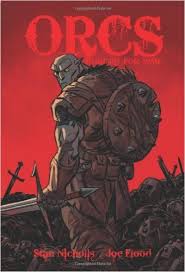
[READ: June 15, 2016] Orcs: Forged for War

This book was a little hard to learn about because Stan Nicholls has written several novels in the Orcs series.  So when you look up his books you get a confusing list of the series and other things.  This book is not part of the series, but it is part of the overall Orcs arc. It comes just before the First Blood Trilogy.

In the intro, Nicholls tells us lot more about his whole Orcs oeuvre.  He points out that unlike Tolkien (whom he loved) his Orcs are not mindless brutes. In fact, in his books, the orcs are the heroes and the humans are the ones who have along and messed things up.  He says that anyone unfamiliar with his orcs books should have no trouble following this book.

And that is true to a degree.  One thing that it behooves an author/artist to do is to make sure that everyone understands who all of the characters/races are in his/her book.  He does give a brief summary in the intro, but that doesn’t really help because there’s no visual guide.

Humans are divided into two camps.  The Manifold (Manis) pursue ancient pagan ways.  The Unity (Unis) are monotheistic.  They are both fanatics but the Unis have more bigotry and demagoguery.

This book opens with the Unis fighting the Manis.  And then the Orcs enter the fray but it’s not always clear whose side the Orcs on, if any. Regardless of which side they are on, they are willing to fight and kill whomever (there is much much bloodhsed and a shocking amount of vulgarity in the book). (more…)

Read Full Post »

class3 SOUNDTRACK: OUGHT-Sun Coming Down [CST115] (2015).

oughtsunSun Coming Down changes but also enhances the sound that Ought worked with on their debut. This album is faster overall–with fewer slow and mellow sections.  It is jittery and sometimes hostile but very much alive.

And yet as with the debut you can hear inspirations from The Fall and trippier Sonic Youth throughout the album.  And there’s more than a hint of No Wave sprinkled throughout.

Notice that Tim Beeler is now known as Tim Darcy.  But the band is the same and Matt May’s fuzzed-out keys often sound like a second guitar.  And drummer Tim Keen and bassist Ben Stidworthy keep the pace perfectly.


“Men for Miles” has a very Mark E. Smith feel–especially in the chorus–a kind of spoken/shouted style.  But that’s not the only way that Ben “sings.” There are actual sung parts like the “tear to your eye” section.   The music is kind of like Protomarytr–aggressively, slightly angular but mostly fast and propulsive.  I love the guitar riff which is surprising and yet catchy at the same time.  And amid a quieter moment, he asks, “Excuse me, did you say there’s a chance of bringing this whole fucker down?”

“Passionate Turn” is a but less intense, but it has a nicely sung verse and a cool, unusual chanted chorus.  There’s also a nifty guitar riff right after the chorus.  The steady rhythm of the bass really keeps the song moving along.

“The Combo” has aggressive guitars and a lumbering bass and drum line combined with some noisy guitars and more of that Mark E Smith chanting vocal.    The middle section grows almost pummeling with the noisy guitars and jackhammer drums as he chants “it’s a little bit strange” in a voice that sounds like he’s almost mocking punk singers.  It’s a surprise about 2/3 of the way in when the vocals grow almost positive: “Jubilation coming.”  It’s one of two songs on the disc that are just over 3 minutes but which still pack a lot of music in.

“Sun’s Coming Down” opens with a ringing feedbacking guitar and some noisy soloing.  “I am talking out of my ass because my heart is not open.”  About half way through, he starts saying “just like that, it changes” and the music follows suit–it changes to a slower thumping drum with some vocals “oooh oohhoohhoooh.”  The song reaches its end with a guitar that sounds like a police siren before returning to that calming “oooooh.”

I love the way “Beautiful Blue Sky” opens.  The guitar riff sounds very familiar in tone, and when the other guitars and noises come in it has  very Sonic Youth feel, with a pretty guitar riff. And then some spoken words enter over some abrasive scratchy guitar “warplanes, condo” that morph into a series of clichéd phrases: “beautiful weather today, how’s the family, how’s your health been, fancy seeing you here.”  The middle section slows things down with “I am now longer afraid to die because that is all I have left.  Yes.  I am now longer afraid to dance tonight because that is all I have left.”  And the ecstatic way he says “Yes” is surprisingly powerful as it sounds so different–almost ecstatic– from the rest of his delivery

“Celebration” is a much shorter piece with a sort of angrily chanted “Celebration.”  There’s buzzy guitars and a feedback-seeming drone behind the music.  It all leads up to a slow down where he chants, “All right, I’ll take it!” in a rather louche voice.

“On the Line” begins with the vocals sung quietly over a buzzing drone.  Slowly a synth line comes in.  The song sounds like nothing else on the disc until  the drums and guitars come bursting forth and the song blisters along.  And then it settles back to the quieter section with spoken word recitation.   The changes are abrupt and switch between a mellow poetry and garage rock.

“Never Better” opens with an aggressive riff and keening vocals.   It has a quieter chorus but the song never flags in intensity.

Even though it is obviously the same band, their three discs really explore many different facets of their sound.  I’m really looking forward to what the come out with next.

PERSONNEL
Matt May: Keys, Vocals
Ben Stidworthy: Bass
Tim Keen: Drums, Violin
Tim Darcy: Vocals, Guitar

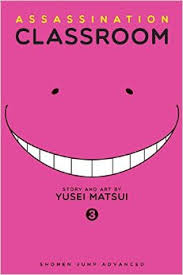
[READ: September 24, 2016] Assassination Classroom 3

I looked up this series online and saw that there are currently 21 volumes in it!  (11 are translated into English so far).  I can’t imagine how he can keep this story going (and at a pretty fast pace until the Earth will be destroyed) for so many more books!

This book begins with the students still on vacation in Kyoto.  Two of the girls have been captured by other students.  It’s a disturbing chapter with the implication that these boys have done things to girls before.  But Koro Sensei’s book about field trips actually covers the event of a kidnapping!  So the rest of the class is on it.  It even suggest where they might find the culprits (how did he know?).  It’s also a really big book and can be used as a weapon.  And our class comes out unharmed.

In the next chapter a new assassin named Red Eye is sent to take out Koro Sensei.  Red Eye is a sniper but he is baffled by Koro Sensei–who is able to stop a bullet with a dumpling.  Koro Sensei proves to be such a good teacher that even the Red Eye can learn something from him.

After a light episode in which the kids try to learn about Koro Sensei (and Irina’s) past girlfriends/boyfriends, a new student is added to the class.  But this student is a computer named Autonomous Intelligence Fixed Artillery.   It is a fast learning computer (with a pretty girl as its avatar).  And it is designed to learn from its mistakes.  It estimates that bu the end of the day it will have a .03% chance of killing Koro Sensei but by the end of the month it will be 90%.  So it begins class by opening fire on Koro Sensei (despite the fact that it breaks the class rules and disrupts class).  And then the kids have to clean up the mess of BBs.  In fact the kids are so annoyed that they tape the machine up so it’s guns can’t come out.  Eventually Koro Sensei teaches it that it needs to respect the fellow students or it will never blend in.  Koro upgrades the machine who actually seems to enjoy learning.  This is pretty fun sequence of chapters.

In the next section, Koro Sensei is affected by humidity–his head swells to a crazy size.  But that proves to be a diversion compared to the real plot that follows–revenge on a cheating girlfriend and her jerky boyfriend.  It’s very funny and quite elaborate.

The final chapter of the book is all about Irina.  She is trying to teach them to speak without an accent but the kids can’t seem to get their Ls and Rs correct.  She says that if they can’t get them straight, she will have to French kiss them (totes inappropes–although the previous chapter revealed that she was 20, which is much better than the mid 30s I assumed she was).  But we soon see that Irina’s “handler,” the guy who sent gave her the assignment, determines that she is no longer the right assassin for the job.  She is pissed but her services are no longer useful.

The book end with Koro Sensei proposing a test between Irina and her handler to see which one is the better assassin!

This manga is written in the traditional style of right to left, which is fun.  It is translated by Tetsuichiro Miyaki with an English adaptation (whatever that means) by Bryant Turnage.

Read Full Post »

assclass2 ought-once-moreSOUNDTRACK: OUGHT-Once More With Feeling… [CST108] (2014).

This EP came hot on the heels of their debut record.  It reworks a couple of older songs and has a largely improvised jam as well. It sounds pretty different from the previous record.

From the Constellation website: Discussion of a tour-only release that would grab a couple of the band’s self-recorded early tunes and commit them to vinyl shifted by the end of spring towards a realization that Ought might update this material to reflect how the songs have evolved on stage and in concert. … This yielded new recordings of two early pieces, “Pill” and “New Calm Pt. 2” (the self-recorded 2012 versions of which remain available on Ought’s Bandcamp) along with the brand new, more experimental and largely instrumental “New Calm Pt. 3.”. The non-album track “Waiting” from the More Than Any Other Day sessions (and the first tune to be given out via Constellation when we announced the Ought signing) rounds out this 24-minute EP….  In light of this new/freshly recorded material, it seemed unfair to restrict the Once More With Feeling… EP to tour-only status.

“Pill” sounds unlike anything else they’ve done.  It is mellow with Beeler Darcy’s (note the name change) singing as opposed to chanting/speaking voice.  I like that it is a fairly conventional sounding song and the way it builds slowly.  There’s a great bass line that enters after a bout 2 minutes.  The song feels meandering but it never wanders much from its mellow path (with some louder chords in between verses).  By around 4 minutes the song begins to build with a noisy solo and smashing drums that bring out the punkiness of the band. (That solo!).  But they never lose the basic momentum of the song—and the bass keeps things constant with that riff at the end of each segment.  This song also appears on their New Calm EP from 2012 which you can hear here).

“New Calm Pt 2” is a super catchy rocking song.   It starts with him saying “Oh I love this one.”  This is basically a song that encourages the audience to participate.  He tells us, “Hear  me now I am dead inside.  That’s the refrain.”  It’s a fun catchy bouncy riff repeated through pretty much the whole song.  The lyrics are pretty strange and seem arbitrary but are a lot of fun.  “Who invited Paul Simon?  I didn’t invite him.”  “I think everybody’s here now.  Everybody put your arms in the air.  That’s the generally accepted sign for not having a care.”  The song “ends” for about two minutes of him encouraging everyone to sing along to the “Da da da dah da da” section.  “It’s the part where we all sing together.”  “I have the microphone but you can sing it as well….”  And about ten times he says, “last time” then sings it again.

Interestingly, the original version of this song (on their bandcamp site) is much slower but has all of the same words

“New Calm Pt 3,” is the exact opposite of Pt2.  The lyrics are spoken slowly (“That is some good clear water an ocean of air rushes over your head”) while he guitar is a wall of noise and chaos.  The drums are loud in the mix with a lot of crashing cymbals and high hats.  The last three minutes are just some noisy guitar sounds.  And the notes say: “New Calm Pt. 3” ‘was recorded during this EP session, taken from an 20 or so minute long (maybe longer, can’t remember lol) improvised piece.’  And it seems like it.

“Waiting” is a faster, more propulsive song—with a cool bass line and alt 90s guitars.  The song grows in intensity with a wild screeching solo.  This EP is not as compelling overall as the album, but it has some fantastic moments, especially “Part 2.”

PERSONNEL
Matt May: Keys
Ben Stidworthy: Bass
Tim Keen: Drums
Tim Beeler Darcy: Vocals, Guitar

[READ: September 22, 2016] Assassination Classroom 2

Book 2 opens with a handy “the story thus far” which nicely sums up some important details from Book 1:

A mysterious creature showed up in our junior high classroom claiming that he had attacked the moon and promising to destroy the earth next March.  And then…he took over as our teacher.  The leaders of the world had no choice but to rely on the students of Class 3-E to do the job.  For a reward of ten million dollars.  Will the students of the so called End class, filled with loser sand rejects be able to kill their target by graduation?

Tabby was interested in this series–the cover of the big smiling Koro Sensei is pretty appealing.  But it is rated for teens and is all about killing your teacher.  I didn’t think I should let her.  Well, book 2 gets a bit more intense. In part, this is because there is a new professional assassin hired.  Irina Jelavich is a sexy lady with intense cleavage (which the junior high boys are well aware of).  She has killed many many people.  And Koro Sensei–despite not being human–seems to be not immune to her charms.  Shiota notes that his 5th weakness is boobs.

Despite her aggressive flirting (or maybe because of it) the kids don’t much like her.  Also because they want to win the $10 million themselves–not for her.  And she’s not very nice.  She tells them not to call her Miss Irina–she’s not a teacher after all (even though she is pretending to be one to blend).  So they call her Ms Hella-bitch (wonder how that worked in Japanese?) which gets her super angry.  But Ms Jelavich has it all figured out.  She plans to lure Koro Sensei to the shed where pleasure and pain awaits him. Of course he’s not so easily fooled. And she is made to appear ridiculous (I won’t speculate on what actually happened to her).

But her failure emboldens the students who are no longer impressed by her.  And soon she is made to actually agree to be a languages teacher–being an assassin she has learned how to say key phrases in multiple languages.

A new wrinkle appears in the book, though.  Koro Sensei has been working very hard helping each student succeed in his or her own way–he has even cloned himself (the students are concerned since he seems exhausted).  And when the school gathers for an assembly–rather than 3-E being put in its place and mocked, the students seem to be feeling pretty good about themselves.

And that’s when the principal steps in.  He lets Koro Sensei know in no uncertain terms that 3-E must fail their tests–that’s how the other students succeed–through fear of being like 3-E.  Koro Sensei has other ideas though.  He tells the class that if the 3-E students don’t score to a certain percentage he will flatten the school.  But he doesn’t know how serious the principal is about the status quo.  As Koro is preparing his students, the principal is trying to modify things.  This is upsetting Koro (and don’t forget that the students are still trying to kill him as well).

The last two chapters of the book see the students of a field trip to Kyoto.  And things change mightily when the students are away from school. For one thing, they aren’t under the protection of the school–against strangers or, worse yet, aggressive fellow students who want them in their place.

And as the book ends a new character is introduced, a psychic, Saiki, and he is here for a sweet bun–the very one that Koro Sensei wants to buy as well. The book end with the two of them having a very strange bonding moment.  I don’t know how this story can be stretched out into a number of volumes but clearly he has a lot of twists and turns planned ahead for us.

This book is rated T for teen.  Despite the cute grinning covers, it’s not for kids..

This manga is written in the traditional style of right to left, which is fun.  It is translated by Tetsuichiro Miyaki with an English adaptation (whatever that means) by Bryant Turnage.

Read Full Post »

assclassSOUNDTRACK: OUGHT-More Than Any Other Day [CST103] (2014).

oughtmoreOught might just be the most straightforward band every released by Constellation Records. They are a rock/punk band with some spoken word singing that sound at times like Mark E. Smith.  However, the music is a bit catchier than The Fall’s with fast moments and really slow almost ambient stretches.

“Pleasant Heart” opens with a raw echoing guitar riff and chords that sound like nothing else on the album.   The song lurches through some great sounds and Beeler’s unusual chanting style of singing.  There’s also a cool bass line rumbling throughout the song built with lots of drum fills and chaos.

About half way through this six-minute song the bass and drums drop out leaving just a squeaky violin and harmonic guitar (this squeaky violin is possibly the only thing that makes this record sound like a Constellation release).  The bass comes back in slowly.  But it’s not until almost two minutes of this instrumental that the song resumes with a crunch and the lurching melody and verses continue until the end.

“Today More Than Any Other Day” was the first Ought song that really grabbed me.  It starts out slowly with some spare drums and meandering bass.  It doesn’t really feel like its going to resolve into anything.  By a minute and a half it’s finally starting to sound like something–a slow meandering song perhaps.  Around 2 minutes Beeler starts whispering “we’re sinking deeper, and sinking deeper.”  And then the song starts building and turning into something else .  We’re now half way through this 5 minutes song when the guitar starts chiming and he states “The name of this song is ‘Today more than any other day Parts 4-43.  So open up your textbooks … or any kind of reading material.”  And as the guitar plays the verses he recites various things that have happened today more than any other day (making a “decision between 2% and whole milk.”  A cool bass line starts playing as else drops away and he starts chanting a rather laconic “dah dah dah dah dah” following the bass.  It reminds me, strangely enough of the Dead Milkmen as its kind of not exactly out of tune but almost as if  not really caring.  But when the song resumes, it’s all right on again.  It’s a weird and wonderful, strangely catchy song.

“Habit” opens with a nice slow bass riff and chiming guitars.  It brings the intensity of the previous song down some.  And the vocals sound a little different, especially in the chorus, where the whole song take on a kind of Talking Heads vibe (the falsetto singing in particular).  It slows down toward the end with some scraping violins. The song is quite pretty in an alt-sorta way.

I love “The Weather Song” from the opening harmonics and intriguing bass line to the way the song suddenly ramps up for the chorus.  In addition to the catchy spoken opening there’s a great chorus of “I …. just wanna revel in your lies.”

“Forgiveness” is a relatively short 4 and a half minutes and opens with almost an organ sound.  A scraping violin sound joins the drones. After 2 minutes he sings in a very slow drawl “forgiveness is a drug that you take with a shrug.”  It has echoes of the Velvet Underground’s “Heroin” although it never changes tempo or intensity.

“Around Again” has a very 1980s guitar riff and whispered vocals until the whole band kicks in and it grows in intensity.  And then the whispered “go slow” returns the song to the beginning.  After 3 minutes, the song builds and then drops out with a spoken: “It’s coming. Why is it you can’t stand under the sun but you can stick your head into a bucket of water and breathe in deep” and then a whole new sound of dissonant guitar and thudded bass and drums “we have reached the intermission.”  But it’s not an intermission it goes through to the end of the song like this.

“Clarity!” opens with what sound to me like “Love Will Tear Us Apart” but with guitar chunks played over the top.  Slow harmonics and whispered vocals move the song forward.  After 2 minutes it rocks out, with a returning ringing high note and interesting sound effects.  And by the end the song comes to a plunging conclusion

“Gemini” opens with some low rumbling notes and then a sprinkling of keyboards.  There’s some scratchy guitars and a rumbling bass.  After 2 and a half minutes, the song’s punky parts take over with jagged guitars and screamed vocals.  The end of the song is mostly just two-note thumping while he screams “you wanted … wanted … wanted … wanted.”

I really like this album a lot.

I noticed that the lead singer changes his name on each release.  So, to help keep it straight:

PERSONNEL
Matt May: Keys
Ben Stidworthy: Bass
Tim Keen: Drums, Violin
Tim Beeler: Vocals, Guitar

[READ: September 20, 2016] Assassination Classroom 1

Assassination Classroom has a very strange and unsettling premise–the students of this classroom are being taught to assassinate their teacher.  Given the current climate of guns in the US, that’s probably not a comfortable position to take.  However, Matsui alters the premise to make it more palatable, and frankly more fun. The students’ teacher is actually an alien (or maybe not, but it is certainly not human).  He (I guess) is a multi-tentacled creature who can move at Mach 20, is exceptionally perceptive and can’t be harmed by most conventional weapons.  But wait, there’s more.  The students are sent to assassinate this particular creature because he blew a huge chunk out of the moon (it’s now a permanent crescent) and is planning to do the same to the earth in a year’s time.  But wait, there’s more.  One of his conditions for not blowing up the Earth sooner is that he be allowed to teach this particular classroom.  Although no one is sure why yet.

The class is 3-E, the lowest of the low, the worst students in the very prestigious Kunugigaoka Junior High.  The 3-E class are misfits–they were smart enough to get into the school, but they have done something wrong and they are treated very poorly because of it.  In fact, 3-E is used as a kind of cautionary tale for the other students–act up and you could wind up like them.  (Why they don’t just leave the school is not addressed).

The kids call the creature Koro Sensi (which is a pun on the Japanese “Koro senai” which means “can’t kill”), and it turns out he is actually a pretty great teacher.  He really seems to care about the kids.  So why would they want to kill him?  Well, aside from the destruction of the planet, there is also a ten billion yen reward (the amount seems to change some in the book, but it’s roughly 100 million dollars).  Of course, as the name implies, this guy is really hard to kill.  And when they try to kill him in a way he finds beneath them (they are training to be great assassins after all), his own revenge will be swift.  At the same time, he heartily encourages them to try their best to kill him–and he applauds their most creative efforts. (more…)

Read Full Post »

jerusalemSOUNDTRACK: JERUSALEM IN MY HEART-If He Dies, If If If If If If [CST114] (2015).

ififif Since 2005, Jerusalem In My Heart has been Radwan Ghazi Moumneh (all music) and Charles-Andre Coderre (all visuals).  This is only their second album, however, because they were always more of a live band.

Obviously there’s no real visual component to the record.

Since I don’t know all that much about this band, I rely on the Constellation records website for my information.  Thus:

Moumneh expands his compositional palette on If He Dies, If If If If If If, exploring new deconstructions and juxtapositions of both traditional and popular Arab musical currents, with an album that oscillates between powerfully emotive vocal tunes and instrumental works that primarily make use of Radwan’s expressive acoustic playing on buzuk as a point of departure.

The album’s first song “Al Affaq, Lau Mat, Lau Lau Lau Lau Lau Lau (The Hypocrite, If He Dies, If If If If If If)” opens the disc with a short piece of processed vocals.  The Arabic traditional voice is mildly auto-tuned which sounds kind of cool.  [FROM CST: One of Moumneh’s finest melismatic a cappella vocal performances].

Track 2, “A Granular Buzuk” is a 7-minute instrumental piece of Moumneh on buzuk with pulsing electronic background music.  [CST: the buzuk is processed, re-sampled and otherwise disrupted through Radwan’s real-time custom signal patches]. As with a lot of this record, pretty instrumental passages are interrupted and taken over by noise—this time a kind of mechanical scratching.  It ends with some quietly ringing percussion as the electronics all slowly drift away.

“7ebr El 3oyoun (Ink From The Eyes)” is a vocal track with an electronic drone.  It sounds traditional and mournful, but about 3 minutes in, a drum and buzuk keeps time and the song grows a bit more upbeat.  [CST: languidly plaintive vocals set against a gradually accelerating riff underpinned by hand percussion].

“Qala Li Kafa Kafa Kafa Kafa Kafa Kafa (To Me He Said Enough Enough Enough Enough Enough Enough)” has incredibly loud static with a buzuk playing in the background.   After a minute and a half the static drops away and the background is filled with a quiet pulsing kind of static.  You can finally hear the instrument being played in all its glory.  [CST: a scabrous white noise intervention wherein the entire audio mix is fed through a contact mic placed in Radwan’s mouth].

“Lau Ridyou Bil Hijaz (What If The Hijaz Was Enough?)” is mostly synth–again an old sound with metronymic electronic percussion and quiet vocals. It’s all kind of muffled and very retro.  [CST: Moumneh continues to channel his love for Arabic pop and Casio/cassette culture with this silky lo-fi dance].

“Ta3mani; Ta3meitu (He Fed Me; I Fed Him)” is a faster piece.  Echoed vocals and drones rest behind a fast buzuk melody.  [CST: he pays homage to the until-recently-exiled Kurdish poet and singer Sivan Perwer on this traditional-minded, unadorned folk tune].

“Ah Ya Mal El Sham (Oh The Money of Syria)” opens with a loud vocal and a flute mirroring the voice.  It runs for seven-minutes and ends quietly.  [CST: a tour-de-force drone piece built from Bansuri flute (performed by guest player Dave Gossage)].

The disc ends with “2asmar Sa7ar (The Brown One Cast A Spell),” a fast buzuk solo played over the relaxing sounds of oceans waves.  It has a cool melody and runs quickly and then calmly for some five-minutes before the disc ends with more waves lapping against the shore.  [CST delicate acoustic number set against the sound of waves recorded on a beach in Lebanon].

As with the previous record, song titles employ the transliterative characters used in Arabic phone texting, which I think is pretty cool.

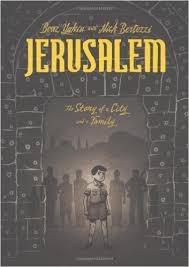
[READ: March 30, 2016] Jerusalem

With a title and subtitle like that you know this isn’t going to be a fun and lighthearted story.  And it is not.  The introduction explains how this is the story of a family, but it is more about the land and the strife that has been there for generations.

A lengthy history of Jerusalem is given, but for the purposes of this story the most recent action is the 1929 dispute over prayer rights which led to riots.  And then the British imposed the White Paper of 1939 which blocked Jewish immigration and was in place as the Nazis were riding to power. This led many Palestinian Jews to regard the British as hostile. And yet many Palestinian Jews joined the British army to fight the Nazis in Italy and the Middle East.  At the same time there were underground forces of Palestinian Jews who were attacking the British.

The action of this story takes place in 1945.

There is also a history of the Halaby family about whom this story is concerned.  Yakov Halaby was born after a series of girls were born in his family.  His father vowed that if they had another son they would move to Jerusalem.  After Izak was born they did so.  But Yakov was jealous from the start.  And he made Izak’s life miserable.  Eventually Izak left and married an Egyptian woman and they both moved back to Jerusalem. (more…)

Read Full Post »

zabimeSOUNDTRACK: ST. PAUL AND THE BROKEN BONES-Tiny Desk Concert #410 (December 6, 2014).

stpaulPaul Janeway stands on Bob Boilen’s desk wearing gold shoes  and singing his heart out.  Janeway is the lead singer of St. Paul and the Broken Bones, a seven-piece soul band based out of Alabama.

Janway has a powerful voice and sings in a very old-school soul style.  The Broken Bones consist of two guitarist, a keyboardist, a trombone, a trumpet and drums.

They play three songs, “Half the City,” and “Call Me” (in which he does some great shuffle dances on the desktop and seems to almost fall off the desk) are full throttle dancing soul music.  The final song is kind of a sad song, a story about how the band got together called “Broken Bones and Pocket Change.”

There’s a funny moment when Bob asks if he’s hot way up there and he Janeway replies, “Is it hot?  Naw man, we’re from Alabama.”

The band was fairly new back in 2014, but I see that as of this week, they have a  new album coming out. So good for them.

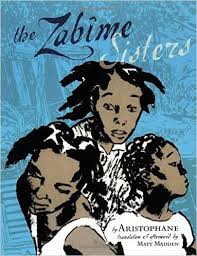
[READ: March 1, 2016] The Zabîme Sisters

When I read this book, back in March, I had been reading a lot of First Second graphic novels (I’m very close to having read them all!).  And reading this publishers entire catalog has led me to read amazingly detailed and interesting stories about real events.  And that’s pretty awesome.

This story is set in Guadeloupe, but unlike some of the other real-life stories of horror and degradation that I’ve read, this one is a simple story of childhood in a Caribbean island.

Not a lot happens, and yet the story is charming and enjoyable.

The story is told in 3 parts.  It is about three sisters, I’m not sure if they are triplets or just close on age.  I like how they have similar features but distinctive hair. (more…)

Read Full Post »

west SOUNDTRACK: SAM AMIDON & BILL FRISELL-Tiny Desk Concert #408 (December 1, 2014).

amidonThe first time I listened to this Tiny Desk Concert, I didn’t like Sam Amidon’s voice at all–he sings with a strangely flat delivery–almost monotone–but never actually off pitch.  It’s rather unusual sounding.

But the second time I listened I found it kind of interesting–compelling in an unexpected way.  I was also able to really hear what Bill Frisell was adding to the songs.

“Blue Mountains” is a folk story-song.  It is played with a very simple acoustic guitar piece and then, of course, Frisell’s interesting leads and chords that dd more and more texture as the song progresses.  The whole things is grounded by Shahzad Ismaily’s delicate drumming.

After the song, Amidon says, “Good morning, welcome to Washington DC.”  For “Pat Do This, Pat Do That,” a song about he banjo, Amidon switches to banjo.  This was my favorite of the three songs.  He plays the banjo very high on his chest (without a strap) and he plays quite fast.  It’s hard to decide to listen to Frisell’s interesting chords or to Amidon’s great banjo playing  For this song Ismaily switches to bass, which gives it lovely low end.

For the final song, Amidon gives a very long introduction about falling asleep on a pillow but dreaming that it is a little fuzzy donkey.  It’s a very strange introduction that doesn’t really end satisfactorily.  The final song is him on guitar, Frissell on electric and Ismaily on bass for a time and the switching over to drums.  Midway through Amidon switches to violin and plays a wild solo that he accentuates with a screeching voice.

It’s a most unusual and somewhat unsettling Tiny Desk Concert.  And I know I won’t be seeking out any more music by Amidon.

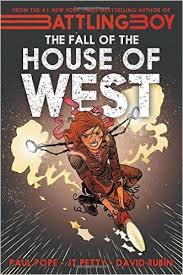
[READ: March 26, 2015] The Fall of  the House of West

This book follows The Rise of Aurora West with that cast involved.  I really enjoyed the resolution of the mystery of Aurora’s mom’s death, but otherwise I was kind of unimpressed by this book.

As with the previous book, I hate the way Rubin draws faces, especially Aurora’s–there’s too much face and not enough expression (conversely, his profiles are lovely).

Much of this story is fairly simple.  Aurora believes that she knows who killed her mother and she intends to get revenge.  But her father, the superhero Haggard West doesn’t want her to investigate on her own.  And her bodyguard/teacher is not going to let her do the work on her own, either. (more…)

Read Full Post »

imperiumSOUNDTRACK: PAT BENATAR & NEIL GIRALDO-Tiny Desk Concert #407 (November 24, 2014).

benatarI never liked Pat Benatar.  Back in the day she was all over MTV (and even in Fast Time at Ridgemont High) and I just didn’t like her.  I’m not sure why, although I was particularly bitter about “Hell is for Children” (being a child myself).  Of course, I still know all of her singles really well.

But I haven’t thought about her in probably a decade.  And then  around 2014 that she was playing with Neil Giraldo in some kind of acoustic tour.  I recognized his name but didn’t know they were married or anything like that.

And so here they are doing a Tiny Desk Concert–all acoustic–with him playing guitar and contributing backing vocals.  Over the decades, Benatar’s voice has changed a bit–she sounds gruffer and it really suits her. (more…)

Read Full Post »

julyaugSOUNDTRACK: RHEOSTATICS (Art Gallery of Ontario, Toronto, ON, September 6, 2015).
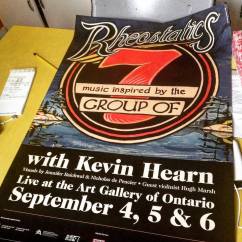
06Sep2015Almost exactly one year ago, my family traveled to Toronto as a mini-vacation.  The impetus was my scoring tickets to see The Rheostatics live for the first for me (and potentially–but not in reality–last) time.

They had called it quits 8 years earlier and were reuniting for the 20th Anniversary of their Group of 7 album–a soundtrack of sorts that was created to celebrate the works of the great Group of 7 artists.  They were scheduled to perform three nights at the Art Gallery of Toronto.

I purchased tickets to the second night assuming that the first night they might be a little rusty and the final night they might be burnt out.  Well, it turns out, that was completely faulty logic.  The final night was outstanding (as this recording shows), not least because it was so much longer!

The quality of this recording is really good.  Dave is in fun form, commenting and joking with the audience.  At the end of “Six (Cello For A Winter’s Day),” the band goes a little nutty with noise and after the jazzy ending, Dave says that “playing fake jazz is way more fun than real jazz” because you gotta know stuff.

They thank everyone during this break.  Dave introduces Martin: “You got Martin Tielli back… look at a him, he’s a good boy.”  Someone shouts, “We miss you!” and Dave responds, “We miss you very much, especially you, sir, with the loud voice.”

As they’ve noted, the break here is because they’re playing the album as if it were two sides.  So do what ever you do between the two sides of records.  “urinate? I guess? or make a sandwich?” Kevin chimes in: “wash some dishes.”  “Look around outside make sure no one is stealing your stuff or inside in case you’re living with a dodgy housemate.”

Later, Dave sends a Hi “to the mother’s lounge up there.”  Tim’s mom and Dave’s mom are there.  Dave quips, “they’re in the mother’s lounge getting hammered.”

Each night there was a new piece of information added to the history oft he Go7 album. This night’s was a thank you to “Winchell Price, an artist friend of Don Kerr’s who did all of the spoken sections on the album.  (It was Don’s decision to add him to the record).  Price was vegan in 1919 totally ahead of the curve.  They are happy to raise the spirit and the ghost of the Go7–and their rebellious form of art when rebelliousness was discouraged in Canadian culture.

Before one of the songs Dave dedicates the night to his kids: “Lorenzo and Cecilia you weren’t here 20 years ago but you’re here now and life is beautiful because of it.”

The encores tonight were many: “Bad Time To Be Poor,” “Green Sprouts Theme,” “Stolen Car,” “Legal Age Life At Variety Store,” “Christopher,” “Claire” and “Horses.”

After a great version of “Bad Time to be Poor,” with cello and acoustic guitar, Dave introduces “The Professor Tim Vesely… now that Neil Peart has retired, Tim can become The Professor.”  Tim retorts, “I prefer the Mad Chap from Mississauga.” Dave: “That’s Don.  You’re from Etobicoke.”  Then they tell us, “Don was the mad chap on tour for… one hour.  Back in his neck beard days.  “I can’t believe we’re about to discuss the neck beard days–an underappreciated era.”

Dave notices someone whistling the Green Sprouts Theme Song, so the band plays it. And then they launch into a great version of “Stolen Car.”  “Legal Age Life,” is a lot of fun, of course, with everyone getting a solo.  And then after the disastrous “Christopher” the previous night, they played a near perfect “Christopher.”

Martin thanks everyone and says it “really meant a lot to us and to me, thanks a lot.” While Dave is thanking everyone involved with the shows, Kevin plays some nice “Oscar wrap up trills.”

Tim rather sheepishly tells everyone they’re going to play “Claire.”  Dave comments, “Tim is warning you that we’re going to do Claire–come on back in everyone.”  It’s a really great version, and I love that just before the solo, Dave says, “Martin, paint us a picture.”

And then they wrap up the night and the whole series with a blistering version of “Horses.”  During the middle section, Dave goes on a major rant about the upcoming election:

We must be free…. Imagine the beauty of October 20  Imagine a country where scientists keep their jobs for believing in science.  Imagine a country where the great first nations of our country don’t have to look over their shoulder at the prison cell behind them.  Imagine a country where the cops take orders from us not from some security company put in power by Stephen Harper, the most evil man in the history of Canada

And the crowd loves it.

But even more fun is that later that they’ll be at the Monarch Tavern.  If I had gone to this show instead of Saturday night’s, I totally would have gone to the Monarch which sounds like it was a blast and half.  The write up from the Rheostatics Live site notes:

After an amazing show Saturday night with some special moments at the end that most would never know occurred, [I wonder if the statute of limitations has run out so we can finally find out what happened that night?] the rheos came out tonight and played the best night of the 4 day GO7 run. GO7 was followed by Bad Time To Be Poor with Hugh Marsh on violin and Don on Cello, and impromptu version of Green Sprouts. Stolen Car, Legal Age Life, a redemptive Christopher and then a 2nd encore of Claire and Horses closed the 4 night run of rheos magic time machine glory at the AGO.

After that, around 12:30AM the band reconvened at The Monarch Tavern to play what was without a doubt the ending true fans were hoping for: a sloppy, magnificent set of hot bar room rheos songs that if it had to be the end was exactly the way they should go out. Song of Flight led into The Ballad Of Wendel Clark Part 2 and Bridge Came Tumbling Down. After sorting out the monitor kinks they went into Soul Glue…. Kevin Hearn took them through I’m Waiting For My Man, Ring Of Fire, Monkeybird, and Lou Reed’s Down at the Arcade…. Northern Wish was absolutely slayed by Terra Lightfoot, and then Mike O’Brien did the same with We Went West. Selina Martin killed Dope Fiends and Mary Margaret O’Hara singing RDA….

Of course, I was long asleep by then. But I hope they keep doing little shows like this and one day I’ll get back up to Toronto to see one.

01. One (Kevin’s Waltz)   1:54
02. Two (Earth (Almost))   7:50
03. Three (Boxcar Song (Weiners and Beans))   7:16
04. Four (Landscape And Sky)   0:48
05. Five (Blue Hysteria)   3:40
06. Six (Cello For A Winter’s Day)   8:09
07. Chat   6:20
08. Seven (Northern Wish)   5:17
09. Eight (Snow)   4:10
10. Nine (Biplanes and Bombs)   5:38
11. Ten (Lightning)   8:20
12. Eleven (Yellow Days Under A Lemon Sun)   6:10
13. Bad Time To Be Poor   3:48
14. Chat and Thanks   1:46
15. Green Sprouts Theme   0:52
16. Stolen Car   6:01
17. Legal Age Life At Variety Store   5:13
18. Christopher   6:50
19. Claire   5:38
20. Horses   10:05

[READ: August 19, 2016] “Three Tshakapesh Dreams”

After the lighthearted love and lust theme of the summer issue of The Walrus, it was time for a story about drugs and death!  This one is set in Quebec and was translated from the French by Donald Winkler.

A boy, Simon, was found in the Frontenac Library with a needle sticking out of his arm.  Brisebois was the policeman who notified people of the death.  And he notified The Indian who was an undercover cop.  But the Indian said to Breisbois, “Simon may have had his faults but he knew how to shoot up.”

He made Breisbois check the stash.  It turned out to contain coke an almost pure heroin. (more…)

Read Full Post »

« Newer Posts - Older Posts »