Feeds:
Posts
Comments

Archive for the ‘Violence’ Category

SOUNDTRACK: THE EBENE QUARTET-“Felix Mendelssohn: String Quartet No. 6 in F Minor Allegro assai” (Field Recordings, January 25, 2013).

I don’t quite understand why this Field Recording [The Ebene Quartet Powers Through Mendelssohn] sounds so great–it is rich and full with resonant bass notes.  Is it the recording or the quartet itself?

The title suggests it is the players.

The Paris-based Quatuor Ebene — the “Ebony Quartet” — has risen fast in the musical world with two separate artistic identities. In recent years, audiences have gotten to know the “other” Ebenes — the sophisticated cover band that plays everything from “Miserlou” (the Pulp Fiction theme) to jazz to “Someday My Prince Will Come” (yes, the one from Disney’s Snow White).

But when violinists Pierre Colombet and Gabriel Le Magadure, violist Mathieu Herzog and cellist Raphaël Merlin play classical music — whether Beethoven’s transcendent Op. 131 quartet or, as on their latest recording, works by brother-and-sister composers Felix and Fanny Mendelssohn — you realize the depth and beauty of vibrantly intense performances.

Felix Mendelssohn completed his String Quartet No. 6 in F Minor just two months before his own death, and very shortly after the death of his beloved sister Fanny. Even though this second movement, marked Allegro assai, is architecturally the “light” section in this piece, it’s full of dark colors, tense and moody and shaded with grey and black. The music provides rich counterpoint to the setting, the bright and spacious powerHouse Arena, a bookstore, gallery and performance space in Brooklyn’s Dumbo neighborhood.

We thought that the setting would appeal to the quartet’s double identities, given powerHouse’s signature mix of art titles and whimsical children’s selections, including a board book with a cute little piglet that clearly fascinated Raphaël to no end. And our idea worked: The shoot was bookended, so to speak, by the quartet browsing and buying. Maybe our idea worked a little too well? No matter — once the quartet got down to playing, the results were magical.

I have enjoyed Felix Mendelssohn’s music before, but this recording is outstanding.

[READ: October 20, 2017] “Strangler Bob”

I don’t enjoy prison stories.

This one is a little different, I suppose.  It concerns a guy remembering his days in prison.  He was eighteen and hadn’t been in too much trouble when his malicious mischief landed him a sentence of forty-one days.

His cellmate was an older guy, late forties, who was in the cell for doing “something juicy.”  The narrator would eventually learn that his roommate is Strangler Bob, and that his own nickname is Dink.

He befriended a guy his own age named Donald Dundun, who liked to stroll the catwalks and climb the bars spreadeagling himself against the jambs .suspended in the air. (more…)

Read Full Post »

SOUNDTRACK: APANHADOR SÓ-“Prédio” (Field Recordings, May 13, 2015).

Apanhador Só  is from Brazil.  At the beginning of the video you see the guys in the band gathering…junk.   Childen’s toys boxes of refuse and homemade instruments.

The video starts and the singer explains that Prédio means building.  He says the song is about a different vision of life, a different perspective.  As it pans back we see that the only conventional instruments are a floor tom and a guitar.  And all kinds of weird other things.

In this video, shot during SXSW in Austin (2015), its members coax rhythms and beats from a trunkload of found items, including a children’s bicycle and other playthings. The resulting performance of “Prédio” is the stuff of hip-swaying joy.

The song starts with one of them tapping a bicycle bell.  Soon he starts keeping time by spinning the wheel and clacking the spokes.  Then he switches to a jug of some kind that changes the sound as he uncovers the opening.

There’s even a kazoo solo.

Near the end of the song, there’s wonderful breakdown where you can see then hitting and kicking everything at their feet-all kinds of junk that makes a cool cacophony.  The song is really catchy and lovely, although I admit I was more focused on what they were playing more than what they were playing.  (The items rather than the melody).

[READ: January 4, 2017] “Invasion of the Martians”

This was the funniest , most enjoyable thing I’ve ever read by Robert Coover.  Probably because it is so base and straightforward, it transcended some of his usual stylistic things.

A Senator from Texas is in bed with two women–the Secretary of the Interior (whom he calls the Secretary of the Posterior) and his intern–when he gets the news that Martians have landed in his home state.

He greets them warmly with Southern hospitality, but they don’t seem to speak any civilized languages.  They also don’t have any papers.  As the Senator was explaining this to them, they shot him. (more…)

Read Full Post »

SOUNDTRACK: JUPITER & OKWESS-Tiny Desk Concert #784 (September 7, 2018).

Jupiter Bokondji comes from the troubled capital of Democratic Republic of the Congo.

He and his band Okwess dress in wonderfully colorful garb.  Jupiter’s jacket is practically a zoot suit with blue and white stripes on one side, a red field on the other and giant white stars  He has a big hat as well.  But he can’t hold a candle on the shirtless drummer who is wearing a red white and blue wrestling mask the whole show.

The guitarist has a beautiful patterned gold shirt with blue lapels and the percussionist in addition to wearing another cool hat has on a terrific sweater.

The band plays “the vibe of Kinshasa street musicians, that feels both African and American” and indeed, “their fierce energy here is an astonishing performance.”

Then of course there’s Congolese rumba, the popular dance music from as early as the 1940s, not too dissimilar from some Cuban music of the day. And the message of the music has been steeped in the complicated politics of the region, stumbling between chaos, anarchy and oppression.

This is urgent music … that stems from the gut but has thought and theatrics to flesh out the feelings. It’s music to be experienced. This is your entry point.

They play 3 songs each with a similar feel but with a very different sound.

“Ofakombolo” is so wonderfully catchy with the percussionist and drummer chanting the chorus on the first time around.  On the second the rest of the band sings too, for a nice harmony.  The bassist gets what sounds like a rap guest verse before playing a kind of funky bass solo.  The percussionist is great for shouts and trills animals noises, too.  The music is nonstop, propulsive and fun, with a distinctive guitar solo sound.

“Pondjo Pondjo” starts with a quiet guitar intro.  But it is joined by the drummer whistling and the percussionist pulling a string through a plastic container, making a crazy squeaky sound that works wonders as a percussive sound.  The bassist seems to be singing lead on this song (a very different voice).

 Jupiter introduces “Ekombe” by saying “Let’s go to dancing!” It opens with a funky bass line and the drummer playing a fast hi-hat beat and chanting.  It’s a very dancey with a slinky guitar line running throughout the song.  There’s a nifty breakdown in the middle which features some fun on the bass and a wild solo to end the song.

This is a wonderful introduction to Congolese music.  Stay for the end, as they end the show with a post-credits kung fu pose.

[READ: January 5, 2017] “In the Act of Falling”

Boy this was a dark, dark story.  After the last line I actually said aloud, “Jesus, Danielle, what the hell.”

This is the story of a family: a woman, her husband and their nine-year-old son, Finn.  Finn was recently suspended from school for punching a fellow student in the mouth.

They live in a an old house that they imagined fixing up but two years later even the dining room is unfinished.

Finn is in the yard setting up a volleyball net–but he is doing it sideways like a hammock.  It turns out he is setting it up to catch ducks as they fall from the sky.  Birds were the next heralders of the apocalypse.  And, she had seen that all of the ducks in St Stephen’s green were dead–all of them.  She probably shouldn’t have told Finn this, but she did. (more…)

Read Full Post »

SOUNDTRACK: FLASHER-Tiny Desk Concert #770 (July 30, 2018).

I haven’t heard of Flasher, but the description of the band (noisy) makes me think I’d like them.  I’m also intrigued by the various guitar and bass lines.  The vocals are also really nice–wonder just how buried they are on record:

For its visit to the Tiny Desk, this young Washington trio set aside the distortion and worked up a semi-acoustic set of three songs — taken from its debut album, Constant Image.  Voices sometimes in unison, sometimes swapping leads, adding a shifting point of view to songs that, on record, give equal footing to a precise noise.

These three high school friends, Taylor Mulitz (guitar, vocals), Daniel Saperstein (bass, guitar) and Emma Baker (drums) have been bouncing around the D.C. punk scene of house shows and DIY venues for some time.

I rather got a kick out of this little “How Bob knows the band”

I’ve been aware of Taylor’s work for a while…in the potent D.C. band Priests; Daniel I’ve known (a bit) since he was a child, mostly from Hanukkah parties with his family (his mom was the executive producer at All Things Considered when I was the show’s director); Emma can be seen playing around town with another band, Big Hush.

I really enjoyed the stops and starts of “Pressure” I imagine it’s really fun when they rock.  It also has some really clever word play: “saving face / self-effacing / keeping pace / in a stasis.”  Most of the delicate harmony vocals come from the bassist (who is actually playing acoustic guitar), although when all three of them sing it sounds even better.

The interchange of electric and acoustic guitar works great on “XYZ.”  All three sing in tight harmony.

I love the way “Who’s Got Time?” seems to be constantly catching up on itself, like they are running out of time to finish the song–even though it never sounds like they are out of sync with each other.

Their overall sound is wonderful acoustic shoegaze.  At least at the Tiny Desk.

[READ: August 15, 2018] “A Refugee Crisis”

I didn’t love Wink’s last story (about killing cats), but I found this one fascinating because of how many elements were included here.

The narrator is a writer living in a place where one can cross-country ski regularly (Bozeman, MT).  The trail is mostly unused except for a guy who runs tours by dogsled–and there is plenty of dog shit on the trail to show where the sled went.

When he gets home, M is lying on his couch.  She says she let herself in since she knew the key was still under the mat.  She says she just came back from Serbia.  (She had been in Athens, Budapest and Frankfurt among other places).  The refugee camps there were really bad–people are trying to get across Hungary and the military is beating them, shooting at them.

She is twenty-three but looks forty and her personal hygiene is atrocious.  They have sex anyhow.  She says they can’t get pregnant because she already is–from a nineteen year old boy from Raqqa.  She didn’t tell the guy.  She is planning to get an abortion shortly. (more…)

Read Full Post »

SOUNDTRACK: LOCAL NATIVES-“Fountain of Youth” (Field Recordings, October 5, 2016). 

I know and like Local Natives, although I didn’t know this song.

In 2010, Local Natives came clattering into the indie firmament with the U.S. release of Gorilla Manor, an irresistible blend of in-vogue sonic signifiers like Afropop guitars, rich harmonies and the hint of a folk sensibility. In 2016, the band’s run has continued with the synth-heavy Sunlit Youth.

For their Field Recording, Local Natives played one of the singles off that album, “Fountain of Youth.” Though the recorded version is lush and electronic, Local Natives stripped the song to a driving core. The band played, and then it was off again — guitars in hand, headed for the evening’s show elsewhere in Brooklyn.

They sound great stripped to just two guitars and a tambourine standing on the water’s edge. [Local Natives Strips Down Its Sound For A Riverside Show].  I love this introduction:

The East River Ferry is a very fast boat. Local Natives came hurtling toward our crew up the river one overcast evening this summer, shouting three-part harmonies over roaring engines for a surprised clutch of fans. When the ferry docked, three of the band’s members hurried over to our pier off WNYC Transmitter Park to play this Field Recording.

I’m not sure which of the five Natives these are, but they harmonize wonderfully. And I really like that the main singer is playing his guitar while the second guitar is silent until later in the song when his higher notes are used as an excellent accent.

[READ: January 15, 2018] “Kinderscenen”

This was a fascinating story because of how much detail was given and how little plot there was.

This is the story of a boy, Toby.  It is written in a kind of childish third person, almost by a benevolent guardian.

Sentences like:

What he does know is how Daddy’s cigarette looks in the evening when sitting on a wicker chair with the other grown-ups softly talking in a row, he flips it away its red star tracing lopsided loops before shattering into sparks on the bricks.

In his heart he knows that this is the best town in the world.

In the story, Toby helps his mother garden (by lifting the prickery bushes “holding up the bushes’ skirts” which has a naughty sound that nevertheless doesn’t make it fun. (more…)

Read Full Post »

SOUNDTRACK: DEVONTÉ HYNES interviews PHILIP GLASS (Field Recordings, September 21, 2017).

This is the final video under the “Field Recordings” headline [‘When You Gonna Get A Real Job?’: Philip Glass And Devonté Hynes Compare Notes].  Unlike the other videos I have watched, this one is actually an interview, not a song.

I was unfamiliar with Devonté Hynes.  He is a 31-year-old British producer and songwriter who performs under the name Blood Orange,  He has made many hit records with the likes of Carly Rae Jepsen.  And Philip Glass was at the time of this interview, 80 years old (and calls the cast of Hamilton hipster, instead of hip-hop, but he did rave about the show (which Hynes was unable to get tickets to!).

Walk into Hynes’ third floor loft in New York’s Chinatown and you’ll find a photo of Glass on his piano. He discovered Glass’ music by chance as a London teenager, when he bought the 1982 album Glassworks on the strength of its crystalline cover image alone. What he heard after he brought it home transfixed him. Today, he says Glass’ influence “seeps” into his music.

This spring, Hynes invited Glass to his apartment where they sat at a piano, compared chords and traded stories. Ninety minutes later, their wide-ranging conversation had touched on the pulse of New York City, the pains of striking out on your own as a musician, what role the arts play in society today and Hamilton. Plus about a hundred other ideas.

This clip is only 6 minutes, and they don’t touch on all that much.  We learn that Glass grew up in Baltimore and worked in his father’s record store.  His father knew nothing about music but loved it and soon enough young Philip was the store’s record buyer.

Glass moved to New York in 1957.  His mother told him that being a musician would be a terrible life of travel and hotels.  And he thought that sounded wonderful.  He worked day jobs loading trucks and moving furniture–he never took a job he couldn’t get out off if he had the opportunity to play.

He says that Einstein on the Beach was a hit but he knew nothing about money and they actually lost money on the deal.

For his part, Devonté came from London to New York ten years ago.  he says you can hear Glass’ jobs in his music, like the sounds of the city as he drove his taxi around.

Glass concludes, “When bad things happen in the country the artists become the voice.  Without the arts our society would be a prison.”

[READ: January 17, 2018] “Sans Farine”

I really couldn’t believe how long this story felt.  Even with enjoying most of it, it seemed like it was 50 pages not 9.

The narrator, Charles Henri Sanson is an executioner in France around the time of the revolution.  He was a real person.  I didn’t know that while reading this but it doesn’t really impact my take on the story.

His father and his six brothers were also executioners.  There is quite a stigma to the job–most people are not allowed to even communicate with them, much less marry them.  And yet ask any soldier what his profession entails  He’ll answer that he kills men.  No one flees his company for that reason.

There’s a lot of detail about his life, both before and after the revolution,  He and his family have negotiated the revolution well and he still works,no killing the royals,

He talks about Joseph Guillotin reinventing the penal code–a less barbaric, swifter execution for all condemned. (more…)

Read Full Post »

SOUNDTRACK: NELLIE McKAY-Reveals ‘Cavendish’ (Project Song: April 2, 2008).

Project Song was a nifty little show that NPR Music created.  The premise was that NPR would give a musician some prompts and a recording studio.  They then had two days to write and record a song.  I don’t know how much of the process was to be filmed, but presumably most of it. Then it would be edited down to a fifteen minute show.  The results are pretty cool and it’s a shame they only made five of them.

The third one they did was five months after the previous one.  As with the Stephin Merritt project, McKay was solo, but she had a lot of problems and recriminations.

When I invited Nellie McKay to participate in Project Song, I figured she’d write some witty words and hammer something out on the piano. I don’t mean to make it sound so simple, but listen to the music of Nellie McKay, and she’s the one who makes it seem so easy.

McKay came into our studio looking as if she’d just walked off a movie set. In fact, at times in conversation, a young Judy Garland came to mind. She took great care with her curly blonde hair and her beautiful pinstriped suit.

I laid some photographs [all from the Library of Congress] and some words on our makeshift bar for her to consider as jumping-off points for the song she would write over the next few days.

It didn’t take long for McKay to settle on a black-and-white photograph of some men dancing the Charleston out in front of a movie theater. To go with the picture, she chose the word “Bravado.” Those two things would inspire and inform her song.

And then, despite a bit of hemming and hawing, McKay proceeded to sit behind the grand piano and begin drawing musical staff lines on some note paper. She began composing her song.

Although perhaps the consternation and questioning was more of her conscious mind, because it sounds like she was much more confident than she appeared.  “Why couldn’t I have written a song in secret and brought it in and pretended to be confused?”

Here’s what I now know that I didn’t know at the time: In just a few hours of playing at the piano, Nellie McKay wrote her song. I know that now, because I can look at the zoom lens of our video camera and see all the scribbles in her notebook. The words are mostly there, and so is the music.

She pokes out notes on the piano and scribbles in her book.  Then she plays the ukulele (with wah wah).  She hems and haws quite a bit, playing with Bob’s computer to make three distinct drum parts.  She talks with Bob.

“Its hard enough to do a bad pastiche which is what I’m aiming at now.  This is the worst thing, I wrote a complicated bad song.”

She finally asks Bob, the constant cheerleader, “where’s your cynicism, you work for NPR?”

From my perspective in the control room of our studio, what I heard for the better part of our first day was some tinkering, some scribbling, and more tinkering. She’d pick up the ukulele and play more piano, but I couldn’t hear a song emerging.

Then she plays some cello on top.  Then it’s on to some haunting backing vocals.

Bob’s mind is boggled: “to put down the uke part first after what I’ve heard, why not play the piano first?  Her answer: “I’m sick of the piano!”

She says she’s big on secrecy and doesn’t understand how other people did it.  Before revealing that she decides to put down “the thunderclap, perhaps the loon, a little bit of backing vocals, and then I’ll freak out a bit more and then I’ll try to do the main vocals.”

The lyrics, however — and even the title — were a closely kept secret until the final hours of the final day.

Then she reveals the dramatic, multi-faceted, three-part song.  It is stunning that she came up with this.  There’s sound effects, spoken word, Latin rhythms and then a torch song part with horns and falsetto.

And this is it, a song about a London hotel called the Cavendish. A song about some of its guests, like D.H. Lawrence and The Beatles, and of better, simpler times. A wonderful theatrical journey from Nellie McKay — someone who seems connected with the past and unsure of her present.

The Cavendish was a real hotel.  They went through a lot of change.  The hotel has been through two wold wars.  The Latin part is exotic–lovely and yet unsettling.

[READ: January 24, 2018] “The Gulch”

The centerpiece of this story is vile and horrible even to think about.  The story begins with it, it focuses on it but then it also kind of dismisses it at the end.

The story is basically about three juvenile delinquents who have crucified a boy in their class (he did not survive).  It begins with a description of the cross they created with pressure-treated wood and rope from a neighborhood laundry line.

It is written in a kind of casual style from Detective Collard’s point of view.  There’s lots of parenthetical asides “The one who dreamed up the scheme (for lack of a better word).”

One of the boys admitted to digging the hole but then said he wasn’t there in sport or heart. (more…)

Read Full Post »

SOUNDTRACK: THE DIVINE COMEDY-Loose Canon: Live in Europe 2016-2017 (2018).

I loved The Divine Comedy at the turn of the century (the fin de siècle, if you will).  They were one of my favorite bands.

Since then Neil Hannon (the man behind the band) has released a few albums which I have liked–but none as much as those early records.

This recording is primarily his latter songs, and as such isn’t as exciting to me.  (Although setlists from the tour shows that he played a lot of older songs as well, so this disc is mostly a latter period recording).

The first three songs are from the newest album Foreverland: “How Can You Leave Me On My Own,” “Napoleon Complex” and “Catherine the Great.”  And among the next few songs are “To the Rescue” and “Funny Peculiar.”   So that’s five in all from that album.

The previous album Bang Goes the Knighthood accounts for five more songs “The Complete Banker,” “Bang Goes The Knighthood,” “At The Indie Disco,” “Assume The Perpendicular” and “I Like.”

So that’s ten of seventeen from the two latest albums.

After listening to it a few times I have come to appreciate his newer music even more and to see that it is equally as cleverly crafted.  He’s just a different person now with different lyrical and musical ideas.  I will certainly give a re-listen to the last decade;s worth of music.

“How Can” is fun a bouncy, “Napoleon” is snarky and witty.  “Funny Peculiar” is a duet with  guest vocals from Lisa O’Neill.  She has a fascinating singing style which is kind of peculiar in its own way.

“The Complete Banker” is wonderfully sarcastic and catchy and “I Like” is so simple and delightful.  “Assume the Perpendicular” is an other fun uptempo song, but of this batch its “Indie Disco” that is the real highlight (this includes an excerpt from New Order’s Blue Monday”).

It also sounds like this was a fun souvenir for anyone who saw the tour (he dressed up as Napoleon and others, and apparently “Indie Disco” was really fun live).  I have always wanted to see them and hold them high on my list of bands to see.  But he hasn’t been to the States in almost ten years, so I don’t have high hopes to experience them live.

The band for The Divine Comedy’s live shows has changed over the years, sometimes large and orchestral or, like this tour, a simpler five-piece.  They sound good although they do underplay the orchestral quality of the music.

Going back there’s one from Victory for the Comic Muse “A Lady Of A Certain Age” and one from Absent Friends “Our Mutual Friend.”  These two songs are lovely and quite poignant, especially “Lady.”  They are a far cry from the raucous songs of old.

The first older song is from 2001’s Regenertaion with a wild and fun rendition of “Bad Ambassador.”  His voice doesn;t sound great on this song.  I’m not sure if he ever sounded great live, but he certainly underplays some of the bigger moments in the song.

The crowd really gets pumping for Fin de Siècle‘s “Generation Sex” and “National Express.”  These two songs are a lot of fun and I imagine mus t be really rousing live.  Once again he doesn’t sound great. Not that he has lost his voice but almost like he;s not trying all that hard.

The disc is collected from shows all over Europe, so its interesting if they picked songs where he doesn’t sound that great.

It’s not until the encores that he brings out two really old songs 1994’s “A Drinking Song” and “Tonight We Fly.”

I’m sure they picked this particular version of “A Drinking Song” because he admits to being quite drunk himself.  And there’s a funny moment where he gets a hair caught in his throat.  “Is it yours?”  Indeed, his banter with the audience is a highlight.  He is clearly a good showman, and perhaps that makes up for some of the shortcomings of the disc.  This song is a good example.  His voice is much louder than the instruments and, frankly, he doesn’t sound that great as what is mostly a capella–but the overall presentation is fun.

The ending “Tonight We Fly” is a treat as well.  Again, he doesn’t sound perfect, but he sounds like he’s having fun.

I feel like this makes me want to see them a little less–except that it sounds like the performance is great even if his voice isn’t anymore.  Regardless, is he ever comes back to the States, I’ll be there for sure.

[READ: January 19, 2018] “The People Who Kept Everything”

I read this novel 7 years ago.  But since I’ve been going back through old Harper’s and found this excerpt I thought it would be worth reading (the excerpt) again.  And I really enjoyed it, I had forgotten about this scene until the end of the piece.

The narrator says that on the night before he left for college his father gave him a Spanish dueling knife and told him to keep it and never lose it.

When the narrator asks his father where he got it he says he’d better not say–he could tell him he won it in a card game in El Paso or a cathouse in Brownsville.

He kept the knife in a drawer and it moved with him to every location her went–dorm rooms, apartments.  Often it was in the kitchen with the cutlery, ignored by everyone except the new girlfriend who wanted to cook something. (more…)

Read Full Post »

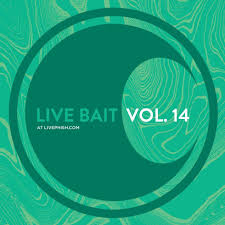
 SOUNDTRACK: PHISH Live Bait 14 (2018).

Phish has just released its 14th compilation of free downloads.  This one is a little over two hours with seven long songs.

Harry Hood (8/2/97 Gorge Amphitheatre – George, WA) 18:11
After a slow intro–it’s about two and a half minutes before the vocals come in–then there’s jazzy bass and funky keys.  The jam is pretty mellow, he even asks to have them kill the lights “so I can have the outdoor vibe here.”  A relaxed piano comes in around 12 and it’s not until 17 minutes that they sing the end of the song.

McGrupp And The Watchful Hosemasters (10/29/98 Greek Theatre – Los Angeles, CA) 11:45
This is a fun treat as they don;t play this song much anymore.  The piano opening is very quiet, but the middle is cool with a piano and splash cymbals.  The ending is twinkling piano that segues perfectly (despite being nearly a year later) into the next song.

Wolfman’s Brother (9/24/99 South Park Meadows – Austin, TX) 18:55
opens with a quiet piano but it quickly grows upbeat with a hot jam. Although the final section is dark for a bout a minute before it ends.

Gotta Jibboo > Saw It Again > Magilla (7/4/00 E Centre – Camden, NJ) 39:28
Gotta Jibboo brings back the lightness again. It’s got a happy solo with a pulsing high keyboard note that runs for almost ten minutes while Trey solos.  It turns funky/groovy around fifteen minutes in and then around 17 minutes in it shifts gears and grows slowly noisy and chaotic before sequing to Saw It Again.  Around 34 minutes, it slows down and segues into Magilla with really cool drums.

What’s The Use? (6/25/00 Alltel Pavilion at Walnut Creek – Raleigh, NC) 9:52
This is an instrumental that starts out sounding quite raw–the guitar is sharp with feedback moments.  After  couple of minutes the guitar fades and it gets quiet and pretty before the guitar returns and grows noisy again.

Runaway Jim (7/9/99 Merriweather Post Pavilion – Columbia, MD) 12:21
As always this song rocks.   Although the jam is pretty mellow and pleasant sounding.

Tweezer > Prince Caspian (8/22/15 Magnaball, Watkins Glen International – Watkins Glen, NY) 34:17
Most of the songs on this compilation are from the turn of the century, but this one is from just a couple years ago and it’s a big old “Tweezer” exploration.  This version sounds pretty loose–Trey even modifies the open chord riff somewhat.  Even the “Uncle Ebeneezer” noise is somewhat subdued.  It grows fairly calm before a funky guitar solo.  By 11 minutes, there’s a lot of piano added and then through 17 minutes “Prince Caspian” begins.  It’s a typically fun version of the song.  And by 31 minutes it feels like the song is circling back around to “Tweezer,” but it never actually gets there.  It just kind of ends.

Hard to complain about a free compilation, and there’s not much to complain about here.  Good selection of songs and great performances.

[READ: January 19, 2018] “The Blade”

This is story of tramps.  Hoboes.

There is a young kid who reminded Ronnie of himself from way back.  But it generally assumed the kid will be tossed off the train car before two long.

After some silence Vanboss and Stark begin talking.  Vanboss tells of a head on collision between two cars going 100 mph and how the cars were melded into a small cube but somehow a baby escaped unharmed.  No one believes that, so they talk of other deaths, brutal and extraordinary. (more…)

Read Full Post »

SOUNDTRACKPLANTS & ANIMALS–Live at Massey Hall (December 1, 2016).

This is the start of the fourth season of Live at Massey Hall.

I didn’t really know any of the six artists, but they have recently begun adding new bands about whom I am pretty excited.

Of course, as with many of these shows, it’s the bands I don’t know which blow me away.

I didn’t know Plants and Animals, but I loved their set.

Drummer Matthew Woodley says that he and Warren Spicer (guitars and vocals) met in Halifax and had a series of bands until they moved to Montreal and met Nick Basque (guitars, keyboards).  They started as an instrumental band and then Warren started to craft words and now we’re a normal singing, dancing and playing band.

“We Were One” opens with feedback and some cool mechanical sounds that come from one of their guitars.

Warren sings kind of quietly and plays acoustic guitar.  Mid way through, the song shifts gears with some big guitar sounds from Nick with a great little autocratic guitar run and riff before a big chord ends it all.

“All of the Time” is a cool moody piece with loud pianos from Nick, rumbling guitars and backing vocals from bassist Josh Toal.

During the break, one of them says, “we like an element of danger… if I go to a show and everything is under control it’s still fun if you like the music, but as an experience if you forget about the music,  the feeling it’s just going to play out…   they’ll get two encores and we’ll go home….  But we’d rather feel, “Oh, but this is cool whats going to happen?” The first band they toured with was Wolf Parade and they had a “wow, anything can happen, they might just stop.”  That’s the kind of show we want to pursue–something that feels a little bit dangerous.

“Flowers” opens with some cool falsetto vocals and then a moody middle section.

“So Many Nights” opens with synths and a cool bass line.  It sounds a bit like Air (French band) with some lengthy guitar solos from the acoustic guitar which sounds very cool.  The slows down and slows further and then builds and build and builds and builds further to a noisy crescendo with them chanting “your feet are heavy, carry on.”

“A L’oree Des Bois” opens with pretty, intertwining guitars while Nick talks about making records in his Québécois accent.

Before the final song they bring out a tiny boy (Aaron Spicer) who sings a quiet song in French–to rapturous applause.

“No Worries Gonna Find Us”  Is a great humping song that repeats the title and “no worries gonna be the boss of my mind.”

They say “you guys are gonna get your faces ripped off by Half Moon Run.”  But it was Plants and Animals that really impressed me so far.

[READ: July 8, 2018]  “Active Shooter”

I always like when David Sedaris talks about visiting with his sister(s).

Sedaris and his sister Lisa were driving “in her toy-size car” to her home in Winston-Salem, North Carolina.

She is bemoaning a woman at Starbucks with a tiny monkey on a leash (in a pink dress).  She wanted to yell at woman, “What do you plan on doing with that thing once you lose interest in it?”

I love that this piece is about guns, but he is willing to throw in a bit about pet owners.

Like a lot of pet owner, I know, Lisa is certain that no one can take care of an animal as well as she can.

But as she was saying of  the woman “It’s a monkey, of course she’s going to lose interest in it” they drove past a firing range called ProShots. (more…)

Read Full Post »

« Newer Posts - Older Posts »