Feeds:
Posts
Comments

Archive for the ‘Unlikable main character’ Category

SOUNDTRACK: KISS-Rock and Roll Over (1976).

After Alive!, Kiss released what I think of as the cartoon albums.  These next three discs all had cartoon covers, which also coincides with their huge ascent into fame.  I tend to think of Destroyer and Love Gun more than this one (maybe full-bodied pictures are more memorable than just their faces), even though this one has a huge share of important Kiss songs like “I Want You” (which has an amazingly long version on Alive II). 

I never really liked “Take Me,” there’s something about the chanting backing vocals that irks me (although “Put your hand in my pocket, grab onto my rocket” is one of my favorite Kiss couplets).  But “Calling Dr. Love” is a wonderful twisted song (the falsetto backing vocals are so doo wop, it’s funny to contemplate the band’s musical direction at this point).  I loved this song so much it even features in one of my first short stories

As an eight year old, I could never figure out what Gene would be doing in the “Ladies Room”–since he was a boy and all.  Naiveté is a wonderful thing to have as a young person listening to Kiss–I had no idea what was going on in most of the songs–I wonder if my parents bothered to listen to the lyrics at all.

I also never really liked “Baby Driver” all that much–I don’t know if it’s Peter’s voice, or that I can’t figure out what the hell this song is about but it’s still just okay to me–although I like the guitars at the end.   I love the solo in “Love ‘Em Leave ‘Em”–although the sentiment is not the best.  Of course, the sentiment in “Mr. Speed” cracks me up: “I’m so fast, that’s why the ladies call me Mr. Speed.”  Did that mean something different in 1976?

“See You in Your Dreams” was covered by Gene on his solo album, and I think I like that version better (it’s more theatrical).  Although this one has very interesting use of Beatlesesque harmonies.  “Hard Luck Woman” is wonderful song, and I do like Peter’s voice here, yes.  But who the hell is Rhett?  “Making Love” ends the disc.  I like the break in the middle and the awesome guitar solo.  Also, Paul’s vocals have some cool effects on them. 

This is a fun album.  Even the songs I don’t love are still songs that I like quite a bit.  It’s a nice contrast from the bombast of Destroyer.  The amazing thing is that both this album and Destroyer are barely over 30 minutes long.  Were they making albums so frequently that they didn’t have any more songs, or were they just following the Beatles model: make an album every 7 months to stay in the public’s eye?

[READ: October 2, 2011] Dogwalker

I can’t believe how quickly I read this book.  I wasn’t even planning on reading the whole thing just yet, but I started the first story and it was so quick to read and so enjoyable that I couldn’t stop.  I finished the whole book in a couple of hours (it helps that a number of stories are barely 4 pages and that it’s barely 150 pages).  The title of the book is something of a mystery as there are a lot of dogs in the stories, but walking is about the furthest thing from what happens to them.  I was also somewhat surprised to see how many of these pieces I had already read (Bradford was in five of the first six McSweeney’s issues). 

This collection is certainly not for everyone.  In fact when I recounted the story “Dogs,” Sarah was disgusted and said she would never read the story.  Bradford definitely pushes some boundaries, but they’re mostly in an attempt to find humor, so I think that’s cool. Sarah even admitted that the end of “Dogs” sounded funny (although she was still disgusted).  The two things I found odd about the stories were that two of them featured a three-legged dog, which seems a little lazy to me–although I don’t know what the dog might signify.  And two of them featured someone or something singing unexpectedly and the narrator getting a tape recorder to surreptitiously save this special recording.  Again, it’s a really unusual thing to happen at all, but to have that happen in two stories?

Aside from those little complaints, the stories were fun, funny and certainly weird. (more…)

Read Full Post »

SOUNDTRACK: RADIOHEAD-The King of Limbs: From the Basement (2011).

The TV channel Palladia has been showing this BBC production since it became available.  And it’s scheduled to be broadcast a few more times in the next couple of months. 

From the Basement is a show in which (very cool) bands play in this recording studio (presumably in the basement of wherever it is recorded).  The show is filmed in HD and the sound is fantastic.   The Wikipedia page gives some context for the show–it was originally designed as a program to showcase several bands playing a few songs.  Several of these episodes aired (the Wikipedia page gives details).  The show was created by Nigel Godrich, Radiohead’s producer.  Thus, it makes sense that Radiohead have now done live sessions shows for their last two albums.

So this is a recording of The King of Limbs.  I’m not sure if the album had come out by then, but this is basically the complete album and two extra songs: “The Daily Mail” and “Staircase.”

The session sounds amazing.  There’s a brass section for a number of songs, there’s two drummers (both completely bald, which is kind of neat to see), and you get to see Thom Yorke up close (sometimes a little too close) on all kinds of instruments.   I feel a little bad for Jonny Greenwood as it seems like Thom plays most of the guitar parts (unless Jonny is on keyboards too–it’s not always clear who is playing what).

I liked King of Limbs, but I must say that this live recording brings much more depth to the album.  While the band sounds tight as a drum, paradoxically, they also seem looser in their overall feel.  They seem like they’re really enjoying themselves.  It doesn’t have the same vibe as a concert (they’re not playing off the crowd or improvise at all), rather it has a feeling of jamming with friends–trying to get a perfect take, without the tension of fretting about the perfect take.  It’s really a great show and worth watching for any fan of Radiohead.

[READ: September 5, 2011:] ” What Have You Done”

I had a hard time getting into this story.  It’s about a man named Paul.  Paul is headed home to visit his family in Cleveland and he is more than a little apprehensive about it.  He deliberately hasn’t been home in about ten years, so this is quite a chore for him.  And it is quite clear from the outset that Paul is something of an asshole.  We don’t really learn why in the beginning (and that’s why the story was hard for me to get into–more on that)–he’s just sort of accepted as an asshole and that his family will give him shit.

And that’s what families do, this idea is in no way new.  But what’s is odd about the story is that we don’t really have any context for Paul’s attitude.  We seem to jump into the story with him feeling like an asshole and assuming that his parents will treat him like crap.  That they won’t believe anything he says and that they’ll give him a hard time.  Indeed, when he finally gets to his parents’ house (and his sister and her husband are there) he is so aggressively defensive that he’s quite unlikable.  And yet we still don’t know if he is defensive or if they are nasty.  Paul seems to flare up at anything anyone says and yet we don’t know if he has a right to.

The crazy thing is that Paul’s major fault seems to be that he’s fat.  Quite a bit is made of the fact that he is fat.  And he seems to be so very lonely–hateful of his family and resentful of his sister’s happiness–that when we finally learn the truth about him and what he’s been up to these last ten years, it’s hard to believe it’s really true.  His family doesn’t believe him, and the only reason we do is from a phone call that comes in to him.  But he’s so paranoid, it’s hard to know what to believe. (more…)

Read Full Post »

SOUNDTRACK: NEIL HANNON-“A Lady of a Certain Age” (From the Basement) (2008).

[DISCLAIMER: This post was published on September 6th, see that post for details].

This video comes from the From the Basement series.  As I mentioned, the Radiohead live show comes from this series, but initially, rather than recording a whole album, more often that not they recorded a few songs.  The bad news is that many of the videos are no longer available on the site (there’s a DVD, but I’m unclear exactly what it includes).  But for each artist, there seems to be one streaming video.

This is a mellow song from The Divine Comedy’s Victory for the Comic Muse album.  It’s probably my favorite track on the album.  It’s a literate and clever song about an older woman.  This version is simply Neil and his acoustic guitar.  I tend to think of The Divine Comedy as being a heavily orchestrated band (their music is wonderfully symphonic) so it’s surprising for me to hear a DC song in this simple acoustic format. 

And yet, Neil’s voice is stellar and it easily holds up i this intimate setting.  Visually it’s not that exciting (it’s just Neil sitting, playing and singing), but musically it is wonderful. 

[READ: August 31, 2011] One Book Review

Unlike previous columns, Zadie only reviews one book in this one.  And she sets up her reading by talking about summer books.  I recently posted about Summer Books, and this would have been a nice addendum.  Zadie talks a bit about the fun and joy of Summer books.  Her assessment is that a summer book should really engross you: 

If every few minutes you find yourself laying it flat upon your chest and wondering about lunch then it is probably not a summer novel. 

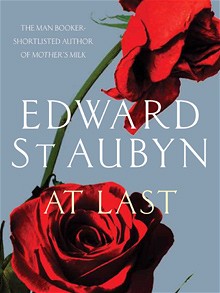
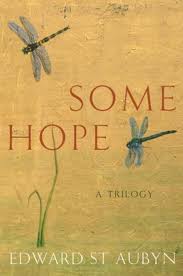
Zadie’s summer book is a continuation of a series.  The author is Edward St. Aubyn and this third book is called At Last (the culmination of the confusing “Patrick Melrose Trilogy” Some Hope, Mother’s Milk and At Last–confusing because the first book of the trilogy (Some Hope) was actually released in England as three separate books–Never Mind, Bad News and Some Hope, making this the fifth book in the series)He has also written other books, but I’m not sure of any of them deal with the same family or not.

At last (and the series in general) is a semi-autobiographical story of a good family in name only.  There is an alcoholic mother, a pedophiliac father, and a main character, Patrick, who has shot heroin and chugged whisky and yet still manages to recite poetry.

Despite the darkness (and the fact that At Last focuses on Patrick’s mother’s funeral), the story sounds like a wonderful mix of dark humor and scathing wit.  Indeed, the previous book, Mother’s Milk was short listed for the Booker Prize in 2006 (he has written two novels in between). 

Zadie quotes extensively from the book and the quotes are really good: long  sentences that are well constructed and contain a bit of humor in almost every piece.  But it’s a subtle humor, and it seems like it takes a careful reading to make sure you get it all. (more…)

Read Full Post »

SOUNDTRACK: THE HEAD AND THE HEART-SXSW, March 18, 2011 (2011).

Just months after their in-studio session, The Head and the Heart played South by Southwest.  This set seems somehow louder than the in-studio (which seems a very common phenomenon–the bands just seems to be quieter in-studio somehow, even if they are playing hard, it still seems subdued, which isn’t bad at all, just odd).  So here, the band really lets loose (or maybe it’s because they’ve been playing no for six extra months?) and they sound like they’re really having fun.

Their sound is loud and (somewhat) chaotic, and it really suits them.  The set list is similar to the in-studio (they also play “Cats and Dogs” which segues into “Coeur d’Alene”).  “Ghosts” and “Lost in My Mind” are also here (“Lost” sounds great in this rambling, somewhat shambolic format).  They also play “Down in the Valley.”  Added to the set are “Winter Song” and “River and Roads.”  These two songs feature vocals by violinist Charity Thielin, and I have to admit I don’t love her voice.  Perhaps it’s in this context or that she is mixed a wee bit to loud (because I didn’t dislike her voice in the in-studio).  As I said, I haven’t heard the studio version yet, so I’ll chalk it up to a very large crowd.

But otherwise the set is outstanding, and I’m becoming a huge fan of the band.

[READ: March 28, 2011] Here They Come

I had been thinking about reading this book for a while (the blurbs on the back are quiet compelling) but I kept putting other McSweeney’s books in front of them (I had hoped to finish an entire stack of McSweeney’s novels before The Pale King came.  But it shipped two weeks early and threw off my plan).

I have read two pieces by Murphy in previous McSweeney’s issues, but looking back they didn’t prepare me for this strange story. And the strangest thing is the point of view of the narrator (but more on that later).

This is actually a simple enough story.  Set in New York over an unspecified time period (there’s a couple of winters and a couple of summers, but I’m not sure if it’s new seasons or flashbacks), the (as far as can tell) unnamed narrator girl leads a pretty crap existence.

Firs there is John, the hot dog vendor.  He’s a married man from a middle eastern country (his family is back there).  And basically the narrator lets him feel her up (for what it’s worth on a flat chested 13-year-old) for free hot dogs and candy bars.  She doesn’t seem to upset by the groping and keeps going back to pass the time with him.

Then there is her brother, an obnoxious boy who walks around in a silk dragon bathrobe all the time. When he is not smashing things with his guitar when he walks past the furniture, he is smashing things in his room or threatening to shoot himself with their old, unloaded gun.

Her mother works all the time but really can’t afford to take care of them or feed them.  And she says “Merde” night and day (she is French).  But worse is her mother’s mother, la mere, who stays with them from time to time.  la Mere seems like she has money but she never gives them any. (more…)

Read Full Post »

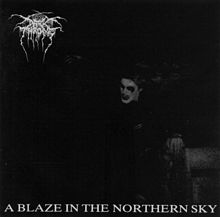
SOUNDTRACK: DARKTHRONE-“Kathaarian Life Code,” (1992), “Sacrificing to the God of Doubt” (2004), “Canadian Metal” (2007).

After watching Until the Light Takes Us, I wanted to check out some of Darkthrone’s music.  According to their Wikipedia page, over the years the band who pioneered black metal has morphed away from the sound.  They’ve added elements of punk and speed metal to their bludgeoning sound.  In the movie Fenriz says that he listens to all kinds of music and is very open-minded.

Kathaarian Life Code” is a ten minute dirge of black metal.  It opens the band’s second album (considered to be a black metal classic) with chanting and guttural spoken words.  Then it blasts forth with the jackhammer style of drums that is now standard in black metal.

It slows down from time to time, allowing for the really heavy parts to blast through the chaos of the fast parts.  It’s pretty intense and not for the faint of heart.  You can hear occasional guitars screaming through the din, but the production is intentionally murky, dark and noisy.  As they say in the movie, the bands intentionally recorded on the shittiest equipment they could find.

Sacrificing to the God of Doubt” is a later song, taken from what is considered their final album in the black metal style.  The band was turning away from the traditional black metal sound, and there are elements of punk (guitar riffs that are audible, and a sound that is less bass heavy) present.  And the production, while still mired by noise is relatively cleaner.

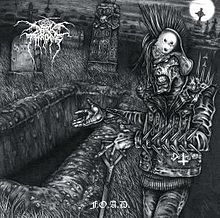
Canadian Metal” is from their third most recent album, after the shift from black metal was more or less official.  It sounds more like an early death metal song.  There’s low tuned notes, audible vocals (growled, but you can actually hear words) and a kind of headbanging aspect to it.  The album is called F.O.A.D. which was a song by Venom (and others, obviously), and this track reminds me of Venom somewhat.  I wouldn’t say that the band has sold out because there’s no way anyone is playing this on the radio, but it’s interesting to see how a band has managed to change things up and add new elements to its sound even though they were the forerunner and grandfather of a scene.

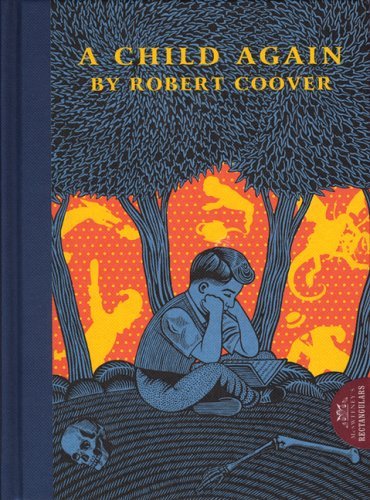
[READ: February and March 2011] A Child Again

This is a collection of short stories from Robert Coover.  There is a kind of theme throughout (most of) the stories about returning to childhood.  But the overall sense is one of despair, sadness, pointlessness and sex.  Lots and lots of sex.  And the sex is usually as vulgar and nasty as the tone of the book suggests it would be.  It’s a little off-putting, actually.

I was planning to say that I didn’t like this collection at all because I really didn’t enjoy the first half-dozen or so stories.  I continued because Coover has a great reputation that I didn’t want to give up after a few misfires.

The real disappointment came because the stories seem so promising: many of them are a kind of retelling of classic fairy tales that looks at “what happened afterward.”  However, and this was true for almost all of them, Coover tries to do two contradictory things with the stories.  He is playing with fairy tales but he is also writing stories that are completely unlike fairy tales.  By that I mean, Coover’s stories are long and very detailed, they bring far too much information to the story.  And a fairy tale is almost by definition short.  I mean, “Puff the Magic Dragon” is a song that’s about five paragraphs long.  But Coover’s “Sir John Paper Returns to Honah-Lee” is 26 pages long.  So instead of playing with the original, it feels like an original story that uses someone else’s characters.  It’s unsettling and unsatisfying.

It’s also not very funny.   And I’m not sure fit’s supposed to be.  But with a title like “Sir John Paper Returns to Honah-Lee” you expect the funny.  And there are funny moments.  I mean the whole premise is that little Jackie Paper has grown up into Sir John Paper.  He’s now an old Knight and he is sent to slay the dragon (Puff) who is plaguing the city.  Even though that is a tragic story, it is also inherently humorous.  And there are laughs when they reunite.  But it gets so bogged down in details, that the essence of the story seems to get lost.  Perhaps I’m just disappointed because it (they) turned out so unlike I wanted them to be. (more…)

Read Full Post »

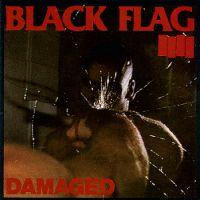
SOUNDTRACK: BLACK FLAG-Damaged (1981).

I’ve liked Black Flag since I bought Loose Nut on vinyl way back when (1985, the year punk broke for me).  And those four bars were iconic to me even before I had heard a note (although I just learned they are supposed to represent a flag waving).

And this is where their legend really took off.  So a few things I never knew about this album until I looked them up recently.  1) That’s Rollins on the cover punching the mirror.  2) He didn’t really punch the mirror (it was smashed prior and the blood is fake).  3) I knew that Black Flag existed for a while before Rollins’ arrival and that they’d had a series of singers before him.  But I didn’t realize what a their first EP (Nervous Breakdown–Keith Morris on vocals) came out in 1978, their second EP (Jealous Again–Ron Reyes on vocals–credited as Chavo Pederast (he left the band in the middle of a live show, so they changed his name to that rather offensive one)) came out in 1980.  Their third EP (Six Pack –Dez Cadena on vocals) came out in 1981.  Rollins joined a few months after that and Damaged–their first full length–came out in December 1981.

“Rise Above” is a wonderfully angry song.  The gang vocals of pure empowerment work so well with the chords.  It’s still effective thirty years later.  “Spray Paint” goes in the other direction: rather than an uplifting, catchy chorus, it’s a deliberately angular chorus that’s hard to sing along to (even for Rollins).

“Six Pack” represents the more “popular” side of the band.  And it is a wonderfully funny single.  I just can’t decide if it’s serious or ironic (see also “TV Party”).  These two dopey songs are great to sing along to and are simply awesome.  (Fridays!)

The rest of the album turns away from the lighthearted tracks.  “What I See” is a really dark moment on this album.  And the negativity is unusual especially given Rollins’ later penchant for lyrics about fighting back.  True, Rollins didn’t write these lyrics.

“Thirsty and Miserable” is a blast of noise with some of Ginn’s first real guitar solos (which Guitar World says is as one of the worst guitar solos in history…and I say really? that’s the solo they pick?  Ginn has done some pretty outlandishly bad solos over the years…of course the whole list is questionable at best).  “Police Story” is a simple but effective description of the punks vs cops scene at the time.

“Gimme Gimme Gimme” seems childish, but that’s clearly the point.  “Depression” is a super fast track.  (Trouser Press considered Black Flag America’s first hardcore band).  “Room 13” is an odd musical track, with pretty much no bass.  It’s just some roaring guitars and drums and Rollins’s screams.  This track stands out because Chuck Dukowski’s bass propels most of the songs here.

“No More” sounds “typically” hardcore: very fast with the chanted chorus of “No More No More No More No More.”  “Padded Cell” is also fast (and is pretty hard to understand) except for the “Manic” chant, but the following track “Life of Pain” features what would become a signature Greg Ginn sound…angular guitars playing a riff that seems slightly off somehow.  Compelling in a way that’s hard to explain.

It’s funny that a band that plays as fast as they did also released some pretty long songs. “Damaged II” is almost 3 and a half minutes long.  It has several different parts (and a pretty catchy chorus).  And the final song “Damaged I” is a kind of crazed rant from Rollins;  It’s one of his scariest vocal performances; he sounds really deranged.  Especially when it sounds like he just cant think of anything else to say so he just screams maniacally.  But his vocals are mixed behind the music as if he’s trying really hard to get heard.  There’s very little else on record like it.

It’s a wonderful end to an intense disc, and the beginning of a brief but powerful career.

[READ: March 25, 2011] The Life of Polycrates

I’ve been reading Connell for a few years now.  In fact, the first time I posted about his work came with a blistering dismissal of his story “The Life of Captain Gareth Caernarvon” in McSweeney’s 19.  That story is included here, and upon rereading it, I learned two things:

  • One: context is everything.
  • Two: I was totally and completely wrong in that original review, and I take it back.

But before I explain further, some background about this book.  This is a collection of eleven stories, eight of which have appeared elsewhere.  Unfortunately there’s no dates of publication included so I don’t know how old any of these stories are.

The other thing I’m fascinated about is Connell himself.  I’m not the kind of reader who wants to know a ton of details about the author, but I like a little bit of bio (or a photo) when I read someone.  The only bio that is consistently presented about Connell is that he was born in Santa Fe, New Mexico.  I’m fascinated by this because so many of his stories are set in Europe.  So I have concocted a master biography about Connell’s life and how he has lived and toured extensively in Europe, studied theology (and found it wanting) and investigated all of the world’s darker corners.

It’s this latter aspect that really altered my perception of Connell’s writing.  I’ve liked the last few things that he’s written, but I fear that I was not looking at him through the proper lens.  And this relates back to bullet point one above.

Connell writes in a world not unlike H.P. Lovecraft–a world that is unconventional, dark and more than a little twisted.  And yet, unlike Lovecraft, there is very little of the fantastical in his stories.  Rather, his characters reside in our own world (with a little chymical help from time to time), but they are all real.  They’re just not characters most of us choose to associate with.  So, reading that first story in McSweeney’s, where it was so different from all those others, I found it really distasteful.  In retrospect, I’m not going to say that it is meant to be distasteful, although some of his stories are, but it was certainly not a pleasant story by any means.

The other fascinating thing to note about this book is that all of the stories are written in short, Roman Numeraled segments.  So the title story has 35 segments.  But even some of the shorter ones has twelve or thirteen segments (sometimes a segment is just a few lines long).    I actually enjoy this style (especially when the segments introduce something totally new into the story–which many of these do). (more…)

Read Full Post »

SOUNDTRACK: MAYYORS: 3 EPs (online only) (2008-2009).

I learned about Mayyors from the NPR’s Best Metal and Outer Sounds releases of 2009 on All Songs Considered.  I enjoyed Viking’s picks for 2010 quite a bit so I thought I’d investigate his previous years’ selections.  I’d never heard of Mayyors before, but he makes the band sound so intriguing (and dirty).

The write up is so wonderfully enigmatic that I had to find the tracks online.  I mean, how can you pass up this:

This is a plea to Mayyors: If you’re going to release one of the ugliest pieces of noise rock this side of The Jesus Lizard, please start issuing your music in editions bigger than David Yow’s beer gut. After a couple of ripped 7″ singles made the rounds on blogs last year, those seeking the puss-popping skronk of Mayyors scavenged message boards and listservs to get their hands on the next limited affair. (After all, these Sacramento-based dudes don’t have a Web site or any known email addresses. Punk rock, I guess.) The Deads 12″ EP significantly dirties the rock gene pool with nauseating feedback and power chords dumber than the actual mud driven over the orange covers. Once again, Google is your friend.

That link to Google is the only way I was able to find these songs.

So Mayyors have released three EPs since 2008.  Each had a pressing of about ten copies, apparently.  You really can’t find any information about them online.  I don’t even understand how the band plays shows since their total recorded output is about 2o minutes long.  But I was able to get all 9 songs.

Having said all, that I don’t always like the music.  It hurts your head. The general sound is really downtuned sludge rock.  It’s not squealy feedbacky noise, it’s just distorted guitars played very loud and fast with vocals that are pretty incomprehensible (with lots of echo!). I have no idea what he’s singing about.  I’m sure it’s not very nice.  But I feel like their music would be even more subversive if they sang about love and kindness (or like the cover of Megan’s LOLZ: unicorns and rainbows).

The first EP: Marines Dot Com has two tracks “Metro” (3:08) and “Fatigure” (3:35).  “Metro” reminds me a lot of early Butthole Surfers.  “Fatigure” has a discernible riff (which is of course very downtuned.  It’s entirely possible they have only a guitar and a bass.  About half way through, the song changes into a noise-fest.  Of course, nearly 4 minutes of noise is pretty tough to handle.  Especially since the noise is sludgy and loud loud loud.

The middle EP, Megan’s LOLZ, is my favorite.  Three songs: “Intro” (0:59), “Airplanes” (3:23), “White Jeep” (2:18).  The noise and sludge is still there, but you can actually hear nascent riffs under all the noise. It also seems a little crisper (or something), which makes the tracks stand out a little more.

“Intro” actually plays around with different kinds of noise, suggesting they’re in for something new on this EP (of course, it’s still buried under noise and sludge).  “Airplanes” has another discernible riff, although it does sound like it’s recorded in an airplane hangar.  “White Jeep” has a similar (if not the same) riff, but it plays a bit more with feedback and genuinely piecing noises.  (There’s even a  kind of guitar solo).

The latest EP, the one that Viking likes, is called Deads.  It has four songs: “The Crawl” (1:41), “Ghost Punch” (1:41) “Clicks (2:42) and “Deads” (2:53).  And as he describes above, the cover does appear to have been driven over by a muddy truck.

This album is a bit more “polished” (how dare anyone use that word).  In fact the sludge doesn’t really get put onto “The Crawl” until about 50 seconds in.  Don’t get me wrong, it’s still a sludgy mess, but you can sort of tell what instruments there are and that there’s a guy singing.   “Ghost Punch” sounds a bit more death metal-like than their other songs, although it’s so tinny, it sort of transcends the genre somewhat.  “Clicks” seems to be the song of choice for examples of what Mayyors can do.  It’s got intense delay, squealing noises and a vocal melody! (Do I hear screams of sellout?).  Hear it and “The Crawl” here.  “Deads” actually has staccato notes in the opening, but it’s all sludge from there.

And then there’s silence.  Blissful silence.  Mayyors: Not for the sensitive.

[READ: March 5, 2011] “The Other Place”

Mary Gaitskill is generally acknowledged as a master short story writer.  I haven’t read all that much by her.

I’m not sure if her stories are all as dark as this one, but man this is quite dark, indeed.  It’s about a man and his son.  Well, actually it begins with the son.  He is into guns. Like really into guns. He draws them, he makes stories about them, he plays guns outside even if they don’t have guns.  He also loves violence on TV, especially if it’s funny.  The boy is thirteen.

When I read the story, I initially thought that the father was upset or worried about this gun fascination, because he opens the story with “How did this happen?”  But he seems to know how this happened: “The way everything does, of course.  One thing follows another, naturally.”

And so, with the wrong impression, I couldn’t quite understand why the father was so surprised by the son’s behavior because as the father relates his own past, it’s pretty full of violence itself.  Indeed, as it progresses, it seems like the son inherited all of his father’s traits. (more…)

Read Full Post »

SOUNDTRACK: WAVVES-“Post Acid” (2010).

Wavves’ King of the Beach CD made many Top Ten of 2010 lists.  I listened to a track somewhere and wasn’t all that impressed.  Right now there’s a live show on NPR, which I listened to a bit (and which made me investigate them further).

They have a few songs on their My Space page and I really like this one.  It is short and fuzzy and catchy and cool.  It’s a fast blast of punk nonsense.  I have no idea what it’s about (and I rather like the weird break in the song where the singer can barely get words out).

I’m not sure if I’d listen to a whole record of them (although I love their hair).  But this was sure a fun track.

[READ: February 17, 2011] Arkansas

John Brandon did a pretty amazing thing with this book.  He took two rather unlikable characters and made them sympathetic and, eventually, compelling.  The unlikability may have come from the detached style of their introduction.  Each of the main characters is introduced separately with a brief anecdote that seems to end abruptly.  In fact, I wondered if it was going to be a series of brief character sketches and nothing more.  I’m thankful that that wasn’t the case since, each character’s “section” could have been a complete (but very unsatisfying) story.  When I saw more of Swin, I was pleased, even though I didn’t really “like” him.

First we meet Swin Ruiz, a very intelligent guy who makes it to college.  While in college a foolish mistake (resubmitting an essay to a teacher) costs him his scholarship, which essentially means he’s out of school.  He scams some money from the rich students and then takes off, leaving his family and his beloved younger sisters with their jerk of a stepfather.  From there, he drifts aimlessly until he meets a bartender who sets him up with someone to help “break the laws of the land.”

Kyle Ribb is the other main character. He’s a harder man, something of a bastard.  He tries to go legit by working in a bike store.  When that doesn’t pan out (the story of that is pretty funny) he reverts back to his “no boss” ways.  He eventually meets a guy who introduces him to Colin, a man with criminal connections.

The third character we meet differs from these two.  First, a date is given as an introduction (1974).  Second, the whole section is written in second person (“You are Ken Hovan”).  We learn about his life and his background and how, eventually, he took the nickname Frog and became a shop owner, a dealer of unusual merchandise (which begins with bootleg tapes and, naturally, transforms into drugs).

The story of Frog’s life from 1974 to the present intersperses the main story (which is really about Swin and Kyle).  And each time frame jump ties together some of the mysteries of the book (Frog, being the boss, ties the thread together).  And there are many mysteries.

Kyle and Swin move up the ranks of the ne’er-do-well scale, until they land a job in an underused state park in Little Rock, Ark.  They get a “legit” job manning the booth, checking visitors in and out, and cleaning up the brush, but their “real” job is to deliver packages to random locations in different states.  They drive a car to a parking lot, wait for a person to get in and then drive off in a different car with a package for the other end.  And that’s pretty much it. It’s obvious they’re doing illegal work, but they don’t ask questions and don’t know too many details.

Their boss at the park is Bright, a man who seems to really enjoy the park and genuinely likes to take care of it.  He is a middleman for Frog, but a rather benevolent one.  There are some other characters as well.  The first is Her, (that’s the only name she gives out), she gives Bright the details about the packages.  Bright’s boss at the park is Wendy, she knows what they do and receives a cut.  She only wears pink and wishes to be a painter.  She recites a quotes from a different painter before she leaves. (more…)

Read Full Post »

SOUNDTRACK: All Songs Considered Year End Music Roundup (2010).

Every year, I like to check various sources to see if there were any albums that I missed.  My definition of good resources: allmusic, amazon, pitchfork.  (There’s another fascinating list available here at Best Albums Ever, a site I’ve never seen before, and I have a large portion of the Top 50 albums.  I didn’t buy a lot of music this year, but evidently I chose wisely!).  I don’t necessarily agree with these lists, but if I see the same album on a few lists, I know it’s worth at least listening to.

This year, since I spent so much time on All Songs Considered, I thought I’d see their Best of Lists.  What’s awesome about the site is that you can hear not only selected songs in their entirety, you can also download the audio of the original show…where the DJs talk about their selections and play excerpts from them.   There are many different lists to investigate.

The most obvious one to star with is 50 Favorite Albums of 2010.  This shows the staff’s 50 favorite albums in all genres.  I admit that there’s going to be a lot on this list that I won’t bother exploring (I’m not really that interested in new classical or jazz and I’m not too excited by most pop music, although I was pleasantly surprised by how much I enjoyed the Kanye West songs here).

But some albums did stand out that I hadn’t heard, and I will investigate them further in 2011:

Buke And Gass, ‘Riposte’
Deerhunter, ‘Halcyon Digest’ (I know, this is on many best of lists)
The National, ‘High Violet’ (This is also on everyone’s list)

Bob Boilen, All Songs Considered’s most awesome host, picks his Top 9 of the year.  I’m on board with about 1/2 of his list (haven’t heard the other half).  Sufjan Stevens is his #1.

Robin Hilton, Boilen’s partner in crime, has a Top Ten which is remarkably similar to Boilen’s.  It has most of the same albums just appearing in a slightly different order.  Lower Dens is #1. (I’ve never heard of them).

Carrie Brownstein (of beloved Sleater-Kinney and now evidently a permanent member of the NPR team) has a Top Ten (Plus One)–funny that she liked more than ten when Boilen liked less than ten.  I’m really surprised by her selection of albums because her own music is so punk and abrasive, but her top ten features R&B and some folky bands.  Her top album is by Royal Baths, a band I’ve never heard of.

Stephen Thompson also picked his Top Ten.  He has an interesting mix of alt rock and jazz.  His number one is by Jonsi from Sigur Rós. (A great album).

Perhaps the best list comes from 5 Artists You Should Have Known in 2010.  I didn’t know any of the 5.  Sarah bought me two CDs for Christmas (and she was pleased to have gotten me good music that I hadn’t heard of!).  The Head and the Heart hasn’t arrived yet, but The Capstan Shafts is great.  I’m also really excited by Tame Impala.

Another great list is Viking’s Choice: Best Metal and Outer Sound (stay tuned for much more from this list).  It is dominated by black metal, but there are a few surprises in there as well.

Even the All Songs Considered Top 25 Listener’s List was great.  I had most of the list (except for The Black Keys who I simply cannot get into).

Although I enjoyed a lot of new music this year, it’s always nice to see that there is some new (to me) stuff to investigate.  Who knows maybe some day I’ll even have listened to enough new music in a year to make my own Top Ten.

[READ: December 31, 2010] McSweeney’s #36

With McSweeney’s #36, it’s like they made my conceptual ideal.  Its weird packaging is fantastic and the contents are simply wonderful.  But let’s start with the obvious: this issue comes in a box.  And the box is drawn to look like a head.  You open up the man’s head to get to the contents.  Brilliant.  The head is drawn by Matt Furie (with interior from Jules de Balincourt’s Power Flower.

Inside the box are eleven items.  The largest are smallish books (postcard sized) running between 32 and 144 pages.  The smaller items are a 12 page comic strip, a nineteenth century mediation (8 pages) and 4 postcards that create a whole picture.  The final item is a scroll of fortune cookie papers.   The scroll is forty inches long with cut lines for inserting them into your own fortunes (I wonder if they will sell this item separately?)

Aside from the bizarre head/box gimmick (and the fact that there is ample room in the box for more items), the contents are really top-notch.  For while many of the books included are individual titles, there is also an actual “issue” of McSweeney’s (with letter column and shorter stories) as well.  So let’s begin there

ISSUE #36: New Stories and Letters.  The resurrected letters page continues with more nonsense.  I’ve often wondered if these are really written like letters or if they are just short pieces that have no other place to reside.  (Oh, and the back of this booklet contains the bios for everyone in here as well as assorted other folks who don’t have room for a bio on their items).

LETTERS (more…)

Read Full Post »

SOUNDTRACK: NPR Live Concerts from All Songs Considered (Podcasts).

For a couple of months now I have been exploring the All Songs Considered Podcasts.  I recently stumbled upon a link to a whole slew of Live Recordings that are available for free.  All of them are available for listening and most of them are available for downloading.

Some of the recordings seem to be acoustic in-studio sessions that last about 15 minutes (called the Tiny Desk Concerts), but there are many which are full concerts recorded from the soundboard.  I happened upon this site because of a 2008 Radiohead show which runs just over 2 hours.  Some other full concerts (most of which are recorded at the 9:30 club in Washington D.C. include: Superchunk, Dinosaur Jr., New Pornographers, Public Image Ltd., Tom Waits, and a whole bunch of shows from SXSW.  The Tiny Desk shows include “Weird Al” Yankovic, Phoenix and my new discovery Sharon Van Etten.  And there’s even videos of many of the shows, too.

I’m pretty excited to have discovered this, as there are a surprising number of great shows available here (as I’m scrolling to the bottom of the list, I keep finding more and more bands that I like).  And all you need is to download iTunes to hear them (and if you’re a geek like me, you download Audacity and insert track numbers for ease of cataloging).

[READ: November 21, 2010] “My Bird Problem”

Of all of the Franzen non-fiction pieces that I’ve read, this one has been my least favorite.  And one of the reasons for that is that it made me feel kind of uncomfortable.   Not because of the main content of the article (bird watching) but because of some of the personal information that he (as per usual) included in the article.

The first uncomfortable part concerns his at-the-time-wife.  It feels the like he is including information that seems like he would have needed her permission to write (especially since we know who he is and therefore know who she is,  I can’t believe she would give it).

The second thing was just how misanthropic Franzen is.  When he goes out into the woods to look for birds, he finds that the mere awareness of other people sends him into a fury.  (“Oh no, were those human voices coming up behind us?”).  And while I’ve certainly felt like that, to see it in print and to see it so often is more than a little unsettling. (more…)

Read Full Post »

« Newer Posts - Older Posts »