Feeds:
Posts
Comments

Archive for the ‘Translation’ Category

SOUNDTRACK: JONATHAN BISS-Tiny Desk (Home) Concert #126 (December 14, 2020).

This is the first of three Tiny Desk Home Concerts to honor Beethoven’s 250th birth anniversary. 

Biss is uniquely qualified for the task at hand. The 40-year-old pianist has recorded all 32 of Beethoven’s freewheeling sonatas, performed them worldwide and has taught an online course in the music.hat’s impressive. Still, what’s more astounding is the personal story behind Biss’ obsession with Beethoven. The recording project alone took nearly 10 years and the things Biss says he gave up – relationships, even his sense of self – in order to live the dream is heartbreaking. The pandemic has shut down the life and livelihoods of many musicians, and for Biss the down time offered space to confront his relationship to Beethoven and his own demons. He tells his story in a raw and insightful audio memoir called Unquiet: My Life with Beethoven.

You can hear some of Beethoven’s own struggle in these perceptive performances. The bittersweetness of the Bagatelle Op. 126, No. 1, the moments of fragility in the Sonata, Op. 90, and the interior perspective that reaches outward from the Sonata Op. 109, all prove that Beethoven’s music is as meaningful today as ever.

Jonathan Biss is a chatty pianist.  After playing the lovely if brief “Bagatelle in G, Op. 126, No. 1” (it’s under 3 minutes), he explains that the six bagatelles were the last thing Beethoven ever wrote for the piano. 

He also jokes that he had the overwhelming urge to introduce himself via the “invent your NPR name” by inserting your middle initial somewhere in your first name and your last name is the most exotic place you’ve ever traveled.

He says that didn’t expect to be drawn back to Beethoven during the pandemic because hos music is so intense and so much.  He thought he’d rather be drawn to comfort food.  But he can’t get away from Beethoven.

The pandemic has sidelined many big Beethoven birthday plans. Jonathan Biss was slated to play concerts around the globe in celebration of the 250th anniversary of the composer’s birth. Instead, he’s home in Philadelphia. So it’s no surprise that for this all-Beethoven Tiny Desk concert, Biss chose music that explores the composer’s own isolation, brought on by deafness and an uncompromising personality.

He talks about cancelling his tour in March.  He came home  and decided to read more–do he randomly picked out How to Be Alone as if the fates were telling him something.  Biss feels that beethoven provided a guide to being alone.  He was alone for most of his life–his personality was rather off putting, but he was also functionally deaf–the most profound form of isolation.  He retreated into his imagination to create these songs.

“Piano Sonata in E minor, Op. 90: I. Mit Lebhaftigkeit und durchaus mit Empfindung und Ausdruck” is a piece that shows his vulnerability–a rare things for Beethoven.

He plays the first two movements of “Piano Sonata in E, Op. 109: I. Vivace, ma non troppo — Adagio espressivo, II. Prestissimo.”  You can hear him humming an grunting along.

He signs off with his “NPR name” which I can’t quite make out.  Then he concludes with the final bagatelle, “Bagatelle in E-flat, Op. 126, No. 3” which ends by drifting into the ether.

[READ: January 1, 2021] The Linden Tree

I’ve had a few César Aira books sitting around that I wanted to finish and the beginning of a new year seemed like a great opportunity.

It’s not always clear if his stories are fiction, non-fiction or some combination of the two.  The back of this book calls it a “fictional memoir,” as if that clears things up.  Chris Andrews translated this fictional memoir.

The book opens with the narrator explaining that his father used to go into the town square to take leaves and flowers from the linden trees (in particularly one unusually large tree) and make a tea out of them.  This had some kind of regenerative properties for him–they cured his insomnia at any rate.

From there, as happens with Aira stories–it goes everywhere.

About a different Aira story Patti Smith once wrote:

I get so absorbed that upon finishing I don’t remember anything, like a complex cinematic dream that dissipates upon awakening.

And THAT is exactly the way Aira books work for me too.  I have to go back through them just to try to remember the details.

So, in this story the narrator’s father is black (mixed race marriages were unusual in Pringles at the time of their marriage).  His mother, who he praised for marrying a black man, was also flawed in many ways, including being very short and very bossy.

But the main thing about this story is the rise and fall of Peronism. (more…)

Read Full Post »

SOUNDTRACK: JULIA BULLOCK-Tiny Desk (Home) Concert #119 (December 1, 2020).

I had not heard of Julia Bullock, so when I started this video I was surprised that she was an operatic singer.  Their setting seems so casual–just her sitting next to her husband, Christian Reif, at the piano.  And then pow–what a voice!

Soprano Julia Bullock prefers to be called a “classical singer.” It’s a rather humble, even vague, appellation for one of today’s smartest, most arresting vocalists in any genre.

Bullock is in Munich Germany and has decided to sing songs in both langauges.

Carefully choosing songs in German and English, Bullock begins with something bittersweet and introspective by Franz Schubert that cautions patience when looking for inner peace.

Franz Schubert: “Wanderers Nachtlied II” [Wanderers Night Song] features poetry by Goethe and is barely two minutes long.  It’s a wonderful start.

She follows with “Wie lange noch” (How Much Longer), a World War II-era song by Kurt Weill. Written after Weill emigrated to the United States, the song contained coded messages for Germans back home. But Bullock has no time for secrets in these days fraught with uncertainty. The meaning behind her insistent cries of “How much longer?” as she stares straight through the camera, couldn’t be more transparent.

That direct look at the camera is certainly uncomfortable–I hope the right people are made uncomfortable by it.

The next two songs are a gut-punch of clear-eyed observation, struggle and hope. The spiritual “City of Heaven” finds a determined protagonist facing down sorrow.

The song is sung as a spiritual, but Bullock’s operatic voice cannot be denied.

while Billy Taylor’s “I Wish I Knew How it Would Feel to be Free,” written at the height of the civil rights movement, speaks truth to power. At the very end, Bullock spins out a long flowing line on the word “free.”

After a soft piano intro, she sings the beginning of the song a capella.  So that when the piano comes back in it’s even more powerful.  As are the deep notes she hits.

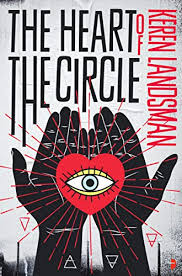
[READ: December 29, 2020] “The Heart of the Circle”

This was an excerpt in the back of the novel Simantov.  It’s another book from Angry Robot and “more Israeli fantasy.”  The story was translated by Daniela Zamir.

I enjoyed the way this book starts right in the middle of the action–giving very little in the way of context.

A few people (college students) are seated at a bar.  There’s Reed and Daphne.  He is close with Daphne (her curls tickle his nose), but she is a free spirit.  There’s also Reed’s brother Matthew.  Daphne and Matthew were supposed to be an item (according to the boys’ mother) but it never happened.  Their mother now sees her as part of the family–as a sort of sister.

They are all somber.  It is the day after the latest murder.

The first murder was unbearable.  This is now the fifth or sixth and they are almost numb. This time they didn’t know her, but they were marching with her when she was killed.

When pyros tried to get revenge after the first murders, they were arrested and executed by the Prevention of Future Crimes Unit. (more…)

Read Full Post »

SOUNDTRACKOWEN PALLETT: Tiny Desk (Home) Concert #113 (November 17, 2020).

I know Owen Pallett from their performance at Massey Hall.  It was beautifully layered orchestral pop.

Typically they loop the songs to make them bigger, but or this set, Owen changed things up.

Owen recorded four songs in multiple stages on different instruments: first, they played acoustic guitar and sang; then they performed the songs again, but this time on violin and viola; finally, Owen layered the recordings in post-production, not really knowing what the final versions would sound like. They explain the whole process, charmingly, between songs.

The setlist here is complete different from the one from Massey Hall.  Although like a that show, he mixes some songs from his first album (released as the band Final Fantasy) as well as he official solo songs.

From a bedroom in Toronto, Owen traverses their musical history, opening with a dreamy song from 2005’s debut album (as Final Fantasy), Has a Good Home, 

His guitar melody is beautiful and the layers of strings make this song feel big and pastoral.  His voice is gentle and lovely.

Before the second song, “Cliquot,” he says that in 2007, he went to Quebec with the band Beirut to write songs and record his EP Spectrum, 14th Century. and Beirut’s album The Flying Club Cup. Zach Condin gave him an instrumental and asked Owen would write a melody, lyrics and sing lead.  They don’t play it live probably because it’s really really gay and Zach doesnt want any more werotci fan fiction writen about the two of them.

Beautiful string melodies in between verses.

“Perseverance of the Saints” is from Owen’s latest record, Island. Here it’s transformed from arpeggiated piano to guitar, and I love the tone it sets.

It is so gentle with swirling strings and a gentle melody.

Owen not only performed each instrument in separate takes, but also did all the production work: recording, filming and editing. A remarkable talent captured in a candlelit bedroom.

“Song for Five & Six” is from his 2014 album In Conflict.  He says when he loops live things to end to get “overwritten and annoying,” so he’s looking forward to playing this with arpeggiated guitar instead of synth.

This song was written about an incident he saw on the Orkney Islands.  After playing some kind of ball game, the men and boys, covered in mud, would climb on the back of a flatbed truck and ride through town banging sticks on the side of the truck.  He thought it was a beautiful image and probably the only pure thing that the men have ever done.

He sings in a gentle falsetto and there’s some gorgeous strings.

[READ: December 19, 2020] “The Snowstorm”

This year, S. ordered me The Short Story Advent Calendar.  This is my fifth time reading the Calendar.  I didn’t know about the first one until it was long out of print (sigh), but each year since has been very enjoyable.  Here’s what they say this year

You know the drill by now. The 2020 Short Story Advent Calendar is a deluxe box set of individually bound short stories from some of the best writers in North America.

This year’s slipcase is a thing of beauty, too, with electric-yellow lining and spot-glossed lettering. It also comes wrapped in two rubber bands to keep those booklets snug in their beds.

As always, each story is a surprise, so you won’t know what you’re getting until you crack the seal every morning starting December 1. Once you’ve read that day’s story, check back here to read an exclusive interview with the author.

It’s December 19.  Alexander Pushkin, author of Eugene Onegin, died in 1837 and so was unreachable for comment. [Click the link to the H&O extras for the story].

I have not read any stories by Pushkin before and I really enjoyed this one (translated by T. Keane).

Set in 1811, this story revolves around a young woman who has fallen in love with a young man whose station is far beneath her.  And such great quotes!

Maria Gavrilovna had been brought up on French novels, and consequently was in love.  The object of her choice was a poor sub-lieutenant in the army, who was then on leave of absence in his village.  It need scarcely be mentioned that the young man returned her passion with equal ardor, and that the parents of his beloved one, observing their mutual inclination, forbade their daughter to think of him.

They wrote to each other every day.  At last they decided that they would run off and get married in secret.  They would then hide away for a time and come back to throw themselves at their parents’ feet for their blessings. (more…)

Read Full Post »

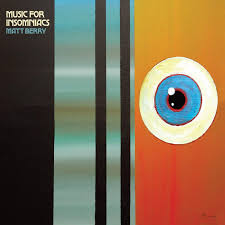
SOUNDTRACK: MATT BERRY-Music for Insomniacs (2014).

Matt Berry is a renaissance man and I love everything he does.  Whether it’s acting in over the top comedies or making over the top prog rock, Berry is my guy.  He has several albums out already.  This one was his fifth. Evidently he created this album in the middle of the night while unable to sleep.

The back cover image is of him sitting amid a Rick Wakeman-like array of keyboards.  And if you’re into gear, he lists everything that he plays on this album:

Arp Odyssey Synthesiser, Korg MS-20 Synthesiser, Korg MS-20008 Synthesiser & Vocoder, Korg Sigma Synthesiser, Korg Polyphonic Ensemble, Korg SV1 Electric Piano, Minimoog Synthesiser, Mellotron-Pro, Solina String Ensemble, Roland Jupiter 4m Synthesiser, Roland Pro Mars Synthesiser, Roland juno 6 Synthesiser, Roland Gaia Synthesiser, Roland Jupiter 80 Synthesiser, Yamaha CS-15 Synthesiser, Yamaha CS-60 Synthesiser, Hammond XKB Organ, Korg & Roland rhythm boxes and found percussion.

Why would anyone need so many synthesisers?  Well, to make an album like this.

It is two 23 minute “songs.”  They are meandering, trippy sounds mashed up with snippets of “songs.”

Part 1 opens with vocals and then an organ playing a familiar-ish classical organ melody but it’s only a nod to classical music because soon enough a bass comes in and turns the music into a very different sounding piece.  I particularly love the way he phases and echoes the drums.  Variations on this song/theme run for about five minutes with more and more interesting sounding effects, until it all fades out into waves of synths.

The swirling synths create an atmosphere for another five minutes when abruptly, you hear something being turned off (or on) and a shushing.  More trippy synth washes follow and then at 13 minutes a new keyboard melody is added to the washes–a gentle tune that give the washes some momentum.  It starts building until 16 minutes when it grows distinctly dark.  Creepy echoing voices come out of the fog.  And you can hear someone shouting okay okay.  Then out of the quiet, a martial drumbeat grows louder and louder as a song starts to form.  At 19 minutes, the melody from “October Sun” from his Kill the Wolf album starts playing.  A processed voice sings the lyrics, but they are very hard to hear.  I assume it is Cecilia Fage, as she is credited with voice/choir.

Part two is not radically different.  It opens with a choir of voices.  It morphs into gentle washes of synths like mid-period Pink Floyd, complete with space sounds–whooshing and zapping.  Then comes what sounds like a horse walking by and some slightly dissonant keys before some hugely vocodered voice start singing a melody.  It’s followed by pianos at seven and a half minutes which merge with the rest of the synth melody.  There is much more going on in the background–voices, sounds, who knows what.

Things abruptly end with a big splash of water at 8:45 and remain underwater for a time before a new synth pattern emerges. Things become celestial with a choir around 13 minutes.  After a big explosion at 14 minutes, spacey chords return followed by another explosion and a return underwater–squishy sounds, then a distant bay crying (my daughter just walked in and said this music is creepy).  Other sounds swim in and out as angelic voices sing.  This goes on until 17 minutes when things settle down into a more stately organ-fueled section.  Things drift away almost to silence and then at 19, a pulsing synth bass starts things up again.  He adds a jaunty synth melody to the bass and it’s suddenly a new wave song.  This dancy part continues until the end of the song when things grind to a halt.

This is a peculiar record for sure.  It’s not soothing for sleep, nor is it particularly upbeat for non-sleep.  But it is an interesting look into Matt Berry’s headspace.

[READ: November 18, 2020] “Fata Morgana”

This is an excerpt from Koeppen’s novel Pigeons on the Grass which was translated by Michael Hofmann.

I’m not sure where in the story this comes from, but I feel like it jumps in right in the middle of a scene.

A black man, Washington Price, is walking through the streets of tenement houses (in Germany) with a bouquet of flowers: “he had marriage on his mind.”

He wasn’t particularly notable in this area, but the fact that he arrived in a blue limousine started a lot of people grumbling behind the tenement windows.

He was there to see Carla.  Carla lived on the third floor with some other girls and their minder, Frau Welz.  The other girls were there for the soldiers.  As (maybe?) was Carla.  They all knew he was there for Carla, but that didn’t stop them from trying to entice him into their room. (more…)

Read Full Post »

SOUNDTRACK: BORIS-präparat (2013).

präparat is Boris’ 18th album.  It contains a huge variety of styles in its 40 some minutes.  It also features a couple of guests.  Michio Kurihara plays guitar on track 3 and 5 and Gisèle Vienne offers spoken word on track 6.

So this album starts with one of the band’s most beautiful instrumentals.  “december” is slow with a cool bassline and gentle drums. The lead guitar perfectly matches the strummed bass.  It’s a lovely post-rock instrumental complete with a section that manipulates the volume knob to bring in extra soft notes.

The pretty guitars continue to ring in on “哀歌 -elegy-” for about 20 seconds before the ominous distortion means an oncoming crash of chords.  But this is a slow crash of chords with some gentle singing (from Takeshi?) in the melodic verses.  About three minutes in the song jumps into a fast rocking section with a great guitar riff and heavy drumming. It’s excellent.

It segues into the 57 second noise fest that is “evil stack 3.”  It’s just distortion and wild soloing, a noisy interlude that is abruptly ended by the gentle “砂時計 -monologue-”  This song is four minutes long complete with gentle drums, and pretty guitars.  About halfway in, it takes off in another postrock spectacle of pretty guitars and a gentle melody.

“method of error” features Michio Kurihara on guitar and starts with some slow heavy thumping chords.  Church bells come echoing in followed by soaring guitars.  The drums interject crashing sounds from time to time.  Two guitars provide an extra wailing solo as the rest of the band jams a heavy chunky riff.  This song runs over 7 minutes.

“bataille sucre” starts off quietly but then brings in a loud ringing guitar.  Then an old school heavy metal riff begins with some screaming lead guitars.  The guest vocals are whispered (presumably in French) and add texture (if you don’t know what she’s saying).

Then comes two songs in under a minute.  “perforated line” is 34 seconds of fast heavy guitar (and synth) that feels like the beginning of song, but it abruptly ends and jumps into the oddball, almost dance stylings of “コップの内側 -castel in the air-” all SEVEN SECONDS of it.  It’s followed by “mirano” which is a warped, carnivalesque waltz with keys and possibly vibes.

“カンヴァス -canvas-” has the tone of a Kim Gordon Sonic Youth song with fuzzy guitars and an almost whispered vocal, although the chorus is pure shoegaze with layers of soft vocals.  About half way through the band add a noisy wall that sounds like it’s going to explode, but it just drops away for some clear crooning from Takeshi.

The disc ends with the eight and a half minute “maeve.”  It opens with skittery percussion and faraway gongs.  Then comes a distorted slow riff.  It’s a slow drone-like song that lumbers along for about six minutes.  The last two are a wave of distortion that sounds like a slow heavy train echoing through your head. 

I love the diversity of this record and the tracks that are not experimental are just dynamite.  I’m really glad this album is no longer hidden away.

[READ: November 12, 2020] The Proof

The Little Buddhist Monk (written 2005) has been bundled with The Proof (written 1989) together in one book.  Both stories were translated by Nick Caistor.

The Proof is about as different from The Little Buddhist Monk as you could get.  It’s also the most visceral story I’ve read by Aira, whose stories tend to be very “of the mind.”

Indeed, you can tell this story is quite different just from the way it starts.

“Wannafuck?”

This question is asked to Marcia (a senior in high school?–she’s “fourth year”) as she is walking down the street.  There are groups of teenagers hanging around,and this question comes from one of the girls.  (more…)

Read Full Post »

SOUNDTRACK: BORIS-Vein (2006/2013).

Boris continues to reissue their back catalog in streaming format.  Which is pretty amazing since so much of their work is so hard to find.  Possibly not great for collectors, but great for those of us who actually want to hear the music.

Vein is Boris’ thirteenth album.  Because they are Boris, the released two different albums under the same title in 2006.  The packaging was identical on both records and the only way to tell them apart was to check out the surface of the vinyl itself.

The “Hardcore version” had punk, hardcore, and drone.with vocals that are screamed rather than sung.  The  “Noise version” had drone and noise music as well as punk. This version of the album does not include any vocals.

In 2013, the band announced that the album would be released as a 2-CD set not as a reissue, but rather a re-arrangement of both albums combined.

Given all of this, it’s not even entirely clear to me what has been released her on bandcamp.  But it seems like the first two tracks (here labeled “v” and “e” are the hardcore version.  The third and fourth tracks “i” and “n” are a little harder to place.

“v” is 14 minutes long, broken up into several small pieces:

It starts with a wall of noise–static and low feedback swirling and manipulated until 4.01 when it segues into segues into ringing bells and effects that sound like a jet taking off and broken glass swirling and zipping around.   Then some drums and chords are introduced.   At 6:15, there’s a samples from the 1979 film Stalker, by Russian director Andrei Tarkovsky. A man says “И пусть посмеются над своими страстями” (Russian for “Let them laugh at their own passions”) followed by a blistering hardcore song  until 7:52.  After an abrupt halt comes the next screaming hardcore song which is more fuzz than chords with screams and feedback which at 9:06 segues into another super fast song which is distinguished from the others because of a riff where the chords go up and up higher and higher and faster as if they are going to explode, although it rumbles unto feedback at around 10:24 when a new tone of fuzzy nose feedback and a much slower introductory opens before before the pummeling hardcore resumes until 12:03.  This first song ends with a moment of silence and then a woman saying “unpleasant dreams” before a Wata fast high note solo is balanced by slow pummeling chords and drums and cymbals. After a minute or so, the hardcore returns this time with a solo all over the top of the song.  The song ends with a humming and what sounds like car keys jingling

“e” is over 15 minutes long and is one third hardcore punk and two thirds slow lengthy drone.  It starts with an Atsuo scream and hardcore drums. There’s a blistering hardcore song–fast riffage and screamed lyrics (which I assume are in Japanese).  Although the hardcore songs sound similar (and are unnamed) the riffs are distinctive enough to tell them apart.  Some backwards masked sounds come in at 1:05 and a similar riff at 1:15.  I have never seen them play this kind of set–it must be exhausting.  At 2.01 a loud bass comes in with a lot of cymbals and the song is buried under a blanket of distortion.  two minute song starts with.  At 3:04 a buzzsaw sound and a cool riff is coupled with some intense screaming.  At 4:45 it morphs into feedback that contains another sample from an Andrei Tarkovsky film, this time the 1986 film, The Sacrifice.  A man say “I hela mitt liv har jag väntat på det här. Hela mitt liv har varit en enda väntan på det här.” (Swedish for “All my life I’ve been waiting for this. My whole life has been a long wait for this.”)  The rest of the song feels like it might stay a lengthy drone, but at 5:46 after some cracks of the snare, a slow powerful Boris riff emerges.  But the riff dies away for some slow Wata soloing over droning chords.

Track 3 is probably the “noise version” (which is 17 minutes long) or the 2013 re-release (which is 17:25) but this track is 18:04.  Of course, if the “noise” version has no vocals, it can’t be this because it does have vocals.

It opens with a similar kind of noise that opens “v” but more staticky and with distant riffing going on.  At 1:58 a riff comes in.  The songs are like “v.”  A shorter version of the jet sounds are followed by some slow heavy chords.   At 3.22 there’s some chirping feedback that introduces the first hardcore song in “v.”  At 5.22 [#4 above] segues into a scream-filled hardcore song followed at 6:14 by the riff that goes higher and higher.  At 7:36, there’s slow thumping with noise and feedback (this might be new and not on “v”) then a sudden drop off of sound and near silence before the screeching feedback that starts at 8:39 with a blistering hardcore song that sounds unlike anything before. There’s heavy fast riffing with a pause and a big scream before resuming.  At 11:50, warping sounds and a thundering drum compete with a really fast riff which sounds like the first part of “e.”  At 13:05 song 2 from “e” begins–short, fast and loud.  Then at 13:51 comes track 4 from “e” (there’s no track 3) with the buzzsaw opening. At 15.21 there’s some backwards recording which eventually becomes the guitar solo that ended “v,” although this time it’s just under 3 minutes long.

Track 4 is “n.”  Perhaps it’s the “noise version” as there are no words.    It’s 17:59 and is a noisy composition of drone and feedback.  There’s some heavy chords and some quieter moments.  The high soaring notes seem to fit in very nicely with the sludgy bottom parts.  About half way through it turns into a fast, heavy hardcoreish track with a lot of drums, but buried under a wall of feedback and distortion.

[READ: November 12, 2020] The Little Buddhist Monk

The Little Buddhist Monk (written 2005) has been bundled with The Proof (written 1989) into one book.  Both stories were translated by Nick Caistor.

The Little Buddhist Monk is an absolutely bizarre, borderline stream of consciousness story.  It jumps from topic to topic like a fever dream and resolves itself in an even more unexpected way.

The story opens with us meeting the little monk who would very much like to leave Korea (where he was born and where he studied). But he has no money and no reasonable expectation for ever emigrating.  

Then one day a French photographer, Napoleon Chirac, and his wife Jacqueline Bloodymary (!) happened in his path.  They were on vacation and spoke French to each other.  The monk knew French and joined in the conversation.  They were delighted to meet a fellow French speaker in such a foreign land.  He imagined that they could be his ticket out of Korea.  So he decided to help them throughout the day.

They talk a lot about art.  Napoleon photographs empty rooms with a 360 degree camera and then splices it together as one image.  He has traveled the world filming places and he is looking to do a Korean monastery.  What luck, the monk can take them to a good one. (more…)

Read Full Post »

SOUNDTRACK: BORIS-tears e.p. (2019).

Boris tends toward being a very heavy band.  Their two recently albums D.E.A.R. and NO are some intense heavy metal.  They also do a lot of noise and heavy drone.  But they are not afraid of melody.  And they are not at all afraid to make pretty, dancey music.

There are five songs.  The first song “どうしてもあなたをゆるせない (doushitemoanataoyurusenai)” is on the disc twice.  The first version of this song is a remix by Narasaki under his name “Sadesper.”  It opens with a grooving bass line and some pretty guitars.  The drums are metronomic and there’s a sprinkling of keys.  I’m not sure who sings, but there’s a lot of falsetto. I love how just before the chorus there’s some orchestra hits.  It’s pretty much a full on dance song and it suits them perfectly.  You’d never guess it was Boris, but it makes sense once you realize it.  It even ends with a nifty guitar solo that sadly fades out.

“u fu fu” opens with a fast simple guitar chugging riff.  After a good ol’ “Whoo!” from Atsuo, the song pulses forward on the insistent grunted  “ooh ah” that works as a foundation to the song.  There’s a lots of great backing vocals in each ear. With about a minute to go, the bass takes over with a fast, heavy rumble before the harmonizing vocals kick in.

Up next is a fantastic cover of a Coaltar of the Deepers song “To the Beach.”  I didn’t know Coaltar of the Deepers before this release, but I have listened to them a bunch since and they are a terrific Japanese band unknown in the States.  I’m not sure how much this differs from the original , but this version is fantastic–slow and moody with lots of build and release.  The song starts with a pretty guitar melody and then a series of crashing chords and cymbals while Wata’s guitar soars.  The verses are slow with a whispered vocal.  But the choruses resume the crashing chords to punctuate things perfectly.  In the middle of the song as the vocals overlap and blend, it sounds magnificent.

“Peaches” comes next, it’s a 2 minute song sung by Wata.  A pulsing bass line propels the song forward as Wata chants the the word “peaches” over and over with an occasional “la la la” fleshes things out.  A repeating piano is added for a bit and then a shift to a kind o funky bass line that leads to the end of the songs.  It’s only two minutes long and kind of goofy but I wish it was longer.

The disc ends with an instrumental version of “どうしてもあなたをゆるせない.”  The song is so catchy and wonderful that hearing it a second time in the EP is a great thing.  It’s one of the few instrumentals that I think might sound better than the original because you can really hear what the musicians are doing–and its some great stuff.

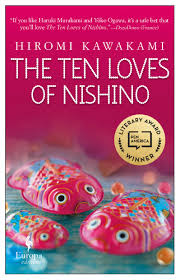
[READ: October 29, 2020] The Ten Loves of Nishino

I have a stack of books waist high next to my desk which I intend to read.  And yet, I continue to find new (to me) books that I jump in and read first.  This book was recommended by the most recent Tiny Desk Contest winner Linda Diaz.  Why on earth would I read a book recommended by a person I’d never heard of before?  She said it was her favorite book ever (which seems weird since it only came out in English last year, but whatever).  It was also pretty short.  So I decided to check it out.

I have enjoyed many of the Japanese writers that I’ve read, so I was intrigued to read a contemporary female author (this book was translated by Allison Markin Powell).

So this book is written in ten chapters–each one written by a lover of Nishino, an enigmatic figure whom we only learn about from the women writing about him.

There is something strangely seductive about Nishino that these women find hard to resist.  He is aloof and puzzling, but that seems to make women want him even more.  But he is perpetually with women (more than these ten, it would appear). (more…)

Read Full Post »

SOUNDTRACK: BTS-Tiny Desk (Home) Concert #82 (September 21, 2020).

BTS is the biggest band in the world right now.  As the news the next morning said

Korean boy band BTS played its first Tiny Desk Concert on Monday — and broke the series record for most YouTube views on its first day, which happened in about 25 minutes.

When I was younger I hated all boy bands on principle–they were fake creations with no soul.  But either I’ve mellowed with age (true) or I’m less exposed to pop music so no longer sick of it (true) or maybe I just get a kick out of band from South Korea making people excited in the U.S.  Whatever the reason, BTS makes me smile.

Partly, it’s the band members themselves:

V; Jin; Jimin; J-Hope; RM; SUGA and Jungkook [I have no idea if that’s a left to right listing or just a random assortment of names] all seem to be really enjoying themselves and each other.  Perhaps all boy bands have this camaraderie (I’ve never watched enough to notice), but these guys are pretty entertaining–right down to their fabulous clothing choices.

The little I’ve seen of BTS makes me think that they are known by their hair color choices: the blue one, the purple one, the blond one, the brown one, but in this set, aside from a blue and a blonde, the rest of the guys have black or brown hair.  So instead, you have to go by their voices I guess.

One of them (on the right) has a really fantastic falsetto, another has a much deeper voice.  One of them seems to be a rapper.  The rest I can’t really tell apart–I’m not entirely sure if it makes sense for there to be seven of them, but it works.

With BTS cooped up in Seoul, the group held true to the series’ spirit by convening a live band for its Tiny Desk debut, and even arranged to perform in a workspace with a music-friendly backdrop: the record store VINYL & PLASTIC by Hyundai Card in BTS’s hometown.

The following introduction makes me laugh because I have literally never heard this song (or really any BTS song, as far as I know)

Opening with this summer’s inescapable “Dynamite” — the group’s first single to hit No. 1 in the U.S., as well as its first song to be fully recorded in English

“Dynamite” has a real disco vibe and is really catchy.  Moreso than the other two songs, I feel.  Perhaps because its in English, but I don’t think so.  The melody and delivery is really spot on.  And I love the whoohoos and heys. 

I really like their live band.  It’s kind of hard to pay attention to them when you have seven guys singing and dancing around in front.  I don’t know if they normally play with a live band, but the guitar from Shyun is really grooving.  He also plays a lot of unobtrusive but wild solos throughout the songs.  The bass from Kim Kiwook is really smooth and funky

They introduce the next song in English. 

From there, the group dipped into its back catalog, seizing on the opportunity to showcase its quieter side while (mostly) staying uncharacteristically seated. The breezily propulsive “Save ME,” from 2016,

starts with a squeaky keyboard sound from DOCSKIM followed by the falsetto guy on the end (who seems to sing more than anyone else–I wonder if he’s the favorite) but they can all do some impressive falsetto notes in the verses as well.  I get a kick out of how they have a really hard time staying seated–with one or more of them seeming to need get up and dance. 

This song has a rap verse (in Korean I guess) which is pretty interesting to hear.

They discuss the song in Korean (with subtitles) and then introduce the final song in English.

It’s the full-on power ballad, 2017’s reflective “Spring Day,”

which seemed especially true to BTS’s hopeful nature: Introduced with a few optimistic words from rapper and singer RM (“It’s been the roughest summer ever, but we know that spring will come”), the song reflects on a need to wait out hard times, even as the weight of present-day pain feels oppressive.

The song builds from a slow intro to a pretty big ending with some notably solid drumming from KHAN.

I was surprised by how much I enjoyed this tiny concert.

[READ: September 22, 2020] Birthday

Birthday is not a novel, it is an autobiographical essay.  It’s important that this distinction is made because many of Aira’s novels feel autobiographical.  But this one is meditative and a very personal–it was translated by Chris Andrews.

Aira turned 50 in 1999 (he dated this work July 18, 1999).  He imagined it as an opportunity to prepare for the future. But nothing really changed.  He went on as usual.

It was a short time later, when walking with his wife, Liliana, when he stated that the phases of the moon could not be produced by the earth’s shadow as he had learned.  But his wife said there was no way anyone thought that’s how the moon’s phases were created.  He felt so dumb for thinking this, that he spent the next several days going over in his head what else he didn’t know.  He spends most of the book mocking himself for his ignorance. (more…)

Read Full Post »

SOUNDTRACK: Æ MAK-“We Have It Right Here” (2020).

Æ MAK is Aoife McCann.  She creates a fascinating tapestry of music.  It feels classical and operatic and yet also feels very electronic and oddly poppy.

This song begins with muted xylophones -sounding electronic tones playing a pretty melody (which reminds me of Björk).

McCann’s voice comes in and lilts and flutters almost bird-like. She sings in English but with interesting emphases on words.

Her vocal delivery and melodies conjure Regina Spektor.

About halfway through the, until now entirely electronic song, adds some soft acoustic guitar and gentle bells.

The second chorus is almost all voice with simple percussion and a kind of Kate Bush vocal trill.

The electronics come back in and suddenly start getting fuller and louder–filling up your headspace with sounds as her voice echoes itself and adds other lines before building to a remarkably catchy ending.

There’s so much going on in this song even though it often feels very minimal.

And wait until you see her on stage.

[READ: September 21, 2020] On Contemporary Art

I have enjoyed Aira’s novels and was intrigued by this short essay about Contemporary Art.

The entire book is 60 pages and it includes and Foreword and an Afterword.  That jibes with the premise of the imprint itself.  Ekphrasis Press reprints works about visual art that are not meant to be academic in nature–but compelling as prose.

In the Foreword Will Chancellor, talks about how language can throw you off.  He recalls bring a child and seeing the Objects in the Mirror are Closer Than They Appear warning.  He wondered how objects and their appearances could diverge.  He continues that Aira suggests this gap between appearance and reality might be the origin of cotemporary art.

~~~

The main body of the book is Aira’s essay, translated by Katherine Silver.

He starts by saying he is a writer who looks for inspiration in painting.  He says that cave painters painted facts, but it took a person relating the adventure, the storyteller, to make the episode come alive.

As a lover of art, he subscribes to many art magazines, namechecking Artforum, Art in America, Flash Art, Frieze, art press and more.  He says the magazines look better every year but that their ability to convey art gets worse every year–they cannot properly convey what an art piece looks like.  You have to read the texts to see what is happening.

His essay concerns the Enemy of Contemporary Art who says that today’s

frauds who pretend to be artists depend on a justifying discourse to validate the nonsense they produce.

They say that contemporary art doesn’t speak for itself–that it needs critics to explain it. (more…)

Read Full Post »

SOUNDTRACK: ANAT COHEN AND MARCELLO GONÇALVES-Tiny Desk (Home) Concert #74 (September 2, 2020).

Anat Cohen plays the clarinet and Marcello Gonçalves plays the seven-string guitar.  Their

music comes from the heart of Brazil. The first two songs are choros, from the choro genre of music that originated in 19th century Rio de Janeiro. Think of choro music like New Orleans jazz, but in South America, both born of European and African influences. Cohen, on the other hand, is a clarinetist from Israel and the composer of these tunes. She developed a passion for Brazilian music while studying at Berklee College of Music and not long afterward found herself in a “roda” (choro jam session) in Rio de Janeiro with some of the most virtuosic players in Brazil’s choro scene. It was on that trip 20 years ago when Cohen met Gonçalves for the first time. All these years later, choro music has woven many of the threads in Cohen’s musical fabric.

Notice Gonçalves’s seven-string guitar, a common instrument in choro music; the additional string extends the lower register as if to combine an acoustic and bass guitar. Cohen explained in an email that playing with Gonçalves “makes me feel like I am playing with a full band.”

This duo was recently revered for their 2018 Grammy-nominated record, Outra Coisa, which celebrates the music of the iconic Brazilian woodwind player and composer Moacir Santos. Gonçalves is acclaimed for refining Santos’s orchestral arrangements down to just two musicians.

“Waiting for Amalia” opens with a bouncy guitar line and a sweet almost flirtatious clarinet.   This song feels quite jazzy.

“Valsa do Sul (Waltz of the South)” begins with a lovely, almost slinky clarinet melody. I love watching him play some of the fast riffs along with her, but it’s the bouncing, percussive moments that really make the song come alive.

This duo was recently revered for their 2018 Grammy-nominated record, Outra Coisa, which celebrates the music of the iconic Brazilian woodwind player and composer Moacir Santos.

Santos was the teacher of the guitarist and composer Baden Powell de Aquino.  I only recently heard of Baden Powell but here he is mentioned again–this time as an influencer before the existence of Instagram.  “In the Spirit of Baden” has some great low notes and a bouncy clarinet.  The middle has a strangely dissonant section where Gonçalves plays a few chords that are a little harsh.  Then Cohen joins in adding some wailing clarinet solos.  It’s a surprisingly dissonant moment in an otherwise very pretty song.

[READ: September 1, 2020] “U.F.O. in Kushiro”

I read this story almost ten years ago.  It was republished in a March 2011 issue of The New Yorker to memorialize the then recent earthquake in Japan.  This story was inspired by the incidents of the 1995 earthquake in Kobe, Japan.

The story (translated by Jay Rubin) opens a few days after the Kobe Earthquake.  And even five days after the Kobe earthquake, Komura’s wife is still engrossed in the TV footage from Kobe.  She never leaves the set.  He doesn’t see her eat or even go to the bathroom.  When he returns from work on the sixth day, she is gone.  She has left a note to the effect that she’s not coming back and that she wants a divorce.  Komura’s wind is knocked out of him. (more…)

Read Full Post »

« Newer Posts - Older Posts »