Feeds:
Posts
Comments

Archive for the ‘Translation’ Category

CV1_TNY_11_26_12Blitt.inddSOUNDTRACK: BAND OF HORSES-Live on KEXP, October 19, 2007 (2007).
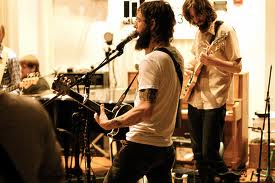
bohgibsonBand of Horses plays in New York at Gibson Showroom for the CMJ Festival and KEXP was there for the broadcast.  The band plays six songs and they sound really great here–I’m always amazed by their harmonies.  They had just recently released Cease to Begin, and so they play “Is There a Ghost” which sounds perfect live (I’m not sure if it has been a hit by then).

I’m confused that in “Marry Song,” they state that he switches to the double neck guitar.  Not that I doubt that he does, but there’s so little guitar in the song, it seems an odd choice.  Regardless it sounds pretty, as does “Ode to LRC”–one of my favorite BoH songs.

The chat with the DJ is great, as she reminds the singer about 6 or 7 years ago when he was pushing his new label and the band Carissa’s Weird and how all of a sudden he was playing with them behind the drumkit and now he’s fronting Band of Horses.  There’s a  comment about the band relocating back to North Carolina (and no longer being a “Seattle” band).  And they joke about the song “Detlef Schrempf” and how they have had a sports guy on both of their albums so far.

The play “Par One” which he says he hopes he doesn’t screw up because he forgot the words the other day.  The final track “Am I A Good Man,” is a cover of a Them Two song.  I’m always mixed about bands dong covers.  It’s fun to hear their take on things but I’d much rather hear an actual BoH song than one by someone I’ve ever heard of.  Having said that, this song is really good, very retro-sounding with a cool 70s style keyboard solo.

It’s odd that the band hasn’t been back on KEXP since 2007.  You can hear this one here.

[READ: December 1, 2012] “Bull”

Mo Yan’s story (translated by Howard Goldblatt) opens with a technical detail about forcing water through the arteries of slaughtered animals.  Lao Lan perfected the method for doing this that required far less water.  It was also suggested that he used a bit of formaldehyde to keep his animals looking fresher than the other butchers’ wares.  The person who suggested the formaldehyde was Luo Tong, the narrator;s father.  [I know that it’s the reader’s responsibility to keep characters straight, but is it really that hard to not have your two main characters have these three names: Lao Lan Luo?].

The narrator’s father was an expert at judging animals–he could look at any beast and guess the weight and overall meat content.  He would put his hands on the beasts just for show.  But he was always right within a kg and at the market, his word was bond.

There’s a brief interlude in which we see the narrator’s homelife.  We learn that Luo Tong is cheating with “Auntie Wild Mule.”  There’s a funny sequence in which the narrator reveals that he knows his mother’s name (a no-no apparently) because Luo Tong told it to Wild Mule.

The story seems like it might just be a story about the village and Luo Tong’s proficiency at his skill (he never accepted any gifts from anyone so as to not seem unjust, everyone agreed he was fair–crazy, but fair).  But then as the day’s trading is ending, Lao Lan walks over to where Luo Tong is sitting and pisses on the ground right in front of him (from the amount and the smell, the narrator surmises he has been holding it a long time).  Luo Tong does nothing.  Literally he just sits there.  The narrator is mortified at his father’s cowardice and it is clear that Luo Tong must have lost some respect here.

When the day finally ends and the merchants give Luo Tong his cut, Lao Lan deliberate drops the money in the puddle of urine.  The narrator calls his father all manner of names and says he can no longer respect him.  Lao Lan states that the narrator should consider being his (Lao Lan’s) son instead.  The narrator is offended by this as well and charges at him (but misses).  And the narrator sulks. (more…)

Read Full Post »

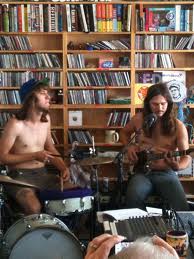
SOUNDTRACK:  JEFF THE BROTHERHOOD-Tiny Desk Concert #165 (October 8, 2011).

This was my first exposure to JEFF the Brotherhood, a rollicking duo who blast out the walls of the NPR studios.  The guitarist and drummer play simple, power punk (quite well) and they sound like a whole band, not just two guys.

“Diamond Way” reminds me of the Meat Puppets–echoey lazy-sounding punk.  ANd the oh oh oh oh oh is very catchy.  And then, after describing an NPR host as sounding like Ira Glass–if he were an old woman (and then apologizing if he offended anyone), they play “Bummer”–shirtless—presumably a first for the NPR offices.

“Bummer” is a mellower song and their sound doesn’t sound less full for the mellowess–especially when he kicks on the distortion pedal.  “Bone Jam” is one of my favorites–more ooh’s and the simple but wonderful lyrics “Gonna grind your bones to make my bread.”  It’ s amazing that two guys can sound this good.

[READ: August 17, 2010] “The Ruin of Amalfitano”

Natasha Wimmer has translated yet another posthumous work from Roberto Bolaño, this one called Woes of the True Policeman, due out this month.

This may already exist, but I hope someone is compiling a family tree of all of the Bolaño characters who have appeared in different locations.  For instance, the Amalfitano in this story appeared in 2666, indeed he has a whole chapter about himself.  And we know it’s the same Amalfitano because they both have a daughter named Rosa.  This story is set before 2666 and these fascinating events would shed some light on the state of Amalfitano when we do meet him in the novel.  Of course, Bolaño’s writings don’t seem to follow a conventional strategy so who knows if he intended any of this to be part of the “missing” Part 6 of 2666.

Anyhow, this story is about Amalfitano, but it opens with Padilla who decided to become an artist at the age of 13.  After dabbling in theater and film, he settled on poetry.  By 17, he was a sarcastic angry kid who could be easily provoked to violence (he claims that when fighting Nazis, anything is permitted).

At 18, he published his first book of poetry and when he was 21 he showed the poems to Amalfitano.  Amalfitano was a teacher of Latin America writers at the University.  He liked Padilla’s poetry, although he didn’t much like Padilla who didn’t come to class very much.  But once Amalfitano gave him praise for the poems, Padilla never missed another class. He even invited Amalfitanoto his house for parties.  After many such parties, the two became lovers.

Once the University learned of this, Amalfitano was fired.  (more…)

Read Full Post »

SOUNDTRACK: ANIMANIACS-Wakko’s 50 State Capitals (1995).

To the tune of “Turkey in the Straw,” Wakko teaches you all of the capitals of the 50 States.   I suspect that if I had the energy, I would try to remember this (as many commenters on YouTube say they’ve done).  While I know most of the capitols, I certainly don’t know them to a  catchy tune.

This song is not as explicitly insane as the countries of the world song, but it’s still pretty awesome.  Thank you, Animaniacs for being this generation’s School House Rock!

[READ: July 2012] Chi’s Sweet Home 9

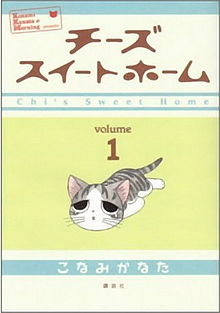
Volume 9 of Chi’s Sweet Home has just come out and the whole family was excited to read it (Clark grabbed it first!).

I don’t know how long the series is going to run, but if anyone thought it was winding down with Book 8, nothing could be further from the truth.

As the book opens, Chi is wearing her Elizabethan collar to protect her from her injuries (I actually don’t recall what injuries they were).   But she soon gets that off and her family realizes that since she couldn’t go outside with the collar on, maybe they should make her an indoor cat after all–she’ll certainly be safer!

And so begins Chi’s frustration–unable to get outside and nobody helping her out!  And she had promised Cocchi that she would met him at the fountain   For the first time in the series (as far as I can remember) another character gets an entire strip to himself: poor Cocchi, the naughty stray cat feels sad and lonely as he waits for Chi who promised she’d be back to play today.   If you think it’s frustrating to wait for people  imagine being a cat and having no way to communicate! (more…)

Read Full Post »

SOUNDTRACK: JOHN DOE AND EXENE CERVENKA at KEXP December 31, 2010 (2010).

X toured the Los Angeles album back in 2010–the 30th anniversary of the album.  John Doe and Exene Cervenka came to KEXP to do an acoustic set and to talk…a lot.  The DJ tells them of when he saw them at age 16.  He had his camera and wanted to be a rock photographer.  He was getting pushed around in the pit and Exene pulled him onstage (he got great photos which I’d love to see).  Surprisingly, Exene does not seem as moved as one might expect by that story.

This is a simple, acoustic set–John with his guitar and he and Exene singing.  They play a few songs from across their career: “Because I Do,” “In This House That I Call Home” (a personal favorite), “True Love” (another favorite) and “See How We Are.”  John still sounds great, although Exene’s voice sounds a little worn on “Because I Do” and is actually hard to listen to on “True Love.”

There’s some really long interviews–talking about drugs and The Germs and the heyday and how Exene can’t wait for 2011 to start.

[READ: August 27, 2012] The Emily Dickinson Reader

This book is “an English-to-English translation of Emily Dickinson’s Complete Poems.”  What?  Well, basically Paul Legualt has taken all of the “poetry” out of Dickinson’s poems and has left us with what the poems might mean to contemporary readers.  But he also reduced them to basically one line summaries as well–or as McSweeney’s says: “ingenious and madcap one-line renderings.”

So you get “translations” like: #314

“Hope” is the thing with feathers –
That perches in the soul –
And sings the tune without the words –
And never stops – at all –

And sweetest – in the Gale – is heard –
And sore must be the storm –
That could abash the little Bird
That kept so many warm –

I’ve heard it in the chillest land –
And on the strangest Sea –
Yet – never – in Extremity, It asked a crumb – of me.

Which Legault translates as: “Hope is kind of like birds. In that I don’t have any.” (more…)

Read Full Post »

SOUNDTRACK: PHOENIX in Studio at KEXP (2009).

For this in-studio  performance, two members of Phoenix showed up to play a stripped down acoustic performance.

They play four songs (and all of the songs are quite short, as well).  Three songs from Wolfgang Amadeus Phoenix (“Listzomania” “1901” and “Armistice”) and a cover of Air’s “Playground Love.”  Given how different Phoenix and Air sound (even if they are both French), it’ an impressive change of style for the set.

This stripped down version really shows what a great voice the singer has.  And these songs, while not quite as catchy as the originals, still sound fantastic.  There’s also a brief chat with the DJ about their then recent appearance on Saturday Night Live.

If you like Phoenix, this is a great show to download.

[READ: September 1, 2012]  An Iliad

Since I really enjoyed the two Baricco stories that I’ve read so far, I decided to try something else from him. An Iliad is a fascinating book from conception to execution.

Baricco wanted to read Homer’s Iliad aloud on the radio.  But when he investigated the project further he found that a) it was way too long and b) it wasn’t really well suited to contemporary audiences.  So (and he gives details about exactly how he modified it), he decided to remove sections of the original, restructure it and try to give it a more contemporary feel.

But he also tried to keep as much of the original as he could.  So, rather than rewriting the book, he worked with a prose translation (poetry being way too convoluted for his project) and used his  translation of that translation  (which for us gets further translated into English, yipes, although the translation is again a very good job by Ann Goldstein) to create his Iliad.  One of the major excisions he did for the book was to remove all of the sections with the gods.  They are alluded to, but he removed the gods (and all supernatural aspects) from the book reasoning that the mortals reference what the gods say and do so anyway, so he simply took away the duplication.  Plus, the gods aren’t really relevant to contemporary listeners. (more…)

Read Full Post »

SOUNDTRACK: KISS-Alive III (1993).

Kiss put out Alive! after just three albums.  Alive II also came out after three albums.  Alive III has 14 albums between it and Alive II (if you count the solo albums as 4).  I guess poor sales and poorly attended concerts don’t really suggest live albums.  But Revenge revitalized them somewhat so it was time for a new one–their first with no makeup!  And it’s a pretty good one.

But it’s also like Kiss has forgotten all about being Kiss.  There’s no “You wanted the best, you got the best, the hottest band in the world…Kiss” (which would have been untrue at the time anyhow, but since when has that stopped Kiss?)  The tracklisting is pretty darn good though.  For Alive II, the band didn’t want to repeat any tracks from Alive! (that’s such an endearing thing to say about the band with 400 repackaged hits records).  Since there are tons of records since Alive II, you’d assume Alive III was all 80s songs.  But that’s not the case.  There are a few inevitable duplicates (how could there not be–all their biggest hits were from the 70s), but I’m surprised they didn’t throw more current stuff on the disc.

It opens with “Creatures of the Night” a great heavy version.  Then they go way back to “Deuce” which is a cool surprise.  Since this was the tour for Revenge, you’d think there might be more songs from it, but there’s only three: “I Just Wanna” “Unholy” and “Domino.”  “I Just Wanna” was perfectly crafted for Paul to banter with the audience and get them to sing “I just wanna fuck” (which was edited from the album I understand).  And in this live setting “Unholy” sounds great.

“Heaven’s on Fire” works well live, even if I don’t really like the song–but the band can really ham it up here.  The big surprise has got to be “Watching You,” a totally unexpected song form the past.  And even if it was on Alive!, this version is quite different (no Peter Criss cowbell).  I don’t think much of “Domino” anyhow (well, the music is great but the lyrics, ick), but in this version Gene just seems kind of bored.

Another surprise comes in “I Was Made for Lovin’ You”  true it’s one of Kiss; biggest hits but they often try to distance themselves from the “disco” era.  Nevertheless this version sounds revitalized.  And since there were no live albums in the 80s, there’s no official live recordings of it.  “I Still Love You” is another great chance for Paul to shine.  “I Love It Loud” sounds great (although the harmonies get a little sketchy at times.  But it’s weird to hear “Rock N Roll All Nite” in the middle of the set instead of at the end.  It’s also odd to start off this song with “It ain’t bullshit when you say rock and roll all nite and party every day.”   The intro to “Detroit Rock City” is also very strange “It doesn’t matter where you’re born ,it doesn’t matter where you come from, it matters where your head is at. This one;s called Detroit Rock City.”  Huh.

There’s not much you can do with a dreadful song like “Lick It Up,” and ad-libbing “I wanna lick you” doesn’t make it any better.  The disc ends with “God Gave Rock n Roll to You II,” which I don’t like, but which sounds good live, a lot of energy.  And it wraps up with a very odd thing–a guitar solo version of the Star Spangled Banner.  It doesn’t compare to Alive! or Alive II, but Alive III is a good live album from a good live band.

[READ: August 15, 2012] “From the Pencil Zone”

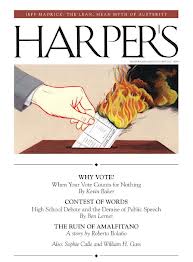
This is a review of the microscripts of Robert Walser, an author whom I have never heard of.  Walser was born in Switzerland in 1878 and he published several shorts and several novels (which were admired by Kafka!).

As the market for shorts dried up, so did his career, and he moved into smaller and smaller places.  Accordingly, his handwriting grew smaller and smaller, too.  Eventually he cheeked himself into a series of mental institutions.

Walser’s early novels dealt with everyday life, like the “young boyish man” who wants to become a bookshop proprietor in The Tanners.  The character (whose name we don’t learn for a long time) is effusive, praising the job to the heavens as a divine calling!  And lo he is given the job.  A week later he declares, “the entire book trade is nothing less than ghastly.”  Wasler himself had a multifaceted career: butler, inventor’s assistant, clerk, journalist.  But he was eventually diagnosed with schizophrenia and is responsible for this quotable quote: “I’m not here to write.  I’m here to be mad.”

After Walser died, people discovered a treasure trove of 526 pages of “microscripts.”  The writing was so small that these 526 pages, when written in book form came to six VOLUMES of books.  They were released as Aus dem Bleistifsebiet (From the Pencil Zone).  Galchen’s review here is for the short one volume New Directions collection called Robert Walser: Microscripts.  Interestingly, most of the stories have no title and some seem unfinished.  New Directions (and Harper’s) include images of this man’s microscopic writings (all done in pencil of course).  He wrote in Kurrent, a widely used script at the time which was a version of medieval shorthand and which dramatically reduced the number of strokes per character.  His letters were often one or two millimeters tall.  He was able to fit six stories on a postcard received from a newspaper editor. (more…)

Read Full Post »

SOUNDTRACK: KISS-Asylum (1985).

This series of mid-80s Kiss CDs is regarded pretty poorly.  In fact, I believe that Gene and Paul have distanced themselves from Asylum.  And yet, despite its pop metal vine and really dayglo appearance, there’s some good stuff on it.  The solos are really notable on this disc.  Bruce Kulick has taken over lead guitar duties and he is wailing maniac.  He has speed and flash and he, frankly, really stand out (not always in a good way) in these songs.  His solos seem to signal a shift to a more pop heavy metal sound.

The disc opens with a pounding drum salvo and aggressive guitars!  “King of the Mountain” is a classic Kiss song—loud, with a great sing a long chorus from Paul.  “Anyway You Slice It” also rocks pretty hard, one of Gene’s fast, sex songs.  But man I hate songs that break down to just vocals and drums. “Who Wants to Be Lonely” seems like a ballad—lyrically and all—but it’s actually a pretty heavy song, again, perfectly suited for Paul’s voice.  “Trial By Fire” is the first song that really falters.  A generic anthem with the really lame chugga chugga guitars that Kiss would really push in this era.  “I’m Alive” opens with more crazy drumming and wild soloing and for all the world sounds like mid 80s Van Halen.  Until Paul belts out a fast vocal line.  This is a fast, aggressive song with a great chorus.

“Love’s a Dirty Weapon” almost turns into a great song—the chorus is just a little lacking.  And there’s that other part with just drums and a guitar solo—again, very Van Halen, which is good for Van Halen, but sounds really weird for Kiss.  I should hate “Tears Are Falling,” it’s got the chug chug chug guitars, and very little else, but I love a good Paul ballad—when he starts wailing at the end, it’s pretty great.  I am aware that the lyrics suck, yes.  But the solo is more like old school Kiss.  “Secretly Cruel” is cheesy, but delightfully so, and actually sounds like Kiss of old as well.  “Radar for Love” is an awkward song that never quite flows the way it wants.  It’s a good song that shows them branching out, though.  “UH! All Night” is a, well, look at the title.  It’s the kind of throwaway song that is so over-the-top ridiculous that it comes back around to be kind of fun.  And I imagine that some fans are still singing that chorus to themselves.  “When you work all day you gotta Uh all night.”  No one ever said Kiss was classy.  Note:  I listened to this song a week ago and that frikkin chorus is STILL in my head.

[READ: August 11, 2012] McSweeney’s #40

This issue came in a double pack–with a paperback issue of the magazine and a hardback edition of In My Home There Is No More Sorrow by Rick Bass.  I have not yet read Bass’ book [UPDATE: read it at the end of July 2013], because it sounds really depressing [UPDATE: It was].  But I do hope to get to it before the end of the year.  This issue has a few short stories and  a non-fiction at the beginning.  The entire back half of the journal is devoted to the January 25 uprising in Egypt.  It is full of testament and testimony about the event from all kinds of people–bloggers, poets, musicians.  It’s pretty profound–and almost seems like having a silly story in the journal is inappropriate.

As has been the trend lately, the journal also opens up with a series of letters. (more…)

Read Full Post »

SOUNDTRACK: NADA SURF-The Stars Are Indifferent to Astronomy (2012).

Nada Surf continues to put out poppy guitar rock.  I tend to link them with Guster, in that they write really catchy pop songs about unexpected things.  The songs are usually fast, but they also writes some slower songs too.  They would make a good double bill.

This album with the wonderful title is 38 minutes long, a perfect light summer album.  If you don’t get “Waiting for Something” (which I agree is repeated waaay too often in the chorus) stuck in your head, then you haven’t been listening to this record.

All ten songs feature bouncy guitars (except “When I Was Young” which opens as a slow ballad), although even this song, after about 2 minutes, calls forth loud electric guitars.  There are some elements that show the band “maturing”–strings on “When I Was Young” horns on “Let the Fight Do the Fighting.”  But one of the songs references Gilligan’s Island, so they’re not maturing too much.

And some of the songs sound like throwbacks to other eras too, the 60s guitar intro of “Jules and Jim,” the R.E.M. ish intro of “Waiting for Something.”  It’s a great album, fun, catchy and perfect for driving.

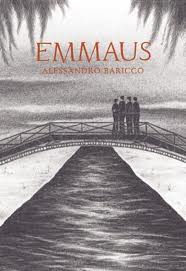
[READ: July 24, 2012] Emmaus

I had no idea who Alessandro Baricco was when I got this book as part of my Book of the Month deal with McSweeney’s.  But I’ve never been disappointed by one of their new books before, so it was worth checking out.

The book is short–134 pages–and is novella length, which is the perfect length for this story.  [I had just read about Jim Harrison and his novellas, and I believe that there needs to be more novellas published].  This book was originally written in Italian and was translated by Ann Goldstein.

There is a prologue which is completely exciting and absolutely wonderful.  It’s only a page and a half, but it is intriguing, funny, deep and, most of all, really surprising.

The opening of the book doesn’t quite match the excitement of the prologue, but that’s because this novella has two aspects–deep, thoughtful introspection and base, animal instinct.  And Baricco/Goldstein does an excellent job keeping the flow and continuity going between these two very different writing extremes.

The book reminds me of Jeffrey Eugenides’ The Virgin Suicides for two reasons.  One: it is written about a group of boys and is written in the second person plural (at least the beginning is) and two: they are all watching a girl who is beyond their ken–someone of their world but not, someone who is en route to hurt herself.  And there’s nothing they can do about it.

But this book is entirely its own.  There are four boys who make up the initial “we” (and when it diverges from plural to singular, you really feel the loss of the other boys).  And so the book starts: “We’re all sixteen or seventeen years old, but we aren’t really aware of it.”  The four boys are good boys–Catholic (and believers, at that), who play in the church band, who volunteer removing catheters at the poor person’s hospital and who plan to not have sex before marriage (heavy petting is okay but it never goes too far).  The four boys are: the narrator, whose name is never given I don’t think; Luca, whose father is rumored to be suicidal; Bobby, the most outgoing of the bunch and The Saint, a very pious young man who has designed for the priesthood and who is not afraid to be seen as more pious than you. (more…)

Read Full Post »

SOUNDTRACKCHI’S SWEET HOME (new) end credits (2010).

I have yet to watch the anime of Chi’s Sweet Home, so I don’t know how new this is (r frankly even if it is new–of course why would this poster lie).  My kids will love it but it’s only available subtitled so I’m not sure how much they would enjoy that.

This song was a surprise to me because the voice is deep, at least until the ending Meow Meow Meows come in.

Regardless, it’s catchy and I prefer it to the opening theme.

[READ: July 2012] Chi’s Sweet Home 6-8

Ah, this series has been magnificent so far.  And we have now caught up to what is available in the U.S. and almost to what is available in Japan.

If you missed the first post, Chi is a kitten and these are her adventures.  As with the first 5 books, the action in these three takes place over a very short period of time (weeks, maybe).  So Chi remains an irrepressible kitten during these stories.  And that’s just what we like.

Each of the stories is 8 pages long (Book 8 ends with story #146).  Each one follows a short arc with a few of the stories continued in the next story.  In these books, Chi encounters her first pigeon, she sees the neighbor’s dog buring a bone and she wears a collar (very briefly).  She also gets locked out, falls asleep in a park and gets rained on.

Most of these books concern Chi exploring the outside world.  She is well settled in to her new surroundings and she is preparing to explore the world around her house.  She meets a little kitten called Cocchi who is a streetwise kitten and at first wants nothing to do with Chi.  But Chi s so innocent that she tags along, usually bringing out the playful kitten in Cocchi (even as he gets mad that she does so).  When they both get in trouble by sneaking into a garden shed and knockig thngs over, Cocchi even expreses concern about Chi.  Even though she loves her human family, she is starting to make cat friends. (more…)

Read Full Post »

SOUNDTRACK: SATOMI KŌROGI-“Home is the best!” Ouchi ga ichiban (おうちがいちばん) (2008).

Sweet, over the top and not as catchy as one might expect, this is the theme from the animated Chi’s Sweet Home.  You can watch all 104 (!) episodes (they’re 3 minutes each) at Crunchyroll.  They’re in Japanese, subtitled in English, which is only a shame if your four-year old can’t read.

The show is basically the episodes from the books.  And the animation looks just like the books.

The theme song is sung in Japanese, which isn’t the problem–it’s just not as adorable as Chi is.

[READ: June 18, 2012] Chi’s Sweet Home

I saw Chi’s Sweet Home at the library and grabbed books 1 and 2.  I didn’t realize that there were 8 books!

Clark loved books 1 and 2 very much (it was quite his obsession for about three days–that’s pretty good for a seven-year old).  I wanted to read it too, and I am totally hooked.

Each book is comprised of twenty episodes, each is 8 pages long.  And they follow the adventures of Chi, a small kitten.  Kanata Konami is renowned for her cat manga, and it’s obvious why.  Chi is incredibly expressive–I love the way her feet go crazy when she is excited and the big smile she gets when something pleases her.  Of course, her angry face is also precious.

But unlike so many other animal stories, the adventures of Chi are simply the realistic adventures of a little kitten as she explores her new home and her environment.  The whole five that I’ve read so far seems to cover about a month, so Chi never grows up (although the family goes through quite a lot in that short time). (more…)

Read Full Post »

« Newer Posts - Older Posts »