Feeds:
Posts
Comments

Archive for the ‘Translation’ Category

CV1_TNY_04_22_13Pearson.inddSOUNDTRACK: MIKAL CRONIN-MCII (2013).

mciiMikal Cronin has a very pleasant middle range voice—conventionally good.  Indeed, there’s nothing especially unique about this record.  But it is a great summer pop album.  Lots of great big choruses that are fun to sing along to.  And, Cronin is a talented multi-instumentalist.  I believe he plays everything on the record, although I’m not sure about that.

The album is 37 minutes.  The first song, “Weight” has a simple melody and is incredibly catchy. There’s a nice falsetto before the big loud guitar chorus kicks  in.  “Shout It Out” is another great pop song—big fuzzy guitars and a wonderfully catchy melody.   And I love how it gets mildly chaotic at the end.  “Am I Wrong” is a straightforward rocker, with more big crunchy guitars.  There’s a fun fiddly keyboard solo (with lots of flubs, which is kind of endearing).  This song (and several others) remind me of Sloan.

“See It My Way” has a shambolic feel to it, I can do without the oddball sax solo, but there’s something so oddball about it that I think it works in the end.  “Peace of Mind” has a nice harmony vocal on it that gives this simple song a fuller sound.    There’s an unexpected violin solo in here.  “Change” opens with a real grungy loud guitar which is quickly replaced by a  speedy drum over a simple, catchy verse.  And a speedy chorus.  There’s an interesting middle section with another violin solo (and some unusual squeaky violin noises as well).  “I’m Done Running From You” is a fun fast bit of pop with a rocking guitar solo.  And “Don’t Let Me Go” is a slow ballady type song (as much as one can be on a rocking record like this).  “Turn Away” brings the rock back, although “Piano Mantra” ends the disc with a solo piano intro.  But the song builds and builds into a rollicking violin-fueled conclusion.

I’d never heard of Mikal Cronin before, and when i first started listening to the disc I thought it was an okay pop punk album.  But the more I listened to it, the more I enjoyed it.  It’s still as simple pop punk album but it’s done so very well.  I’m going to have to check out his debut as well.

[READ: May 2, 2013] “Mexican Manifesto”

I love that stories from Roberto Bolaño keep popping up.  I realize that most of these have been published in Spanish somewhere, but it seems like even if we know that his next book is going to be all poetry (Unknown  University coming out in June), somehow there’s at least one short story in it (I assume it comes from here, where else would it have come from?).  So, since it seems like there’s a new Bolaño book out every six months, I assume that barrage will come to an end now.

Unknown University is, as far as I can tell, the last thing that will be translated by Bolaño.  Wikipedia suggests that there are four other titles that could be translated: A Lumpen Novella (which he completed but which has not been translated), Diorama, an unfinished novel, something being called Part 6 of 2666 (who knows what that means) and an early book that he cowrote Advice from a Morrison Disciple to a Joyce Fanatic which I would really like to read–the title is so intriguing–but who knows is it will ever find a translator.

But that’s got nothing to do with this short story.  This short story is about a couple who frequent steam baths. The narrator is the man, and the woman, Laura, I the more adventurous of the two.  She is the one who encourages them to go to the baths in the first place and, while he also thinks it is wonderful, it is she who wants them to explore as many different baths in the city as possible. (more…)

Read Full Post »

cousinkSOUNDTRACK: FOALS-“Inhaler” (2013).

foalsinhalerI really really liked Foals debut album.  It was weird and off-kilter and was one of my favorite albums of that year.  I had heard that their follow-up was very different, less weird, more conventional, and I have yet to hear it (narrow-minded, I know).  But then I heard that their new album was really great.  “Inhaler” was the first song I heard.

Man, do I love it. The song opens kind of funky with some noisy echoed guitars.  After a few verses the bridge comes in and the big excitement of the song comes when he gets to the chorus, “I can’t get enough SPACE!”  It’s not so much that he yells “space,” which he does, it’s more the way the whole song explodes with a new exciting riff and it just seems to get bigger and bigger. It blows me away every time.

After the first chorus we drop right back to that falsettoed slow verse delivery.  And the song slowly builds back up again.  The length of the bridge as you anticipate the big chorus is just excruciatingly wonderful.

[READ: April 5, 2013] Cousin K

I found this book when I was cataloging it at my job.  I don’t know what grabbed me about it (there’s nothing special about the cover).  I think it may have been the French Voices label in the corner (and its brevity).  I thought, hey why not read a contemporary French novella for something different.

Well, to my surprise, that is not what I got.  Indeed, nothing in this book is as it seems.

Yasminia Khadra is a pseudonym for Mohammed Moulesshoul.  He chose the name to avoid military censorship (that’s all the book says, I don’t really understand what that means).  Moulesshoul was born in the Algerian Sahara.  He is now retired from the military and is living in France.

But so, instead of this being a story from a French woman, the story is actually from a Male Algerian.  Which doesn’t really matter in the long run, but I assumed that the narrator was a girl (based on the “author = narrator” theory that is an easy shortcut in fiction.  This was really only confusing because the narrator is unnamed for quite a while in the book.

But what a book.  In just 80 some pages, Khadra turns in a  fascinating psychological picture of neglect and psychological abuse.  But it is such an elliptical book that there are almost as many questions as there are answers.  It is this elliptical style which provides some of the confusion, but a lot of the interesting structure of the story. (more…)

Read Full Post »

[ATTENDED: March 21, 2013] Śląsk

slask1Pronounced “shlahnsk” according the announcer, Śląsk is the national Polish folk song and dance troupe.  They are named after the Silesia (“Śląsk”) region. Śląsk originally focused on the folk traditions of Upper Silesia and has since expanded to include all Polish regions.

When I saw the listing at McCarter I was really curious.  I had literally no idea what to expect from the show.  In theory I was celebrating my heritage, but it was completely alien to me and could have easily just been a bunch of guys on stage with accordions.  Thankfully that proved to not be the case.

The ensemble consists of 80 members, including a choir and dancers dressed in stunning and intricately decorated traditional costumes.  And boy, were the costumes spectacular.  Pictures could never do justice to the beauty of these clothes.  slask2I can honestly say I have never seen blues as rich as these or violets as powerful as these.  And the intricacy of the design work (all hand-made) was stunning.  Most of the dancing consisted of the women spinning (a lot).  And their dresses were designed in such a way that the final six inches or so would face down while the rest billowed out.  Even Sarah, no slouch in the seamstress department, couldn’t understand how it worked.

We had cheap seats (really cheap–$20–and these two were the only $20 seats to be had I don’t quite understand why).  We were on the left side of the stage, practically below the stage and right in front of the minimal orchestra (about six people on stage, although I couldn’t see them all).  The crazy thing is that people just one row ahead or even two seats over paid a much higher price, so I guess our seats couldn’t have been that bad.  The major downside to sitting where we did is that you couldn’t see the overall patterns of ten or twelve women spinning around as well as you could from the balcony.  Indeed, center balcony seats would be amazing.  The advantage to our seats was that we were very close to the stage (six rows away) and could see the clothes very closely, and I believe the colors may have even been more vibrant. (more…)

Read Full Post »

HarpersaprilSOUNDTRACK: THE AFGHAN WHIGS-“I’m Her Slave” (Live at the Bowery Ballroom 2012).

whigs

 I really liked some of The Afghan Whigs’s songs back in the 90s.  There was other stuff I didn’t love by them–when they were on, they were amazing.  Of course, I feel like the Whigs were pretty much all the work of Greg Dulli–charismatic frontman with the intriguing voice.

When they disbanded or broke up or whatever, I didn’t mind so much.  But they have reunited recently and my friend Joe posted this video from last year’s tour.  I don’t really know this song that well (although I do have the Congregation album i was more of a Gentlemen fan), but it sounds great.  And apparently this is one of the songs they were trotting out (they played it on Fallon, but the video has been taken down).

Dulli’s voice still has that wonderful quality and the band sounds tight and loud here.  Seems like a good reunion.

[READ: March 19, 2013] “Limhansfältet”

This excerpt comes from Knausgaard’s (also spelled Knausgård’s) second volume of his six-volume autobiographical novel (wow!).  I have no idea who the guy is or why we’d want to read it.  Evidently Knausgård is quite famous in his native Norway.  Don Bartlett translated this from the Norwegian.

So this excerpt shows a very short time in the writer’s life (knowing it’ autobiographical makes it different somehow).  The writer is married, a father of four three (although evidently now, he is divorced and his first wife is mad to her portrayal in the books).  The first few paragraphs just kind of talk about what’s going on around him (but it is more compelling than that sounds somehow).  I liked the scene where he is sitting so still in the garden that a hedgehog crept past him (but then I like hedgehogs).  But the crux of the action occurs at Limhansfältet, a grassy area outside of town where men gather every Sunday to play football.  They have gathered since the 60s and the men range from 18 to 80.

On this one occasion his family came with him. They watched for a bit but then wandered off.  And they missed him get injured.  Injured so badly that he had to go to the hospital. (more…)

Read Full Post »

mister orangeSOUNDTRACK: MUSE-The 2nd Law (2012).

2ndlawMuse are over the top.  No question about it.  And that’s why I like them so much.

So when the new album opens with crunchy guitars that give way to keyboards that sounds not unlike a Bond movie, it’s not really surprising.  The first verse is fairly mellow, building until Matt Bellamy hits some crazy high notes and the heavy bass guitar kicks in.  But unlike some previous albums, this one is not all heavy heavy guitar rock.  There’s some electronic elements as well.  Especially on the single “Madness” (which was debated about on the alt rock station I listen to, wondering if it was too dance-oriented).  The song uses a dub format for repeating the Muhmuhmuhmuhmuh madness, but the verses are so catchy it’s hard to resist.  It also has a major Queen feel (a common complaint about them, although it’s not like Queen are still making music).  For Muse, this song is kind of understated until the big verse at the end when Bellamy can really soar.  “Panic Station  has a big thumping bass and drum along with some screams that sound out of an 80s metal band but there are horns that give it a dancey feel–always a contradictory outfit, Muse.

“Prelude” sounds indeed like a prelude to what proves to be “Survival” it is big and anthemic (as Muse tends to be).  It is uplifting and, as one may recall, it was the official song of the 2012 London Olympic Games (which is fitting it’s all about winning).

“Follow Me” slows things down a bit in the beginning, but it of course comes back with lots of bombast (this is Muse after all) but there’s also elements of electronica (is that  dubstep sound?) and backing vocals that remind me a lot of U2.  “Animals” has a kind of slinky bass line that wends its way through the song’s guitar solos.  By the end of the song it has grown much heavier with shouting crowds and a furious double bass drums.

“Explorers” is a ballad that grows and retracts.  “Big Freeze” has another big chorus. It’s followed by “Save Me,” a gentle ballad with harmonies.  Then “Liquid Freeze” picks up the pace a bit.  This is all leading to “The 2nd Law: Unsustainable” which is my favorite weirdo song in ages.  It is so crazy over the top and audacious that I love it.  It opens with crazy strings and a fast talking jittery computer voice.  And when she reaches the word “unsustainable,” the song goes absolutely bonkers, with crazy sound effects–I would assume most people hate this track, but I think it is very cool.  The final track “The 2nd Law: Isolated System” is a kind of denouement for the whole album–a piano ballad of 5 minutes that has a bit of a dance feel to it.

I can’t get over how much I enjoy this record.  It’s definitely not as heavy as past muse records, but it has some great experimentation and Bellamy absolutely knows a great melody.

[READ: March 8, 2013] Mister Orange

I was walking past the New shelves in the library and this book caught my eye (who says placement isn’t important?).  Something about the title and the cover design was really appealing.  I looked at the blurb–it’s about an American kid during WWII.  I wasn’t really sure I wanted to read that, but then there was a line about an artist and comic books.  I immediately thought about The Adventures of Kavalier and Clay which is also about comics in the 1940s (although this book is NOTHING like that one at all), and I decided to grab it.  Besides it was only 150 pages.

Well, I never would have guessed that the book is a historical fiction novel about Piet Mondrian, one of my favorite artists of all time.

So the story is about a boy, Linus, and his family living in New York City in 1943.  His oldest brother, Albie has volunteered for the war.  His mother is disappointed in him as she believes that all war is wrong and that nothing good every comes from war.  She is so disappointed, in fact, that she does not hang the blue star that all families with soldiers are given to hang in their windows.  Linus wonders if she is not proud of her son for fighting for what he believes in, but his mother says “Flags are for celebrating, and there is nothing to celebrate about war.”  She doesn’t even let him go to the parade for the departing soldiers.

When Albie leaves, the rest of the family is stuck waiting for word from him.  But life goes on at home and with Albie gone, that means that everyone moves up in responsibility (and shoes get handed down).  Simon (now the oldest at home and a sullen teenager) takes on Albie’s work at the newspaper, Linus picks up Simon’s grocery delivery route (their family owns a grocer’s shop) as well as Simon’s shoes, which are way too big, and Max takes over looking after the youngest children: Sis and Willy.  For the most part we follow Linus as he learns the new route and learns a bit more about the city. (more…)

Read Full Post »

Harpersmaerch13SOUNDTRACK: DEFTONES-White Pony (2000).

Iwhitepony had forgotten how much I loved this album when it came out.  It’s been a while since I listened to it but it still sounds great.  I remembered thinking Around the Fur was the album that blew me away but it proved to be White Pony.  I have the “limited edition” red cover for whatever that’s worth (not much really, although I did get a bonus song).  This album really explores their more alternative side, with quiet guitars and very non-metal sounding songs including some trip-hop drums on a track.  But there are three or four really heavy songs showing they’re not giving up their heavy roots by any means.  It’s a really accomplished and complex album and is definitely a high point in alt-rock.

The album starts with “Fieticeira” which has a cool alt guitar sound (Stephen Carpenter really displays an amazing range on this album) and some lurching verses.  The choruses get big and loud (in the way that the Foo Fighters do now), although there is a weird noisy section that keeps it from being a totally polished track.  “Digital Bath” is a dark creepy song where the guitars are nearly as menacing as Chino Moreno’s whispered voice.  The drums are actually the loudest instrument and you can hear how intricate the Deftones drumming can be.  I haven’t mentioned the other members in the other two write ups and shame on me.  Abe Cunningham’s drumming is great–far beyond most metal drummers.  But when the bridge kicks in the song lifts up and by the chorus it’s a big vocalled song.  “Elite” shows that the Deftones haven’t given up their heavy side–it’s a loud screaming distorted fast thrasher.  It never lets up and by the end the voice is distorted almost beyond human sounds.  “RX Bath” is one of my favorite songs on the disc.  It’s slow but with a cool slinky bass (Chi Cheng, always outstanding).  “Street Carp” is a short song–with loud guitars for the verses and a creepy slow chorus that I’ve always loved: “Here’s my new address…six six four oh I forget.”

“Teenager” is the biggest surprise  it has a slow acoustic guitars and a kind of trip hop drum beat with glitchy effects.  It’s followed by “Knife Party” a song that opens with flanged guitars until the big chords crash in.  It’s probably their most commercial sounding song yet, except when after the second chorus Rodleen Getsic starts singing a wild vocal solo (like a crazed version of Pink Floyd’s “Great Gig in the Sky”), some of the notes she hits are inhuman.  “Korea” returns to the heavy dropped D sound with big noisy guitars and screams.  It’s one of their mist abrasive tracks.

“Passenger” is one of two songs that’s over 6 minutes long.  It’s a duet with Maynard from Tool–it’s unusual how their voices are so similar  They don’t sound alike but they have that same wavery tenor and vulnerability   It’s a perfect match.  “Change (In the House of Flies)” starts as a slow slinky song with a big chorus (and a great chorus of Ah ahs which somehow make the song seem even more claustrophobic.  It proves to be surprisingly catchy.  “Pink Maggit” ends the disc proper with a beautifully, agonizingly slow guitar and vocal intro–the guitars are buzzy and slow and sound almost out of tune (but aren’t).  Chino’s voice strains itself before the song proper starts.  I love songs like this when the chorus does one thing and the vocals play a slightly different melody (as if he;s singing a minor note and the guitars are playing a  major note), it’s very cool and a little spine tingly. At seven minutes this is a wonderfully claustrophobic alt rocker.   The album ends with what sounds like a heart beat (again, another Pink Floyd nod).

The red version has a bonus track called “The Boy’s Republic,” a big heavy song that encapsulates a lot of the album down into one track–the great vocal/guitar interplay, swelling chorus and interesting interplay of the instruments.  Even though it’s clearly a bonus song (you don’t have a song that ends with a slow heartbeat and not have it actually end your album), it fits in perfectly with the set and is a real treat.

Even though this album is 13 years old it still sounds fresh and amazing.  It really is a masterpiece.

[READ: February 25, 2013] “So Who Could I Tell the Story To”

According to Harper’s this is an excerpt from City of Angels: Or, the Overcoat of Dr. Freud.  It was translated by Damion Searls.

The excerpt begins in the middle of a question: “–the story that now needed to be told, even though it wasn’t a story at all?”  A very strange opening to be sure, and not as compelling as one might want.  And that was how I felt about this whole thing.  I wanted to be more excited by it but I never was.

There was something confusing about the whole setup.  The narrator is talking to Francesco.  But the narrator is talking about and apparently to “you.”  So there are lots of you’s floating around but we also know she’s talking to someone.  And while it’s all about clandestine behavior, the whole proceeding was confusing. (more…)

Read Full Post »

TintinLotusSOUNDTRACK: THE DOUBLECLICKS-“The Internet National Anthem” (2012).

inatThe Doubleclicks are a sister duo from Portland, Oregon.  They are nerdy and fun (perhaps we can think of them as non-accordion, female They Might be Giants?).  Take “The Internet National Anthem”,” a song  with a steady four/four beat, cellos and  a suitably anthemic chorus, that’s all about the internet.

I was introduced to this band from Kid’s Corner, although I feel that perhaps their songs aren’t really for kids (not that they’re inappropriate but they seem more sophisticated than a typical kids song.  Like this song has big words and it is quite funny.  Although in all honesty it’s not laugh out loud funny, just mildly funny.  It’s got the vibe of Garfunkel and Oates, but not the big guffaws.

Check out their albums here .

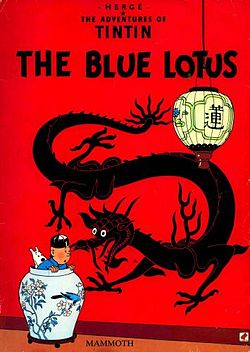
[READ: February 8, 2013] The Blue Lotus

This third (technically fifth) Tintin book is the continuation of Cigars of the Pharaoh.  One of the characters from Pharaoh returns in this book, despite the fact that it is set in China.  This book also continues with Hergé’s having it both way in terms of other races.  His drawings are caricaturey and depending on your sensibilities/appreciation for drawing skills/tolerance are either really racist or simply in poor taste (although it does seem to be that the bad characters of other races are the most offensive–the good people are less crazy).

But despite the visual insensitivity, there are several section where Hergé explicitly talks about tolerance and understanding between races.  Like when Tintin saves the young Chinese boy, Chang, who says he thought all white devils were wicked.  Tintin explains that white people believe stupid things about Chinese people too  (eating rotten eggs, tons of unwanted babies in their rivers, etc.).  Chang says “They must be crazy people in your country).  As it turns out (quoting Wikipedia ), “The Blue Lotus is a pivotal work in Hergé’s career, moving away from the stereotype and loosely connected stories and marking a new-found commitment to geographical and cultural accuracy. The book is also amongst the most highly regarded of the entire Tintin series, and was the 18th greatest book on Le Monde’s 100 Books of the Century list.”  It’s quite progressive for the 1930s.

The plotlines from the previous book are continued: there is the poison that makes you crazy, the Pharaoh’s logo shows up and there are Indian characters returning as well.  And by the end Thompson and Thompson, the twin policeman who complicate each others sentences and prove to be more bumbling than we originally thought arrive to capture Tintin (although they believe in Tintin’s goodness–they’re only following orders, you see). (more…)

Read Full Post »

seamSOUNDTRACKELFIN SADDLE-Devastates [CST087] (2012).

elfinElfin Saddle continues their streak of oddly juxtaposed music that works very well.   The band specializes in a kind of Middle Eastern folk music (there’s a lot of Jewish-style singing), but with Emi Honda singing Japanese-style vocals it really alters the overall sound.  They also use a lot of raw sounding “instruments” many of which are found or quite simply, junk.  Check out the instrumentation list: Jordan McKenzie: voice, guitar, half-accordion, drums, varied percussion, membrane pipes, organs, piano, pvc processing, tapes, phonographs, speakers, etc.  Emi Honda: voice, ukulele, drums, half-accordion, musical saw, extra percussion.  It’s that extra percussion and etc. that you hear a lot, rattling around in the background of these songs.

They play complex rhythms (with lots of low end drumming) underneath ethereal noises (music boxes and the like).  And all the while, Honda and McKenzie trade off their unusual vocals.  It’s mesmerizing.  When the band really starts rocking, like in “The Changing Wind” you hear how well it all works together, and how well the two play off each other.  The slower pieces, like “Boats” are very cinematic, probably because everything sounds so real–you can see the items that are making these odd sounds.

The music is definitely not pop, but with just a listen or two, you can really appreciate what they’re doing.  If you like your folk a little noisy or your rock a little experimental, this is a great record to check out.

[READ: January 13, 2013] The Seamstress and the Wind

Things that I have said about every book of Aira’s that I have read: they are all short, he writes a lot of books (according to Wikipedia he has written at least 45 books since this one came out about twenty years ago), and they are all nonlinear.

And so it is with this 130 page book.

As the book opens, a young boy named César Aira is playing with his friend in the back of their neighbor Chiquito’s truck.  They are playing a game of ghosts when suddenly, César finds himself walking in a trance back to his house.  Turns out his friend Omar couldn’t find him for hours (and when César snaps out of it, indeed hours have passed).  And yet, despite this story, it turns out that really Omar is missing (what? who knows?).  Omar is the son of the local seamstress, Delia Siffoni.  She is sewing a wedding dress for the art teacher, Silvia, who is (scandalously) pregnant.  When she hears that her son is missing, she freaks out and calls out a search party.

She concludes that Omar was hiding in Chiquito’s truck when he left for Patagonia.  So she takes a taxi to chase after Chiquito.  Since the dress is due to be finished right away, she takes it and her supplies with her in hopes of finishing it on the road.  When Ramón, Delia’s husband realizes what she has done, he chases after her.  And when Silvia realizes that her dress is driving away in a taxi she follows Ramón.  And so it becomes a road novel in which none of the characters are together.

By the end of the story there has been a terrible accident with a taxi crashing into a truck.  There has been a poker game where one of the two women has been lost in a bet (unbeknownst to her) and we have met The Wind (Sir Ventarrón) who helps the seamstress with her problems.  Indeed, Sir Ventarrón becomes an integral part of the story, including a flashback when Sir Ventarrón assisted a snowman in his quest for eternal life (yes). (more…)

Read Full Post »

literarySOUNDTRACK: CHELSEA LIGHT MOVING-“Burroughs” (2013).

chelsea-light-moving-albumChelsea Light Moving is Thurston Moore’s new band [no comments about the state of Sonic Youth/Kim Gordon will be included in this post].  I don’t know anything about the other members of the band; I’ve not heard of any of them.  “Burroughs” is one of four new songs streaming on the Matador Records site.

The song is spot on for the noisy/sloppy style of Sonic Youth.  Fans of Sonic Youth will certainly detect some differences–the counterpoint of Lee Ranaldo is definitely absent, indeed, the entire low end sounds very different from what SY would create given this song.  But man, if you’re jonesing for some chaotic noise, this song has it in spades.

Moore is capable of creating some traditionally beautiful songs (see his Trees album), but here it’s all about discord.  The song is over six minutes long and the last 3 or so are devoted to some noisy guitars in both chords and solos.

While SY has not shied away from long songs, this song doesn’t feel like an epic–it’s not multi part or “extended” exactly.  It’s a fairly straightforward rock song with an extended solo section.  It’s really great.  I’m looking forward to the whole album (and I love the cover, too),

[READ: March 23, 2012] The Literary Conference

This has been my favorite Aira book so far.  And that’s probably because it is wonderfully over the top, mixing fantasy, sci-fi, genetics and literature.  All in 90 pages.

The story is about César Aira, translator.  He has been invited to a literary conference in Venezuela.  While there, he solves the age-old problem of The Macuto Line.  The Macuto Line is, essentially a rope which is attached to a pirate treasure.  For generations, people have tried all kinds of  things to impact this line–but it has proven to be unsolvable and indestructible.   Aira happened to be staying near the Line in a hotel.  He claims that he is no genius, but it just happens that the elements of his life have given him the exact information he needs to solve the puzzle.  And with a simple touch of the rope, the treasure is his.

But that’s just part 1 and has nothing to do with the rest of the story, really.  For despite his newfound wealth, he will still be attending the literary conference.  Primarily because he knows that Carlos Fuentes will be there (Fuentes is a real person, a Mexican author who died in 2012).  For, you see, Aira is planning to clone Fuentes in his bid to take over the world.  (In addition to being a translator, Aira is a mad scientist). (more…)

Read Full Post »

woesSOUNDTRACK: ATERCIOPELADOS-Live at Bumbershoot, September 5, 2010 (2010).

atercioA rock en Español band who have returned after a brief hiatus, Aterciopelados have changed a bit since their early more punk days.  Their last album Rio came out in 2008, I knew them back in the mid nineties.  This brief set (7 songs) at Bumbershoot showcases their more mellow tracks (there’s pan pipes) on “El Estuche.”  The Colombian band has always been political, but it seems like they are much more explicit about it on this record.  As singer Andrea Echeverri introduces a number of song, she talks about how they are “important” and are meant to bring attention to the troubles of Colombia.

“Ataque de Risa” has a wonderfully catchy melody (and I believe she says her daughter is singing with them on it).  The song “Bandera” (which means “Flag”) is pointedly directed at Arizona’s anti-immigrant law.  She introduces it as saying that all peoples are together under a rainbow flag.   It’s a more angry sound for Echeverri’s voice, but she does a great job.  Her voice is really impressive.  “Rompe Cabezas” has a rollicking chorus that’s a lot of fun and “Bolero Falaz” ends the set with a very cool and catchy song.

Here’s a video of El Estcuhe

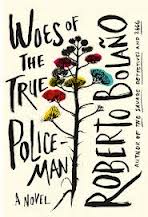
[READ: December 2, 2012] Woes of the True Policeman 

This is yet another unfinished novel from Roberto Bolaño.  Bolaño knew that he was dying and he created a lot of work in anticipation of his legacy.  The afterword of the novel says that they found all of the various parts of this novel in various locations among his work–hand written and computer drafted.  And they all mention this titles, so they are pretty certain about the order and that it is as finished as it could be.

Unlike some of his other posthumous releases, this one must be deemed pretty significant since it was published by Farrar, Straus and Giroux instead of New Directions (publisher of most of Roberto Bolaño’s other smaller works).

And really what it reads like is a kind of prelude to 2666.  For this is the same Amalfitano as in 2666.  But it is his story from before he moves to Sonora, Mexico–before all of the murders started.  Indeed, there are parts of 2666 which make Amalfitano’s past seem like it is unknown but this story fills in the gaps quite well.  One of the details in 2666 is that Amalfitano’s teaching contract had expired at the University of Barcelona, although this book gives the behind the scenes reason why it expired.

Bolaño has many many stories in which he explores the past of a character from a different story.  Typically, it is a novella in which a minor character from a bigger novel gets his or her own story told.  And that seems to be the case with this as well.

The story is set up in five sections (just like 2666).  Section I of this story (part of which was as excerpted in Harper’s recently) is called The Fall of the Berlin Wall and tells how Amalfitano, a professor, fell for a young poet named Padilla.  He wound up having an affair with him, which ended his career (I’m unclear whether it is because he is a student or because the affair was homosexual that the University wanted him out).  Amalfitano had never had homosexual desires before, and he was a proud husband and father, but he found that Padilla really affected him.

And so Amalfitano and Rosa, his daughter, moved to Sonora and the only school that would have him. (more…)

Read Full Post »

« Newer Posts - Older Posts »