Feeds:
Posts
Comments

Archive for the ‘Suicide’ Category

SOUNDTRACK: PHOENIX in Studio at KEXP (2009).

For this in-studio  performance, two members of Phoenix showed up to play a stripped down acoustic performance.

They play four songs (and all of the songs are quite short, as well).  Three songs from Wolfgang Amadeus Phoenix (“Listzomania” “1901” and “Armistice”) and a cover of Air’s “Playground Love.”  Given how different Phoenix and Air sound (even if they are both French), it’ an impressive change of style for the set.

This stripped down version really shows what a great voice the singer has.  And these songs, while not quite as catchy as the originals, still sound fantastic.  There’s also a brief chat with the DJ about their then recent appearance on Saturday Night Live.

If you like Phoenix, this is a great show to download.

[READ: September 1, 2012]  An Iliad

Since I really enjoyed the two Baricco stories that I’ve read so far, I decided to try something else from him. An Iliad is a fascinating book from conception to execution.

Baricco wanted to read Homer’s Iliad aloud on the radio.  But when he investigated the project further he found that a) it was way too long and b) it wasn’t really well suited to contemporary audiences.  So (and he gives details about exactly how he modified it), he decided to remove sections of the original, restructure it and try to give it a more contemporary feel.

But he also tried to keep as much of the original as he could.  So, rather than rewriting the book, he worked with a prose translation (poetry being way too convoluted for his project) and used his  translation of that translation  (which for us gets further translated into English, yipes, although the translation is again a very good job by Ann Goldstein) to create his Iliad.  One of the major excisions he did for the book was to remove all of the sections with the gods.  They are alluded to, but he removed the gods (and all supernatural aspects) from the book reasoning that the mortals reference what the gods say and do so anyway, so he simply took away the duplication.  Plus, the gods aren’t really relevant to contemporary listeners. (more…)

Read Full Post »

SOUNDTRACK: PINK FLOYD-Alan’s Psychedelic Christmas (1970).

I’ve always loved Pink Floyd’s Atom Heart Mother.  I have no recollection of how I stumbled upon this live bootleg, but when I saw that it contained one of the few live recordings of “Alan’s Psychedelic Breakfast” I had to give it a listen.

So this show is from 1970 and was recorded in Sheffield just before Christmas (Nick Mason evidently introduced the show while wearing a Santa Claus suit).  The sound quality is pretty good given that it is 40 some years old.  There’s a bunch of hiss, and the quieter talking bits are hard to understand, but the music sounds fine.

So the show opens with “Alan’s Psychedelic Breakfast” and what is so silly (and I assume funny to watch (a little less funny on bootleg) is that the band made and ate breakfast on stage.  As Collectors Music reviews writes: “This is the only known live recording of ‘Alan’s Psychedelic Breakfast’ but also hosts an amazing performance by the band which included them making morning tea on stage which is audible. Just like most of their earlier performances, the performance of “Alan’s Psychedelic Breakfast” slightly differs from the album version due to some nice jamming done by the band, especially Gilmour with his delay pedal.” As I said, some of the audio is static and hard to make out in this song–the band is conversing during their tea, but who knows what they are saying.  And who know what is o the radio.

Then the band gets down to business.  One of things I love about this period Floyd which is so different from their later work is that the played really long spacey jams often with very few lyrics.  So we get a 12-minute version of “The Embryo” (the only available studio version is a very short one on Works which is quite a shame as the song is really good).  A 14-minute workout of “Fat Old Sun” which is usually only about 5 minutes.

There’s a great version of “Careful with that Axe Eugene” and “Set the Controls for the Heart of the Sun” (15 and 12 minutes respectively).

Then in a killer version of “Saucerful of Secrets,” just as they get to the end, there’s a power failure (at least according to the song title).  The band is rocking out just hitting the climax when suddenly all you can hear are un-miked drums.  Ha. After a couple of minutes, power comes back and they pick up from just before where they left off.

Then the band launches into a full 31-minute version of “Atom Heart Mother” complete with horns and choir  of voices.  It sounds quite good (the horns seem a little sketchy but that might be expected with such staccato music).

The set ends and the band needs an encore.  Apparently they couldn’t remember anything else because they just re-do the last few minutes of “Atom Heart Mother” again.

One of the things that cracks me up about these shows in the 70s in England, is that the audience is so polite. Their applause sounds like a classical theater rather than a rock show.  And with a bootleg you know they didn’t try to make the audience sound bigger than they are.

The whole package is a fun trip.

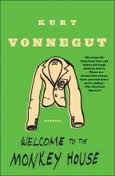
[READ: August 17, 2012] Welcome to the Monkey House

So this book is Vonnegut’s second collection of short stories.  But there’s a twist.  This collection contains all of the short stories from Canary in a Cat House except one. It also contains many of the stories he had written since then as well as stories not collected in Canary.  So you get basically 18 years worth of stories here.  And it’s interesting to see how much he has changed over those years (during which he wrote 5 novels, but not yet Slaughterhouse Five).

Since I read Canary a little while ago (see comments about the stories here), I knew that his 50’s era stories were influenced by WWII.  So it’s interesting to see how his stories from the 690s are not.  They deal more with day to day things and, of course, abstract concepts about humanity, although politics do enter the picture again once Kennedy is elected .

  • Where I Live (1964)

This was a good story to open with because it shows the then-later-period Vonnegut’s mindset and location.  This story is about Barnstable Village on Cape Cod (where I assume Vonnegut lived since there are a number of stories set on the Cape).  This is a very casually written story about an encyclopedia salesman who goes to the local library and sees that their two encyclopedias are from 1910 and 1938.  I enjoyed this line: “He said that many important things had happened since 1938, naming among others, penicillin and Hitler’s invasion of Poland.”  He is told to talk to the library directors who are at the yacht club.  I love the attitude that Vonnegut creates around the village which “has a policy of never accepting anything.  As a happy consequence, it changes about as fast as the rules of chess.” For really, this story is about the Village more than the encyclopedia salesman, and it’s an interesting look at people who move into a new place and want it to never change. (more…)

Read Full Post »

SOUNDTRACK: NADA SURF-The Stars Are Indifferent to Astronomy (2012).

Nada Surf continues to put out poppy guitar rock.  I tend to link them with Guster, in that they write really catchy pop songs about unexpected things.  The songs are usually fast, but they also writes some slower songs too.  They would make a good double bill.

This album with the wonderful title is 38 minutes long, a perfect light summer album.  If you don’t get “Waiting for Something” (which I agree is repeated waaay too often in the chorus) stuck in your head, then you haven’t been listening to this record.

All ten songs feature bouncy guitars (except “When I Was Young” which opens as a slow ballad), although even this song, after about 2 minutes, calls forth loud electric guitars.  There are some elements that show the band “maturing”–strings on “When I Was Young” horns on “Let the Fight Do the Fighting.”  But one of the songs references Gilligan’s Island, so they’re not maturing too much.

And some of the songs sound like throwbacks to other eras too, the 60s guitar intro of “Jules and Jim,” the R.E.M. ish intro of “Waiting for Something.”  It’s a great album, fun, catchy and perfect for driving.

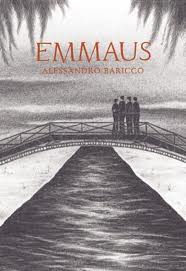
[READ: July 24, 2012] Emmaus

I had no idea who Alessandro Baricco was when I got this book as part of my Book of the Month deal with McSweeney’s.  But I’ve never been disappointed by one of their new books before, so it was worth checking out.

The book is short–134 pages–and is novella length, which is the perfect length for this story.  [I had just read about Jim Harrison and his novellas, and I believe that there needs to be more novellas published].  This book was originally written in Italian and was translated by Ann Goldstein.

There is a prologue which is completely exciting and absolutely wonderful.  It’s only a page and a half, but it is intriguing, funny, deep and, most of all, really surprising.

The opening of the book doesn’t quite match the excitement of the prologue, but that’s because this novella has two aspects–deep, thoughtful introspection and base, animal instinct.  And Baricco/Goldstein does an excellent job keeping the flow and continuity going between these two very different writing extremes.

The book reminds me of Jeffrey Eugenides’ The Virgin Suicides for two reasons.  One: it is written about a group of boys and is written in the second person plural (at least the beginning is) and two: they are all watching a girl who is beyond their ken–someone of their world but not, someone who is en route to hurt herself.  And there’s nothing they can do about it.

But this book is entirely its own.  There are four boys who make up the initial “we” (and when it diverges from plural to singular, you really feel the loss of the other boys).  And so the book starts: “We’re all sixteen or seventeen years old, but we aren’t really aware of it.”  The four boys are good boys–Catholic (and believers, at that), who play in the church band, who volunteer removing catheters at the poor person’s hospital and who plan to not have sex before marriage (heavy petting is okay but it never goes too far).  The four boys are: the narrator, whose name is never given I don’t think; Luca, whose father is rumored to be suicidal; Bobby, the most outgoing of the bunch and The Saint, a very pious young man who has designed for the priesthood and who is not afraid to be seen as more pious than you. (more…)

Read Full Post »

SOUNDTRACK: MOGWAI-Zidane: A 21st Century Portrait-An Original Soundtrack by Mogwai (2006).

It’s no secret that I love Mogwai.  I like them so much that I even track down soundtracks to obscure films that I’ll never watch.  (Of course, since Mogwai play mostly instrumentals, soundtrack work suits them quite well).

The Zidane of the film is Zinedine Zidane, a French footballer whom many consider to be the greatest ever (don’t yell at me for that, I don’t have an opinion of the man).  I had to look up exactly what the film is about and I have to say I’m intrigued: The film is a documentary focused on Zidane during the Spanish Liga Real Madrid vs. Villarreal CF game on April 23, 2005 at the Santiago Bernabéu Stadium and was filmed in real time using 17 synchronized cameras.  I watched a couple minutes on YouTube, and indeed it is a football match.   How on earth did they decide on that game (in which Zidane is ejected for fighting as the match nears its end).

The music is designed primarily for background and pacing, although there are certainly moments of great melody as well.  There are three songs that are more or less played twice (with different variations): “Terrific Speech 2″ and Terrific Speech” “Half Time and “Time and a Half” are similar piano melodies, and the opener and closer “Black Spider” and “Black Spider 2.”  “Black Spider 2” opens with the same melody as 1, but this song is thirty minutes long.  After a few moments of silence, it tuns into 17 minutes of quiet noise.  The remaining five experiment with distant feedback squalls.  Not loud and crazy, but something that creates a lot of tension, which goes with the end of the film.

Despite the titles, “Wake Up and Go Berserk” and “I Do Have Weapons” are a mellow songs.  They’re very pretty tracks.  Indeed, there’s nothing too wild at all here.  Fans of Mogwai’s wilder music will be a little disappointed.   And indeed, the overall feel is almost kind of sleepy, but it really captures another side of Mogwai, and the music is quite good.

[READ: June 20, 2012] “The Cheater’s Guide to Love”

Not bad… Junot Díaz had a story in the New Yorker just a few weeks ago, and now he’s got another one.

The familiar criticism of Díaz is that he writes the same story over and over (well, the other criticism is that he always writes in Spanish and English, but I think that’s a stupid complaint).  So here’s another story about Yunior and how he cheats on women and is basically a shit-heel.

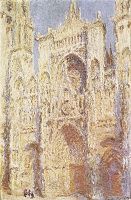
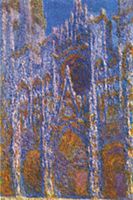
While there is some validity to criticizing an author for retelling the same basic story, it is not unheard of in art.  Monet, for instance painted over 30 paintings of Rouen Cathedral.  And while they are all the same composition, individually they are very different.  Here’s four paintings (not prints a la Andy Warhol):

While I’m not suggesting that Díaz is on par with Monet, I am trying to say that you can work with a similar subject and create very different pieces of art.

So, yes it’s another Yunior story and yes, Yunior has cheated on his girlfriend again.  But this story is constructed differently.  And at this point I’m starting to wonder if maybe there aren’t multiple Yuniors–I’ll even think of them as in alternate realities.  Because Yunior sure has cheated on a lot of women by this time.

It makes him the perfect writer for “The Cheater’s Guide to Love.”

Unlike in the other stories, this one takes place over five years!  In Year 0 you are caught cheating by your girl (the story is set in second person).  She sticks it out with you for a time and then dumps your ass.  I liked how it was revealed just how many women he had cheated in her with over the years that they were together–he really is a shit.

In Year 1, you act like it doesn’t matter, but it does.  And you are crushed.  Your friends try to help out, but how much can they really do?  You think suicidal thoughts and imagine that that will make her forgive you.  It doesn’t.  By year 2, you have met someone.  But you find some bullshit reason (she hasn’t put out yet) and you break it off and go into another spiral.

Year 3 sees you looking after yourself–running and fitness.  In what I think of as a wholly accurate happening, you injure yourself running and are knocked back on your ass for months–momentum and caring are gone.  You look for substitutes but nothing feels as good as running.  So you stop.  And you let yourself go.

What I also liked about this story is that despite this background of the break up, there are other interesting things spiraling around Yunior.   There’s a fascinating look at racism in Boston (perceived or real?); there’s the woman who claims to be the mother of his child, the woman back in the DR who claims to be the mother of his friend Elvis’s son.  Both men act very differently to the news.  Elvis is thrilled to have a son, Yunior is freaked by this woman.  This is probably the first time that I’ve seen Díaz have a woman do behave the way they do in this story.  It’s also interesting to compare Yunior and Elvis by the end of the story.

I also got a kick out of all the women he used to cheat on his girlfriend with star getting married and they all start sending him invitations: “Revenge is living well, without you.”  Year 5 sees a completion of the spiral for all parties.  And a cool resolution to this story.

Much like with the Monet paintings, if  Díaz can keep his Yunior stories interesting (and varied enough), I will keep reading them.

For ease of searching I include: Junot Diaz, Bernabeu

Read Full Post »

SOUNDTRACK: RICHARD THOMPSON-Grizzly Man Soundtrack (2005).

This is a largely instrumental soundtrack by Richard Thompson.  It features some wonderful guitar work (no surprise there).  There are several slow acoustic numbers (“Tim & the Bears,” “Foxes”–which is in the style of his old traditional folk ballads) there’s also the slow impassioned electric guitar solo (set over a simple beat) of “Main Title.”  “Ghosts in the Maze ” is a dark piece, the exact opposite of “Glencoe” a traditional-sounding song, both of these are under two minutes long.  “Parents” adds a cello, which means a sombre song.  “Twilight Cowboy” is one of the longer pieces, and it really conveys an openness of nature.

“Treadwell No More” is a slow six-minute dirge type song.  “That’s My Story” has spoken dialogue by Treadwell, over a simple unobtrusive guitar.  But as the title of the record says, Music composed and performed by Richard Thompson.  Which means there are other musicians on the soundtrack too.  “Small Racket” is where things start to get noisy and a little uncomfortable.  There’s some squeaks and slashes of sound, but it’s mostly a tense guitar feel.  Then comes the darker, scarier stuff.  “Bear Fight,” is a series of cello noises and swipes.  “Big Racket” is indeed that, with guitar from Henry Kaiser and noises from Jim O’Rourke.  “Corona for Mr Chocolate” is all Jim O’Rourke, it’s also odd noises and moods.  None of these three songs are terribly off-putting but they reflect a very different tone.

The album ends with “Main Title Revisited,” which is what it says and “Coyotes” by Don Edwards which has some coyote yodels.

It’s a good soundtrack, really conveying what the movie is about, and while not essential Richard Thompson, it is still some great guitar work

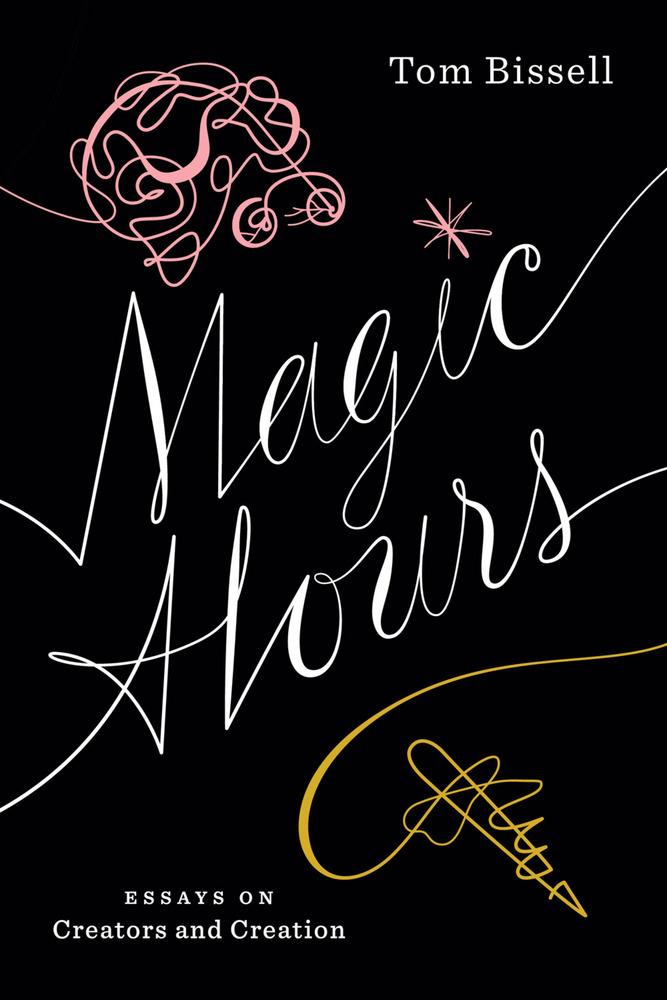
[READ: July 23, 2012] Magic Hours

I thought that I had never heard of Tom Bissell, but I see that I have read three of these articles already (I guess I don’t always pay attention to the author’s name).

This collection of essays comes from the last eleven years (2000-2011).  The articles have appeared in The Believer & The New Yorker (these are the ones I have read) and Boston Review, Harper’s, New York Times Magazine, Virginia Quarterly Review, New York Times Book Review and Outside (which I am starting to think I should really check out more).

Primarily they are articles about writing–he looks at fiction, non-fiction, film or a combination of them.  Bissell is a strong writer and he does not hold back when he sees something he likes or dislikes.  I found his articles (all of which are quite long–about 30 pages each) to be engaging, funny and very persuasive.  I’m really glad I read the book (and was even glad to re-read the articles that I had read before). (more…)

Read Full Post »

SOUNDTRACKBABE THE BLUE OX-“Basketball” (1998).

This was the first song I’d ever heard from Babe the Blue Ox, and I was hooked (sadly, The Way We Were, where this song is from was their last album).  This is also my favorite songs about sports (and it will never be played in an arena).

It opens with this great funky keyboard over a cool walking bass line.  And after a verse about playing basketball, we get the gorgeous bridge: “pass it to me, I am free, look there’s no one guarding me) sung by one of the women in the band (who sounds vaguely like Edie Brickell).  When the chorus kicks in “And when she gives it to me, I am as high as can be” both singers harmonize wonderfully.

There’s even a cool instrumental break.

Everything about this song is catchy and wonderful.  And it should have been huge.

[READ: December 21, 2011] Grantland

McSweeney’s seems to keep trying to push me away.  Or maybe they are just trying to push me out of my comfort zone.  First they publish Lucky Peach, a magazine about cooking (with recipes that contain ingredients that I couldn’t find anywhere).  I don’t read cooking magazines, but I loved this one.  Now they publish Grantland, a book about sports.  I don’t follow sports.  At all.  I used to play sports and I used to watch sports, and then when I got out of college, I did neither.  I have a very good knowledge of most sports (so I can still follow any game that’s on), but as for actual people playing the games right now–I’m ignorant.  So, why on earth would I want to read this book about sports?

I was pretty sure I would finally not be getting this book until I read the author list: Chuck Klosterman, Colson Whitehead (!), Malcolm Gladwell (?)  I knew this was going to be no ordinary sports book.

So it turns out (and I didn’t know this until just now) that the book is a collection of works from the website Grantland, which is created and run by Bill Simmons.  I haven’t explored the site but it sure looks interesting enough–longish articles about sports and culture and all kinds of interesting things.  And evidently this issue is a sort of best of the website.  The whole Grantland experience, including this book, are connected to ESPN, indeed, ESPN gets a copyright for the book, McSweeney’s is just the publisher.

And this volume was wonderful.  I couldn’t put it down.  I even wound up putting aside a book I was in the middle of to read it.  None of the articles are terribly long and, despite the basketball textured cover (which is very cool–no one can walk by and not touch it) the variety of sports covered is wonderful: from boxing to cricket!  And there are short stories and essays about the entertainment industry as well (articles on Shia LeBeouf and Amy Winehouse (!)).

If I had one complaint about the book it’s that many of the articles don’t give a time from when they were written.  I assume they are all fairly recent but since I don’t follow sports I can’t say for sure.  The other problem is that several of the stories end with a game/match unresolved.  Clearly they have been resolved since then, but even one line saying what happened would be comforting for those of us not glued to ESPN. (more…)

Read Full Post »

SOUNDTRACK: THE SWORD-Warp Riders (2010).

I have heard some great things about this disc from The Sword–that it was old school metal who usually sang about swords (duh) and sorcery but were warping into the future on this disc.  I put the disc on and was blown away by the opening track, the instrumental “Acheron/Unearthing The Orb.”  It sounds very 80s metal: heavy guitars, and great riffs coupled with tremendous solos.  The second song opens just as strong but then something weird happened.  I hated the lead singer’s voice (my discussion of their previous disc came to the same conclusion).  It doesn’t do ANYTHING that 80s metal should do–it’s neither growling nor yelly nor operatic.  In fact, once the vocals kick in, the song takes on a distinctly non-metal feel.  More specifically, it feels like heavy classic rock from the 70s.  The guitars are still heavy as anything, but the melody and vocals change things.

I really didn’t like the album all of a sudden, until I listened a few times and accepted that this blend actually worked.  Once I acknowledged that it wasn’t what I thought it would be, I wasn’t disappointed by it anymore, and I was able to really enjoy it.  “Tres Brujas” has a simply wonderful sing along chorus that I can’t get out of my head.  And it continues in this vein–heavy riffs (the guitars on “The Chromancer 1: Hubris” and “The Chromancer II: Nemesis” (love the names!) are really heavy) and surprisingly catchy choruses. 

The biggest surprise comes with the song “Night City” which sounds like, well, like Thin Lizzy.  The macho riffs, the swagger, the lyrics, it’s all Lynott.  And once I realized that, I really understood what The Sword was all about, and the disc has been in heavy rotation ever since.  I don’t mean to say that I had to analyze the disc to “get” it, but once it all clicked, it clicked really well.

[READ: December 13, 2011] “The Pharmacist from Jena”

This is my first story from Michael Dahlie and I have to say that I was hooked from the start. 

The story is set in 1912, when the narrator was sent from his home in Stockholm to Winslow, Indiana.  He was sent to work with his uncle as a pharmacist’s assistant. 

It’s in the second paragraph, after the exposition, that things take off: “My uncle was a passionate lover of cocaine and had situated himself in such a way that he supplied nearly all the nearby interested parties.”  He was also renowned as a great “voluptuary and eroticist.”

There is a real plot, which gets established late in the story, but in the beginning, the story is all about the narrator’s adjustment to this life.  How his aunt seemed to believe he was a girl and decorated the room accordingly.  How his uncle had a fight with a bear (long story) in that very girl-themed room (long story) and how the room was soon, no longer girl-themed.

One thing I really liked about the story was the narration.  Like: “At the time I was living in Winslow, it was fashionable for wives of wealthy men to suffer from mental disorders.”

His uncle experimented with shock therapy, but he mostly used it for erotic experimentation.  The end of the shock experiments occurred when a local husband found out what the good doctor was doing (from the burns that his wife received at the doctors hands).  (more…)

Read Full Post »

SOUNDTRACK: BOOKWORM-Jeffrey Eugenidies: The Marriage Plot (December 1, 2011) (2011).

Since “Just Kids” mentions  Eugenides’ book, and since Eugenides happened to appear on Bookworm at around the same time as I read this article, it seemed like a good pairing.

Obviously, from the title of the episode you can tell that this is all about Eugenides’ new book, The Marriage Plot.  Michael Silverblatt raves about this book like no other book I have heard (granted I haven’t listened to all that many episodes of Bookworm, but still).  In fact while listening to this episode, I put The Marriage Plot on hold at the library.  I always planned to read it but figured I’d just get around to it some day.  Now I feel more of a sense of urgency.

They talk at length about the state of marriage in the 21st century.  Not as in its decline but in how it differs so much from classic literature in which women had to get married by 21 or risk spinsterhood.  Eugenides set out to write a book about people getting married without having the trappings of classical literature.

It sounds wonderful.

The reason I mention this interview at all is because in the article below, Hughes talks about contemporaries of DFW using DFW as the basis for a character in their books.  So, in Franzen’s Freedom, there is character who is very much like DFW (I haven’t read Freedom yet so I can’t say). 

And in The Marriage Plot, there is a character who resembles DFW.  When I read the excerpt of this story in The New Yorker, I had to admit he did seem an awful lot like DFW–a tobacco chewing, bandanna wearing philosopher.  Eugenides had been mum about it for a while, but now, under the gentle nudging of Michael Silverblatt, he comes clean. 

He admits that there are some characteristics of DFW in the character.  However, he says that he didn’t know DFW all that well and the character has been kicking around since he went to college (long before he knew DFW).  Tobacco chewing was rampant at Brown in the 80s apparently.  But it’s a nice revelation and it ties in very well with the article.

You can listen to the show at KCRW.

[READ: December 7, 2011] “Just Kids

I have always grouped together certain authors in my head.  When there were a bunch of Jonathans publishing, I kind of lumped them together.  I think of Mark Leyner and Bret Easton Ellis in the same breath.  It’s fairly common, I suppose.  But I never really thought of David Foster Wallace in terms of a group of authors.  He seems so solitary that it’s funny to even think of him as having friends.   But according to Hughes, many of today’s established authors prove to have been a part of a kind of nebulous writer’s circle.  A kind of 1990’s update of Dorothy Parker’s vicious circle.  But more insecure.

The article bookends with Jeffrey Eugenides.  In 1983 he and Rick Moody drove to San Francisco with the intent of being writers.  Five years later with no written works, Eugenides moved to Brooklyn, alone.  In that same summer, Jonathan Franzen was in Queens, also feeling alone (even though he was married–unhappily) and desperate for friends and peers.  And then Franzen got a fan letter from David Foster Wallace (that’s after he had written Broom of the System, but before Girl with Curious Hair) praising The Twenty-Seventh City

Franzen and DFW became friends.  To this friendship was added William T. Vollman, and David Means, also Mary Karr (whom DFW dated) and Mark Costello (who co-wrote Signifying Rappers with DFW).  Later they would connect with Eugenides, Rick Moody and Donald Antrim.  (more…)

Read Full Post »

SOUNDTRACK: THE COLIN McENROE SHOW-The Life & Legacy Of David Foster Wallace (December 5, 2011) (2011).

This NPR show features an interesting discussion about David Foster Wallace:  his fan base, his cronies and his archive.   The guests were Donald Brown (New Haven Review), Evan Hughes, Ryan Walsh (who created the David Foster Wallace Audio Project) and Maria Bustillos.  Evan Hughes recently wrote a piece in New York that I’ll look at tomorrow and Maria Bustillos wrote the main piece for today’s post.  The other two guys I admit I don’t know.

This show looks at some interesting aspects of DFW’s life in the wake of his suicide and the release of The Pale King.  Although really the impetus seems to be Hughes’ article (which was published in Oct).  McEnroe asks him about the state of literature today and how both Jonathan Franzen and Jeffrey Eugenides have created characters that “resemble” DFW in some way.

They talk about the cult of DFW and play some audio clips.  Brown is an older reader and so does not embrace DFW as much as others.  He is of the same age as DFW and so loves the people DFW loved more than DFW himself.  I get the feeling that he is a curmudgeon.

But they can all agree that fans of DFW feel that he was their buddy.  Super-intelligent but very human, almost speaking like they would (if they were that smart).  They conclude that the Kenyon commencement speech is something of the pinnacle of his project of earnest warmth in humanity.

At the half way point, Maria Bustillos comes in to talk about going to the archive (which you can read about below).  She explains her own interest in self-help books and how DFW was a person who needed help.

The end of the episode has them talking about DFW’s voice.  They wonder why DFW has an “audio project” but other writers do not.  They talk about DFW’s voice and his presence during interviews and how he is very warm, even when he’s being cold (it’s an odd clip they choose). I’ve mentioned the Audio Project before.  It’s wonderful.

For anyone interested in reading books that are in a similar vein to Infinite Jest, Bustillos recommends Under the Volcano (Malcolm Lowry) and wholeheartedly recommends The Last Western (Thomas Klise).

A fascinating thing about this show was finding out that McEnroe was the author of a pretty funny piece in McSweeney’s many many years ago called “I Am Michiko Kakutani.”  He offers an anecdote about originally mentioning DFW in the story but that the McSweeney’s guys asked him to change it to someone else.

But I have to say that the show seems a bit too much about Colin McEnroe (the McSweeney’s anecdote was just one of many involving McEnroe).  He talks a lot about himself and about how he’s “afraid” that the Awl will make fun of him or that Franzen (who was with McEnroe in a green room backstage at some show) will put him in his next book (because he was discussing Neti Pots).  But I’m just not sure that Colin McEnroe rates enough to warrant the concern. 

It’s an enjoyable show, although unlike other interviews by people like Charlie Rose or Michael Silverblatt, McEnroe’s questions and comments aren’t very well informed.  If you know a lot about Wallace, this show is a bit frustrating because it takes a tone that Wallace is basically a “postmodern ironist” or that he sees everything as “a big dark joke.” And even when the guests are showing that that is not the case, he seems to try to keep reverting back to this trope.

Oh well, it led to some interesting articles at least.  Like the one below.

[READ: December 7, 2011] “Inside David Foster Wallace’s Private Self-Help Library”

For no reason in particular, I’m devoting this weekend to articles that are specifically or tangentially about David Foster Wallace (it’s been awhile, and I have yet to finish my Consider the Lobster project, so, why not). 

I actually read this because of the above radio show.  I know Maria Bustillos because we’re both in a newsgroup.  “Newsgroup” is so 90s, I wonder what they’re called these days).  Anyhow, Maria has always proven to be smart, funny and very articulate.  And the only reason I didn’t read this article when it came out was because I wasn’t sure I wanted to dive into this topic. 

After listening to the above radio show, however, I felt that this would be a very interesting article. And so it was.  It’s available at The Awl.

As it opens, Bustillos lets us know that she visited the DFW Archives Ransom Center at the University of Texas at Austin and pored over all of the materials they have there (undergrad papers, drafts of fiction and non-fiction, syllabi, tests and quizzes, and juvenilia among other things). 

Wallace was a major note-taker.  And he loved to take notes in a book as he was reading.  Just look at some of these books

But what surprised Maria (and me) is that among Wallace’s collection of wonderful fiction was a collection fo self-help books which were equally annotated and marked up. 

Much of the set up of the article concerns why DFW had self-help books at all.  The answer is, of course, because he was a depressed person (obviously) and because he had been in rehab for a pretty long time.  None of this background information is new, but Maria offers insights into DFW and his life that I had never heard before (Maria and DFW had corresponded, although I don’t know if they were “friends” or not).  (more…)

Read Full Post »

SOUNDTRACK: SEMISONIC-Feeling Strangely Fine (1998).

In my mind, Feeling Strangely Fine is the pinnacle of Semisonic’s pop greatness.  I mean, it’s got “Closing Time” on it.  And while I am now pretty tired of the song (can it really be 13 years old?), when it came out it was pretty awesome.  And so I tend to think of The Great Divide as being in the shadow of this record.  But in retrospect, I think I have to favor Divide over Fine.  This album has a bit too much polish, a bit too much smoothness for my liking.  And while there are some great songs on it, I’m not entirely sure it matches up to The Great Divide.

“Singing in My Sleep” is a supremely catchy song–a simple riff, mellow verses and an urgent chorus.  It should have been huge too.   And “Never You Mind” has that Semisonic quality in spades–simple accents that make a song catchy (a little guitar riff) and really catchy choruses.  Plus lyrically, it’s rather clever.  “Secret Smile” is one of their few ballads that I really like.  I guess they have just mastered pop hooks for this record.

But to me the rest of the record pales a bit compared  to The Great Divide.  “DND” is a similar slow song although it’s a bit slinkier.  And there’s some very mild funk on “Completely Pleased” which is a welcome return to the rockier songs but which doesn’t quite reach the heights that they have hit before.

“California” is a fun track.  It could use a bit of oomph but it shows off some fun noises at the end.  And the last two tracks just kind of fade the disc out.

Nothing on the album is really bad.  And indeed, in the right frame of mind these songs are all really enjoyable, but i think after comparing them to some of the earlier tracks and even the earlier tracks on this record overall this one comes up a bit short.

[READ: November 6, 2011] “Exorcism”

This is a Eugene O’Neill play that was believed to be lost forever.  He staged the play in 1920 but after a brief run, he destroyed every copy, possibly to assuage his dying father.  But this copy was recently found amongst a friend’s papers.

So that’s pretty exciting that a new Eugene O’Neill one-act play is now available.  I believe the whole thing is printed here–it’s so hard to tell with the New Yorker.  But they also say that Yale University Press will be publishing the play in the spring.  If the whole thing fits onto 7 New Yorker pages, how are  they going to publish it as a book?  Well, that’s Yale’s problem.

I don’t know that I have read many, if any, O’Neill plays.  I’ve never really taken any drama classes, although I know about O’Neill’s mastery of drama.

So this is probably as good a place to start as any.

This is the classic “nothing happens” kind of story which proves to be a powerfully emotional story (especially as it resonates so closely to his own life). (more…)

Read Full Post »

« Newer Posts - Older Posts »