SOUNDTRACK: BELA FLECK, EDGAR MEYER, ZAKIR HUSSAIN-Tiny Desk Concert #70 (July 26, 2010).
Bela Fleck is a rather legendary musician, and yet I realized I don’t really know that much about him. And somehow I never knew he was a banjo player (that’s a pretty serious omission on my part). I had never heard of the other two musicians, although they are apparently world-class masters of the bass fiddle and the tabla.
I also didn’t expect this Tiny Desk Concert to be so interestingly world-musicy.
This set is only two songs but each is about 7 minutes long and they are both very cool (and from the album The Melody of Rhythm).
Fleck’s playing is amazing, with a tone that is often unlike a standard banjo sound. And I absolutely love the tabla–I am fascinated by this instrument. The first song, “Bubbles” is an amazing demonstration of Fleck’s banjo. About midway through he is playing in a decidedly middle eastern style (which works great with the tabla). And when the bass starts getting bowed around 1:50, it adds an amazing richness to this already cool song. There’s a cool bass solo (I love that the tabla pauses a few times during the solo). The ending is just wonderful.
Before the second song, “Bahar” (which means “springtime”) they talk about being nervous, which is pretty funny. This song opens with the bass fiddle’s bowed notes (including a very very high note). This one seems to be a more solo-centered, with some elaborate work from Fleck after the introduction. And the tabla solo, while brief, is really cool to watch. I prefer the first song, but the more traditional nature of the second song is a nice counterpart to the first.
[READ: August 24, 2015] Grantland #12
I enjoyed this issue as well. This was mostly the spring and summer of 2014, which sounds so long ago, and yet so many things seem so current.
CHUCK KLOSTERMAN-“The Life and Times of Kiss”
I love this article about Kiss. And I wrote about it back here.
WESLEY MORRIS-“Poison Candy”
This is about the disastrous state of female comedies. It focuses on the movie The Other Woman which is ostensibly a female centered comedy but is entirely other.
BILL SIMMONS-“Sterling’s Fold”
A drumming down of Donald Sterling. It’s hard for me to believe that this happened over a year ago.
ZACH LOWE-“Building the Brow”
An article about Anthony Davis of the Pelicans, who is proving to be better than anyone imagined. (more…)
Another peculiar Tiny Desk is this one from Betty LaVette. It’s only peculiar because, for licensing reasons, they can only show one of the three songs she sang.
I don’t know much about LaVette, but I immediately loved her voice–rough and sultry and amazingly powerful. The only song here is her take on “It Don’t Come Easy,” and it’s really great.
With only her voice and guitarist Alan Hill accompanying her, she manages to bring amazing depth to this song.
The other two songs were: “Don’t Let the Sun Go Down on Me,” and “Nights in White Satin.” While I’m not that interested in “Sun,” I would love to hear her take on “Nights.”
The notes say that at this time they don’t have the rights to play the songs. It has been five years, and I imagine they are not really pursuing those rights any longer.
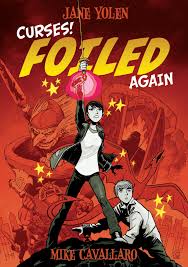
[READ: July 28, 2015] Curses! Foiled Again
Since I recently posted the Foiled review I had to run out and get the sequel (also on First Second books)
After a quick “Previously,” we get reintroduced to Aliera’s weapon and its glowing gem and we learn that Avery is beautiful on the outside but an actual troll within. As with the previous book, the panels are all gray scale until she runs into the mystical beasties.
The problem with this book is that Aliera is mad at Avery for secretly being a troll (fair enough), but there is nothing he can do to get her to listen to him. So it is actually rather tedious that for the whole book he keeps trying to tell her things but she refuses to listen. (more…)
Songhoy Blues are from Mali. They play an interesting style of rock/blues that follows rock conventions but subverts it as well.
“Sekou Oumarou” is a pretty straightforward bluesy number. Until the vocals come in and you realize that they are not singing in English. I think they are singing in French, but I’m not exactly sure.
It feels like the main instrument on “Al HassidiTerei” is the drums which, while keeping pretty steady beat, don’t keep a simple 4/4. This is not to say that the guitar and bass do nothing, because they play a cool riff and rhythm. But they tend to keep the music pretty steady while the song plays on. That is, except for the massively cool fuzzed out guitar solo at the end.
“Soubour” has a great classic rock style riff and when the guitarist stars going it sounds like it could be coming from the late 60s. It’s a stellar track with a groovy psychedelic sound and wailing solo.
It’s tempting to want to like Songhoy Blues because of the politics and story behind the band (which is pretty intense), but they are so good that you don’t need to know anything about them to really get down to their great songs.
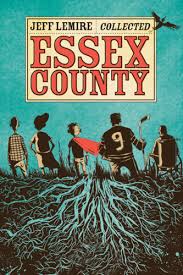
[READ: May 17, 2015] Essex County
I saw this book in the library. I was intrigue by the hockey player on the cover (okay and that it was 500 pages). When I saw that it was a 2011 selection in Canada Reads, I knew it had to be at least worth a look.
This graphic novel looks at several generations of people living in Essex County, Ontario, Canada. It collects the three books Tales from the Farm, Ghost Stories and The Country Nurse as well as some other odds and ends.
The introduction by Darwyn Cooke is really great for contextualizing this piece, although i wish he hadn’t spoiled the scene with the hockey players (so maybe for maximum impact, don’t read this before reading the book itself–actually, read the whole thing except that 8th paragraph). (more…)
After the tumultuous release of Drama, Yes broke up. And then, soon after, they got back together. This time Jon Anderson was back on lead vocals and Trevor Horn was…producer? Steve Howe did not return after the breakup. He was replaced by a different Trevor, Trevor Rabin. And returning behind the keyboards was original original keyboardist Tony Kaye (woah).
This reincarnated Yes was supposed to be a band called Cinema with Squire, Alan White and Trevor Rabin. But when Anderson and Kaye joined in and Horn agreed to produce, they became Yes again.
They got rid of the old logo and replaced it with a bland one but a new symbol. Long gone is Roger Dean, replaced by a high-tech looking cover and a high-tech sounding album title 90125 (which, rather lamely was just the records catalog number (7-90125-1).
Despite the old school returnees, this album was pure 80s pop. I can imagine that many diehard yes fans hated it when it came out. There are moments of yes (Anderson’s voice and the harmony vocals), but there’s no intricate guitar, there’s no melodious synths, even the drums are modern sounding. The biggest difference between this and previous albums (aside from the whole new wave feel) is the crispness of the recording–sudden starts and stops, and really quiet breaks of songs. It’s very “produced” and not very warm.
But I wasn’t a die hard fan when it came out and I rather liked it and I still do. In fact I talked about this album a while ago, so i figured I’d just contextualize some of those ideas.
“Owner of a Lonely Heart” is a much-sampled 80s classic. The quality of the sound is pretty great and the music is also really spare–not a bad thing, just surprising. This and “Hold On” were written originally by Trevor Rabin (even though “Hold On” sounds very Yes with the choruses and big vocals). “Changes” was also written by Rabin. And I am fairly certain he sings the lead vocals, although I can’t find that information anywhere–it certainly isn’t Anderson.
“It Can Happen” is a very poppy song (well, they all are) which was originally written for Cinema, but which they modified for Yes. And so was “Cinema,” the two-minute instrumental. It was originally 20 minutes long, but they seriously reduced it for the Yes album–I’d like to hear the original to see if there’s any sense of a Yes epic in there.
“Leave It” is one of my favorite songs from the album with the voices which I assume are sampled, but possibly not There’s just so much electronic manipulation here, it is so un-Yes, but it sounds great. The production is perfect and the song is great.
“Our Song” has a really good chorus but it doesn’t quite achieve the excitement of the earlier songs. “City of Love” is the same for me, moments that are good, but the quality had to drop off somewhat on the record, right?. “Hearts” is the longest song and it actually lasts too log. Again, the chorus is good, but it kind of drifts after a bit.
That doesn’t stop it from being a great album, with a ton of great songs front loaded on the album and presumably a nice load of cash for the guys to spend (how mad must Howe be that he chose that time not to come back?).
Since almost every Yes album had different personnel, I’m going to keep a running tally here. This is a biggie, look who has left!
Chris Squire-bass
Jon Anderson (#1, replaced Trevor Horn #2) vocals
Alan White (#2)-drums
Tony Kaye #1 (replaced Geoff Downes #4)-keyboards
Trevor Rabin (#3 replaced Steve Howe #2)-guitar
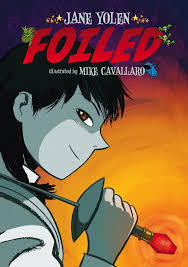
[READ: April 20, 2015] Foiled
Jane Yolen has written over 300 books apparently. I know her more as a children’s book maker and hadn’t read any of her YA books.
This book was really wonderful. And I’m aware that it’s part one of two, although it ended satisfyingly.
Aliera Carstairs is a fencer in high school. She started fencing when she was 11 and had a real aptitude for it. Her coach suggested she could make nationals. She has defeated girls and boys much older than her. She has a gift.
She has no social life, but she doesn’t mind. She doesn’t fit in with the jocks, the goths, the nerds or really anyone, she just is herself. She also has a cousin whom she visits every Saturday. Her cousin has rheumatoid arthritis so she is confined to a wheelchair. But she and Aliera play role playing games every Saturday. While they play, Aliera becomes queen Xenda of Xenon, swordfighter extraordinaire (which she knows is not much of a stretch, bit it’s still fun).
She also has a mom who loves buying things at yard sales and Salvation Armies. And she manages to get Aliera a practice fencing sword for $2. It has a really cheesy ruby on the handle but aside from that it’s quite good. (more…)
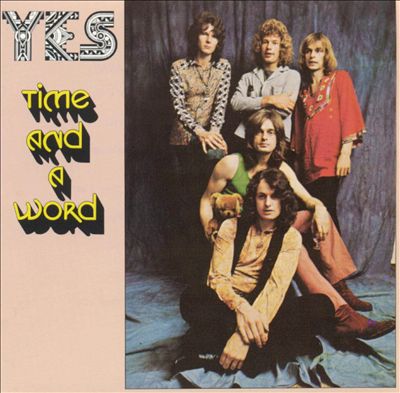
The second Yes album feels like a step towards what we know of the prog masters, but it’s more of set sideways as they have added an orchestra to the mix. Chris Squire’s bass sounds a lot more like the Yes we know, but those strings kind of mess with the synergy.
Opening track “No Opportunity Necessary, No Experience Needed” is a cover of a Richie Havens song (it’s hard to imagine such an original band doing so many covers). In this one, Chris Squire shows the kind of bass he’s capable of—big deep bass notes, high fast riffs and far more complex rhythms. It’s just odd that the song opens with a string version of title music from the movie The Big Country. There’s some cool bass sounds and drum fills. It’s a great opening song. The strings are a weird addition but I think they work here (mostly).
“Then” opens with some interesting descending keyboard chords. There’s some wonderfully dramatic moments in the verses and the chorus gets nice and big and catchy. The middle section has some good rumbling bass (with a strange addition of horns that give this a kind of soundtrack quality) and lot of keyboards. The lyrics are still pretty hippy “Love is the only answer hate is the root of cancer, then.”
“Everydays,” is another cover (Buffalo Springfield) is a kind of jazzy song with 70s keyboards and quiet jazzy drums. But after two minutes it turns into a heavy staccato riff that’s all bass and keyboards (and very cool). This is followed by a big jam with wild drums, keys and bass. It then jumps back to a mellow section of mostly vocals. It’s a pretty wild song.
“Sweet Dreams” opens with some very distinctive Chris Squire bass. The keyboards are big again. “Prophet” opens with some ponderous keyboards and then the string section playing. Then there’s some great loud bass playing. The main body of the song is nearly all strings, which is an unusual sound for Yes. But it’s just waiting for the bass to rumble in (opposite horns again). “Clear Days” is a 2 minute song which is all strings and Anderson’s voice. It’s an unexpected track on this album for sure.
But the final two songs are once again real highlights.
I love “Astral Traveller” or (as-ter-al trav’lr as it is sung). The opening chords are sharp and unusual. There’s some great rumbling bass and the chorus has some really interesting dissonance–really the first for the band who is usually pretty sweet up til now. There’s a keyboard section which feels a little displaced from the rest (later albums would make this kind of segmentation a bit more seamless) although Squire’s super high bass riffs are a fun addition. There’s also a great bass riff as the song heads to the final chorus.
And “Time and a Word” ends the album quite nicely. Although this song is more delicate than others, it has some great elements—guitar harmonics, some cool bass and a very catchy chorus. This record is pretty well overlooked (and is deservedly in the shadow of its successors, but there is some real quality stuff here).
I also just leaned that the original album cover was quite different from the one that Americans are familiar with.
Since almost every Yes album had different personnel, I’m going to keep a running tally here. Interestingly, it was the same lineup for these two records, but Peter Banks left right at the end of recording to be replaced by Steve How on the next album:
Chris Squire-bass
John Anderson-vocals
Bill Bruford-drums
Tony Kaye-keyboards
Peter Banks-guitar
[READ: January 15, 2015] Sumo
I loved this book. I loved the illustration style (which was so very cool) and I loved the story which was simple but poetic.
The simple story is this: Scott is a football player with potential. But when things don’t pan out (and his girlfriend dumps him) he decides to try a different route. What if he becomes a sumo wrestler?
Scott is a blond haired American, but evidently this is not an unheard of transition, and so Scott decides to fly to Japan to try it out. Scott is blond with a big square head. Actually Pham’s drawing style is very blocky, which give it an especially memorable and interesting look
The book si told in 4 sections (and the pages are designated by the color/symbol of that section. The first is a circle in a square, which is primarily where we see Scott, in Japan, working out with the sumo.
The section (set off by a water tower) shows Scott on his last night at home–getting drunk with his friends. They are sad to see him go, but wish him well. Until his ex girlfriend comes in and wants to talk to him. (more…)
Karl Ove mentions many bands in this book, but the deLillos are the only Norwegian band that he plays. They sing in Norwegian and play sprightly, jangly guitar pop–they would fit in very well with some of the lighter alt bands from the late 80s and early 90s.
I have no idea what they’re singing about (well, the title translates to “love” so I guess I know what they are singing about.
The singer has a high, delicate voice and there’s some interesting harmonies. I really like the way the song transitions from verse to chorus with the picked guitar notes–very catchy.
It comes from their second album, Før var det morsomt med sne (Beforeit was funin the snow), which along with their first was quite popular and was reissued with a bonus disc in the 90s. Having said that I see that Amazon has one copy of the disc and no album cover listed. Worse yet, I can’t find many other songs online (Spotify lists the album, but I can’t get it to play).
Sorry, deLillos (even searching for you gives us more Don DeLillo than you guys).
[READ: June 24, 2014] My Struggle Book Four
I started including the British edition page numbers because at my work we received both editions of the book, and I received the British one first so I grabbed it and started reading. I noticed the page numbers were quite different (the British book is taller and the print is quite bigger, although this doesn’t explain why the previous books have fewer pages).
I had been interested in the differences between editions from the get go. I had enjoyed the American editions, but I enjoyed reading this British edition more (bigger print?). But when I noticed on one of the pages that the word “realise” was spelled as I typed it, it made me wonder if the American edition changed that to the American spelling. [Actually, I see that Don Bartlett lives in Virginia, so perhaps he translates it into American first]. While I wasn’t about to go into a deep inspection of the topic, when I saw the American edition on a shelf at work, I had to do a little comparison.
And what I found out was that even though Don Bartlett is the (amazing) translator for both editions, someone (perhaps Bartlett himself?) is translating the American into British (or vice versa). I looked at a couple of pages and noticed these changes from British to American:
BRITISH EDITION = AMERICAN EDITION
Pack it in, now = Give it up, now
roll-up = rollie [about hand rolled cigarettes]
looked daggers at = gave her a dirty look
a complete prat = completely useless
is that possible? = really?
to cook and wash up = cooking and doing the dishes
I had got = I’d gotten
had penned = had written
and yes, realised = realized.
Other than select phrases, every word is exactly the same. So somebody goes through the books and changes them to British english idioms and spellings. That’s fascinating.
I also see that this is the first book I had not read an excerpt from first. Not that it would have made any difference as to whether I read the fourth one. I couldn’t wait to get my hands on it.
So book four is set in Håfjord, a town in Northern Norway near Finnsnes (a five hour flight away–okay I had no idea Norway was so big!). Karl Ove is 18 and has decided to become a grade school teacher there for one year. The tax breaks are great if you teach, and he plans to teach and write his masterpieces and then get out. He has no interest in teaching, but the town is small (most grades are 3-7 students), so he figures it can’t be too hard.
As in most of Karl Ove’s books, the stories jump around and flash back and do not stay all in this one time, but it is largely set in this locale.
My first thought was that I have never read a story with as much semen (both nocturnal emission and premature ejaculation) in my life. It is a strange take away from the book, but there it is. Karl Ove is 18 and really wants to have sex for the first time. About 3/4 of the way through the book he reveals that he never masturbated (it just never occurred to him, apparently, and at 18 he’s too old to start–what!?). As such, he seems to have wet dreams every night. And every time he gets near a woman, he has an orgasm too soon. He is horny all the time–it’s a bit disconcerting.
And since I mentioned that, I don’t know if Karl Ove’s life is typical of Norway, but I am shocked by the number of women who take their clothes off around him (he may have never had sex, but he was about to on at least a half-dozen occasions). And he says that all through school (from around age 13 and up) it was common place for the boys to lift up the girls’ shirts and kiss and or fondle their breasts. It is mind-boggling to me. And the 16 year olds all seem to be having sex all the time–this may be skewed from Karl Ove’s perspective, but that’s what I now believe happens in Norway.
But while sex is the main theme of the book–sex, sex sex, there is more to it.
Karl Ove’s parents have split up and his father has started drinking in earnest. The dad has remarried and has just had a baby. Incidentally, I was also shocked to read that Karl Ove’s father, who is an abusive stodgy old man who is cranky and mean and abusive and all the stuff that we read about in the other volumes was only 43 at the time that Karl Ove was 18. So the old man who I pictured as a gray-haired curmudgeon in this book is actually younger than me. Great.
In Håfjord, Karl Ove is teaching kids who range from age 13 to 16. It’s disconcerting to read about him thinking lustful thoughts about his students, until he reminds us that for most of the students, he is only 2 years older than them. I am pleased to say that he behaves himself (except in his mind) with all of the students. There’s even a really interesting flash forward to eleven years later when he runs into two of them again.
He proves to be a pretty decent teacher it seems. The kids mostly like him (the girls all think he is hot) and he is young and tries to make it fun (he himself hated school and everything about it). He even seems to help out an awkward boy (although that is never resolved). We see him teaching, trying to interact with the kids and generally being a pretty good guy.
Until the booze comes out.
For in addition to semen, this book is chock full of alcohol. Before graduating from gymnas (high school), Karl Ove basically stopped caring about anything. He spent most of his time drunk. It is astonishing the amount of drinking he does–it’s practically like an Amish Rumspringa how crazy he goes. But even in this retrospective look, he talks about how much he likes it, how it loosens him up and makes him less nervous.
But really he just spends most of his time drunk, hungover or sick. He even got into the hash scene for a while. He was living with his mom at the time and she was appalled at the way he acted–especially when he threw a party which trashed their house. She even kicked him out for a time.
He seemed to be over the drink in Håfjord, but it turns out that there’s precious little else to do except drink up there, especially when it grows dark for most of the day. So there is much drinking–he only misses class once or twice because of it but he comes very close a lot.
The irony that he is appalled at his father’s drinking, while drinking so much himself, is apparently lost on him.
The other main preoccupation with Karl Ove is music. He talks a lot about his great taste in music (he reminds me of me–a little insufferable). Back when he was in gymnas, he spent a lot of time discussing his favorite bands and favorite songs. He got a job (at 16) writing reviews for a local paper (holy crap, jealous!) and then later gets a job writing a column for another paper. For the previous book I listed a lot of the bands he mentioned, and I wish I had written them down for this one. U2 features prominently (this is 1987, so I’m guessing Joshua Tree), but also Talking Heads, a Scottish post-punk/new wave band The Associates and their album Sulk which he describes as “an utterly insane LP.” he and his brother really like The Church and Simple Minds (before they got so commercial). He also has a whole thread in which he makes connections with albums:
Briano Eno, for example, started in Roxy Music, released solo records, produced U2 and worked with Jon Hassell, David Byrne, David Bowie, and Robert Fripp; Robert Fripp played on Bowie’s Scary Monsters; Bowie produced Lou Reed, who came from Velvet Underground, and Iggy Pop, who came from the Stooges, while David Byrne was in Talking Heads, who on their best record, Remain in Light, used the guitarist Adrian Belew, who in turn played on several of Bowie’s records and was his favorite live guitarist for years. (64).
He also specifically raves about “The Great Curve” from the Talking Heads album, and of course, he raves about the first Led Zeppelin album as well.
Music is a huge part of his life (and he dresses accordingly too). It’s unclear whether the kids think this is awesome or not, but he may be a bit too much for some of the locals. The locals are mostly fishermen (which makes sense), and Karl Ove is a bit intimidated that he is so wimpy compared to them–one of the women even teases him about his tiny arms.
But his main focus is writing. He writes a few shorts stories (to my knowledge he has never published any of them). We see some excerpts and they seem fine–he fancies himself Hemingway. But he also mentions a bunch of Norwegian authors (I love when he does that). Sadly again, not too many of them have been translated into English. [I really hope that some mega fan creates a database of all of the bands and authors he mentions]. He also talks briefly about his first novel which alludes to his time teaching here. I happened to read a small summary of said novel (Out of the World) and feared that it spoiled what was going to happen. But, in fact there does appear to be a difference between his fiction and non-fiction.
The book moves very quickly–from party to party, from failed sexual attempt to the next, even from his staying up all night long trying to write. And most of the time he comes off as kind of a dick–he is also very self-critical, which somehow tempers that dickishness.
As with the other books I cannot figure out exactly why I am so addicted to his writing. I brought the book home on Thursday night and finished it (all 548 pages of it) Monday night. This really completes the picture of himself as he moved from childhood to adulthood and really lays the foundation for whatever is to come next. Early in the book he talks about the books that he loved at that age, books that talk about the move from childhood to adulthood. And thus, this book becomes something of a bildungsroman as well. Although whether or not Karl Ove actually grew up at the end of this book will have to wait until volume 5 (which I have to assume is still another year away as there is no information about it online at all!).
For ease of searching, I include: Hafjord, For var det morsomt med sne.
From March 17-March 21, the SXSW festival raged on. And my friends at NPR Music were there so I didn’t have to be. In past years they have had a nightly recap of their favorite shows of the day. This year they upped the ante by inviting a musician to sing a lullaby. Most of these lullabies occurred in some unexpected outdoor location at 2 or so A.M. after a long day of music.
The final lullaby comes from new to me singer Torres. She has one of my favorite songs from the NPR Austin 100 “Strange Hellos.” It starts slow and builds and builds. This is not that song (which would never work as a lullaby).
This is the only lullaby to feature an electric guitar. And even though it is played quietly you can hear her fingers sliding up and down the strings squealing away. This is a song from her new album Sprinter. And it’s quite lovely. I’m looking forward to hearing the full album when it comes out.
This issue of Harper’s featured five essays (well, four essays and one short story) about “Growing Up: five coming of age stories.” Since I knew a few of these authors already, it seemed like a good time to devote an entire week to growing up. There are two introductions, one by Christine Smallwood (who talks about Bob Seger) and one by Joshua Cohen who talks about the coming of age narrative.
I’m not sure why Wells Tower submitted fiction rather than an essay (he comfortably does both), but I’m glad he included this story as I think it’s a really interesting one. And yes it does cover growing up–and may even be based on fact, who knows.
This is written from the point of view of a seventeen year old girl, Maxine. She has been invited to Hammer Island (of the coast of Maine) for the summer to watch the (frankly wicked) daughter of famed film producer Morris Walls. Walls terrifies people in Hollywood, but when he comes to Hammer Island he is treated like everyone else. I loved this example:
Morris flicked a cigarette butt over the boardwalk rail. A teenage boy walking behind us retrieved it. He jogged up to Morris, tapped him on the shoulder, and slipped the cigarette butt into his palm. “No littering,” said the boy. “I know you’re new here, but we take it pretty seriously. Technically, there’s a three-hundred-dollar fine. I’m not going to report you, but just so you know, most people would.” In California or New York, threatening Morris Walls and handing him garbage would have been a sure way to get sworn at, slapped, doused with hot coffee. But Morris understood that attacking the boy would be pointless. The boy was of the island, and he spoke with the full authority of the place behind him.
And I loved the general pretension of the island:
Whenever anybody walked by, you had to call, “Hello! Come up, come up! We’re picking crabs!” Or you had to say that if you owned the house and the person passing by owned a house on Hammer, too. If you had been coming to Hammer Island for thirty summers, renting the same house for $4,000 a week, you did not get summoned to a porch for crab picking. You were still looked upon as an interloper and a thug.
Interestingly, this is all just set up for the real story which has little to do with Walls and nothing exactly to do with the island. For this story is about Maxine and a teenaged boy, Todd Greene. When Maxine is able to get a way from Lola (the brief story about Lola is hilarious), she would watch Todd play tennis. He was masterful. And after his matches he would talk with her. And soon enough he invited her onto his boat.
When she arrived at the dock, a short, dwarfish man was polishing the boat and Todd was nowhere to be seen. The man seemed to have nothing but admiration for Todd, talking about what a good sailor he was and making the boat perfect for the young man. When Todd finally arrives, he takes the keys, says nothing to the man and he and Maxine head out to open waters, where “Todd talked me out of some but not all of my clothes.”
Two days later, Maxine was invited to the Greene’s house where she discovered that the “dwarf” was actually Todd’s father. Todd’s mother and brother are, like Todd, gorgeous, and she can’t figure out the father’s place. But it seems that his place is simply to serve everyone. And when he makes a mistake with dinner, the whole family reams him out. But this time, having had enough, the father storms out and is not seen on the island again that summer.
Maxine is surprised that Todd keeps in touch over the year with quarterly updates on his exploits. And they both plan to return to Hammer Island next summer. When they do return Todd’s father is there waiting (and he has a plan). The end of the story is exciting and emotionally complicated. It’s a very satisfying story indeed.
SOUNDTRACK: BASIA BULAT-“Tall Tall Shadow” and “It Can’t Be You” live at Polaris Music Prize (2014).
Swinging to the other side of the musical world from Tanya Tagaq, Basia Bulat also performed at the 2014 Polaris. I like Bulat a lot, she comes across as a sweet singer (no idea if she is actually sweet). And I love that she can make really complex songs out of such random instruments (she plays autoharp, hammered dulcimer and others).
In this performance, she is fairly traditional for “Tall Tall Shadow” on the piano (although the french horn accompaniment is a nice twist), but “It Can’t Be You” on charango really highlights just what you can do with, essentially, a souped up ukulele.
“Shadow” highlights her voice which she holds for some quite long notes. The song is really pretty with a great chorus. “It Can’t Be You” is just her and the charango (which looks like a ten string ukulele but is Andean in origin). It’s quite a song–her voice and that instrument are lovely.
[READ: February 4, 2015] Grantland #11
I enjoyed this issue quite a lot, even if I didn’t know who half of the people profiled were (and won’t remember them in two days time).
I am very curious why Grantland is just so obsessed with basketball than other sports. It’s a little crazy how one sided these books tend to be. They obviously love all sports but the preponderance of NBA articles is really staggering.
I do wish there’d be a bit more about TV and movies (and even more about the shows that I watch), but it is a fun way to learn about shows I would never watch. And maybe that’s why I like these books so much, it’s my chance to vicariously enjoy sports without having to care about any of it (especially since it is all a year old, I never know if anything they talk about actually came to fruition or not).
This issue covers January-March 2014 (it’s fun reading about things almost exactly a year apart–to read about Oscars and Super Bowl stuff but have it be last year’s Super Bowl (especially since it too had the Seahawks) was very trippy indeed).
SOUNDTRACK: THE BEATLES-Sgt. Pepper’s Lonely Heart’s Club Band (1967).
A few years ago I started writing about Beatles records–a thankless task if ever there was. I got held up at Sgt Pepper, so it seems fitting to get back to the Beatles after enjoying the cover album from the Flaming Lips.
I have long thought that this was my favorite Beatles album–it was the first one I bought on vinyl, after all. But when I was writing about the records last time, I discovered that I like Revolver a little better. I’m surprised by this especially since I really enjoy all of the amazing musical advances the band made with this album (and the psychedelics too). I mean, to pretend to be another band, to add a full orchestra–the band had pretty much given up touring at this point–and to have added so many interesting things to this record is really amazing. And I don’t mean to say that I dislike the record, just that I think Revolver is better.
The title opening is great with the horns and sound effects (just so you know, Paul’s voice is all in the right channel, something that sounds really weird if you only listen to the left!). In fact the whole album has all kinds of fun stereo manipulations.
“With a Little Help from My Friends” has so many great vocal parts and I love the bass–slow and simple but playing unexpectedly high notes. This apparently also means that Ringo is Billy Shears. Speaking of the concept, this album doesn’t really work as a concept album–I mean, overall, what’s the “message”? There are some songs about love (the lonely hearts club) but there’s also some songs that are not at all about love. And how does say “She’s Leaving Home” connect to “Mr. Kite?” It doesn’t really matter, I suppose.
“Lucy in the Sky with Diamonds” is just great–everything about it from the harpsichord to the weirdo processed vocals and the big drums for the chorus (the chorus could actually be a bit bigger) still sound tremendous. “Getting Better” sounds very old school Beatles to me–I like it but it doesn’t really fit the psychedelic nature of the album. The harmonies are great (“it can’t no worse”). It’s also a strangely simply love song I believe, even though it seems like it’s about life in general. On a sour note, what’s with the Beatles beating their women?
“Fixing a Hole” has a great melody line and instrumentation. I have always liked “She’s Leaving Home,” I think it’s pretty and the lyrics are great. But I suddenly find it to be a bit too slow and string-heavy–guess I’m just a rocker at heart? Interestingly there’s no other Beatles playing instruments on the song. “Being for the Benefit of Mr. Kite!” is all sung in the right speaker. It’s a wonderfully weird song with great instrumentation.
I’m constantly surprised by “Within You Without You” just because it is completely Indian–no Beatle plays on the song at all, expect for George. There are also uncredited Indian musicians on swarmandal, dilruba, tabla, and tambura–imagine that there are Indian musicians who can actually say they played on Sgt Pepper, and be telling the truth! I feel like with a 5 minute song (twice the length of any other song on the disc, except the closing) that Indian music should have become much more popular (or maybe people just skipped the track–it was track 1 on side 2 after all.
The delightfully silly, but somehow profound “When I’m 64”–vocals sped up a bit and bouncing from left to right ear seems like a trifle but is still fun. “Lovely Rita” is a fun jaunty song. I like that he thought she was cute dressed as a military man. Interestingly, she pays for dinner. “Good Morning” I feel is more known for the chorus, while the verses are a bit obscure. Although it’s interesting to hear the kind of fast verses that Lennon sings (and that scorching guitar solo (from Paul!) is pretty cool).
I’m intrigued that “A Day in the Life” comes after the song that seems like it should end the record (the Pepper reprise). “A Day in the Life” really does get better with each listen–the closer you listen, the better it gets, too. It’s a great way to end any disc.
So yes this album is great and incredibly influential. I love listening to it. The biggest surprise to me is that the album is only 39 minutes.
Thirty-nine minutes!
[READ: January 24, 2015] “Last Meal at Whole Foods”
This story is set in a Whole Foods (duh). The narrator is eating dinner with his poor mother. He says that she is till young which is the tragedy, since she is close to death. They had a doctor’s appointment earlier which was meant to be “a formality.”
While they are eating he tells us that she has maintained an appetite even though she was always just a nibbler. But as of late her apatite has been voracious.
The man then reflects back on the location of the Whole Foods. Twenty years ago this street was apart of a dicey neighborhood. The only building was the Goodwill. The Goodwill that he and his other shopped at when they first moved to the area.
On their first outing there (his mother was so excited to get to building) she bought him a football jersey–even though he didn’t follow the local team. But the jersey proved to be a very cool item and the boys all talked to him about football because he wore it–there was even a rumor that he was related to the name of the back of his shirt. (more…)
[LISTENED TO: December 29, 2014] Jasper Dash and the Flame-Pits of Delaware
We are now hooked on the Pals in Peril series. This, the third book, promised to be the funniest and weirdest yet. I mean, look at the title.
But this book proved problematic for us for two somewhat related reasons. The first is that we usually listen to longer books like this when we have a lot of driving to do. We didn’t have any major big drive ahead so we wound up listening in small chunks, which was a little confusing. The kids were able to follow quite well, but after a couple of weeks some details are bound to get lost. The second reason is that this book is long. It was a 6 hour audio book as opposed to the 3 hours of the other two books.
The brevity of Whales on Stilts was a real treat. In it, Anderson wrote that he didn’t like to write action scenes because they were all the same. Same with chase scenes. But in this book, he has our heroes slogging through the wilderness for literal days (and almost an entire disc). It got a little samey, I feel–especially since we were listening in small chunks at a time.
This is not to say that the book wasn’t enjoyable. There were hundreds of hilarious moments in it. Even in the duller sections, he often threw in an absurd joke (or ten) that made me laugh. So maybe if we had listened all at once this would have held up better. But honestly it was only the middle that was kind of trudging (when they were trudging) because the beginning and end were great.
This happens to be another book where reading it would have been entertaining in other ways–the characters of Delaware have virtually no vowels in their names. Mark Cashman (who did another awesome job reading) does a fine job saying their names, but I had to find a print copy in the library because I needed to know how these crazy words were spelled.
 SOUNDTRACK: BELA FLECK, EDGAR MEYER, ZAKIR HUSSAIN-Tiny Desk Concert #70 (July 26, 2010).
 Bela Fleck is a rather legendary musician, and yet I realized I don’t really know that much about him. And somehow I never knew he was a banjo player (that’s a pretty serious omission on my part). I had never heard of the other two musicians, although they are apparently world-class masters of the bass fiddle and the tabla.















 I Just Read About That...