Feeds:
Posts
Comments

Archive for the ‘Boxing’ Category

grantlandSOUNDTRACK: The xx–Live at KEXP (July 25, 2012).

I xxkexphave casually seen The xx on a few shows and I’m intrigued by them.  I’ve never really given their albums any time though, so I can’t say anything much about them.

However, I really enjoy the sound they get live (which is funny since in the article below they talk about how much of a perfectionist Jamie, the studio tech guy, is about the recordings).

This set from KEXP (KEXP always has great audio quality) contains four songs “Fiction” “Reunion” “Sunset” and “Angels.”  And I have to say the band sounds amazing.  So close, so clean, so intimate.  Oliver’s voice is right there, whispering in your ears, and Romy’s guitars sound gorgeous–gentle vibrato, chiming chords; her voice is also beautiful.

The thing that throws me about The xx is how spare their music is.  Sometimes it’s almost like there’s no music at all. And I keep thinking of reasons why I wouldn’t enjoy such simple music (it’s usually not my thing). Or that it should only be experienced in a dark room by yourself.  But the melodies are so beautiful that I think they’ve made a convert of me.  I really adore these songs.  And I must have heard “Angels” somewhere because it is completely familiar.

I wonder if they sound this good on record.  You can watch the show here:

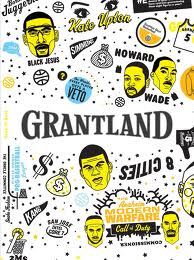
[READ: July 9, 2013] Grantland #5

Grantland continues to impress me with articles about sports that I don’t care about.  They style that the writers have (and the humor they impart) is wonderful.  And it goes to show that if you are passionate about something you can make it interesting to anyone.  So, even if I don’t know who some of the people who they’re talking about are, I can still enjoy what they say about them.  Plus, their entertainment coverage is really fun, too.

BILL SIMMONS-“Battle of the Olympic Heavyweights”
I really enjoyed this article which compares Olympic swimming and gymnastics to see which one “wins” in this battle for TV coverage and the hearts of Olympic fans (hint: it’s gymnastics, but Simmon’s categories are very good).

BRIAN PHILLIPS-“The Death’s Head of Wimbledon”
Phillips tries to cover Wimbledon and finds it very difficult to manage because it is all designed for TV, not in person coverage.

REMBERT BROWNE-“I Feel Like a Free Man”
The amazing decision of Frank Ocean to come out and how little it impacted his career. (more…)

Read Full Post »

clickSOUNDTRACK: BEACH HOUSE-Teen Dream (2010).

teendreamI didn’t know Beach House until this album got huge raves in end of the year lists.  I decided to investigate it and I was really pleasantly surprised by the album’s Cocteau Twins meets My Bloody valentine feel.  I have recently read that their first two albums were not quite as big and full and orchestral as this album, which meant that this one marked a recording (but not necessarily song stylistic) change for the band.  Part of me wants to hear what the earlier, more homemade version of the band sounds like, and yet I like the full almost orchestrated feel of this album so much that I can’t imagine going back to a less big sound.

The album opens with a delicately reverbed guitar riff—it feels warm and summery and then the angelic voices kick in and the ahhhs launch the song into the stratosphere.  And it pretty much stays there for the whole album.  There’s virtually no bass and only the slightest hints of drums (time-keeping measures rather than percussion).  Well, okay, “Better Times” has drums but even they are mild.  Victoria Legrand’s voice just soars, sometimes in staccato bursts, but mostly in otherworldly seeming falsetto (with occasion moments when she sounds kind of masculine and yet still angelic–it’s an amazing range).  There’s mostly reverbed guitars but on some tracks like “Used to Be” there are keyboards as well.  They’re even more prevalent (and more 80s sounding) on “Lover of Mine.”

Despite the sameness of the songs, the album doesn’t feel like one song repeated over.  The melodies are unique and the composition of the songs really shows a lot of diversity within a format.  Like “10 Mile Stereo” which has a faster pace than the other but still maintains that ethereal vibe.  Or “Real Love” which introduces a piano into the mix, and the song feels a little less ethereal, but only a little.  The album is also not too long.  It’s like a wonderful blast of summer.

The CD comes with a DVD with videos for each song, although I have not watched them yet.

[READ: February 11, 2013] Click

I discovered this story because it was listed in Roddy Doyle’s bibliography on Wikipedia.  I’m somewhat surprised that I’d never heard of it as I know so many of the authors that were involved (indeed, several of them are involved in the 39 Clues, another multiple author series).  This book is billed as a YA book and I guess it is as many of the sections are about teenagers, but some characters grow old and there’s some talk of the bombing of Hiroshima which may be a bit intense (there’s no pictures and no detailed descriptions, but still…).  It is a quick read though, so I guess it can qualify as YA.

The story is about a photographer named Gee (real name George Keane) and how he impacted so many lives.  In the first story/chapter (each chapter is like a short story that contributes to the overall picture and each one of these is written by someone different), written by Linda Sue Park, we learn that Gee has just died.  He left his granddaughter Maggie (who I came to think of as the “main” character, even though she doesn’t appear in every story) a box with seven compartments.  In each compartment was a shell with a clue, suggesting that she should take all of the shells back to where they came from–a subtle encouragement to travel the world.  But Maggie is utterly distressed by Gee’s death and she can’t get off the couch where she used to spend time with him.  Eventually her parents offer to take her to one of those locations–Japan–getting her life started at last. (more…)

Read Full Post »

grantladn4SOUNDTRACK: PUBLIC IMAGE LTD-“Poptones” and “Careering” on American Bandstand (1980).

abThe Dick Clark article below alerted me to this bizarre gem–PiL “playing” on American Bandstand.   The article talks about John Lydon ignoring the lip synch, climbing into the audience and generally disregarding the show’s script. The video suggests something sightly less sinister (although maybe for 1980 it was outrageous–do you really cross Dick Clark?).

Dick Clark himself announces the band nicely, and then the crazy off-kilter bass and simple guitar of “Poptones” kick in.   Lydon runs into the bleachers with the kids (most of whom are dressed in New Wave finery not unlike Lydon).  They shriek with glee when he comes nearby (do any of them know who he is?  I have no idea).  When Lydon’s spoken rambling come in a little later you can’t help but wonder what the hell they are doing on AB.

Then, Lydon starts grabbing people from the audience and pushing them towards the stage–something I believe was unheard of on AB.  The fans dance around to the impossible-to-dance-to “Poptones.”  The song ends and Dick asks John if he wants the kids out there for song two.  Yes, song Two!  He does and John faux lip synchs through “Careering,” avoiding cameras at all costs and dancing with the kids–one of the most egalitarian performances I can think of from Lydon.

And listen for Dick asking Jah Wobble his name (reply THE Jah Wobble) and him saying, nice to meet you Wobble.  What a surreal moment–wonder what Dick thought of it.

Enjoy it here:


[READ: December 28, 2012] Grantland 4

Grantland continues to impress me with these books (and no, I have not yet visited the website).  My subscription ran out with this issue and I have resubscribed–although I take major issue with the $20 shipping and handling fee.  I even wrote to them to complain and they wrote back saying that the books are heavy.  Which is true, but not $5/bk heavy.  The good news is that they sent me a $10 off coupon so the shipping is only half as painful now.

This issue’s endpages were “hypothetical baseball wheel-guides created by JASON OBERG–they were pretty cool and a fun idea.  They look very retro, but use contemporary batters, pitchers and catchers.  I’d like to see them for real.

Each issue makes me like sports a little bit more, but not enough to actually watch  them.

(more…)

Read Full Post »

SOUNDTRACK: RED HOT CHILI PEPPERS-“Magic Johnson” (1989).

Just before the Red Hot Chili Peppers totally took off and became stadium stars, they released Mother’s Milk.  It was a commercialized realization of their three earlier more raw sounding funk rock records.  It was one of my favorite records of the late 80s.

Since Flea is interviewed in this issue of Grantland, and since he’s still a fan of the Lakers, it seemed like a good time to mention this song.

It opens with some martial drums (from then new drummer Chad Smith) and band chanting about M A G I C.  The lyrics are sung very quickly (I’m not even sure what they say half the time).  About 80 seconds in some wild guitar work burst forth, but it’s largely a chanted song of bass and drums.  There’ s a brief jam at the end where Flea shows off some great basswork and John Frusciante gets to do his thing again.

I don’t think I’ve ever heard it played anywhere (maybe at Lakers games?), so here’s a chance to hear it:

[READ: May 8, 2012] Grantland 3

One thing is for sure, Grantland loves it some basketball.  Basketball is the most widely covered sport in the published Grantlands so far. (The first issue even looked like one).  Since basketball is such a pop culture-referencing sport it actually works pretty well as a subject–with lots of different angles–especially given the state of the NBA lately.  Some other things on the Grantland staff’s minds include–the dangers of football and inadequacy of helmets to protect kids and Tim frickin Tebow (still!).  I don’t think an issue has past without talking about him yet.  I realize that’s a function of the time of these publications but… ew!

Nevertheless, the writing remains exciting and interesting, even for a non-sports guy like me.

(more…)

Read Full Post »

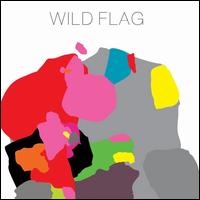
SOUNDTRACK: WILD FLAG-Wild Flag (2011).

For reasons unclear to me now, I wasn’t psyched when I heard about this band.  Despite the fact that it was 2/3 of Sleater-Kinney and the force behind Helium joining together, I didn’t jump for joy.  But now that I have listened to the album a million times, I can say that it is one of the best albums not only of that year, but of many years.  Man is it good.

Sleater-Kinney was a great band, they were melodic and tuneful but also abrasive and occasionally off-putting.  Who knew that the majority of the adhesiveness came from Corinne Tucker (well, she was the screamer, admittedly).  It’s pretty clear that Carrie Brownstein is bringing a ton of melody (and a wee bit of amativeness) to the mix.  Mary Timony always included trippy imagery and a weird kind of whispered/loud singing voice.  The tunes are so catchy so strong, so singalongable.

There’s little moments in each song that are amazing.  The backing vocals (and the pitch shift in the chorus) in “Romance”.  The way “Something Came Over Me” sounds so different from “Romance” (and is clearly a Timony-sung song).  I absolutely love the guitar “solo” that begins each verse and how it stands out but fits in so nicely as a baritone guitar sound (I assume from Carrie?)  “Boom” is just a full-on rocker with some great guitar pyrotechnics and Carrie’s more extreme vocals.  And man is it catchy.

“Glass Tambourine” is a cool trippy psychedelic workout  that’s still catchy and interesting.  “Endless Talk” has a strange British retro vibe.  (Carrie seems to be singing with a kind of punk British voice).  And there’s lot of keyboards.  It’s great that the album has so many different sounds, but still sounds cohesive.  “Short Version” has some great guitar soloing in the front and back.  “Electric Band” is like a perfect pop song–great backing vocals, great poppy solos and a cool video to boot.  “Future Crimes” is another amazing tune, with a keyboard solo!

“Racehorse” is probably my least favorite song on the disc.  It’s got some cool parts and some interesting swagger (and I like the live versions where they really jam) but the album version feels a little dragged out (although the chorus is really hot).  The disc ends with the wonderful “Black Tiles” which could easily be a Helium song, but which still sounds very Wild Flag.

And, I can’t say it enough, Janet Weiss is amazing on drums.  I feel badly because I tend to leave out the keyboardist–because I don’t know who she is or the band that she came from.  But her keyboards play an essential role in the music.  They fill out the spaces that the two guitars don;t always fill.  They even introduce the opening of the album.

If you go back through previous posts you’ll see I’ve mentioned them 3 times already because they have special bond with NPR and three of their concerts are available there.  I can’t wait for more from them.

[READ: May 8, 2012] Grantland 2

I was surprised at how much I enjoyed Grantland #1.  So I was pretty excited to get Grantland #2.  #2 has all of the elements that I loved about #1–non-sports articles about entertainment (video games, music, TV), and sports articles that are short and digestible for a non-sports fan.  This issue also features a number of really long articles about basketball.  I like basketball fine, but I can’t say I paid any attention to the lockout.  Thus, much of this was lost on me. It probably doesn’t help that I don’t know any sports people either.

I may have said this last time, but I will reiterate for Issue #3–for those of us who don’t follow sports, or those of us who may not remember back to September when most of these articles were written, or heck, for people who are going to read this in ten years’ time:  For certain articles, can you give us an epilogue about what happened after the article was written.  If you speculate about  the lockout. Have an epilogue to say about how the lockout turned out.  If you talk about a game 5 of a series and the series didn’t end, have an epilogue that tells us how the series ended.  It doesn’t have to even fit the style of the article, just a few words: so and so ended like this. It can show how prescient the writers were.  And it can help us complete the stories.

So, despite a few articles that I thought were too long, (although probably aren’t if you love basketball) I really enjoyed this issue of Grantland, too. (more…)

Read Full Post »

SOUNDTRACK: QUEENSRŸCHE-The Warning (1984).

Queensrÿche fulfilled the promise of their debut EP with this album.  It takes the blueprint of the EP and expands it wonderfully.  They introduce some cool low vocal chants to compliment Tate’s soaring alto (like on “En Force”), they also introduce some wonderful effects and riffs and scales (also on “En Force”).

There’s also some really great, odd “keyboard” bits thrown in as kind of sound effects or jarring moments (“Deliverance”).  “Deliverance” also has great backing vocals, and I love the way the “Deliver Us” part of the song is quite different from the soaring of the rest of the vocals.  The back and forth of “No Sanctuary” also showcases the bands skills very well.

The band even shows signs that they’re not sticking to standard heavy metal.  On “N.M. 156” there’s some sci-fi chanting and the really cool section of the song in which Tate sings “Forgotten…Lost…Memories” and the “Lost” part is a completely unexpected note.   They were taking chances from the beginning.

“The Lady Wore Black” is updated with the stunning “Take Hold of the Flame,” a slightly more progressive version of that first song.  “Before the Storm” was the first song I heard from this album and it has always been my favorite on the record (this is one of those few albums where the better songs aren’t front loaded).  “We watch the sun rise and hope it won’t be our last” (they were always happy guys).

“Child of Fire” opens with a wonderful riff and the compelling, “the souls that are damned by the pain that you bring send you higher.”  The song settles down into a slow part and Tate growls “Damn you and the pain they must feel” and you can tell he means it (whatever else the song is about).

All this time I don’t think I ever realized that “Roads to Madness” was nine minutes long.  It is definitely foreshadowing the kind of epic work they would do later.  And it closes out the album in a cathartic blast.  It’s wonderfully pure metal from the mid-80s.

[READ: October 20, 2011] Celebrations of Curious Characters

I had never heard of Ricky Jay before getting this book, but apparently he is a reasonably well know radio personality (on KCRW), he is also an actor on Deadwood, and he’s a magician.  This book is a collection of his KCRW radio show broadcasts along with accompanying pictures from his vast collection of obscure ephemera.

There are forty-five entries in the book–each one is a page long (it’s an oversized book and they are two columns each).  Each essay is Jay’s take on a particular subject or, as the title says, curious character.  Jay is a collector of esoteric information, especially that related to magic and, for lack of a better word, freakish behavior.   One of the most enjoyable parts of the book are the pictures that accompany each entry.  The pictures come from Jay’s collection and each picture’s provenance is given in the back of the book.  So we get pictures like “The little Count Boruwlaski, engraving by A. van Assed ([London]) Borowlaski [sic], 1788). or Lithograph of Chung Ling Soo (Birmingham: J. Upton, c. 1912) or Frontispiece portrait from George Devol, Forty Years a Gambler on the Mississippi (Cincinnati: Devol & Haines, 1887).  Some of these photos you can see on his website.  Or you can enjoy this picture of a chicken firing a gun that is not in the book (it comes from his site). (more…)

Read Full Post »

SOUNDTRACK: SHAD & DALLAS-“Live Forever” (2010).

Shad and Dallas Green (from Alexisonfire) recorded an EP called Two Songs and the profits go to Skate4Cancer.  The A Side is the new song “Live Forever.”  Shad is a great rapper, and make no mistake, this is a Shad song.  Green sings the hook-filled chorus (and an intro line).

Shad’s rapping is great and his rhymes are clever and interesting (he even does a fast double-time section which I’d never heard him do before). But the music itself is kind of bland.  I listened to it three times and I never really got into the flow of it.

I rather hope that sales are good (for the charity’s sake) but I’m afraid I’m not that excited by the track.

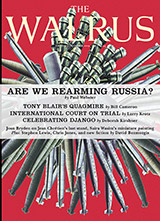
[READ: January 23, 2011] “Choynski”

I recently noticed that I had reviewed a whole bunch of stories from The Walrus.  So I wondered just how many stories there were in previous issues of the maagzine that I hadn’t posted about.  The magazine only started in 2003, and I still have all the issues (yes, that’s right…  I bought Issue 1 on the newsstand), so it wasn’t that hard to figure out.  In the early days, not every issue had fiction in it.  I started calculating and discovered that there were only about 25 stories to go.  So I thought, why not go back and read them all, eh?

This story was in Issue #2, and I have to say, good for them for picking David Bezmozgis to be their first author.  His issue bio reads that his first short story collection Natasha will be published in June.  And if you check now, you’ll see that Natasha won a Commonwealth Writers’ Prize and was a New York Times Notable Book.  Not bad.

There are essentially two stories in this piece and they tie together quite nicely.  The first arc concerns the narrator’s dying grandmother.  She is an old Russian Jew whose English isn’t great so she tries to speak in Yiddish to make up for it.  Her family understands but few others (like her doctor) know what she’s talking about.  As the story progresses, her family tries to keep the truth of her condition from her, but she is no dummy.

The second story concerns the narrator’s attempt to learn more information about Joe Choynski.  Choynski was being inducted into the International Boxing Hall of Fame (Old Timers division) and the narrator was going to the ceremony.  In trying to learn more about Choynski (considered America’s frst great fighting Jew), he enlists the help of Charley Davis, an old man who knows more than just about anyone else about the Choynski.  (more…)

Read Full Post »

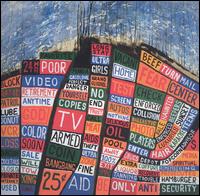
SOUNDTRACK: RADIOHEAD-Hail to the Thief (2003).

After the claustrophobia of Amnesiac, Hail to the Thief was a nice compromise between their earlier guitar rock and the ambience and the technology of Kid A.  “2 + 2 =5” is one of their most satisfying songs, opening with a nice guitar lick and Thom Yorke’s keening vocals, it abruptly jumps into a full-fledged rocker.  “Sit Down Stand Up” has similar properties–it opens quietly with a distant guitar riff.  The song builds and builds into a manic intensity.  By the end, when the pace is much faster and the lyrics are repeating “the raindrops” over and over, it’s a glorious mess.

“Sail to the Moon” is a keening piano-based ballad.  Not one of their best, but with very nice melodies.  “Backdrifts” flashes back to the experimental side of Kid A, with lots of percussive noises tapping into the electronic groove.

The band surprises everyone with a very acoustic sounding song, “Go to Sleep.”  It’s a really wonderful track, especially placed amidst the electronica of the other tracks.  The bridge brings Yorke’s vocals into the stratosphere (and the guitars get noisier and noisier).  “Where I End and You Begin” is a noisy staccato piece of fun with effects and more effects trying to hide Yorke’s voice.

“We Suck Young Blood” is a spare, almost completely stripped song composed of pianos and handclaps.  It is eerie and not a little disturbing.  While “The Gloaming” is practically all electronics.  It’s one of those transitional songs, not terribly exciting in itself, but not throwaway either.  And it leads into the gorgeous quintessential Radiohead of “There There” which could be an OK Computer outtake.

“I Will” is mournful dirge with just guitar and multitracked voice that lasts only 2 minutes and leads into the experimental “A Punchup at a Wedding.”  “Punchup” opens with that rarest of Radiohead sounds: a solo bass.   But it is quickly swallowed by more electronica.

“Myxamytosis”  is a nother great rollicking track with a great slinky keyboard riff that propels the song through the murky depths.  “Scatterbrain” features a cool guitar motif that shows that they can still play pretty music and which leads to the album closer, “A Wolf at the Door.”  “Wolf” ends the disc wonderfully with a cool guitar song and awesome almost-spoken lyrics.  It is kind of sinister and kind of sad at the same time.

This is a disc that rewards repeated listens (and headphones). If OK Computer was difficult, Thief is much more so, but for very different reasons.  But it pays wonderful dividends.

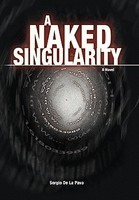
[READ: January 6, 2011] A Naked Singularity

I received a copy of this book about a year ago in March.  It is self-published and seems to have been sent to many folks who blogged during Infinite Summer (because it’s a big book, you see).  I was interested in reading it, but I had a lot of other things that I was reading first, so I put it aside until last month.  And I am really bummed that I waited this long.

A Naked Singularity is a wondrous, beautiful mess of a book that I was so absorbed in, I couldn’t put it down.  The writing style is great: funny, clever, funny, philosophical, funny, legal, funny and at times rather violent.

I’m torn when writing this how much of the “story” to give away.  I didn’t know anything about the book (the blurb on the back is just a quote from the book–there’s no summary or anything).  So I’m going to rob you a little of the “what the hell is going on in this story” aspect that I had, but I’m not going to give anything major away.

The story opens in a the middle of a conversation between a prisoner and a lawyer.  It’s a bit confusing until the story pulls back and we get the whole deal.  The story is about Casi.  He is a wunderkind lawyer who has never lost a trial (in 14 attempts).  He plays the system, but he’s also dedicated to getting his clients off (even though he–and everyone else on staff–knows they are guilty) mostly because he is undefeated.

The entire first Part of the book (320 pages) introduces us to Casi, to his workload, to his clients, to his coworkers and to his family.  His clients are mostly drug dealers. His coworkers are mostly jaded and are no longer excited by their jobs.  His family is wonderful, a group of Colombian immigrants who love each other and fight with each other loudly.  (The early scene at his family’s house is hilarious scene in which unattributed dialogue overlaps–it’s wonderful).

And yet for all of that, the first part never quite gives us a plot.  This might be a problem for some books, but the whole set up is so compelling that you just go with it, from one amusing (or hilarious) segment to the next.

In addition to introducing us to his cast of drug addicts and low level criminals, Casi also indicts the New York Justice system (in hilarious detail).  There are quite a few chapter spent talking about “bodies” (criminals) and how many of them sit in jail for 72 hours until they see a lawyer.

Of course, when he gets home, all is not normal there either.  His apartment is free (because his downstairs neighbor’s father owns the building and Casi squats there).  The neighbors are a curious bunch of college students.  One of them is a total TV junkie.  And, there’s a bizarre, wonderful subplot about him trying to bring Ralph Kramden from The Honeymooners to life in his room by watching the shows nonstop for weeks.  Yes.

Textually, the story also plays with lots of styles.  In addition to the dramatic scene with his family, we also see many court transcripts.  The second one with Mr McSlappahan is quite funny not least of which because the judge cannot get the poor man’s name right and the official transcript changes his name throughout the case.  There are also letters to and from one of the clients.   There’s a chapter-long epic poem (which was probably the hardest thing in the book for me to digest).  There’s even a recipe for empanadas (which sounds delicious).

In addition to some wonderful wordplay and punning there is also childish gross-out humor.  A scene with frozen burritos (pp. 150-158) had me laughing out loud for several pages.  But there’s also a lot of commentaries on society.  For instance Television is always capitalized and treated as a proper noun.  The mayor of New York is named Toad.  There are street vigilantes with cameras everywhere and, most amusingly, there’s an in-the-making TV show: Clerical Confessions.

By the time Part Two comes around a plot starts forming.  I was concerned that all of part two would follow this nascent plot, but it doesn’t. The book continues in a similar vein with the plot-instigator [coworker and lawyer, Dane, one of the most consistently amusing characters I’ve read in a long time] continually popping up on Casi’s periphery to try to get him to help him with…the perfect crime.

And that’s when boxing comes into play.  Casi is a fan of boxing, specifically a fan of Wilfred Benítez (who I didn’t know was a real boxer, but whenI looked him up I found this part of the story even more compelling).  And so, interspersed throughout the rest of the book is Benítez’ biography and fight history. It’s a rather lengthy character study of the man himself and boxing in general.  Now, I’m not a fan of boxing, I’ve never watched a fight, but I was totally engrossed by the storytelling.

Because he is setting up a whole story about muiddleweight champiosn, the novel follows many boxers who I had heard of and knew from pop culture (I checked and even Sarah knew who most of these boxers were, so they really must get into the pop culture world): Sugar Ray Leonard, Marvelous Marvin Hagler, Thomas Hearns (I didn’t know him, but De La Pava’s description of the 3 round Hearns-Hagler fight is so exciting that I’m going to watch them on You Tube) and Roberto Durán (she didn’t know him).  And so the story of these middleweight fighters trying to knock each other over for the title becomes something of a metaphor for the Casi’s life pre- and post- crime.  In fact, when they go to execute the perfect crime, the first half of that chapter is taken up with a story about Benítez…that’s quite unexpected.

While the crime is beign set up, Toom, one of Casi’s coworkers asks him to help with a case in Alabama.  A severely mentally retarded man is to be executed and Toom has taken on the case to rescue the man.  This plot adds a surprising amount of pathos to the story, especially when Casi flies to Alabama and meets the man.  But even that sequence is lightened by a wonderfully absurd hotel scene.  I totally want to stay at this hotel.

Part Three of the story is where the whole thing devolves into a crazy quilt of insanity.  The crime has happened, and it is messing with everything. There is a city-wide blackout, Casi has no heat, no cars are allowed on the streets so he can’t even escape to his mother’s house.  There’s also a strange guy in is building who looks and sounds suspiciously like Ralph Kramden.  And, Casi is accused of contempt (and is about to be ousted by his law office’s morals group, the childish but amusingly named Committee to Oust Casi Kwickly). Both trials are as absurd as a Marx brothers movie (Karl of Groucho?).

The lead up to the end is very satisfying will all kinds of loose ends tied together (things that I thought he’s never address were in fact cleared up!).  But with a story this all over the place, it’s hard to imagine how you would finally end it.  The ending goes in a direction that is supported by the title (and is a little overwhelming).  It’s a little unsatisfying, but aside from a tidy happy ending (which you knew you weren’t getting) I don’t know how else you could have ended the book.

Ending aside, this is a fantastic novel.  There is just so much going on in it (I didn’t even mention the discussion of Hume vs Descartes “I guessed there was nothing wrong with Hume provided it was acknowledged that Descartes was The Man” (510)) or the whole subplot about the two kids who kidnap a baby), and it is very well constructed and tied together.

Somebody please publish this book officially!  Yes it’s long, yes it’s multifaceted, yes it demands a lot of the reader,but the payoffs are wonderful and, frankly, this is the kind of unexpected story that could be embraced by, well, not the general public, but a niche market who enjoys clever books (and yes, probably fans of David Foster Wallace (and his progenitors)).

Give De La Pava a contract, huh!  You can read an excerpt here.

Read Full Post »

SOUNDTRACK: BLUE ÖYSTER CULT-Tyranny and Mvtation (1973).

The album cover is similar to the first disc (a simple black and white), but this one adds a touch of red. Similarly, the music adds a touch of something that makes this disc leap beyond the foundation of their first.

The songs are heavier, the lyrics are weirder and yet the whole proceeding is catchier and groovier at the same time.

The first half of the disc is called The Black (going with the first song “The Red & The Black”).  It contains 4 great tracks.  The highlight is the improbably named “7 Screaming Diz-Busters” a 7 minute song that starts off with great heavy guitars, segues into a spooky/wild moog organ fueled freakout and ends with a denouement that is mellow and creepy.

But the other three songs rock hard too.  “The Red & the Black” is a super fast boogie which repeats some of the lyrics from the first disc: “Canadian mounted baby.  Police force at work.  Red and black. Its their color scheme.”  The tempo slows somewhat with “OD’d on Life Itself,” but it quickly comes back with “Hot Rails to Hell.”

Side two, The Red, opens with “Baby Ice Dog” with lyrics by Patti Smith (!).   The side is less heavy, with Allan Lanier’s piano coming to the front on this track (although there’s a delightfully cheesy wolf howl at the end). “Wings Wetted Down” foreshadows more familiar BOC with great choruses and harmonies, coupled with cool riffs.  And the final song “Mistress of the Salmon Salt (Quicklime Girl)” is yet another wonderfully oddly titled (and lyrically peculiar) song.

Even though the first disc is quite good, BOC totally hit their stride on this disc, showcasing their weirdness and their virtuosity in equal strength.  The recently remastered edition contains 4 live tracks that show just how much the band rocked in a live setting too.

[READ: Week of February 22, 2010] 2666 [pg 291-349]

During last week’s reading, I had replied to a post on Infinite Zombies in which I stated that I am a very credulous reader.  If I believe that the author is doing something worthwhile, I’m totally willing to suspend my disbelief about whatever the writer tells me.  Sometimes, when I’m done, or if I’m asked to be critical, I’ll look for flaws, but generally I like to go with the flow.  So, I’d been reading along uncritically primarily because I don’t exactly know what Bolaño is up to, (even 300 pages in) so I’m just going to enjoy the ride.  More on this in a moment.

This week’s reading continues Fate’s saga down in Santa Teresa.  His story request about reporting on the murders in Santa Teresa has been turned down.  And he thinks back to all of his other stories that have been rejected by the newspaper.  Like the Mohammedan Brotherhood.  Fate met them at a Pro-Palestine demonstration. They were marching under a banner of Osama bin Laden (shortly after 9/11/01).  They were so over the top that Fate felt the need to interview them. (more…)

Read Full Post »

SOUNDTRACK: Make the Load Lighter: Indie Rock for Haiti (2010).

I mentioned this disc a few days ago because it’s a benefit disc for the people of Haiti.  I had encouraged people to order it ($10 to a good cause, eh?) but hadn’t fully listened to it yet.

Well, after playing the disc nonstop for the weekend, it’s time to chime in and say that this is a fantastic disc of indie rock, which spans the indie rock gamut from harder punk songs to beautiful heart-felt passionate tracks.  Each and every track is catchy, and most of them have a cool twist or hook to push it beyond being “just” an indie song

The first three songs are really fast and really heavy.  Footstone opens the disc.  I don’t know a lot by them, but this sounds to me like their heaviest song ever.  It comes across like a really hard edged punk song, but you know there’s a groove too.

Boss Jim Gettys (one of many wonderfully named bands) play a 2 minute punk metal blast that is notable for the cool guitar solo that breaks up the onslaught.  The third heavy song is by Dromedary stalwarts cuppa joe (!?).  “Taniqua” is a fast song with a rocking guitar intro.  It thuds along for 2 and a half minutes and then ends with a wonderfully upbeat chord that leads nicely in to the fourth song.  Moviola’s “Calling on the Line” is a poppy jangly college rock sounding song from the 90s.  It pretty well epitomizes the Dromedary sound.  The band has a bunch of records out which you can see here.

I wasn’t that impressed with Three Blind Wolves at first.  It seemed a little lacking.  But after about three listens I got it, and it’s now one of my favorite songs on the disc.  The singer’s voice is varied and wonderful, warbling over a fairly spare musical intro (the occasional high notes are totally cool).  But the chorus just rocks out wonderfully.  Three Blind Wolves is one of four Scottish bands from what I rather assumed would be a Jersey based compilation.

Paula Corino’s song is okay.  It’s my least favorite track on the disc, but only because it never really grabs me, and, while it’s a totally fine song, it gets a little lost amidst the rest of the tracks.  It’s followed by Wallendas’ “Adrianne” a delightful poppy song like a modern day Byrds.

The next song, The Neutron Drivers’ “All Around the Sun” doesn’t have an original second in it.  And yet it is easily the catchiest song on the whole disc. When you first hear the opening guitars you pretty much know exactly what the whole song (even the obvious guitar solo) will sound like.  It’s like the uber-rocksong.  And yet for all of its sounding familiar, it doesn’t sounds like any specific song. Amazing how they pulled that off.

The Dark Brothers’ “Knee Deep in Sin” is a weird and unsettling song in that it sounds like the singer from Social Distortion with a slide guitar.  It’s got a majorly country feel, until about three minutes in when you get a guitar solo straight outta Teenage Fanclub’s “The Concept” and suddenly this country song is a slow burning rocker.  Very cool.

The next two songs justify the price of the disc.  There Will Be Fireworks’ (Scottish band #2) “Foreign Thoughts” is a fantastic, amazing song.  It builds and builds with tension upon tension as the singer (with a wonderfully aggressive accent) spits the words over more and more instrumentation.  It’s followed by the utterly amazing Gena Rowlands Band’s “Fuckups Of the World Unite.”  This is like the great long lost American Music Club song.  It’s vulgar and yet completely un-profane.  It’s catchy, heartfelt and it blows me away each time I hear it, both lyrically and musically.  The simple guitar paired with the opening couplet is amazing in an of itself but it’s even better when it closes the song.

The Mommyheads come next with a remixed version of “Spiders” from Flying Suit.  I enjoyed the song on that disc, but it takes on a new life in this remixed version.  It feels fuller and even slighty creepier.

On like my third or fourth listen, Scottish band #3, Farewell Singapore’s “Blue” grabbed me and said “HEY THIS SONG IS FUCKING GREAT YA BASTARD.”  And man, is it ever.  I’ve been walking around all weekend singing “Scotland’s as dark as it’s going to be” over and over.  And I’ve no idea what it means.  The sudden breaks in the song sound like there’s something wrong with the track given the propulsive nature of everything else.  And the intense guitar solo that follows the glockenspiel bit is fantastic.  Oh and the male/female vocals sound great together.

Jennifer Convertible (a wonderful band name which gently rips a regional chain store, which seems to have changed its name to the far less inspired Jennifer Sofas and Sofabeds) has a very cool song that opens like a latter R.E.M. track but brings in some wonderfully atmospheric guitar noise to add a real sense of foreboding to the song.  The buzzing guitar solo is a nice touch, too.

lions.chase.tigers (4th and final Scottish band, with a downloadable EP on their website) sound a bit like an early Bob Mould track.  Which is pretty good in itself, but what I love about the song is that it’s a cool jangly indie rock song with a great martial drum sound.  And it bops along, in a minor key until we get a delicate guitar riff and then a rocking chorus.  But the really interesting part is yet to come: the gentle guitars come back but they’re accompanied by a voice screaming its lungs out (and yet mixed way down, so it’s no louder than the guitar).  And the song proceeds as if that isn’t a weird thing to add in.  Man, it takes guts to write a song like that, and it pays off.

The disc ends with Stuyvesant’s song, “Salieri.  It’s another slow builder, but it’s quite catchy and when the harmonies kick in in the last minute, it become quite the great song.  And it ends the disc on a good note.

So, in sum, order the disc.  It’s for a good cause, but even if you’re not into that sort of thing, you get some really great music for your money.  There’s literally not a bad track on the disc, and the bulk of them are outstanding.

Even the liner notes are interesting (and provide a look at why and how this disc came about).  My only complaint is that you get almost no information on the bands!  Now, I realize that in the world of online downloads, you’re lucky enough to get album art (and the photos are sad and beautiful) but I’d love to know more about these bands, where they’re from, who they are, and if any of them are have websites or other discs or whatnot.  But then, I actually read liner notes on discs!

Download the tracks, and the art, here.  Do it!  Now!

[READ: Week of February 15, 2010] 2666 [pg 231-290]

This week’s reading is the first half of the third Part: The Part About Fate.  And I have to say thus far it is easily my favorite part of the book.  I enjoyed it right from the start upon learning that the titular Fate is not an abstract Fate but a person named Fate.  A nice twist right up front.

This section also deals quite directly with matters of race.  Fate is black, and during his travels he is acutely aware of his color.  Plus, many scenes pop up in which race is definitely a factor.

Fate’s real name is Quincy Williams.  He is a 30 year-old reporter for Black Dawn, a magazine out of Harlem.  Quincy is known as Oscar Fate; everyone calls him Fate. (more…)

Read Full Post »

« Newer Posts