Feeds:
Posts
Comments

Archive for the ‘South’ Category

momentSOUNDTRACK: NICK BUZZ-Circo (1996).

nickbuzzNick Buzz is a side project of Rheostatics singer/lead guitarist Martin Tielli.  This album was reissued in 2002, when I bought it  But it came out in 1996, right around the time of the concerts I’ve been posting about.  Martin says that this album is pure pop, and that he is genuinely surprised that people don’t see this.  Of course, when your album has screeching monkeys, cars honking and circus music, pop is not the first thing that comes to mind.  There are certainly pretty songs on here, but it is an album that resists easy entrance.  There are short manic pieces, slow, languorous, almost lounge music pieces, and an improved cover of Joni Mitchell’s “River.” And then there’s the instrumentation: piano, violin, guitar, voice (no drums, although there is percussion on some tracks) and other weird sound effects.

“Step Inside” opens the disc.  It seems like a normal, mellow song (with slightly falsettoed vocals).  But 34 seconds in the circus music starts—a deviant and unsettling circus that pushes its way into the song briefly then vacating and allowing the pretty melody to return.  It’s like a mild form of Mr Bungle (with more actual circus).  It’s unsettling at first but then strangely catchy after a few listens.  There is fanfare as the song ends, interrupted by the sound of a tape speeding up (or going backwards) until song two bursts in.

“That’s What You et for having Fun” is less than three minutes and while weird, it is certainly accessible and funny.  The guitar sounds like he is slapping the strings rather than strumming them.  The refrain of “there’s a monkey in my underwear” gives a sense of the absurdity (especially when the President of Canada (sic) says he has one too).  “Just Because” mellows things out a lot—simple guitar with a kind of lullaby feel (it’s a bout wishing on stars).  It’s so slow after the craziness of the first two songs.  After  3 minutes of a lounge type song, it ends with a distant radio sound of an even more loungey song which melds into the live version of “River.”

The mellow “River” is followed by a raucous bass clarinet solo and wild guitar solo that is interrupted by the long (nearly 6 minutes) “Sane, So Sane.”  This is the most conventional song on the record—a simple piano melody with repeated lyrics (conventional aside from the weird distant music in the background of course).  Although it does gone on a bit long.  “A Hymn to the Situation” is an eerie two-minute wobbly song.

“Fornica Tango” is indeed a tango presumably sung in Italian. This song features a crying baby, an interesting sounding “Italian” chorus and the screeching monkey at the end.  “Love Streams” is a pretty, slow ballad.  “Aliens Break a Heart” is another pretty song.  Although this is the song that ends with traffic sounds.  “The Italian Singer/Just Because I’m Nick the Buzz” has a kind of Kurt Weill atmosphere to it with spoken words and falsettos.

It took me several listens before I could really find purchase with these songs.  I find that I really enjoy most of them now–some of those slow ones are a little too meandering for my liking.  But it seems like a fun outlet for Tielli’s songcraft.

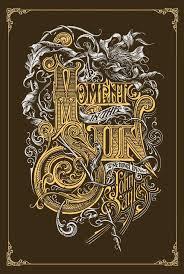
[READ: October & November 2013] A Moment in the Sun

I read this book last year…finished it just before Thanksgiving, in fact (I was proud of my pacing).  But it was so huge that I didn’t want to write about it until I had a good amount of time.  And now here it is four months later and I probably have forgotten more details than I should have and the post will be nowhere near as in depth as I was saving time for in the first place.  Bah.

When people see this book, they say, “That’s a big book.”  And it is a big book.  It’s 955 pages (and they are thick pages, so the book itself is nearly three inches thick–see the bottom of this post for an “actual size” photo); it’s got three “books” and dozens of characters whose stories we read about in full.  It is about the United States, racism, The Gold Rush, the assassination of a President, the Spanish American War, a World’s Fair and even the exploration of moving pictures.  This is a fairly comprehensive look at the Unites States from the 1890s to the early 1900s.  And, man was it good.

John Sayles is known more for his movies than his books (18 films directed, nearly as many different ones written and only 4 novels), but the cinematic quality that is clearly in his blood comes through in this book as well. (more…)


Read Full Post »

weltySOUNDTRACK: PAT JORDACHE-“Radio Generation”/”Radar” [CST074] (2010).

jordache“Radio Generation” appeared on Jordache’s album Future Songs in 2011.  This 7″ single has an otherwise unreleased B-side called “Radar” as well.

I think of “Radio Generation” as an unusual “single from the album because, as I wrote of the CD: It opens with “Radio Generation,” which has a really cool bouncy guitar riff and bassline.  It doesn’t quite display the signature sound that I think of this album as having but it certainly points to it.

“Radar” has even less of the Future Songs feel.  It is very sparse, with guitars that sound almost like a Western.  The vocals are slow and drawn out and then the spoken word section begins–continuing the meandering nature of the song.  The melody is pretty, but this is justifiably a B-side.

[READ: January 7, 2012] “Why I Live at the P.O.”

I read about this story in the D.T. Max David Foster Wallace biography.  I’d never read anything by Welty before, and I have no idea if this story is representative of her work.

There’s not a lot of plot to the story, which is probably why it is so successful.  Welty constructs a very funny home scenario (one that I actually had a hard time understanding at first because the names of the characters are rather odd–although perhaps not odd to Southerners?)  I had to read the first sentence a few times before I could really parse it.  It’s not complicated but the names and the dialect are…odd.

I WAS GETTING ALONG FINE with Mama, Papa-Daddy and Uncle Rondo until my sister Stella-Rondo just separated from her husband and came back home again. Mr. Whitaker!

The narrator is Sister, the older and much aggrieved sister of Stella-Rondo.  As the opening says, Stella-Rondo has moved back home.  And she has arrived with a baby (which she swears is not hers).  Sister is put out by the intrusion because she says that Stella-Rondo has always gotten everything she wanted (unlike Sister).  We have no direct proof of that although, if Sister’s telling of this story is to be believed, Stella-Rondo is a major instigator  trying to get Sister in trouble as soon as she returns.  Of course, Sister also tries to get Stella-Rondo in trouble, but her parents don’t seems swayed by her complaints. (more…)

Read Full Post »

SOUNDTRACK: BARBARA MANNING-“Though with People” from Score! 20 Years of Merge Records: The Covers (2009).

I have a Barbara Manning disc, although I don’t remember it very well.  In this song, Manning’s voice is strong and good, but not terribly memorable–perhaps a less distinctive Neko Case?  It’s a catchy cover–a good 90’s era rocker.

The original is also a 90s era rocker. The song is by Portatstic, which is a side project from Superchunk’s Mac.  It doesn’t sound all that different from Superchunk (a little less manic, but Macs voice is distinctive enough that perhaps this just sounds like a slower version of their song).

I like Manning’s cover enough to go dig out 1212 to see what I haven’t listened to in a while.

[READ: April 13, 2012] “Stretch Out Your Hand”

This story came in second place in the Fall 2012 Narrative Magazine writing contest. I read this one first because it was much shorter than the other two stories and I needed a shorter piece for today !

I was disposed against the story from the start because of my own prejudices—I don’t really like stories set in the rural South from the early 20th century.  It’s a combination of my inability to relate and to my overexposure to clichés about the time, where everyone says “Momma” and everything sucks.

And so, when in the first few paragraphs, a young girl named Ruth has finally broken a fever and the father calls the mother “Momma” and the mother can’t stop thanking Jesus, I was not excited to keep on.

But then I started paying attention to the writing.  It was wonderful.  Ruth’s brother starts watching his sister’s fever evaporate and lift into the room.  Then he gives us this observation: “And which of these things is more miraculous: the incandescent movement of my sister’s fever, or the way my father held her.  I can’t say.  There is a place in me where these things go.”

The narrator does not conform to the stereotype of rural Southerners, which makes this transcend a story of sickness and grief. (more…)

Read Full Post »

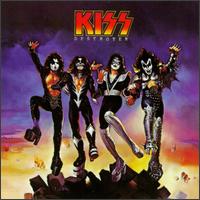
SOUNDTRACK: KISS-Destroyer (1976).

Although this is not the first Kiss album I heard (that would be Love Gun) it was probably the one I listened to most (it had “Beth” on it after all).  It is also full of some of the most over the top theatrical music of any heavy metal band at the time (is it any wonder that I also enjoy Meat Loaf and other over the top bands if I was raised on this?)  Kiss has always been about theater, and how much more theatrical do you need? (How about a cartoon of the band standing on a pile of ruins?).  But this album is such a classic, it’s hard to even think critically of it

“Detroit Rock City” is, well, it’s “Detroit Rock City.”  An amazing, iconic (albeit simple) guitar solo, great effects in the beginning (with Paul (I always assumed) singing along to other Kiss hits on the radio) and an awesome crash at the end.  Fill it out with an amazing riff and great work from the whole band.  What more need be said?  How about the way it leads perfectly into “King of the Night Time World.”  This song is overlooked despite its greatness.  It opens so loud and full then the verses get awesomely tinny until the galloping chorus kicks back in (Petter Criss plays drum rolls mid-song like no one else).  It also has great riffs and a memorable solo.  Oh and then a little song called “God of Thunder.”  Awesome bombast, creepy kids’ voices (I remember some kind of rumors about who the kids were and how they were held captive by the band or something).  It’s a wonderfully memorable song.

“Great Expectations” slows things down but adds the bombast.  I’ve always enjoyed this egocentric song, even as a kid singing along in a mirror.  Although the extra musical notes (keyboards and such) are kind of wimpy.  But it’s followed by the electrifying “Flaming Youth,” a hard-edged guitar song that is pretty simple, but pretty potent.  Again, the keyboard bits undermine the heaviness, but the repeated “higher and higher and higher” is pretty bad ass.

“Sweet Pain” is a great dark Gene-sung song (evidently about S&M, although I never knew that quite so specifically–I never understood the first two lines until I looked them up just now: “My leathers fit tight around me/My whip is always beside me”).  “Shout It Out Loud” is one of the great Kiss anthems.  I actually prefer it to “Rock and Roll All Nite” although that could be just because of the over exposure of “RaRAN.”  Of course, “Beth” is next and it is impossible for any Kiss fan to say anything about “Beth”.  This was the first song I ever memorized the lyrics to, and I sang it to my no doubt confused grandmother when I was 9 years old–my first and only live performance until college.

I always liked “Do You Love Me” (I think these Kiss fantasy songs were pretty big for me).  I was always confused by the tinny voice in the final verse of the song.  It was very strange to my young mind, but it really stands out in the song–as does Paul’s ending rant.  The overall sentiment of the song  is kind of funny coming from the guys who would soon be singing “Love Em Leave Em” but it is nice that they feel insecure once in a while too.

My LP of this album (or maybe it was an 8 track?) did not have the “bonus” track, which is just 90 seconds of a crazily processed version of “Great Expectations” with some lifted vocals of Paul in concert.  Apparently even though it is untitled, it is called “Rock and Roll Party” by most fans.  It appears to be a joke about all of the backwards masking that was supposedly on Kiss records.  Huh.

This is still one of my favorite albums of all time.

[READ: September 30, 2011] “The Russian professor

Nabokov did not secure the teaching position at Wellesley where he had been creative writing professor the year before (Lolita would not come out for a nother 13 years, so he was working via his Russian book reputation).  So instead, he went on a several-month speaking tour of Unites States colleges, many of them in the South.  These (excerpts from) letters to his wife detail some of the indignities that he suffered and reiterate his love for her and his son.

On his way to Coker University in South Carolina, his train car was double booked, his taxi didn’t show up and he wound up going to the wrong hotel.  When he finally was picked up: “Feeling that I wouldn’t have time to shave before the lecture…I went in search of a barber” [what kind of time management is that??].  Nabokov writes of the shave:

He shaved me horribly, leaving my Adam’s apple all bristly, and since in the next chair a wildly screaming five-year-old child was grappling with the barber who was trying to touch up the back of his head with the clippers, the old man shaving me was nervous, hushed the child, and finally cut me slightly under the nose.

(more…)

Read Full Post »

SOUNDTRACK: HELLBENDER-Hellbender (1993).

Hellbender is a band that Wells Tower was in before he became a professional writer.  He played guitar and sang backing vocals (and wrote some lyrics, but not on this album).  The drummer, Harrison Hayes is now the drummer for Les Savy Fav and the bassist and singer Al Burian is most notable for his zine Burn Collector (for a time he was the most famous former Hellbender, although I’d never heard of him).  They were always pretty small time, although their third album did receive some attention.

This first album is pretty rough–quickly made and cheaply mastered and yet there are good dynamics, cool breaks and a whole lot of punk.  Al Burian’s voice is in shouty punk mode (lyrics are not all decipherable) and although his voice works it’s a bit samey throughout the disc.  The drums don’t always sound great, but there are often cool drum breaks.  And the guitars are quite assured.  Despite the punk attitude, it’s not all flat out speed.

There are some dynamic breaks, like in the second track “Housebroken,” which has some cool moments when the drums highlight an unexpected tempo changed.  “Clocked Out” was the single they released prior to the CD and it has some real production values (and a very funny intro from a local DJ).  The guitar highlights the trebly end in a kind of ska riff which is quite different from the rest; there’s also some discernable bass lines and a cool bass/guitar solo (punk, yes, but branching out a bit).  It’s a great track.

“Two Twenty Two” made it onto a couple of local compilations.  It has a slightly less heavy feel, with some interesting guitar lines.  “Aisle Ten” has verses that end with some really heavy (reminding me of Metallica) riffs that really punctuate the vocals.  “Peeling” has some cool backing vocal chanting (as well as what sounds like an answering machine message) that sets it apart from the other songs.  “Clarence” has a really long instrumental opening (1 minute out of a 2 and a half-minute song) that shows of more of Burian’s bass lines.

“Couch” was the B-side to “Two Twenty Two” and it has better production values as well–and lots more dynamic parts.  The final song, Retread” is a sorta political song, “Do you remember when we were young–revolution seemed like fun.  I thought I could get things done by yelling at the top of my lungs.”  Not mind-blowing lyrically but a good sentiment nonetheless.

The band is very tight–their breaks and starts and stops are right on–many of their songs end suddenly and the band pulls it off very well.  When I first listened to the album, I thought it was kind of pedestrian, but after really listening, I realized this is a very well-formed debut. It’s an interesting addition to any punk fan’s collection and an interesting footnote for any fan of Wells Tower.  You can find a copy of the disc at Metro/Sea.

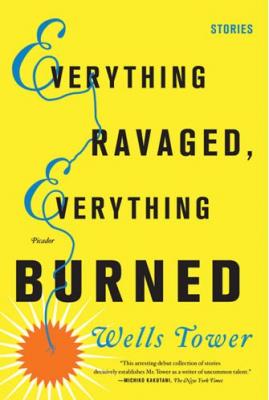
[READ: September 30, 2011] Everything Ravaged, Everything Burned

After talking about Wells Tower for a while and reading all of his uncollected stories and nonfiction, I finally got around to reading his short story collection.  And I think I have an interesting perspective on the book because at least two of the stories were totally reworked from their original release.  Not simply updating a thing or two, but totally revamped.  In my experience, aside from the David Foster Wallace essays that were truncated in their original form, this is the only book I know where the stories inside were totally rewritten for the compilation.

There are nine stories in the collection.  And I have to say as an overview to this book, I can’t get over how much I enjoyed them.  I mean, I knew I liked Tower from what I had read before, but I didn’t expect to enjoy this book quite so much because Tower writes a very manly kind of story.  He usually writes about tough guys and men who have a hard time interacting with their fathers and other situations that are out of my ken.  But Tower upends many conventions in his stories and his prose is tight and succinct and his stories are very quick to read and really enjoyable. (more…)

Read Full Post »

SOUNDTRACK: RUSH-“Caravan” (2010).

I was watching a great, lengthy interview with Rush on CNN.  At the end of the interview they mentioned that Rush had released two new songs (somewhat unheard of for the band to release a “single”).  I had some extra download cash from Amazon, and was even able to get the “booklet” yeeha.  The song is also available on YouTube, if you want to check it out.

When a song throws you a curve, it’s really only a curve the first time you listen to it.  And boy, “Caravan” has crazy curves in it.  In fact, musically, “Caravan” is easily my favorite Rush song in years.

It opens with some faint chords and sound effects and then kicks in with a loud riff, the likes of which Rush has specialized in lately–heavy, heavy, nasty guitars.  The bass is insane throughout with some breakneck stuff, and then at the 1:30 mark, the bass slides and the song drops out into a delicate, gorgeous guitar piece; it surprised the heck out of me.  It’s brief and effective and sets the stage for the next heavy riff.

The beautiful quiet bit returns and is then followed by another twist: a mildly funky bass solo (which hasn’t featured prominently on the last few albums) which leads into a really cool instrumental mid section, that’s almost like a self-contained song.  All of this leads to one of Alex’s insane solos.  It’s noisy and crazy and wonderful.

I’m very excited about this new album.

[READ: October 10, 2010] “The Wide Sea”

Tony Earley is the next writer in the 1999 New Yorker 20 Under 4o issue.

After several funny, clever and witty stories this rather simple story came as a bit of a welcomed respite.

This is a very straightforward story about Jim and his Uncle Al. They live in Aliceville (which, I had to look up, is in Alabama).  Jim takes many trips with Uncle Al “to see a man about a dog.”

This particular trip is Uncle Al’s chance to buy Belgian horses (Uncle Al and Uncle Zeno currently use mules on their farm).  They travel to South Carolina (which, looking on the map is quite far–over 550 miles!). (more…)

Read Full Post »

SOUNDTRACK: FUGAZI-13 Songs (1990).

I was so blown away by that first Fugazi disc that I immediately ran out and got this collection of their first two EPs.
The strange thing to me is that even though I enjoy the disc, nothing on it really stands out as all that memorable.  I feel like Repeater was such a strong release that these earlier tracks pale somewhat.

I’ve listened to this disc a number of times over the last few days and nothing really stands up and grabs me like Repeater still does.

I wound up buying two more Fugazi discs after this, but I’m pretty sure the reason I stopped buying their music was from this same feeling: the songs were all good, rocking, indie music, but there was nothing terribly memorable about them.

[READ: April 15, 2010] Stephen Fry in America

I first heard about this book when Stephen Fry appeared on The Late Late Show.  This book was very casually plugged as Fry’s attempt to visit every State in the U.S.  It turns out that this book is the companion piece to a six part BBC TV series of the same title (which I have not seen).  Although the TV series makes the existence of this document much more understandable.  Because although everyone wants to travel to every state in the union, the only way it would ever be accomplished in the fashion is for a TV show (even a book wouldn’t get quite this treatment if there were no TV show).

Stephen Fry was almost born in America (in New Jersey, in fact, where he believes he would have been Steve, rather than Stephen).  And he has always felt a connection to the States.  So, Stephen Fry, (in my head the quintessential Brit) brings a film crew and his classic British Big Black Taxi to see all of the States.  He begins in Maine and travels in an interesting manner, zig-zagging across the country.   He tends to visit the places/events/sites that each state is known for.  And, like any good TV show, he participates in the activities (he lobsters, he rides horses, his deals blackjack) and makes a tit of himself. (more…)

Read Full Post »

SOUNDTRACK: THE WAFFLE HOUSE Jukebox, Williamsburg, Va (2010).
My family doesn’t normal eat in chain restaurants.  We’d much rather buy local.  So, even if TGIF is good, we don’t know that.  And we pretty much never eat anywhere that has a drive through.  It’s a silly principle, but we have so few principles, that we can usually stick to it.

The big exception comes when we travel!  Especially to the south.  Because there is nothing as exciting as the Waffle House or the Sonic logo.  (I want to do Hardee’s but the Dead Milkmen have spoilt it for me).  And, mmm, sweet tea!

Anyhow, we were enjoying the awesome Pecan Waffles at a Waffle House in Virginia and the quiet jukebox suddenly shouted Turn It Up!  And proceeded to play some kind of honky tonk song.  We were startled.  But it did add some ambience to the place.

I’ve no idea who the singer was or what song it was, and I’m not about to track it down.  But what started off as a pretty obvious twangy honky tonking song ended up being quiet enjoyable.  The guitars were pretty rocking, there was a wild solo at the end, and then the song was over.

It wasn’t quite as enjoyable as the biscuits and gravy, but it was fine nonetheless.  Although the sweet tea was a little too sweet.

[READ: April 17, 2010] “Ten Stories”

Since I’ve been on vacation, I thought I’d come back with a simple, easy story.  This turned out to be ten stories, all of about 3 pages.  And, even though Williams recently won the Pushcart Prize (for a different story), I really got nothing from this collection at all. (more…)

Read Full Post »

SOUNDTRACK: MONSTER MAGNET-God Says No (2001).

It’s not often I have a disc with the same name as a book.  But lo, here they are.  I’ve no idea if the album inspired Hannaham at all (or if he even knows of it) although the title track song does rather work well with the book, with lines like:

You won’t get caught if you don’t get queer/And you’ll be ready for a new frontier  You try and live And God says no.

I had loved Monster Magnet’s Powertrip quite a lot.  So, I was more than willing to get this follow up.  I’m a little disappointed in the disc overall, but I’m not entirely sure why.  It’s not quite a sharp as Powertrip, but it’s also not quite a trippy as their earlier stoner rock releases.

Having said that, there’s some great tracks here.  It opens very prominently with “Melt” and the phenomenal heavy rocker “Heads Explode” which features delightfully obscure lyrics like “I am a pillar of salt.  You’ll never be worse than me.”  And then comes, “Medicine 2001” another fast, chunky rocker.

There’s also some other way-out (for Monster Magnet) tracks, like the bluesy slide guitar sleaze of “Gravity Well.”

I think it’s the tracks at the end that kind of drag the disc a little bit “Queen of You” is an interesting slow track, but at nearly 7 minutes and coupled with the 7 minute “Cry,” it’s a bit too much all at once.  The final track, “Take It” is a weird, weird (for Monster Magnet) keyboard and drum machine track. It’s very mellow (and sounds like early Depeche Mode), and works as a weird experiment.  The actual final track is a bonus track, “Silver Future” which rocks once again.

I’m pleased that Monster Magnet experiments so much, but it feels like a full disc of MM songs with an extra EP of experiments tacked on.  I’m not sure what they could have done differently, but for some reason the disc falls a little short.

[READ: March 18, 2010] God Says No

This is a very simple tale of an overweight black man struggling with life in the 1990s.  The twist on the story is that he is not struggling because of his race or his size.  He is struggling because he is a good Christian man who is, without question, homosexual.

The book is written in first person and as such it reads like a memoir (although the main character has a different name than the author).  You can’t help but wonder how much of this book is true (although really it doesn’t make any difference), especially when one of  the characters dies.  It feels like tribute to an actual person.

The book opens with Gary Gray living in a dorm at a Christian college.  He is completely obsessed with his roommate, a hunky white guy who walks around in his boxers.  The roommate is clearly not interested in him, in fact he goes so far as to say he is repulsed by Gary (for being fat and black, in addition to anything else he may find flaw with). (more…)

Read Full Post »

SOUNDTRACK: BLUE ÖYSTER CULT-compilations and live releases (1978-2010).

For a band that had basically two hits (“Don’t Fear the Reaper” and “Burnin’ for You”) and maybe a half a dozen other songs that people might have heard of, BOC has an astonishing number of “greatest hits” collections.

Starting in 1987 we got Career of Evil: The Metal Years (1987), Don’t Fear the Reaper (1989), On Flame with Rock n’ Roll (1990), Cult Classic (which is actually the band re-recording their old tracks (!)) (1994), and the two cd collection Workshop of the Telescopes (1995).  There’s even Singles Collection, (2005) which is a collection of their European singles & Bsides.

This doesn’t include any of the “budget price” collections: E.T.I. Revisited, Tattoo Vampire, Super Hits, Then and Now, The Essential, Are You Ready To Rock?, Shooting Shark, Best of, and the 2010 release: Playlist: The Very Best of).

The lesson is that you evidently won’t lose money making a BOC collection.

I don’t know that any of these collections are any better than the others.

The 2 CD one is for completists, but for the most part you’re going to get the same basic tracks on all of them.

And, although none of them have “Monsters” for the average person looking for some BOC, any disc is a good one.

Regardless of the number of hits they had, BOC was tremendous live.  And, as a result, there have also been a ton of live records released.  Initially the band (like Rush) released a live album after every three studio albums. On Your Feet or On Your Knees (1975) Some Enchanted Evening (1978) and Extraterrestrial Live (1982) were the “real releases.”

Then, in 1994 we got Live 1976 as both CD and DVD (which spares us nothing, including Eric Bloom’s lengthy harangue about the unfairness of…the speed limit).  It’s the most raw and unpolished on live sets.  2002 saw the release of A Long Day’s Night, a recording of a 2002 concert (also on DVD) which had Eric Bloom, Buck Dharma an Allan Lanier reunited.

They also have a number of might-be real live releases (fans debate the legitimacy of many of these).  Picking a concert disc is tough if only because it depends on the era you like.  ETLive is regarded as the best “real” live disc, although the reissued double disc set of Some Enchanted Evening is hard to pass up.  Likewise, the 2002 recording is a good overview of their career, and includes some of their more recent work.

If you consider live albums best of’s (which many people do) I think it’s far to say that BOC has more best of’s than original discs.  Fascinating.  Many BOC fans believe that if they buy all the best of discs, it will convince Columbia to finally reissue the rest of the original discs (and there are a number of worthy contenders!) in deluxe packages.  I don’t know if it will work, but I applaud the effort.

[READ: October 2009-February 2010] State By State

This is a big book. And, since it’s a collection essays, it’s not really the kind of big book that you read straight through.  It’s a perfect dip in book.  And that’s why it took me so long to get through.

I would love to spend a huge amount of time devoting a post to each essay in the book.  But, well, there’s 51 (including D.C.) and quite a few of them I read so long ago I couldn’t say anything meaningful about.  But I will summarize or at least give a sentence about each essay, because they’re all so different.

I’ll also say that I read the Introduction and Preface last (which may have been a mistake, but whatever).  The Preface reveals that what I took to be a flaw in the book was actually intentional.  But let me back up and set up the book better.

The catalyst for the book is the WPA American Guide Series and sort of Steinbeck’s Travels with Charley.  The WPA Guides were written in the 1930s as part of the Works Progress Administration.  48 guide books were written, one for each state.  Some famous writers wrote the books, but they were ultimately edited (and many say watered down) by a committee.  I haven’t read any of them, but am quite interested in them (and am looking to get the New Jersey one).  Each guide was multiple hundreds of pages (the New Jersey one is over 800).

State By State is written in the spirit of that series, except the whole book is 500 pages (which is about 10 pages per state, give or take).  And, once again, famous writers were asked to contribute (no committee edited this book, though).  I’ve included the entire list of authors at the end of the post, for quick access.

So I started the book with New Jersey, of course.  I didn’t realize who Anthony Bourdain was until I looked him up in the contributor’s list (I’m sure he is thrilled to hear that).  And his contribution was simultaneously exciting and disappointing,.  Exciting because he and I had quite similar upbringings: he grew up in North Jersey (although in the wealitheir county next to mine) and had similar (although, again, more wealthy) experiences. The disappointing thing for me was that Bourdain fled the state  for New York City (and, as I now know, untold wealth and fame (except by me))  I felt that his fleeing the state, while something many people aspire to, is not really representative of the residents of the state as a whole.

And that dissatisfaction is what I thought of as the flaw of the book (until I read the Preface).  In the Preface, Matt Weiland explains that they asked all different authors to write about states.  They asked some natives, they asked some moved-ins, they asked some temporary residents and they asked a couple of people to go to a state for the first time.  In reality, this decision makes for a very diverse and highly entertaining reading.  In my idealized world, I feel like it’s disingenuous to have people who just stop in to give their impression of an area.  But hey, that’s not the kind of book they wanted to compile, and I did enjoy what they gave us, so idealism be damned.

For most of the book, whenever I read an essay by someone who wasn’t a native or a resident of a state, I assumed that there weren’t any famous writers from that state.  I’ve no idea if that played into anything or not.  From what I gather, they had a list of authors, and a list of states (I was delighted to read that three people wanted to write about New Jersey-if the other two writers ever decided to put 1,000 words  to paper, I’d love to read them (hey editors, how about State by State Bonus Features online, including any extra essays that people may have wanted to write).

From New Jersey, I proceeded alphabetically.  And, I have to say that I’m a little glad I did.  I say this because the first few states in the book come across as rather negative and kind of unpleasant.  Alabama (written by George Packer) comes across as downtrodden, like a place you’d really have to love to live there.  Even Alaska, which ended up being a very cool story, felt like a veil of oppression resided over the state (or at  least the part of the state that Paul Greenberg wrote bout.)  But what I liked about this essay and the book in general was that the authors often focused on unexpected or little known aspects of each state.  So the Alaska essay focused on Native fisherman and the salmon industry.  Obviously it doesn’t do justice to the rest of that enormous state,  but that’s not what the book is about.

The book is meant to be a personal account of the author’s experiences in the state. (more…)

Read Full Post »

« Newer Posts - Older Posts »