Feeds:
Posts
Comments

Archive for the ‘Short Story’ Category

SOUNDTRACK: CARLY RAE JEPSEN-“Call Me Maybe” (acoustic) (2012).

I had never heard of this song until about three days ago.  I’m led to believe that this song is massive, and yet somehow I missed it (which is fine).  I first read about it  as “the song that Justin Bieber made famous.”  So I listened to it and I hated the overproduction of it.  Then one of the folks at NPR picked it as her favorite song of the year (the discussion was split 50/50 between love and hate).  And I had to agree that after another listen, it was really catchy.  But I still hated the overproduction.

One of the people in the discussion said that an acoustic version would be great.  So I found one (there are actually a ton online…this song really must be huge).  And indeed, the acoustic version is pretty nice.  It is insanely catchy (and remarkably sweet).   And her voice is very intriguing–I think her voice really makes the song.  Absent all of that obnoxious production, this is an enjoyable pop song (although, the keyboards are pretty awful still on this version–loose the keys, Carly).

One acoustic version (that’s barely 2 minutes long) is available here.

[READ: June 13, 2012] “My Internet”

I was poisoned against the story because I read just one line of Karen’s review: “Let’s face it – without Jonathan Lethem’s name on this, it’d never get out of a slushpile.”  That was a pretty big hurdle for this story.  And it never cleared it.   I’m going to have to agree with Karen—possibly not as harshly, but with a general….huh?  I have a hard time believing that this found a publisher.

The idea is kind of interesting:  there is a another internet tucked away inside the internet we all know.  There are only 100 people who are on it, and they were all sent special invitations to join.  There are only two rules on this Internet—no money and no animals.  But for some reason (explained by the end), the narrator is unhappy here, and he wants to create his own internet within this other internet (which is within the global internet).

And that’s pretty much it. (more…)

Read Full Post »

SOUNDTRACK: PHISH-The Man Who Stepped Into Yesterday (1987).

This record was created by Trey Anastasio as his senior project at Goddard College.  The thesis included an essay piece and this collection of songs (recorded by Phish) relating this epic tale from the band’s fictional land of Gamehendge.  It was never officially released, but since Phish is so free with the tape trading, it is pretty widely available online (heck, even Wikipedia has a link to the Lossless SHN download of the album).

This release is legendary in the band’s history because they have played all of the songs from this album many times in their live shows (some much more than others, of course).  And while they have more or less played the Gamehendge saga a few times in concert, I’d always wondered what the original story was all about (many songs have since been added to the saga as it grew larger).

So here in all its tape-hissy glory is the original.  My first thought is that I guess it was hard to get good sound recording equipment in 1987 (or else this is a multi-generational copy—the “white cassette” from a year earlier sounds better).  And there seems to be a few flubs in the narration (which could be from copying).  I actually surprised he didn’t use a more authoritarian voice for the narration.

For fans, this is fun to hear because of that narration.  Live, the narration varies all the time, not always explaining what is going on the same way (some live narrations are far better and much more interesting).  But here you get it straight from the source.  The narration is accompanied by rather pretty instrumental music (which varies depending on who he is speaking about).  But for those of us who know all of these songs, the biggest surprise is finding out that “AC/DC Bag,” “The Sloth,” and “Possum” were part of the story (or maybe the biggest surprise is learning from the narration what the hell an AC/DC bag is (a robotic, mechanized hangman, of course).

The story is pretty interesting (Wilson and the Helping Friendly Book and all that), although by the end it loses itself a bit.  And I’m not really sure that “The Sloth” and “Possum” fit into the story at all.   But hey, he was a college senior when he wrote it, one can forgive a little sophomoric nonsense, right?

[READ: June 11, 2012] “The Republic of Empathy”

This is the first fiction I’ve read of the sci-fi issue.  I’m not sure if it’s supposed to be sci-fi, because it’s not really, at least not in terms of genre (I’d say sci-fi fans would object to the designation of sci-fi for this).  But it is futuristic and neat.  I especially enjoyed the humor and the construction of the story—Lipsyte is usually good for both of these.

It begins with William.  Williams is married to Peg.  Peg wants to have a second child as a gift for their first child (who has just grown out of the new baby smell).  William thinks this is crazy, but Peg says it’s a dealbreaker.  The next day William, who works for a flip-flop company, smokes a joint with an ex-cop friend, Gregory on the roof of their building.  On the roof across from them, they see two men fighting. And then one falls of the roof—splat.

Gregory says he’s seen this before but that William will be traumatized.  And he is in his dreams, but he’s even more traumatized when he dreams that his wife is pregnant and they already have two kids.  Oh, and that the neighbors, the Lockhorns, masturbate each other in the living room with the windows open.

Section two is from Danny’s point of view.  Danny is Gregory’s son.  Every few weeks Gregory is dating a new, younger lady.  This one is only a few years older than Danny.  It’s gross (and Danny feels like a bad YA narrator as he relates the story).  This is all before (I assume) Gregory comes out of the closet.  Because William knows that he’s gay in the above scene. (more…)

Read Full Post »

SOUNDTRACK: TARKIO-three song demo (from Omnibus) 1997.

These three songs are part of a demo released in 1997.  I actually assumed that Omnibus would have collected all of Tarkio’s releases (how many more can there be?), but I learned that “omnibus” means “a book containing reprints of a number of works.”  So there ya go.

Nearly every review of Omnibus complains about the size of the release.  Some complain that the songs are too long (which is something else entirely), but many seem to suggest that 27 songs is too many for this collection.  I don’t quite understand this attitude, because if it were the collected works, there would be no reason to complain.  As such, I suspect I am the only person who wishes there was a little bit more–like why not the other two songs from this demo?

And demo is a rather unfair name for this, because it sounds wonderful.  (I suspect a demo from 1997 could be recorded with much better equipment than a demo from say 1984).  And these three songs are really something.  I suppose also, listening to these songs in this manner–not as a two disc set but as an original demo of three songs, makes them seem like maybe there isn’t too much of a good thing.

“This Rollercoaster Ride” opens with an interesting pseudo Middle Eastern violin.  But it quickly settles down into a very catchy rock/folk song.  It sounds very Decemberists, and it’s extremely catchy.  “Following Camden Down” is a beautiful song (the reminds me of The Replacements’ “Skyway”).  Meloy’s voice sounds subdued and not as immediately notable as he normally does.  It’s a wonderful little song.  “Slow Down” is a bouncy folk number (with dominant violin).  It’s got a rocky alt feel, although it still reads as traditional folk.

True, none of these songs reach the delirious heights of the best Decemberists songs, but they’re a nice step towards the kind of music Meloy and friends would put out next.

[READ: June 5, 2012] “Take Me Home”

This issue of the New Yorker is devoted to Science Fiction (see the cover).   In addition to five stories (which I assume are science-fiction-y) we also get five (more or less) one-page pieces from masters of the genre (genre being a dirty word, we’ll find).  When I first saw the names of these writers, I thought they were each creating a cool one-page story.  So I was a little disappointed to realize that these are “personal histories” with sci-fi.  But I shouldn’t have been disappointed, because even though these are short, they are really impactful–and come on, they’re classic writers.

I’m surprised by the fact that I haven’t read more Ray Bradbury.  I know I’ve read Fahrenheit 451 and I’m sure I’ve read some of his stories, but I haven’t even scratched the surface–he has written so much!  Indeed, I was surprised to hear that he was still alive (in fairness, he is 92).

This piece begins with Bradbury’s recollections of his introduction to sci-fi with Buck Rogers (1928) and John Carter of Mars (not Disney’s creation, but a series of stories by Edgar Rice Burroughs). (more…)

Read Full Post »

SOUNDTRACK: TARKIO-Sea Songs for Landlocked Sailors (1999).

Tarkio was Colin Meloy’s band before he formed the Decemberists.  My first reaction to the name Tarkio was that it sounded like Tarkus, the album by Emerson lake and Palmer.  And, since I heard about it during The Decemberists’ The Crane Wife album, which is proggy, I assumed Tarkio would be a prog rock band.  Little did I know that the real name of Tarkio comes from a train stop in Montana and that the real (at least to me) forerunner for this album is Tarkio by folkies Brewer & Shipley which featured the song “One Toke Over the Line.”

All of Tarkio’s music was collected in 1995 on the album OmnibusOmnibus contains their album I Guess I was Hoping for Something More, this EP, and various other unreleased tracks.

This EP actually came out after Tarkio’s debut album (when I decided to write this first I assumed it came first).  It seems especially surprising to me because the opening song sounds very different from anything on the LP.  Not worse, just like a direction they chose not to go in.  His voice is kind of processed and sounds, yes, funny.  Although I have to admit I rather like it—it’s much more alt sounding than the rest of the disc, which has a more folkie charm.  This disc was self released.  And I cannot believe that there are no images of it online anywhere.  Decemberists fans are crazy intense and no one has a copy of this CD?  Weird.

So as I said, the first song, “Devil’s Elbow” is full of vibrato and sounds like an alt rock song circa the mid 90s.  The solo sounds like it could be done by Robert Smith.  “Weight of the World” sounds more alt-folkie, big guitars and whatnot.  And the chorus sounds very much like a Decemberists song.  And check out these lyrics: “we hear the homeless philharmonic singing all the Charlies Angels to their heavenly convergence in the sky.” Pure Colin.

If you had any doubt that this was Colin Meloy’s band (which you wouldn’t, but if you did), this song title will tell you all you need: “My Mother Was a Chinese Trapeze Artist.”  Lyrically it is pure Meloy, although musically it’s more spare.  Decemberists fans will recognize this song from Castaways and Cutouts (that version is over a minute longer).  The Tarkio version has louder guitars as the song progresses, although the Decemberists’ version has more interesting instrumentation.  “Mountains of Mourne,” is a sad ballad played mostly on banjo.  “Never Will Marry” is a slow dirgelike song–very traditionally folk-sounding.

I really don’t know much about why Tarkio broke up.  This EP shows a band experimenting with their more ballad-y side.  Probably not destined to be a big seller, it works as a nice companion to their debut.

[READ: May 26, 2012] “The Region of Unlikeness”

This was the last short story I found by Galchen and I was really excited to read it.  It starts off a little oddly—it’s one of those stories where there are two characters spoken about and they are inseparable and it’s not always clear which is which.  Especially when the opening is as peculiar as this, “Ilan used to call Jacob ‘my cousin from Outer Swabia’”  Originally the narrator thinks it a joke, but she later decides it’s a sort of a clue.  She met the two of them by chance.  They were talking loudly and boisterously about Wuthering Heights in a coffee shop.  And that intrigued her to no end.  So she chimed in, and the three of them ended up talking for a while.  The crazy thing about them was that Jacob had a daughter. He seemed so carefree and like he had no responsibilities.   She never met the daughter, he barely mentioned his family, and yet she was always there in the back of his mind.

And she fell hard for Ilan—he seemed antiquated and resourceful like “fancy coffee and bright-colored smutty flyers.”  Of course all of her friends found the two of them arrogant and pathetic, but the narrator could not be drawn away from them.  Although really she was drawn to Ilan, who was generous with praise, while Jacob was kind of sulky and dark and was “jealous of Ilan’s easy pleasures.”  The narrator felt Jacob was pedantic.  All of this makes it surprising that the bulk of the story is about the narrator and Jacob.

And then she stopped seeing them.  Literally, they were nowhere to be found. (more…)

Read Full Post »

SOUNDTRACK: PHISH-Live Bait Vol 6 (2011).

Yesterday was my coworker Jay’s last day here, so I’m writing about this Phish bootleg set in his honor.

So these Live Bootleg Series are fun in that they’re a free sample of live songs–warts and all–from various shows in the band’s touring history.  These shows are primarily 1993-1996, with a 1988 song and two from 2003 thrown in for good measure.  The opening of “The Curtain” into “Tweezer” is from Red Rocks.  In fact, the first 8 songs are from Red Rocks at different times in their career (I like that they meld the shows together like this).  From 1996, “The Curtain” sounds amazing, so it’s really surprising how badly Trey messes up the opening guitar riff of “Tweezer.”  It’s so bad I would have thought he might have considered starting over!  But after an ugly beginning the band settles in for a 17 minute version.  “Split Open and Melt” also comes 1994.  The band sounds great on this song.  This is one of my favorite jam sections–it goes in a really weird direction.  And, there’s great bass and a guitar solo.  “It’s Ice” and “The Wedge” are from 1993 (touring their 4th official release!).  They sound really on for these songs.

Next comes a trio of songs from 1995 that always go together: “Mike’s Song” (everybody’s favorite), “I am Hydrogen” and “Weekapaug Groove.”  The middle of the “Mike’s Song” jam gets a little weird (some of their slow sections can sound very strange especially if people overhear them out of context), but they bring it back very nicely.

“The MOMA Dance’ and “Limb by Limb” are from 2003.  And they are fantastic.  “McGrupp and the Watchful Hosemasters” actually comes from the Colorado ’88 CD, but it’s a fun addition within this set.  It certainly sounds older than the others, but not radically out of place.  It’s followed by “Ghost” from 1997.   “David Bowie” has a lot of fun in the intro–the begin playing several different songs, including “Mike’s Song” and several other intros before finally settling into “DB.”  The jam also gets pretty dark, but I love at the end when the conventional shredding solo keeps getting interrupted by a strange minor key riff.  Similarly, “Wilson” takes a really long time to get going, including a nice little nod to “The Simpsons” in the intro.  And then there’s a really long pause before the “blap boom” part comes in.  It’s a fun version of the song.  The disc ends with a wild version of “Run Like an Antelope” from 1993.

It’s a pretty great set, and not bad for free.  You can download it here.

[READ: May 25, 2012] “The Bank Robbery”

I’ve never read Richard Ford.  I have a copy of Independence Day but I never read it. I hear it’s great.

So, here’s this excerpt from Ford’ new novel called Canada.  As has been said before, you can’t really write a review of  an excerpt.  However, a excerpt can get you excited about a book.

And that’s what this did.  It doesn’t make me want to pre-order Canada or anything, indeed, I’m not even sure how this excerpt can relate to the rest of the story as it’s pretty self-contained, but I loved the way it was written and the tone and pacing that Ford employs.

This excerpt opens with the narrator recollecting what he knows about the bank robbery.  The one that his parents committed.  His parents are pretty normal people, except for one thing—they actually thought they could pull of a bank robbery.  I love this section:

Conceivably many of us think of robbing a bank the same way we lie in bed at night and delicately plot to murder our lifelong enemy….  [details excised].  After which we conclude that though it’s satisfying to think we could murder our enemy in ambush…only a deranged person would carry out such a plan.  That is because the world is set against such acts…At which point we forget about our plan and go to sleep….  But for my parents this kind of thinking didn’t occur. (more…)

Read Full Post »

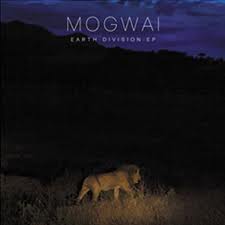
SOUNDTRACK: MOGWAI-Earth Divison EP (2012).

Oh wait, this isn’t the Mogwai EP.  What CD did I put in?

Holy crap, it IS the Mogwai CD.  And it opens with a beautiful piano and violin ballad called “Get to France.”  While it’s true that Mogwai has always been about melody (under the noise), I never expected this.  It sounds like a gorgeous soundtrack to a sad film.  It’s followed by “Hound of Winter” a gentle ballad of acoustic guitars and strings.  I know that Mogwai has a softer side, it’s just surprising to hear it all at once like this!

“Drunk and Crazy” is more like it.  It opens with a wall of guitar noise which…vanishes after about two minutes into a gentle, dark string section (strings are by Luke Sutherland of Bows and Long Fin Kille).  And while the distortion never entirely goes away (it’s evident in the piano), it is certainly pushed to the background until about 90 seconds later when it begins to overtake the track again.  It’s nowhere near as dynamic as their best stuff, but it really showcases what Mogwai can do in just over 5 minutes.

The EP ends with “Does This Always Happen?”  While it reintroduces electric guitars, it’s still a mellow song–a pretty electric guitar riff repeated while piano stabs and chords flesh out the tune and strings make it a fuller song.

None of  these songs will become “classics” (although Does This Always happen?” sounds the most like  a Mogwai song).  But it’s always great to hear them expand what they can do.   And these EPs give them a chance to show off some new styles.

To learn more about these tracks, read Stuart’s explanation of them at The Guardian.

[READ: May 25, 2012] “The Proxy Marriage”

I love Maile Meloy and I was crazy excited when I saw that she had a story in this issue.

Meloy writes stories that seem simple—they avoid a lot of the trappings of contemporary stories, indeed, they often feel like they are set in the past, even if, like in this one, they are very current.  Part of that is setting.  She tends to write about people and family interactions, which don’t require a time frame.  She also tends to set her stories in unlikely places—Montana, for instance, where not too many stories are set.  Of course, this one is set in Montana for a good reason.  It is the only state that allows double proxy marriage.  Which is what?  In a proxy marriage, if your beloved can’t make it, you can have a stand-in for him or her do the speaking and signing.  In a double proxy marriage, neither person is present but they agree to let proxies serve for them.  Why on earth would you do this?  Well, this is common in military cases, where one member is serving overseas and the other doesn’t live in Montana—this allows the non-military person to get all of the military benefits that a spouse is entitled to.  Since Montana allows this, and since this story is set soon after the 9/11/01 attacks, it all jibes.

But this story is really about unrequited love.  And I have to say, now that I’m an adult, that unrequited love sucks.  I mean, true it sucks when you’re in it too, but I hate stories that romanticize the idea that you should hold fast to the belief that this person who doesn’t  think about you that way will somehow come around. It happens a lot in stories (and always swells the heart) but when have you ever heard of it happening in real life?  Most of the time the person isn’t worth it , but realistically, once you have left school (it always happens in school) that person has found someone new and that’s the end of it.

This story’s unrequited lover is William, a shy awkward boy who plays the piano.  The girl he pines for is Bridey Taylor, with golden curls and dreams of being an actress.  William never asked her out.  Bridey was popular and other boys asked her out—and William suffered through every one.   But they were friendly—she sang while he played piano, and he helped her with school work.   Then the 9/11 attacks happened.  And this is where the story gets interesting.  Because although neither of  the main characters are not directly involved in the attacks, when the requests start coming in for proxy marriage, Bridey’s father, who was willing to perform them, asked William and Bridey to be the proxies. (more…)

Read Full Post »

SOUNDTRACK: SISKIYOU-Keep Away the Dead [CST083] (2011).

I really enjoyed Siskiyou’s first album. This album updates the sound and makes it a bit bigger.  And yet somehow the album still sounds fragile.

The album is full of songs that are catchy, but not really easy on the ear.

The first song reminds me of Arcade Fire.  Something about the ringing guitar and crescendos.  But the recording feels more like a demo, much more intimate that Arcade Fire.  “Where Does That Leave Me” is an even more spare number, just vocals and guitar although it slowly builds.  “Twigs and Stones” is the first song that sounds like the bulk of the album—where Colin Huebert’s vocals really come to the fore.  His vocal style is loud and verging on the whiny (again, like Arcade Fire).  This song also has a lot of other instruments that percolate to the top—reminding me of older Mercury Rev.

“Revolution Blues” is the standout track for me, it’s incredibly catchy (and fun to try to sing in his eccentric voice).  The accordion and the minor key intensity is really powerful.  I guess it’s a shame that it was written by Neil Young, then (although the Siskiyou version is much better).  “Dear Old Friend” is a more country sound (which for me is shorthand for slide guitars), but it keeps the same style and feel as the other songs.  “Fiery Death” is the first song where percussion makes itself known very loudly.  It’s a cool introduction of loud thumping.  “Sing Me to Sleep” is a 2 minute lullaby and “Dead Right Now” is a 2 minute coda that ends the album nicely.

The disc is short (about 30 minutes) but a lot of emotion and craft is packed into it.  It’s really enjoyable.

[READ: May 24, 2012] “Sweet Dreams”

I’m always disconcerted when a story is in English but is set in another country.  Well, that’s not exactly right.  When it seems like it’s set in another country because the author is from that other country and he or she is writing about that other country without specifying it (usually because it is translated).  It’s very Amerocentric, but perhaps everyone thinks a story is set in their town unless told otherwise.  So I didn’t realize that this story was originally written in German (it was translated by Michael Hoffman), but it felt like it was taking place in Europe.  I actually guessed France, until later on it was revealed to be Switzerland.

There’s something cool about stories that are written elsewhere, especially if you don’t know the place well, it allows for almost anything to happen.  A couple riding a bus in Europe doesn’t mean the same thing as a couple riding a bus in, say Tallahassee.  But having set up that distinction, this story is about love.  And love is universal.

The story is written from the point of view of Lara, a shy bank worker.  She has been dating Simon for several months and they have recently moved in together.  They should be in the first bloom of love—on their own for the first  time (they never felt comfortable fooling around at their parents’ houses)—but her shyness in particular won’t loosen.  She doesn’t like him to see her naked, and they are very reserved in their love-making.  And from the start Stamm places a dark tone over the story.  The get a place in the town that he likes but it’s pretty run down.  He hadn’t brought much to the apartment, and he seems critical of some of her purchases.  He even comments that “forever is a long time” when she says that the towels she bought will last forever.  And then on the bus, a man, dressed in a long black coat stares at Lara over and over.  It may be innocent, but it’s still disconcerting.

When they get home, she takes a bath (she won’t let him in the bathroom) and asks him to go to the restaurant downstairs to buy a bottle of wine.  She finishes the bath and he’s not back yet, so she reads the paper.  Which is full of more grim news.  When she reads about a dead body found in the lake nearby and since we know she doesn’t feel comfortable about the restaurant downstairs, we know something bad has happened. (more…)

Read Full Post »

SOUNDTRACK: COLIN STETSON-Those Who Didn’t Run (10″ vinyl) [CST084] (2011).

This 10″ vinyl contains two more of Stetson’s amazing bass saxophone solo monstrosities.  Each is over ten minutes.  And while ten minutes can be a bit much to take for one of these songs, the music is so powerful and so jaw dropping to listen to that, frankly he could play for days (and maybe he actually could) and I’d enjoy it.

The amusing thing about this 10″ is that when I played it on my record player, I didn’t know what speed to play it at.  And, since the whole platter is full of bass saxophone blasts, and all of the percussion is clacking from the saxophone, I honestly couldn’t tell what speed it was supposed  to be played at.  It wasn’t like a song with vocals or anything.  And the first song I played was the B Side “The end of your suffering ” which is played on a low alto sax–meaning it’s higher than his usual stuff, so the 33RPM actually sounded like it might be right!

After knowing the proper sound (you can stream the music here), it’s funny to hear the slow version–which just sounds meaner and angrier (especially around the 6 minuite mark of “Those Who Didn’t Run,” when he’s really hitting some crazy notes.  But I was so intrigued by the slow version that I went back and listened to both sides at the slow speed, just for fun.  In the dark.  By myself.

[READ:May 22, 2012] “About the Typefaces Not Used in This Edition”

This seemed like a perfect piece to put next to Rivka Galchen’s piece about the future of paper.  This is listed as a short story, and in a way it is, although not in any conventional sense.  This was published in 2002, long before Safran Foer’s book of cut up text, Tree of Codes was even conceived, so it’s obvious that he has been interested in type, in the way words play off of each other, in the way words appear on the page for quite some time.

This short piece (two pages) discusses the eight fonts that the editor chose not to use for publishing “this book.”  I don’t know if this references a specific book or not, although he does include character names and broad concepts from “the book”: Henry, Elena, an unsafe wooden bridge, the last word is “free,” and many times the words, “I love you.”

The typefaces are: (more…)

Read Full Post »

SOUNDTRACK: THE FLAMING LIPS AND HEADY FWENDS Walkthrough (2012).

This is not a review of the album, because I haven’t listened to it all yet.  This is a link to a hyper video in which Oklahoma’s Wayne Coyne rambles on and on about the new Flaming Lips Record Store Day 2012 album.

For a lead singer and frontman, he seems strangely uncomfortable here–barely looking at the camera (unless, as the comments say, he’s stoned).   He explains all of the details of the album and who they’ve collaborated with.  He also explains about the super rare and crazy expensive ($2500.00) vinyl that will contain the collaborator’s blood mixed into the vinyl.  Ew.

There’s not much in the way of samples of the music, but with just a few clicks around you can find a bunch of the songs.

And no, I didn’t buy the $2500.00 version.  Although since I see that they are already selling for $75 on ebay, I wish I had purchased an extra copy of the regular version.

[READ: May 1, 2012] “The Future of Paper”

This Land is an Oklahoma-based publication with a lot of content online. It is inspired by Oklahoman progressive thinkers (the name comes from Woody Guthrie).  It’s a pretty neat online resource, with all kinds of good articles (and a TV show apparently).  Rivka Galchen is on the Editorial Board.

This is the final article by Rivka Galchen that I have uncovered.  I don’t really know what this is—although the fact that it was also collected in The Last American Novel: Writers on the Future of Books, helps to discern more of its intention.  When I say I don’t know what it is, I don’t mean I’m completely ignorant, what I mean is, it’s a strange little meditation to get published.

I enjoyed the opening in which the avian flu is eventually transmitted to paper cranes and then ultimately all books.  For this is how the books died. (more…)

Read Full Post »

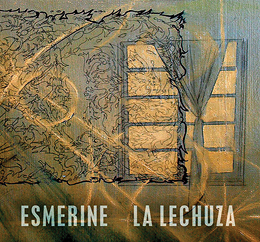
SOUNDTRACK: ESMERINE-La Lechuza [CST080] (2011).

This album is a wonderful surprise.  I had not heard of Esmerine before this CD (they have put out two previous records on a different label).  All I knew about them was that violinist Becky Foon (who is all over the Montreal scene and who is really good) was one of the founders of this band.  So I expected some epic instrumentals ala all of the Constellation Recordings bands that she has played with (Godspeed, Silver Mt Zion, etc).

I was delighted by the opening fast marimba notes of “A Dog River”.  I’m not sure if the marimba can play minor key notes, but the melody that co-founder Bruce Cawdron plays is uplifting and mesmerizing.  When Becky adds her strings, it takes on a new element–a kind of wistfulness.  Then at nearly 3/4 of the way in, some loud guitars come in to give the whole song a feeling of urgency.  And all the while it is very filmic.  It’s a wonderful opening.  “Walking Through Mist” is a much slower piece, and the marimba adds contextual pacing–they’re still not minor key or sad marimba notes, but they are not as uplifting as on the first track.  “Last Waltz” introduces a vibrato’s piano as the primary instrument.  It is at once unsettling.   It’s also the first of three songs with vocals.  The vocals work well on this song–they fit the mood perfectly–especially the wordless singing at around 4 minutes.  But I have to admit that I like the instrumentals better.  The same can be said for “Snow Day for Lhasa” (another song with vocals) which I find a little too slow to be impactful (it actually reminds me of a very slow version of Broken Social Scene’s “Lover’s Spit”).

“Trampolin” introduces a harp and some vibrant percussion.  It’s uplifting and feels like a perfect song for a theatrical dance company to perform to.  “Sprouts” is an uplifting new-agey sounding track.  By itself it might veer uncomfortably into the new age scene, but amidst the songs of the album it works very well.  “Little Streams Make Big Rivers” returns to that slower sound from earlier.  But this song is short and feels like a slow building march.  By the half way mark when the drums kick in, the song is unstoppable.  The album proper ends with “Au Crépuscule, Sans Laisse” a slow filmic song that returns the album to the quiet sound it was toying with earlier.

I mentioned Lhasa earlier.  Lhasa was a Canadian singer who had international fame (from my own experience, I know that X-Files creator Chris Carter wanted to go see her live–I know this because I was friends with his assistant and she told me the tale of trying to find tickets for this show).  I checked out her stuff but it wasn’t for me.  Anyhow, Beckie and Bruce were supposed to tour with Lhasa for her 2010 album, but sadly, she died of breast cancer (at 37, Jesus), right after the album came out.  So this album is dedicated to her.  The final song “Fish on Land” is a previously unreleased version of a Lhasa song that was made with Bruce and Beckie.  I wish I liked it more, but as I said, she’s not my thing.

I absolutely love the instrumentals on this album and I’m going to have to check out their earlier releases, too.

[READ: May 24, 2012] “Referential”

This story is like a kick to the stomach.  When you’re lying on the floor.  After you’ve thrown up.  And I mean that as very high praise indeed.

You know you’re in for trouble when the story opens: “For the third time in three years, they talked about what would be a suitable gift for her deranged son.”  We quickly learn that the woman’s son was fine until he was about twelve years old when he stopped brushing his teeth and began muttering to himself.  By then Pete had been dating the woman for about six years.

Pete and the woman had been coping with her son’s placement in the institution for over three years now.  There were so many rules they had to follow when visiting the boy–almost nothing could be brought in for fear of its being used as a weapon–even the homemade jam was taken because it was in glass.  Similarly, the woman has stopped wearing accessories, as a kind of solidarity–she would just have to remove them anyway.  She is now aging naturally and (she fears/admits) not very prettily.  An amazing slap in the face comes at the end of the first section with this amazing sentence:  “‘To me, you always look so beautiful,’ Pete no longer said.”  [Ouch!].

Pete has lost his job and is clearly unable to handle the strain of her son any longer (there’s a wonderfully painful scene where the boy asks Pete why he hasn’t come to visit lately). (more…)

Read Full Post »

« Newer Posts - Older Posts »