Feeds:
Posts
Comments

Archive for the ‘Short Story’ Category

42SOUNDTRACK: IRON MAIDEN-Iron Maiden (1980).

Steve Harris was on That Metal Show recently.  Harris is the baimssist and primary songwriter for Iron Maiden and has been since their first album in 1980.  When I was in high school Iron Maiden was my favorite band hands down.  I had all their albums, I had all their singles, all their hard to find British vinyl 12 inch singles, even a few pictures discs.  Wonder if they’re valuable?

Every album was an epic event for me–I even played “Rime of the Ancient Mariner “off of Powerslave to my English class (not telling anyone it was 13 minutes long).

And then, after Somewhere in Time, I just stopped listening to them. Almost full stop.  I did manage to get the first four albums on CD, but the break was pretty striking.  I actually didn’t know that they’d had personnel changes in the ensuing years.  I’d vaguely heard that Bruce Dickinson  left, and that others followed, but I don’t think I quite realized that they were back to their big lineup these days.

Anyhow, Harris was so earnest and cool that I had to go check out some of their new stuff. Which was okay.  I’d need more time to digest, but then I had to listen to the first albums again.

And wow I had forgotten how much the first Iron Maiden album melds punk and prog rock into a wild metal hybrid.  There’s so much rawness in the sound and Paul Di’Anno’s vocals, not to mention the speed of some of the tracks.  And yet there’s also some epic time changes and starts and stops and the elaborate multipart Phantom of the Opera….  Wow.

The opening chords of “Prowler” are brutal.  But what’s surprising is how the second song “Remember Tomorrow” is a lengthy song that has many ballad-like qualities, some very slow moody sections–although of course each chorus rages with a great heavy riff and a blistering solo.  On the first two albums Paul Di’Anno was the singer.  He had a fine voice (it was no Bruce Dickinson, but it was fine).  What’s funny is that Bruce does the screams in “Remember Tomorrow” so much better in the live version that I forgot Paul’s vocals were a little anemic here.

However, Paul sounds perfect for the rawness of “Running Free” a wonderfully propulsive song with classic Harris bass and very simple metal chugga chugga riffs.  And this has one of the first real dual guitar solos–with both players doing almost the same riff (and later Harris joining in on bass).

“Phantom of the Opera” is the band’s first attempt at an epic multi-secton kinda-prog song.  It opens with a memorable, if slightly idiosyncratic riff and some wonderfully fast guitars/bass.  There’s a great slow bit that morphs into an awesome instrumental soloing section with bass and twin guitars playing a wonderful melody.

“Transylvania” is an instrumental that is challenging but probably not one of the best metal instrumentals out there, although again when Dennis Stratton and Dave Murray play in synch solos it’s awesome.  This track segues into “Strange World” a surprisingly trippy song (with effects that seem like keyboards but which aren’t).  It’s slow in a “War Pigs” kind of way, but it doesn’t entirely break up the album, because there are other slow bits on the disc.  It is a little out of place though.

Especially when “Sanctuary” blasts forth.  True, it wasn’t originally on the album (in the UK), but man, blistering punk or what!  “Charlotte the Harlot” was always one of my favorite songs (it taught me what a harlot was after all), it’s quite proggy, with a lot of stuttered guitar work and a middle section that features some loud and complex bass.  The disc ends with the by now almost immortal “Iron Maiden.”   A great raw riff opens the song, a harmony guitar partners it and the band blasts forth.  Who even knows what the lyrics area about, the song just moves and moves–There’s even a great chaotic bass/drum break in the middle.  And listening to the guitar noises in the solos at the end.  Amazing.  It’s quite the debut.

[READ: June 7, 2013] McSweeney’s #42

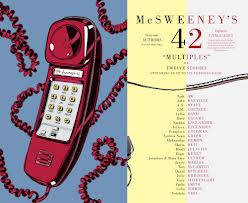
I have made it a point of (possibly misguided) pride that I have read every word in every McSweeney’s issue.  But this issue has brought that to an end.  As the title states, there are twelve stories in the book.  But there are also sixty-one authors writing in eighteen languages.  And there’s the rub.  One of my greatest (possibly misguided) shames is that I don’t speak any other languages.  Well, I studied Spanish and German, I know a few dozen words in French and I can read the Greek alphabet, but none of these would help me read any of these stories.  So, at least half of this book I didn’t read.

But that’s kind of the point.  The purpose of this book is to make a “telephone” type game out of these stories.  Stories are translated from one language to another and then re-translated back into English.  The translators were mostly writers rather than translators and while some of them knew the second language, many of them resorted to Google Translate or other resources to “read” the story.  Some people read the story once and then rewrote it entirely, other people tried to be as faithful as possible to the original.  And so what you get are twelve stories, some told three times in English.  Some versions are very similar and others are wildly divergent.

I normally write about the stories in the issues, but that seems sort of beside the point as the original stories were already published and were selected for various reasons (and we don’t even see any of the original stories).  The point here is the translation(s).  So, in a far less thorough than usual way, I’ll list the contents below. (more…)

Read Full Post »

220px-The_Invention_of_Morel_1940_Dust_JacketSOUNDTRACK: RODRIGUEZ-“Sugar Man” (1971).

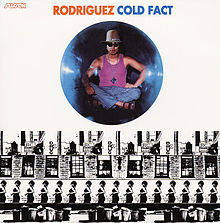
RodriguezcoldfactThis song was played a lot on WXPN, and when I first heard it I couldn’t imagine what new artist was talking about “sweet Mary Jane.”  So it turned out that this song was over 40 years old but it had been resurrected for a movie called Searching for Sugar Man, which is a documentary about Sixto Rodriguez and how he released two albums and then disappeared.

There’s something extremely catchy about this song–the loud down strums that stand out over the quieter strumming, the crazy high frequency sound that sails throughout the song and that hint of horns that gives more depth to this simple folk song.   All of these elements make this song more complex than it might have been.  In fact, the song seems like it’s going to end after about two minutes but there’s the instrumental section full of crazy sounds and electronics.

And even though it seems over after that there’s one more verse and chorus to go.  And then the song just drifts away echoing into nothingness.  It’s quite a catchy little number.

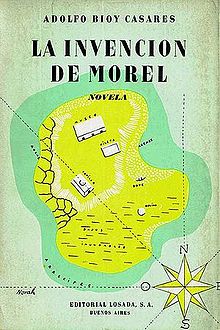
[READ: June 4, 2013] The Invention of Morel and Other Stories

Roberto Bolaño recommended this main story (the other ones as well, I assume).  He’s a big fan of Bioy Casaraes.  But also, Jorge Luis Borges has a prologue to the story in which he states of “The Invention of Morel”

“I have discussed with the author the details of his plot.  I have reread it.  To classify it as perfect is neither an imprecision nor a hyperbole.”

Holy crap.

I can’t say exactly that it I perfect although it is quite fine.  It deals with all kinds of interesting issues and is inspired by (maybe that’s not exactly the right word) The Island of Dr Moreau.  The funny thing is that Morel is neither the main character, nor even a major character for half the book.

The story starts on an island with the narrator writing this book down to leave a  record of “the adverse miracle.”   We learn that the narrator is a fugitive and he was told by an Italian rug seller in Calcutta that the only possible place for a fugitive like him is an uninhabited island.  And on this particular island in 1924 a group of white men built a museum, a chapel and a swimming pool.  But no one dares to go there—not Chinese pirates, not even the Rockefeller Institute because there is a fatal disease located on the island—anyone who has visited there has been found later dessicated. (more…)

Read Full Post »

CV1_TNY_04_15_13Sorel.inddSOUNDTRACK: AKRON/FAMILY-“Sand Talk” (2013).

akronfamThe folks on NPR played this song as part of a “new songs” segment and I couldn’t get over how noisy and chaotic it was.  I had always thought of Akron/Family as being kind of an indie folk outfit (I know they were on Swans’ label, but I still thought of them as more folkie than noisy).  So I was surprised by just how chaotic and wild this song was.

It opens with a distorted, echoey guitar that settles into a ringing sound which reminds me of Fucked Up.  Then the drums come in (tribal and various) until it all settles down into a thumping song with a kind of spastic guitar riff.  Then the vocals come in–full bodied and sounding like more than one person.  And after the first verse, it seems like everything that happened before happens again–this time all at once.  But now, the music occasionally pauses to let the vocals come to the fore.  And at one point everything stops and a chorus of voices sings a nice melody as the band slowly resumes playing.   And this echoing fugue-like music continues apace until it all kind of slows down and then ends.

It’s quite a challenging song and one that I found rewarding after just a few listens.  I have to reevaluate what I think this band sounds like, and I definitely have to listen to the rest of this album.

[READ: May 1, 2013] “The Night of the Satellite”

What I really liked about this story was the way that Boyle plays with two ideas of randomness.  The first is the possibility of a piece of a satellite falling out of the sky and landing on you.  The second is of running into a couple in several different and unrelated locations.

As the story starts, a couple (graduate-school aged) are excited that the summer is upon them.  They plan to take a trip to visit some friends (with their dog) to get away from it all.  En route they see a car pulled over at the side of the road facing the wrong way.  The young man is sitting on the hood, the young woman is crying near the road.  Mallory tells him to stop the car.  He is reluctant but does so (childlocking the doors).  The girl says that her boyfriend is a jerk.  She is crying but says she is not hurt.  The boyfriend is yelling across the road that she should just get in the car and leave with them.  But after a few minutes, she decides not too.  So he drives on despite Mallory’s protests. (more…)

Read Full Post »

PalmSundayFrontandBackSOUNDTRACK: THE STATLER BROTHERS-“Class of ’57” (1972).

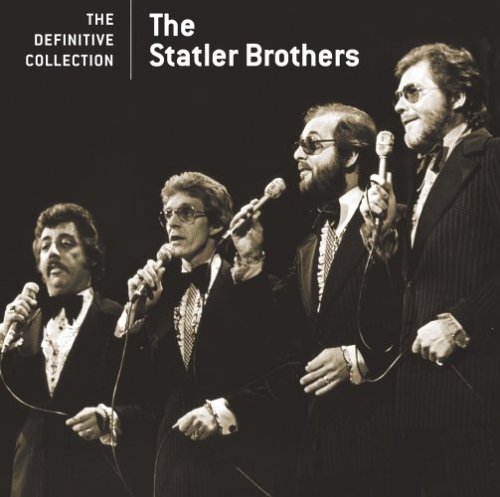
stalerI don’t know much about The Statler Brothers.  They are considered country, although this song is hardly country–it’s more folk with some bluegrass and, the real selling point–great harmonies (especially the bass singer with the big mustache).

The song is a wonderful coming of age song, sad and funny with a list of what happened to everyone in the class of ’57.  Like:

Betty runs a trailer park, Jan sells Tupperware,
Randy’s on an insane ward, Mary’s on welfare.
Charlie took a job with Ford, Joe took Freddie’s wife,
Charlotte took a millionaire, and Freddie took his life.

John is big in cattle, Ray is deep in debt,
Where Mavis finally wound up is anybody’s bet.

But the kicker comes at the chorus:

And the class of ’57 had its dreams,
Oh, we all thought we’d change the world with our great words and deeds.
Or maybe we just thought the world would change to fit our needs,
The class of ’57 had its dreams.

And then at the end:

And the class of ’57 had its dreams,
But living life from day to day is never like it seems.
Things get complicated when you get past eighteen,
But the class of ’57 had its dreams.

Vonnegut quotes the entirety of this song in the book and I’m glad he did, it’s a very moving song and really captures American life.

[READ: May 26, 2013] Palm Sunday

After writing several successful novels, Vonnegut paused to collect his thoughts.  And Palm Sunday begins: “This is a very great book by an American genius.”  It is also a “marvelous new literary form which combines the tidal power of a major novel with the bone-rattling immediacy of front-line journalism.”  After all the self praise, he decides that this collage–a collection of essays and speeches as well as a short story and a play which is all tied together with new pieces (in TV they would call this a clip show)–this new idea of a book should have a new name and he chooses: blivit (during his adolescence, this word was defined as “two pounds of shit in a one-pound bag.”  He proposes that all books combining facts and fiction be called blivits (which would even lead to a new category on the best seller list).  Until then, this great book should go on both lists.

This book is a collection of all manner of speeches and essays, but they are not arranged chronologically.  rather they are given a kind of narrative context.  What’s nice is that the table of contents lists what each of the items in the book is (or more specifically, what each small piece is when gathered under a certain topic).

Chapter 1 is The First Amendment in which he talks about Slaughterhouse Five being burned and how outraged he was by that–especially since the people so anxious to burn it hadn’t even read it (and the only “bad” thing is the word motherfucker).  The first speeches included are “Dear Mr. McCarthy” to the head of the school board where his books were burned and “Un-American Nonsense” an essay for the New York Times about his book being banned in New York State.  The next two are “God’s Law” for an A.C.L.U. fund raiser–it includes his confusion as to why people don’t support the A.C.L.U. which is working for all of our own civil liberties. (more…)

Read Full Post »

harpers maySOUNDTRACK: LAURA VEIRS-“Sun Song” (2013).

lauraI know of Laura Veirs from her work with The Decemberists, but as she’s mostly a backup singer (and occasional lead), I couldn’t really say I knew her very well.  So I was delighted to hear this song that she had written and to see just how great it is,.

The song begins with a simple folk guitar and pizzicato pluckings. Veirs’ voice has an innocence that I really love—gentle but clean.  The chorus brings an unexpected harmony vocals and vibrato but nothing prepares you for the feedback squalls that the new electric guitars bring in.

The song doesn’t get faster, just a little noisier—it reminds me of the best Sarah Harmer tracks.   Then the electric guitar goes away and the song feels fuller somehow.  The end of the song introduces a  kind of call and response which adds a cool new element until it all relaxes back into its original mellow style.

I really like this song and need to hear more from Veirs.  And I see that she has released a whole bunch of albums, so there’s a lot to choose from.

[READ: May 30, 2013] “Loyalty”

This story begins with a pretty straightforward sentiment: “As much as I love her, I blame Astrid.  Astrid told my wife, Corinne, that she could achieve happiness if only she’d leave me.”  Indeed, Astrid made a regular suggestion out of it–leave him, be free.  And so finally Corinne did–she left him alone with their son, Jeremy.  Initially Jeremy wrote to Corinne but eventually the replies were fewer and further between and he gave up.

Wes was crushed, but soon after he fell in love with Astrid and they got married.  I love the way it is presented:

The minute Corinne was gone, Astrid showed up. I don’t recall that, prior to that day, we had so much as exchanged a moody, sparking glance. She took me into her expert arms. It was consolation and sympathy at first, I guess. I didn’t question it. In about the time it takes to change the painted background in a photographer’s studio from a woodland scene to a brick wall, she had left her boyfriend and was presenting me with casseroles and opened bottles of cold beer.

We never really learn if Astrid had planned this all along.  It seems like it, but it’s not like Wes is a huge catch.  Corinne’s divorce request went though with no trouble or custody problems.  And soon he and Astrid had a new child, a daughter, Lucy.  Then they saw Corinne on TV, on a show about runaway moms–Wes asks, what would make her do such a thing–and no reasonable answer is given. (more…)

Read Full Post »

harpers maySOUNDTRACK: SHEARWATER & SHARON VAN ETTEN-“Stop Dragging My Heart Around” (2013).

Shearwater-Sharon_RSDEverybody knows this song.  It was  way overplayed (overplayed enough that Weird Al parodied it in 1983).  So I can’t say I was all that excited to hear this cover.

What’s nice about it though is that if you’ve heard a song a million times, hearing a slightly (not radically) different version can reintroduce it to you in a new way.

It’s noisy and clunky in the music–giving a more folkie vibe.  And while Sharon sounds a bit like Stevie Nicks—she gives that same raspy quality to it–she’s definitely not trying to be Stevie.  The Shearwater vocalist does moderate mimic of Petty—enough to show that he knows what the original sounds like without duplicating it.  The whole feel has a kind of tossed off, less polished vibe that really works with the lyrics.

It turns out that this version is live and it was released on a  7″ single (but NPR gives it to us for free).  I like this version quite a bit although I do miss the “Ah ha has” and “Hey hey heys” in the bridge.

[READ: May 29, 2013] “The Gift”

This was a very strange little story.

In it, a woman wakes up after her house has flooded.  Not entirely, but there was certainly a few feet of water (she can see the residue marks).  What’s also strange is that she had not left her apartment for five days and she had just spent nearly $90 (the bulk of her grocery money) ordering a box of glacé apricots from Australia–in gold foil at extra cost–no less!

She feels guilty… but they just looked so good in the catalog.  Of course, so did the mosquito netting–but really what use had she for that?

She spent some time thinking about the Australians working in the glacé apricot factory–did they ever steal an apricot?  Were they hungry? Somehow she imagined them enshrouded in the mosquito netting.

She was awoken from her reverie by the water rushing around her living room–and the piglets grunting around in the mud. (more…)

Read Full Post »

5.20SOUNDTRACK: SAVAGES-Live at KEXP (May 16, 2013).

savagesI heard some songs from the Savages album, and I loved them–that combination of 80’s punk and goth all wrapped up in current technologies and attitude.  A couple of their songs are some of my favorite of the year so far.  I’d also heard that they were even better live.  So here are four songs played live in the studio from KEXP.  And while the audio is awesome, they are a lot of fun to watch.

In fact, the more I watch the less I know who I am most impressed by–the amazing guitarist?  the great unaffected bassist?  the wild drummer?  They’re all a pleasure to watch.

But it also sounds great.  There’s some great soaring guitar sounds on “City’s Full” which really has a Patti Smith meets Siouxsie vibe.  And there’s that whole goth feel–the bass up front and dominant but with really big guitar chords and cool riffs.  And the drums, man she rocks out in the whole first half of “City’s Full.”   Then listen to the fabulous bass line that runs through “Shut Up.”   I love the way the low bass plays off the high guitars  (and the vocals sound very Siouxsie there).    And the drummer is amazing at the end of the song.

A great 80s echoey riff opens “She Will.”  I love when the song almost stops and it’s all fast cymbals and faster guitar (which is really cool in and of itself) until it builds back up.  And just look at her drumming at 10:20.  Wow. 

And the closer, Husbands” just gets more and more intense.  Like the crazy noisy cymbals.  And the way her voice soars and soars until it just stops.  Wow.

[READ: May 23, 2013] “The Dark Arts”

Julian is sick. Very sick.  So sick, in fact, that American doctors can’t seem to help him, can’t even seem to effectively diagnose him.  So he and his girlfriend Hayley have traveled to Europe for new medicines that the AMA hasn’t approved yet.  They travel to a few places first as a kind of romantic vacation and their ultimate destination is Düsseldorf.  It’s there where Julian will have his bone marrow drawn out, then boiled and tinkered with and then injected back into him.

Ouch.

But there’s been a snag.  On their way to Düsseldorf, they had a fight and Hayley stayed behind.  So Julian went to Düsseldorf to a hostel.  Every day he goes to the train station hoping to see Hayley show up.  He imagines what he must look like to the locals–a skeletal American wearing what must look like a death shroud.  He barely eats, he barely does anything.  In fact, he has more or less given up.

But his father and Hayley, they believe in him, they believe that these cures can help.  Indeed, his father has been so great through all this offering him anything he needs–money they don’t really have and unwavering support.

And then the story gets even more interesting–we find out that American doctors not only couldn’t diagnose him, but actually believed that there as nothing wrong with him. (more…)

Read Full Post »

CV1_TNY_05_06_13Schossow.inddSOUNDTRACK: BOY-“Little Numbers” (Live at The Current, April 6, 2013) (2013).

boyI am totally hooked by this single–a song which sounds like the next huge Feist hit.  It’s got a great piano melody that just grabs on and won’t let go.

So how does the song hold up on acoustic guitars?  In a recent interview the two Swiss/German band members, Valeska Steiner and Sonja Glass, say that the song was originally written in this slower more acoustic vein.  On first listen this version is not very appealing–there’s something so bubbly and bouncy and joyous about the single version.

The immediacy of the song is gone and the “woah-o” section seems more mournful than joyous.  I suppose it is actually more true to the original intent of the song (I read your name on every wall, is there  cure for me at all).  Although this version features Boy’s beautiful harmonies, especially the concluding moments, I still prefer the more upbeat single version.

[READ: May 21, 2013] “The Gray Goose”

When this story started, I was a little concerned that it was going to be another story about a repressed childhood under the thumb of an oppressive Jewish mother.  It begins by telling us that Miraim’s father left in 1948, when she was little.  One of the only presents she had been given was an album by Burl Ives.  And that album could be played on her family’s hi-fi/radio housed in a rosewood cabinet—“the most fantastical item of furniture in their lives.” Her father hated that they gave into consumerism to buy such a thing, but it was revered.  And all vinyl was held very delicately, as if a breath of air might warp it.

“The Gray Goose” was her favorite song and she listened to it often, trying to scrutinize the songs—just what was this gray goose that could not be killed, Lord, Lord, Lord.  (The traditional meaning of the gray goose that could not be killed appears to have something to do that with the hunter went hunting on the Sabbath, so the goose could not be killed). Although in the story, Miriam’s mother, Rose, says that the goose represents the heart of the working class.  For Rose and her husband, Albert were fiercely Communist.  We learn about Rose and Albert’s marriage—they were passionate about their beliefs, and this passion seemed to transmit to each other.  And then Rose got pregnant, so they married.  And then Rose had a miscarriage, but now they were stuck with each other so they decided to have a child—Miriam.  (His parents didn’t approve of any of it, especially Rose).

Then Albert was offered a job back in Germany—the only Jew to return to Germany so soon, and Rose and Miriam were on their own.  Well, Miriam was on her own, Rose had many many suitors, although none could stay the night.

That’s all back story for the evening of the action—the evening that Miriam and some friends have gone to Greenwich Village to a jazz club.  Miriam is precocious, having finished school a year early and started college (and apparently already dropped out).  She is out with some friends, the wonderfully named Rye Gogan, the horn-rimmed glasses-wearing Porter, assorted girlfriends and Miriam’s boyfriend who is referred to hilariously as Forgettable.  As in “of course Forgettable weighed in with, ‘What?’” (more…)

Read Full Post »

2013_05_13_p139SOUNDTRACK: ELEANOR FRIEDBERG-“Stare at the Sun” (2013).

efI don’t know Eleanor Friedberg, who is part of the Fiery Furnaces.  This song is fast and bright.  It’s a pretty standard rock song with bright guitars, and there is definitely folk feel to it.

The real selling point of the song is Friedberg’s voice.  She sounds a bit like a 60’s-era male with a high voice (indeed, she reminds me a little of Russel Mael from Sparks).  Maybe I’ll think of her as a mix of Kirsty MacColl and Sparks.

I like this song.  It’s not amazing, but it has a real bouncy summer feel.  An enjoyable romp that bears repeated listens.

[READ: May 21, 2013] “Art Appreciation”

I read this story in two parts.  And when I finished the first part (about four pages in–the paragraph that ended “and he kissed her there for the first time”), I thought it was a delightful story.  A sweet story of young romance.  True, the main character is a bit of a douche: “Henry Taylor had always known he would have money one day, and this confidence was vindicated when his mother won the lottery.”  But I thought that maybe Eleanor, Ellie, would somehow make him a better person.  And that sweet kiss seemed like a wonderful start.

The year is 1961, the place is Australia (it took me a little time to figure that out).  Henry is a gambler–but a mostly winning gambler–he goes to the dog tracks on Friday nights, the horses on Saturday.  But Henry, who is 28,  is also a working man–a mid-level employee at an insurance firm.  And even after his mother won the lottery he didn’t quit his job (it was of course douchey to assume that his mother would somehow give him the money but that’s what he thought).  Despite his confidence about the money, he also didn’t want to show off about it.

Ellie had recently started working in Henry’s office. She was very attractive and he thought that “now that he had money, he would marry her” (geez, he gets douchier by the minute).  Soon enough he has asked her out.  And she happily accepts.  Ellie is 20.

Finally one Sunday Henry’s mother says that she is moving to Victoria with her sister and giving him the house–she wants to see him settled.  He imagined selling the house and buying something closer to the city.

That night he visited Kath.  Kath is his un-serious girlfriend.  He tells her that their fun is over, that he is dating Ellie now so this will be their last fling.  He also has the douchiness to tell her that he has won the lottery.

Soon we learn what the title refers to, Ellie goes to art appreciation classes on Friday nights.  She asks Henry to walk her to class, which he does.  Henry stays for this one and doesn’t like it.  He sits with another bloke who asks if he was dragged there, too.  But she is so excited by the class, art is her passion.  They have a nice dinner together and they kiss for the first time.

And I thought that was nice.

But there’s more. (more…)

Read Full Post »

sed

SOUNDTRACK: TRABANT-“Maria” (2005).

trabantI learned about Trabant from the magazine pictured to the left.  It came with McSweeney’s issue #15 and is completely in Icelandic.  Trabant are apparently a pretty huge band in Iceland, and they have a  lot of songs on YouTube.  And many of their songs are very different sounding so I’m not entirely sure what kind of band they actually are.

This song begins with strange clicks and sound effects and then a big throbbing bass.  There’s kind of a funky keyboard background and then a slightly off kilter riff.

Then the big guitars kick in and the vocals (which are “if you want a love song”) don’t start until about two minutes in.  There’s a break in the middle where the band starts changing Ma Mo Ma Mo Maria and then the singer starts free associating over some wild guitar riffing and more sound effects.  It’s a really weird song and I have no idea if this is representative of the band (they did make a video for it so it can’t just be a throwaway, right?).

I’m really intrigued by these guys, and I’m going to have to look for more.

[READ: May 18, 2013] McSweeeny’s bits.

4Over the course of my reading the McSweeney’s issues, there were bits and pieces that I missed for one reason or another.  I tried to be complete, but sometimes it wasn’t easy.  So, with the publication of The Art of McSweeney’s I have now been able to read two things that I missed earlier.  And the third is something I didn’t exactly read, although I tried.

Just as issue 1 had a short story by Dave Eggers on its spine! issue #4 (the box of books) had a brief piece by Ben Greenman ringing the contents list of said box.  I never noticed it before (indeed I may not have ever read the back of the box before, shame on me).  But anyhow, in very tiny print is “More Notes on Revising Last Night’s Dream” by Ben Greenman.   And in this brief piece (which is several bullet pointed items–although arranged as a line rather than bullets) there are several ideas about last night’s dream which include “Egg on breakfast plate need not bloom into flowers” and “Cut out part in which Leslie Nielsen meets Trotsky–silly.”  And, of course, “More Invisibility.”  This is the kind of short silly thing that the first issues published which have more or less been relegated to the McSweeney’s website now.  And while I feel the website is a better place for it (and I need to go read the website more), these silly things are certainly missed.

20

The second missed item is also found thanks to The Art of McSweeney’s.  I mentioned in my review of Issue #20 that the story on the cover was completely covered by art.  And I wondered why and I wondered if you could find the whole text anywhere.  Well, in The Art of McSweeney’s they print the original cover!

I was delighted by this because it did two things–it explained how the cover was made (the 3D art was not “added on,” rather the white section under the art was “Compressed” which is how it came out 3D.  Very cool.  There’s also a brief breakdown of costs of the issue.  But the bulk of the cover story is about how the author (Eggers, I assume) broke up a fight in New York City.  A man and his family are walking down the street when a lady bumped into their little girl.  The man freaks out because she didn’t apologize and he gets right up in the lady’s face (really, dude?).  Eggers is on the phone arranging to meet someone when he says he has to get involved.  So he tells the guy to chill out.  Things quiet down a bit, but then the woman starts screaming “You got knocked up!”  And that’s when Eggers takes a look at her and realizes that she is homeless and crazy and not ever going to apologize.  But the screaming gets the mother involved in the fight which starts up again.  Things finally settle down with the family acknowledging that the lady doesn’t understand anything.  And they all depart.  It’s probably the most exciting editor’s note of them all, and yet it was covered up.

15My guess is, from what I know about Eggers, that story may have seemed too self-serving to include   Or maybe it was just fun to cover up words with a picture.

The final item comes from Issue #15.  It is a small magazine called Séð og Heyrt (Seen and Heard).  It is a real weekly magazine, although I’m not sure if our version is complete (I assume it’s not since it’s only 16 pages, but who knows how much tabloid you can fill each week in Iceland).  It is a pretty typical scandal magazine  For some insight into this magazine, check out this post on I love Icelandic Music.

I can’t even begin to guess what half of the articles are about as the pictures are mostly crazy.  There seems to be something about an Idol show, there’s a female body builder, something about some wholesome looking people who may be called Icelandic Pearls.  And then the centerfold is called Rokkorgia, which should be easily translated. It features half naked pictures of the guys from Trabant.  The next page has Love Guru in strange positions with his lady friend and a big headline Bingo I Beinni.  The back page has an ad for Krit Paradis Eyjahafsins which appears to be a nice resort.  What a fun, odd addition to the Icelandic Issue of McSweeney’s.

Then as I was glancing through I caught something that said That 70s Show.  And sure enough, it was a preview of a new episode tonight (is it dubbed into Icelandic??).  So even though I played around with translating bits and pieces of the magazine, this was the only one I did fully.  So in Icelandic (excluding some accents)

I kvold hefjast syningar a nyrri syrpu um unglingana i Wisconsin.  Jackie þarf ad velja a milli Hyde of Kelso.  Red er að ba ser eftir hjartaafall og Eric er með samviskubit yfir þvi að vera að fara i burtu i haskola.  þokkadísin Estella Warren leikur gestahlutverk i þaettinum

Which Google tells me means:

Tonight begins exhibiting a new series about a teenager in Wisconsin. Jackie has to choose between Hyde of Kelso. Red is ba after a heart function and Eric is guilty not be going away to college. charm diesel Estella Warren plays a role in the show.

Cool huh?  What a strange thing to find in a magazine that was not meant for me.  But I’m glad I read it because now I know all about Trabant!

For ease of searching, I include, well, I’m only including the magazine, because there’s way too much otherwise: Sed og Heyrt.

Read Full Post »

« Newer Posts - Older Posts »