Feeds:
Posts
Comments

Archive for the ‘Short Books’ Category

SOUNDTRACK: MOGWAI-Young Team (1997).

When Mogwai released Young Team there was quite a bit of buzz around them.  I remember when I bought the album, that I had no idea where they were from.

With the Asian-looking characters on the cover and a picture of Fuji Bank (and no band members names listed) I assumed they were Japanese.  Of course, a closer listen reveals a lot of Scottish voices quietly chatting away during some of the songs (which doesn’t necessarily mean they are Scottish…but indeed, they are).

Young Team is a great debut and Mogwai shows a lot of versatility.  It opens with a spoken word bit about Mogwai (If the stars had a sound it would sound like this).  It’s a slow instrumental, actually quite pretty, with picked guitar and continual bass and even harmonics.   It gets loud by the end, yet even that is restrained.  But just when you think that Mogwai is going to be another post rock instrumental chill out band, they hit you with “Like Herod.”

“Like Herod” is one of the more amazing songs in instrumental rock.  It plays with loud and soft dynamics like nobody’s business.  Opening with a slow rumbling bass, the guitars pick out intricate melodies.  Then at 3 minutes, all hell breaks loose in the form of big guitar chords and screaming guitar notes.  Things slow to a crawl about 6 minutes into the song. But we’re only half way done.  And those quiet notes are once again blown away by those same chords and screaming notes.

You could pretty much end the disc right there and call it a success.  But “Katrien” shows off another side of the band: a spoken word side.  Behind some gorgeous melodies there’s something of a rant.  It’s followed by “Radar Maker,” a 90 second piano-based instrumental.  It’s quite delicate and it leads right into “Tracy” a beautiful 7 minute song with a pretty melody and lovely washes of sound.

The middle of the album has two shot songs: “Summer [Priority Version]” is a condensed version of that quiet/loud dynamic that Mogwai does so well.  And “With Portfolio” plays havoc with a pretty piano song by throwing in washes of noise and sound effects which completely take over by the end.

The unfortunately titled “R U Still In 2 It” belies its bad name with some beautiful quiet guitar work played behind a vocal turn by Aidan Moffat.  There’s even a sung chorus!

“A Cheery Wave from Stranded Youngsters” is a two-minute sort of intro to the final track on the disc, the amazing “Mogwai Fear Satan.”  A 16 minute instrumental that is quite beautiful as it opens: distorted chords that don’t overpower the melody.  They bolster it as it builds and builds until it reaches a moment of silence which is filled by…a flute (!).  The song continues to build with a gorgeous repeating motif.  Then it slows down again to let the flute really sync with the song until it reaches its beautiful end.

It’s a great debut, deserving all of the praise that was heaped on it.

[READ: March 3, 2011] To Ruhleben and Back

This is a true account of one man’s escape from Ruhleben prison in Germany during WWI.  I admit that I had never heard of Ruhleben before (and frankly I’m really surprised I never have, as roughly 4,000 British citizens were interned there from 1914-1918).

This story was published in 1916 as one man’s account of his escape from the prison.  And then it quietly went out of print. McSweeneys’ Collins Library has now (well, in 2002), seen fit to get it reissued once again.

The introduction explains the historical veracity of the book, and also promises a rather ripping yarn.  And indeed, Pyke does not disappoint.

Well, maybe a little in the beginning.  The early parts of the book are a little slow.  It explains who he was and how he wound up in Germany during the war.  The short version is that he was a journalist who was frustrated that he wasn’t hearing proper news from the war, so he volunteered to go to Germany (even though at this point all English men and women were being incarcerated).  He moved there and since he spoke fluent German, he was able to blend in.  Until he was caught. (more…)

Read Full Post »

SOUNDTRACK: WAVVES-“Post Acid” (2010).

Wavves’ King of the Beach CD made many Top Ten of 2010 lists.  I listened to a track somewhere and wasn’t all that impressed.  Right now there’s a live show on NPR, which I listened to a bit (and which made me investigate them further).

They have a few songs on their My Space page and I really like this one.  It is short and fuzzy and catchy and cool.  It’s a fast blast of punk nonsense.  I have no idea what it’s about (and I rather like the weird break in the song where the singer can barely get words out).

I’m not sure if I’d listen to a whole record of them (although I love their hair).  But this was sure a fun track.

[READ: February 17, 2011] Arkansas

John Brandon did a pretty amazing thing with this book.  He took two rather unlikable characters and made them sympathetic and, eventually, compelling.  The unlikability may have come from the detached style of their introduction.  Each of the main characters is introduced separately with a brief anecdote that seems to end abruptly.  In fact, I wondered if it was going to be a series of brief character sketches and nothing more.  I’m thankful that that wasn’t the case since, each character’s “section” could have been a complete (but very unsatisfying) story.  When I saw more of Swin, I was pleased, even though I didn’t really “like” him.

First we meet Swin Ruiz, a very intelligent guy who makes it to college.  While in college a foolish mistake (resubmitting an essay to a teacher) costs him his scholarship, which essentially means he’s out of school.  He scams some money from the rich students and then takes off, leaving his family and his beloved younger sisters with their jerk of a stepfather.  From there, he drifts aimlessly until he meets a bartender who sets him up with someone to help “break the laws of the land.”

Kyle Ribb is the other main character. He’s a harder man, something of a bastard.  He tries to go legit by working in a bike store.  When that doesn’t pan out (the story of that is pretty funny) he reverts back to his “no boss” ways.  He eventually meets a guy who introduces him to Colin, a man with criminal connections.

The third character we meet differs from these two.  First, a date is given as an introduction (1974).  Second, the whole section is written in second person (“You are Ken Hovan”).  We learn about his life and his background and how, eventually, he took the nickname Frog and became a shop owner, a dealer of unusual merchandise (which begins with bootleg tapes and, naturally, transforms into drugs).

The story of Frog’s life from 1974 to the present intersperses the main story (which is really about Swin and Kyle).  And each time frame jump ties together some of the mysteries of the book (Frog, being the boss, ties the thread together).  And there are many mysteries.

Kyle and Swin move up the ranks of the ne’er-do-well scale, until they land a job in an underused state park in Little Rock, Ark.  They get a “legit” job manning the booth, checking visitors in and out, and cleaning up the brush, but their “real” job is to deliver packages to random locations in different states.  They drive a car to a parking lot, wait for a person to get in and then drive off in a different car with a package for the other end.  And that’s pretty much it. It’s obvious they’re doing illegal work, but they don’t ask questions and don’t know too many details.

Their boss at the park is Bright, a man who seems to really enjoy the park and genuinely likes to take care of it.  He is a middleman for Frog, but a rather benevolent one.  There are some other characters as well.  The first is Her, (that’s the only name she gives out), she gives Bright the details about the packages.  Bright’s boss at the park is Wendy, she knows what they do and receives a cut.  She only wears pink and wishes to be a painter.  She recites a quotes from a different painter before she leaves. (more…)

Read Full Post »

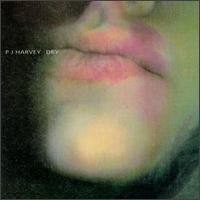
SOUNDTRACK: PJ HARVEY-Dry (1992).

This first PJ Harvey album was a revelation in 1992.  It was angry and loud and awfully disconcerting. And, perhaps most importantly, it showed a strong woman, unafraid to point fingers at foolishness around her. (Yes, I miss the 90s).

It was also raw and abrasive and, at times, scary.  The opening track featured discordant music and vocals that were more than a little uncomfortable.  “O Stella” has more uncomfortable vocals with super cool and slightly off harmonies.  The guitar is a great distorted mass and the bass is low and heavy.  A great track.

“Dress” is one of the least abrasive tracks musically, which really lets the lyrics come to the fore. And her lyrics are wonderful throughout the disc–she attacks conventions of femininity and flips expectations.  And although “Dress” has a very simple chorus–just the line “If you put it on”–it is catchy as anything.

But it’s not all loud songs, either.  The wonderfully titled “Happy and Bleeding” features some intriguing quiet guitar work and whispered verses.  It grows in strength but never wails like the other songs.  For real wailing, “Sheela-na-Gig” is your song. Terrifically rocking and obscene, it’s a funny, clever awesome alt rock song.

Harvey experiments with falsetto (although nothing like she will on Let England Shake) on “Hair,” a cool twist on the Samson and Delilah story.  “Plants and Rags” makes exquisite use of a creepy violin to bring some extra sounds to an already cool song.

It’s a stunning debut and showed that Harvey was a fearless singer.

[READ: February 27, 2011] Misadventure

This is Millard Kaufman’s final novel (after the very cool Bowl of Cherries).  The Afterword (written by Kaufman’s son) seems to suggest that Millard actually wrote this back in the 60s.  There are elements of this book that make me thing that he did write it in the sixties (and then obviously updated particulars to make it contemporary).  It just feels circa the 60s and it feels like the book of a younger man (Kaufman was 92 when he died).

The story opens with a dead body and a real estate agent.  And it quickly develops into a tidy noir fiction with double-crossing and undermining and all kinds of interesting twists.  I don’t read noir or “mysteries” as a rule, so this is kind of a novel novel to me.  Accordingly, I can’t compare it to the genre. (more…)

Read Full Post »

SOUNDTRACK: THE HEAD AND THE HEART-“Winter Song” (2010).

Sarah intended to get this disc for me for Christmas.  But evidently Sub Pop bought out the disc and put it out of print.  It’s now available as a download.  But a personal email from Sub Pop headquarters said they’d be releasing the disc in physical format sometime in April.  (Yay!)

This is a beautiful folk song which features wonderful harmonies.  It’s a simple guitar-picked song.  It opens with a male vocalist who sounds very familiar (I can’t quite place who he sounds like), but the end of the verse has a beautiful, brief blast of multi-part harmony.  The second verse is by a different vocalist (he sounds close to the first, I only noticed he was different after a few listens). The final verse is by a female vocalist which comes as a wonderful surprise as her voice brings a whole new shape to the sound.

The harmonies continue throughout the song and really flesh it out.  There’s not a lot to the song itself: a simple verse/chorus structure, but the execution and vocals are really lovely.

[READ: February 21, 2011] The Sword Thief

I can’t believe it has been five months since I read Book Two of this series.  It wasn’t for lack of enjoyment, sometimes other books get in the way!  But now that I’ve jumped back in, I’m in for a while (I’ve already started book 4).

One thing that I wanted to point out before talking about the book itself, was the way the various destinations are described in the book.  While I haven’t been to all (or really any) of the locations described, I have seen enough (in books and online) to know that the authors aren’t simply placing the kids in a generic location that pretends to be a city.  They really try to give each environment a full-bodied realism.  And I hope that young readers can really appreciate the sights and smells of the different countries.  It’s especially effective in Egypt (in book 4), but Tokyo really comes to life and Korea, although not fully explored, really shows the rural regions well.  Maybe this will encourage people to travel, but if not at least it’s instructive that not every place looks the same.

What I especially liked about this book is that the kids form a (brief) alliance (or two).  The first two books emphasized how all of the different family lines were in such competition with each other for the clues.  And, obviously that is the point of the books.  But it would be very tedious to simply have them run from place to place being chased by the different families.  So in this one, the kids form an alliance with Alistair Oh.  Better than that though is that Lerangis gives a detailed background of Alistair which makes him a more sympathetic, human character (even if we don’t fully trust him). (more…)

Read Full Post »

SOUNDTRACK: SARAH HARMER-Oh Little Fire (2010).

I found Sarah Harmer when she had a left field hit (“Basement Apt”) in the states.  I went back and discovered her band Weeping Tile (who are quite good and recorded a version of the song on their EP Eepee) and have been following her continued solo career.

Since that first record, she released a killer second disc, followed by a re-release of an intimate 1999 record she made for her dad which let her revel in her country roots.  She followed this up with I’m a Mountain, a very country, but very catchy album.  Finally, four years later, she put out Oh Little Fire.

Although she hasn’t lost her country roots, this album returns to more of the rock sound that first attracted me to her.  It’s not hard or heavy by any stretch, but it’s moved beyond the country of I’m a Mountain.

Sarah and I listened to this album a lot at night when it first came out, and it slowly seeped into my system.  I had kind of forgotten about it for a while, and upon rediscovering it I was delighted to hear that the melodies were fresh and still with me.  The album seems like a simple indie folk or the work of an adult alternative singer songwriter, but the thing with Harmer is that she has that wonderful background with Weeping Tile, a band that was always slightly off-center.  So, she writes beautiful melodies but puts little grace notes into them to keep them from being disposable.  And yet they are still super catchy.

The only hard thing about this disc is wondering which song will be stuck in your head after listening to it.

[READ: January 7, 2011] L. M. Montgomery

I’ve never read any L. M. Montgomery (although I’ve seen the miniseries of Anne of Green Gables) and I’ve never read any Jane Urquhart (but I love her name!).

This biography is so radically different from the other three I’ve read so far.  I wondered immediately if it was because Montgomery (and Urquhart) are women.  It deals with subjects that the other books didn’t at all: lost loves, mental incapacitation, family crises.  But it becomes clear through the book that these issues were THE issues that a woman at Montgomery’s time would have dealt with.  Unlike the men in the other books, Montgomery did not have a professional life (outside of being an author, which she did at home).  She was hardly a public figure, and since she was a woman, she was always in danger of losing what she had.

This biography is also vastly different from the others in the way it is constructed.  You can tell by some of the chapter headings: Her Death (the first chapter), Orphan, Sorrow, Madness.  You can also tell by these chapter titles that Montgomery did not have a happy life.

Indeed, between a husband who believed he was destined for Hell (he was a preacher!) and children whose life choices she disapproved of, not to mention terrible insomnia coupled with nightmares, her late adult life was nothing but torment.  But, sadly for her, her early life was nothing but torment either.  Her mother died when she was two, she was sent to live with her aunt and uncle (which was never a happy place).  But the most depressing of all of these events is when she lost her dearest friend at a terribly young age, a death she never really recovered from.

So how is it possible that Montgomery wrote such charming stories?

The answer to that (and the basis for most of this biography) is in her diaries.  Montgomery kept meticulous diaries (which she wrote and rewrote and then rewrote with posterity in mind).  She wrote about her childhood and her life as (sort of) an orphan.  She wrote about the places where she lived and the beautiful outdoors which impressed her.  She wrote about the sadness and the happiness.  Nothing was lost on her, and she saved it all (she also took photos of everything she loved, which are a beautiful and sometimes contradictory records of her diaries), and there are many published volumes that we can read to learn even more about her.

To me, the most fascinating (and horrible) part of the story was when she finally had Anne of Green Gables published.  The publishers took complete advantage of her.  They forced her to write sequels that she didn’t want to (although they are still quite good) and even compiled a final book from castoffs of the previous books (Return to Avonlea) that they published in her name.  Eventually the case was settled in her favor, phew, and she was able to write new characters that inspired her.

Montgomery had a rough life, and as her diaries come to an end, she stopped writing about things.   It’s hard to know exactly what she went through towards the end, but it doesn’t seem very positive.  And yet for all of her disappointments in life, she left us with some engaging and memorable stories.

The last chapter is a fascinating personal account of how Montgomery’s stories impacted Urquhart’s family.  It was incredibly touching and convinced me that Urquhart’s fiction would be enjoyable too.  Some day, some day.

This was a really enjoyable (but major downer) biography.  And, more than anything it has really inspired me to read Montgomery’s stories (and even one or two or Urquhart’s).

And, here’s a shameless plug to the folks at Penguin Canada–I will absolutely post about all of the books in this series if you want to send me the rest of them.  I don’t know how much attention these titles will get outside of Canada, but I am quite interested in a number of the subjects, and will happily read all of the books if you want to send them to me.  Just contact me here!

Read Full Post »

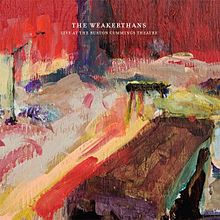
SOUNDTRACK: THE WEAKERTHANS-Live at the Burton Cummings Theatre (2010).

I’ve enjoyed The Weakerthans for a few years now, so I was pretty excited to see they had a live album out.

This live album works like a greatest hits.  All of the songs are great catchy pop songs–why aren’t The Weakerthans huge?  Maybe because their songs are literate and clever (and have weird titles (like “Our Retired Explorer (Dines with Michel Foucault in Paris, 1961)”).  In fact that song is one of only two songs that I know of that mention Jacques Derrida (the second being Scritti Politti’s “Jacques Derrida”).

Admittedly, The Weakerthan’s songs are simple and catchy and these live versions aren’t radically different from the originals.  There’s no extended jams or maniacal freak outs or anything.  But the album is very charming (John Samson is unfailingly polite) and the one big surprise is quite a surprise!

On the track “Wellington’s Wednesdays” Samson introduces a guy: “This is Ernesto.  He’s from Mexico.  He’s going to play a guitar solo.”  While listening to the disc I couldn’t imagine this peculiar introduction for a band member.  My version of the disc comes with a concert DVD of the show.  I didn’t get to watch the DVD until recently and… mystery solved:  Ernesto is a fan in the front row.  Samson talks to him mid-song, pulls him up on stage, introduces him and gives him his guitar to play the solo!  Then Samson jumps into the front row to watch.   How cool is that?

The video doesn’t deviate from the audio, except for leaving in a few moments of patter from Samson. In fact, I found the video to be somewhat choppily edited.  When Samson plays “One Great City!” (solo…which wasn’t obvious from the audio.  I mean, you can tell he’s solo, but it’s much more dramatic in the video) at the finish of the song, it immediately cuts to the next full band song, rather diminishing the return of the band.  (Although I do like the jump cuts to the audience which reveal what appears to be a room full of teenagers–it’s adorable!)

The other confusing thing is that the recording notes say that it was recorded over two days, and yet the video appears to be one night’s show. And the audio matches it, so who knows.

But those are little quibbles.  The music is great, the sound quality is fantastic and the song choices are great.  There are some cool surprises on the disc (like the horns and violin), but mostly what you get is an enjoyable evening at a small hometown concert with fans who love to sing along to the chorus of “One Great City:” “I hate Winnipeg!”

[READ: December 18, 2010] Stephen Leacock

What I’ve really been enjoying about this series of Extraordinary Canadians is how the writers of the books (at least the three I’ve read so far) are writing in such very different styles.  Obviously Coupland did his own thing.  Vissanji is a novelist, and he wrote his in a more novelistic way (its not like a novel at all, but it’s constructed in a kind of narrative style).  Macmillian is a historian, and I suppose for that reason, this biography feels more like a history (of Leacock, but also of economics) than a simple biography.

The strangest thing about this book is that although MacMillan obviously likes and respects Leacock, a surprising amount of the book is taken up with her talking about things he either said or did wrong or about his books that really aren’t that funny.  This is surprising because Leacock is a noted humorist. (In 1947, the Stephen Leacock Award was created to recognize the best in Canadian literary humour).

This biography looks at his life, but mostly it focuses on his academic and humorous works.  Leacock was an economist although he seems to generally disapprove of economists.  He had begun by teaching high school but found it incredibly stifling.  Eventually he found his niche at McGill University where he was well-respected and highly regarded by students and faculty alike. (more…)

Read Full Post »

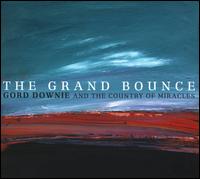
SOUNDTRACK: GORD DOWNIE AND THE COUNTRY OF MIRACLES-The Grand Bounce (2010).

I knew I was going to write about Canadian musicians for this series of Extraordinary Canadians, but I wasn’t sure who would get matched to whom. I figured I’d match Gord Downie to Mordecai Richler, but when I saw this in the liner notes to this disc, I knew I’d made the right choice:

Thank you to the Richler Family for the font you are presently reading.  The Richler font, not publicly available, was created and named for the great Mordecai Richler.  It was commissioned by Louise Dennys, designed by Nick Shinn and graciously made available by Florence Richler.  I am grateful for this honour.

So Gord Downie is the driving force behind The Tragically Hip.  I’m always curious when a guy who pretty much runs a band needs to do a solo album (or three).  And in this case, since the last Hip album was much more mellow and almost country, it seemed like he got some of his less rocky side out on that disc, so what’s the need?  Unless, of course, it’s just the need to play with some other folks once in a while.

Well, whatever the reason, this disc finds Downie in incredible form.  In fact, I think I like this disc better than the last Hip disc (which I did like, but which was a little too mellow overall).  The songs are all great, from the simple folk tracks to the more elaborate rockers.  And, yes, while the disc never rocks as hard as some Hip songs tend to, this is not a simple acoustic guitars and solo vocals record.

“The East Wind” is a wonderful starter.  It’s fairly simple with awesomely catchy lyrics.   I learned that the lyrics are from a quote by Todd Burley.  And they are an awesome way to describe a hostile and violent wind: it’s lazy, because “it doesn’t go around you, it goes right through you.”  Fantastic.

“Moon Over Glenora” sounds a lot like a Hip song.  Downie’s lyrics are almost mumbled and understated until he gets to the end of each verse when he raises his voice an octave for maximum effect.   The stops and starts in the bridge are also great.  “As a Mover” is also smoothly catchy with a wonderful rising chorus.

“The Dance and the Disappearance” is another great conceit.  This song is inspired by a quote from Crystal Pite: “Dance disappears almost at the moment of its manifestation.”  It is suitably dramatic with some great verses.  “The Hard Canadian” is a gentle acoustic number that would not be out of place on the more recent Hip records.  “Gone” feels like a continuation of “Heart,” almost like the slightly more rocking second half of it.

My favorite track is “The Drowning Machine” (I seem to like anything that Downie writes that’s about the sea).  It’s a minor chord wonder, dark and mysterious and wonderfully catchy.  The rock comes back on the rather simple “Night is For Getting.”  It’s probably the least essential track on the disc except that once again the chorus/bridge is really great and memorable.

The last three tracks bring on the mellow, which is a fitting ending for the disc, although since the three t racks take up about 12 minutes, it makes the end drag a bit.  “Retrace” is a country-tinged (steel guitar) mellow track (again, Downie’s voice brings out the excitement) .  “Broadcast” has an extended outro of gentle guitars and piano that for all the world sounds like the end of a disc, so I’m always surprised that there’s a final track after it.   And so the final track “Pinned” feels like filler.  It has a movie projector clicking sound and gentle piano with almost inaudible vocals.  It’s actually a pretty song, but it feels almost discarded here.

One of things I’ve always liked about Downie’s lyrics is that they are atypical of rock songs.  They’re not “about” sex or rock or drugs or swagger or anything like that.  In this case they are about locations and events.  And it really paints a picture.  And speaking of painting, Downie painted the cover art.  The beautiful simplicity of the painting is not unlike the beautiful simplicity of the music on the disc.

Oh and my copy is autographed too! (although I wasn’t there when he autographed it, so it could have been anyone who scribbled on the cover).

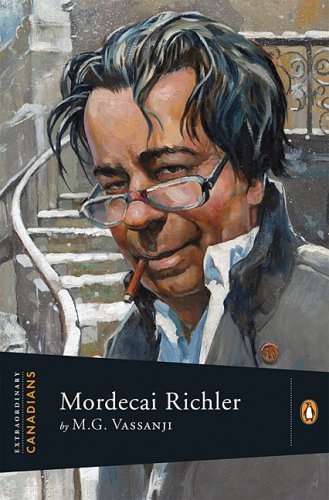
[READ: November 15, 2010] Mordecai Richler

I don’t know a lot about Mordecai Richler, although I feel like whenever I read about him it’s in hushed tones (a neat trick, that).  Nevertheless, for a number of reasons I have wanted to read him for many years but have just never done it.  Now, the stars are aligning with me for Richler.

There’s this book, there’s the cover of the October 2010 issue of The Walrus and the recent filming of his book Barney’s Version (the filming of which is discussed in the same issue).  And then a patron asked for the film of The Apprenticeship of Duddy Kravitz.  So, it’ about time to read one of his books.  But here’s the rub…do I start with the great books or do I start at the beginning and work my way through his career?  And, there’s also a huge new biography coming out (the review of which mentions a wonderfully offensive event in which Richler absolutely dismisses his Jewish audience).

This book was written by M.G. Vassanji.  I feel that I’ve heard of him but I’ve never read him.  And yet listen to this incredible biography:

M.G. Vassanji was born in Kenya and raised in Tanzania.  He attended University in the United States, where he trained as a nuclear physicist, before coming to Canada in 1978.  Vassanji is the author is six novels and two collections of short stories…and he has twice won the Giller Prize.

Damn.

Since I read this right after Coupland’s McLuhan it’s tempting to compare them.  And yet, as I said in that review, it seems quite apparent than Coupland’s book will be like no one else’s, so I won’t say much about that.  Instead, Vassanji opens the book by talking about the similarities between himself and Richler and their few awkward but pleasant meetings.  (In this respect yes, it is sort of like Coupland’s book in that the author puts himself into the text). (more…)

Read Full Post »

SOUNDTRACK: SHAD-TSOL (2010).

I first heard Shad on CBC Radio 3 online.  The track was “Yaa I Get It” and I really enjoyed it.  I haven’t listened to a lot of rap in the last few years; I’ve more or less grown bored by the genre, especially all the violence.  So, I was happy to hear this track, which was boastful but funny.

I decided to get the whole disc, and I wasn’t disappointed.  “Rose Garden” features a sample of “I Never Promised You a Rose Garden” which sets some of the tone of the disc.  But it’s on the next song “Keep Shining” that Shad’s uniqueness shines through.  This song is about women.  But not in any way that I’ve heard in rap before: “I can’t speak for women.  We need more women for that.”  And the inspiring final verse:

My mom taught me where to keep my heart.
My aunt taught me how to sing two parts.
My sis taught me how to parallel park,
and tried to teach me math but she way to too smart.
My grandma in the 80’s is still sharp.
My girl’s cousin is in activism in art.
They taught there’s no curls to tight, no mind too bright, no skin too dark to keep shining.

Later on the disc is “We Are the Ones” an oddball jam that sounds like one of those bizarre Atlanta rap tracks (funky vocals and all) and an amusing line about being Lost like Matthew Fox.  But his name checks aren’t all pop culture (Moredcai Richler gets a mention as does Glenn Beck (he “better duck like foie gras”).

And of course, there’s the wonderful “Yaa I Get It.”  With great horn blast samples and all kinds of noise competing for our attention.  Yet, throughout the lyrics stand out: “Maybe I’m not big cus I don’t blog or twitter…Dawg, I’m bitter.”  And there’s this wonderful couplet: The precision of my flows in terms of tone and diction/Is akin to that of the old masters of prose and fiction.”  Or take this lyrics from “Call Waiting,” “But what they say is hard for a pimp is harder for a man of faith.”

“Listen” has some great scratching on a heavy rocking track.  It’s followed by “At the Same Time.”  This is a mellow, sad song, which I don’t really like, yet which I find very affecting.  And lyrically, it’s great: “I never laughed and cried at the same time… Until, I heard a church pray for the death of Obama.  And wondered if they knew they share that prayer with Osama.”

The disc ends with “We, Myself and I” another noisy rocker and the one minute “Outro” an acapella rant.

Shad is a great rapper, doing interesting things and trying to make a difference.  He’s worth checking out.

[READ: November 1, 2010] “Marshall McLuhan”

I learned about this book because I’m a fan of Douglas Coupland.  And, as it turns out I’ve always had a vague interest in Marshall McLuhan, so it seemed like a sure thing. The problem was that the book was not readily available in the U.S.  So, I had to order it from Amazon.ca.  And, since you can’t get free shipping to a U.S. address from amazon.ca, I thought it would make sense to order 6 titles in the series, all of which I’ll post about this week.

So, here’s a shameless plug to the folks at Penguin Canada–I will absolutely post about all of the books in this series if you want to send me the rest of them.  I don’t know how much attention these titles will get outside of Canada, but I am quite interested in a number of the subjects, and will happily read all of the books if you want to send them to me.  Just contact me here!

Each book in the series has an introduction by John Ralston Saul, in which he explains the purpose of the series and states globally why these individuals were selected (“they produce a grand sweep of the creation of modern Canada, from our first steps as a democracy in 1848 to our questioning of modernity late in the twentieth century”).  It also mentions that a documentary is being filmed about each subject.

Perhaps the most compelling sentence in the intro is: “each of these stories is a revelation of the tough choices unusual people must make to find their way.”  And that’s what got me to read thee books.

This volume was probably a bad place to start in the Extraordinary Canadians series if only because it appears that Coupland’s volume is markedly different from the others.  Coupland being Coupland, he has all manner of textual fun wit the book.  The other authors seem to write pretty straightforward books, but you know something is up right away when you open the book and the first six pages comprise a list of anagrams of “Marshall McLuhan.”

On to Marshall McLuhan.  The Medium is the Message.  That’s about all anyone who has heard of McLuhan knows about him (and that he has a hilarious cameo in Annie Hall).

When I was a freshman in college, I took a class in Communications which focused an awful lot on Marshall McLuhan.  I didn’t like the teacher very much, but the message stayed with me all these years.   And so even though I’m not a student of McLuhan or anything, I was happy to relearn what I should have known about the man and his ideas.

(more…)

Read Full Post »

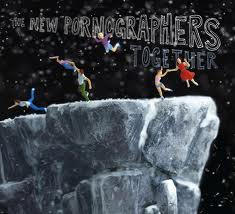
SOUNDTRACK: NEW PORNOGRAPHERS-Together (2010).

I enjoyed The New Pornographers’ debut album Mass Romantic, but I didn’t bother getting their later discs.  In the ensuing years, I’ve grown appreciative of both Neko Case solo and Dan Bejar’s Destroyer.  And, while I intend to get the NP’s middle discs, in the meantime, I am totally enamored of this one.

Their first disc sounded like a group of great songwriters doing their own thing.  This disc (their fifth) sounds like a group of great songwriters working together.  The album sounds cohesive and, frankly, wonderful.  It’s hard for me to pick a favorite song, because when the disc is over I find myself singing bits and pieces from so many of them.

The songs work well together, with different vocalists coming to the fore.  But there’s an overall cohesiveness to the disc.  Even the Dan Bejar songs (three on this disc), which sound very distinctly Bejar, act like a change of pace but retain the album’s style, rather than sounding like Bejar solo songs.

And I like the Bejar songs quite a lot (“Silver Jenny Dollar” is always in my head), but it’s the Newman songs (those sung by Neko Case and otherwise) which rise into the pop stratosphere.  The gorgeous delayed chorus of “Up in the Dark,” the beautiful cello of “Moves.”  Even a song like “Valkyrie in the Roller Disco” which opens a little quietly compared to the rest of the disc, pulls out a stunning chorus.

“A Bite Out of My Bed” is weird and wonderful and, of course, those first 6 songs are amazing.  “My Shepherd” is a stunning song and “Your Hands (Together)” is a catchy rocker which should have been a huge single.  Just when you think that “As a Rule” couldn’t possibly get any catchier, along comes a whistle solo.  Fabulous. And the album closer, “We End Up Together” has great group vocals and a nice return to those catchy strings from the opening.  It’s a great release from start to finish.

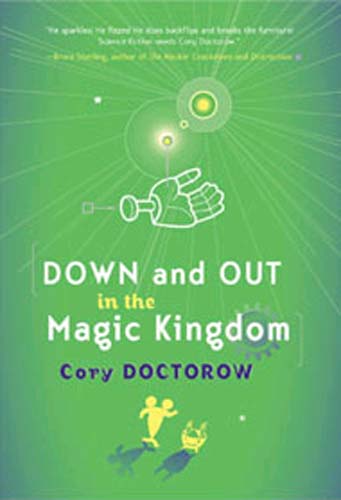
[READ: January 24, 2011] Down and Out in the Magic Kingdom

I loved Doctorow’s Little Brother.  And when I recently said I would be going to Disney, an astute reader said I should read Down and Out in the Magic Kingdom (which I’d never heard of).

Knowing what I know about Doctorow (this and all of his books are published under a Creative Commons license and if you go to his site, you can download the entire book for free), I expected that this book might bash Disney (the main source for our current copyright extension laws–see The Copyright Extension Act also known as The Mickey Mouse Protection Act).  The title also hinted at is as well.  But in fact, this book does not bash Disney World in any way.

Rather, it embraces the Magic Kingdom as a sort of traditional refuge, something that should be immune to technological update.  Of course, since it is a science fiction novel, it is also futuristic, full of bizarre technologies and lots and lots of behavior control.

The book opens in the undetermined future (although later in the book we learn that it’s probably sometime around 2069).  The Prologue is full of words that won’t be defined until later in the book (if at all):  “Deadhead” as a verb, “Bitchun Society,” and this whole sentence: “I took a moment to conjure a HUD with his Whuffie score on it.”

So, we know that this is not a typical story.  And it stays atypical.  Chapter One opens:

My girlfriend was 15 percent of my age, and I was old-fashioned enough that it bugged me. Her name was Lil, and she was second-generation Disney World, her parents being among the original ad-hocracy that took over the management of Liberty Square and Tom Sawyer Island. She was, quite literally, raised in Walt Disney World and it showed.

The story is set in Disney World.  Julius, the narrator who is 100+ years old but has been rebooted several times and appears 40, is dating Lil, who was 19 or so when they met.  And despite her youth and apparent airheadedness, they really hit it off.

As stated, her parents were more in less in charge of portions of Disney.  So, when they decide to deadhead, it puts Lil (and by proxy Julius) in charge.  Lil’s domain is the Hall of Presidents (and there’s fun insider knowledge about the Hall, and Lil is often seen with her head inside Abraham Lincoln).  Julius, meanwhile, loves loves loves The Haunted Mansion (and the story of his first time(s) there is really great).  And he works behind the scenes there now, constantly trying to make it better (shave a few seconds off here, make this part a little scarier, etc).

And all is great until Julius is killed. (more…)

Read Full Post »

SOUNDTRACK: PEARL JAM-Backspacer(2009).

In 2009, Pearl Jam came out with Backspacer, a 36 minute album of short songs (most are under 3:30, with three approaching the 4 minute mark).

It’s tempting to call this a return to form, but the songs have a lot more bite and punch than the tracks on Ten (which were fast, but were often quite long with lengthy guitar solos).  Overall, the album feels like a fun album, a good chance to let their hair down (those who still have any) and rock out.  And on the opening four tracks they rock really hard.

“Gonna See My Friend” is a furious blast (and the guitar solos are tucked into the verses for maximum expediency).  “Got Some” slows the pace incrementally, and there are some interesting sparse sections where just the guitar plays.  “The Fixer” has a catchy “yeah yeah yeah” bridge which seems like a perfect fit for concerts.  And “Johnny Guitar” is another hard rocker, but it features a mid section that is a major departure from the other songs: a quiet section with bass and scratchy guitars.  It lasts but a moment but it lets you know the whole album won’t be heavy and furious..

Because even though the disc seems like it’ll be all punk, “Just Breathe” is a mellow acoustic song that sounds like it came from Vedder’s soundtrack for Into the Wild–complete with strings.  “Among the Waves” starts out similarly mellow, although it has some big choruses, and sounds like the most typical Pearl Jam song.  And “Unthought Known” is kind of a mix of these two–a big arena song with pianos, swelling verses and a guitar solo

But just when you think the rest of the album is going to just mellow out, “Supersonic” rips the pace back up.  It’s a fast rock song not unlike “Spin the Black Circle”.  Then there’s a return to the mellower songs (despite the title) with “Speed of Sound.” It starts off with an interesting minor chord progression, but returns to the upbeatness of the rest of the disc for the choruses.

“Force of Nature” introduces a wah-wah (!) and a killer chorus.  And the last song “The End” is a gentle acoustic guitar song (like “Just Breathe”) which ends the disc on a quiet note.  This isn’t a classic album, but it is good and it’s a lot of fun.  And it has a bunch of songs which will remain concert staples for a number of years.  And for those who like Pearl Jam’s poppier side, it’s an intriguing re-introduction to the band who has been out of the spotlight for some time.

[READ: January 13, 2011] The Guild: Vork

I love The Guild.  It’s a very funny and very clever show.  I also enjoyed the first comic book, especially when it turned out to be not a retelling of the show, but a sort of prequel to it.  This issue is a one-shot that focuses on Vork (played by co-author Jeff Lewis).

And in the way of One-Shots, this story is a cute and fairly amusing story about Vork’s home life.  Vork lives with his grandfather, a ninety-something year old guy who is full of vices (smoking, drinking, porn) and who lives his late years to the fullest (there’s a very funny scene of him at a rave).  His grandfather stresses Vork out to no end and he winds up taking it out on his Guild-mates (even more than usual).  And they’ve basically had it with him.  So they ask him, no tell him, to get out of the Guild.  (more…)

Read Full Post »

« Newer Posts - Older Posts »