Feeds:
Posts
Comments

Archive for the ‘Short Books’ Category

SOUNDTRACK: METRIC-Live It Out (2005).
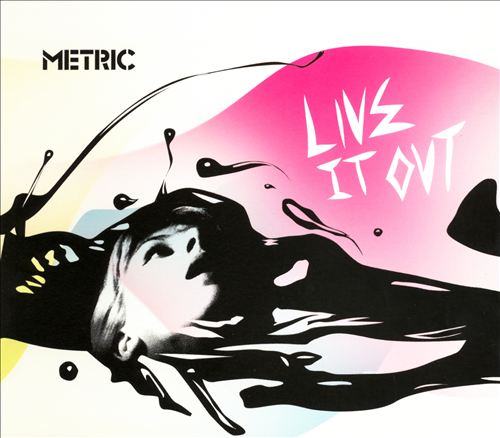
I enjoyed Metric’s Fantasies album so much that I bought their previous album (an album that I had written down as worth checking out about 5 years ago).  At first I was a little disappointed–the album doesn’t have the glow (or perhaps sheen or polish) of Fantasies.  Normally I prefer raw to polished, but it’s surprising to go the other way sometimes.  And after a couple more listens I really started to appreciate this album’s rawness.

The guitars are loud and pushy.  There are keyboards that dominate some songs, but they never make the songs poppy.  And Emily Haines’ voice sounds great.  The opener “Empty” has a lot of quiet sections, but the guitars really just burst forth.  It’s 6 minutes long but that’s mostly through a long intro and outro.  The rest of the songs stick firmly in the 3-4 minute range.  “Glass Ceiling” has a cool stuttering riff and a kind of awkward bridge–these first two songs kind of resist admittance (the piano/guitar solo is certainly a weird combination–which I like now of course).  “Handshakes” shows their more commercial side–a slick kind of guitar riff with Haines’ more aggressive vocals.  True the siren sound may turn off some, but it’s certainly a signature.  “Too Little Too Late” is a slow sultry number, but even more sultry is the sleazy-feeling (no doubt because of the keyboards) “Poster of a Girl.”  In addition to a cool spoken word section in French (the whole song is bilingual), we get the English lines “Coming in your pants/For the off chance/With a…poster of a girl.”

“Monster Hospital” is a fun punk blast that is still a live favorite for the band.  “Patriarch on a Vespa” has another rough riff with some cool bass.  It also features some disconcerting singing (ahahs that sound more than a little spooky).  “The Police and the Private” is one of the cool songs with easily singable but easily confusable lyrics.  While “Ending Start” has some great guitar riffs near the end.   “Live It Out” ends the disc with a staccato punk number.  It’s a perfect summation of Metric before they got more commercial.  And it’s a great addition for fans of the band.

[READ: July 8, 2012] The Big Meal

This play came as a supplement with Lucky Peach issue #4.

I have often maintained that it is much better to see a play than to read one.  Not a daring opinion, by any stretch. I have taken that to something of an extreme however, which means that I pretty much never read plays.  This has severely limited by Shakespeare intact, naturally.  It also means that a lot of great works are lost to me.

I’m using that information by way of introduction, not because I think this play compares to Shakespeare, but because this is one of a few plays that I have read recently that I’ve really enjoyed.  So I’m retracting some of my earlier thoughts about reading plays.  True, some plays with multiple characters can be confusing to keep straight (since defining characteristics are not given).  But in shorter plays or plays with not too many characters, it’s not so hard to read them.  And in fact, it can be a quick and enjoyable read.

Although this play complicates things immensely because of its (very cool) setup.  The setup is described in the introduction to the play: “The actors play multiple generations of one family…as they glide through time.  As the characters age, their “essences” pass from younger to older actors.”  So, the story takes places over a few generations of time.  There are eight actors.  Each actor plays multiple roles.  These roles correspond to the characters at certain ages.  So, for example, the youngest actor plays Character A as a child; the adolescent actor plays Character A as an older child; the middle-aged actor plays Character A as a middle-aged person, etc.   So that’s a little confusing (although I’ll bet it makes sense seeing it live).  What I like though is that this “gimmick” is not so much a gimmick at all, but a real indication of how we turn into our parents and an indication of how quickly time passes in this play. (more…)

Read Full Post »

SOUNDTRACK: SCHOOL HOUSE ROCK-“Interjection” (1975).

I can’t get over how much information I learned from School House Rock.  And, conversely, how kids don’t have exposure to this kind of educational material.  In part because it’s not made anymore, but also because we TiVo everything, so there’s no interstitials.  I’d love to be able to insert some of these into their shows that they like.

Interjection has got to be one of the best of the bunch (I have a top ten which is very different from the Best of CD that came out–where’s Verb?).  We were listening to this CD in the car the other day trying to get them excited about the songs (which definitely work better with the videos).  But since Clark’s story has an interjection, this was the obvious choice.

Relive the glory:

Darn.  That’s the end.

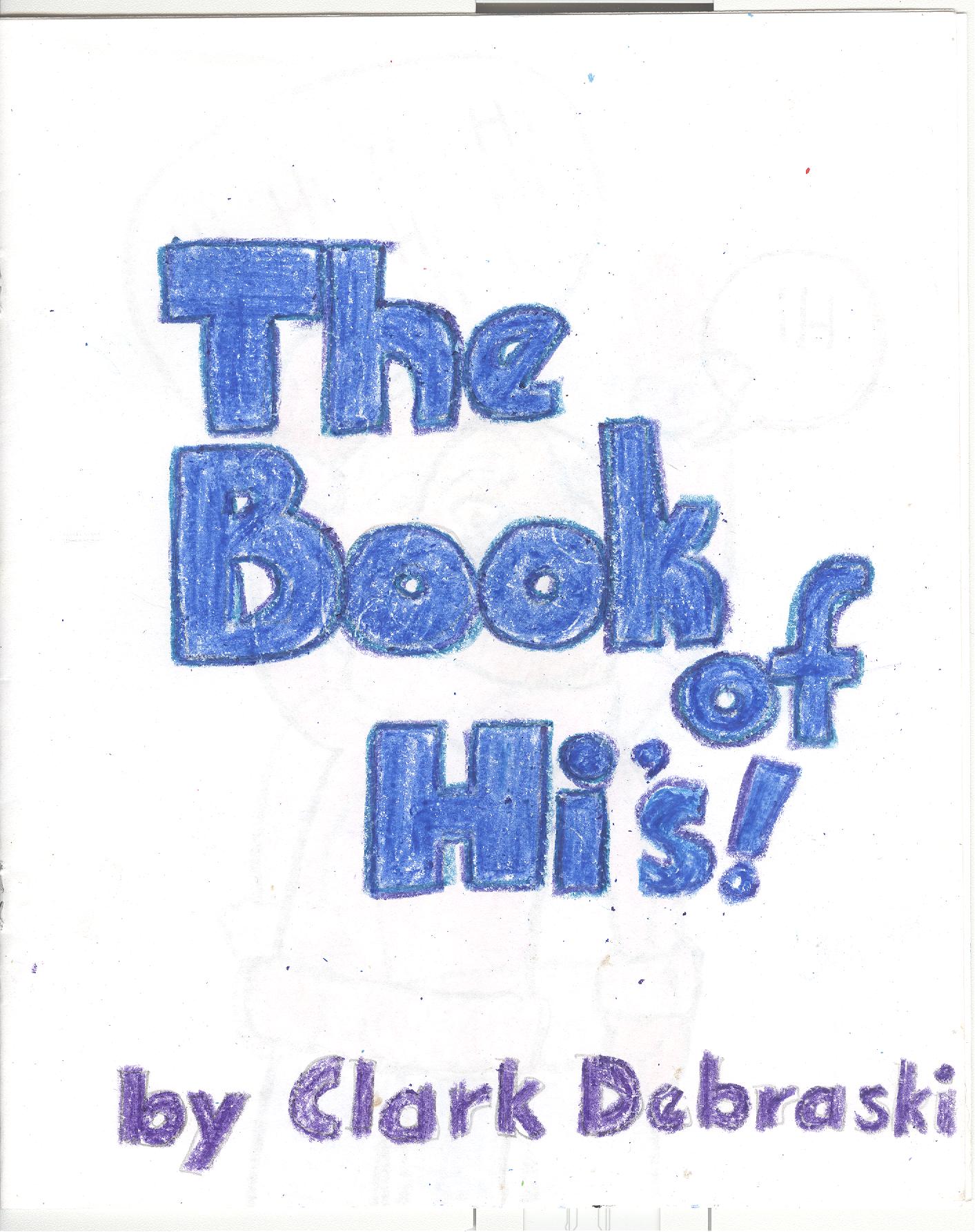
[CREATED: June 2012] The Book of Hi’s

Today is Clark’s 7th birthday!  Happy birthday, sweetheart!

I have told my kids that if they tell me stories, I will make them into books for them.  I even have a digital recorder if they want to recite stories that we can make together.  They are always coming up with stories that their toys play (mostly about jail and monsters and whatnot), but they don’t seem to want to record them for posterity.

Then one day Sarah and the kids were doing a craft that involved writing out stories (Sarah had stapled pages together).  Clark wrote this story.  And it cracks me up, primarily because I know he thinks it is very funny, but also because it is weirdly funny (if ever there was a kid who was almost ready for Monty Python, it’s this one).

He wrote it out very fast on one page of the book, so I decided to make a proper book out of it.  For your enjoyment, I present, in full, The Book of Hi’s. (more…)

Read Full Post »

SOUNDTRACK: SIX ORGANS OF ADMITTANCE-“Even If You Knew” (2012).

Lars from NPR’s All Things Considered picked this as his summer music preview song.  I don’t know a thing about Six Organs of Admittance, but their discussion of this song makes it seem like this is atypical for the band (which has a massive output).  Evidently they’re usually more droney sounding. But man, this song is pummeling and wonderful.

It’s seven minutes long and opens with a simple, plodding heavy bass riff.  The vocals are kind of whispered and strained.  But then comes the guitar solo–a raging piece of distortion that complements the bass.  And that’s just the first three minutes.

The second half of the song features a quieter section–the bass is quieter, while the guitar noodles around and the vocals play over the rhythm.  The song slowly builds again, and by the last minute or so there’s another fierce guitar solo. Until the song is exhausted by the final distorted notes.

This is some beautiful noise.  And, no I have no idea what the band’s name means.

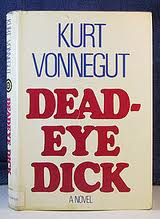
[READ: June 27, 2012] Deadeye Dick

Deadeye Dick is the last Vonnegut book that I was completely unfamiliar with.  I had no idea what it would be about.  So I didn’t realize until very late in the book, and then I looked online and confirmed that this book is set in the same location as Breakfast of Champions, Midland City, Ohio.  Indeed, some of the same characters appear in this book as appeared in that book.  But more about that later.

Vonnegut is not known for his happy books.  Misanthropy is pretty rampant in his pages.  But this book is one of his bleakest books yet.  The story concerns the Waltz family–Rudy (the protagonist) and his brother Felix are the only children of Otto and Emma Waltz.  Pretty early in the story we learn that Rudy is a double murderer.  Yipes!

As with most Vonnegut stories, this one is told in a convoluted and non-linear fashion.  He foreshadows (and really just casually mentions) a lot of crazy things that are going to happen in the book.  Like the fact that Midland City is going to be devastated by a neutron bomb.  In fact, his preface (like with many of his prefaces) tells us a lot about what’s in the book and who the characters are based on and the fact that there is a neutron bomb (but the reality of a neutron bomb is different from what he says).  There is something about knowing this information ahead of time that impacts the way you read the story.  Whether you think maybe he’s not telling the truth about what will happen (can the narrator really be a double murderer?) or maybe somehow the foreshadowing makes it even worse when it actually happens–the revelations are perhaps more deliberate.  But the style–a recursive style in which he says what happens and then he goes back and fills in the details, makes the events that much more powerful.

The funny thing about this story is that a lot happens to the characters in the beginning of the story and then not too much happens to them after that.  But that early stuff is pretty exciting and it has an impact all the way through. (more…)

Read Full Post »

SOUNDTRACK: BEACH HOUSE-“Myth” (2012).

I‘ve really been enjoying the previous Beach House record.  And in the meantime, he has released a brand new one.  “Myth” was selected as one of the best songs of the year by the folks at NPR, and it’s hard to disagree with them.

It’s not groundbreaking for Beach House (or anyone, really)–nice keyboards and guitars melodies, soaring vocals, a shimmering effect.  But like any band that hits its stride, Beach House makes a simple and beautiful song seem effortless.  How he hits some of those notes I’ll never know.  (Well, because he is actually a woman, duh).

You can see the NPR list here.  Or listen to the song (no video) here.

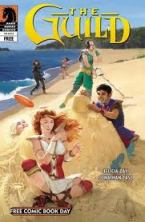
[READ: June 22, 2012] The Guild: Beach’d

My friend told me that the free comic book day was featuring a Buffy and a Guild together.  I misunderstood and thought that the two worlds would be intertwining.  No such luck. Rather, it was a split issue with one half being taken up by The Guild and the other half by Buffy the Vampire Slayer.  Which is still pretty awesome.

The members of Codex’s guild are lost for a place to gather now that Cheesybeards has burnt down.  Of course,  they are squabbling big time about it.  Codex doesn’t understand what the fuss is–just pick someplace. Tink just suggests that they never meet face to face again.  Ever.  But everyone else has some suggestions about where to go.

And when tensions flare up, they decide to battle it out.  Bladez proves the most formidable foe, killing most of his teammates.  The battle is awesome (I’m not sure what this does to their lives in the game, actually).  And he is pretty psyched that his spot–a strip club–will be there new permanent meeting place. (more…)

Read Full Post »

SOUNDTRACK: SATOMI KŌROGI-“Home is the best!” Ouchi ga ichiban (おうちがいちばん) (2008).

Sweet, over the top and not as catchy as one might expect, this is the theme from the animated Chi’s Sweet Home.  You can watch all 104 (!) episodes (they’re 3 minutes each) at Crunchyroll.  They’re in Japanese, subtitled in English, which is only a shame if your four-year old can’t read.

The show is basically the episodes from the books.  And the animation looks just like the books.

The theme song is sung in Japanese, which isn’t the problem–it’s just not as adorable as Chi is.

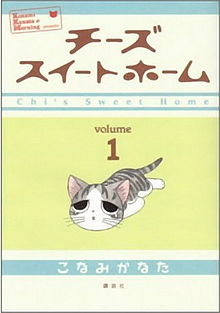
[READ: June 18, 2012] Chi’s Sweet Home

I saw Chi’s Sweet Home at the library and grabbed books 1 and 2.  I didn’t realize that there were 8 books!

Clark loved books 1 and 2 very much (it was quite his obsession for about three days–that’s pretty good for a seven-year old).  I wanted to read it too, and I am totally hooked.

Each book is comprised of twenty episodes, each is 8 pages long.  And they follow the adventures of Chi, a small kitten.  Kanata Konami is renowned for her cat manga, and it’s obvious why.  Chi is incredibly expressive–I love the way her feet go crazy when she is excited and the big smile she gets when something pleases her.  Of course, her angry face is also precious.

But unlike so many other animal stories, the adventures of Chi are simply the realistic adventures of a little kitten as she explores her new home and her environment.  The whole five that I’ve read so far seems to cover about a month, so Chi never grows up (although the family goes through quite a lot in that short time). (more…)

Read Full Post »

SOUNDTRACK: MASTODON-Crack the Skye (2009).

I’ve really enjoyed Mastodon’s previous records, and this one ranks way up there in intensity and songsmanship. There are 7 songs on the disc, with two over ten minutes long.  “Oblivion” opens with a great minor key chord plucked with single notes and a dropped E.  And when the vocals come in, they highlight the different vocals styles in the band–from a more screamy, almost punk voice to the more melodic/echoey voice of the chorus (kinda like Alice in Chains).  At about 4 minutes the solos play off each other wonderfully, both blistering and then melodic (with almost a Pink Floyd feel at one point).  “Divination” has some amazing guitar play both in the intro and the way the bridge soars with great guitar lines underneath the vocals.  “Quintessence” opens with furious drums and a great prog rock kind of guitar opener.  I love the way the bridge is a gentle (albeit fast) almost trippy section before the chorus bursts in with heavy, heavy chords and chants of “let it go let it go let it go”  It’s the kind of song where the parts work so perfectly together but which wouldn’t seem to.

“The Czar” is a four-part, ten-minute epic.  It opens with a creepy keyboard melody.  The first section is slow and heavy, and when part two comes in the guitars are loud and fast.  Part three has a great riff.  And the end has some gorgeous solos.  It amazes me that ten minutes can pass so quickly. It’s followed by the very heavy (lots of double bass drums) “Ghost of Karelia” the pretty much heaviest song on the record (with a nod to Voivod in the descending guitar solo about three minutes in).  “Crack the Skye” opens dark, but throws in some contradictory keyboard notes that lead to another cool extended guitar riff before jumping into a super heavy death metal verse.  This gives way to some more soaring vocals–the juxtaposition of these two vocalists is amazing.  Imagine the surprise then when the last third of the record has the vocals sounding completely robotic and phased–followed by a mess of guitar solos and concluding with some pretty guitars.

They fade into the final epic, the 13-minute “The Last Baron,” which is one of my favorite metal songs.  It opens with some great guitars and some really cool singing.  The vocals soar, the bass plays a great melody.  There’s a great heavy instrumental section but it keeps returning to the wonderful rising vocal melody line that will get stuck in your head for days.  It’s an amazing end to a great album.

The disc also comes with a DVD that’s all about the recording of the album.   I watched a few minutes and it seemed kind of fun, so I hope to watch it more soon.

[READ: June 17, 2012] The Architect

In the past, Connell’s books have explored all manner of depravity. His books were violent, often sexual and dealt with an otherworldliness that may or may not be internalized. Despite all of this transgressive material, his work was never schlocky, especially his later pieces which show an amazing growth in topics, word choices and imagination.

Connell’s previous books The Life of Polycrates and Metrophilias featured short stories that dealt with all manner of topics.   In Metrophilias, the stories were very short, and it allowed Connell to really explore an idea to its fullest without having to make a “book” about of each one. The short length also allowed him to make the words choices and descriptions more effective.

All of the benefits are reaped in this book, a novella.

Although I enjoyed Connell’s previous longer works, I really loved the way this story started with one idea and stayed with it. Some of his other books are a bit more episodic, which worked for those stories, but in this one, we’re in one place and we are pretty much going to stay there.  And that focus makes this story all the more powerful.

The one thing that hasn’t changed is Connell’s scholarship (both real and fake). For this book is a celebration of Dr Peter Körn (1849-1924), visionary and spiritual scientist. As the story opens, four members of the Körn Society are discussing plans for the new Meeting Place, a central location where all members of the Körn society can gather. They are disgusted by the pedestrian, commercial and rather offensive submissions that they have received for their building—a building that should reflect the spiritual visions of Körn.

Dismayed at the architects who have submitted, one of the members of the Society, Maria Venezuela tells the other three that her nephew Peter De la Tour will soon be arriving with something special.  Peter brings them a book of architecture designs by Herr Nachtmann.  These designs are bizarre and wonderful–organic, amoebic, gravity-defying gorgeous monstrosities–exactly the kind of thing the Society is looking for.  Although one member feels that they are impossible to build, the others are firmly on board.

The challenge then is to find the man. There is some history about the man himself–his genius in and out of school followed by his utter inability to have his work taken seriously by the establishment.  He even had one of his more ingenious ideas stolen by the very teacher who said it was terrible.  And so, when Peter finds him, he is little more than a drunk at the end of the bar.

Yet his ego has never been diminished, and when he is presented to the Society he dismisses their concerns and even tells them that he will not wait for their decision–they have 30 minutes to say yes or he walks.  They agree and he begins working on his masterpiece.

The Society loves the sketch–they know it will be expensive, but Nachtmann promises fast work, effective designs and world-wide acclaim.  Amazingly, he delivers.  He works his men hard.  All through the spring and summer and into the fall, the men work carelessness and the building rises at a phenomenal rate.  Even if it seems to be growing larger than designed. (more…)

Read Full Post »

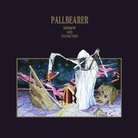
SOUNDTRACK: PALLBEARER-“Legend” (2012).

For the past several years, NPR has been one of my favorite resources for new music.  They feature a new song every day, they play first listens of new albums, they have downloadable concerts and much more.   And every year their best albums picks invariably feature and album or two that I hadn’t heard of which prove to be amazing.

But this first half of the year’s album picks are really kind of disappointing. It’s a diverse mix (Leonard Cohen, Sharon van Etten, Bobby Womack, fun., some rappers I don’t know, a little classical, Spiritualized).  I’m not saying these choices are bad, I actually haven’t heard most of them.  But there was nothing that made me jump up and say, how did I miss that?

But then there was this cut from Pallbearer.  It’s a dirgey death metal song, slow and heavy.  Lately I’ve enjoyed death metal but I’ve been disappointed by the vocalists.  Pallbearer has a guy who can sing and whose voice rings through the sludge.  And there is sludge–some of the notes sound like the guitar is completely de-tuned.  But what’s cool about the recording is that it doesn’t sound sloppy or mushy–you can hear the sludginess in all its clarity.  The guitar solo is interesting too.  It also soars above the sludge, but it’s not a shredding solo, it’s melodic and quite pretty.

I’ll check out more from Pallbearer.  I’m always excited to see NPR promoting death metal.  It’s as good juxtaposition as the parts of this song itself.

You can see the NPR choices here.

[READ: June 10, 2012] Ghostopolis

Sarah gave me this book after reading it quickly and raving about it (this after our friend Megan gave it to her and raved about it).  And I read it quickly and will rave about it now too.

The book opens with an airplane that is having engine trouble.  The airplane, it turns out, is being flown by a little boy name Garth Hale.  Because it’s a toy plane (the reveal is great).  He’s being gross (barf bags everywhere) until his mother can’t take it anymore.  But she has reason to be gentle with him.  She has just found out that her son’s disease is incurable.

Meanwhile Frank Gallows is a special agent whose job is to send ghosts back to the afterlife.  He has a cool handcuff-like device that he has to attach to the ghosts’ arms or legs.  He then pushes a button and poof, back they go.  His first assignment today is to get Benedict Arnold (who plays a big role later on) out of the world.  Then he goes after a horse–a skeletal nightmare horse–which is overpowers for him.  As it floats through a wall, Frank manages to shackle its legs and poof.  Only after the poof does he realize that the horse was on top of a little boy.  A boy named Garth Hale.   Frank is in big trouble. (more…)

Read Full Post »

SOUNDTRACK: LMFAO-“Party Rock Anthem” (2012).

My son doesn’t seem to care about music.  It’s shocking to me since I love music so much.  He really likes They Might be Giants’ Here Comes Science, but I think more for the words than the music (which makes me proud for other reasons).  He likes the music from Kirby and Star Wars and he liked some Mogwai because it sounded like a soundtrack to a movie.  When he sings to himself it’s always the tune from Christmas Carols.  In fairness, I didn’t really appreciate music until I was 7 or 8, but so many young kids seem to really be into music (with amazingly bad taste), that I’m not sure what to think.

So the other day he was singing some words to this song.  I was shocked.  Where in the hell had he heard it anyhow?  Then the other night his CD player didn’t work so I tuned in a random radio station and he heard this and wanted it on.  So, he finally has a song that he likes.   I hadn’t really listened to this song, so I figured I’d give it a try.

I don’t really have an opinion of it.  It’s a dance song.  It reminds me of Daft Punk and maybe early Prodigy.  I’m a sucker for the keyboard riff that sounds kind of twisty (fake electronic music appeals to the sci-fi geek in me).  Lyrically it’s innocuous enough I guess–it is a dance song after all (wait are they dissing The Beatles and Led Zeppelin?).  The funny thing to me about songs like this is that they are all kind of interchangeable–each year or so someone comes out with a new dance theme that everyone can pogo to and do X to and “have a good time.”  I think perhaps that this was even played at a recent Cub Scout function to the confusion of most of the adults.

Since my son doesn’t dance and would certainly never dance in public (I don’t even think he’d even “put his hands up”), I’m not quite sure what the appeal of this is to him (“other kids like it” is probably as far as it goes).  But hey, maybe this is a gateway into his actually wanting to listen to his dad’s music.  [And when does he ask me what LMFAO means?  Probably never, because he has no idea that that’s the band’s name].

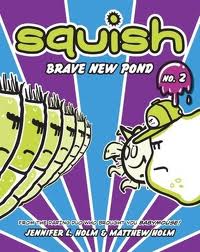
[READ: June 6, 2011] Squish: Brave New Pond

The second squish issue depends a bit on the first one.  There are a number of references in the book to the first one (with a comment about half way through that says to just go and read the first one already).

In this one Squish, who is an amoeba, is reading a comic about Super Amoeba.  He’s a superhero who helps everyone in Small Pond (including an amusing scene where a girl drops her ice cream and he flies to her rescue).   But then he is asked to join The Protozoans, heroes who help the World, not just Small Pond.  And Super Amoeba is thrilled  and is soon off to join them (in their spiffy (and tight) uniforms).

This parallels to Squish’s own situation.  It’s his first day of school.  And he has decided to make some changes.  Maybe he won’t hang out with his old friends so much, maybe he’ll try to become more popular, maybe he’ll even get picked for the kickball team, and maybe, just maybe, he’ll get to hang out with The Algae Brothers, the biggest, meanest, coolest kids in school.  [This story line has striking parallels to Queen Bee, eh?  Does anyone ever make stories from the POV of kids who are already popular?].

He has a hard time ditching his old friends (they’re so clingy).  But it turns out that last year, when Squish stood up to Lynwood, the meanest amoeba in the pond, the Algae Brothers noticed.  And when they recognize him, they invite him to hang with them (where nachos with cheese are actually delivered to their table at lunch!).  He’s made it!

Being cool is pretty great.  Sure he misses his old friends a bit, but everyone is in awe of his new found status. (more…)

Read Full Post »

SOUNDTRACK: Retro songs for teen audiences (ie. Glee) (2012).

I’m not really going to talk about Glee here.  I’m using it as a springboard for a question that the show has raised for me.  And this question pops up a little in Queen Bee as well.  I know that retro things are always cool.  Full stop.  And I know that the retro coolness shifts accordingly to be always 20/25 years in the past.  But in my experience, the retro craze pretty much applies to fashion, not necessarily to music.

So given that, it makes me wonder about the premise of some of the music on Glee.  Now, I know, Glee is about as far from reality as anything on the Syfy Channel.  I accept that.  I accept that the universe in which the show is set is more or less not even our own.  But when they have nods to actual history, I’m curious.  And this leads me to ask:  Do kids in high school really care about Michael Jackson?  Or, more to the point, about Whitney Houston?  I mean, sure if you’re in glee club, you’ve probably had to sing “I Will Always Love You” a million times.  But were high school kids really upset when she died?  I mean, sure she released an album in 2009 (that I didn’t even know about) and it went to #1 (really?), but in terms of actual pop relevance, she’s been on the down low since the 90s.

I don’t know any high school kids well enough to ask them about this, but I knew some middle school kids when I worked at the library, and they were all about whoever the flavor of the minute was.  Again, musically talented kids may be different, but it seems really odd to me that even on Glee, the kids seemed to love some retro songs and then of course were arbitrarily against some other ones.  [That’s a good subtitle for the writing of the show: “Glee:  It’s All Arbitrary”].  I think back to my high school years, and I didn’t like anything retro, in fact I thought all old music sucked.  (Of course I listened pretty much only to heavy metal, so I’m not a good sample audience).  But aside from some Simon & Garfunkel, I don’t recall there being a lot of folkie kids in my high school.  The cool kids listened to 80s pop and the alt-kids listened to college music.

This brings to Queen Bee.  The song that she chooses to sing (see below) is The Go-Go’s “We Got the Beat.”  A classic of 80s pop music, undoubtedly.  And yet, I have to wonder how many kids in her middle school class even knew the song.  A bit of research shows that it has been used in films and such, but would that have garnered any real recognition/excitement?  Aside from the fact that it’s catchy as anything and the drumming is awesome, of course.  [I also realize that that isn’t the point of her using the song in the story, I’m moving beyond the text here].

I know this is all fiction and I just need to relax.  But I’m mostly curious.  Aside from getting stuck listening to their parents iPods, do kids actually listen to older music?  When I was little my parents listened only to big band music.  And I hated it.  Until I got to college and realized it was pretty cool.  But still, in my teen years, I was all about the present.  Isn’t that the point?

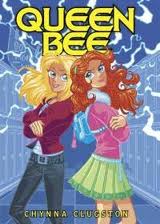
[READ: June 5, 2012] Queen Bee

I have enjoyed most of Chynna Clugston’s books (Blue Monday and Scooter Girl in particular).  I love her style of drawing (anime, but with a twist) and her pop culture sensibilities.  I had no idea that this book existed until I saw it in the children’s comics section at the library!

I also assumed that this was an earlier work by her (what’s she doing writing for Scholastic?).  But no, this book came out many years after the books I love so well.  It’s kind of funny that she went from alt rock hipness to middle school (and then moved to Legion of Super Heroes).  But wait, she hasn’t done anything in five years?  Gasp.  Actually I see she has a new blog and a new husband–so she’s clearly busy.

Anyhow, back to the book.

This book is set in middle school.  It features a young woman named Haley Madison (that must be a joke about over-common names).  She is a geek and a loser.   But when her mom gets a new job at the hippest and coolest teen magazine, Haley gets to move to a new school.  Which means fresh start!  And she plans on becoming the queen bee at JFK intermediate.  She is introduced to a nice girl named Trini.  Trini shows her around and introduces her to her cool friends (who are super nice to her).  But when Trini shows her the Hive–five girls who are super duper popular, Haley has a goal in front of her. (more…)

Read Full Post »

SOUNDTRACK: RUSH on Archer (2011-2012).

Not really a soundtrack, but I wanted to mention some of the Rush references in Archer.

I was really hoping to use the Rush in Cleveland DVD as my Soundtrack, but I haven’t finished it yet.  And yes, I am padding this out a bit so that the pictures fit nicely.

Cobra Cobra Cobra (that’s a joke to the book below).

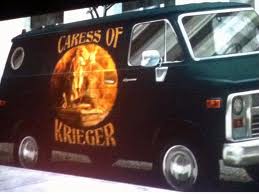
The Archer guys like Rush and they put nods to Rush in occasional episodes–usually through mad-scientist (I want to call him The Professor), Krieger.  Here’s three of Krieger’s vans.

I love the detail that went into “Vanispheres.”  Since Krieger always wears a lab coat, it’s a wonderful detail to have him wearing it as the nude man.  And, of course to have him as both the nude man and the clothed man is perfect.

Since it’s my favorite obscure Rush album, the Caress of Krieger van just cracks me up the most.

And just to add to the fun here’s a video of Krieger’s Neil Peart-like drum set

It’s pronounced “Why Why Zed.”

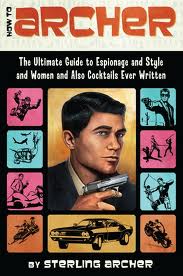
[READ:May 9, 2012] How to Archer

Although the Archie Meets Kiss comic proved to not be the joy I’d hoped, How to Archer easily made up for it.  I love Archer, it is one of my top ten shows ever, I think.  And this book is basically a print version of the show.

It’s designed as a how-to manual written by Sterling Archer himself.  He gives you tips on how to become the world’s best secret agent.  He teaches you how to dress (the details about buying shoes are amazing), how to drink (he provides cocktail recipes and his own opinion of subpar drinks), how to eat (a recipe for Eggs Woodhouse that sounds divine) and even a secret to gambling!

The fact that Archer is an abrasive, cocky, sexist, racist dick only makes the book that much funnier.

If you haven’t seen Archer (on FX), it’s a cartoon about a spy.  His mother, Malory, owns the spy agency and they have a very contentious relationship.  (The fact that his full name is Sterling Malory Archer should be just one clue to that).  Malory gets the introduction to the book, which is pretty darn funny as well. (more…)

Read Full Post »

« Newer Posts - Older Posts »