Feeds:
Posts
Comments

Archive for the ‘Sexual Assault’ Category

SOUNDTRACK: MESHELL NDEGEOCELLO–Tiny Desk (Home) Concert #167 (February 10, 2021).

I bought Meshell Ndegeocello’s Plantation Lullabies back in 1993 on the strength of “If That’s Your Boyfriend,” a funky track that is still pretty great.  I didn’t realize she had been steadily putting out music ever since.

This Tiny Desk (home) concert … includes songs from throughout her career framed by her thoughts on the importance and influence of James Baldwin: “He deserves flowers every day. Most of all because he was willing to discuss things that were painful, hard to look at, hard to see, hard to accept.”

Ndegeocello is a bad-ass bass player with a serious funk edge.  And yet in this Tiny Desk Concert, she strips almost all of that away.

The first song comes from Lullabies, but in this version of “Step Into the Projects” she strips away all the music and turns the song into a spoken word piece (although she does keep the rhythm of the original).

For the next three songs she is accompanied by her longtime guitarist Chris Bruce.

“Price of the Ticket,” is from Ndegeocello’s recent project, Chapter & Verse: The Gospel of James Baldwin, “a 21st century ritual toolkit for justice” inspired by Baldwin’s The Fire Next Time.  In the track, it’s just Bruce’s gentle guitar and Meshell’s quiet voice.

“Forget My Name” from Comet Come To Me (2014) is stripped down from its original reggae arrangement and lays bare the haunting imagery in the lyrics.

She plays some spare bass, but musically it’s all about Bruce–the cool low riff and the pretty high melody.

“Fool of Me,” from her acclaimed album Bitter (1999), ends the set with just vocals and guitar.

Like the other songs, it is spare and beautiful, allowing you to really hear the words.  I love Meshell’s funk, but this is a beautiful set.

[READ: March 29, 2021] Parable of the Sower [2026-2027 (chapter 19)]

I have not read Cormac McCarthy’s The Road, and I don’t intend to.  But I feel like this book acts as a precursor to that one.  And that is something I did not in any way expect.

2026 opens in June, almost seven months after the previous entry.  I’m curious about the distance between entries.  It’s possible that Lauren has dozens and dozens of pages that just said, “today sucked” and we don’t need to see that.  But I am curious about the time jumps.

Is it a way for Butler to move us ahead quickly so that something that needed to take a few years to happen is given the time to do so?  I’m thinking about Mars a bit.  In two years a lot can happen with the space program.  Of course, the President was supposed to cancel the program.  So who knows what’s going on there.  Aside from basic passage of time, did we need to wait six months to see what came next?  I’m not sure.

In June Keith is back–bigger and more confident.  He’s not yet 14, but he’s very successful, bringing home money and gifts (but none for his father).  He has ingratiated himself into a gang by being the only literate one in the group:

They’re all older than me, but not one of them can read or write anything.  They stole all this great stuff and they couldn’t even use it.  Before I got there they even broke some of it because they couldn’t read the instructions. (105)

Lauren and Keith have a heart-to-heart–really their first ever.  He learns a bit about her and while he gains a little more respect he also tells her that she’d never survive out there–she doesn’t know enough.  He also tells her about these new crazies called Paints who paint their skin green or blue or yellow and eat fire and kill rich people.

Keith comes back on her birthday and gives her a present.  A month later he is dead–killed in a horrific and gruesome way.  He was clearly tortured and left to be found.  His death was a message for someone–a rival gang, probably.

But they don’t call the police:

cops liked to solve cases by “discovering” evidence against whomever they decided must be guilty.  Best to give them nothing.  They never helped when people called for help.  They came later and more often than not, made a bad situation worse. (114)

In October, a new component to the story crops up.

Kagimoto, Stamm, Frampton and Company (KSF) has taken over a nearby town called Olivar.  It is small and well to do.  The citizens voted to let their town be taken over–privatized.  They intend to set up energy resources in the community–solar, wind, desalinization.  They mean to own great industries in an area that people have given up on.

Kagimoto, Stamm Frampton: Japanese, German, Canadian.  When I was young, people said it would come to this. Well why shouldn’t other countries buy what’s left of us if we put it up for sale. (121)

This is another aspect of the story that confuses me.  Is it basically that Los Angeles has exploded and the rest of the country is okay?  There’s talk about work up north, but why?  What happened to the country that they/we would let L.A. collapse but nothing else.  Or maybe it’s the entire South West?  Nobody knows anything about the East Coast, apparently.   I’m hoping that they will get explained a bit later on.

Olivar was accepting applications to live there.  They were looking for educated people.  And here we learn that both of Lauren’s parents have PhDs [a commentary on the invisibility of Black scholars?].  Her stepmother thinks it’s a great idea to go to Olivar.  They would be guaranteed safety and security.  But her father is against it, calling it “half antebellum revival and half science fiction” (122).

Anyone KSF hired would have a hard time living on the salary offered. In not very much time, I think the new hires would be in debt to the company.  That’s an old company-town trick–get people into debt, hang on to them and work them harder.  Debt slavery. That might work in Christopher Bonner’s America. Labor laws, state and federal are not what they once were. (121)

Come November, the Garfields have been accepted at Olivar.  The Garfieds include Joanne, Lauren’s one time best friend (who misplaced Lauren’s trust by tattling to her father).  Joanne has been serious with Harry Balter.  But Harry is staying in Rebledo.  Lauren suggests they get married and then Harry can move in with them, but she says that Harry wants to get married and travel north.  He thinks they way Lauren’s father does about Olivar.

But the Garfields are still going: “conservative and sensible and mature and wrong” (128).

In November, Lauren’s father did not come home one night.  They spend days looking for him with no luck.  The search parties uncover all kinds of remains, some of which they think might be her father’s but which turn out not to be.

The search also reveals an aspect of Lauren’s hyperempathy that we didn’t know–sound doesn’t trigger it (she hears a man screaming), only sight does.

Five days alter they have a Sunday survive that turns more or less into a memorial.  Lauren speaks at he service and proves to be powerful preacher.  She speaks of God but presumably she means her own god–the earthseed god.  By mid-December they have a formal funeral–they accept that he would have found his way home by now.

Later, when KSF came for the Garfields, it was in an armored truck

The two movers were a black and a white, and I could see that Cory considered that hopeful.  Maybe Olivar wouldn’t be the white enclave that Dad had expected. (139)

All along Lauren has been romantically involved with Curtis.  People anticipated that she would get married an have a baby with him–something she strongly resisted.  Indeed, her plan all along was to leave Rebledo without him.  But now with Lauren’s father gone (he was the reason she hadn’t left yet–she didn’t want to hurt him), Curtis suggests that they both go.  He’s upset that she wanted to go without him, but she explains that she didn’t want to force him to make that choice.

Two days later, someone burned down the Payne/Parrish house; while that was going on. they robbed three of the other houses including Lauren’s.

I’ve been frightened at the phrases that Butler says that prove eerily prophetic to the last few years:

People are setting fires because they’re frustrated, angry, hopeless. They have no power to improve their lives, but they have the power to make others even more miserable.  And the only way to prove to yourself that you have power is to use it.  (143)

Interestingly, the drug that gave Lauren her hyperempathy–Paracetco–was initially a legitimate drug intended to help victims of Alzheimer’s disease.  Pyro was an accident–a homebrew on the East coast it made it was away across the country.

People on the fire drug get off on watching things burn.  Blaze, fuego, flash, sunfire.  The most popular name is pyro short for pyromania [I’m fascinated that she needed to spell that out as I feel that in 2021 (and much earlier) it was a common abbreviation].

As the year ends, the families try to make due with what they have left.

Then we enter 2027.  Once again it’s six months into the year.  And this is when things change dramatically.   Thieves drove a truck through their wall and set everything on fire.  Nearly everyone in the community was killed.  [I did wonder if it was worthwhile learning anyone’s names, and it was two people I didn’t think twice about who survived].  The description is a violent orgy of death, rape, fire and who knows what else.  It is brutally described.  Lauren escaped.  She had the forethought to run back in and put on clothe and shoes and grab her bug out bag.  No one else in her family had done so. She saw them n bare feet and pajamas and then she didn’t see them any more.  She managed to get outside and to hide until the next day,

She crept back into her community and went to her house which was being looted and stripped. She knew where there were some hiding places and she managed to get clothes for her family as well as money that was hidden in the ground.  She grabbed a gun and got out, looking like all the other miserable looters.

Lauren was sure she was alone.  Then out of the rubble came Harry Balter and Zahra Moss–the youngest wife of Richard Moss the polygamist.  Zahra’s baby was killed (brutally) and an attacker was about to (or had begun to) rape her when Harry saved her (and got beaten for his help).  Neither one had planned for anything like this and they are pretty hopeless.  Lauren decides that three is safer than one and invites them to go North with her.

Zahra’s backstory is interesting.  Richard bought her from her mother who was a drug addict and a prostitute.  Zahra has lived on the streets and she knows what’s what.  She takes them to Hanning Joss, the biggest secure store complex.  I’m fascinated to learn that there are are still megastores and that they have security allowing people to shop safely there–commerce always wins.

Then they do what everybody else does–they head North.  Lauren has decided to pass as a man.  She’s tall and muscular and can do so, so she cuts her hair short.  They encounter much danger and violence but manage to get relatively far north.  Harry is a trusting guy, trying to avoid violence in any way possible.  But Lauren (and Zahra) knows the reality of the situation–kill or be killed; steal or be stolen from.  And with Lauren’s hyperempathy, she can’t afford to let people around her suffer.  She winds up cutting a man’s throat to stop the hurting that he (and she) are feeling.  Harry is appalled at her.  So she finally admits to her hyperempathy assuming they’ll abandon her.  But they do not–three is better than two.

Zahra and Harry become a couple and have unprotected sex (what harm could come from that?)

Then the trio meet another family who seems to be tagging along after them.  Everyone is out for themselves, but Lauren takes pity on this mixed race couple with a baby.  She helps them out at the second Hanning Joss and a few days later, when Lauren saves their baby from a feral dog, they agree that five (or six) is better than three and two (or three).

The new people are Travis Charles Douglas, Gloria Natividad Douglas and six month old Dominic. They are going to Seattle where Travis’ aunt lives.  Travis is quite taken aback when he learns that Lauren is a woman–especially since she saved them, but he’s going to have to get over it.

All of this time, Earthseed has been running around in Lauren’s head, but it hasn’t really shown up.

Then in chapter 18, Lauren starts talking to them about Earthseed.  Travis is a (surprisingly) intelligent man–he knows about entropy.

Travis’s mother was a live in cook for a rich man.  But before that she had written for newspapers and magazines.  She taught Travis to read. The man she worked for had a library and she would sneak out one book at a  time–he didn’t want Travis touching his stuff.

Of course. Slaves did that two hundred years ago.  They sneaked around and educated themselves as best they could sometimes suffering whipping, sale or mutilation for their efforts. (218)

Natividad was a maid and the rich man let them marry:  The son of the cook marrying one of the maids. That was like something out of another era too.

They discuss her poems–Earthseed.  Travis pushes back against her ideas, although never in an aggressive way.

She argues that here is no pore pervasive power than change.  Travis says that nobody is going to worship change.  Lauren says she hopes not

This excerpt from God is Change summarizes this discussion nicely:

“I was looking for God. I didn’t know whether there was a god to find, but I wanted to know. God would have to be a power that could not be defied by anyone or anything.”
“Change.”
“Change, yes.”
“But it’s not a god. It’s not a person or an intelligence or even a thing. It’s just … I don’t know. An idea.”
“It’s a truth. Change is ongoing. Everything changes in some way— size, position, composition, frequency, velocity, thinking, whatever. Every living thing, every bit of matter, all the energy in the universe changes in some way.”
“Sort of like saying God is the second law of thermodynamics?”
“That’s an aspect of God. There are all kinds of changes in the universe.”
“But why personify change by calling it God? Since change is just an idea, why not call it that? Just say change is important.”
“Because after a while, it won’t be important. People forget ideas. They’re more likely to remember God— especially when they’re scared or desperate.”
“Your stuff isn’t very comforting.”
“It is after a while. I’m still growing into it myself. God isn’t good or evil, doesn’t favor you or hate you, and yet God is better partnered than fought.”
“Your God doesn’t care about you at all.”
“All the more reason to care about myself and others. All the more reason to create Earthseed communities and shape God together. ‘God is Trickster, Teacher, Chaos, Clay.’ We decide which aspect we embrace— and how to deal with the others.”
“But nobody’s going to worship change.”
“I hope not.  Earthseed deals with ongoing reality, not with supernatural authority figures. Worship is no good without action. With action, it’s only useful if it steadies you, focuses your efforts, eases your mind.”
“Praying makes people feel better even when there’s no action they can take. I used to think that was all God was good for.”
“That isn’t what God is for, but there are times when that’s what prayer is for. And there are times when that’s what these verses are for. God is Change, and in the end, God prevails. But there’s hope in understanding the nature of God— not punishing or jealous, but infinitely malleable. There’s comfort in realizing that everyone and everything yields to God. There’s power in knowing that God can be focused, diverted, shaped by anyone at all. But there’s no power in having strength and brains, and yet waiting for God to fix things for you. Best to understand that and return the effort: Shape God.”

Lauren thinks he might join her movement.  Zahra is already on board.

She imagines finding and isolated place on the coast and making a deal with the owners–if there were more of them and they were better armed, they could provide security as well as education.

This fantasy, this plan gives the first sign of hope in this bleak world of Lauren’s.  It seems impossible.

Read Full Post »

SOUNDTRACK: THE MOTHERS OF INVENTION-“Trouble Every Day” (1966).

Frank Zappa and the Mothers of Invention would play all kinds of music over the course of their existence (even more genres added when Frank went solo).  It’s not even entirely clear how you’d describe their first album Freak Out!

This song opens up side three of the double album and is a bluesy song based around a four note (and one bent note) melody and includes harmonica solo.  The song runs almost 6 minutes long and doesn’t change much until after about five and a half the tempo increases dramatically until the song fades.

It was written after the Watts Riots.  It was an accurate description and also sadly prescient.

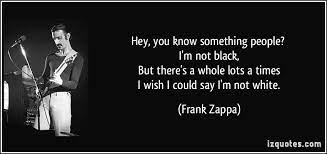
Right in the middle of the song Frank states:

Hey you know something people I’m not black But there’s a whole lots a times I wish I could say I’m not white

That seems like it was a pretty powerful thing to say (and something you’d be unlikely to hear on the radio) back in 1965.

The chorus sticks with us

So I’m watchin’ and I’m waitin’
Hopin’ for the best
Even think I’ll go to prayin’
Every time I hear ’em sayin’
That there’s no way to delay
That trouble comin’ every day
No way to delay
That trouble comin’ every day

He certainly predicted the state of 24 hour news

Well you can cool it, You can heat it…
Cause, baby, I don’t need it…

Take your TV tube and eat it
‘N all that phony stuff on sports
‘N all THOSE unconfirmed reports
You know I watched that rotten box
Until my head began to hurt
From checkin’ out the way
The newsmen say they get the dirt
Before the guys on channel so-and-so
And further they assert
That any show they’ll interrupt
To bring you news if it comes up
They say that if the place blows up
They’ll be the first to tell
Because the boys they got downtown
Are workin’ hard and doin’ swell,
And if anybody gets the news
Before it hits the street,
They say that no one blabs it faster
Their coverage can’t be beat

Things haven’t changed since this song was written

And it’s the same across the nation
Black & white discrimination
They’re yellin’ “You can’t understand me!”
And all the other crap they hand me
In the papers and TV
‘N all that mass stupidity
That seems to grow more every day
Each time you hear some nitwit say
He wants to go and do you in
Because the color of your skin
Just don’t appeal to him
(No matter if it’s black or white)
Because he’s out for blood tonight

Perhaps the theme verse for recent events

Don’t you know that this could start
On any street in any town
In any state if any clown
Decides that now’s the time to fight
For some ideal he thinks is right
And if a million more agree
There ain’t no great society
As it applies to you and me
Our country isn’t free
And the law refuses to see
If all that you can ever be
Is just a lousy janitor
Unless your uncle owns a store

It’s a shame this song still resonates.

[READ: March 22, 2021] Parable of the Sower [2024-2025]

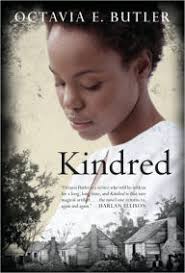
I found Kindred to be an enjoyable (not exactly the right word, I know) novel.  I thought the premise was really cool and I thought the content was impactful and was conveyed really well.  It was a powerful story that did not shy away from brutality.

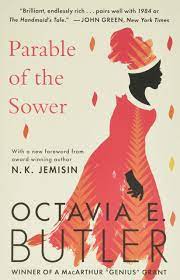
But it in no way prepared me for Parable of the Sower.

I didn’t know anything about this book at all before starting.  At first I thought it was neat that it was set in 2024 (hey that’s so close!)  And that, coincidentally, myself and my daughters are almost the same ages as the main character and her father (will this be our future?).

But then, holy crap, Butler doesn’t hold back.

The brutality of Kindred was based on reality.  It was horrible and, in retrospect, hard to believe that people could do such things.  The brutality of Sower, however, is all based on the future projection.  The book was written in 1993. Basically, she posits that in 30 years, America has become a rotting hellscape.  And while we haven’t reached quite the levels that she imagines, there are some pretty eerie accuracies.  I have to assume, given the natural of the elected politicians, that some things are going to get very very spookily prescient.

The book opens in 2024 with a quote from Earthseed.  We don’t know what that is yet, but by the end of this week’s read we’ll learn that Earthseed is a sort of manifesto written by the main character, Lauren Oya Olamina–I didn’t realize her name was given after the first quote from Earthseed until looking back on it.  Each chapter has another quote from Earthseed and then the story unfolds as a series of diary entries. (more…)

Read Full Post »

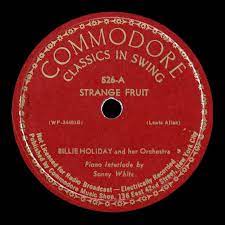
SOUNDTRACK: BILLIE HOLIDAY-“Strange Fruit” (1939/ (live1959)).

This haunting song is sung with minimal piano accompaniment.  In between verses, the original version has some stark trumpet solos, although they are not present in this live version.

Southern trees bear a strange fruit
Blood on the leaves and blood at the root
Black bodies swingin’ in the Southern breeze
Strange fruit hangin’ from the poplar trees
Pastoral scene of the gallant South
The bulgin’ eyes and the twisted mouth
Scent of magnolias sweet and fresh
Then the sudden smell of burnin’ flesh
Here is a fruit for the crows to pluck
For the rain to gather
For the wind to suck
For the sun to rot
For the tree to drop
Here is a strange and bitter crop

She sings the words slowly (the song is 3 minutes long despite the relatively few words), letting the image linger in your mind as she stretched out “burning flesh”  and “for the crows to pluck.”  The way she agonizingly sings “drop” and “crop” really emphasizes the last lines.

The studio version has a haunting guitar line–the only guitar in the song–as a little coda.  It’s a remarkable addition and really affecting.

I can’t imagine the courage it took to sing these words in 1959 let alone 1939.

This song has a fascinating origin.

Thomas Shipp and Abram Smith were two Black men who were hanged in a spectacle lynching in 1930.  A photograph was taken by studio photographer Lawrence Beitler.  He sold thousands of copies of the print [which is amazingly disturbing and I can’t imagine who would have bought them].  In 1937 Abel Meeropol, a Jewish school teacher from New York City saw a copy of Beitler’s 1930 photograph which “haunted [him] for days” and inspired his poem “Bitter Fruit” which was published in The New York Teacher in 1937 (under the pseudonym Lewis Allan). Meeropol then set his poem to music, renaming it “Strange Fruit” which Billie Holiday recorded in 1939.

[READ: March 8, 2021] Kindred [the fight]

This week took us to the end of the book.

Dana arrived home with Kevin this time.  He’s initially happy to be home, but is soon very restless. He was in the past for five years.  They have only been in their new house together a few days–noting is familiar here.  He is agitated and irritable.  He tells her about some of the horrible things he’s seen like a woman dying in childbirth.  It’s interesting that this horror comes from Kevin telling Dana about a woman’s whose master beat her until the baby fell out of her.

I feel like Kevin is overreacting to his return–his agitation seems way too great.  I realize that things are new in this house, but you’d think that even after five years, being home wouldn’t be such a bad thing.  And then he tells a story like the above and while I still don’t understand why it’s not just a relief to be out of there, i can see that he’s got PTSD.

But he was jumpy–the sound of jet overhead freaked him out.  Again, would five years without a jet overhead make you forget that they existed before hand?

Earlier Dana had been concerned that Kevin could be “won over” to the bad side. But he tells her that he had been helping slaves to escape.  he even imagined that they might both want to go back to help more slaves escape–to do good historically speaking. (more…)

Read Full Post »

SOUNDTRACK: NINA SIMONE-“Mississippi Goddamn” (Live in Antibes, July 24-25, 1965).

This song is amazing for so many reasons.

Nina Simone wrote this song in less than an hour as a response to  the murders of Emmett Till and Medgar Evers in Mississippi, and the 16th Street Baptist Church bombing in Birmingham, Alabama (see the posts from John Lewis’ March).

It is simple and straightforward.  She pulls no punches, from the title to the explicitness of the lyrics.

The intro (and chorus) get right to the point

Alabama’s gotten me so upset
Tennessee made me lose my rest
And everybody knows about Mississippi, goddamn

She doesn’t stop there.

Don’t tell me, I’ll tell you
Me and my people just about due
I’ve been there so I know
They keep on saying
“Go slow!”

But that’s just the trouble “too slow”
Washing the windows “Too slow”
Picking the cotton “Too slow”
You’re just plain rotten “Too slow”
You’re too damn lazy “Too slow”
The thinking’s crazy “Too slow”
Where am I going What am I doing I don’t know

Having the band chant back “too slow” during the bridge is a nice call for support.

What’s most scary about this song is how little has changed since she wrote it fifty years ago,

Picket lines, school boycotts
They try to say it’s a communist plot [substitute Antifa or BLM now]
All I want is equality
For my sister, my brother, my people, and me

In the Antibes version, she substitutes Governor Wallace in one of the lines–and you can tell how intensely she feels these words.

Then there’s the music–a sort of bouncy jazzy number that could easily be about anything.  The lyrics are straightforward, but the music almost softens the bite, or at least.  In the Carnegie Hall recording she even jokes “This is a show tune, but the show hasn’t been written for it, yet.”

The middle section, which is a little quieter, definitely sounds a bit more sinister.  And justifiably

Hound dogs on my trail
School children sitting in jail
Black cat cross my path
I think every day’s gonna be my last

Watching this video is really intense.  I wonder how impactful this was in France. And I can’t imagine what the impact was like at Carnegie Hall.

[READ: March 8, 2021] Kindred [the fight]

This week’s read is one long, painful chapter.

After the first few sections have established the scenario, the more you think about it, the more you realize how many things can (and likely will) go wrong for Dana.

Each time Dana is sent back in time, the gap between instances grows.  Time doesn’t pass in the present the same way it does when she goes back.  She had been gone for nearly two months but when she returned home she had been “gone” for less than a day.

Now that Kevin has remained, she fears for him as well and those fears are completely reasonable–he was treated well in that world because he was white.  He looked forward to watching the expansion of our country West.  Could he become a hardened white person if he was there for too long?  Kevin seems like a pretty decent fellow and doesn’t seem like he would become an owner of anyone, but you could see him getting caught up in everything that’s happening. (more…)

Read Full Post »

SOUNDTRACKMARTHA REDBONE-GlobalFEST Tiny Desk (Home) Concert #135/154 (January 13, 2021).

Martha RedboneGlobalFEST is an annual event, held in New York City, in which bands from all over the world have an opportunity to showcase their music to an American audience.  I’ve never been, and it sounds a little exhausting, but it also sounds really fun.

The Tiny Desk is teaming up with globalFEST this year for a thrilling virtual music festival: Tiny Desk Meets globalFEST. The online fest includes four nights of concerts featuring 16 bands from all over the world. 

Given the pandemic’s challenges and the hardening of international borders, NPR Music and globalFEST is moving from the nightclub to your screen of choice and sharing this festival with the world. Each night, we’ll present four artists in intimate settings (often behind desks donning globes), and it’s all hosted by African superstar Angélique Kidjo, who performed at the inaugural edition of globalFEST in 2004.

The fourth artist of the third night is Afro-indigenous appalachian performer Martha Redbone.

Martha Redbone performs her Tiny Desk Meets globalFEST performance from her home studio in Brooklyn’s Navy Yards. Native and African-American singer-songwriter Martha Redbone is known for her mix of folk, blues and gospel from her childhood in Harlan County, Ky., which she infuses with the eclectic grit of pre-gentrified Brooklyn. Inheriting the powerful vocal range of her gospel-singing African-American father and the resilient spirit of her mother’s Cherokee, Shawnee and Choctaw culture, Redbone broadens the boundaries of American Roots music.

“The Garden of Love” starts with Martha playing percussion sounds.  Keyboardist Aaron Whitby is playing some backing chords while guitarist marvin Sewell is playing some interesting slide guitar sounds.   Martha sings in a very traditional style.  Then the song starts proper with an old sounding blues riff and the song feels old and gospel-like.

She tells us her inspiration is the Appalachian mountains where she grew up–rattles, soul music, the blues.

“Talk About It” is a prayer for stronger communication around the world.  It’s a more conventional sounding soul song, with heavy keyboards and Redbone’s vocals taking the fore.

“Underdog” is a very pretty ballad with slide guitar sounds and gentle keys.  But it’s all about her gorgeous voice.

[READ: March 1, 2021] Kindred [prelude-the fall]

I’m always happy to start a new group read with the fine folks at Infinite Zombies. Normally we read big books by white men.  So this time it was decided to pick a different kind of author.

I was pretty pleased to see that Octavia E. Butler would be the new reading choice.  I had only recently heard of her and had recently read Mind of My Mind, which I really liked.  So it was a great opportunity to read more from her.

Kindred is Butler’s most famous book.  I was looking forward to reading something different from Mind (although I do intend to read the rest of that series).

I didn’t know what this book was about.  The cover of this book gives absolutely no indication is what’s going inside.  In fact, it looked pretty much exactly like what is not happening in this book.

I was blown away by the first sections of this book.  Butler’s style is not fancy and I found this direct writing to be really effective at conveying what is going on.

Butler basically puts a horrifying slave narrative into a science fiction story.

It starts very abruptly with the prologue.  The narrator, Dana says that she lost her arm on her last trip home.  The police question her husband Kevin but she assures them it is not his fault.

Then the story resumes with The River.  It flashes back to when this all started–June 9, 1976.

In The River, Dana and Kevin are unpacking books in their new California home when suddenly Dana feels dizzy.  She is pulled through space into a river where a young red-haired boy is drowning.  Dana thinks quickly and stomps into the river to rescue the him.  She even does some mouth to mouth

The boy’s mother starts blaming Dana for what’s happening even while she is trying to resuscitate the woman’s son.  Dana succeeds and just as the boy, whose name is Rufus comes to, his father holds a shotgun at Dana’s head.  What is the black woman (who is dressed like a man) doing with her mouth on his son?

Rufus’s father is Southern and they seem very, very old-fashioned.  But just as Dana fear the worst from the shotgun, she flies back to her bedroom.  She is covered in mud and soaking wet, but Kevin says she was gone maybe ten seconds.  He has a hard time believing her (who wouldn’t) despite the proof of the mud on her clothes.

What in the hell just happened? (more…)

Read Full Post »

SOUNDTRACKJAN VOGLER AND ALESSIO BAX-Tiny Desk (Home) Concert #128 (December 16, 2020).

This is the third of three Tiny Desk Home Concerts to honor Beethoven’s 250th birth anniversary. This was my favorite. The first was just piano the second was a quartet of strings.  But this one, a combination of the two, was the most exciting.  I love the way the cello (Vogler) played off of the piano (Bax).

For this Tiny Desk (home) concert, we pay a visit to the doctor’s office. Actually, the venue is called Rare Violins of New York and it’s something of a second home to cellist Jan Vogler, who pops in frequently to have the experts give his 1708 Stradivarius cello a thorough checkup. If your multi-million-dollar fiddle has a cough or the sniffles, or even needs a full-blown restoration, Rare Violins, which sits just a block away from Carnegie Hall, can help. The firm also has a lovely music room, kitted out with a fine piano – something Vogler lacks at his place.  With help from the fine pianist Alessio Bax, Vogler makes a convincing case for Beethoven as one of the great heroes of the cello. Beethoven, whose 250th birthday falls this week, wrote five cello sonatas, plus other works for the instrument, which, before his time, was primarily relegated to beefing up the bass line in various chamber music situations.

Beethoven, in essence, liberated the cello. Listen to how it dances and struts in the opening scherzo from the Sonata in A, Op. 69.

“Cello Sonata in A, Op. 69: II. Scherzo” starts with a piano and the cello quickly jumps back in.  The song builds and swells and then quiets down to a pretty piano and cello melody.

Like Jonathan Biss, these two are very chatty. They are mostly chatty with each other, but they do direct their answers to the camera sometimes too.

Up next is a short piece from the beginning of his career “12 Variations on a Theme from Handel’s Judas Maccabaeus: Variation XI: Adagio.”   In this piece the cello “sings sweetly.”  Vogler says that Beethoven was friendly with a fantastic cellist and he may have inspired the composer to write more pieces for the cello.

Although the piece starts with a lovely piano intro and has several moments of just piano, the cello adds so much to it.

Before the final song the two talk about how the pandemic has changed them and what they are looking forward to doing when it is over.

And finally there’s the opening to Beethoven’s last cello sonata, which Bax — whose role is far more than just an accompanist here — says is compact with emotion, yet “stretches the boundaries” for the instrument.

“Cello Sonata in D, Op. 102: I. Allegro con brio” feels like a call and response–two instruments in conversation.  And they had a lot to say.

[READ: December 20, 2020] The Disaster Tourist

In continuing with my around-the-world reading, I picked up this novel that was originally written in Korean (translated by Lizzie Buehler).

This story sounded really weird and interesting.

Yona works for a company called Jungle which specializes in offering vacations in areas that have suffered a disaster.

On a disaster trip, travellers reactions usually went through these stages

shock; sympathy and compassion, maybe discomfortable gratefulness at their own lives; a sense of responsibility that they’d learned a lesson and maybe a feeling of superiority for having survived where others didn’t.

For instance, a tsunami had hit Jinhae–in an instant everything was underwater.  Yona travelled there because Jungle currently didn’t offer any tours there.  But they would soon.  Yona would give donations and offer condolences to the community.  Then she would create a vacation package that involved viewing the aftermath along with volunteer work.

Yona had worked at Jungle for over ten years.  She was something of a star.  But apparently, her star was starting to fade because she had all of sudden been asked to handle some customer service phone calls–never a good sign.

Things got even worse when a supervisor named Kim got on the elevator with her.  He said:

Johnson is asking me to send my greetings to you.
Who?
Johnson.  My Johnson. Kim pointed to his crotch.

At this point I had to wonder.  Is this level of harassment something that happens in Korea?  Is this  shocking incident for any reader?  Is this a hyper real fiction in which everything is just a bit beyond reality?  I don’t know.

Then Kim grabs her bottom and put his hand in her blouse.  The gesture suggested that Kim didn’t care if he was caught.

Yona was upset, but not because of the sexual assault. Because Kim was known to only target has-beens. (more…)

Read Full Post »

SOUNDTRACK: MICKEY GUYTON-Tiny Desk (Home) Concert #108 (November 9, 2020).

Mickey Guyton is a country singer, which is probably why I have never heard of her.  And yet, when Guyton sang her first song, I never would have guessed she was a country singer.

Her first song “Black Like Me” is beautiful.

In June, after the killing of George Floyd, Guyton released “Black Like Me,” which tells her own story in a way that gently but resolutely calls for change.

Her desk holds the book that inspired it.  Her voice is powerful and there’s not a twang in sight.  The lyrics are sensational, with the excellent chorus:

if you think we live in the land of the free
you should try to be black like me.

The only problem I have with the song is that although the piano accompaniment from Lynette Williams is lovely, I feel that the song deserves a much bigger arrangement.

I love the arrangement of the next song “Salt.”  Soulful keyboards, the Afro-Caribbean instruments of percussionist Paul Allen, Jon Sosin’s acoustic guitar.  She sounds a lot more country music in her delivery (there’s an actual delivery style that you can hear as she sings, even without the twang).  I liked this song, and I think it’s clever, but after the resonance of the other two songs, this one–a warning to men about women–seems beneath her.  Although the lyrics are pretty clever.

In February, as protests against sexism intensified in the country world, she debuted “What Are You Gonna Tell Her” and it caused an instant sensation.

She sang the he song at the ACM awards and was the first African-American woman to sing an original song at the awards–in 2020!

It’s back to just piano again–maybe the more important songs are more spare?  For some reason, the music of this song makes me think it could fit into Hamilton.  And the lyrics, once again, are terrific.

She thinks life is fair and
God hears every prayer
And everyone gets their ever after
She thinks love is love and if
You work hard, that’s enough
Skin’s just skin and it doesn’t matter
And that her friend’s older brother’s gonna keep his hands to himself
And that somebody’s gon’ believe her when she tells
But what are you gonna tell her
When she’s wrong?

Wow.

[READ: December 7, 2020] “Cut”

This year, S. ordered me The Short Story Advent Calendar.  This is my fifth time reading the Calendar.  I didn’t know about the first one until it was long out of print (sigh), but each year since has been very enjoyable.  Here’s what they say this year

You know the drill by now. The 2020 Short Story Advent Calendar is a deluxe box set of individually bound short stories from some of the best writers in North America.

This year’s slipcase is a thing of beauty, too, with electric-yellow lining and spot-glossed lettering. It also comes wrapped in two rubber bands to keep those booklets snug in their beds.

As always, each story is a surprise, so you won’t know what you’re getting until you crack the seal every morning starting December 1. Once you’ve read that day’s story, check back here to read an exclusive interview with the author.

It’s December 7. Catherine Lacey, author of Pew, presses every button in the elevator on her way out.  [Click the link to the H&O extras for the story].

I read this story back in April, when it was printed in the New Yorker.  It’s the only story in this collection that I’ve read before so far.  It was bizarre and I loved it.  I’m going to post a briefer version of my original post which you can read here.

This story started out is such an amusing way:

There’s no good way to say it–Peggy woke up most mornings oddly sore, sore in the general region of her asshole.

But it’s not an amusing scene at all.  It burns when she uses the toilet and she finds blood in her pajamas.

She could see a cut but only when using a hand mirror while she was crouched at the right angle.  But even so, her groin “was that of a middle-aged woman and not as strictly delineated as it once had been.”  Nevertheless, whenever she looked for it she always “paused to appreciate the inert drapery of her labia.”

The cut was there, but it seemed to migrate.   She tried to look it up online, but only found porn.  Adding Web MD brought back porn in doctor’s offices.  And adding Mayo Clinic introduced her to people with a fetish for mayonnaise. (more…)

Read Full Post »

june8SOUNDTRACK: KAWABATA MAKOTO [河端一]-That Awaking: Good​-​bye Me (2020).

a0192176181_16Recently, Kawabata Makoto [河端一], mastermind behind Acid Mothers Temple, revealed a new bandcamp site for some newer releases.

This album is his most recent release (and I believe the impetus for this new site).

This album has two sons, each over a half an hour.

On “Summoning Souls To Meet” (35:47), a quiet, pretty acoustic guitar melody plays throughout the background while on top comes a series of electric guitar noises an explorations.  It’s a pretty improvisational song that never goes too crazy in the experimentation (although there are a few times when he plays some wild solos).  That acoustic melody keeps it grounded.

“That Awaking : Good-bye Me” (31.29) opens with a piercing sound which slowly morphs into another beautiful acoustic melody.  He then overdubs a pretty electric wah wah guitar solo.  It’s a lovely piece of music, although I wish that piercing ringing note was not there (it wouldn’t be Kawabata if there weren’t some high frequency sound floating around).  Eventually, you lose that high note amid the wonderful soloing he’s doing.  It’s soaring and psychedelic, sometimes fast sometimes echoing.  The last ten minutes or so seem to have some backwards looping going on.

Kawabata Makoto recorded this in May 2020 using electric guitar, acoustic guitar, and driftbox.

[READ: June 13, 2020] “White Noise”

This story is about Harvey Weinstein, except that it technically isn’t.

It’s about a movie mogul named Harvey who is on trial for abusing women.  It basically covers a short time before his verdict.

I wondered why Cline would feel compelled to write this fictionalized account of such a dreadful man.  I don’t often read the accompanying interviews with writers (I guess I should). The important takeaway is that “Curiosity about a consciousness doesn’t translate into endorsement.” (more…)

Read Full Post »

SOUNDTRACK: PHOEBE BRIDGERS WORLD TOUR (May 26-June 4, 2010).

Phoebe Bridgers is a fascinating person.  She sings the most delicate songs.  Her voice is soft and almost inaudible. Her music is simple but pretty.  And her lyrics are (often) devastatingly powerful.

And yet she is really quite funny.  Both in interviews and in her visual representation of herself.

Her logo when I saw her was a fascinating faux death metal style of her name.  And now with this world tour, you can see in the poster all of the metal bands referenced in the logos. (There’s Slayer in the kitchen for instance).

And then there’s the basic joke of this world tour.  No one can go anywhere, so she is travelling her world: kitchen, bathroom, and bedroom (second concert by popular demand??)

The first show last night raised money for Downtown Women’s Center.

After some introductory talking and even a magic show (!) from Ethan, her producer, she played five songs.  Midway through she agrees that the set was a bit of a downer, especially opening with these two sad songs.

“Scott Street”
“Funeral”

Then it was time for two new songs (and an electric guitar).

“Moon Song”
“I See You”

Before coming to the end, she delayed, because she was having so much fun (and raising so much money).  So she showed us around her kitchen and pitched the kind of guitar she was playing, the kind of capo (quite expensive!), and her Target-purchased kitchen ware.  

She ended the set with a boygenius song, “Me and My Dog ” dedicated to her dog Max who died at the age of 17 last year.

The first night of her tour was a success. Tonight is night two, from the bathroom.

You’ll laugh, you’ll cry.  You can watch it here.

[READ: May 27, 2020] “California Ghosts”

I don’t usually read profiles of artists I like.  But every once in a while, one strikes me as interesting.

Phoebe Bridgers is a pretty fascinating character (see the above part for some details).  So I though this might be an interesting profile.  And it was.

Bridgers was brought up in Laurel Canyon and came of age listening to emo.  I love that the writer has to define emo for the New Yorker crowd, “a sub-genre of punk focused on disclosure and catharsis.”  That’s probably the most concise definition of emo I have read.

She writes that Conor Oberst (of Bright Eyes) is one of emo’s most beloved practitioners.  Phoebe grew up listening to him and then met him in 2016.  He says when he first heard her he felt like he was reuniting with an old friend.  In 2018 they made Better Oblivion Community Center together.

At Carnegie Hall (where she wore a tea-length black dress and high to Doc Martens), she sang a song with Matt Berninger of The National. (more…)

Read Full Post »

SOUNDTRACK: NICK HAKIM-Tiny Desk (Home) Concert #12 (April 22, 2020).

I had a mixed reaction to Nick Hakim”s Tony Desk, although the blurb writer says he loved it.

Whenever I’m asked to name my favorite Tiny Desk concerts, Nick Hakim’s 2018 performance sits near the very top. He and his four bandmates reset the bar for intimacy at the Desk with their hushed groove.

Hakim plays three songs from his upcoming album WILL THIS MAKE ME GOOD

from the corner of his dark bedroom with a keyboard, guitar and stacks of audio components.

His vocals on all three tracks are quiet and echoing, as if he is whispering down a long hall.  In fact all of the music sounds muted and soft, with a feeling of hazy smoke floating around,.

“QADIR,” is a haunting dedication to a fallen friend.  He plays guitar–mostly slow muted echoing guitar chords.  When the song ends, he activates a mini applause effect box which is pretty funny.

He takes a few loud slurps from his drink and gives a big “ahhh,” before starting the next song. For “GODS DIRTY WORK” he switches to the keys.  His singing style is exactly the same, although the song may be a little slower.

He adds a little more fake applause and then a somewhat creepy echoing laughter as he switches the drum beat for “CRUMPY.”

Honestly, all three songs sound a lot alike and seems really slow and hazy. It’s weird how upbeat and smiling he is, in contrast to the music.  I wonder how he makes everything seem so quiet.

[READ: April 15, 2020] Nicotine

I really enjoyed Nell Zink’s two other novels, but somehow I missed this one entirely when it came out.  I couldn’t imagine what it was about with that title and boy I never expected it to go where it did.

I actually had a slightly hard time getting into the book. That may have been because it was Quarantine and it was hard to ficus or it was because the opening of the book was so puzzling.  And yet by the end I was totally hooked.  But the beginning:

A thirteen year old girl stands in a landscape made almost entirely of garbage, screaming at a common domestic sow.

Then a white man comes and takes the girl away.  Her name is Amalia. (more…)

Read Full Post »

« Newer Posts - Older Posts »