Feeds:
Posts
Comments

Archive for the ‘Sexism’ Category

SOUNDTRACK: GIVĒON–Tiny Desk (Home) Concert #166 (January 28, 2021).

GIVĒON is a pretty classic R&B crooner.  He seems pretty grateful to have gotten where he is.

“Just bear with me while I just enjoy this and soak in it,” GIVĒON admits with a laugh.

He plays three songs.

“The Beach” opens with gentle guitar chords from James Murray and a slow bass line from Ivan Chatman.  Then GIVĒON and RaVaughn Brown sing together.

After the song, he says he’s pretty excited to play in February.

“Any moment to do this would be special,” he says between songs, “but I think Black History Month … just celebrating Black culture for this month, I’m really excited to get to do this on this platform.”

He also notes that he is a Pisces.  “Pisces are emotional, maybe that’s why I make songs like this.”  “Like I Want You” opens with a simple drum intro from Andre Montgomery and a slow bass line.  Deondre Ellis plays a keyboard melody that matches the vocal melody at the beginning each line–it’s a nice touch.  Murray plays a pretty ripping guitar solo, too.

Before the final song, “Stuck on You,” he says, “I can’t wait to watch this with my mom and see what she thinks because she likes to nitpick sometimes.”  It’s a bit of a faster song and when there’s about a minute left, GIVĒON walks off to let the band jam out the set.  The mark of an old school singer already.

[READ: February 20, 2021] Goliath

The final book of this trilogy was as exciting as the rest of the series.

Everyone is back aboard the Leviathan and they are heading toward the Arctic.  They have an exciting and dangerous mission up ahead–they are going to lower Leviathan as low as she can go so that they can retrieve some cargo from the back of a polar bear beastie.

Deryn and Newkirk are on a small platform swinging madly through the air as they try to secure this very large parcel from the back of a moving bear.  It’s something that’s been done before, but never with something this large (usually just mail bags).  This is a massive time saver, but if they miss, it means a several hours before they can turn around an try again.

The package is a huge amount of supplies both for the Leviathan and for the special guest who they are going to meet in the Wilderness. Things don’t go as smoothly as promised because the package weighs more than was promised–the danger is pretty great and the scene is very exciting.

When they open up the packages in the ships hold, they discover that in addition to the various supplies there is a massive Clanker gadget that needs assembling.  It is good that Alek and his men are on board to help assemble the Clanker contraption.  He’s also happy to have gainful employ for a time–it’s the happiest he’s been in a while.

The device proves to be a portable metal detector–a powerful one designed to be used almost like a giant magnet. But there’s no explanation for why it’s here.

The ship continues on its mission further up towards Greenland.  Then the watchman sends a message: Trees All Down Ahead.  It doesn’t make sense until they see a clearing up ahead and indeed all of the trees are destroyed–knocked over as of by the world’s largest hurricane. Worse yet, there are gigantic bones littering the place–as if a whale beastie was eaten. (more…)

Read Full Post »

SOUNDTRACK: MESHELL NDEGEOCELLO–Tiny Desk (Home) Concert #167 (February 10, 2021).

I bought Meshell Ndegeocello’s Plantation Lullabies back in 1993 on the strength of “If That’s Your Boyfriend,” a funky track that is still pretty great.  I didn’t realize she had been steadily putting out music ever since.

This Tiny Desk (home) concert … includes songs from throughout her career framed by her thoughts on the importance and influence of James Baldwin: “He deserves flowers every day. Most of all because he was willing to discuss things that were painful, hard to look at, hard to see, hard to accept.”

Ndegeocello is a bad-ass bass player with a serious funk edge.  And yet in this Tiny Desk Concert, she strips almost all of that away.

The first song comes from Lullabies, but in this version of “Step Into the Projects” she strips away all the music and turns the song into a spoken word piece (although she does keep the rhythm of the original).

For the next three songs she is accompanied by her longtime guitarist Chris Bruce.

“Price of the Ticket,” is from Ndegeocello’s recent project, Chapter & Verse: The Gospel of James Baldwin, “a 21st century ritual toolkit for justice” inspired by Baldwin’s The Fire Next Time.  In the track, it’s just Bruce’s gentle guitar and Meshell’s quiet voice.

“Forget My Name” from Comet Come To Me (2014) is stripped down from its original reggae arrangement and lays bare the haunting imagery in the lyrics.

She plays some spare bass, but musically it’s all about Bruce–the cool low riff and the pretty high melody.

“Fool of Me,” from her acclaimed album Bitter (1999), ends the set with just vocals and guitar.

Like the other songs, it is spare and beautiful, allowing you to really hear the words.  I love Meshell’s funk, but this is a beautiful set.

[READ: March 29, 2021] Parable of the Sower [2026-2027 (chapter 19)]

I have not read Cormac McCarthy’s The Road, and I don’t intend to.  But I feel like this book acts as a precursor to that one.  And that is something I did not in any way expect.

2026 opens in June, almost seven months after the previous entry.  I’m curious about the distance between entries.  It’s possible that Lauren has dozens and dozens of pages that just said, “today sucked” and we don’t need to see that.  But I am curious about the time jumps.

Is it a way for Butler to move us ahead quickly so that something that needed to take a few years to happen is given the time to do so?  I’m thinking about Mars a bit.  In two years a lot can happen with the space program.  Of course, the President was supposed to cancel the program.  So who knows what’s going on there.  Aside from basic passage of time, did we need to wait six months to see what came next?  I’m not sure.

In June Keith is back–bigger and more confident.  He’s not yet 14, but he’s very successful, bringing home money and gifts (but none for his father).  He has ingratiated himself into a gang by being the only literate one in the group:

They’re all older than me, but not one of them can read or write anything.  They stole all this great stuff and they couldn’t even use it.  Before I got there they even broke some of it because they couldn’t read the instructions. (105)

Lauren and Keith have a heart-to-heart–really their first ever.  He learns a bit about her and while he gains a little more respect he also tells her that she’d never survive out there–she doesn’t know enough.  He also tells her about these new crazies called Paints who paint their skin green or blue or yellow and eat fire and kill rich people.

Keith comes back on her birthday and gives her a present.  A month later he is dead–killed in a horrific and gruesome way.  He was clearly tortured and left to be found.  His death was a message for someone–a rival gang, probably.

But they don’t call the police:

cops liked to solve cases by “discovering” evidence against whomever they decided must be guilty.  Best to give them nothing.  They never helped when people called for help.  They came later and more often than not, made a bad situation worse. (114)

In October, a new component to the story crops up.

Kagimoto, Stamm, Frampton and Company (KSF) has taken over a nearby town called Olivar.  It is small and well to do.  The citizens voted to let their town be taken over–privatized.  They intend to set up energy resources in the community–solar, wind, desalinization.  They mean to own great industries in an area that people have given up on.

Kagimoto, Stamm Frampton: Japanese, German, Canadian.  When I was young, people said it would come to this. Well why shouldn’t other countries buy what’s left of us if we put it up for sale. (121)

This is another aspect of the story that confuses me.  Is it basically that Los Angeles has exploded and the rest of the country is okay?  There’s talk about work up north, but why?  What happened to the country that they/we would let L.A. collapse but nothing else.  Or maybe it’s the entire South West?  Nobody knows anything about the East Coast, apparently.   I’m hoping that they will get explained a bit later on.

Olivar was accepting applications to live there.  They were looking for educated people.  And here we learn that both of Lauren’s parents have PhDs [a commentary on the invisibility of Black scholars?].  Her stepmother thinks it’s a great idea to go to Olivar.  They would be guaranteed safety and security.  But her father is against it, calling it “half antebellum revival and half science fiction” (122).

Anyone KSF hired would have a hard time living on the salary offered. In not very much time, I think the new hires would be in debt to the company.  That’s an old company-town trick–get people into debt, hang on to them and work them harder.  Debt slavery. That might work in Christopher Bonner’s America. Labor laws, state and federal are not what they once were. (121)

Come November, the Garfields have been accepted at Olivar.  The Garfieds include Joanne, Lauren’s one time best friend (who misplaced Lauren’s trust by tattling to her father).  Joanne has been serious with Harry Balter.  But Harry is staying in Rebledo.  Lauren suggests they get married and then Harry can move in with them, but she says that Harry wants to get married and travel north.  He thinks they way Lauren’s father does about Olivar.

But the Garfields are still going: “conservative and sensible and mature and wrong” (128).

In November, Lauren’s father did not come home one night.  They spend days looking for him with no luck.  The search parties uncover all kinds of remains, some of which they think might be her father’s but which turn out not to be.

The search also reveals an aspect of Lauren’s hyperempathy that we didn’t know–sound doesn’t trigger it (she hears a man screaming), only sight does.

Five days alter they have a Sunday survive that turns more or less into a memorial.  Lauren speaks at he service and proves to be powerful preacher.  She speaks of God but presumably she means her own god–the earthseed god.  By mid-December they have a formal funeral–they accept that he would have found his way home by now.

Later, when KSF came for the Garfields, it was in an armored truck

The two movers were a black and a white, and I could see that Cory considered that hopeful.  Maybe Olivar wouldn’t be the white enclave that Dad had expected. (139)

All along Lauren has been romantically involved with Curtis.  People anticipated that she would get married an have a baby with him–something she strongly resisted.  Indeed, her plan all along was to leave Rebledo without him.  But now with Lauren’s father gone (he was the reason she hadn’t left yet–she didn’t want to hurt him), Curtis suggests that they both go.  He’s upset that she wanted to go without him, but she explains that she didn’t want to force him to make that choice.

Two days later, someone burned down the Payne/Parrish house; while that was going on. they robbed three of the other houses including Lauren’s.

I’ve been frightened at the phrases that Butler says that prove eerily prophetic to the last few years:

People are setting fires because they’re frustrated, angry, hopeless. They have no power to improve their lives, but they have the power to make others even more miserable.  And the only way to prove to yourself that you have power is to use it.  (143)

Interestingly, the drug that gave Lauren her hyperempathy–Paracetco–was initially a legitimate drug intended to help victims of Alzheimer’s disease.  Pyro was an accident–a homebrew on the East coast it made it was away across the country.

People on the fire drug get off on watching things burn.  Blaze, fuego, flash, sunfire.  The most popular name is pyro short for pyromania [I’m fascinated that she needed to spell that out as I feel that in 2021 (and much earlier) it was a common abbreviation].

As the year ends, the families try to make due with what they have left.

Then we enter 2027.  Once again it’s six months into the year.  And this is when things change dramatically.   Thieves drove a truck through their wall and set everything on fire.  Nearly everyone in the community was killed.  [I did wonder if it was worthwhile learning anyone’s names, and it was two people I didn’t think twice about who survived].  The description is a violent orgy of death, rape, fire and who knows what else.  It is brutally described.  Lauren escaped.  She had the forethought to run back in and put on clothe and shoes and grab her bug out bag.  No one else in her family had done so. She saw them n bare feet and pajamas and then she didn’t see them any more.  She managed to get outside and to hide until the next day,

She crept back into her community and went to her house which was being looted and stripped. She knew where there were some hiding places and she managed to get clothes for her family as well as money that was hidden in the ground.  She grabbed a gun and got out, looking like all the other miserable looters.

Lauren was sure she was alone.  Then out of the rubble came Harry Balter and Zahra Moss–the youngest wife of Richard Moss the polygamist.  Zahra’s baby was killed (brutally) and an attacker was about to (or had begun to) rape her when Harry saved her (and got beaten for his help).  Neither one had planned for anything like this and they are pretty hopeless.  Lauren decides that three is safer than one and invites them to go North with her.

Zahra’s backstory is interesting.  Richard bought her from her mother who was a drug addict and a prostitute.  Zahra has lived on the streets and she knows what’s what.  She takes them to Hanning Joss, the biggest secure store complex.  I’m fascinated to learn that there are are still megastores and that they have security allowing people to shop safely there–commerce always wins.

Then they do what everybody else does–they head North.  Lauren has decided to pass as a man.  She’s tall and muscular and can do so, so she cuts her hair short.  They encounter much danger and violence but manage to get relatively far north.  Harry is a trusting guy, trying to avoid violence in any way possible.  But Lauren (and Zahra) knows the reality of the situation–kill or be killed; steal or be stolen from.  And with Lauren’s hyperempathy, she can’t afford to let people around her suffer.  She winds up cutting a man’s throat to stop the hurting that he (and she) are feeling.  Harry is appalled at her.  So she finally admits to her hyperempathy assuming they’ll abandon her.  But they do not–three is better than two.

Zahra and Harry become a couple and have unprotected sex (what harm could come from that?)

Then the trio meet another family who seems to be tagging along after them.  Everyone is out for themselves, but Lauren takes pity on this mixed race couple with a baby.  She helps them out at the second Hanning Joss and a few days later, when Lauren saves their baby from a feral dog, they agree that five (or six) is better than three and two (or three).

The new people are Travis Charles Douglas, Gloria Natividad Douglas and six month old Dominic. They are going to Seattle where Travis’ aunt lives.  Travis is quite taken aback when he learns that Lauren is a woman–especially since she saved them, but he’s going to have to get over it.

All of this time, Earthseed has been running around in Lauren’s head, but it hasn’t really shown up.

Then in chapter 18, Lauren starts talking to them about Earthseed.  Travis is a (surprisingly) intelligent man–he knows about entropy.

Travis’s mother was a live in cook for a rich man.  But before that she had written for newspapers and magazines.  She taught Travis to read. The man she worked for had a library and she would sneak out one book at a  time–he didn’t want Travis touching his stuff.

Of course. Slaves did that two hundred years ago.  They sneaked around and educated themselves as best they could sometimes suffering whipping, sale or mutilation for their efforts. (218)

Natividad was a maid and the rich man let them marry:  The son of the cook marrying one of the maids. That was like something out of another era too.

They discuss her poems–Earthseed.  Travis pushes back against her ideas, although never in an aggressive way.

She argues that here is no pore pervasive power than change.  Travis says that nobody is going to worship change.  Lauren says she hopes not

This excerpt from God is Change summarizes this discussion nicely:

“I was looking for God. I didn’t know whether there was a god to find, but I wanted to know. God would have to be a power that could not be defied by anyone or anything.”
“Change.”
“Change, yes.”
“But it’s not a god. It’s not a person or an intelligence or even a thing. It’s just … I don’t know. An idea.”
“It’s a truth. Change is ongoing. Everything changes in some way— size, position, composition, frequency, velocity, thinking, whatever. Every living thing, every bit of matter, all the energy in the universe changes in some way.”
“Sort of like saying God is the second law of thermodynamics?”
“That’s an aspect of God. There are all kinds of changes in the universe.”
“But why personify change by calling it God? Since change is just an idea, why not call it that? Just say change is important.”
“Because after a while, it won’t be important. People forget ideas. They’re more likely to remember God— especially when they’re scared or desperate.”
“Your stuff isn’t very comforting.”
“It is after a while. I’m still growing into it myself. God isn’t good or evil, doesn’t favor you or hate you, and yet God is better partnered than fought.”
“Your God doesn’t care about you at all.”
“All the more reason to care about myself and others. All the more reason to create Earthseed communities and shape God together. ‘God is Trickster, Teacher, Chaos, Clay.’ We decide which aspect we embrace— and how to deal with the others.”
“But nobody’s going to worship change.”
“I hope not.  Earthseed deals with ongoing reality, not with supernatural authority figures. Worship is no good without action. With action, it’s only useful if it steadies you, focuses your efforts, eases your mind.”
“Praying makes people feel better even when there’s no action they can take. I used to think that was all God was good for.”
“That isn’t what God is for, but there are times when that’s what prayer is for. And there are times when that’s what these verses are for. God is Change, and in the end, God prevails. But there’s hope in understanding the nature of God— not punishing or jealous, but infinitely malleable. There’s comfort in realizing that everyone and everything yields to God. There’s power in knowing that God can be focused, diverted, shaped by anyone at all. But there’s no power in having strength and brains, and yet waiting for God to fix things for you. Best to understand that and return the effort: Shape God.”

Lauren thinks he might join her movement.  Zahra is already on board.

She imagines finding and isolated place on the coast and making a deal with the owners–if there were more of them and they were better armed, they could provide security as well as education.

This fantasy, this plan gives the first sign of hope in this bleak world of Lauren’s.  It seems impossible.

Read Full Post »

SOUNDTRACK: JLCO SEPTET WITH WYNTON MARSALIS-Tiny Desk (Home) Concert #163 (February 2, 2021).

I was looking for some era-appropriate music for this post, then I saw this Tiny desk from Wynton Marsalis which hearkens back to big band but is very contemporary (just like this story).

Marsalis has been writing music about democracy and the call for justice for decades. “I hope that the social and political corruption and turmoil of these times cast a light on the individual investment required to maintain a libertarian democracy,” he wrote on his blog in January. “May the events of these times inspire us all to engage even more deeply in the rights and responsibilities we have as citizens.”  Wynton Marsalis and the Jazz At Lincoln Center Orchestra Septet recorded their Tiny Desk (home) concert at Dizzy’s Club, or what they call “the house of swing.”

The first of the three pieces is called “Sloganize, Patronize, Realize, Revolutionize (Black Lives Matters),” a six and a half minute instrumental that  features tasty solos from just about everyone.

“Sloganize, Patronize, Realize, Revolutionize (Black Lives Matters),” [is] a bold statement about humanity and the consequences of racism. Marsalis says this piece — as well as the rest of the music on his new album, The Democracy! Suite — deals with the timeless human issues we see exacerbated during the times of the pandemic, like social challenges and matters of the heart.

It’s got a big swinging intro and then things settle down for individual moments.  First Walter Blanding plays a grooving tenor saxophone solo.  Wynton takes a bright trumpet solo.  Carlos Henriquez gets a little upright bass solo action and has a little back and forth with Obed Calvaire on drums.  I often wonder if these solos are written out, or if they follow a general guideline or if they are all improvised.

After a return to the main melody, Ted Nash gets a very different sounding alto saxophone solo after which Elliot Mason plays a ripping trombone solo.  Dan Nimmer plays a slightly dissonant piano solo before the band returns to the main theme and brings it all home.

The next two pieces of the suite run uninterrupted into each other.

“Deeper than Dreams” is a reverential piece Marsalis wrote for those who have lost loved ones during the pandemic. Marsalis … lost his father, the legendary pianist and jazz patriarch, Ellis Marsalis, to complications from COVID-19 last spring, and [he] speaks affectionately of “the times when our old folks come and sit with us in the spirit realm when we are sleeping.”

This piece starts slow and swoony. This time the solos are more duos.  With Marsalis and Nash playing together, then Blanding and Mason going back and forth and finally a piano and bass moment for Nimmer and Henriquez.

To close, “That Dance We Do (That You Love Too)” is playful and funky and inspires a hopeful message, one that Marsalis says is “for everybody who got out and got down during this time on behalf of freedom.”

This final piece opens up with a funky introduction.  Nimmer mutes the piano strings as he plays a sound that sounds like a guitar.  The bass brings in a funky rhythm and then the horns all go to town.  The biggest surprise comes when Blanding brings out a tiny saxophone that looks almost like a toy and yet he plays a wicked and wild solo on it.

Then Marsalis plays a muted raw trumpet solo–he gets some wild and crazy sounds.

Obed Calvaire never gets a drum solo per se, but his work throughout the songs is always interesting and complex with all kind of nice percussion and rhythm.

This was a really fun set.

[READ: March 15, 2021] Matthew Henson and the Ice Temple of Harlem

I saw this book at work and thought it might be a reprinted Blaxploitation novel.  But in fact, this is an entirely new book.

I also didn’t realize that Matthew Henson was a real person.  I’m embarrassed not to know that but I see that it was almost by design that I didn’t know who he was.

Henson was an American explorer who was one of the first people to reach the geographic North Pole.  He was essentially partners with Robert Peary on several voyages to the Arctic over a period of 23 years.  [I’d never heard of Peary either, so I didn’t feel too bad about not having heard of Henson].  But unsparingly, upon the success of reaching the North Pole, it was Peary who received the accolades and Henson was dismissed as his helper or even his servant.  Henson received nothing for his work and wound up languishing until many years later when his work was finally recognized:

In 1937 he became the first African American to be made a life member of The Explorers Club; in 1948 he was elevated to the club’s highest level of membership. In 1944 Henson was awarded the Peary Polar Expedition Medal, and he was received at the White House by Presidents Harry Truman and Dwight Eisenhower. [He died in 1955].  In 1988 he and his wife were re-interred at Arlington National Cemetery. In 2000 Henson was posthumously awarded the Hubbard Medal by the National Geographic Society.

So that’s the background.

In this story, Henson has come back from his expedition and has been making a name for himself as a kind of hero for hire.  It’s a wonderful conceit and a great way to get attention for a man who deserves more name recognition.  Also very cool is that the book includes Bessie Coleman, (the first African American and Native American woman to earn a pilot’s license–although she had to go to France to earn it since America wouldn’t give her one). (more…)

Read Full Post »

SOUNDTRACK: THE MOTHERS OF INVENTION-“Trouble Every Day” (1966).

Frank Zappa and the Mothers of Invention would play all kinds of music over the course of their existence (even more genres added when Frank went solo).  It’s not even entirely clear how you’d describe their first album Freak Out!

This song opens up side three of the double album and is a bluesy song based around a four note (and one bent note) melody and includes harmonica solo.  The song runs almost 6 minutes long and doesn’t change much until after about five and a half the tempo increases dramatically until the song fades.

It was written after the Watts Riots.  It was an accurate description and also sadly prescient.

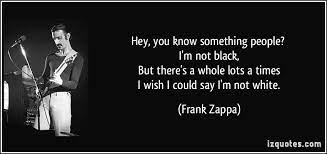
Right in the middle of the song Frank states:

Hey you know something people I’m not black But there’s a whole lots a times I wish I could say I’m not white

That seems like it was a pretty powerful thing to say (and something you’d be unlikely to hear on the radio) back in 1965.

The chorus sticks with us

So I’m watchin’ and I’m waitin’
Hopin’ for the best
Even think I’ll go to prayin’
Every time I hear ’em sayin’
That there’s no way to delay
That trouble comin’ every day
No way to delay
That trouble comin’ every day

He certainly predicted the state of 24 hour news

Well you can cool it, You can heat it…
Cause, baby, I don’t need it…

Take your TV tube and eat it
‘N all that phony stuff on sports
‘N all THOSE unconfirmed reports
You know I watched that rotten box
Until my head began to hurt
From checkin’ out the way
The newsmen say they get the dirt
Before the guys on channel so-and-so
And further they assert
That any show they’ll interrupt
To bring you news if it comes up
They say that if the place blows up
They’ll be the first to tell
Because the boys they got downtown
Are workin’ hard and doin’ swell,
And if anybody gets the news
Before it hits the street,
They say that no one blabs it faster
Their coverage can’t be beat

Things haven’t changed since this song was written

And it’s the same across the nation
Black & white discrimination
They’re yellin’ “You can’t understand me!”
And all the other crap they hand me
In the papers and TV
‘N all that mass stupidity
That seems to grow more every day
Each time you hear some nitwit say
He wants to go and do you in
Because the color of your skin
Just don’t appeal to him
(No matter if it’s black or white)
Because he’s out for blood tonight

Perhaps the theme verse for recent events

Don’t you know that this could start
On any street in any town
In any state if any clown
Decides that now’s the time to fight
For some ideal he thinks is right
And if a million more agree
There ain’t no great society
As it applies to you and me
Our country isn’t free
And the law refuses to see
If all that you can ever be
Is just a lousy janitor
Unless your uncle owns a store

It’s a shame this song still resonates.

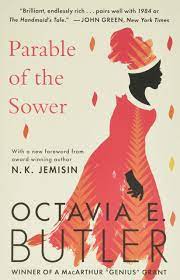
[READ: March 22, 2021] Parable of the Sower [2024-2025]

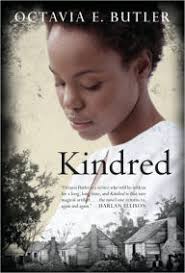
I found Kindred to be an enjoyable (not exactly the right word, I know) novel.  I thought the premise was really cool and I thought the content was impactful and was conveyed really well.  It was a powerful story that did not shy away from brutality.

But it in no way prepared me for Parable of the Sower.

I didn’t know anything about this book at all before starting.  At first I thought it was neat that it was set in 2024 (hey that’s so close!)  And that, coincidentally, myself and my daughters are almost the same ages as the main character and her father (will this be our future?).

But then, holy crap, Butler doesn’t hold back.

The brutality of Kindred was based on reality.  It was horrible and, in retrospect, hard to believe that people could do such things.  The brutality of Sower, however, is all based on the future projection.  The book was written in 1993. Basically, she posits that in 30 years, America has become a rotting hellscape.  And while we haven’t reached quite the levels that she imagines, there are some pretty eerie accuracies.  I have to assume, given the natural of the elected politicians, that some things are going to get very very spookily prescient.

The book opens in 2024 with a quote from Earthseed.  We don’t know what that is yet, but by the end of this week’s read we’ll learn that Earthseed is a sort of manifesto written by the main character, Lauren Oya Olamina–I didn’t realize her name was given after the first quote from Earthseed until looking back on it.  Each chapter has another quote from Earthseed and then the story unfolds as a series of diary entries. (more…)

Read Full Post »

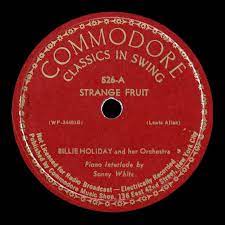
SOUNDTRACK: BILLIE HOLIDAY-“Strange Fruit” (1939/ (live1959)).

This haunting song is sung with minimal piano accompaniment.  In between verses, the original version has some stark trumpet solos, although they are not present in this live version.

Southern trees bear a strange fruit
Blood on the leaves and blood at the root
Black bodies swingin’ in the Southern breeze
Strange fruit hangin’ from the poplar trees
Pastoral scene of the gallant South
The bulgin’ eyes and the twisted mouth
Scent of magnolias sweet and fresh
Then the sudden smell of burnin’ flesh
Here is a fruit for the crows to pluck
For the rain to gather
For the wind to suck
For the sun to rot
For the tree to drop
Here is a strange and bitter crop

She sings the words slowly (the song is 3 minutes long despite the relatively few words), letting the image linger in your mind as she stretched out “burning flesh”  and “for the crows to pluck.”  The way she agonizingly sings “drop” and “crop” really emphasizes the last lines.

The studio version has a haunting guitar line–the only guitar in the song–as a little coda.  It’s a remarkable addition and really affecting.

I can’t imagine the courage it took to sing these words in 1959 let alone 1939.

This song has a fascinating origin.

Thomas Shipp and Abram Smith were two Black men who were hanged in a spectacle lynching in 1930.  A photograph was taken by studio photographer Lawrence Beitler.  He sold thousands of copies of the print [which is amazingly disturbing and I can’t imagine who would have bought them].  In 1937 Abel Meeropol, a Jewish school teacher from New York City saw a copy of Beitler’s 1930 photograph which “haunted [him] for days” and inspired his poem “Bitter Fruit” which was published in The New York Teacher in 1937 (under the pseudonym Lewis Allan). Meeropol then set his poem to music, renaming it “Strange Fruit” which Billie Holiday recorded in 1939.

[READ: March 8, 2021] Kindred [the fight]

This week took us to the end of the book.

Dana arrived home with Kevin this time.  He’s initially happy to be home, but is soon very restless. He was in the past for five years.  They have only been in their new house together a few days–noting is familiar here.  He is agitated and irritable.  He tells her about some of the horrible things he’s seen like a woman dying in childbirth.  It’s interesting that this horror comes from Kevin telling Dana about a woman’s whose master beat her until the baby fell out of her.

I feel like Kevin is overreacting to his return–his agitation seems way too great.  I realize that things are new in this house, but you’d think that even after five years, being home wouldn’t be such a bad thing.  And then he tells a story like the above and while I still don’t understand why it’s not just a relief to be out of there, i can see that he’s got PTSD.

But he was jumpy–the sound of jet overhead freaked him out.  Again, would five years without a jet overhead make you forget that they existed before hand?

Earlier Dana had been concerned that Kevin could be “won over” to the bad side. But he tells her that he had been helping slaves to escape.  he even imagined that they might both want to go back to help more slaves escape–to do good historically speaking. (more…)

Read Full Post »

SOUNDTRACKFUTURE ISLANDS-Tiny Desk (Home) Concert #158 (January 25, 2021).

I’m not a huge fan of Future Islands.  I like some of their songs, and I think singer Sam Herring’s voice is really interesting.  The biggest thing I remember about them is NPR’s fascination with singer Sam herring’s dancing.  Herring does some dancing here, but saves most of it until the final song.

Future Islands’ four members are gathered not too far from their Baltimore base in Carroll Baldwin Memorial Hall, sans desk. “We lost the desk,” singer Sam Herring tells us with a smile. With drummer Michael Lowry on the tiny stage, the rest of the band — including bassist William Cashion and Gerrit Welmers on electronics — took to the floor, allowing Sam Herring to make his moves and sing his heart out. This music is clearly for the head and the feet.

The first three songs are from

their sixth and very recent album, As Long As You Are. 

“Hit the Coast” is an upbeat song musically.  The notable thing about Future Islands is that their music is primarily keyboard based, but there’s something about having a bassist that brings an organic element to the music.

Along with themes of loneliness and love, we also hear songs about race, which is most evident in “The Painter,” a song about how we can all look at the same thing and see it so differently.

He continues, “Art is subjective but they way we think about people and the way we treat human lives shouldn’t be.”

My favorite part of this very precise song comes mid-song when Cashion scratches up the strings a bit to add some chaotic distortion.

“Thrill” is set in Greenville NC on the banks of the great greasy Tar River.  It’s about feeling isolated in your society, about self-isolating through substance abuse and about continuing to push forward as all the seething bubbles up inside of you like the great river.  It is a slow and moody song and yo can tell that its very personal to Herring.

We end with a song that came out shortly after visiting NPR in 2011 [Oh man, I miss my hair] called “Balance.” It’s one of those tunes that feels repurposed for the 2020s: “This is a song for anybody who’s struggling through their lives,” Sam Herring says, “and I know there are a lot of you all out there, just trying to get by, but it’s going to take a little bit more time.”

This is a fun dance song–the kind of earlier, faster song that I like from them.  Herring lets his dance shoes lose, with some impressive and wild moves.

[READ: March 1, 2021] Behemoth

Book two of this series was longer and more dangerous–as a sequel should be.

As this book opens, everyone is on board the Leviathan having just sailed to safety.   Alek is showing Deryn how to fence.  She is impatient and has no technical skill.  But it’s nice for her to be with Alek (who Deryn has admitted to herself that she fancies) and it’s nicer that he is saying things like “we” when he talks about the Leviathan.

But soon they see some enemy ships.  The ships look in bad shape and the Leviathan looks poised to destroy them.  Until one of them fires up what they learn is a Tesla tower–a generator that can shoot lightning across great distances.  No one has ever seen one before.  But Alek’s men piece together what it is.  Since they are the only ones who know how to fly Clanker engines, they are in charge of propulsion.  And they disobey orders by bringing the ship to a halt.  The Leviathan, being sentient, also senses what’s going on and starts to concur with the decision.

But disobeying orders is mutiny (except that Alek’s men aren’t technically part of the crew so they can’t be punished).

The Tesla cannon fires and grazes the Leviathan.  It doesn’t puncture the ship (it could literally blow it up if it got to any of the hydrogen), but it does mess with everything electrical.  It also leaves one of the men stranded on a Huxley–essentially electrocuted.

Deryn takes it into her hands to save her mate in an exciting an daring rescue. (more…)

Read Full Post »

SOUNDTRACKGABRIEL GARZÓN-MONTANO-Tiny Desk (Home) Concert #147 (January 19, 2021).

Gabriel Garzón-Montano did a solo Tiny Desk Concert a few years ago, as the blurb quickly points out

If Gabriel Garzón-Montano’s solo Tiny Desk back in 2017 was an exercise in restraint and vulnerability, his home set is the polar opposite. It beams ingenuity and unveils multiple layers, figuratively and literally.  In this performance he brought the full band, sporting all white from mask to toe and bringing to life all the sonics we hear on the record, last year’s genre-snubbing Agüita.

They play three songs.

Garzón-Montano morphs into three different characters from Agüita and stretches the boundaries even more, adding salsa flavor to “Muñeca” and delivering some bonus bars on the set opener, “With A Smile.”

“With A Smile” opens with just his face surrounded by flowers as he plays a pretty acoustic guitar.  The flowers move away as the Gracie Sprout’s harp adds more pretty notes.  As the song moves along with Gabriel’s soft and sexy voice, Itai Shapira’s bass and Lenny “The Ox”‘s drums come thumping in.

Like the rest of his band, Gabriel is in all white, including white Uggs and a long white coat with tails.   The only color is from the sweater underneath.

At the end of the song he raps in Spanish, which has a really nice flow.

Taking advantage of of the rare opportunity to gather musicians in quarantine times, he says “It’s like being a child who’s allowed to do what they always wanted to do when they didn’t wanna get up for school, and it’s also felt like an adult who didn’t know what to do at 3 p.m. on a Tuesday afternoon. I’m focusing on oscillating between those states with ease.”

For “Muñeca” he takes off the big coat and shows off the colorful sweater which has a fascinating cut, including tails.  For this song, it’s a trio of bass and Daniel Rodriguez on drums. Rodriguez plays a funky middle with conga and cowbell as Gabriel gets up and dances.  He picks up the guitar again at the end of the song for a little strumming outro.

Before the final song, Gabriel moves to the piano.  He takes off the colorful sweater to reveal a sleeveless shirt underneath (which shows off his tattoos).

“Tombs” features the KROMA Quartet and everyone else on synths.  Nicholas Semrad plays the lead, but everyone else adds melody.  It’s a delicate song with an interesting and slightly creepy synth melody.  About half way through this six minute song he gets up and picks up an electric guitar.  He and  Justin “Jhawk” Hawkins play a harmony solo together, which sounds pretty cool.

I am quite intrigued by this singer, and I love the description of genre-snubbing.

[READ: February 28, 2021] Pops

I have often said I wanted to read more books by Michael Chabon.  And after finishing this I realized that the only novel by him that I’ve read is Kavalier and Clay and that was 21 years ago.  So maybe it’s time to get into some of these other books.

Pops is a collection of (very) short essays.  Most were written for Details Magazine (which folded in 2015), one for GQ and a final one I’d already read in the New Yorker.

“Introduction: The Opposite of Writing”
It’s not too often that you really enjoy an introduction, but this one was pretty great.  In it, Chabon talks about when he was an up and coming writer and he met a well-established Southern writer.  This writer told him that the secret to being a good writer was not having children.  That for every child you have, you will lose one book.

Chabon had no children with his first wife but has had four with his second wife (the writer Ayelet Waldman).  So clearly they have lost eight books between them.

The writer’s argument was that children take away time from novel writing and that novel writing takes away time from children.  Chabon had always felt that his father was not very present (as one of the essays says) and he promised to be much more involved in his children’s lives).  These essays suggest that he was.  So how did he find time to write?  He does not say. (more…)

Read Full Post »

SOUNDTRACK: NINA SIMONE-“Mississippi Goddamn” (Live in Antibes, July 24-25, 1965).

This song is amazing for so many reasons.

Nina Simone wrote this song in less than an hour as a response to  the murders of Emmett Till and Medgar Evers in Mississippi, and the 16th Street Baptist Church bombing in Birmingham, Alabama (see the posts from John Lewis’ March).

It is simple and straightforward.  She pulls no punches, from the title to the explicitness of the lyrics.

The intro (and chorus) get right to the point

Alabama’s gotten me so upset
Tennessee made me lose my rest
And everybody knows about Mississippi, goddamn

She doesn’t stop there.

Don’t tell me, I’ll tell you
Me and my people just about due
I’ve been there so I know
They keep on saying
“Go slow!”

But that’s just the trouble “too slow”
Washing the windows “Too slow”
Picking the cotton “Too slow”
You’re just plain rotten “Too slow”
You’re too damn lazy “Too slow”
The thinking’s crazy “Too slow”
Where am I going What am I doing I don’t know

Having the band chant back “too slow” during the bridge is a nice call for support.

What’s most scary about this song is how little has changed since she wrote it fifty years ago,

Picket lines, school boycotts
They try to say it’s a communist plot [substitute Antifa or BLM now]
All I want is equality
For my sister, my brother, my people, and me

In the Antibes version, she substitutes Governor Wallace in one of the lines–and you can tell how intensely she feels these words.

Then there’s the music–a sort of bouncy jazzy number that could easily be about anything.  The lyrics are straightforward, but the music almost softens the bite, or at least.  In the Carnegie Hall recording she even jokes “This is a show tune, but the show hasn’t been written for it, yet.”

The middle section, which is a little quieter, definitely sounds a bit more sinister.  And justifiably

Hound dogs on my trail
School children sitting in jail
Black cat cross my path
I think every day’s gonna be my last

Watching this video is really intense.  I wonder how impactful this was in France. And I can’t imagine what the impact was like at Carnegie Hall.

[READ: March 8, 2021] Kindred [the fight]

This week’s read is one long, painful chapter.

After the first few sections have established the scenario, the more you think about it, the more you realize how many things can (and likely will) go wrong for Dana.

Each time Dana is sent back in time, the gap between instances grows.  Time doesn’t pass in the present the same way it does when she goes back.  She had been gone for nearly two months but when she returned home she had been “gone” for less than a day.

Now that Kevin has remained, she fears for him as well and those fears are completely reasonable–he was treated well in that world because he was white.  He looked forward to watching the expansion of our country West.  Could he become a hardened white person if he was there for too long?  Kevin seems like a pretty decent fellow and doesn’t seem like he would become an owner of anyone, but you could see him getting caught up in everything that’s happening. (more…)

Read Full Post »

SOUNDTRACKMARTHA REDBONE-GlobalFEST Tiny Desk (Home) Concert #135/154 (January 13, 2021).

Martha RedboneGlobalFEST is an annual event, held in New York City, in which bands from all over the world have an opportunity to showcase their music to an American audience.  I’ve never been, and it sounds a little exhausting, but it also sounds really fun.

The Tiny Desk is teaming up with globalFEST this year for a thrilling virtual music festival: Tiny Desk Meets globalFEST. The online fest includes four nights of concerts featuring 16 bands from all over the world. 

Given the pandemic’s challenges and the hardening of international borders, NPR Music and globalFEST is moving from the nightclub to your screen of choice and sharing this festival with the world. Each night, we’ll present four artists in intimate settings (often behind desks donning globes), and it’s all hosted by African superstar Angélique Kidjo, who performed at the inaugural edition of globalFEST in 2004.

The fourth artist of the third night is Afro-indigenous appalachian performer Martha Redbone.

Martha Redbone performs her Tiny Desk Meets globalFEST performance from her home studio in Brooklyn’s Navy Yards. Native and African-American singer-songwriter Martha Redbone is known for her mix of folk, blues and gospel from her childhood in Harlan County, Ky., which she infuses with the eclectic grit of pre-gentrified Brooklyn. Inheriting the powerful vocal range of her gospel-singing African-American father and the resilient spirit of her mother’s Cherokee, Shawnee and Choctaw culture, Redbone broadens the boundaries of American Roots music.

“The Garden of Love” starts with Martha playing percussion sounds.  Keyboardist Aaron Whitby is playing some backing chords while guitarist marvin Sewell is playing some interesting slide guitar sounds.   Martha sings in a very traditional style.  Then the song starts proper with an old sounding blues riff and the song feels old and gospel-like.

She tells us her inspiration is the Appalachian mountains where she grew up–rattles, soul music, the blues.

“Talk About It” is a prayer for stronger communication around the world.  It’s a more conventional sounding soul song, with heavy keyboards and Redbone’s vocals taking the fore.

“Underdog” is a very pretty ballad with slide guitar sounds and gentle keys.  But it’s all about her gorgeous voice.

[READ: March 1, 2021] Kindred [prelude-the fall]

I’m always happy to start a new group read with the fine folks at Infinite Zombies. Normally we read big books by white men.  So this time it was decided to pick a different kind of author.

I was pretty pleased to see that Octavia E. Butler would be the new reading choice.  I had only recently heard of her and had recently read Mind of My Mind, which I really liked.  So it was a great opportunity to read more from her.

Kindred is Butler’s most famous book.  I was looking forward to reading something different from Mind (although I do intend to read the rest of that series).

I didn’t know what this book was about.  The cover of this book gives absolutely no indication is what’s going inside.  In fact, it looked pretty much exactly like what is not happening in this book.

I was blown away by the first sections of this book.  Butler’s style is not fancy and I found this direct writing to be really effective at conveying what is going on.

Butler basically puts a horrifying slave narrative into a science fiction story.

It starts very abruptly with the prologue.  The narrator, Dana says that she lost her arm on her last trip home.  The police question her husband Kevin but she assures them it is not his fault.

Then the story resumes with The River.  It flashes back to when this all started–June 9, 1976.

In The River, Dana and Kevin are unpacking books in their new California home when suddenly Dana feels dizzy.  She is pulled through space into a river where a young red-haired boy is drowning.  Dana thinks quickly and stomps into the river to rescue the him.  She even does some mouth to mouth

The boy’s mother starts blaming Dana for what’s happening even while she is trying to resuscitate the woman’s son.  Dana succeeds and just as the boy, whose name is Rufus comes to, his father holds a shotgun at Dana’s head.  What is the black woman (who is dressed like a man) doing with her mouth on his son?

Rufus’s father is Southern and they seem very, very old-fashioned.  But just as Dana fear the worst from the shotgun, she flies back to her bedroom.  She is covered in mud and soaking wet, but Kevin says she was gone maybe ten seconds.  He has a hard time believing her (who wouldn’t) despite the proof of the mud on her clothes.

What in the hell just happened? (more…)

Read Full Post »

SOUNDTRACK: RHEOSTATICS-3rd Annual Green Sprouts Music Week Night 1 (Ultrasound Showbar, Toronto Ontario September 18 1995).

It has been a while since I’ve listened to a live Rheostatics show.  Darrin at Rheostatics Live has added a number of new shows in the last eight months.  Like this full week of shows from the Third Green Sprouts Music Week.

He writes:

Rheos had just come off of the 2nd Another Roadside Attraction tour with The Tragically Hip in July. The band would perform their Group Of 7 commission in Ottawa a month later and during this run were working on material for what would become The Blue Hysteria album. Some of the working titles are listed (Crescent II, Two Flights) as well as Drumheller which would end up as “Desert Island Poem” on Dave’s first Bidiniband album The Land Is Wild.

I don’t regret missing many shows that I’ve missed, but I do very much wish that i had been able to go to a few nights of a Green Sprouts Music Week.  Seeing them in a small club with them chatting away and experimenting seems like it would have been a wonderful experience.

As the tape starts on this first night, someone asks

“Are we going to play that song tonight?”
“What song?”
“The $1.79 song.”
“Of course it wouldn’t be a Green Sprouts…”

Never find out what that is.  But then Dave tells the audience

The plan is over the next 7 days to pay every song we know and even songs don’t know.  He says that it’s Roger the sound man’s first Green Sprouts week and he hasn’t caught Green Sprouts fever yet.  This is also Don Kerr’s first green sprouts, too.

We’ll lay a couple old ones to start.  Someone shouts “YAY!”  Dave: “Hey you haven’t even heard the new ones yet.”

They start with “Me & Stupid” which features the spoken part of the poem “Wilderness Gothic” by Al Purdy:  “Something is about to happen two shores away a man hammering the sky”

Dave: “The great thing about green sprouts is you forget different stuff each night.”

Up next is “another Southern Ontario song” “Fish Tailin’.”

Then Martin unveils his new (as yet unpainted double neck) guitar: “overcompensating for the lack of headstock for the last 6 years.  Now he’s got a guitar with two big ones.”

Tim gets the first new song with “All the Same Eyes,” a song that doesn’t change much between now and the record.

In what will be a theme for the week, they have a really hard time coordinating the opening countdown for “Four Little Songs.”  They have to start it three times.  And they mess up the 4321 at the end.  Martin’s verse seems different.

Kevin Hearn joins them for the next song.  Dave says they stole some part of “Four Little Songs” from [Kev’s “on patrol?  Cabs On patrol?   No idea].

Kevin plays on “Fan Letter” and in they chant “Farm Fresh” instead of Michael.

Over the course of the week we’ll get more details about the creation of “Sweet Rich Beautiful Mine.”  Onm this first night, Martin forgets the second verse.

Dave says that Neil Peart said that he preferred playing smaller places (meaning arenas) because he could hear himself (he preferred arenas to open air venues).  But in arenas there’s big speakers but it sounds small.  But it’s snugsville in here, boy.

It’s been a long time since we did this song (“Palomar”), which gets a good response.  After which “it’s the fall but we can still play summer music” (“Introducing Happiness”).

Dave says he saw Asleep at the Wheel and the last song everyone did a solo.  Then the lead singer had a guitar shaped like Texas, but instead of his solo, he picked up three balls by his feet and did some juggling. The last one he threw up in the air and it landed on the brim of his cowboy hat.  They’re working on that for later in the week.

They start the new “Connecting Flights” but can’t find a capo.  They do an improv “capo shortage,” a goofy bit a fun.  Up next is the new “Desert Island Poem,” which sounds great.

Then comes the popular section.  A rocking “California Dreamline” which segues into a lovely “Song of Flight” and right into “Fat.”

They haven’t played “Queer” in a while (which is a surprise).  As they start Dave says, “now there’s a little matter of the words.”  Someone recites them for him.

Dave is going to play “My First Rock Concert” every night this week and the and are kind of learning it on the fly.  In the middle of the song, some words are different.

Dave: “I sense something funky coming on (start of “Soul Glue”).

The last song before “our first encore” is a rocking version of Jane Siberry’s “One More Colour.”  I love their version.

Heading into the encore break Don says, “We just played 18 songs without a pee break.”

That reminds him of a gig they played in Pennsylvania: drinks were free until the first person has to pee.  It was a real classy establishment.  The most boring place on earth–Harrisburg, PA.  It’s a great place if you have a huge bladder.

Martin says “My assessment of tonight is that it started out very vague and hazy, like we haven’t played in six months or like we’re getting back together after a year breakup.  But it gelled together in the last three or four songs.”

Martin tries to remember the new song “A Midwinter Night’s Dream.”  He doesn’t go for the high note in the middle of the song–choosing a lower growl instead.  It works pretty well, but I love the high note.

Dave jokes: You don’t know what it was like touring in Platinum Blonde town after town having to play the hits with the drummer under the stage playing the parts for the fake drummer on the stage.

A delicate “Take Me in Your Hand” is followed by Don Kerr’s first time playing “Northern Wish.”  Martin gets the first line but missed the rest of the verse and starts the song again.

The first night ends with a ripping “Dope Fiends and Boozehounds.”  There’s a drum solo for Don and then martin ends the song with interesting guitar effects.

It’s a good start to a great week.

[READ: February 20, 2021] Leviathan

I signed C. up for a YA program at the library.  His subject was steampunk and they chose this book for him.  S. had read this series and loved it, so I decided to give it a read while it was still in the house.  I found it to be a fast and fun read.

The story is set in 1914, the dawn of World War I. But it’s an alternate reality–one where zeppelins and other hydrogen-based flying machines dominate the air  It also has a very cool component of animal/machine hybrids that are really quite impossible to explain except to say that the Leviathan is a living airship that is made out of whale–they are in side of a whale–but it’s also a machine.  Or something.  Best not to think too much about that.

It’s here that I should mention the drawings by Keith Thompson. They are wonderful pencil-looking drawings–dark but detailed.  They really help to get the visuals down of thes extradoridfanly machiens tah Westerfeld has createa.  I’m not always certain that I could picture the without the drawings.

The book opens on teenaged Prince Aleksander, the heir to the Austrian throne.  While he is playing with toy soldiers, imagining a war, two of his servants enter the room and tell him they are off to do some training in the dark–his father’s orders.

The machine that Aleks is being taken to is a Cyklop Stormwalker.  This is a giant machine that walks on two legs (Star Wars, yes). Alek has never piloted something this large before, but they tell him it’s important for his training. But Alek senses something is wrong and that’s when they tell him this is not a drill.  His parents, the King and Queen of Austria, were killed that very night. He is probably another target and they are trying to keep him safe. (more…)

Read Full Post »

« Newer Posts - Older Posts »