Feeds:
Posts
Comments

Archive for the ‘Sex’ Category

SOUNDTRACK: GEORGES BIZET-Overture/Habanera (1874), Nocturne in D major (1867).

Bizet is best known (to me anyway) as the creator of Carmen.  And the Overture is utterly recognizable while “Habanera” is probably one of  the more recognizable vocal operas (you know it).  But Bast and co. seem to known Bizet from his piano work, which I didn’t know at all.

I chose “Nocturne in D major” at random.  It’s very pretty, but nowhere near as memorable as say “Habanera.”

I don’t play piano and I’m not a huge classical music fan (although I do know many composers).  Listening to this piece anyhow, I find it hard to understand how people could recognize Bizet in Bast’s work.  Obviously there are dozens of other pieces that may be more representative of a signature sound, but this just sounds like a beautiful (and not overly challenging like Chopin) piano piece to me.  It’s also true that this piano piece was written ten years before Carmen, and maybe they are thinking of the music of Carmen as recognizably Bizet (can you even play Carmen on the piano?).

I forgot how much I enjoy this opera though, (or at least the highlights).

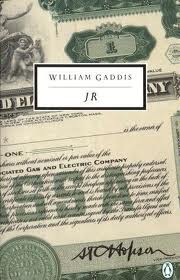
[READ: Week of July 30, 2012] JR Week 7

I enjoyed this week’s read very much.  It had some real emotional scenes–and a scene that stayed with just the same two people for a long time.  It was also interesting to see Gaddis handle sex–in his own detached mechanical way.  And I liked starting to see the pieces (Davidoff, the Waldorf) start falling into place (as they may also be falling apart).

But before we get to that we must look at a doctored photo.  The photo from Mrs Joubert’s class’ interaction with the folks at Diamond Cable has come back and they have added black to the class.  Mr Hyde notices immediately  that his son (“tell by his haircut” (461)) has been darkened, “Blackface in every one of them.”  “Looks like he’s about ready to get down on one knee and sing Mammy” (461).  While Hyde is outraged, the rest of the room is complementing Whiteback and the company for promoting racial diversity.  It’s even suggested that this will help the Major’s image on the other side of town.   Of course underneath all of this is some festering racism: (more…)

Read Full Post »

SOUNDTRACK: ORMONDE-“Cherry Blossom” (2012).

This song was also mentioned in the July 31 All Songs Considered Post.  The album had been singled out because the cover is so awful. It had even made their repository of awful covers.  And then they actually listened  to it.

It opens with some female vocals, but they are quickly replaced by a kind of whispered/sung male vocal.  Behind the vocals are some simple guitar melodies and a straightforward drum.  But there’s something otherworldly about the whole proceedings–not least of which comes when the whole thing shifts to a minor key.  The keyboard solo (which sounds like it’s a $5 Casio) brings more ethereal female vocals (maybe Cocteau Twins-y) and introduces a kind of Middle Eastern mysticism to the whole thing.

The track is so strange and so pretty (the vocals are not unlike Mark Lanegan or a mellower Josh Homme) and the pieces fit together very well.  I’m very interested in hearing more from this album, regardless of the cover.  Bob and Robin admitted that although they can usually judge an album by its cover, they had no idea that the music inside would be this interesting.

[READ: July 30, 2012] “Unprotected”

I love Simon Rich’s comedy.  Simple as that.

But there are some things of his that I like more than others.  I like his really short (like one paragraph) absurdist jokes quite a lot.  I have liked less his longer story-jokes.  So I was a little bummed that this was the latter.

Especially since it seemed kind of obvious at first (and  I really don’t care for this type of “uneducated” narration: “I born in factory.  They put me in wrapper.  They seal me in box.  Three of us in box.”  It seemed like it was going to be obvious.  And I guess it was kind of, except that Rich found a new angle on the life of a condom.

A boy steals the box and puts him in his wallet.  But where that could have gone in a very bad direction, it doesn’t.  Rich is clever and funny and introduces us to all of the other things in the wallet (Blockbuster Card (when was this set?), Learners Permit etc).   And we see that as the condom goes unused, the makeup of the wallet changes–in comes a Metrocard (who is all hilariously knowledgeable) and a creepy lady named Visa.

By the end of the story, the narrator has been taken out twice–both results are funny.  And the end of the story is surprisingly touching.

It’s a more mature outing from Rich, even if it is about a condom.

Read Full Post »

SOUNDTRACK: MOGWAI-Burning DVD (2010).

What might one expect from a Mogwai DVD?  Well, what one gets is a high contrast black and white concert with excellent sound (I have since burned the audio on a CD).

The film zooms in on the players–the guitar necks, the cymbals–and occasional two or three person shots (but very rarely faces).

The faces come in the interstitials, where the filmmakers show the band walking around (getting on subways–walking in rain), and where they talk to fans.

The film is gorgeously shot, but I have to admit it’s not the kind of live show that I enjoy watching.  It’s a little dull–not in individual moments because just about every shot is gorgeous, but in five-minute blocks.  Don’t get me wrong, I love seeing how these guys make this wall of music.  I love watching Stuart’s hands on the neck of his guitar, but this is not a very mobile bunch.  Indeed, many of the people in the audience seem to just be closing their eyes and absorbing the music rather than watching them.  And I found myself doing the same thing (in which case, I would just get an audio concert, right?).  This is compounded by the fact that the camera is in so tight, any big movements are missed.

This is not to say that there aren’t moments of brilliance to see.  Watching the band wait and wait and wait as the chords from “Fear Satan” fade out before they blast into the finale is pretty darn awesome.  And there are moments like that–crisp clarity where everything comes together.

Some kind souls have put the entire show on YouTube.  Here’s part 3 (with “Fear Satan”)

And the fan who speaks over the closing credits is trippy but cool.

[READ: July 31, 2012] “The Places You Find Yourself”

I found this story because a reader left a comment that Junot Díaz’ story ”The Cheater’s Guide to Love” was just like this one.

I have to disagree almost entirely with that sentiment because Díaz’ story talks about what it is like after someone has broken up with you and this story is about being stuck in a relationship that you feel compelled to get out of.

Edwards’ story (which won the 2009 Open City Rrofihe Trophy) is about settling.  And it’s a very realistic portrayal of the frustrations of life: relationships, job, commute–it’s a rather cathartic story.  It is especially cathartic because there is no main character, only “you.”  And Edwards keeps this second person narrator throughout the story.

The story is set up as a series of monogamous relationships: “Then one morning you’ll wake up and there will be another one lying next to you, maybe this one a brunette…” (more…)

Read Full Post »

Gore Vidal [1925-2012]

Gore Vidal died last night at age 86 because of complications from pneumonia.

When I was younger, back in college, I loved Gore Vidal.  I read almost all of his essays and I tried to read most of his novels (I didn’t succeed–he has published some 50 books).  His book United States: Essays 1952–1992 is one of the best collection of political essays I have read.

People who know Vidal at all know him for different reasons.  Some know him as a writer of historical novels known as the Narratives of Empire: Burr (covering 1775-1805 and 1833-1836), Lincoln (1861-1865) 1876 (1875-1877), Empire (1898-1907), Hollywood (1917-1923), Washington D.C. (1937-1952) and The Golden Age (1939-1954).

Others know him for his outspoken pro-homosexuality stance.  His third novel 1948’s The City and the Pillar caused quite the controversy for presenting sympathetic gay characters.  He also wrote Myra Breckenridge about a transsexual character.  His published quote from about sexuality (from 1969) is:

We are all bisexual to begin with. That is a fact of our condition. And we are all responsive to sexual stimuli from our own as well as from the opposite sex. Certain societies at certain times, usually in the interest of maintaining the baby supply, have discouraged homosexuality. Other societies, particularly militaristic ones, have exalted it. But regardless of tribal taboos, homosexuality is a constant fact of the human condition and it is not a sickness, not a sin, not a crime … despite the best efforts of our puritan tribe to make it all three. Homosexuality is as natural as heterosexuality. Notice I use the word ‘natural,’ not normal.” (more…)

Read Full Post »

SOUNDTRACK: TALKING HEADS-“Life During Wartime” (1979).

I ain’t got time for that now.

Talking heads were many things, a weird band, a noisy band, a new wave band with poppy hits, and underneath it all, a punk band that rocked.  If you know Talking Heads from their great later songs, it might be hard to imagine how raw this song is. Byrnes’ voice is intense, the melody is staggered and frantic and the whole enterprise just feels like it could fall apart at any moment.

It’s a great rocking song, and if you haven’t heard it for a while it’s worth checking out again.

Heard about Pittsburgh, PA?

[READ: Week of July 23, 2012] JR Week 6

This week’s read was the first time so far that I found a section tedious.  True, it could have been the time of night that I read it, but the whole section with Gibbs and Tom (which I call the “God damn” section) while providing some recap–and some very useful stuff at one point), was also rather redundant, both internally and in the story as a whole.  It was also quite a downer.  (Infinite Zombies has a post about this book being a comedy or a drama, so I won’t get into that here–I will get into it there though).  Although as with most Gaddis, it was a very accurate portrait of two men wallowing (and would probably be funny to hear out loud), I was happy when Tom finally left the scene.

When we left off last week, Gibbs was coming into Bast’s room holding a bottle.  Bast was just finishing up his videophone conversation with JR (Bast says he was just talking to himself).  Gibbs says he is meeting a man named Beamish here in a little bit. But he interrupts himself “Listen!”  Bast explains that the tub is running non-stop as well.  And Gibbs launches into a poem:

Through caverns measureless to, where the hell…   Bosom where the bright waters meet, like living in Pittsburgh Bast  –confluence of the Mongahela [sic–should be Monongahela] and the vale in whose bosom the bright waters meet to form the mighty Ohio (383).

I’m not entire surely where all of this comes from although As the vale in whose bosom the bright waters meet comes from a Thomas Moore song. (more…)

Read Full Post »

SOUNDTRACK: NADA SURF-The Stars Are Indifferent to Astronomy (2012).

Nada Surf continues to put out poppy guitar rock.  I tend to link them with Guster, in that they write really catchy pop songs about unexpected things.  The songs are usually fast, but they also writes some slower songs too.  They would make a good double bill.

This album with the wonderful title is 38 minutes long, a perfect light summer album.  If you don’t get “Waiting for Something” (which I agree is repeated waaay too often in the chorus) stuck in your head, then you haven’t been listening to this record.

All ten songs feature bouncy guitars (except “When I Was Young” which opens as a slow ballad), although even this song, after about 2 minutes, calls forth loud electric guitars.  There are some elements that show the band “maturing”–strings on “When I Was Young” horns on “Let the Fight Do the Fighting.”  But one of the songs references Gilligan’s Island, so they’re not maturing too much.

And some of the songs sound like throwbacks to other eras too, the 60s guitar intro of “Jules and Jim,” the R.E.M. ish intro of “Waiting for Something.”  It’s a great album, fun, catchy and perfect for driving.

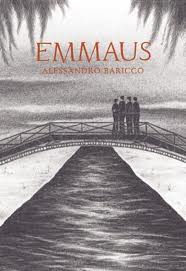
[READ: July 24, 2012] Emmaus

I had no idea who Alessandro Baricco was when I got this book as part of my Book of the Month deal with McSweeney’s.  But I’ve never been disappointed by one of their new books before, so it was worth checking out.

The book is short–134 pages–and is novella length, which is the perfect length for this story.  [I had just read about Jim Harrison and his novellas, and I believe that there needs to be more novellas published].  This book was originally written in Italian and was translated by Ann Goldstein.

There is a prologue which is completely exciting and absolutely wonderful.  It’s only a page and a half, but it is intriguing, funny, deep and, most of all, really surprising.

The opening of the book doesn’t quite match the excitement of the prologue, but that’s because this novella has two aspects–deep, thoughtful introspection and base, animal instinct.  And Baricco/Goldstein does an excellent job keeping the flow and continuity going between these two very different writing extremes.

The book reminds me of Jeffrey Eugenides’ The Virgin Suicides for two reasons.  One: it is written about a group of boys and is written in the second person plural (at least the beginning is) and two: they are all watching a girl who is beyond their ken–someone of their world but not, someone who is en route to hurt herself.  And there’s nothing they can do about it.

But this book is entirely its own.  There are four boys who make up the initial “we” (and when it diverges from plural to singular, you really feel the loss of the other boys).  And so the book starts: “We’re all sixteen or seventeen years old, but we aren’t really aware of it.”  The four boys are good boys–Catholic (and believers, at that), who play in the church band, who volunteer removing catheters at the poor person’s hospital and who plan to not have sex before marriage (heavy petting is okay but it never goes too far).  The four boys are: the narrator, whose name is never given I don’t think; Luca, whose father is rumored to be suicidal; Bobby, the most outgoing of the bunch and The Saint, a very pious young man who has designed for the priesthood and who is not afraid to be seen as more pious than you. (more…)

Read Full Post »

SOUNDTRACK: MOGWAI-Zidane: A 21st Century Portrait-An Original Soundtrack by Mogwai (2006).

It’s no secret that I love Mogwai.  I like them so much that I even track down soundtracks to obscure films that I’ll never watch.  (Of course, since Mogwai play mostly instrumentals, soundtrack work suits them quite well).

The Zidane of the film is Zinedine Zidane, a French footballer whom many consider to be the greatest ever (don’t yell at me for that, I don’t have an opinion of the man).  I had to look up exactly what the film is about and I have to say I’m intrigued: The film is a documentary focused on Zidane during the Spanish Liga Real Madrid vs. Villarreal CF game on April 23, 2005 at the Santiago Bernabéu Stadium and was filmed in real time using 17 synchronized cameras.  I watched a couple minutes on YouTube, and indeed it is a football match.   How on earth did they decide on that game (in which Zidane is ejected for fighting as the match nears its end).

The music is designed primarily for background and pacing, although there are certainly moments of great melody as well.  There are three songs that are more or less played twice (with different variations): “Terrific Speech 2″ and Terrific Speech” “Half Time and “Time and a Half” are similar piano melodies, and the opener and closer “Black Spider” and “Black Spider 2.”  “Black Spider 2” opens with the same melody as 1, but this song is thirty minutes long.  After a few moments of silence, it tuns into 17 minutes of quiet noise.  The remaining five experiment with distant feedback squalls.  Not loud and crazy, but something that creates a lot of tension, which goes with the end of the film.

Despite the titles, “Wake Up and Go Berserk” and “I Do Have Weapons” are a mellow songs.  They’re very pretty tracks.  Indeed, there’s nothing too wild at all here.  Fans of Mogwai’s wilder music will be a little disappointed.   And indeed, the overall feel is almost kind of sleepy, but it really captures another side of Mogwai, and the music is quite good.

[READ: June 20, 2012] “The Cheater’s Guide to Love”

Not bad… Junot Díaz had a story in the New Yorker just a few weeks ago, and now he’s got another one.

The familiar criticism of Díaz is that he writes the same story over and over (well, the other criticism is that he always writes in Spanish and English, but I think that’s a stupid complaint).  So here’s another story about Yunior and how he cheats on women and is basically a shit-heel.

While there is some validity to criticizing an author for retelling the same basic story, it is not unheard of in art.  Monet, for instance painted over 30 paintings of Rouen Cathedral.  And while they are all the same composition, individually they are very different.  Here’s four paintings (not prints a la Andy Warhol):

While I’m not suggesting that Díaz is on par with Monet, I am trying to say that you can work with a similar subject and create very different pieces of art.

So, yes it’s another Yunior story and yes, Yunior has cheated on his girlfriend again.  But this story is constructed differently.  And at this point I’m starting to wonder if maybe there aren’t multiple Yuniors–I’ll even think of them as in alternate realities.  Because Yunior sure has cheated on a lot of women by this time.

It makes him the perfect writer for “The Cheater’s Guide to Love.”

Unlike in the other stories, this one takes place over five years!  In Year 0 you are caught cheating by your girl (the story is set in second person).  She sticks it out with you for a time and then dumps your ass.  I liked how it was revealed just how many women he had cheated in her with over the years that they were together–he really is a shit.

In Year 1, you act like it doesn’t matter, but it does.  And you are crushed.  Your friends try to help out, but how much can they really do?  You think suicidal thoughts and imagine that that will make her forgive you.  It doesn’t.  By year 2, you have met someone.  But you find some bullshit reason (she hasn’t put out yet) and you break it off and go into another spiral.

Year 3 sees you looking after yourself–running and fitness.  In what I think of as a wholly accurate happening, you injure yourself running and are knocked back on your ass for months–momentum and caring are gone.  You look for substitutes but nothing feels as good as running.  So you stop.  And you let yourself go.

What I also liked about this story is that despite this background of the break up, there are other interesting things spiraling around Yunior.   There’s a fascinating look at racism in Boston (perceived or real?); there’s the woman who claims to be the mother of his child, the woman back in the DR who claims to be the mother of his friend Elvis’s son.  Both men act very differently to the news.  Elvis is thrilled to have a son, Yunior is freaked by this woman.  This is probably the first time that I’ve seen Díaz have a woman do behave the way they do in this story.  It’s also interesting to compare Yunior and Elvis by the end of the story.

I also got a kick out of all the women he used to cheat on his girlfriend with star getting married and they all start sending him invitations: “Revenge is living well, without you.”  Year 5 sees a completion of the spiral for all parties.  And a cool resolution to this story.

Much like with the Monet paintings, if  Díaz can keep his Yunior stories interesting (and varied enough), I will keep reading them.

For ease of searching I include: Junot Diaz, Bernabeu

Read Full Post »

SOUNDTRACK: WEEN-Push th’ Little Daisies (1992).

So Ween broke up back in May (this is the year of seemingly one-hit-wonder bands breaking up after decades of playing).  I have a bunch of Ween’s earlier stuff, but stopped listening after their hits.  I’m told some of their later records are quite good.  This song from the album Pure Guava was my introduction to them, and it is weird and kind of irritating and strangely catchy and perfectly encapsulates Ween.

The melody is simple and poppy, but the vocals are, if not sped up, then crazily falsettoed.  And the repeated refrain of “push the little daisies and make em come up” is, if not annoying, certainly infectious (in many senses of the word).

The other fun thing about Ween is that in addition to pretty much none of their albums sounding alike, pretty much none of their songs sound alike.  So you can’t tell if you’ll like any other Ween songs based on this one.  A nice trick, that.

And if, like me, you haven’t see the video in twenty years, check it out

And there is a tangential tie in to JR with this post, by the way.

[READ: Week of July 16, 2012] JR Week 5

I realized that, unlike in previously long weekly posts, I haven’t been including tangentially related photos (I rather liked putting them in the Gravity’s Rainbow posts).  I blame it all on my time constraints.  There also aren’t quite as many picture-worthy things in this book.  GR had lots of locations and historical photo-op type things.  JR is more about money and sex, and the internet doesn’t have many pictures of either, right.   So instead, it’s all block text.

When we left off, JR was trying to persuade Bast to help him out some more.  And, holy, he needs Bast to meet Mister Piscator out by the Egyptian stuff in the museum (JR can’t do it himself obviously–I love that he is using a handkerchief on the phone and everyone asks if there’s connection troubles).  Bast barely says anything but JR is on a roll: he got him the briefcase and that alarm clock (which runs backwards) and the business cards (which Simon pointed out I’ve been missing the typo on) and “I’ll call up that Virginia and fix it up where you get her to take telephone calls at the cafet…” (302).  JR is also going on about the kind of massive tax breaks he (and Bast) will be able to declare.  I can’t decide if he’s right or not (or if it simply won’t be relevant for what he has–indeed, a lot of this financial stuff, it seems like JR is more knowledgeable than anyone else because he has actually read the material–something nobody does.  And Bast is a musician, what does he know about money, right?).  Although his ultimate plan (potentially ingenious, but practically preposterous) is that they buy one share of all the big stocks, get their prospectuses and read them all.  And if anyone is doing anything illegal they can file a class action suit like they did with Diamond Cable. (more…)

Read Full Post »

SOUNDTRACKTHE FLAMING LIPS AND STARDEATH AND THE WHITE DWARF WITH HENRY ROLLINS AND PEACHES-“Money” (2011).

I’ve already mentioned this full length album, but how can you not talk about JR without mentioning this song.  (I probably could have dine a post a week about all of the covers of it).

This is one of the most famous songs certainly by Pink Floyd on one of the most popular album s of all time.  So how do you cover it?  You can’t lose the bass line, it’s way too important to the song.

But aside from that the song is pretty different–the vocals are machine tuned almost out of recognizability.  And that’s when you realize that although this is a pretty faithful cover, it’s also a goofy cover.  Not silly, not really disrespectful but not entirely right either (notes are out of tune and flubbed).  It’s very mechanized, as if they are talking about the auto-tuned nature of making hit songs.

  Henry Rollins takes the roll of the random punters ranting at the end of the song, and that’s pretty fun.

The whole thing is kind of  a trifle.  It works better in context of the album because you can understand what the group is doing.  On its own it’s a bit of  shock.

[READ: Week of July 9, 2012] JR Week 4

This week continues where last week left off–in the middle of trying to get Dan to convince Ann to drop the lawsuit against the school (for firing Bast). Whiteback tries to speak for Vern, but Vern will have none of it–Whiteback, despite being president of the school and the bank, is proving to be more and more of a pushover as the story goes along.

Vern gives his take on the school:

The function of this school is custodial.  It’s here to keep these kids off the streets until the girls are big enough to get pregnant and the boys are old enough to go out and hold up a gas station, it’s strictly custodial and the rest is plumbing.  If these teachers of yours strike just sit still and keep the doors open, by the time these kids have been lying around the house for a week their parents will march the teachers back in at gunpoint (226).

Dan interrupts the proceedings to talk to Whiteback about his mortgage (Vern magnanimously tells Dan to go ahead and conduct personal business during work hours).  Dan’s mortgage is not working out so well because the studs in his house are too far apart–causing it to be less insurable and causing him to pay a lot more. When Whiteback commends Major Hyde’s house for being spectacularly built Dan says that he was surprised to see that Hyde was moving.  Hyde doesn’t know what he’s talking about.  Dan tells him that there was a moving van in his driveway taking all of his things out.  There’s some chaos (and a stolen car) when JR comes in and tells them that Buzzie (who was sent down for possession) has taken off down the hall. (more…)

Read Full Post »

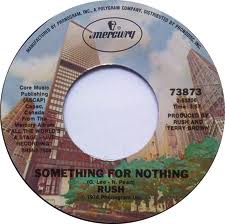
SOUNDTRACK: RUSH-“Something for Nothing” (1976).

This song comes from Rush’s 2112 album.  Since I’ve started reading JR, the refrain keeps popping into my head.  People talk of the influence of Ayn Rand on the band at this time and this song fits the bill.  When you think about the themes of most rock songs (carefree sex and partying) the lyrics to this song are totally conservative: “You don’t get something for nothing, you can’t have freedom for free.”  Rush has always been a hard working band, so this attitude makes sense.

And the song also resounds with the capitalists in this story–make your money (and other people’s money) work for you.  “Countless ways you pass the day.”

The song starts quietly but man it rocks hard with some really heavy guitars.  And the solo is intimidatingly noisy.

Oh and as for Rand, “What you own is your own kingdom.”

Of course, there is a little less capitalism as the song ends: “in your head is the answer, let it guide you along, let your heart be the anchor and the beat of your song.”  So, the message is not one of greed, but that to make your dreams come true you have to work for it.  Not bad advice, really.  Unless you were born into money of course.  In which case, never mind.

[READ: Week of July 2, 2012] JR Week 3

My JR posts are proving to be a day late (but not a… nope I won’t say it). It’s not the reading that’s hard it’s finding time to write these up.  So, apologies for those waiting with bated breath.

The week’s section opens with sex, specifically, Polaroids of sex.  Mr Angel, Stella’s husband, gets a call from Coen at the hospital (he got into an accident because of his broken glasses (ha–it was not reckless driving).  Then he starts talking with Terry about sprucing up the place–nice paneling, some plants–she thinks that’s a great idea (and actually buy a plant with her own money later).  They are interrupted by Mr Angel’s worker Leo who presents him with a stack of photos of the same Terry engaging in various graphic sexual positions (the boys in shipping had them).  With multiple men.  And although none of the men work in the office, the pictures are taken in this very office.  Mr Angel suggests that the photos could be doctored, to which Leo replies, “You’d have to have a picture of her eating a cucumber to paste onto this one, that’s some doctor” (151).   Childish but very funny.

Mr Angel goes off to Dayton to deal with some business and we see that quickest passage of time yet in the book.  Most of the book so far has been set in a day or two, but as we stay with the secretaries, several days pass in Mr Angel’ absence.  Terry and Myrna move their things into the same area so they can talk and listen to the radio while they work.  So there’s the gossip and the radio chatter vying for attention (the radio comes in Spanish as well as English) and the scene stays with them over a few days and through weekend.  Although this book doesn’t shy at all from potty humor, I enjoyed this little exchange before he leaves: Mr Angel say that she’s left the letter “s” off the word scrap on one of the documents.  She’s so embarrassed!

Terry also says she has something to tell Mr Angel about Leo…but that never gets said aloud, even when he returns and reminds her. (more…)

Read Full Post »

« Newer Posts - Older Posts »