Feeds:
Posts
Comments

Archive for the ‘Sex’ Category

CV1_TNY_05_06_13Schossow.inddSOUNDTRACK: BOY-“Little Numbers” (Live at The Current, April 6, 2013) (2013).

boyI am totally hooked by this single–a song which sounds like the next huge Feist hit.  It’s got a great piano melody that just grabs on and won’t let go.

So how does the song hold up on acoustic guitars?  In a recent interview the two Swiss/German band members, Valeska Steiner and Sonja Glass, say that the song was originally written in this slower more acoustic vein.  On first listen this version is not very appealing–there’s something so bubbly and bouncy and joyous about the single version.

The immediacy of the song is gone and the “woah-o” section seems more mournful than joyous.  I suppose it is actually more true to the original intent of the song (I read your name on every wall, is there  cure for me at all).  Although this version features Boy’s beautiful harmonies, especially the concluding moments, I still prefer the more upbeat single version.

[READ: May 21, 2013] “The Gray Goose”

When this story started, I was a little concerned that it was going to be another story about a repressed childhood under the thumb of an oppressive Jewish mother.  It begins by telling us that Miraim’s father left in 1948, when she was little.  One of the only presents she had been given was an album by Burl Ives.  And that album could be played on her family’s hi-fi/radio housed in a rosewood cabinet—“the most fantastical item of furniture in their lives.” Her father hated that they gave into consumerism to buy such a thing, but it was revered.  And all vinyl was held very delicately, as if a breath of air might warp it.

“The Gray Goose” was her favorite song and she listened to it often, trying to scrutinize the songs—just what was this gray goose that could not be killed, Lord, Lord, Lord.  (The traditional meaning of the gray goose that could not be killed appears to have something to do that with the hunter went hunting on the Sabbath, so the goose could not be killed). Although in the story, Miriam’s mother, Rose, says that the goose represents the heart of the working class.  For Rose and her husband, Albert were fiercely Communist.  We learn about Rose and Albert’s marriage—they were passionate about their beliefs, and this passion seemed to transmit to each other.  And then Rose got pregnant, so they married.  And then Rose had a miscarriage, but now they were stuck with each other so they decided to have a child—Miriam.  (His parents didn’t approve of any of it, especially Rose).

Then Albert was offered a job back in Germany—the only Jew to return to Germany so soon, and Rose and Miriam were on their own.  Well, Miriam was on her own, Rose had many many suitors, although none could stay the night.

That’s all back story for the evening of the action—the evening that Miriam and some friends have gone to Greenwich Village to a jazz club.  Miriam is precocious, having finished school a year early and started college (and apparently already dropped out).  She is out with some friends, the wonderfully named Rye Gogan, the horn-rimmed glasses-wearing Porter, assorted girlfriends and Miriam’s boyfriend who is referred to hilariously as Forgettable.  As in “of course Forgettable weighed in with, ‘What?’” (more…)

Read Full Post »

mystrugglSOUNDTRACK: TRICKY-“Christiansands” (1996).

christiansandsThis book is set in Kristiansands, and so naturally this song was ringing through my head the whole while I was reading it.  I’ve known this song for ages, but had no idea that Chirstiansands was an actual place in Norway.

This song is dark and tense.  Over a slinky beat, a spare guitar riff introduces Tricky’s voice as he rasps (his voice is slightly modified to give him a weird echo).  And while he’s reciting his verses, the gorgeous voice of Martina Topley-Bird, repeats what he’s saying in a whispered voice until she sings out the chorus “I met a Christian in Christiansands.”

The verses repeat with Tricky emphasizing, “master your language and in the meantime I create my own.  It means we’ll manage.”

I honestly don’t know what the song is about, and it feels like it never properly ends–that riff, at once menacing and gripping never seems to conclude.  It’s a masterful track and hard to forget once you’ve heard it.

[READ: May 11, 2013] My Struggle Book One

I read an excerpt of Book Two from this series in Harper’s.  And despite the fact that nothing really happened in it, I was drawn in by the writing style.  This first novel is very similar in that not a lot happens but the voice is very captivating.  The translation is by Don Bartlett and it is fantastic–I can only assume the original Norwegian is just as compelling.  So, despite the fact that this autobiographical series contain six books (six!) and totals over 4,000 pages (how could this be if Book one is a mere 400?  Books 4-6 are over 1,000 pages each), I decided to give it a try.  (Incidentally, Book Two has just been translated into English this month).

This series has caused some controversy because it is given the same title as Hitler’s Mein Kampf (Min Kamp in Norwegian), and also because he says some pretty means stuff about people who are still alive (like his ex-wife).  Although there isn’t much of that in Book One.

death in the familyIndeed, Book One basically talks about two things–a New Year’s Eve party when Karl Ove was youngish and, as the bracketed title indicates, the death of his father.  (The title A Death in the Family is the same book as My Struggle Book One–from a different publisher.  It has a totally different cover but is the same translation.  I don’t quite get that).  But indeed, these two events take 430 pages to write about.

How is this possible?  Because Karl Ove writes about every single detail.  (I assume this why the books are considered novels, because there is no way he could remember so much detail about every event).  I’m going to quote a lengthy section from a New Yorker review (by James Wood) because he really captures the feeling of reading the book:

There is a flatness and a prolixity to the prose; the long sentences have about them an almost careless avant-gardism, with their conversational additions and splayed run-ons. The writer seems not to be selecting or shaping anything, or even pausing to draw breath….  There is something ceaselessly compelling about Knausgaard’s book: even when I was bored, I was interested. This striking readability has something to do with the unconventionality of “My Struggle.” It looks, at first sight, familiar enough: one of those highly personal modern or postmodern works, narrated by a writer, usually having the form if not the veracity of memoir and thus plotted somewhat accidentally, concerned with the writing of a book that turns out to be the text we are reading.  But there is also a simplicity, an openness, and an innocence in his relation to life, and thus in his relation to the reader. Where many contemporary writers would reflexively turn to irony, Knausgaard is intense and utterly honest, unafraid to voice universal anxieties, unafraid to appear naïve or awkward. Although his sentences are long and loose, they are not cutely or aimlessly digressive: truth is repeatedly being struck at, not chatted up.

That idea of being bored but interested is really right on–and it may sound like a bad thing, but it’s not.  You can read along thinking that there’s no way he is going to give so much unimportant detail.  But you get this description of drinking a cup of tea: (more…)

Read Full Post »

dreadSOUNDTRACK: PIÑATA PROTEST-El Valiente (2013).

elvaliente-frontrgbOn the Pogues album If I Should Fall from Grace with God, they sing a song called “Fiesta” that is more or less a punk Spanish song which, while very Spanish sounding, still retains a feeling of Irishness.  Piñata Protest, a band from San Antonio who sing in Spanish and English, sounds like a similar mix of Mexico, Ireland and punk (especially on the second track, “Vato Perron”).  I feel like the Ireland comes from the accordion (one of the primary instruments on the disc), while the punk lasts throughout (the whole album is 9 songs in 20 minutes).

The band plays loud guitars at a fast pace.  And it’s amazing how well the accordion brings it all together.

The band sings a few really fast songs and a couple slower ones.  Interestingly, the slower songs (“Tomorrow Today” and “Guadalupe”) are probably the most conventional and, consequentially, of the least interesting songs on the album.  They sound like pretty typical punk pop, albeit with touches of accordion.  It’s the more fast songs like “Vato Perron” and “Life on the Border” (with the great lead accordion and the fun “Hey!” refrain) which really stand out.

“Volver Volver” is a traditional song which starts out slowly (with big guitars) and after a few verses and a very long held note, the punk can’t be contained any longer and the song ends in a blur.  The title track is a great rocker with some interesting guitar sounds an a cool accordion solo.  Then there;s the rocking (and amusing) cover of “La Cucaracha.”  It starts out as a blistering punk song with no real connection to the original until about mid way through when a lone trumpet begins laying the familiar melody.  It’s only a minute long and so is the final cut “Que Pedo” which is just a blistering punk song with lots of screaming.

And with that album is done.  It’s a fun an unexpected treat of an album, and if you like your punk musically diverse, it’s worth checking out (NPR is streaming it this week).

[READ: May 11, 2013] Dread & Superficiality

Sarah got me this book for my birthday.  If you have ever seen Annie Hall (and if you haven’t, go watch it now), you’ve seen Woody-as-cartoon.  Hample is the person who created the cartoon for the movie.  Around the time that that happened, Hample was pushing Woody to have a comic strip based around him (Hample had a moderately successful strip at the time already) and also convincing newspapers that this was a good idea.  All parties agreed and Inside Woody Allen ran from 1976 to 1984.  1984!  I can’t believe I never saw this in a newspaper.  My parents were daily subscribers to two newspapers and I know I read the comics.  Of course, I didn’t care about Woody Allen until I went to college, so maybe I did see it but ignored it.

Anyhow, this book collects a bunch of those strips (I have no idea how many but I would venture around 200–which is a far cry from the nearly 3,000 that would have been produced over those years.  But hey since there’s no other place to see these strips (there were three books published but they are all long out of print), this is a good place to start and a nice collection.  But more than just the strips, most of the book collects the original proofs of the strips, so you can see Hample’s lines and notes (there are several pieces that deal with his color choices and notes on the same).

The book is broken down into subjects and is in no way chronological.  This makes sense as it’s good to see him dealing with the same topic in different ways, but it makes for weird continuity issues (something that will obviously occur when you only select random strips).  Woody is with various women over the strip and it’s hard to know if he was after Laura for a few months or the duration of the strip.  Of course, the sections aren’t really all that different–they all deal with Allen’s philosophical attitude, his attempts to woo women, his therapist and his parents.  However, the breakdowns, while somewhat arbitrary are enjoyable. (more…)

Read Full Post »

CV1_TNY_04_29_13Drooker.inddSOUNDTRACK: THE TRAGICALLY HIP-“Now for Plan A” (2012).

hip manWhile I was enjoying the Hip’s new album, I recognized a voice in a couple of duets.  That voice is Sarah Harmer’s!  I love Harmer and realized that I haven’t heard much from her lately (her last album was three years ago).  I looked up to see what she’s been up to and it appears she’s been on some human rights trips, which is quite cool.  But it’s nice to hear her voice again.

This is the title track to the album.  It starts slow with a wah wah’d guitar.  The sounds slowly build as more layers are added and after a minute Gord starts singing.  By the second verse Harmer sings along with Downie–their voices complement each other very nicely, although it’s funny that in this song neither one of them is really showing of his or her chops–their vocals are mostly quiet.  Although I like when it seems like Harmer is taking over in the final verse.

I don’t love Hip ballads as a rule, but this is a good one.

[READ: May 9, 2013] “Fragments”

This story is indeed about fragments.

It opens with a conversation. And it’s a pretty interesting one–about flying a helicopter over midtown Manhattan.  But then that conversation ends–the protagonist was just overhearing it.  We see that he is at work.  And then his phone rings.  His wife has butt-dialed him and he is able to hear fragments of her conversation.  Although we hear only snippets, it is enough for him (although not necessarily for me) to think that she is planning on having an affair with whomever she is talking to.

This fear is not helped by the fact that she is working extra late hours on a case.  She is out until very late often until he is asleep.  Although in one instance he only pretends to sleep to see what she will do.  She goes to sleep without waking him, which he takes as a bad sign (although honestly, what is she supposed to do wake him up to say she is going to bed?) (more…)

Read Full Post »

CV1_TNY_04_01_13Gutierez.inddSOUNDTRACK: TRAGICALLY HIP-“Man Machine Poem” (2012).

hip manI received the new Tragically Hip album Now for Plan A a while back. I’ve listened to it a few times, but it got lost in the shuffle.  Then I put this song on and it really blew me away.

It’s a very typical Hip song–guitars that build but then retreat to let Gord Downie’s voice soar above the quiet verses.  There’s something agonizingly beautiful about the way he sings the verses, which almost feel like they are a capella, the music is so minimal.  Then for the second verse, the band kicks in and builds the song even more.

The chorus, which is very simple and is barely a chorus at all, punctuates the verses perfectly, with Downie’s voice being a great anchor.  The song doesn’t rock as hard as some Hip songs, nor is it as ballady as others, but it’s a perfect example of what the Hip do so well–a middle tempo song that is both passionate and also rocks.  (Although I could do without those weird little keyboard notes that dot the end).

[READ: May 8, 2013] “Marjorie Lemke”

At first I was unhappy about this story—it seemed like it would be another story of a young girl who gets pregnant and has a shitty life.  Especially when I found out the father is a junkie who has run off and that she herself was a huffer of chemical fumes.  Oh boy. And for some reason I thought the story was Irish (I guess there’s lots of down on your luck Irish girl stories out there–cheeky!)

But Braunstein transcends that story but giving Marjorie a support system.  Her aunt, who is very helpful (but doesn’t remove her responsibilities), and a job as a maid at a nice (but not too nice) hotel.  Her daughter, Della, is small for her age, but she seems mostly healthy.  And the hotel allows Marjorie to bring Della along on her cleaning cart (tucked into the clean towels).  Della pretty much sleeps all day (which is good for work, but not so good for nighttime), and no one has complained about her cooing or drinking a bottle when she does wake up.

Then Marjorie knocks on a door and a man is in there—he didn’t say anything when she knocked.  At first Marjorie thinks he’s masturbating, but he’s not, he’s just absorbed in the newspaper on his lap.  He tells her to just go about her work, don’t mind him.  So she does.  He’s not cold exactly just absorbed in what he’s doing.

The next time she goes to the room, he is there again, but this time his wife is there too. She is brusque and tells Marjorie that they will be in the room for about 4 weeks—she is an inspector and has several jobs in the area.  She asks that Marjorie come every two days to clean and says there will be a large tip waiting for her.

The story then jumps forward a bit.  In a way that is impressionistic more than telling, we learn that Marjorie and the man, Gabe, are getting close—talking, holding hands, comforting each other.  (more…)

Read Full Post »

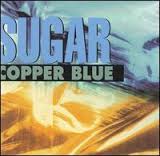
#15SOUNDTRACK: SUGAR-Copper Blue (1992).

copperblueAfter Bob Mould made some solo albums, he created another band.  Another trio, this one called Sugar.  Sugar seems to take Mould’s poppiest elements and wrap them in a big 90s grunge sound–a sound that Mould pretty much invented in Hüsker Dü.  And in many ways Sugar is not all that different from Hüsker Dü–maybe a bit less experimental and a little more commercial.

One thing I noticed about this album that, once I noticed it I couldn’t avoid it, was that when the drummer plays the cymbal (it might even be a hi hat with a tambourine on it), which he plays a lot, the tinny shimmer of that sound is so pervasive, I find it rather distracting.  Or should I say it adds an almost minute level of static over the proceedings.

The disc opens with “The Act We Act,” where big grungy guitars and a simple chugga chugga riff burst out of the speakers. I love the Pixies feeling of “A Good Idea” both that up front bass and the buggy sounding guitars provide an almost false introduction to the catchy verse and chorus that’s to come.  I also enjoy the unexpected break after the chorus.

It’s followed by the ringing guitars that introduce “Changes” a classic poppy rock song that is unmistakably Mould.  The uneasy almost nauseating sounds at the end of the song are again like a feint in the wrong direction as “Helpless” easily the most pop song Mould has ever written comes out.  Of course, as with Mould, this outrageously poppy song is all about feeling helpless.

Keyboards open the next song, “Hoover Dam” (something of a surprise for this album), which proves to be yet another big Mould single.  The song is so open with multiple acoustic guitars (and that cool synth solo) and a really wild reverse guitar solo.  It’s one of my favorite Mould  songs and yet another example of why this album was such a huge hit.

“The Slim” brings back the darker songs that Mould is also known for.  And just when you think that Mould can’t pull out another huge big single, he gives us “If I Can’t Change Your Mind,” one of his great big bouncy acoustic guitar songs.  It is almost obscene how catchy this song is, right down to the simple scale solo at the end.  Mould has this little technique that I find irresistible where he plays a song normally and then plays two fast chord changes segueing into another section.  It’s so cool.

“Fortune Teller” is a fast rocker with Mould’s trebly guitar taking the lead.  “Slick” is the only song I’m not crazy about. There’s something about it that kind of slows the momentum down, which is odd for a song about a car.  It’s got a real middle-period-Who feel to it, which I do like (and I really like the bridge) it just feels odd in this place in the disc.  The end of the song has some snippets of chatter that could have been edited out but lend an amusing air to the final track, “Man on the Moon” which ends the disc with that same air that the rest of the album has—big guitars and Mould’s slightly distorted vocals.  The solo is weirdly processed and kind of fun.  The end of the track with its repeated half step has a very Beatles feel to it. And the very end of the disc has the sound of tape rewinding, an amusing nod to the digital era.

Copper Blue was Mould’s first huge success and in his book he talks about not realizing quite how huge it was until he was in the middle of it.

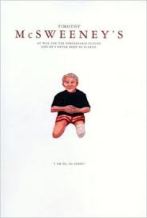
[READ: March 20, 2013] McSweeney’s #15

I was a little disappointed with McSweeney’s #14, but #15 was once again fantastic.  This issue is a smallish hardcover (I like when their books are this size).  The bottom half of the cover features a cool 2 color painting by Leif Parsons.  The issue is known as the Icelandic Issue because of a few things.  The first half of the book features stories by the usual suspects.  Each of these stories is accompanied by an illustration of a Scandinavian rune that dates to the Viking era.  The stories in the second half of the book have illustrations that are taken from Icelandic grimoires–magician’s handbooks.  It is these second half stories that are all from Scandinavian authors.  It’s a fascinating peek into a culture few of us probably get to read.

There’s no letters in this book, which removes some of the levity, but that’s okay.  The front page has a brief story that it was being written on November 2, 2004 in New Mexico, hoping to bring some voting power to “the good guys “in this “completely fucking terrifying election.”  (The bad guy eked out a victory 49.8 to 49.1).  They went canvassing door to door with an Iraqi veteran named Joey (who was 21).  He was very pro-Kerry and may have even convinced a young girl to vote (she thought her vote didn’t count because she was poor (!)).  It really evokes the feeling on that dark night in 2004 when the iota of hope was snuffed out. (more…)

Read Full Post »

CV1_TNY_04_22_13Pearson.inddSOUNDTRACK: MIKAL CRONIN-MCII (2013).

mciiMikal Cronin has a very pleasant middle range voice—conventionally good.  Indeed, there’s nothing especially unique about this record.  But it is a great summer pop album.  Lots of great big choruses that are fun to sing along to.  And, Cronin is a talented multi-instumentalist.  I believe he plays everything on the record, although I’m not sure about that.

The album is 37 minutes.  The first song, “Weight” has a simple melody and is incredibly catchy. There’s a nice falsetto before the big loud guitar chorus kicks  in.  “Shout It Out” is another great pop song—big fuzzy guitars and a wonderfully catchy melody.   And I love how it gets mildly chaotic at the end.  “Am I Wrong” is a straightforward rocker, with more big crunchy guitars.  There’s a fun fiddly keyboard solo (with lots of flubs, which is kind of endearing).  This song (and several others) remind me of Sloan.

“See It My Way” has a shambolic feel to it, I can do without the oddball sax solo, but there’s something so oddball about it that I think it works in the end.  “Peace of Mind” has a nice harmony vocal on it that gives this simple song a fuller sound.    There’s an unexpected violin solo in here.  “Change” opens with a real grungy loud guitar which is quickly replaced by a  speedy drum over a simple, catchy verse.  And a speedy chorus.  There’s an interesting middle section with another violin solo (and some unusual squeaky violin noises as well).  “I’m Done Running From You” is a fun fast bit of pop with a rocking guitar solo.  And “Don’t Let Me Go” is a slow ballady type song (as much as one can be on a rocking record like this).  “Turn Away” brings the rock back, although “Piano Mantra” ends the disc with a solo piano intro.  But the song builds and builds into a rollicking violin-fueled conclusion.

I’d never heard of Mikal Cronin before, and when i first started listening to the disc I thought it was an okay pop punk album.  But the more I listened to it, the more I enjoyed it.  It’s still as simple pop punk album but it’s done so very well.  I’m going to have to check out his debut as well.

[READ: May 2, 2013] “Mexican Manifesto”

I love that stories from Roberto Bolaño keep popping up.  I realize that most of these have been published in Spanish somewhere, but it seems like even if we know that his next book is going to be all poetry (Unknown  University coming out in June), somehow there’s at least one short story in it (I assume it comes from here, where else would it have come from?).  So, since it seems like there’s a new Bolaño book out every six months, I assume that barrage will come to an end now.

Unknown University is, as far as I can tell, the last thing that will be translated by Bolaño.  Wikipedia suggests that there are four other titles that could be translated: A Lumpen Novella (which he completed but which has not been translated), Diorama, an unfinished novel, something being called Part 6 of 2666 (who knows what that means) and an early book that he cowrote Advice from a Morrison Disciple to a Joyce Fanatic which I would really like to read–the title is so intriguing–but who knows is it will ever find a translator.

But that’s got nothing to do with this short story.  This short story is about a couple who frequent steam baths. The narrator is the man, and the woman, Laura, I the more adventurous of the two.  She is the one who encourages them to go to the baths in the first place and, while he also thinks it is wonderful, it is she who wants them to explore as many different baths in the city as possible. (more…)

Read Full Post »

xxSOUNDTRACKQUEENS OF THE STONE AGE-“My God is the Sun” (2013)

qotsaAfter a six-year hiatus, QotSA is back with this slinky song.  It has the sleazy feel that Homme does so well (how does he do that?).  This song feels a little more guitar based (meaning it is a bit more trebly–with interesting echoes on the guitars).  It’s not as immediately catchy as their bigger hits, but it’s got all the elements you look for from QotSA.

It opens with some slashing sounds and then the riff kicks in.  The song is propulsive but somehow doesn’t feel as fast as some of their earlier tracks.  Which is not to say it’s mellow at all.  And once Homme starts singing, well, it’s like they never went away.  There’s a lengthy middle instrumental section which is quite interesting and otherworldly, but it never gives up the propulsion, especially as the end gets faster and faster.

[READ: April 8, 2013] The Mays XX

This is another book that I saw at work and wanted to read (this job is wrecking my already long list of books to read).  I had some difficulty cataloging it (for various reasons), which meant I had to pour over contents.  And the more I looked it over the more I realized that I wanted to read it.

So The Mays Anthology publishes the best new student writing and art from Cambridge and Oxford Universities.  Read more about it at their website.  I’d never heard of The Mays before, but when I saw that John Darnielle of the Mountain Goats was a guest editor, I thought it might be a fun collection tread through.

Issue 20 features poetry, a graphic novel, photography and prose.  The other editors are Andrew Griffin (general), Sebastiano Barassi (Visual Arts), Tao Lin and Toby Litt (Prose) and of course, Darnielle (Poetry).

I was really delighted with the prose in this issue.  None of the stories are more than 1,000 words, which I decided is a wonderful length for a story.  I’m going to talk about the stories, but not so much about the poetry or art.

Darnielle’s introduction to the poetry section was excellent and really resonated with me because of my ideas and fears about poetry (how we feel stupid if we don’t get poetry).  He then explained the things that he looked for in this poetry and I imagined that i would love every piece here.  I didn’t, but on the whole I really liked the poetry. (more…)

Read Full Post »

seminarbookSOUNDTRACK: BOBTOWN-“Don’t Fear the Reaper” (2012).

bobtownI heard this song on the radio today.  When it started I didn’t think much of it–a nice acoustic guitar which… suddenly sounded familiar.  And then, no doubt, it was “Don’t Fear the Reaper.”  With banjo!  A good song can be played in any genre, and while I never would have guessed that this song would work in this genre, man, Bobtown knock it out of the park.

Bobtown has five members–two men, on bass and banjo, and three women who sing in gorgeous harmony.  And if you know “Don’t Fear the Reaper” you know that there are various vocal parts, which these woman tackle beautifully.  Their version gave me chills.

Now, befitting a bluegrass band, they did not play the super fast part (in fact they ignored that entire section of the song–the didn’t use cowbell either).  I was initially a little disappointed because I wanted to hear what they would do with it.  But it was truer to their version to leave it out and by removing it, they made the song a little different–more sombre, less wild.  And it was really good.

This version below is not the studio version, it was recorded in a stairwell.  But the band sounds great in this unlikely location.

[READ:April 7, 2013] Seminar

I grabbed this book at work (just like Cousin K).  This book was also short, which was a plus since I knew nothing about it.  It was also a play and it listed the cast from the opening on Broadway.  And I was rather surprised.  Hamish Linklater (the brother on New Adventures of Old Christine), Jerry O’Connell and..Alan Rickman!  I hadn’t heard of either of the women (Lily Rave–she’s been in nothing I’ve seen and Hetienne Park–her first role).

The story is a one act play about four college-aged writing students taking a seminar with a former great writer and current old man.

The four students are Douglas, a cocky writer who has connections and talent and who has been published in Tin House and is soon to be published in The New Yorker.  Martin, a shy writer who is rather insecure, although he proves to be very talented.  Kate is a girl who Martin knew from high school.  She has been writing the same story for six years and is outraged at the way her fellow students and their teacher behave.  And Izzy (who I thought was a man for a few pages) is a sexually adventurous woman who seems to be willing to do anything to succeed. (more…)

Read Full Post »

14

SOUNDTRACK: DEFTONES-Diamond Eyes (2010).

diamondBefore releasing Diamond Eyes, Deftones had two band crises. The first was that they didn’t really seem to like each other anymore.  The previous album was fraught with tension and they barely toured.  After deciding that they wanted to remain as a band, they were invigorated and made an album called Eros.  But during the recording, bassist Chi Cheng was in a car accident and was in a coma.  As of yet he has not fully recovered.  So they shelved Eros, hired a temporary bass player Sergio Vega and set about recording Diamond Eyes.  And for whatever reason, it proved to be one of their best releases so far.

“Diamond Eyes” opens with a heavy down-tuned guitar–very abrasive–until the chorus come in and it’s their most beautiful ones yet–with soaring keyboards and  harmonies.  And then the heavy guitars come back–it’s what Deftones do so well–beauty and ugly together.  Stephen Carpenter really shines, as always.  “Royal” is a fast song with a great harmonizing chorus.  “Cmnd/Ctrl” has a shocking low riff that explodes into a  bright chorus.  “You’ve Seen the Butcher” has guitars that seem almost untuned as the song starts.  But it morphs into a kind of sexy butt-shaking chorus.  And Abe Cunningham’s drums are, of course, fantastic.

“Beauty School” is the first that doesn’t really start out heavy, it’s a got a gentle guitar intro and the first song where Vega’s bass is really prominent as a separate instrument and it creates a beautiful alternative song–great vocals throughout.  “Prince” brings in a lot of new textures to the album, including a clanging guitar sound and a great screamed chorus. “Rocket Skates” is one of my favorite songs on the record, it has a classic metal riff and the great screamed-beyond-comprehension chorus of Guns, Razors Knives and a weird little whoooo that ends the chorus.

“Sextape” is a surprisingly gentle song, opening with an echoed guitar riff and one of Chino’s most gentle choruses.  “976-Evil” has an echoey guitar and voices not unlike the Cocteau Twins.  “This Place is Death” has another great alt rock feel–a big song with bright guitars and dark lyrics.  I haven’t really mentioned Frank Delgado on keyboards and samples.  He’s been with the band since White Pony, and I feel like his presence was made notable on a few songs here and there.  But it seems like on this disc he really comes to the fore, adding new textures and sounds to the album which really fill it out.

[READ: March 12, 2013] McSweeney’s #14

After the colorful extravaganza of the Comics Issue of McSweeney’s #13, this book settles down into something more somber  The book is softcover and all white.  The cover depicts a cartoon of George Bush with both legs blown off and the caption, “I Am So, So Sorry.”  On the spine in small print: “We’re praying as fast as we can.”  It is the most context-full cover they’ve done yet and, nearly a decade away it seems like a rather mean cover, but if I remember correctly at the time it seemed apt and delicious, especially in light of the upcoming election.

Yet despite the overtly political cover, the content inside is not political or even thematic (although it is pretty dark stuff).  Nevertheless, the table of contents gives us a small joke when it says “To help you know which stories to read first, we have indicated with either a * or a † those that deserve special consideration from you, the reader.  If you see either a * or a †, do not miss that story.”  Of course every story has either a * or a † but they cleverly did not put any kind of pattern to the symbols.

The colophon explains that when they were in Ireland, they met an actual Timothy McSweeney.  He had been given a copy of Issue #3 and then promptly forgot about the magazine.  But when McSweeney’s was in Galway to do a reading at the Galway Arts Festival, Timothy (Ted) McSweeney traveled from Dublin to check it out (not a short trip).  This also resulted in a letter from Mr McSweeney which is actually quite funny.

There are also illustrations in the book, although they are small illustrations and are placed on the title of each piece in the book.  All of the illustrations are old, mostly coming from the 1800s, although one dates back to 1670.  They illustrations are all technical scientific ones and don’t have anything to do with the stories. (more…)

Read Full Post »

« Newer Posts - Older Posts »