Feeds:
Posts
Comments

Archive for the ‘Research’ Category

SOUNDTRACK: RUSH-“BU2B” (2010).

I’m a little freaked out that Rush has a song that is just initials (it’s so text message-y).  And, listening to the lyrics tells me that the 2 is for “to.”  That is no way for 50-some year-old men to behave!

Of course, neither is the pounding heavy song that is “Bu2B.”  Like “Caravan,” the song opens with a dark and dirty riff.  The song is not as complex as “Caravan” although it also features a quieter section.  After the verse, the quiet bridge comes as a more natural progression (and it, too has some strong bass stuff going on).

What’s fascinating about the song is that despite its heaviness, it is layered with some really delicate keyboards that plink along the top of the sections.  It showcases both sides of Rush in one track.  And lyrically it’s quite dark as well.

These two early release songs have me really excited for the new album, Clockwork Angels, due out in 2011.

[READ: October 11, 2010] “The Oracular Vulva”

Jeffrey Eugenides was the next writer in the 1999 New Yorker 20 Under 4o issue.

I really enjoyed Eugenides’ The Virgin Suicides, and I regard him highly as a writer (even though I haven’t read very much else by him).  About midway through reading this story I realized it must be an excerpt from Middlesex (which I haven’t read, but hope to one of these days).   The bad thing about realizing this is that it impacted my reading of the end, making it kind of hard to assess the story as a story (which, I realize it isn’t, so maybe it’s moot anyhow).

This excerpt focuses on Dr. Peter Luce (the famous sexologist).  The title of the story certainly implies a degree of sexology, right?  I was surprised however, that the story opens with the doctor in a jungle, studying the Dawat tribe.  Luce, a very comfortable middle class sexologist is miserable out in the jungle, with crazy animal sounds, oppressive heat and, worst of all, little children trying to pull down his pants.

The doctor is studying this tribe because they have very specific gender roles–so specific, that the men and women are not permitted to interact with each other at all, except for once a month for three minutes, for procreation.  So, for sexual outlet, the men engage in oral sex with each other (semen being a very important thing for the young men to consume).  Yet no matter how progressive Dr Luce is, he simply can’t deal with the thought of this young boy, who is trying to do his culture’s most honorable thing.  (more…)

Read Full Post »

SOUNDTRACK: SERENA MANEESH-“Sapphire Eyes” (2005).

I used to keep a list of songs and albums that I would try to find.  On this list was a single or a B-Side by Serena Maneesh.  I’ve lost the list, but someone just donated their debut album to our library.  So I’m excited to check it out.  In the meantime, I found the video for this track so I’ll start there.

For years people waited for the follow up to My Bloody Valentine’s Loveless.  And if David Shields ever does release a disc under that name again, it will be more scrutinized than Chinese Democracy (and possibly less inspired).

So, why not let someone else take up the reigns of shoegazing music some fifteen years later.

This track displays many traits that made MBV so great.  It opens with a slightly distorted female vocalist.  She starts singing before a throbbing bass and noisy, distorted (seemingly backwards) guitars bring in a wall of noise.  But that wall only lasts for a short time before it breaks away and the song builds again, slowly, with more and more parts (the video shows a violin although I can’t hear it).

And then about half way through the song it does what MBV always made me do, pick up my head and go, yes, this is great.  A mildly distorted amazingly catchy bridge peeks out through the noise and grabs on to you.  Then more noise and a little backwards vocals and its over.

Other reviews of the album suggest that this isn’t the only kind of music they play, that they are also heavier and darker; I’m looking forward to the rest of the disc.   First impressions (five years late) are very good here.  Check it out here.

[READ: June 25, 2010] A Reader’s Guide

Despite my fondness for Infinite Jest, I had not read any of the supplementary books about it.  I’d heard of them, of course, but I didn’t feel compelled to get any of them.  Then I saw that this one was very cheap.  And I decided to get Elegant Complexity while I was at it (a few cents to the Fantods).  Complexity is a big honking book, and I don’t have time for it right now, but this reader’s guide is very short and a very quick read.

I had an idea of what to expect from the book, but I didn’t really know who the intended audience was.  So, I was very surprised to see the way it was set up.  The first chapter is a biographical account of DFW including his place in the new writers anti-ironic camp.  It was a good summary but nothing new, and I worried about what I had just bought. (more…)

Read Full Post »

SOUNDTRACK: New Moon Original Motion Picture Soundtrack (2010).

Back in the 90s, it seemed like every week there was a new soundtrack featuring an unreleased song from some great alt rock band.  This meant huge sales for soundtracks, even if for the most part they weren’t solid start to finish.  In fact, mostly you got three great new songs, three pieces of rubbish, one great song by a band you’d never heard before and two or three okay tracks.

The inclusion of a new Death Cab for Cutie song was the big news about this soundtrack.  And overall, the reviews were positive.  And I’m pleased to say there aren’t really any horrible songs here.  (I have no idea how the soundtrack fits in with the movie as I haven’t seen it and probably never will).

But as with that old soundtrack formula: we get a few good songs by reasonably well-known bands: Death Cab for Cutie, Thom Yorke, Bon Iver & St, Vincent, Muse, Grizzly Bear.  And then there’s a whole bunch of good rock songs.  The disc plays as something of a sampler of downcast, mellow alt rock. In fact, the back half of the disc sounds like a pretty decent alt rock radio station from the last decade or so.

Some of the tracks even sound like 90s alt tracks (Hurricane Bells, that song is 16 years old right?  And Sea Wolf, you’re channeling Peter Murphy, I know.)  The final two tracks are okay.  The Editors is kind of a Nick Cave via Joy Division sorta spoken word ballad.  And I admit I’m a little disappointed in the Lykke Li track–they got hyped beyond their ability.  The final track is a piano score, which is fine.

The biggest surprise to me is how much that Death Cab for Cutie songs sounds like a Rush song.  I’ve never considered that the bands sound anything alike before, and yet from the moment the song opens, that could be Geddy Lee singing, and that whole guitar structure is very Rush-like.  Maybe they should do a cover of it.

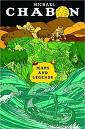
[READ: April 20, 2010] Maps and Legends

This is a collection of 17 non-fiction pieces by Michael Chabon.  The pieces cover everything from book reviews, essays about reading and writing, comic book and comic book artists and golems.

The opening essay is about the modern short story and it sets the tone for the entire book.  Interestingly, this essay talks about the state of entertainment and how “Entertainment has a bad name.  Serious people learn to mistrust and revile it.  The word wears spandex, pasties, a leisure suit studded with blinking lights. (13).  This very topic is at the heart of the David Lipsky/David Foster Wallace book (and in fact Chabon is mentioned in that book as well.)  Ah, serendipity. (more…)

Read Full Post »

SOUNDTRACK: THE DEAD MILKMEN-Bucky Fellini (1987).

C’mon, I’m the walrus, damnit.

Bucky Fellini ups the ante from Eat Your Paisley in that the band sounds really accomplished at this point.  The songs are still silly, but they’re not quite as jokey (except for the hit single, but more on that in a second). There’s even lap steel guitar, violin and backing vocals!

Dave Blood’s bass is really something of a force at this point, propelling songs with interesting riffs.  Rodney  “Cosloy” Anonymous sounds great.  And, Joe Jack Talcum gets quite a number of songs to sing: the mellow (and very twisted) “Watching Scotty Die” and the more rocking “Rocketship.”

“Big Time Operator” is a supremely silly song based on a very simple blues riff.  It features the first (utterly wretched) DM guitar solo (look out Stevie Ray Vaughn!) and even showcases a “humming” solo from Rodney (just me!).  While  on the other end of the spectrum, “Surfin’ Cow” is mostly instrumental which is catchy and full of surprising intricacy.

“Instant Club Hit (You’ll Dance to Anything)” was indeed a club hit.  It’s snarky and silly (complete with a drum machine) and it name-checks some of the most prominent college radio bands of the time.  You could easily have built a good collection of British college rock from their list of who you’ll dance to. (instead of giving your money to a decent American artist like himself).

The Dead Milkmen keep getting better and better.  They’re still funny, but they’ve proven themselves to be far more than a novelty act.  Blow it out your hairdoo cause you work at Hardees.

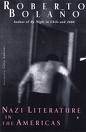
[READ: April 1, 2010] Nazi Literature in America

I’ve read a lot of books that are, shall I say, weird.  But this one is definitely the most unusual when I think:  what would possess a person to write it?

Nazi Literature in the Americas is written as an encyclopedia of Nazis writers who have lived in North, Central and South America.  Except that all of the writers are fake.  So, essentially Bolaño has invented 30 characters, and created rich, fully detailed biographies about all of them.

Some of them are very short (a couple of pages) while a few are over ten pages long, with details of books/poems published, critical reception and even untimely deaths.   The biographies are grouped according to categories (The Mendiluce Clan; Itinerant Heroes or the Fragility of Mirrors, Forerunners and Figures of the Anti-Enlightenment; Poètes Maudis; Wandering Women of Letters; Two Germans at the End of the earth; Speculative and Science Fiction; Magicians, Mercenaries and Miserable Creatures; The Many Masks of Max Mirebalais; North American Poets; The Aryan Brotherhood; The Fabulous Schiaffino Boys; The Infamous Ramírez Hoffman).

And although they are not chronological, Luz Mendiluce (whose bio I read separately) features prominently as a constant “reference point” and creator of one of the prominent Nazi publishing houses.  She had created a publishing empire where Nazi works were spread throughout the continent, and it seems that everyone had a title published by her company Fourth Reich.

What’s so weird about the book is that the people are fake, everything about them is fake (although they are placed firmly within history) and yet their stories are still compelling.  Bolaño has employed a mildly sympathetic tone to these people.  Not sympathizing with the Nazi aspect, but sympathizing with them as humans.

There were one or two who I didn’t really enjoy.  And I admit that I enjoyed the North Americans more; since I know more about North than South America, the facts surrounding these authors resonated more.  But I thoroughly enjoyed most of these biographies.

Of course, just when you think the book is all the same, the final biography changes everything.  In this one, Bolaño himself appears as the writer of the book.  He writes about Ramírez Hoffman in the first person, mentioning himself by name and getting personally involved in the story of this final, skywriting author.  It completely subverts the work before it and leaves you more confused than when you started (although a lot happier for having read it).

The final section of the book is an Epilogue foe Monsters.  It provides a brief biography for all of the secondary characters mentioned in the main body.  It also details the publishing houses and magazines, and finally lists  a bibliography of all books published.  The amount of detail that Bolaño created here is staggering.

But aside from all the Nazism, the book can be quite funny.  Like the conclusion for Luz Mendiluce Thompson, which ends with her driving a car into a gas station.  The final line: “The explosion was considerable.”

It’s tempting to say that this “novel” is not representative of Bolaño’s writing, but I think that’s false.  From what I’ve read so far, Bolaño doesn’t conform to any style in his books: each book is designed differently.  But like this one, they all deal with South America, with violence, with politics and are filled with humor.  So, yes, I guess this is pretty representative.

Oh, and the translation by Chris Andrews is, once again, fantastic.

For ease of searching I include: Bolano

Read Full Post »

SOUNDTRACK: KATHLEEN EDWARDS: Back to Me (2005).

This is Kathleen Edwards’ middle disc.  It continues in the vein of her first, although I think her voice sounds smokier and better.  The opening two tracks are stellar, catchy, snarky/funny and just fantastic.

She has a few mellower songs on this disc (and I’m not a big fan of mellow country folky music).  But as with some of my other favorite singers, her passion and her lyrics make even a slower song interesting.

“Summerlong” is another song that seems like it was a hit long ago.  It just sounds so comfortable and catchy that I feel like I’ve known it forever.   BUt even better is the slide guitar fueled “What Are You Waiting For?”

Strange as it sounds, I think I like her first album overall better than this one; however, there are more songs on Back to Me that I like more than those on Failer.  Whatever the case, Edwards is a great songwriter with a wonderful voice.  And I certainly look forward to more from her in the future.

[READ: April 3, 2010] Echo

I have been reading Echo since Issue 1.  But my subscription lapsed, and I wound up missing an issue.  So I put off reading it until I managed to get the back issue.  Which I finally did.  Phew!

And now I was lucky enough to read a huge chunk up through issue 20.  And I have to say tit is absolutely preferable to read Terry Moore in large chunks rather than one issue at a time.  (Of course, I’ll still be subscribing and reading as I go, because missing that issue killed me!).

Several new developments have occurred since Issue 11 or so.  The most important one is that it is clear that Annie and Julie’s DNA are merging.  Julie is able to hear more and more of Annie’s thoughts.  But also, because Annie has melded with this alloy (and the alloy is, for lack of a better scientific way to explain it…magic), Julie has gained healing powers (in addition to crazily explosive powers). (more…)

Read Full Post »

[WATCHED: March 17, 2010] Brief Interviews with Hideous Men

This film is based on the short story collection Brief Interviews with Hideous Men by David Foster Wallace.  The book is a collection of short stories.   The majority of the stories are indeed, brief interviews (although some are unrelated). And the film is an adaptation of these interviews.  It did pretty poorly at the box office and has met with largely negative reviews.  And I think for the most part that’s understandable.  If ever a film was made for a select audience, it was this.  And it’s very easy to see why a vast number of people either didn’t like it, or didn’t get what he was trying to do.

The interviews in the book are designed so that you only hear the responses of the “subject.”  You never hear the initial o follow-up questions, and you don’t learn anything about the questioner.  In an NPR interview, John Krasinski reveals that DFW told him that he felt that the stories were a “failed experiment.”  He wanted to create a character without actually writing anything about her specifically.  He wanted the reader to insinuate who the interviewer was based upon the answers and reactions of the subjects.  He felt that he was not successful in doing so.

When Krasinski read (and re-read) the stories, he pictured who the interviewer was.  And so in his script, he created an interviewer (because a movie without the interviewer would have done even worse at the box office!).  His interviewer is a young woman who is working on a post-doctorate in feminist studies.   When Krasinski told DFW this, DFW told him that that is exactly who he had in mind.  This great interview reveals how excited Krasinski was at getting DFW’s blessing. (more…)

Read Full Post »

SOUNDTRACK: RUSH-Caress of Steel (1975).

Despite the fact that this album is largely considered a failure, it’s one of my favorite Rush albums.  There’s so much weirdness about it that I can see why it isn’t terribly popular but there’s so much goodness that it makes me a bit bummed that some glorious tracks are overlooked.
It opens with the one track people know from the disc: “Bastille Day,” a rough raw rocker that is heavy and really sets the tone for the first side of the disc. The heavy heavy riff is reminiscent of Black Sabbath and other early metal pioneers.  I also learned that they were touring with Kiss around this time, so maybe that’s where they got some of their heavy riff ideas from. I of course cannot imagine Rush and Kiss touring together.  That must have been a real trip.

The second song, the amusing “I Think I’m Going Bald” is rather obvious, especially the way he delivers the title line, but man the guitar solo just rocks and rocks and rocks.  “Lakeside Park,” a real location outside of Toronto is a gentle tribute to youth.   This quote amuses me no end, and is something I just read about.

The first real highlight for me is “The Necromancer,” a wacked out 12-minute mini epic.  It opens with a spoken word introduction, setting the tale of three travelers fording a river. The first part is pure psychedelia, with screaming guitars going from ear to ear.  The second part is heavy with a slow pounding riff and Geddy’s screamed vocals  It features a long headphone-happy guitar solo.  And just when you think it’s over, there’s some crazy sound effects and, yes more guitar soloing.

The third and final movement sees the return of By-Tor from “By-Tor and the Snow Dog.”  By-Tor is now a good guy and he scares off the Necromancer.  I always enjoyed playing this part on the guitar as the chord progression is really pretty.

Side Two is one song, a full side, their first proper epic. Called “The Fountain of Lamneth” it focuses on a man’s quest for this elusive Fountain.  It has six parts.  The first, “In the Valley” is a pretty, acoustic ballad that expands into a loud rocker.  It introduces our anonymous narrator, and by the end its sets the tone with a loud/quiet explanation of his satisfaction and dissatisfaction with his life.

It’s followed by the insane “Didacts and Narpets” (Teachers and Parents (anagram on Narpets).  It’s just drums and shouting.  Evidently it’s designed to show a young man fighting with teachers and parents, and sure why not.  It’s pretty out there, but it’s only 90 seconds long.  (I’ve always enjoyed it).

The middle sections are really quite mellow.  More of that beautiful classical guitar that Alex does so well.  The songs don’t remain mellow the whole time, with “No One at The Bridge” adding some loud aggressive bits.  But “Panacea” stays quite mellow, with some beautiful guitar harmonics.  The next bit, “Bacchus Plateau” is a really pretty song despite its ultimately downer message, and probably could have been a hit if tit weren’t part of  20 minute song..

The song ends with him finding the fountain.  And yet rather than rejoice, he’s exhausted.  But I’ve always enjoyed the “message” of the song: “Life is just a candle but the dream must give it flame.”  It’s inspirational and depressing at the same time.  It ends with a reprise of the opening acoustic bit. It’s a tidy song and a wonderful first attempt at an epic track.

The only reason I’m surprised this didn’t sell well is that it works so well as a trippy 70s disc, ideal for sitting around with headphones on in one of those round chairs.  I assume its the heaviness that turned away fans of Pink Floyd and the like.  And, well, probably the downer message and really weird title of the disc (what does Caress of Steel mean anyhow?) might have had something to do with it.

[READ: March 10, 2010] Rush, Rock Music and the Middle Class

I read about this book in an article from The Walrus. And I thought to myself, it’s geeky enough to love Rush, but how about reading an academic treatise about Rush? I’m so there.

Well, I haven’t really read a truly academic (as in published by a University Press) book in a while, but it didn’t take too long to get back in the swing of things.  Plus, if I may be so bold, ethnomusicology seems like a lot more fun than philosophy.

As the subtitle implies, this book looks at Rush as music for the middle class.  The only thing I had a hard time with the book was the definition of middle class.  It is specifically aimed at a U.S./Canadian middle class (although the UK does enter into it too), and with all of the definitions thrown around, middle class seems very broad.  The easiest breakdown to see was based on employment and the most prominent type of employment among Rush fans was “professional” (including librarians and IT people).  So, evidently I am middle class.  I only say this because for the most part classes are hidden in the US (they aren’t, of course, but there are many attempts to try to keep them hidden).

This concept of class obviously pervades the entire book.  But before we get too hung up on that, we must not forget that the real focus of the book: the music of Rush. (more…)

Read Full Post »

SOUNDTRACK: ELFIN SADDLE-Ringing for the Begin Again [CST059] (2009).

This is a fascinating disc from our friends at Constellation Records. It defies ready classification and offers elements of folk music, eastern instrumentation, klezmer and Asian influences.

The most obvious Asian influences come from Emi Honda who sings in Japanese.  In a most misunderstanding, on “The Procession,” which sounds Middle Eastern, I actually thought she was singing in Israeli or something until I realized it was Japanese.

Jordan McKenzie, the other half of the band, sings in English and has a variety of vocal styles. He also plays accordion banjo and xylophone, which complements Emi’s own accordion and singing saw (!).  There is also a feeling of random percussion (or as the Constellation website puts it: junk percussion).

The opening track, “The Bringer” begins quietly, building in a gentle staccato with both members singing until it reaches its full height of intensity.  “Running Sheep” sung in Japanese, actually feels like a running song, while “Hammer Song” is almost, almost, a straightforward folk song (in which Jordan sounds Scottish) except for perhaps the tuba accompaniment.  Yet for all of these disparate elements, the disc holds together amazingly well.  These are not nine individual track  glued together, they all work together to create a very solid composition.

It should also come as no surprise that Jordan and Emi are visual artists.  The cover depicts a sculpture of theirs (and the liner notes are beautifully illustrated).  Lyrics are included and the Japanese is translated for us.

The disc doesn’t feature the dramatic highs and lows of some other Constellation releases, but as a solid, slightly avant garde folk release, it’s quite terrific.

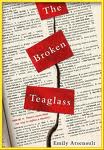
[READ: February 14, 2010] The Broken Teaglass

[UPDATE: Sarah just reviwed the book here.  We don’t often read the same books, so this was fun.]

Sarah’s friend Denise said I would really like this book.  Upon hearing that this book was right up my alley I had to investigate immediately (I always wonder what people think I would like).  And she was totally correct.

So what makes this book perfect for me?  Well, it is set in a dictionary.  Actually, it is set in the editorial department of the offices of the Samuelson Dictionary, one of the premiere dictionaries in the world.  The protagonist is Billy, a recent college graduate (in philosophy) whose first job comes at Samuelson.  The offices are located in the small town of Claxton, Mass.  Billy moves away from home (although it is still driving distance) to a small apartment in this very small town.

I have no idea if the descriptions of working in a dictionary office are in any way accurate, but it certainly is enticing.  Essentially, everyone works in silence all day.  They are assigned several magazines to read to see if there are any new words that are coming into common usage which might wind up in future editions of the dictionary.  Eventually they are assigned words to define as well (for future supplements to the dictionary).

They are also responsible for correspondence with dictionary users.  People write (or call) with questions about word usage, misusage and even suggestions for additions to the dictionary.  How fascinating is that? (Oh and these correspondences were absolutely hilarious!). (more…)

Read Full Post »

SOUNDTRACK: THE ZOLAS (3 Tracks on CBC 3 Radio) (2009).

I must have heard “The Great Collapse” on CBC 3 a few weeks ago because I heard it today and it was so catchy I was sure that I knew the band.  And yet, when I saw the artist, I’d never heard of them before.

But it was so catchy I had to investigate.

The Zolas are from Vancouver, BC and must be the least self-promoting band ever.  They have a Myspace and a Facebook site, but man it was hard to find anything about their CD. It’s available at Amazon (.ca and .com) but it’s for sale at a much more reasonable price here. (Ah, except that it’s $11 shipping to the States, which is more than the disc itself.)

The band list says there’s only two member and that they were previously (or concurrently) in a band called Lotus Children.  But that this incarnation of their songwriting chops is a bit more dramatic, baroque even.

And these three songs have instantly made me want to get their disc.  They are poppy, with wonderful choruses, and yet there are tempo changes and falsettos and surprise twists and turns.

“You’re Too Cool” has about three completely different songs in it, starting as a rollicking rock song, having a rousing chorus, and then, in the middle rather than a bridge we get almost a completely new, mellow song.  “The Great Collapse” is a piano fueled romper with the real catch being the unexpected minor chord at the end of the verses.  The third song “Marlaina Kamikaze” alters the style from the other two with a magnificent guitar intro.  Although it also shifts at the midpoint to include more piano marching type music.  And another killer chorus.  The bridge then comes from out of nowhere (or perhaps from the circus) with a great piano breakdown section, slowly building up to the chanting chorus once more.

Thanks, CBC, for this band.

[READ: January-February 2010] Anonyponymous

This is the third book that Sarah gave me for Christmas.  I thought I’d read it more quickly, but I got caught up in other books.

So, we’d read a summary of this book in The Week.  This book is a collection of word origins that come from a person’s name (eponymous).  The twist is that for the most part, the people are forgotten or unknown (hence anonymous).  Anon-eponymous, aha!

There are tons of etymological books out there, but this one is very deliberately designed as a casual reader’s book.  In fact, when a book lists itself in the definition of “crapper” then you can tell the tone of th ebook?  What?  Yes:

Crapper: A toilet; also, in phr. “crapper material,” a book or magazine meant to be read in the bathroom, e.g., this one. (more…)

Read Full Post »

SOUNDTRACK: COLIN MELOY-Sings Sam Cooke (2008).

I ordered this CD from the Decemberists website.  (Sadly Colin singing Morrissey is no longer available).   This is, as the title states, Colin Meloy singing Sam Cooke songs.

I don’t know much about Sam Cooke (although I knew a few tunes from this disc).  And, in my head, Sam Cooke doesn’t have a “catalog” of songs, like, say, Morrissey does. So, this came across as a disc of standards.  And as such it’s very good.

If you like Meloy, you’ll like this.  If you don’t, this isn’t going to covert you.  It’s basically just him and his acoustic guitar (and an occasional backing vocal) singing these songs.

I have always liked “Cupid” so it’s nice to have a rendition of it.  As for “Summertime,” I’m not sure why that’s considered a Sam Cooke song since it comes from Porgy and Bess.  I didn’t know the other three songs, but they’re all quite good, uptempo jazzy numbers.

This EP makes me want to investigate a Sam Cooke Greatest Hits, to see what I’ve been missing.  And maybe that was Meloy’s point all along.

[READ: January-February 2010] Shite’s Unoriginal Miscellany

I had ordered a couple of Schott’s Almanacs from the UK, because I thought it would be fun to see what was different about them from the U.S. versions (quite a lot actually).  And while browsing for them, I found this parody of the series.  So, for a few dollars used, I ordered it too.

Now any book that bills itself as “extensively researched, eccentrically compiled and irresponsibly written” pretty much lets you know what you’re getting.   And it does conclude its summary by saying, “more than 250 pieces of useless, misleading and possibly dangerous information.”  So, what might you expect?

This is a very strange parody of the series because it does three things at the same time:  1) It provides actual lists of actual things (which are, indeed, useless and silly).  2) It provides nonsensical/hypothetical questions (more on that shortly).  And 3) It has stuff that is clearly made up and intended to be funny (but often isn’t) (more…)

Read Full Post »

« Newer Posts - Older Posts »