Feeds:
Posts
Comments

Archive for the ‘Religion’ Category

speakSOUNDTRACK: STONE GOSSARD-“I Need Something Different” (2013).

stonegossardmoonlanderStone Gossard is the rhythm guitarist for Pearl jam.  He’s also one of their major songwriters.  He has one or two songs that he sings with the band.  This is a solo effort which indicates that he might be a heavier influence on the band.

Stone Gossard last released a solo album 12 years ago.  There’s a new Pearl Jam album in progress and Stone’s other band Brad put out an album not too long ago, so why not release a solo album?

I don’t know how much Gossard does on this song, but I rather imagine he plays everything (the solo is fine but not amazing and the drums are solid but don’t really standout).  And while that sounds dismissive, it’s not meant to be.  Gossard creates a solid sound of simple rock.

The guitars are loud and bouncy.  Stone’s voice is rough and workmanlike—there’s a reason he’s not a lead singer.  But his voice works great for this aggressive slice of rock.

The riff is continuous and non stop, while he sings I need something different.  And then at the mid way part the keyboards start—perhaps this is the something different.  The keys break the propulsion with a poppiness that you wouldn’t expect in the song.

Then the song returns to its original style.  It’s not a terribly original song, but it would be a fun bar anthem.

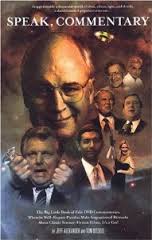
[READ: June 10, 2013] Speak, Commentary

When this book first came out I was pretty delighted.  What a funny concept—overblown writers and political pundits do DVD commentary about films they had nothing to do with.  It seemed like it would be very funny indeed.

And here’s the thing.  It is. For a few pages. But each one of these things feels as long as the actual movie they are commenting on.  Alexander and Bissell have done their research—they know what these figures will say.  And say.  And say.

As I said the premise is awesome, check out these wonderful combinations:

  • NOAM CHOMSKY & HOWARD ZINN on The Fellowship of the Ring
    ANN COULTER & DINESH D’SOUZA on Aliens
  • TERRY DWIBBLE & STEVEN McCRAY on Start Trek II: The Wrath of Khan
  • JERRY FALWELL & PAT ROBERTSON on Planet of the Apes (1968)
    WILLIAM BENNETT & DICK CHENEY on Star Wars Episode I: The Phantom Menace

[Terry Dwibble & Steven McCray are (presumably) fictional characters—die hard Trekkies who are thrilled to be able to add this commentary and, frankly, this is the best one of these pieces.]

I think part of the problem with the book is the sequencing.  The first piece is incredibly dry.  I recall reading this when I first got it.  I don’t know if I read all the way through Chomsky and Zinn.  And I know I didn’t make it through all of the second one (Coulter and D’Souza)—my d0g eared page failure still lingers to this day.

But I finished this time. (more…)

Read Full Post »

CV1_TNY_06_03_13Hall.inddSOUNDTRACK: DJ KOZE-“Track ID Anyone?” (2013).

koze-electronic-beats-amygdalaThis album was selected as one of NPR’s favorite of 2013 (so far).  I really don’t know what to make of it. It opens with what sounds like a massage going on–there’s talk of things feeling good.  And then the music kicks in, or shambles in.

The main riff is weird and stifled, awkward.  But in a way that’s hard to look away from.  Then after almost 3 minutes of a 5 minute song the vocals come in.  They are quiet and harmonied.

The write up of the album says that it is quirky and compelling.  It’s definitely quirky, I’m not entirely sure ho compelling it is.  I was really intrigued where a song with that opening would go, but I wasn’t really that excited by the route it took to get there,

[READ: June 10, 2013] “We Didn’t Like Him”

This was a fascinating story about the growth of a bully named Manshu.  The narrator (I honestly couldn’t tell the gender of the narrator—I assumed it was a girl until much later when I changed my mind.  Actually I see now that the opening says “boys his own age” so I guess the narrator is a boy, but it was never really explicit) is embarrassed by Manshu.  Manshu is “my father’s sister’s husband’s sister’s son” and as such, he is “family” with the narrator.  But Manshu doesn’t play with boys his own age—he plays with the younger kids (like the narrator) and he always beats them—in whatever.  For example, in cricket he would keep batting all day.

There was some degree of sympathy for Mansu because his father died when Manshu was six and his mother had diabetes, but he was still a pain.  Then Manshu’s mother unexpectedly died.  And Manshu changed.  He lived with the narrator’s aunt’s husband who did not like him.  Manshu became quiet and, if possible, spiritual.

The rest of the story concerns Manshu’s spirituality and the community’s temple.  The narrator’s father was on the committee which oversaw the temple and when their current pandit, Gaurji, was deemed to be doing an insufficient job at the temple, he was kicked out and Manshu took over the position.  Of course, there were cries of nepotism, but Manshu seemed to be very holy now.

Until he started to go seemingly against their Brahmin ways.  Well, first he married a woman out of his caste.  Then he started asking about how to get on TV.  Then he started promising that praying in his temple could cure cancer. (more…)

Read Full Post »

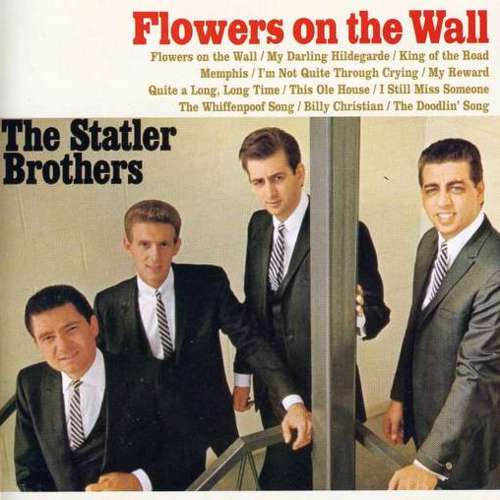
200px-FatesWorseThanDeathSOUNDTRACK: THE STATLER BROTHERS-“Flowers on the Wall” (1965).

flowersonthe Vonnegut mentions this Statler Brothers song in Palm Sunday as well.  I know this from Pulp Fiction–a song that I found very amusing and never would have guessed was a classic country song.  Country music was very different in 1965 than it is now.  I don’t even know if there was a folk or bluegrass category back then, and this song, with its banjo and bouncey acoustic guitar is a great example of the kind of country music I like.  And those harmonies!

This song certainly seems to be about insanity–about a man counting flowers on the wall, playing solitaire with a deck of 51 cards, smoking cigarettes and watching Captain KAN Kangaroo.  Don’t tell him he’s nothing to do.  What a weird little song.  And man is it catchy.  No wonder it was a #1 hit.

[READ: May 31, 2013] Fates Worse Than Death

After reading Palm Sunday I learned that Fates Worse Than Death was a kind of autobiographical sequel to that non fiction book.  I also learned that the two essays that make up Nothing is Lost Save Honor which is impossible to find (and for which I can’t even find a cover) are available in FwtD.  However, since there is no real contents or index, you do have to read the whole thing to find out which chapters contain the essays.  Or you can just look here and see that “The Worst Addiction of Them All” (which was published in The Nation) is in Chapter XIV and “Fates Worse Than Death” appears in Chapter XV.

The last time I read a bunch of Vonnegut together I got a bit burnt out on him and the same thing happened here.  The problem with Vonnegut’s nonfiction is that he tends to repeat himself.  A lot.  And while this book is ostensibly about the 1980s, he talks an awful lot about his family and his friends from the war and his other literary acquaintances., like he did in Palm Sunday.  In a number of places, he says that he doesn’t like to read himself in English, and it would seem that he doesn’t proofread to see if he said something already either.

This is not to say that the book is not worth reading.  Indeed, if you read Palm Sunday in the 80s and then this one in the 90s, you might not remember all of the details that pop up again, but when you read them days apart…well. (more…)

Read Full Post »

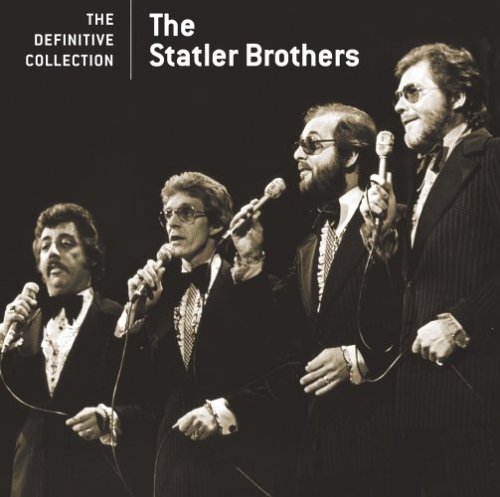
PalmSundayFrontandBackSOUNDTRACK: THE STATLER BROTHERS-“Class of ’57” (1972).

stalerI don’t know much about The Statler Brothers.  They are considered country, although this song is hardly country–it’s more folk with some bluegrass and, the real selling point–great harmonies (especially the bass singer with the big mustache).

The song is a wonderful coming of age song, sad and funny with a list of what happened to everyone in the class of ’57.  Like:

Betty runs a trailer park, Jan sells Tupperware,
Randy’s on an insane ward, Mary’s on welfare.
Charlie took a job with Ford, Joe took Freddie’s wife,
Charlotte took a millionaire, and Freddie took his life.

John is big in cattle, Ray is deep in debt,
Where Mavis finally wound up is anybody’s bet.

But the kicker comes at the chorus:

And the class of ’57 had its dreams,
Oh, we all thought we’d change the world with our great words and deeds.
Or maybe we just thought the world would change to fit our needs,
The class of ’57 had its dreams.

And then at the end:

And the class of ’57 had its dreams,
But living life from day to day is never like it seems.
Things get complicated when you get past eighteen,
But the class of ’57 had its dreams.

Vonnegut quotes the entirety of this song in the book and I’m glad he did, it’s a very moving song and really captures American life.

[READ: May 26, 2013] Palm Sunday

After writing several successful novels, Vonnegut paused to collect his thoughts.  And Palm Sunday begins: “This is a very great book by an American genius.”  It is also a “marvelous new literary form which combines the tidal power of a major novel with the bone-rattling immediacy of front-line journalism.”  After all the self praise, he decides that this collage–a collection of essays and speeches as well as a short story and a play which is all tied together with new pieces (in TV they would call this a clip show)–this new idea of a book should have a new name and he chooses: blivit (during his adolescence, this word was defined as “two pounds of shit in a one-pound bag.”  He proposes that all books combining facts and fiction be called blivits (which would even lead to a new category on the best seller list).  Until then, this great book should go on both lists.

This book is a collection of all manner of speeches and essays, but they are not arranged chronologically.  rather they are given a kind of narrative context.  What’s nice is that the table of contents lists what each of the items in the book is (or more specifically, what each small piece is when gathered under a certain topic).

Chapter 1 is The First Amendment in which he talks about Slaughterhouse Five being burned and how outraged he was by that–especially since the people so anxious to burn it hadn’t even read it (and the only “bad” thing is the word motherfucker).  The first speeches included are “Dear Mr. McCarthy” to the head of the school board where his books were burned and “Un-American Nonsense” an essay for the New York Times about his book being banned in New York State.  The next two are “God’s Law” for an A.C.L.U. fund raiser–it includes his confusion as to why people don’t support the A.C.L.U. which is working for all of our own civil liberties. (more…)

Read Full Post »

arborSOUNDTRACK: DAVID BYRNE-uh oh (1992).

uhohI received this CD free when it came out (radio station perk), and I listened to it a few times, but not really all that much.  I never really thought that much about it because I didn’t really like the cover–it looked too babyish.  It’s been a while since I listened to it and I am delighted at what a good, solid, Talking Heads-ish album this is (with David Byrne, you never know exactly what you’ll get from a record, but this is poppy).

“Now I’m Your Mom” opens with an early 90s funky electronic bass and some crazy guitar sounds.  But as soon as the bridge kicks in, the song is pure Byrne/Talking Heads.  And that world music style chorus means that this song could have been huge (even if it is about a transvestite or transgendered person–I didn’t listen that carefully).  However, the extended section at the end makes the song feel a little long.  “Girls on My Mind” is a strange (but good) song from start to finish—a weird cheesy synth sound pervades the song, and yet once again, it’s very Byrne—especially the crazy singing of the chorus.

“Something Ain’t Right” opens with an odd chant but then turns very conventional—with choral voices giving big oohs.  “She’s Mad” opens as a kind of sinister song.  And yet, after some verses about her being mad, the chorus is as bright as anything else on the record—a very schizophrenic song.  “Hanging Upside Down” has a very commercial Talking Heads Feel, like “Stay Up Late.”

“Twistin’ in the Wind” has more of those big choruses of voices to “well well well” up the song.  “The Cowboy Mambo” has another weird sound that circulates through the song, but it’s got a good beat and a great chorus and it would be fun to dance to.  “Monkey man” is a horn-heavy track that opens in a sinister vein once again.  “A Million Miles Away” just gets stuck with you and makes you want to sing along.  “Somebody” ends the disc with more Latin horns and rhythms.  It’s a fun song, and a good ending.

Overall, this is a surprisingly good record.  All of the songs are a little long–Byrne songs should really max out around 4 minutes.  For that extra time, he either tends to repeat himself or add superfluous codas that drag out the end.  But aside from that, this is a real treat, especially for Talking Heads fans.

[READ: May 20 2013] Arboretum

The back of the book describes this as a collection of enigmatic, enchanting mental maps.

And that is kind of what the book is.  It is a collection of drawings–tree and branch-style drawings mostly–that endeavor to map relationships.  But the subject matter is crazily diverse–oftentimes nonsensical or at the very least unparseable.  The good news is that many of the drawings have an explanatory text in the back of the book.  I acknowledge that ideally the drawings should make sense without needing an explanation, but the explanations were really useful–they really give you the frame of mind that Byrne was trying to explain through the pictures. (more…)

Read Full Post »

[LISTENED TO: May 13, 2013] Musicophilia

musico

My sister-in-law Karen got me this audio book for Christmas.  I had never read any Oliver Sacks before although I have always been amused/intrigued by his stuff (The Man Who Mistook His Wife for a Hat is such a great title).  So this book, as one might guess, is all about how music impacts our lives.  Music is more than just an enjoyable set of melodies, it is a more primordial form of communication.  The key thing for any fan of music to know about this book is that about 97% of the music he talks about is classical.  Which is fine, but you’re not going to get any kind of insight into rock.  The reason for this is twofold.  One–he likes classical (and doesn’t seem to like rock–although he did take one of his patients to a Grateful Dead show) and two–he wants to talk more about music and not so much about lyrics (although again, that’s not entirely true).

I have to admit that while I enjoyed the stories in the book and will certainly talk about it a lot, I found the book a little overwhelming–it was exhaustive and exhausting.  Sacks really tries to cover ever aspect of music (and many I never would have guessed) and so I found the nine hours of story a bit tiring by the end.

Part of that may also have been John Lee, the reader, who spoke very clearly and a little slowly and gave the book something of a lecture-feel.  Which was fine for much of the book, although again, it was a little exhausting sometimes.

The thing that is most exhausting about the book is that virtually every person he talks to or about has had some kind of trauma which makes their appreciation of music different from the norm.  If you are in any way a hypochondriac, this book will make you go insane  I’m not, but even I found myself worrying about having a stroke at any second or experiencing some kind of weird brain thing where I no longer like music or god forbid get some kind of long term amnesia.  Jesus, I was getting a little spooked by the end. (more…)

Read Full Post »

sign4SOUNDTRACK: GOAT-“Run to Your Mama” (2012).

goatI was intrigued to hear this song by Goat (whom I don’t know) because of the picture below.  Now that is a band photo!

Goat are a Swedish band and, like a bunch of Swedish bands recently, their guitar sound is very retro–a big open clean guitar sound.  But the riffs that they play are also very retro, this song sounds incredibly 70s–classic rock/heavy metal 70s.

The lead singer is the female of the trio, and she has a great raspy voice (and I assume she does the backing vocals as well).

The song feels like it could be an epic workout (especially when the solo kicks in and it is lengthy and, apparently, on a xylophone).  But right after the solo (at just under 2 and a half minutes), the song just ends.  It’s fantastic and I’m looking forward to hearing more from the album.

Goat

[READ: May 12, 2013] The Sign of (the) Four

I recently found out that the Sherlock Holmes book that I was supposed to have read in high school (from a reading list that I know I read at least some of) was actually not by Sir Arthur Conan Doyle.  Rather The Seven Per Cent Solution was a relatively recent (1974) book by Nicholas Meyer.  The only thing I remember from the book was learning that Holmes was an addict (and passing that news along to my mother with a tone of “see people have always been bad”).

Anyhow, in The Sign of (the) Four, the book opens with Holmes shooting up a seven per cent solution of cocaine.  The reason being that the cocaine kept his brain active when he had nothing else to do.  Holmes is bored, just waiting for something new to come along.  But Doyle doesn’t keep us waiting long.  A young woman, Mary Morstan, calls on Holmes for help with a case.  Or actually more like a series of interesting puzzles.  The first is the disappearance of her father, Captain Arthur Morstan in December 1878.  He came home from the war and then disappeared.  Holmes asks if he could be hiding, but she says no, he was very excited to come home and see her.  Since he has been gone, she has been employed as a governess and the family she assists have more or less taken her in as a member of the family.

The second puzzle is that she has received in the mail one very expensive pearl a year since 1872.  It always comes on the same date and the sender has remained anonymous.  This all started when she answered an anonymous newspaper ad that asked about her.  With the last pearl she received a letter that said she has been wronged and the sender asks to meet her.  He also says that she shouldn’t come alone.  So she asks Holmes and, by extension, Watson to accompany her.

Through a series of vehicles, they meet Thaddeus Sholto, a friend of Captain Morstan, who confirms that the Captain died in 1882.  Sholto’s father and Captain Morgan were in the war together.  Six years ago they had a fight over a treasure.  During their argument, the Captain suffered a heart attack and died.  Sholto’s father totally freaked out and hid both the body and the treasure.  Some time later, in declining health, his father confessed his sins, but on the night he died, he saw a man out the window who later broke into the house and left a note that said The Sign of Four (incidentally, the title of the book is variously The Sign of The Four and The Sign of Four; Doyle himself had written it both ways).  Thaddeus and his brother Bartholomew take over the treasure.  Well, Bartholomew takes it over and allows Thaddeus to send Mary the annual pearl as a payment for what happened to her father.

On the night that the story takes place, they travel to Bartholomew’s because he is in declining health.  But when they arrive, they find him dead–from a poisoned dart.  And the treasure is missing. (more…)

Read Full Post »

dreadSOUNDTRACK: PIÑATA PROTEST-El Valiente (2013).

elvaliente-frontrgbOn the Pogues album If I Should Fall from Grace with God, they sing a song called “Fiesta” that is more or less a punk Spanish song which, while very Spanish sounding, still retains a feeling of Irishness.  Piñata Protest, a band from San Antonio who sing in Spanish and English, sounds like a similar mix of Mexico, Ireland and punk (especially on the second track, “Vato Perron”).  I feel like the Ireland comes from the accordion (one of the primary instruments on the disc), while the punk lasts throughout (the whole album is 9 songs in 20 minutes).

The band plays loud guitars at a fast pace.  And it’s amazing how well the accordion brings it all together.

The band sings a few really fast songs and a couple slower ones.  Interestingly, the slower songs (“Tomorrow Today” and “Guadalupe”) are probably the most conventional and, consequentially, of the least interesting songs on the album.  They sound like pretty typical punk pop, albeit with touches of accordion.  It’s the more fast songs like “Vato Perron” and “Life on the Border” (with the great lead accordion and the fun “Hey!” refrain) which really stand out.

“Volver Volver” is a traditional song which starts out slowly (with big guitars) and after a few verses and a very long held note, the punk can’t be contained any longer and the song ends in a blur.  The title track is a great rocker with some interesting guitar sounds an a cool accordion solo.  Then there;s the rocking (and amusing) cover of “La Cucaracha.”  It starts out as a blistering punk song with no real connection to the original until about mid way through when a lone trumpet begins laying the familiar melody.  It’s only a minute long and so is the final cut “Que Pedo” which is just a blistering punk song with lots of screaming.

And with that album is done.  It’s a fun an unexpected treat of an album, and if you like your punk musically diverse, it’s worth checking out (NPR is streaming it this week).

[READ: May 11, 2013] Dread & Superficiality

Sarah got me this book for my birthday.  If you have ever seen Annie Hall (and if you haven’t, go watch it now), you’ve seen Woody-as-cartoon.  Hample is the person who created the cartoon for the movie.  Around the time that that happened, Hample was pushing Woody to have a comic strip based around him (Hample had a moderately successful strip at the time already) and also convincing newspapers that this was a good idea.  All parties agreed and Inside Woody Allen ran from 1976 to 1984.  1984!  I can’t believe I never saw this in a newspaper.  My parents were daily subscribers to two newspapers and I know I read the comics.  Of course, I didn’t care about Woody Allen until I went to college, so maybe I did see it but ignored it.

Anyhow, this book collects a bunch of those strips (I have no idea how many but I would venture around 200–which is a far cry from the nearly 3,000 that would have been produced over those years.  But hey since there’s no other place to see these strips (there were three books published but they are all long out of print), this is a good place to start and a nice collection.  But more than just the strips, most of the book collects the original proofs of the strips, so you can see Hample’s lines and notes (there are several pieces that deal with his color choices and notes on the same).

The book is broken down into subjects and is in no way chronological.  This makes sense as it’s good to see him dealing with the same topic in different ways, but it makes for weird continuity issues (something that will obviously occur when you only select random strips).  Woody is with various women over the strip and it’s hard to know if he was after Laura for a few months or the duration of the strip.  Of course, the sections aren’t really all that different–they all deal with Allen’s philosophical attitude, his attempts to woo women, his therapist and his parents.  However, the breakdowns, while somewhat arbitrary are enjoyable. (more…)

Read Full Post »

#16SOUNDTRACK: SUGAR-Beaster EP (1993).

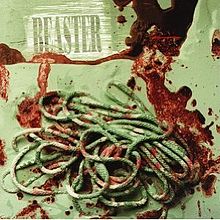
beasterI didn’t know that Beaster, the Sugar EP was recorded at the same time as Copper Blue.  Mould’s biography was very helpful in explaining all the details of the timing and styling behind these two recording.  As well as how the super pop of Copper Blue could be followed right on the heels with the very very dark EP of Beaster.

I have often thought of this disc as being really dark and insular and Mould confirmed as much—he was really airing out some demons with this disc.  But they thought it would be better to put them all in one place rather having them bounce around the poppier full length.  What must fans (like myself) have thought to hear this dark album after the pop of Copper Blue.  I mean just look at the cover!

I hadn’t listened to this in a long time, so I was surprised by how cool “Come Around” sounds—Mould’s acoustic guitar high in the mix with some appropriately grungey guitars in the background.  There are lyrics but for the most part I think of it as just Mould making sounds with his mouth.

It’s followed by the blistering “Tilting.”  It’s got superfast drumming with aggressive guitars, it’s like we’re back to the early Hüsker Dü punk sound (with a little more clarity).  The drumming is great in this track.  The song ends with a preacher being interrupted by dissonance and what sounds like electronic interference. And this song morphs into “Judas Cradle” one of Mould’s darkest songs.  It’s very claustrophobic-feeling with echoed vocals, lots of feedback and lots of compression on the overall sound—quite different from the big open sound of Copper Blue.  And yet for all of that, the chorus, “Have you seen the Judas Cradle, ah”is really quite catchy.

“JC Auto” has some buzzsaw guitars which make it seem like it’s going to be quite an angry song and yet the bridge is quite welcoming (all this talk of holidays) and then the chorus is amazingly fun to sing along to (Mould always finds pop in anger): “Passing judgment on my life you never really got it right/I can’t believe in anything / I don’t believe in / Do you believe in anything / Do you believe me now…  Look like Jesus Christ / act like Jesus Christ I Know I Know I Know Here’s Your Jesus Christ I’m Your Jesus Christ I Know I Know I Know.”  And, as always, I love when Mould repeats his lyrics in the background (the “I Know I Know” surfaces throughout the end of the song).

“Feeling Better” has weird synth blasts that kind of works in the song but sounds out of place on this record.  This song flips between really aggressive guitars and a very bright poppy chorus.   At 6 minutes this song is a little long (because it’s primarily repeating itself by the end), whereas Judas Cradle and JC Autos’ 6 minutes are well justified.

The final song “Walking Away” is a strange one. It is comprised entirely of organs (church organ it sounds like) with Mould delicately singing “I’m walking away back to you”  The end starts to wobble giving a bit of a nauseous feeling but then it’s over.  So even in his most downtrodden and questioning, Mould still has the chops to write some great music.  Down be put off by the cover, Beaster is a great album.

[READ: March 28, 2013] McSweeney’s #16

After the fairly straightforward Issue 15, McSweeney’s was back to fun with Issue #16.  The issue opens up into a kind of quad gatefold which has , in order–a comb, a book, another book and a deck of cards.

The main book contains nine stories, by the typical McSweeney’s roster at the time.  The other booklet contains a lengthy story by Ann Beattie.  The deck of cards is for Robert Coover’s “Heart Suite” and the comb is a comb.  It’s a nice one, although it has never touched my hair.

The MAIN BOOKLET (more…)

Read Full Post »

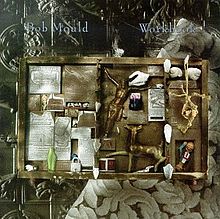
peach6SOUNDTRACK: BOB MOULD-Workbook (1989).

workbI actually wrote this while reading Bob Mould’s book, I assumed I attached it to something and then wrote about Mould’s second disc Black Sheets of Rain.  And now I see that I never attached this to anything.

This is Mould’s solo debut, an album that I think of as being a mellow acoustic album.  And it is, kind of, at least if you go by the opening song, “Sunspots” a  beautiful little acoustic guitar instrumental.  And the rest of the instrumentation on the record includes strings, which are prominent on “Wishing Well.”  Although the song rocks a lot harder than I remember–especially the rollicking solo which has some real screaming guitars and angst in it. It sticks out a bit in the album because most of the album is more along the lines of “Heartbreak a Stranger”–opening with a gentle pretty acoustic guitar and Bob’s emotional voice (and really nice harmonies).

And then comes “See a Little Light” Mould’s first solo hit (and a big one at that).  It’s bright and has great harmonies.  There’s strings which really accentuate the song and a few moments which even now all these years later give me chills. “Poison Years” has more of that acoustic vibe but it brings in a big chorus (oh his harmonies!) and a harsh guitar solo (and a chilling final note)–a great song all around.

“Sinners and Their Repentances” is a minor key masterpiece in which Mould’s voice seems like the main instrument.  “Brasilia Crossed with Trenton” is a six and a half-minute song.  (This album is full of long songs actually–which comes as something of a surprise given Mould’s past success with three-minute pop songs–three of these are over 5 minutes and two are over 6!).  “Compositions for the Young and Old” is a great song all around.  “Lonely Afternoon” has some Hüsker Dü elements.   “Dreaming I Am” has a great mid-song riff (which sounds like a mandolin) and there’s something so great about the chorus.

“Whichever Way the Wind Blows’ ends the disc with a loud abrasive guitar sound. And his singing is practically inaudible shouting.   It sounds angry and has a rough riff and loud guitars.  At nearly 7 minutes it’s quite the cathartic ending.  It’s a strange ending to such a gentle disc, but maybe Mould wanted to show that he hadn’t gone entirely soft.  It’s an amazing debut and an auspicious start to his solo career.

[READ: April 21, 2013] “Last Supper”

As I mentioned, this issue of Lucky Peach is about the apocalypse.  So it’s only fitting that one of the two stories be about a Last Supper.  The story is a series of letters from Adrian to Crowley.

Adrian invites Crowley over for a special meal that his mother is making in honor of the Pope and his Last Tweets of the Apocalypse.  Adrian explains that her mother is a huge fan of Crowley’s work and would love it if he could come to this meal.  There is an enclosed (grotesque) picture of a pig which Adrian says they will be serving and, although it looks like pig, it is not made of pig at all.

Crowley demurs this invitation–he is extremely reticent to eat anything that is not what it purports to be (he had a bad experience once).  But he wishes them well. (more…)

Read Full Post »

« Newer Posts - Older Posts »