Feeds:
Posts
Comments

Archive for the ‘Regrets’ Category

carrieSOUNDTRACK: CATE LE BON-Tiny Desk Concert #337 (February 18, 2014).

cateCate Le Bon has a very interesting style of singing–it reminds me of Grace Slick in her enunciation, but also like someone whose speaking accent is very strong and is somewhat masked by her singing (like the way she sings “reason” as “ree-sun” as opposed to “reezun”).

The blurb explains that her “phrasing is completely tied to her Welsh dialect — in fact, her first record was in Welsh…. The enunciation is completely tied to the loneliness and the questioning.”

 For this concert it is just her and her fellow guitarist H. Hawkline (both wearing super cozy sweaters).  They share the guitar licks very nicely–it’s not always clear who is playing what–with her sometimes finishing his lines (I believe).

“Are You With Me Now?” has a very catchy chorus (with an “ah ha ha ha ha” part that makes it sound like an olde English ballad).

“No God” plays with very simple guitar lines (chords played very high on the neck of her guitar and a simple accompanying riff).  Hawkline plays keys (and sings some great falsetto backing vocals) to flesh out this song.  Everything is so clean you can hear each note from the guitar and her voice.

“Duke” opens with some interesting slightly off sounding from Cate while Hawkline plays a simple chord pattern (his fingers are enormous, by the way).  Hawkline’s falsetto is almost as engaging as the vocal lines that match the guitar line which Cate plays.  And when she says “I’ll see you here” in that unexpected pronunciation, it’s totally captivating.

I like Le Bon a lot and want to hear what she wounds like on record.

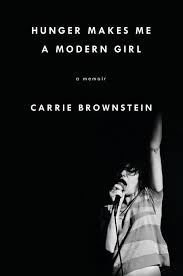
[READ: May 18, 2016] Hunger Makes Me a Modern Girl

After finishing Bob Boilen’s book and thinking about how I don’t really love music-based books, I immediately read Carrie Brownstein’s book.  Carrie Brownstein is one of the two guitarists in Sleater-Kinney and Wild Flag.  She is also one of the leads (writer and actor) on Portlandia.  And she wrote for NPR for a while, too.  Basically, Carrie is the shit.

One thing I took away from this book is that I’ve read a few musician memoirs (Mötley Crüe and Marilyn Manson to name a few) and this is the first one I’ve read that was filled with so much sadness.  Not “I was stoned and regret sleeping with that person with an STD sadness,” but like, real family problems and even a dead pet.  And, as Carrie herself jokes, her stories of being on tour and ending up in the hospital are not based on drugs or other debauchery, but on anxiety and even worse, shingles.

The beginning of the book starts in 2006, around the initial break up (hiatus) of Sleater-Kinney.  Carrie is in pain–emotional and physical–and she can’t take much more.  She starts punching herself hard in the face. (more…)

Read Full Post »

henrySOUNDTRACK: THEE SILVER MT. ZION MEMORIAL ORCHESTRA-Fuck Off Get Free We Pour Light on Everything [CST099] (2014).

99Aside from the dance remix single of “Hang on to Each Other,” this is the latest Silver Mt. Zion record to be released.  For those keeping score, GYBE has released an album more recently than SMtZ.  This album is full of punk piss and vinegar (as if the title didn’t give it away).  It’s mostly represented by a heavily fuzzed out guitar that runs underneath nearly all of the songs.

The album begins with a child saying, “We live on the island of Montreal … and we make a lot of noise … because we love each other.”

This first song is called “Fuck Off Get Free (For the Island of Montreal)” and the music starts with scratching noisy guitars and everyone else playing a simple ascending and descending riff.  The vocals kick in right away and it feels like the whole group is singing along too–everyone is involved in this noisy song.  It works great.  Even when the song shifts to a more singable part it retains the intensity of the pacing.  Around 4 minutes we get a return to the chanted vocals that lead into a kind of hurricane of a solo section.  And when they come out of that the chorus sings the chanted title.  The biggest change comes at 6 and a half minutes when the whole song shifts and a slower, heavier and deeper guitar chord (unlike any they have played before–it feels unearthly) drives the remainder of the song.  As I’ve noted in other songs, I love when the choir sings by itself (the female singers in this case singing “pull me under”), and they all sound much more “professional” than the kind of loose choir they were a few albums ago.  This choir sings to the end of the song as the instruments all drop off leaving only voices.  It’s pretty fantastic.

“Austerity Blues” is 14 minutes long and opens with a flat sounding scratched acoustic guitar and sing along vocals.  While the scratching  guitar is going on a cool bass line begins.  Things quiet down which leads to a noisy one-note distorted guitar that adds a layer of noise to the melody line.  The song shifts to a louder section with scratchy violins and big pounding drums (David Payant has really added a lot to these songs with his powerful drumming).  Around 6 minutes in, a distorted echoing guitar plays a kind of Middle Eastern-sounding guitar solo.  When the solo settles down a new faster section begins–lots of drums and group singing.  By ten minutes, the song feels like it’s fading out as the music gets quieter.  But a new set of vocals resume more quietly this time, and they sing their melodies quietly until the end.

“Take Away These Early Grave Blues” opens with a girl with a very thick British accent wondering why “people think like that” as a noisy violin kicks in with a see-saw riff and shouted vocals.  This song sounds like a pretty standard SMtZ song with the big exception being the really noisy drums that dominate the track (Payant again).  At around 2 minutes, the music drops away leaving just a buzzy bass introducing a noisy drum and guitar solo.  When the vocals resume the music becomes a fast pounding drum fill and more distorted violins and guitars.  The song is intense and while only about 7 minutes long, it really packs a lot in.  It ends with a fast riff (that’s almost an Irish jig) followed by crashing drums and chanting lyrics: “Love each other that’s all.”

“Little Ones Run” is only two and half minutes long.  That’s unusual in itself for the band.  But even more unusual is that the song is like a lullaby.  It’s a quiet piano melody and lyrics sung by the female members of the band.  It hearkens back to their first albums which were all piano, but this is a much updated version of that early sound.

“What We Loved Was Not Enough” opens with quiet violins and deep bass notes.  The relative quiet is shattered by Efrim singing (this is the first instance on this album where his polarizing voice stands out–on the rest of the album it’s pretty well mixed in with everything else.  But I think he’s won us over by this time and we can accept it, especially since the musical melody is so pretty.  There’s also a lovely violin solo that runs through the middle of the song.  In fact, the whole song would be really quite pretty except for the distortion that permeates it–a noisy guitar underpins the whole thing.  But at 6 minutes, everything drops out except for the pretty violin and the vocals,  “And the day has come when we no longer feel.”  That refrain is picked up by the beautiful choir voices (they really sound great).  As they repeat this section, Efrim sings a harsh lead vocal (he sounds a bit like Larry Kirwan from Black 47).  There’s an instrumental section that scorches with noisy guitars for about a minute and then at 9 minutes the song returns to that beautiful chorus (with male voices added) and that delicate violin.  It goes on like this until the end.  It’s really lovely.

The final song “Rains Thru the Roof at Thee Grande Ballroom (For Capital Steez)” is also rather different for the band.  It is “introduced” by an interview (in English and translated into French) from an unnamed musician who is talking about how being in a band is more than a part time gig … it’s what you devote your life to.  When the music comes in it’s floor toms and an unsettling distorted and scratchy strings or keyboards or sampled voices and keyboard which slowly growing louder.  There’s stabs of piano and vocals which are far back in the mix.  The melody is nice but mournful and it continues for all of the four minutes.  [Capital Steez was a rapper from Brooklyn who committed suicide in 2012.  I honestly can’t tell what this song has to do with him].

I’m not sure which band we can expect to hear from next, but both GYBE and SMtZ have released really strong records in the last few years.

For this album, the lineup stays the same as on the previous album (and the band name has remained the same, too).

Thierry Amar: Upright bass, electric bass, plucked piano, vocals
Efrim Menuck: Electric guitar, acoustic guitar, mellotron, vocals
Jessica Moss: Violin, plucked piano, vocals
Sophie Trudeau: Violin, plucked piano, vocals
and David Payant has taken over for Eric Craven on drums, organ, piano and vocals

[READ: March 15, 2016] “Confessions of a Humorist”

I only found out about this story from reading The Fate of the Artist.  I have always vaguely liked O. Henry, but can’t say that I’ve read much by him.  I found this story to be simple and fairly obvious, although perhaps it was obvious because he introduced this style of storytelling to the world one hundred years ago.

The narrator is a bookkeeper in a hardware firm.  We learn a bit more about him and his family.  This line delighted me for some reason, “Naturally, we lived in a vine-covered cottage.”

On the occasion of the senior partner’s 50th birthday, he was selected to give a speech.  And it was a hit.  People laughed and suddenly his reputation as humorist was established. (more…)

Read Full Post »

[ATTENDED: May 23, 2016] S.T.O.P.

stopIf you have a teen or pre-teen and you are concerned about how they will deal with bullying, sex, body issues or, heaven forbid, heroin, this performance is a must-see both for your child and you.  The performers are all high school students.  They wrote the pieces and they are intended for high school students (and middle school).  If you can’t see them yourself, contact your school or community group to arrange for them to do their show.  It is intense and really effective.

When the fifth grade completed the D.A.R.E. program at school, the ceremony included a piece by this group.  The piece was called “Jack & Jill” and it told the story of how an underage party led to the death of two teens.  There were a couple of moments of humor, but the message was intense and the acting was really good (they “rewound” the story and the actors did a great job of going backwards–including one boy who “fell up” the couch (he fell off it earlier).

After they were done, they said that the troupe would be doing their full hour-long show in May and that was open to anyone in 5th grade and older.  I was amazed that Clark wanted to go as it’s not really his thing.  And so we went.  He was bummed that only a couple of kids he knew showed up.  I was bummed at how few people showed up at all.   And so I wanted to post about the show to get the group some recognition because what they did was really powerful and I think should be seen by just about everyone.

When we arrived, the teacher in charge of the group Miranda DeStefano-Meene told us that the show would be uncensored and pretty intense.  The program says that the words on stage “may embarrass, hurt, offend, scare and anger you.  That is intentional.”  The second paragraph spoke of the heroin epidemic in our society which is bigger than any other drug epidemic in recorded history, which I did not know.

And so we sat back and watched this show.  Now, I happen to think that Clark may not have been exposed to a lot of what was going on in this play (which I’m grateful for).  So this show may have been really intense for him (I know I spent the whole show wondering what he thought).  After the show the only thing he said was that it made hm sad.  And we did talk a little about the messages, but he’s a tight-lipped kid, so I can only hope he’ll come back to me with more questions if they arise.

And what questions he must have.  For this show tackled so many problems facing teens.  (more…)

Read Full Post »

vamplove SOUNDTRACK: DO MAKE SAY THINK-You, You’re a History in Rust [CST045] (2007).

rustYou, You’re a History in Rust feels very different from DMST’s previous album.  That record felt kind of insular and tight.  This one feels expansive and experimental.  Like the first song which has multiple sections that feel completely unrelated and which are only connected by silence.  Or the fact that there are lyrics in a song, or even a fairly conventional song.

“Bound to Be That Way” This song opens in a peculiar way.  There’s a drum rhythm, that slowly builds and some piano chords are laid over the top. This goes on for about 45 seconds and then fades out.  And then a new melody–completely different–with horns and guitar peeks its way out. And then it too fades.  Then around 2 minutes a pretty guitar melody comes through followed by big crashing distorted drums. Eventually a new riff enters the song and it really starts grooving.  It’s fantastic, but it too is just a portion of a song which ends at around 4:30.  And then another new section comes in. Then acoustic guitar riff is counterpointed by some horns.  The final melody is the catchiest one of the bunch and it ends this strange song on a high.

But if that was strange, “A with Living” offers the biggest shock to fans of the band.  There are words in this song!  And they are sung! Words were co-written and sung by Alex Lukashevsky and the Great Lake Swimmers’ Tony Dekker.  Akron/Family also joins in doing “oohs” and “ahs.”  It opens with rumbling drums and then the singing begins.  The song has a conventional verse chorus verse structure with big horns.  It’s catchy (the vocals are great).   But it’s also a 9 minute song and at 4 and a half minutes the song moves way from the melody and enters a lengthy instrumental section with deep rumbling guitars.  The chorus of voices returns briefly before the mellow guitars lead us to the end.

“The Universe!” is one of my favorite DMST songs.  It rocks and rollicks.  It has two notes and then five bashing chords.  Repeated several times.  It’s one of the most straightforward songs they’ve done.  It has screaming guitar solos and a cool sliding bass. It’s also very raw sounding, with all kinds of noise floating around it.  And just like that, it’s gone.  Seguing into the quiet, “A Tender history in rust” which opens with processed guitars or keyboards, layered upon each other.   There are voices fighting through (saying all kinds of sounds—including laughing), before it switches to a pretty acoustic guitar riff.  It’s a delightfully conventional folk melody–another unusual addition for the band.

“Herstory of Glory” has another pretty acoustic guitar melody with some rattling drums (in the right ear).   Then there’s a rumbling bass and distant voices before more and more instruments add to the beautiful song–pianos, trumpets, claps.

“You, You’re Awesome,” is the shortest song on the disc at under 4 minutes.  It opens with slow electric guitars and a e-bowed solo.  After a minute or so, the rest of the band comes in with a slide guitar and banjo making a kind of sloppy folky romp.

“Executioner Blues” is another favorite.  Its 8 minutes long with some lovey guitar riffs and sounds.  It opens with some big guitars and a repeating riff.  A martial drums enters the song and keeps it moving until the next big section.  Horns repeat a similar melody and then a romping bass guitar takes over.  More instruments kick in making the song noisy and slightly distorted.  There’s piano trills, glockenspiel, electric guitar, noises and more.   and the instruments all go up the scale slowly for a few bars and then play a punch of staccato notes.  It’s rather dramatic.  After several permutations of this, they just keep going up and up the scale until the reach the top and then they gradually descend again.  The last minute is a series of quiet bass notes, as if everyone has totally come down from that intensity.

“In Mind” is a quiet disc closer.  A simple guitar melody, it is joined by banjo and trumpet.  Then some bass lines come in followed by a very distorted chorus singing “When you die, you’ll have to leave them behind/You should keep that in mind/When you keep that in mind, you’ll find a love as big as the sky.”  The disc ends with some quite banjo plucking.

This disc goes all over the place and really explores different avenues.

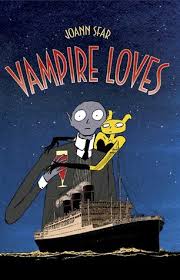
[READ: February 10, 2016] Vampire Loves

Joann Sfar created Little Vampire (and apparently about 100 other comics, some of which have been translated into English by Alexis Siegel and published by First Second).  Of the things I’ve read by him, (and there have been a few) I enjoyed this the most.  It seems like a lot of his books (like Little Vampire) are for kids, bu this one is absolutely for adults (there;’s curses in it and talk of sex and everything).

There are four stories in this book (I just learned that Sfar has written six in total, so maybe there will be more translated). After the third book in this collection, there’s a question as to whether or not Ferdinand, the vampire in this story is Little Vampire.  There’s a little drawing of Little Vampire which says that Ferdinand is him.  “But vampires don’t grow up!  No, but they can grow little.  Ferdinand was me before!  You mean that before being little you were grownup? Yes.”  So there’s that sorted.

“Could Cupid Care Less?” starts us off with Ferdinand the vampire’s woes.  His girlfriend, Lana, (a kind of plant creature) has just come back.  She cheated on him, but turns the conversation around to say that it is his fault–if he weren’t so jealous he never would have found out.  He freaks about this and she storms off again.  Furious, he sets off for his nightly feeding.  Ferdinand is a nice vampire–he takes little sips and only with one fang so it looks like mosquito.  While he is feeding on a woman, a red-haired vampire storms in and shows him how to do it right.  She is a vixen with an ankh necklace and after feeding, she comes on to Ferdinand hard.  She says she likes old, proper-looking vampires–not goth wannabes.  She brings him back to her house but before they can do anything, her sister walks in.  She’s also red-haired and has a shapely figure and actually has more in common with Ferdinand.  And that’s when we learn that the first woman’s name was Aspirine and her sister’s name is Ritaline (ha!).

All of the stories cut back and forth to different sections.  So we cut over the Lani who is staying with the Tree Man.  He is trying to hit on her, but she’s having nothing to do with it.

We return to Ferdinand where he just can’t get rid of Aspirine, even when he wants some alone time.  He can’t get a woman he wants and can’t get rid of the ones he doesn’t.

“Mortal Maidens on My Mind” opens with a Japanese woman meeting Ferdinand in Paris and falling for him.  They do all kinds of things together and she even writes home about him.  But Ferdinand had to return home and that was the end of that.

We cut back to the Tree Man who is still pining for Lani but is having no luck with her.

Back home, Ferdinand runs into the man who slept with Lani, Michael.  He also argues that it was Ferdinand’s fault that things wound up as they did.  He says that he was just looking for fun.  He didn’t want to hurt anyone, so why did Ferdinand have to get involved?  After a fight Ferdinand leaves to go to a bar where he tries to hook up with a woman but it all falls apart.

Then we cut to a man who has created a golem.  He wanted the golem to do bad things, but the golem is so kind that he couldn’t possible have made the him do the evil things he planned.

The postscript of the story contains a few notes on the protagonists of this story which sort of retroactively tries to make sense of the seemingly disparate story lines and lets us know how these characters belong here.

“Lonely Hearts Crossing” shows Ferdinand on a cruise.  But first we meet a woman named Alas, and her spiritual ghost-creature-friend named Sigh.  Alas is looking to score with the captain of the ship (who is the invisible man).

Meanwhile Lani is going shopping with Tree Man.  He has become her buddy and he can’t get out of it.

On the ship, Ferdinand runs into a werewolf who turns into a wolf when he sees a girl.  He only transforms back if he can kiss a girl.  But he is a such charming creature that he has no problems scoring–much to Ferdinand disgust and amazement.

The story turns very exciting as there are armed criminals on board and a shootout.  And by the end of the story Ferdinand is making out with the spirit ghost creature (who teaches him how to go through walls which turns them both kind of ghostly for a time).

“Moonstruck Post Mortem” ends the book with Ferdinand trying to pick someone else up.  His conscience is bothering him lately though so he manages to get rid of it.  The woman is interested in him but already had two boyfriends so she kind of blows him off.

The scenes shifts to Ferdinand at the police station.  He’s not n any trouble.  in fact, the police would like him to help with their investigation of suspicious murders.  Since he’s nocturnal they figure he can look at night.  That’s how police work, right?

Ferdinand decides to go out drinking again. He meets a woman he likes, but she seems disinterested. So he quickly moves on and finds a  creature who is into him.  But he is quickly utterly disgusted by her.  And the first woman just came back. Oh no!

Frustrated, he leaves and goes to see the dentist–because the dentist has some secret information about the investigation. But before he will give the information to Ferdinand, he needs to give him a compete check up.  By the end, he tells Ferdinand not to get involved. And as the story progresses and the criminal is found…  Ferdinand is shot and thrown into a hole!  Can Ferdinand’s conscience come to the rescue?

The whole story concludes with Ferdinand going back to find Ritaline (but of course finding Aspirine instead).  She offers to let him bite her–but when one vampire bites another it’s “catastrophe.”

It’s a totally nuts book but very funny.  Another fun book in my #10yearsof01 February.

I think the reason I don’t enjoy the Sfar books as much as I might is because they are printed so small.  I don’t know what the original size was, but the format makes everything feel really squished.  This makes the dialogue hard to read and means you can’t see all of the details that well.  I think if these books were bigger it would really help their appeal.

Read Full Post »
little vamopSOUNDTRACK: DO MAKE SAY THINK-Winter Hymn Country Hymn Secret Hymn [CST025] (2003).

hymnThis album, at least according to the liner notes, seems to be broken into three sections, as the title suggests.  Although there is no explicit attachment of a particular hymn to the songs, there is a gap between the listings, giving each section three songs.

“Federica” is 9 minutes long and opens with a very lovely slow guitar melody.  Then the drums crash in and the song doesn’t change so much as intensify.  At around 3 minutes the song pauses before a loping bass adds to the mixture and the songs gets bigger and bigger, and even a little funkier. When the distorted guitar comes in at 5 minutes, it’s hard to believe it’s basically the same song all along.  It builds to a cacophonous explosion and then settles down again. A new style emerges—slow and plaintive with mildly distorted guitars. But they can’t stay muted for long. The distorted guitar comes back and forces the song forward with some distorted bass and other noises until it resumes a reprise of the original guitar melody.

“War on Want” is only 2 minutes long.  It is mostly strings that seemed to be looped in some way.  There haven’t been a lot of strings in DMST records so far, so this is new.  They drift slightly out of tune as they introduce the 3rd song “Auberge le Mouton Noir.”  The song opens with some crackling noises and some pretty, slow chords. which resolve into a simple riff.  The song builds, growing faster with a great propulsive beat. I like that it switches back and forth between the chords and the guitar riff.  Is that a slightly out of tune bass guitar before the ringing guitar solo takes over?

The second section begins with “Outer Inner & Secret.”  It’s ten minutes long and opens with an interesting bass line and guitar motif. It’s quiet and insistent, kind of dreamy. After exploring some quieter avenues some feedback squalls float in and out.  About 4 minutes in the song builds, but it quickly recedes only to build again and recede once more.  For the third build the drums kick in and the song launches in a louder direction for a few measures.  But just as you think it’s going to take off for a while, it settles down and then comes back to a quitter style with martial beat and keyboards.   The remainder of the song switches between loud building guitarists and quitter moments with just bass and drums.  For the last-minute or so horns burst forth and then the music drops away except for the horns, which end the song with a plaintive melody.

The 4 minute “107 Reasons Why” is a slow horn & guitar melody song.  There’s some interesting sounds that play over the top of the delicate melody, including a nice horn line.

“Ontario Plates” is 7 minutes long and opens with very jazzy drums and bass–it’s rather noir with a quiet saxophone.   Once the sax plays over the top it just increases the jazziness. DMST has always had a jazz feel but this one really pushes it about as far as the band has gone. The drums start to come to the fore and I love the way about 3 minutes in the drums morph into something else and the song almost imperceptibly switches into a new song entirely. The bass takes over and a new riff enters the piece. About 5 minutes in, the song switches to a very bright and uplifting motif–big horns, bright guitars and a catchy riff.  It’s quite lovely.

The third section opens with “Horns of a Rabbit.”  This song introduces big drums and kind of electronic bass sound.  About two minutes in the noise beaks through—bashing guitars and intense drums.  It even includes a pretty wild guitar solo. I like how the song (which is only 4 minutes (kind of disintegrates on itself before merging into the two-minute “It’s Gonna Rain,” which may indeed be simply the sound of rain on a tin roof.

The final track, the 7 minute “Hooray! Hooray! Hooray!” opens with some synths sounds—unlike anything else on the record.  And then a pretty guitar intro mixes with some lovely horns.  It’s probably the most delicate thing they have created.  After 3 minutes the occasional guitar swirls grow louder and it grinds it way to a happy and uplifting keyboard riff.   Then a bunch of surprises for DMST: A slide guitar plays a little solo and then, most surprisingly, a chorus of voices sings the melody.  The ending slide guitar sounds like it could come from Mercury Rev or The Flaming Lips.  If you listen closely, you can hear people shouting Hooray! in the background.

This album feels a bit more claustrophobic than their others, and while I like pretty much all of the songs, I really like their other albums more.

[READ: December 20, 2015] Little Vampire

Joann Sfar is responsible for the Sardine comics which I kind of liked but mostly didn’t (I think that may have been because of the uglyish drawing style).  But here Sfar has another series called Little Vampire.  (I also just learned that Joann Sfar is a man, so apologies earlier, but I think that’s an understandable mistake).

This book collects three stories into one volume, all translated by Alexis Siegel.  Each story is about 30 pages.  And they follow the “life” of little vampire.  He is a sweet boy with a bald head, big eyes and pointy ears.  He lives in a castle with call all kinds of undead people including his dog Phantomato (he is bright red and rather devious) and several other monsters.

“Little Vampire Goes to School” introduces us to the home where the monsters live.  As the undead are partying, Little Vampire comes down and says he wants to go to school.  The others are horrified, but he won’t give up the idea. He says he’s bored and wants to meet other children (most of the undead are adults).

Little Vampire’s mother (who is strangely pretty in her weird design) and the other elders allow him to go to school, but he can only go at night when it is closed.  So the undead come and all attend school with him.  The class is taught by The Captain of the Dead who is an old dead pirate. (more…)

Read Full Post »

S57OUNDTRACK: DAVE BIDINI-The Upstairs, Sydney, Nova Scotia (July 26, 2007).

sydneyAfter the Rheostatics broke up, Dave Bidini did a solo tour and then wrote a book about it.  This is that book.  And this show is from the mini-tour he did as promotion for the book.  I don’t know too many details about this tour.

I wrote notes about these shows before I read the book (which I recently found and tread).  But I’m going to leave in some of the notes I took about the audio portion for posterity.

I gather he was in town to promote his book and was invited to do a few shows as well.  So these three shows from the Rheostaticslive site include a short reading from the book and then many songs.  This show has two readings and 8 songs (and runs over an hour).

He opens with a description of the book and the tour of china with a band they called the Rheos Not Rheos.  They were asked over and over to play The Beatles.  They played at the Sculpting in Time café.  Dave hung out with the Chinese singers Dirt Star and Airbag (who were also in a cover band that played Radiohead).

For the music, it is just Dave an his acoustic guitar (and a tuner). He plays three Rheos songs “My First Rock Show,” “Me and Stupid” and “Horses” (to much applause).

He plays four new, solo songs “Song Ain’t Good,” “The List” “The Land is Wild” and “The Ballad of Zeke Roberts.”  All of these would appear on the debut Bidiniband album which would come out in 2009.

“The List” is a diatribe against Canada: Tim Horton’s, Stephen Harper,  Zack Werner, and Chad Kroeger.  He says that it was inspired by taking a close look Tim Horton’s bacon and wondering just what it was.  And the mention of Chad Krueger gets a big reaction from the crowd.  The Zeke Roberts song is about a Liberian singer who was killed.  “The Land is Wild” is about Bryan Fogarty, a hockey played who died (it’s not the most upbeat concert I’ve heard).

There’s an extra song “Moncton Hellraisers” (you can watch a video of this one).

He ends the show with second reading and there’s a drunk guy who keeps shouting and interrupting.  I feel bad for Dave, but he handles it well—different than a rock show obviously.  This section involves meeting a TV show producer (of a show called Super Girls) and the Chinese version of the Spice Girls (who sing for them).  He also mentions going to an all night record shop and finding a copy of the Toronto band The Diodes.  He plays their song “Tired of Waking up Tired” for the employees.

If nothing else, this book will introduce you to a lot of little-known bands.

It’s interesting to hear him in such a casual setting.  He sounds good and the audience is really responsive.

[READ: November 5, 2015] Around the World in 57 1/2 Gigs

This book chronicles Dave Bidini’s solo tour after the Rheostatics broke up.  He explains that it was Tim Vesely who wanted to break up the band (no doubt inspired somewhat by Dave and Martin’s harsh critiquing of the songs Tim wanted to submit to their final album 2067).  Nevertheless, Dave was devastated and angry and unsure what to do, especially since they were planning to gig China for the first time.  So he decided to do it himself.  A world tour unlike any other.

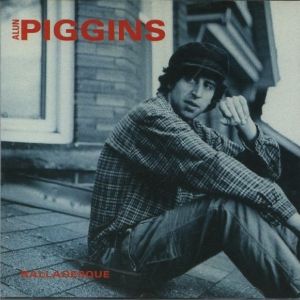
disc_baladesqueHe scheduled a few gigs in Finland.  And he decided to invite his friend Alun Piggins along.  Piggins has been in a number of bands and has released several solo albums.  He seems notable for being a little crazy (with wild hair).  And I automatically respect him for making this album cover.  When Dave asked Alun what to do about being a solo artist (Dave hadn’t really played solo before).  Alun gave him some comforting advice and then said that with his band The Quitters, they would play “our loudest song then tell the crowd, “‘Thank you and fuck off.'”

The two would play separate shows on a double bill and occasionally duet on Rheos songs. They decided to tour Finland.  They flew into London and were only staying for 24 hours.  He wanted to try to get a gig before they left for Finland.  They scored one at the last minute in the Maple Leaf Tavern (which had never staged a live show before) and was themed in Canadian kitsch.  He talks about one man bands like Bob Log III “probably the superstar of all one man bands” (his song “Boob Scotch” is surprisingly straightforward).  He says he spent most of his 35 minute set worrying an doesn’t recall too much about it.

Then they set out for Finland.  First stop Hämeenlinna ( enjoyed typing out all these Finnish towns). (more…)

Read Full Post »

harp jan SOUNDTRACK: RHEOSTATICS-CBC Studios (1999, 2000 or 2001).

cbcrheoThis is a hard event to document.  According to the Rheostatics Live website, this show was broadcast on Sonic 102.9 in 2000, but it appears to be a rebroadcast of a live show that the band recorded at CBC2 Studios in 1999 or, possibly, even in 2001 (according to the link to the video below which states Rheostatics CBC In Session October 26 2001 Just Concerts. Vancouver BC Studio 2, although that may just be a cut up version of the audio–so confusing!).

Whatever the case, the sound of this in-studio live show is tremendous.  It is one of the few instances where you can totally hear Dave’s acoustic guitar in the mix.

Kevin Hearn is there too, so they play a number of songs that they might not be able to without him.  And Michael Philip Wojewoda is on drums. (This complicates my understanding of the recording too, since Don left in 2001, but MPW often played with them anyway).

The audio version contains eight songs and two interview segments.  The interviews are funny (of course) and informative (although Tim sounds totally high), but it’s the music which is the highlight.

They play “Wieners and Beans,” “Martin’s Waltz (Blue Hysteria)” and “Kevin’s Waltz” form Music Inspired by the Group of 7.  They play “Easy to Be with You” “Monkeybird” and “Song of the Garden” from Harmelodia and then “Stolen Car” and “P.I.N.” as “new” songs.

The video below (which is the best video version of these recordings I’ve seen) has “Song Of The Garden” “Easy To Be With You” “Martin’s Waltz (Blue Hysteria)” “Stolen Car” and “Wieners and Beans.”  No word where the other three songs went.  But I love watching the video to see the way Martin makes the crazy sounds out of that little Steinberger guitar.

This is the last Rheostatics show I have for 2000.   I’ll be resuming with some shows from 2001, including Don Kerr’s final shows in a few months.

[READ: March 9, 2015]: “Two Parts”

I have only read two things by Dixon–the two McSweeney’s-released books I and End of I.

This story is a reflective look at regrets and decisions. It is told, as you might guess, in two parts.  He asks if he should start with his father or with Lotte.  He decides to start with his father.  He says he was thinking about something and he decided to talk at Abby about it. This framing device is used throughout the story.

The story about his father is from back when he was about ten and his father was about 51.  His father had always been in good health, but he had a temper.  Especially when it came to the narrator.  And while the father never hit the narrator with his hand, he did whack him with a rolled up newspaper. (more…)

Read Full Post »

« Newer Posts