Feeds:
Posts
Comments

Archive for the ‘Poets’ Category

SOUNDTRACK: THE DEAD MILKMEN-Soul Rotation (1992).

And lo, the Milkmen grow up.

This disc is not funny (well maybe, a little funny); mostly it is  “thoughtful” (and sometimes absurd).  But what is most striking about it is how mature (mellow) it is.  For this is the first album by The Dead Milkmen on Hollywood Records (a subsidiary of Disney).  This combination raises far more questions than is worth looking at.  But suffice it to say that even though this disc is the Milkmen, its a very different Milkmen.

The most obvious difference is that the majority (10 out of 13) of the songs are sung by the artist formerly known as Joe Jack Talcum, now known as Butterfly Fairweather (perhaps Hollywood knew that “”Punk Rock Girl” was their big hit?).  Past DM records were mostly sung by Rodney Anonymous (who goes by H.P. Lovecraft on this disc).  And his were the heavier, weirder, funnier, absurdist tracks, for the most part.  So, when the first four songs here are sung by Butterfly, you know something different is afoot.  Oh, there’s horns on the disc as well!

The disc feels like a pretty typical alt-rock band from the 90s.  But it’s missing the sass, it’s missing the vulgarity.  Basically, it’s kind of dull.

That’s not to say there aren’t good songs on here, because there are.  “If I Had a Gun” is a great screamy Butterfly song, and “Wonderfully Colored Plastic War Toys” is full of Lovecraft’s snark. As is “The Conspiracy Song” a lengthy rant of absurdity.

The rest of the songs drift between mellow and alt-rock rockers.  And it works as a product of the alt rock 90s.  It’s just not much of a DM album.

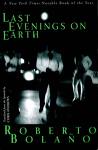
[READ: April 8, 2010] Last Evenings on Earth

I have been reading Bolaño’s short stories for a while now.  And so I have read a couple of the stories in this collection already. The stories in this collection were taken from his two Spanish collections of short stories: Llamadas telefônicas (1997) and Putas aseinas (2001).  And I have looked at about a dozen sources but I can’t find which stories came from which original collection (I like  to know these hings).  I can’t even find a table of contents for the original books.  Anyone want to help out?

I enjoyed these stories more than I expected to.  I have read some of his stories in The New Yorker and elsewhere, and I’ve been okay with them, but this collection blew me away.  Whether it’s being immersed in his writings or just having them all in one place, I was thrilled by this book.

There so many delightful little things that he does in his stories that I find charming or funny or something.  Like that his narrators are usually two or three people removed from the details.  Or if they’re not, they act like its been so long they doesn’t need to get all the details right:  “U insults and challenges him, hits the table (or maybe the wall) with his fist” (“Days of 1978”).

I also get a kick out of all the stories with the protagonist named B.  Which seems a not so subtle way of saying he’s the narrator (even though I ‘m sure these things never happened to him quite like it says (despite all the biographical consistencies with his own life).

The opening story “Sensini” has the narrator working as a night watchman at a campground (much like Enric in The Skating Rink…a bit of biography perhaps?).  A number of his stories are simply biographies of interesting characters (something he went to extremes with in Nazi Litearture in the Americas): “Henri Simon LePrince” a failed writer in Post-WWII France.  “Enrique Martin” a delightfully twisted story about jealousy (aren’t they all, though?) and acting impulsively and foolishly (aren’t they all though?).  This one featured  a riddle that I’m not even sure we’re meant to get:

3860+429777-469993?+51179-588904+966-39146+498207853

which the narrator thinks is a word puzzle. (more…)

Read Full Post »

SOUNDTRACK: THE DEAD MILKMEN-Bucky Fellini (1987).

C’mon, I’m the walrus, damnit.

Bucky Fellini ups the ante from Eat Your Paisley in that the band sounds really accomplished at this point.  The songs are still silly, but they’re not quite as jokey (except for the hit single, but more on that in a second). There’s even lap steel guitar, violin and backing vocals!

Dave Blood’s bass is really something of a force at this point, propelling songs with interesting riffs.  Rodney  “Cosloy” Anonymous sounds great.  And, Joe Jack Talcum gets quite a number of songs to sing: the mellow (and very twisted) “Watching Scotty Die” and the more rocking “Rocketship.”

“Big Time Operator” is a supremely silly song based on a very simple blues riff.  It features the first (utterly wretched) DM guitar solo (look out Stevie Ray Vaughn!) and even showcases a “humming” solo from Rodney (just me!).  While  on the other end of the spectrum, “Surfin’ Cow” is mostly instrumental which is catchy and full of surprising intricacy.

“Instant Club Hit (You’ll Dance to Anything)” was indeed a club hit.  It’s snarky and silly (complete with a drum machine) and it name-checks some of the most prominent college radio bands of the time.  You could easily have built a good collection of British college rock from their list of who you’ll dance to. (instead of giving your money to a decent American artist like himself).

The Dead Milkmen keep getting better and better.  They’re still funny, but they’ve proven themselves to be far more than a novelty act.  Blow it out your hairdoo cause you work at Hardees.

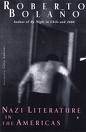
[READ: April 1, 2010] Nazi Literature in America

I’ve read a lot of books that are, shall I say, weird.  But this one is definitely the most unusual when I think:  what would possess a person to write it?

Nazi Literature in the Americas is written as an encyclopedia of Nazis writers who have lived in North, Central and South America.  Except that all of the writers are fake.  So, essentially Bolaño has invented 30 characters, and created rich, fully detailed biographies about all of them.

Some of them are very short (a couple of pages) while a few are over ten pages long, with details of books/poems published, critical reception and even untimely deaths.   The biographies are grouped according to categories (The Mendiluce Clan; Itinerant Heroes or the Fragility of Mirrors, Forerunners and Figures of the Anti-Enlightenment; Poètes Maudis; Wandering Women of Letters; Two Germans at the End of the earth; Speculative and Science Fiction; Magicians, Mercenaries and Miserable Creatures; The Many Masks of Max Mirebalais; North American Poets; The Aryan Brotherhood; The Fabulous Schiaffino Boys; The Infamous Ramírez Hoffman).

And although they are not chronological, Luz Mendiluce (whose bio I read separately) features prominently as a constant “reference point” and creator of one of the prominent Nazi publishing houses.  She had created a publishing empire where Nazi works were spread throughout the continent, and it seems that everyone had a title published by her company Fourth Reich.

What’s so weird about the book is that the people are fake, everything about them is fake (although they are placed firmly within history) and yet their stories are still compelling.  Bolaño has employed a mildly sympathetic tone to these people.  Not sympathizing with the Nazi aspect, but sympathizing with them as humans.

There were one or two who I didn’t really enjoy.  And I admit that I enjoyed the North Americans more; since I know more about North than South America, the facts surrounding these authors resonated more.  But I thoroughly enjoyed most of these biographies.

Of course, just when you think the book is all the same, the final biography changes everything.  In this one, Bolaño himself appears as the writer of the book.  He writes about Ramírez Hoffman in the first person, mentioning himself by name and getting personally involved in the story of this final, skywriting author.  It completely subverts the work before it and leaves you more confused than when you started (although a lot happier for having read it).

The final section of the book is an Epilogue foe Monsters.  It provides a brief biography for all of the secondary characters mentioned in the main body.  It also details the publishing houses and magazines, and finally lists  a bibliography of all books published.  The amount of detail that Bolaño created here is staggering.

But aside from all the Nazism, the book can be quite funny.  Like the conclusion for Luz Mendiluce Thompson, which ends with her driving a car into a gas station.  The final line: “The explosion was considerable.”

It’s tempting to say that this “novel” is not representative of Bolaño’s writing, but I think that’s false.  From what I’ve read so far, Bolaño doesn’t conform to any style in his books: each book is designed differently.  But like this one, they all deal with South America, with violence, with politics and are filled with humor.  So, yes, I guess this is pretty representative.

Oh, and the translation by Chris Andrews is, once again, fantastic.

For ease of searching I include: Bolano

Read Full Post »

SOUNDTRACK: THE DEAD MILKMEN-Eat Your Paisley (1986).

Who has angered the volcano gods?

My friend Paula is the only person I know who truly appreciated the Dead Milkmen.  And we spent many a car trip singing/shouting lyrics like “B.F. Skinner has eaten my dinner” (“Where the Tarantula Lives”).  While this may not be great literature or even terribly clever, there’s not too many songs (punk or otherwise) who name check B.F. Skinner.  So there.

Of course, “Beach Party Vietnam” is not quite as clever, although

– Hey Frankie, aren’t you gonna give me your class ring?
– Oh I’m afraid I can’t do that, Annette
– Why not?
– ‘Cause I don’t have any arms!

Never fails to entertain.

This second Milkmen disc jumps light years above the first.  The band sounds more accomplished, the recording is fuller and the lyrics are more bizarre and often funnier.  Rodney Anonymous Melloncamp does wondrous things with his vocal stylings (he’s still very bratty, but he does different “accents” this time).

It even features an interesting instrumental “KKSuck2” which, while under 2 minutes, holds up quite well as a solid song. And there’s some fun being poked at Hüsker Dü on “The Thing That Only Eats Hippies” (“Now it’s got  a sweet tooth for long hair so Bob and Greg and Grant you should beware.”)

Joe Jack Talcum is featured on vocals on “I Hear Your Name.” (a rather tender ballad) and on prominent background vocals on the wonderfully chaotic and super fun to sing along to “Two Feet Off the Ground.”  And “Moron” has the delicious opening verse: “Hanging out on the commode listening to Depeche Mode.”

Only six songs are under two minutes here, and that’s a good thing: their songs seems more fully realized (with actual parts!).  “Earwig” has three  different sections, even.  And while two songs are around 5 minutes long, the bulk are just under 3, the perfect length for a punk pop song (well, not quite pop, but at least pop-skewering.)

This is definitely the album to pick up for early DM fun.  ‘Scuse me while I puke and die (ha ha ha ha).

[READ: March 31, 2010] The Skating Rink

I simply can’t keep away from Bolaño these days.  I don’t even love 2666 and yet I’m very happily tracking down Bolaño’s other books, starting with this one.  (Which I guess technically is his third written novel if this bibliography is true–and why wouldn’t it be?).

This story is written in a fascinating way:  There are three narrators.  Each gets a chapter (from 1 to 10 pages) to tell the next part of the story.  The narrators are: Remo Morán, Gaspar Hereda and Enric Rosquelles.

As the story opens we learn pretty quickly that a murder has taken place.  But we don’t learn any details at all.  We also learn that the titular skating rink is going to play an enormous part in the story.  The story is set in Spain in the city of Z (which is quite close to the cities of X and Y).

In the first story line, we learn that Gaspar has gotten a job from Remo.  He knew Remo a long time ago, and when he returned to town, although he didn’t seek Remo out, it was quite fortuitous that they were acquainted.  And this job is as a night watchman at a local vacation campground.  He hangs out with El Carajillo and learns the ins and outs of the camp.  Eventually he becomes infatuated with two women, an opera singer and her younger charge.  He shares many conversations with the younger woman, and she seems (distantly) fond of him. (more…)

Read Full Post »

SOUNDTRACK: THE MOMMYHEADS-Flying Suit (1994).

The Mommyheads continue the Dromedary catalog’s streak of consistently poppy indie rock.  Throughout the disc, the The vocals are gentle and falsettoed, setting kind of a trend on the label thus far.

What sets this disc apart from a lot of comparable acts of jangly, light-on-the-bass 90s rock is the subtle complexity of the songs.  Even though most of the songs are fairly simple pop confections, there’s usually an unexpected moment that pops up, making things a little more than what they appear.

The opening chords of “Sandman” are, well, weird, angled and minor, but they somehow lead into a very poppy catchy verse about a sandman.

“Saints Preserve Us” opens with a crazy, no wave guitar lick that, somehow, is matched by a vocal line.  And yet, they can’t resist a smooth an catchy bridge, even if it is only two chords long.  Meanwhile, “Spiders” sounds like a long lost Moxy Fruvous track, kinda funny but kinda serious at the same time.

The only thing odd about “Bottom Out” is how normal it is…a fairly simple, undeniably catchy little pop song that would have fit in very nicely on the Juno soundtrack

“Annabell Ann” plays with the listener’s head by sounding for all the world like an orchestral pop song with a weird arrangement until the chorus pops in with poppy chords and harmonies.  And what of “Worm”?  An opening set of bizarre chords that sounds like it’s coming from next door, followed by a delightfully obscure jazzy bassline.  The song wanders around into interesting corners for a few minutes before ending just as suddenly.

The wonderfully titled “Henry Miller is Dead” shows the heavy side of the band, with noisy guitars and raucous lyrics until the very gentle bridge grounds the song back into familiar Mommyheads sound.  The disc ends with “Valentine’s Day” a gentle sorta jokey sounding song about, well, Valentine’s Day.  It sounds like an even indier version of something off of The Replacemnets’ Hootenanny disc.

The disc is less than half an hour long, making it close to an EP.  But it’s a wonderful half an hour.  You can hear the tracks on Dromedary Radio.

[READ: February 17, 2010] “Gómez Palacio”

This short story comes from Last Evenings and Other Stories, and was translated by Chris Andrews.

Bolaño is from Chile and Mexico City, and he seems to have a rather disparaging view of small Mexican cities.  Gómez Palacio is a small Mexican city where the narrator is assigned to teach a short term writing workshop.  The narrator is a poet himself.  His class is attended by only 5 people, none of who are very good.

The bulk of the story concerns his relationship with the director of the Arts Council where the class was held.  She has bulging eyes and is quite short.  Yet every day she picks him up from his seedy motel and drives him to school.  While driving one day she asks him to take the wheel but he doesn’t drive.  Regardless, he drives down the road until a car pulls over in front of them.  The director says that it’s her husband.  She then regales him with a story about her unhappy marriage. (more…)

Read Full Post »

« Newer Posts