Feeds:
Posts
Comments

Archive for the ‘Parenting’ Category

genius SOUNDTRACK: SAM BEAM AND JESCA HOOP-Tiny Desk Concert #538 (June 6, 2016).

beamhoopI sampled the Sam Beam and Jesca Hoop CD online and really liked it, so I bought it for Sarah for her birthday.  The whole album is really beautiful and I was delighted to see that they performed a Tiny Desk Concert.

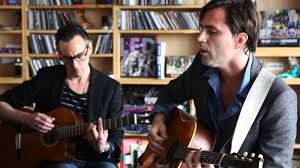
Sam Beam is the man behind Iron and Wine.  He has an incredibly long beard.  Jesca Hoop is a solo performer with a few albums out (although I hadn’t heard of her before).  She looks adorable in this concert in her Oxford shirt and suspenders–they’re an interesting contrast.  And yet their voices work so nicely together.

They sing three songs from the album with Beam on guitar and both of them singing.

“Sailor to Siren” begins with Beam on lead vocals, but Hoop soon joins him to duet on most of the lyrics.  Their harmonies are so pretty, perhaps in particular because Beam’s voice is also in a high delicate register.

Sam Beam is one of the most personable performers to show up on the Tiny Desk–he seems so kind and gentle with a good sense of humor.  And Hoop complements him well.  He comments about having to sing into the microphone without looking and she jokes, “it’s like when you’re driving with someone and you’re feeding them food but you have to look at the road to make sire they don’t hit anything so you put food in their beard.”  It’s a great visual reference with his large beard and it actually gets him laugh and stop playing for a minute.

“Know the Wild That Wants You” features Hoop on first lead vocals and Beam on backing vocals and then they duet on the next verse.  The harmonies in the chorus are again beautiful.

For the final song, the incredibly catchy “Every Songbird Says,” Beam describes a video that was made for the song.  He says it’s the best video he’s ever had made for him; Jesca jumps in and says it was made for her, which makes him laugh.  He describes it as having babies with raccoon and dog heads wrestling and licking each other.

On this song Jesca’s vocals are breathier and quite different–they work wonderfully and are a fine contrast to the high notes she (and he) hit in the chorus.

This is a great representation of the album which is similarly sparse (although it does have some extra flourishes here and there).  Their voices sound just as great as on the record.

[READ: March 1, 2016] Genius

The cover of this book shows a man facing the giant but fuzzy image of Albert Einstein.  And it proves an apt image.

The story is about a man who says he was always pretty smart.  He skipped ahead two grades in school.  Although puberty was a bitch for him, it didn’t do him any real harm.  He married and had two kids.  And he now has a job at Pasadena Technical Institute.  He was brought in as a young ringer with great ideas.  But as he has been there for a while, the ideas have just stopped coming and he sees the new young people starting to overtake him–which might mean the loss of his position.

The story flips back and forth between his worklife–unsatisfying–and his home life–confusing.  His son is old enough (14) to be interested in sex.  But he has a heart to heart with him and says they can talk about anything–it seems to work. (more…)

Read Full Post »

3shadSOUNDTRACK: ANDREW BIRD-Tiny Desk Concert #536 (May 31, 2016).

andrewbirdI haven’t known too many of the recent Tiny Desk performers, but I do know Andrew Bird.  I heard him on NPR and was quite taken with his whistling (one of his trademarks).  I bought his album, but learned after listening to it that I prefer him more in small doses and single songs rather than a whole album.

And while I didn’t love the album (it’s good but didn’t blow me away), these three songs are pretty great.

That whistling is present a lot during this Tiny Desk Concert.  The first song “Are You Serious” has a lot of whistling and is an incredibly catchy song (possibly because it has a very similar melody to “Oops I Did It Again”?).  Regardless of the reason, this song is really fun.  One of the delightful things about Bird, in addition to his whistling is that he also plays violin in number of different ways.  He strums it like a guitar for the beginning of the song and even plays a plucked solo (while still holding it like a guitar).  There’s also some “proper playing” by the end of the song.

“Roma Fade” also opens with his whistling and violin plucking and then shifts to s much more uptempo violin bowing.  It’s got a very catchy melody and again I love how he switches from plucked violin notes to bowed melody.

“Capsized” is a song I have been hearing on WXPN quite a bit.  I had no idea it was him and I really liked it so it was a surprise treat to hear it here.  I don’t recall if the radio version opens this way but in the Tiny Desk, there’s a great fast violin intro and some bowed upright bass rumbling.  The verses are great but it’s the the catchy chorus “and when you wake up” that rules the song.  There’s a cool plucked violin solo and some more nice bowing.

The band he has (bass, guitar and drums) also sings great harmonies which really make these songs sound big.  It’s a great Tiny Desk and means I’m going have to dig out the album I have and give it another spin.  And actually it is good, just a bit more mellow than I like.

[READ: March 10, 2016] Three Shadows

I really liked just about everything in this graphic novel.  I was struck almost from the start by Pedrosa’s drawing style, which relished in loops.

The first page has a boy and his father walking in the garden.  The tree is comprised of circles, the man’s pipe is producing circle smoke rings, even the apples in the trees are swirling circles.  The whole pages looks to be in motion.  And it has a very interesting folk-art feel.  On the next page the trees are simply big swirling circles.  It’s really visually striking.

However, once a story begins “Back then life was simple and sweet,” you know that the story isn’t going to be a happy one.

But it does start off peaceful.  This small family–mom dad and little boy live in an idyllic little house far from the world.  But one day, their dad sees three shadows on the top of the hill.  He gets really freaked out about them even though they don’t come close.  His wife thinks that he is overreacting, but every time he sees them, he knows they are up to something.  And then one night they come in adn try to take the little boy. (more…)

Read Full Post »

522016 SOUNDTRACK: SISTER SPARROW & THE DIRTY BIRDS-Tiny Desk Concert #525 (April 25, 2016).

sistersparrowI was intrigued by the name of this band, but I was so disappointed to find out that they were another soul/blues band fronted by a woman who sounds like Bonnie Raitt.  Between Bonnie Raitt’s new album, Tedeschi Trucks Band, Lake Street Dive and now this band there’s just too much of this music that is basically the same.  And then there’s the song titles: “Sugar” “Catch Me if You Can” and “Mama Said.”

I also had to laugh at the men in the band each one of the six has a beard.  And I got  a big kick out of the harmonica player who looks like he’s trying to be bad ass, but it’s really hard to look like a bad ass when you are blowing harmonica. And the lead singer does all of those bluesy things that drive me nuts—”sing it with me, “can you play that thing for your mama, now,” etc.

Having gotten that out of the way, the band is really quite good.  The sax player has some great solos and the trumpet player sounds good too.  And, while I mocked the harmonica player, he is really good—especially on the second and third songs where he plays an electric harmonica and really wails (he is also the brother of the lead singer).  Speaking of the lead singer, her voice is great.  She’s a tiny little thing but man can she belt out notes.  And she’s got the great ability to “sing” mmm hmmms and have them be really loud—a good bluesy front woman.  The lead guitarist is really good too whether he’s playing with a slide or doing some lengthy solos, the band really rocks.  Frankly you’d have to be a corpse not to tap your foot along to the rhythm or smile at this skinny redhead belting out these notes.

But I would never be able to tell them apart from the other bands I mentioned earlier.

[READ: June 10, 2016] “Choking Victim”

This was the second story in a row that I found hard to believe (and which I didn’t understand the title of).

Karen is in her mid-thirties and has recently had a baby.  She is depressed and doesn’t understand why everything is so different in her life.

The thing that I couldn’t quite get in this story was whether or not all of the people who gave her dirty looks (and there a lot) were in her head or in reality.  I simply don’t believe that so many people would give her a dirty look just as she walks down the street: “When she pushed her baby through the park in a bulky red stroller, people watched her with curiosity and pity.”

Her husband was away for two weeks and she had a hard time with the baby.  It was especially disconcerting to Karen because at six months old her baby wasn’t really talking–hardly even babbling. (more…)

Read Full Post »

  karlove5SOUNDTRACK: RAGA ROCKERS-“Slakt” [“Slaughter”] (1988), “Hun er Fri” [“She is Free”] (1988) and “Noen å hate” [“Someone to hate”] (1990).

ragaKarl Ove mentions many bands in his books.  Raga Rockers appeared twice in this one.  I can’t find a ton about them online, because they never really made it beyond Norway, but the Google translated version of their website says:

Raga Rockers is an ingenious rock ‘n roll band that has existed since 1982.

Today the band consists of: Michael Krohn (vocals, lyrics), Hugo Alvar Stein (keyboards / guitar), Eivind Staxrud (guitar), Arne Sæther (keys), Livio Aiello (bass) and Jan Kristiansen (drums).

The band came out of the punk community in the early eighties, but became such a “poppy” large parts of the Norwegian people have founded acquaintance with them.  Songs like “She is free” and “Someone to hate” is almost singalong classics! Their greatest triumph came perhaps in 1999 when they played for thousands of ecstatic Norwegians at the yellow stage at Roskilde Festival. (Reviews of the show by Dagbladet (which Karl Ove wrote for) and Dagsavisen–both are in English.

Despite their punk roots and the rather violent song titles, the songs are almost poppy–heavy guitars but simple chords and a singer who doesn’t sound angry at all.  In fact, if I didn’t read about their punk roots, I’d swear these songs are kinda goofy.

“Slakt” is a simple song, opening with a 4/4 drum and splashes of guitar.  The middle is a bluesy riff with a chorus of “ah ha ha”  The lead singer’s voice is mostly kind of deep–not quite what I expected from the heavy guitars.

“Hun Er Fri” is quite different from the others songs.  It’s only 90 seconds long and features a piano.  The chords are still simple the piano may be playing single notes in fact).  The lyrics are pretty much nonstop and kind of fast.  It seems like a silly pop trifle and I can see why it’s popular among their fans.  The first time I listened to it, I was surprised it ended when it did.  This bootleg live version is certainly fun.

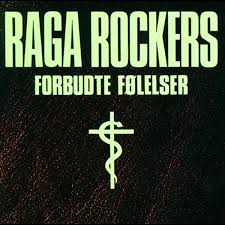
rocknrollThese two songs came from their 1988 album Forbudte følelser [Prohibited feelings]

“Noen å hate” has a bit more of a metal sound, but is essentially the same kind of heavy rock with simple chord progressions.  There’s a good solo at the end.  A black metal band called Vreid has done a cover of this song (which really only sounds different because the Vreid singer is more growly).

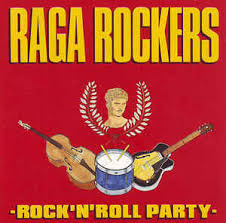
This song comes from their 1990 album Rock n’ Roll Party.

And yes, they are still around.  They took a hiatus in the 2000s but came back with three albums 2007’s Übermensch, 2010’s Shit Happens and 2013’s Faktor X.

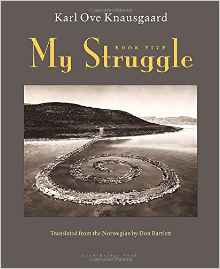
[READ: May 1, 2016] My Struggle Book Five

karlove 5ukI realized as I read this fifth book that I should have been keeping a vague sense of the timeline of these books.  Specifically, because he opens this book with this: “The fourteen years I lived in Bergen from 1988 to 2002 are long gone.”  So if he was born in 1968, this book covers roughly ages 19-33.

So my general outline for the other volumes:
Book Five: 1988-2002 (19-33)
Book Four: 1987 (18)
Book Three: 1968-1981  (1-13)
Book Two: 2008 (40) (with flashbacks to meeting his second wife in 2003 or so)
Book One: 2008 (40) (with flashbacks to his father’s death in 1998 or so)

What era could Book Six possibly be about?

We’ll find out next year in what is said to be the 1,200 page final volume.

So as I mentioned above, Karl Ove talks about the fourteen years he lived in Bergen.  And it made me laugh that he says:

The fourteen years I lived in Bergen, from 1988 to 2002, are long gone, no traces of them are left, other than as incidents a few people might remember, a flash of recollection here, a flash of recollection there, and of course whatever exists in my own memory of that time.  But there is surprisingly little.

And then he proceeds to write 600+ pages about that time. (more…)

Read Full Post »

silentSOUNDTRACK: HOSPITAL SHIPS-Tiny Desk Concert #177 (November 23, 2011).

hospital shipsHospital Ships is a band created by Jordan Geiger, who was in the band Shearwater, among others. In 2011 he released his second album as Hospital Ships.  The blurb describes the album as “packed with poppy folk songs and brash rockers enhanced with instrumental flourishes and bursts of guitar feedback,” but for this recording, they strip everything down to the basics: a guitar, banjo, ukulele and a drum with a towel over it to muffle the sound.

Geiger has a rather high-pitched, delicate, almost talking-singing voice and his songs are rather pretty.  The band plays 3 songs in just over ten minutes.  The first one, “Phantom Limb,” (once my lover, now my friend, you are my phantom limb) has a recurring motif of them saying/singing “ha ha” which is rather catchy.

“Carry On,” features a four-letter word (technically a seven letter word), which might be one of the first times on a Tiny Desk Concert that such a word is uttered.  It’s especially funny given how sweet the band sounds.  The sentiment of the song is nice though: “To all the women I’ve loved, When I was with you I would say I was better off….  And when I’m gone, carry on, carry on.”  There were harmonies in the first song, but they are more prominent in this one (three part) and are quite nice.  The banjo player also does a whistling solo.

“Let Me In” made me laugh because he uses the word baby a lot (which Ben Folds said in his Tiny Desk that he has never said in real life, so why would he put in it a song?).  But this song is very gentle and sweet–just Geiger on his guitar singing “baby, let me in.”

Geiger’s voice reminds me of a few different people–Ben Gibbard from Death Cab for Cutie especially on the final track; perhaps the Mountain Goats or the Weakerthans.  And his songwriting is very good.

[READ: December 26, 2015] Silent But Deadly

I really enjoyed the first Liō collection, and was pretty excited that I could find the second collection so quickly (my library doesn’t have any more collections for some reason, so I’ll have to track the rest down elsewhere).  This book collects the strips from February 25, 2007 – December 2, 2007.

Not much has changed from that book to this one, but I think Tatulli’s comic chops have gotten even better.

The strip won me over immediately with the first one in the book. Lio draws a monster and it comes to life.  He looks at the marker and it says “magic marker” and he gets a big grin and goes back to work.  So simple yet so funny.

It is that big grin–wide open-mouthed just unfettered mischievous delight that occurs in nearly every strip. (more…)

Read Full Post »

lio1 SOUNDTRACK: JOE HENRY-Tiny Desk Concert #176 (November 21, 2011).

joe henryI had never heard of Joe Henry, so imagine my surprise to find out that he was releasing his 12th album in 2011.  For this Tiny Desk, it’s just him at a stool playing his guitar.  He has a very easy vibe, telling stories between songs and playing them with very little fuss.

He opens the show by saying this is, “not exactly like Woody Guthrie playing for the union members but you are working people.”

He plays four songs, “Sticks and Stones,” After the War,” “Odetta” and “Piano Furnace.”

Between the first two songs, he says he first became aware of Tiny Desk Concerts when his friend Vic Chesnutt was on the show (amusingly, he was the second person on the show).  He says he has a song on his new record about Chesnutt (Chesnutt had recently died).  He doesn’t play it though.  At first it seems like he might not be allowed to play it, but then it seems like maybe he just doesn’t get to it.

Rather he plays “After the War” where his guitar sounds like it has an incredible echo on it.  That echo is also present on the third song.  After which Bob asks him about his guitar.

Joe says he’s had the guitar for 6 years.  But the guitar dates back to 1932.  He says that he heard things differently with this guitar.  It’s got a smaller body and was actually sold as a budget guitar by Gibson (for $19 in 1932).  He also jokes that it’s black and looks a bit like a World Wrestling Federation belt.

Then someone asks him about Sam Phillips.  Joe says he sold her husband a guitar about 20 years ago.  She and her husband have split and Sam got the guitar and has been playing only that guitar for the last 20 years.  He says that he loves that she doesn’t plug in her guitar.  She plays into a microphone where you can hear the whole guitar and which makes the other players lean in to hear her.

I love the chords he plays in the final song, “Piano Furnace,” even if I don’t know what the song is about.  Henry’s voice is familiar.  I think he sounds a bit like a number of different singers.  And overall, nothing really stands out in his performance, except that everything sounds great and hiss songwriting is really solid.  That’s not a bad thing.

[READ: December 20, 2015] Happiness is a Squishy Cephalopod

Mark Tatulli is the author of the Desmond books.  I liked the stories, but I didn’t love the drawing style so much.  Imagine my surprise to find out that Tatulli has been drawing comics featuring this little boy Liō since 2006 (going forward, I’m leaving off that line over the o, because it’s a real pain).

And even more surprising is that I like the drawing style in the comic quite a bit–it is slightly refined over the Desmond books and is all the better for it.

I am also really surprised to find out that this strip appeared in newspapers across the country.  I’ve certainly never heard of it (but then I don’t read newspapers anymore, either).

So Lio is strip about a boy named Lio.  Lio is a dark, dark kid.  He has a pet squid, he loves monsters and he’s delighted by chaos. (more…)

Read Full Post »

april16SOUNDTRACK: SEAN ROWE-Tiny Desk Concert #157 (September 16, 2011).

seanropwe Rowe (rhymes with how) is a burly, bearded folk-singer-songwriter.  When he’s not singing he is into wilderness survival and primitive living.

Before the third song he tells a lengthy story about going out into the woods with just a knife and surviving on whatever he could find.  If you’re interested in his stories, you can read about them on his site.

Rowe plays three songs.  For the first, “Night” he stands and plays a rather delicate guitar.  I don’t love his voice though, especially during the ending “where is my lord?” part.

I was amused by him when he said that for $200 he would eat the toast that is on the shelves behind him.  Robin asks if it’s really that hard out there.

He plays a different guitar (and sits on a stool) for “Bluegrass Baby.”  He sings and plays louder on this song.

The final song, “Surprise,” is my favorite.  I like the repeated riff that he plays, and his voice seems to work better with this louder song.  I especially love the great strumming/picking thing he does at the end

For sure, Rowe is a fascinating character.

[READ: March 13, 2016] “Plexiglass”

This is an excerpt from DeLillo’s novel Zero K (I do like that Harper’s tells you that it is an excerpt right from the get go).

I found that I didn’t rally like DeLillo’s last excerpt that I read.  His books are pretty complex and multifaceted and typically an excerpt doesn’t do it any kind of justice.  And while I enjoyed this one more, it still felt very spare.  And without context clues it’s kind of hard to get invested in the story.

Especially since in this case all of the characters seem to be rather unemotional themselves. (more…)

Read Full Post »

HarpersWeb-Cover-201603-302x410-21SOUNDTRACK: DIEGO GARCIA-Tiny Desk Concert #156 (September 12, 2011).

diegoDiego Garcia is an Argentine-American singer-songwriter.  When I saw the set up of guitar and cello I actually expected a more classical style.  But rather, Garcia is writing some beautiful, catchy songs about love and loss.

The blurb says that his album Laura is meant to be listened to as a full story, not just a few singles.  Since we only get four songs here I don’t know what part of the story we’re missing, but the songs we hear are pretty great.

“Nothing to Hide” is really quite lovely.  Diego sings and strums while Daniel on cello plays some aching notes.  Despite the aching quality the song is actually strangely upbeat sounding as well.

“You Were Never There” is interesting for where he plays the chords (way up on the neck).  And the cello plays the melody quite nicely (even taking a solo).  The song is poppy for such a dark sentiment.  The other guitarist, Zeke, plays a nylon-string acoustic guitar and adds some cool high notes (and a solo) as wonderful accents to what Garcia is playing.

“Under This Spell” begins with some minor chords and a much darker sound.  The tempo is fast again and the harmony vocals during the chorus really make it pop.

After the third song he asks if they can play a fourth song, “Would you mind?” (Who would ever say no?).

“Stay” features some really nice classical style playing from the nylon string guitar as Diego accompanies on strummed guitar and Daniel does some nice oooos as backing vocals.  I don’t really like the fluttering vocals he does in the middle of this song, though.  It might work better in studio or with a loud song, but it jut sounds weirdly affected here.  Nevertheless the way the song ends so dramatically really makes up for it.

I had never heard of him before, although apparently he was the leader of the band Elefant.  I get a sense that these songs tell a full story, and I’d like to hear the whole thing.

[READ: April 4, 2016] “Glory”

There was so much that I enjoyed about this story.  I loved that the main character Glory’s real name is Glorybetogod and how her parents (in Nigeria when she was born) believed that this would set her on the right path: to be smart, to attend church regularly and to “never stray from the Word (amen!).”  But in fact this name has given her nothing but trouble especially since they moved to the U.S.   She would always have to provide copies of her birth certificate for nearly every document and her Facebook account was constantly getting deleted because of their “real name” policy.  Her parents wanted the best for her, but it was her grandfather who was straight with them all: “That girl has something rotten in her, her chi is not well.”

And he proved to be correct as misery and failure followed her everywhere.  While some might say it was fate, a lot of it was her poor decision-making skills.  Like deciding when she was 5 to put her finger into a sleeping dog’s mouth.  And now at thirty she is disappointing everyone by working a terrible job at a call center.

And that is why that night she has written a suicide note and has a handful of sleeping pills. (more…)

Read Full Post »

1985SOUNDTRACK: KING CREOSOTE AND JON HOPKINS-Tiny Desk Concert #154 (September 4, 2011).

creosoteI’d heard of King Creosote but didn’t know anything about him.  He’s a Scottish folk singer.  And Jon Hopkins is an English producer and multi-instrumentalist who is better known for his room-filling electronic works–although here he only plays the…yes, harmonium and keyboards.

“John Taylor’s Month Away” is a somewhat upbeat song–although the King’s voice is somber and mellow on every song.  I like watching him thump on his guitar to keep the beat while he’s not strumming.  And when he comes back in with the guitar again it sounds all the bigger for it.

The chord structure and delivery of “Bubble” sounds like a 1960s British folk song.  It’s quite lovely.  And when Hopkins switches to piano, it really brings out a lot more in the song.

These two songs came from Creosote’s album Diamond Mine, which the blurb says was everyone’s favorite album in 2011 (although I don’t recall hearing anything about it back then).  Stephen Thompson writes: “To immerse yourself in Diamond Mine is to be transported to a small, calm town in the Scottish countryside: For all of [Kenny] Anderson’s [King Creosote’s real name] reflective ruminations on aging and regret, he and Hopkins know how to make listeners feel at peace; to make the faraway seem everyday. “

“Cockle Shell” is not from Diamond Mine, although Jon did work on it, he says.  The guitar is a played differently–more picking, less strumming.  And the piano sounds lovely again. Creosote sings a bit bigger on this song.  The way he sings the preposterously upbeat music behind the lyrics “choke me, blind me, cut off my hands,” reminds me a lot of Frightened Rabbit.

For the final song, Hopkins switches back to harmonium.  It’s a short song, lovely and sweet.  And I’m sure if I followed the lyrics a bit more closely it would be rather sad too, as the final line is “while they were alive.”

I enjoyed Creosote’s music, although I feel like I’d have to be in a certain mind frame to put it on intentionally.  I will have to give a listen to Diamond Mine in total though.

[READ: January 26, 2016] “Three Thousand Dollars”

After reading the Lipsky articles in Harper’s I thought I’d see if he had written anything in the New Yorker.  I only found this one item, a short story from his collection.

I was intrigued from the start by this story because of the duplicitous nature of the college-aged narrator.  This was especially interesting to read after reading Lipsky’s Harper’s article about slackers.

The story begins with the statement that the narrator’s mother doesn’t know he owes his father $3,000.  It transpires that his parents are divorced and his father–who has a ton of money–is going to pay for his college after they get financial aid based on his mother’s lower income.  The balance–$3000 is what his dad will pay.

But when the $3000 check came in, the narrator spent it on other things instead. (more…)

Read Full Post »

Sfeb20156OUNDTRACK: GRAHAM NASH-Tiny Desk Concert #515 (March 14, 2016).

nashI only realized after reading this blurb that he was in The Hollies.  I’ve really only known him from CSN&Y.  And that makes sense now why “Bus Stop” (a song I’ve known forever but never knew the name of) sounds so familiar.

Nash plays guitar (and harmonica) and sings and he’s accompanied by Shane Fontayne on guitar and harmony vocals.  The duo sound great.  Nash’s voice is clear and sounds amazing (because he’s 74 but even if he weren’t).  Obviously I missed the mega harmonies of CSN&Y, but as a solo performer he really shines.

The first song he plays is “Bus Stop” and it sounds wonderful.  I miss some of the inflections that are in the original–but this is clearly a solo rendition (and it has been 50 years after all).

The other two songs are from his new album.  “Myself at Last” he says was the first song the recorded and that it was done in one take (and that musicians love that).  It’s a lovely song with a very Graham Nash feel (imagine that).  I love the chord progression in the bridge and the slight delay in vocals for the chorus.

For the final song, “This Path Tonight,” he asks us to imagine “an incredible rock and roll band playing with us.”  Even though the song isn’t fast, it has a real sense of urgency in it.  The chord progression is intense, and I imagine that with a band this song would be even more exciting.

[READ: January 20, 2016] “My Diagnosis”

This is the kind of story that reads more like an exercise that was later developed into a full story.

The opening of the story is that the narrator’s mother has made the narrator’s diagnosis public.

And the rest of the story is the narrator’s way of obfuscating what that diagnosis is–possibly from herself but definitely from her mother’s friends. (more…)

Read Full Post »

« Newer Posts - Older Posts »