Feeds:
Posts
Comments

Archive for the ‘Tiny Desk Concert’ Category

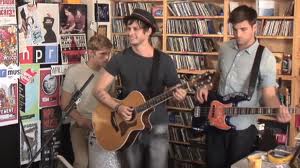
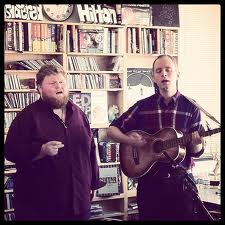
SOUNDTRACK: FOSTER THE PEOPLE-Tiny Desk Concert #155 (September 9, 2011).

This is a very brief Tiny Desk Concert.  The guys play three songs with just a little chatting which makes this a tidy morsel of a concert.

The set is very stripped down compared to their recorded version.  “Helena Beats” sounds great in this setting–there are effects and processing on the album but you can tell that the kernel is in the guitar and voice, which is pretty cool.  The first song feature solo tracks and gentle picking (he comments that you’ll be able to hear the other songs better).

The discussion features the bassist’s quote from Plato that he has inscribed on his bass.  And of course, they play “Pumped Up Kicks.”  There’s a funny comment from Bob Boilen asking is that the first time you said “This is pumped up kicks” and no one said anything.  He replies, “I think people are over that song.”  But it sounds very good in this stripped down version.

You can hear the whole set here

[READ: November 14, 2012] “Breatharians”

This story poses the question: after the protagonist has killed three cats with a wrench, will you continue reading?  For many the answer is no.  For those who persist, they have the mass poisoning of many other cats to look forward to.

I recall in the 70s or 80s that “dead cat” jokes were de rigueur, but I don’t think any were as brutal as this story.  And the strange thing is that the title has nothing to do with the cats.

Indeed, if I were to tell you that the Breatharians in the story are people who believe that they can subsist without eating–they simply inhale and gain all of the sustenance that they need, you might think that this was an interesting story about spirituality.  And if I mention that the main character’s mother has recently become a Breatharian, even though she continues to make him delicious sounding food (that pork chop…yum!), you might be very curious about this whole Breatharian thing. (more…)

Read Full Post »

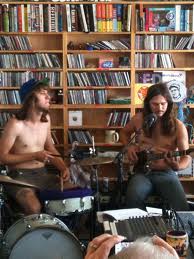
SOUNDTRACK:  JEFF THE BROTHERHOOD-Tiny Desk Concert #165 (October 8, 2011).

This was my first exposure to JEFF the Brotherhood, a rollicking duo who blast out the walls of the NPR studios.  The guitarist and drummer play simple, power punk (quite well) and they sound like a whole band, not just two guys.

“Diamond Way” reminds me of the Meat Puppets–echoey lazy-sounding punk.  ANd the oh oh oh oh oh is very catchy.  And then, after describing an NPR host as sounding like Ira Glass–if he were an old woman (and then apologizing if he offended anyone), they play “Bummer”–shirtless—presumably a first for the NPR offices.

“Bummer” is a mellower song and their sound doesn’t sound less full for the mellowess–especially when he kicks on the distortion pedal.  “Bone Jam” is one of my favorites–more ooh’s and the simple but wonderful lyrics “Gonna grind your bones to make my bread.”  It’ s amazing that two guys can sound this good.

[READ: August 17, 2010] “The Ruin of Amalfitano”

Natasha Wimmer has translated yet another posthumous work from Roberto Bolaño, this one called Woes of the True Policeman, due out this month.

This may already exist, but I hope someone is compiling a family tree of all of the Bolaño characters who have appeared in different locations.  For instance, the Amalfitano in this story appeared in 2666, indeed he has a whole chapter about himself.  And we know it’s the same Amalfitano because they both have a daughter named Rosa.  This story is set before 2666 and these fascinating events would shed some light on the state of Amalfitano when we do meet him in the novel.  Of course, Bolaño’s writings don’t seem to follow a conventional strategy so who knows if he intended any of this to be part of the “missing” Part 6 of 2666.

Anyhow, this story is about Amalfitano, but it opens with Padilla who decided to become an artist at the age of 13.  After dabbling in theater and film, he settled on poetry.  By 17, he was a sarcastic angry kid who could be easily provoked to violence (he claims that when fighting Nazis, anything is permitted).

At 18, he published his first book of poetry and when he was 21 he showed the poems to Amalfitano.  Amalfitano was a teacher of Latin America writers at the University.  He liked Padilla’s poetry, although he didn’t much like Padilla who didn’t come to class very much.  But once Amalfitano gave him praise for the poems, Padilla never missed another class. He even invited Amalfitanoto his house for parties.  After many such parties, the two became lovers.

Once the University learned of this, Amalfitano was fired.  (more…)

Read Full Post »

SOUNDTRACK: JENS LEKMAN-Tiny Desk Concert #173 (November 7, 2011).

I have enjoyed Jens’ skewed take on pop folk for some time. He plays great folk music and there’s wonderful backing vocals by Addison Rogers.  What’s funny about this Tiny Desk concert is that he talks a lot about the song before singing it.  But he pretty much gives away everything in the song (especially if there is a punch line).  For the first song, “I Want A Pair Of Cowboy Boots,” the explanation is pretty good, he says that if you have the same dream for two years you may want a new one…with cowboy boots.  The song explains that the boots will help him walk back to the girl of his dreams.  Sweet.

What’s cool about the second song, “The End Of The World Is Bigger Than Love”  (in addition to the song) is that you can hear a car driving away before it starts, just showing how intimate the Tiny Desk shows are.

But it’s the final song in which Jens gives away so much about the origin of the story that the song itself is almost redundant (although it’s still great).  When you finally get to the punchline of “Waiting For Kirsten,” you’re charmed and smiling.  Jens explains that Kirsten Dunst once said that she likes his music.  So when she was filming with Lars von Trier in Scotland, he couldn’t help but stalk her day and night.

He’s a charming guy.  You can check it out here.

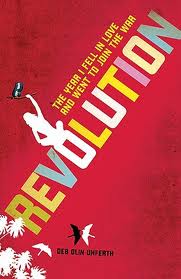
[READ: November 7, 2012] Revolution

Deb Olin Unferth has now published three books and I’ve read them all, even though I’m not a huge huge fan.  I enjoyed her novel Vacation, which was delightfully peculiar.  Her other book was a collection of flash fiction, a genre I’m really on the fence about, although Unferth’s is really quite good.

This book is a memoir.  And, as the subtitle indicates, it’s about the year that Unferth spent looking for a revolution in Central America.  The book proves to be about much more than Central America and revolutions–she talks about religion, family, morality, relationships, youth, idealism and reality.  Not bad for 200 pages.

It’s also about the man she fell in love with, George, who encouraged them to go to Central America and vive the revolution.  George is a Christian, Deb was an atheist Jew.  But she falls for him and his Christian ways and “converts” (much to the detriment of her younger sibling who had the family’s faux Jewishness now thrust upon her to avoid a similar thing happening.  (Poor Deb’s younger sister really is the victim in this saga).  George and Deb flee the comforts of home and all 80s capitalism and head to Central America.

As with Unferth’s short stories, these chapters are almost all very short.  And they often feel as unfinished as some of her flash fiction.  They are also mostly jumbled up in an utterly non-narrative way.  It’s entirely possible that you could shuffle some of these chapters and it wouldn’t matter at all (that’s not entirely true, as some do flow one in to the other, but many are jarringly out of sequence). (more…)

Read Full Post »

SOUNDTRACKMATES OF STATE-Tiny Desk Concert #163 (October 5, 2011).

Mates of State is another band that I only know of because of NPR.  I hadn’t heard them at all before this set (and another concert that they recorded for download).  I like them, although they haven’t totally blown me away.

Mates of State make delightful music.  I don’t know if there’s a better word for it–it’s poppy and upbeat without being cloying or treacly and it seems so happy.   The founders of Mates of State are a husband and wife.  They sing quite loudly and often in a high register.  Indeed, the write-up that accompanied this show says that the band is quite scaled back–that they are usually much bigger and louder and that they had a hard time in this small setting.

But it’s a very good set and a nice sample of the kind of music they play.   The set features keyboards, acoustic guitar and a trumpet.  They play two songs from their album Mountaintops, “Sway” and “Desire.”  They also play “My Only Offer” from Re-Arrange Us, their previous record.  Mates of State have released a bunch of stuff on Barsuk records, a wonderful indie label, so they get respect from me.

I was also amused when Kori Gardner commented that this was “the earliest concert they’ve ever done.”

[READ: November 3, 2012] Stealth the Ghost Panther

The final book of this arc has just come out and Clark was very excited to read it.  I’m torn about what to do if Scholastic releases the next story arc.  The books seem to come out every six months, but I don’t think I want to wait six months to read book 26 after reading book 25.  But then do I want to wait three years to read the next arc all at once?  No I do not.  Not since Clark will be ten!  I hope Scholastic picks up the pace here.

Anyhow, this six book arc ended with Stealth the Ghost Panther (the most fearsome beast yet!).  [The one thing I dislike about the series is that every next beast is “more fearsome” than the last, which somehow undermines the fearsomeness of the previous beasts, no?  Honestly, how could that be quantitatively true.  Having said that, this one is pretty scary.  The panther is scary, but worse, if it simply scratches you it turns you evil. (more…)

Read Full Post »

SOUNDTRACK: KATHLEEN EDWARDS-Tiny Desk Concert #206 (April 5, 2012).

Kathleen Edwards has a great voice and she writes great songs.  There’s not much more to this set than her singing four fantastic songs in the Tiny Desk setting.  Although her songs have full band arrangements on records, they do not sound out of place in this smaller, acoustic environment.

As she introduces the final song of the set “Change the Sheets” she says it’s the first time they’ve played it acoustically.  You’d ever know.  It sounds great.

There’s not a lot more to say about this Tiny Desk set–it highlights a great songwriter with a great voice.

[READ: October 15, 2012] “The Third Born”

I had a wee bit of trouble following this story, although I admit I didn’t give it my undivided attention at first.

If this isn’t an excerpt, then it’s a fairly disconnected story with large gaps–it reads like a few distinct scenes that happen so far apart as to be almost disconnected.  (I re-read it to make sure).

The story begins with a boy in a village in India.  He is sick and his mother knows how to help him with this not uncommon rural disease.  He watches the village as he lays there, more or less immobile–how the women seem to do a lot of work, although his mother doesn’t work outside the house.  Eventually his father returns from the city where he is a successful cook.  The boy’s mother asks if the whole family can move to the city.  He balks at the idea–he spends several month sat a time in the city where he makes good money, although he claims it is not enough for a family to live on in the city. (more…)

Read Full Post »

SOUNDTRACK: KISHI BASHI-Tiny Desk Concert #215 (May 10, 2012).

A few days after the concert at the 9:30 Club, K Ishibashi stopped in at the NPR offices to record a Tiny Desk concert.  The Tiny Desk  concerts are always fun–incredibly intimate and always well recorded.  He plays three of the five songs that he played at the 9:30 Club, and while they sound quite the same, there are little differences.

I find it very cool how similar they sound–since most of the sounds he makes are with his voice, it’s quite cool that he has that much control.  But I also like that he varies things a bit (although it sounds like a slightly flat note that plagues “Atticus in the Desert”).

What’s interesting is that although he doesn’t play things very differently, the feel of “I am the Antichrist to You” is quite different in the Tiny Desk setting.  I don’t really understand why, but it sounds very different, and equally wonderful.

Watching the Tiny Desk show is also neat–I’ve never seen anyone strum chords on a violin before.   And watching all of the technical adjustments is very cool too.  I’ve definitely become a fan of Kishi Bashi.

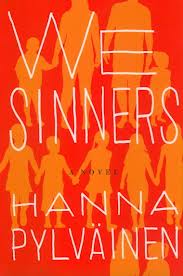
[READ: August 28, 2012] We Sinners

This has got to be the fastest turnover I’ve ever had where I read a short story and then read the author’s novel.  Well, it turns out that “Jonas Chan” was not a short story, but an excerpt from this novel.

The novel is a series of short stories about the same family.  I’m reluctant to brand it one of those connected-short story novels, but I think it really is.  Each chapter has a title and a specific focus and, as the excerpt showed, each chapter can work independently–although having all of the information certainly fills out the story.  (Unless I am mistaken, a few things that really depend upon the rest of the book were left out of the excerpt).

The novel is about the Rovaniemi family.  They are a very traditional Finnish family living in the midwest United States.  More than just Finnish, they practice Laestadianism, a very conservative kind of Lutheranism that is unique to the Finns.  There are nine children in the family (and 11 chapters in the book), and the novel follows them through about 18 years (the youngest, Uppu, is born in the first chapter and the second to last chapter is about her leaving for college.

There’s even a handy family tree:

WARREN  –  PIRJO  (parents)

BRITA  TIINA  NELS  PAULA  SIMON  JULIA  LEENA ANNI  UPPU

There isn’t an overall plot so much as an evaluation of this traditional family and how modern life impacts them.   And wisely, the book opens with the oldest daughter.  This (as opposed to first looking at the parents) allows us to see what kind of difficulties the kids will have with their religion.  We see Brita in school facing a tough decision.  The Laestadian religion doesn’t permit dancing (or TV, or much of anything).  And Brita has to inform her “boyfriend” that she can’t go to the dance because she isn’t allowed.  When Tiina finds out that Brita revealed their religious secret she freaks out that people will know about her too. (more…)

Read Full Post »

SOUNDTRACK: REAL ESTATE-Tiny Desk Concert #202 (March 12, 2012).

I enjoyed some Real Estate songs, but i never listened to their whole albums.  I thought this Tiny Desk show would give me more sonic information about them.

This three song set is very pleasing.  The music is soft and nonabrasive, with a very smooth feel (as you can see they are dressed in sweaters and cardigans, so this is not really a shock).  It’s poppy without having any real hooks.  They remind me of a less catchy Guster or a less dramatic Smiths (“Green Aisles,” especially for the bass and guitar solo) or gentler Death Cab for Cutie (“Municipality”).

There’s nothing to radically distinguish these three songs (radical is not a word that would apply to Real Estate), although “Green Aisles” has a few more dynamic moments (mostly from the change in drum patterns).

This review sounds like I didn’t like the set, but that’s not true.  As I said, it’s very pleasant.  And sometimes pleasant is what you want.

You can hear it here.

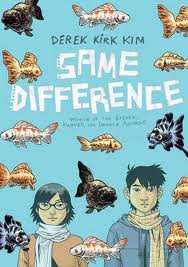
[READ: March 11, 2012] Same Difference

First Second continues to publish some of the most beautiful and thought-provoking graphic novels around.  This is a republication of a story that first appeared in a collection (and proceeded to win an Eisner, Harvey and Ignatz Award).

The story is about Simon and his close friend Nancy.  It opens with them in a Vietnamese Restaurant in Oakland, CA.  The first scene of the book is wonderfully drawn–we look in on the characters through a fish tank–fish are practically littering the panels–it’s very cool.

The two of them are with their friend Ian and they are shooting the breeze, talking nonsense.  And then Simon sees a woman that he knew from high school.  She is sitting at the bus stop and Simon wants to, but can’t, talk to her.  Her name is Irene, she seems sad, eyes downcast looking at the ground.  And then Simon reveals that she is blind.

In high school, he and Irene were very close.  He helped her out, described films to her in class, and “rescued” her from bullies.  And then she invited him to a Sadie Hawkins dance.  He doesn’t like her that way, so he lied to get out of it.  She never found out about the lies, but it has haunted him for the last seven years.

Later, Nancy figured out the truth of the matter, and even though we the readers probably guessed it as well, it still hit hard when it was spoken aloud. (more…)

Read Full Post »

SOUNDTRACK: LE BUTCHERETTES-Sin Sin Sin (2011).

I learned about Le Butcherettes from their Tiny Desk Concert.  So I thought I’d check out their album.  I’ve listened to it a few times now and it’s really quite good.

While the Tiny Desk Concert showed a subtle side of Teri Gender Bender, this album rocks really hard.  All three songs from the Tiny Desk Concert rock much harder here, and are actually better in this full band context (especially “Henry Don’t Got Love”).

It has a punk feel and reminds me of a more commercial sounding Bikini Kill or other Kill Rock Stars punk.  “Dress Off” is all Teri’s voice shouting over drums: “You take my dress off. Yeah, you take my dress off.
Yeah, You take my pretty dress off.”

In the Tiny Desk concert, Teri Gender Bender channeled PJ Harvey completely.  On the album, she has a bunch of different vocal styles that all work well for the songs.  Although “New York” is totally PJ, “The Actress That Ate Rousseau” reminds me of punkier No Doubt and”Tainted in Sin” has a simple stark keyboard melody with Teri singing a more aggressive guttural style.

Unsurprisingly for someone named Teri Gender Bender, there are some political songs as well.  “Bang!” has the lyric, “George Bush and McCain taking over Mexico.  Next thing you’ll see is their army banning seranata

Although there’s a lot of short songs (7 are 2 and a half minutes or under), there’s a few long ones too.  “The Leibniz Language is over 5 minutes and “I’m Getting Sick of You” and “Empty Dimes” are both over 4.  There’s also an instrumental, “Rikos’ Smooth Talking Mothers” which is a simple song spurred on mostly by scratchy guitars.

The final song, “Mr. Tolstoi” is the anomaly on the album.  Teri “sings” with a fake Russian accent  over a very Soviet-style keyboard march.  The chorus:

I want Raskolnikov To be inside of me.  I want Sonya’s eyes.  I want Sonya’s eyes.

Weird.  But not outrageously crazy for this record.  It’s good noisy fun.

[READ: January 23, 2012] “Labyrinth”

It’s no secret that I love Roberto Bolaño.  And I’ve said before that one thing I love about him is the astonishing variety of subjects and styles that he comes up with.

So this short story is forthcoming from his newly translated collection of unpublished short stories called The Secret of Evil.  What I love and find so unique about this story is that the entire story is based upon a photograph.  The New Yorker includes the photograph (I wonder if the The Secret of Evil will include it also).  In the photograph, eight writers/thinkers sit around a table.  Thy are: J. Henric, J.-J. Goux, Ph. Sollers, J. Kristeva, M-Th Réveillé, P. Guyotat, C. Devade, and M. Devade.  The only person I know of this list is J. Kristeva, whose work on semiotics I have read.  [I just looked her up on Wikipedia and learned that she has also written novels, including: Murder in Byzantium, which deals with themes from orthodox Christianity and politics and has been described by Kristeva as “a kind of anti-Da Vinci Code.”  Gotta put that on my list].  But the others are (evidently) prominent in their fields as well (editor of Tel Quel, author of several novels and non-fiction, etc).

The beginning of the short story is an extensive detailing of the photograph.  Bolaño looks at each man and woman in the photo and describes them with exquisite accuracy.  Beyond that he imparts a bit of speculation about what they are wearing, where they are looking, their attractiveness and even, about the length (or lack) of necks. (more…)

Read Full Post »

SOUNDTRACK: tUnE-yArDs-Tiny Desk Concert #179 (December 1, 2011).

tUnE-yArDs perform three songs in this Tiny Desk concert.  Merrill Garbus doesn’t chat a lot between songs, but she’s clearly having a good time (witness them all jumping at the end of “You, Yes You” and how much she smiles at the end of the set.  This is a wonderful opportunity to see and hear her live sampling technique in a small setting (with close up cameras!).

Her voice sounds great–she pulls off all of those voices that she conjures on the record.  And her ability to sample herself and make it work is wonderful to witness (I never imagined that some of those “sirens” and “keyboards” are actually her voice).

The live band is also really hot.  The bassist really hold everything together and the horns sound great–duplicating the sound of the record with just enough flare to keep it original.

And to think she’s making all of  that guitar noise with a ukulele!  It’s pretty groovy.

Watch it here.

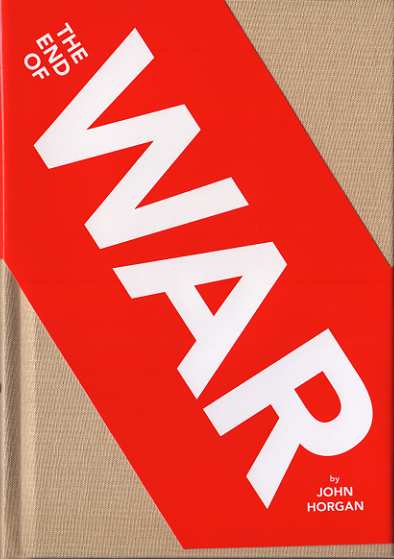
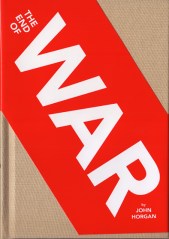
[READ: January 21, 2012] The End of War

This is a non-fiction book in which Horgan believes that in the not too distant future (his lifetime I believe), we will see the end of war.  Not the end of violence, nor anger nor aggression–he’s not crazy–but military campaigns against another country could be ended if we reversed our fatalism about war’s inevitability.

Horgan is a writer for Scientific American and in this book he uses the scientific method to show that ending war is utterly possible.  Now, although Horgan is himself kind of a pacifist (he’s not entirely one, this interview explains), his family is not–his father and grandfather are both veterans and his son is looking to enlist in the army.  Nevertheless, Horgan feels that war is not a viable way to solve problems and that the cost of human life is never worth it.

His research shows him that war should be thought of as a solvable, scientific problem—like curing cancer.  The difference is that cancer is outside of our control, while war is not.  But like cancer, war can infect any society–there is no “reason” for it, but it is like a virus–it infects all cultures, even peaceful ones.  If one culture is aggressive the peaceful neighbors need to prepare for war or move away.

Horgan anticipates skepticism, indeed, many of the sources he quotes are skeptics, and he deals with all of their arguments accordingly.  He looks at those who say that war is genetically part of humanity (as many people believe) or that the best way to prepare for peace is to prepare for war (as just about everyone seems to believe).  He looks at those who say that scarcity causes war (not necessarily true), to those who say that as long as there are guns there will be war (he disagrees).  He has a reasonable, believable argument for all of these doubts.  He even shows that the whole “alpha male, XXY chromosome” argument has been disproven and while men are more prone to violence, they are not more prone to wage war.

He also shows scientific evidence that war has not been around as long as people (or even apes) have existed.  Indeed, the first evidence for “war” (as opposed to violence) is 10,000 years ago (not much in humanity’s timeline).

He culls data from previous wars to show that the causes of wars can never be narrowed down to one thing.  And yet, rather than seeing this as a negative–that so many things cause war, he sees it as a positive–that causes of war are not monolithic and impervious to breakdown.

I was skeptical of this book when I started reading it.  I was willing to accept the various scientific answers that he showed (that war is not innate, for example) but my skepticism came because of what I guess you call the military industrial complex–that our military budget is huge and is not going to go down any time soon.  Just see how much protest is garnered by the miniscule amount that President Obama wants to reduce it.  [Everybody knows this truth but it’s worth seeing in print–our military budget is more than almost every other country combined.  China, who spends the next largest amount on their military has a budget that is 1/6 the size of ours.  That is shocking and depressing and a horrific waste of money].

But his point is that like with so many other things that we have outlawed or abolished over the years: slavery, apartheid, monarchy (as opposed to democracy), acceptance of torture; if we have enough consensus we can also abolish war.  He gives examples that it’s actually not as hard as we might think.  Germany and Japan become pacifist virtually overnight (it was forced on them, but they have taken to it with no problem) and even better, Sweden and Switzerland are pacifist voluntarily.

He also points out that war is already on the wane–although the United States was in two wars very recently, the warlike nature of the world is much less than it was even as recently as the first half of the 20th century.  The number of casualties from war has dropped dramatically compared to World War I.  We simply need to find ways to solve crises that do not involve killing people.

All of the chapters were interesting in this book (the book is more or less set up to deal with an issue per chapter).  Some of the chapters were a little long but at 186 pages (plus a bunch of citation pages) this book is short overall.  I appreciate all of his scientific rigor and his ability to show the arguments and then knock them down.

For me, the most interesting and satisfying chapter was the one that found that preparing for war, despite claims that it is necessary, actually does not keep a people safe. That the allocation of resources towards war removes resources from things that actually make people’s lives  better: art, culture, medicine, health.  Preparing for war doesn’t keep us safe, it actually harms us.

Similarly, he shows that competition for resources is not necessarily a cause for war.  To the contrary they have found that in some cultures scarcity brings out altruism.

In short, he says that the only thing that prevents us from abolishing wars is our fatalism that war is inevitable.  The more fatalistic we are about war the more we accept hawkish ideas which perpetuates more war. Once we stop believing that and we try to work towards the end, he believes that we war can end very quickly.

Horgan doesn’t really calm my fears about the military industrial complex–but who knows with enough popular opinion, maybe voters can change things.  It’s a wonderful thought.  And here’s hoping that this post can spread the good word.

And here’s an interview with Horgan that addresses a lot of these questions.

Read Full Post »
SOUNDTRACK: LE BUTCHERETTES-Tiny Desk Concert #185 (January 9, 2012).

The write up for this Tiny Desk show implies that I should know who Le Butcherettes, and leader Teri Gender Bender, are.  I don’t.  But that doesn’t matter.

In this set, it’s just Teri Gender Bender and her acoustic guitar.  And she is channeling early PJ Harvey like nobody’s business.  If you like PJ’s new album but miss the less than subtle aspects of her earlier  records (and who doesn’t, honestly), this is a very enjoyable set.  Teri is angry and it shows.  But it’s all done on an acoustic guitar, so the anger is modified by the music.  It’s a neat trick.  But it’s also a little disconcerting.  Not least because she seems so nakedly honest when she sings (when she coughs aggressively during “Henry Don’t Got No Love” it’s not entirely clear if that’s part of the song or not.  But also because Teri is not afraid to look right at the camera (or, indeed, the audience) when she sings the songs.  Teri is very pretty but there is something haunting about her, which makes these songs of loss and love all the more effective.

See for yourself here.

[READ: January 22, 2012] “Notes on The Chelsea Girls”

I’m not going to start reviewing films, or, worse yet, reviewing reviews of films.  But since I like to try to read all of the academic articles that get recommended to me, I wanted to mention this one too (I admit I will not be subjecting myself or readers to a thirty plus page article about Charles Darwin and pigeon fanciers (which seemed interesting, especially the pictures, until I saw that it was over thirty dense pages).

It’s childish to laugh that a reviewer of Warhol’s The Chelsea Girls is named Battcock, but I’m not above that sort of joke.  What is amazing, to me, is how intellectual this review is.  I’m used to reading reviews in Entertainment Weekly or even The New Yorker, which talk about the plot of the film and the quality of the direction and what not.  And The New Yorker often trashes mainstream film on highfalutin grounds.  But even that doesn’t come anywhere close to:

Warhol still questions the very nature of the medium and its relationship with the cultural matrix and the contemporary value structure–for which he clearly holds no brief.  He is determined to prove that only vital institutions can provide vital art statements; his challenges to the medium serve ultimately to assure its legitimacy.  If in his earlier movies he attempted to redefine the nature of film and to clarify its limitations, the new works may be said to check out the remaining restrictions of the art form.  These include such physical aspects as the two distinct types of images (the retinal-visual and the cerebro-visual), as well as the nature of the auditorium, projection and screen.

Battcock is kind of hash on the film–which is actually several short films–two of which are projected side by side at the same time.  He says the individual shorts, which run about 30 minutes each, are “a little bland.”  Although, as he points out above, the actual films themselves are kind of beside the point.

Indeed, he criticizes other critics for missing the “point” of these films, which is that Warhol is “stripping the cinematic medium of its pretension and decorations.”  Rather, he complains, “Nearly all the other critics writing in the popular press dwelt with the lugubrious insistence on the squalidness, sordidness, perversion, etc of the lives depicted in the film” (more…)

Read Full Post »

« Newer Posts - Older Posts »