Feeds:
Posts
Comments

Archive for the ‘Field Recordings’ Category

SOUNDTRACK: LOCAL NATIVES-“Fountain of Youth” (Field Recordings, October 5, 2016). 

I know and like Local Natives, although I didn’t know this song.

In 2010, Local Natives came clattering into the indie firmament with the U.S. release of Gorilla Manor, an irresistible blend of in-vogue sonic signifiers like Afropop guitars, rich harmonies and the hint of a folk sensibility. In 2016, the band’s run has continued with the synth-heavy Sunlit Youth.

For their Field Recording, Local Natives played one of the singles off that album, “Fountain of Youth.” Though the recorded version is lush and electronic, Local Natives stripped the song to a driving core. The band played, and then it was off again — guitars in hand, headed for the evening’s show elsewhere in Brooklyn.

They sound great stripped to just two guitars and a tambourine standing on the water’s edge. [Local Natives Strips Down Its Sound For A Riverside Show].  I love this introduction:

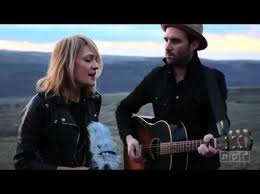
The East River Ferry is a very fast boat. Local Natives came hurtling toward our crew up the river one overcast evening this summer, shouting three-part harmonies over roaring engines for a surprised clutch of fans. When the ferry docked, three of the band’s members hurried over to our pier off WNYC Transmitter Park to play this Field Recording.

I’m not sure which of the five Natives these are, but they harmonize wonderfully. And I really like that the main singer is playing his guitar while the second guitar is silent until later in the song when his higher notes are used as an excellent accent.

[READ: January 15, 2018] “Kinderscenen”

This was a fascinating story because of how much detail was given and how little plot there was.

This is the story of a boy, Toby.  It is written in a kind of childish third person, almost by a benevolent guardian.

Sentences like:

What he does know is how Daddy’s cigarette looks in the evening when sitting on a wicker chair with the other grown-ups softly talking in a row, he flips it away its red star tracing lopsided loops before shattering into sparks on the bricks.

In his heart he knows that this is the best town in the world.

In the story, Toby helps his mother garden (by lifting the prickery bushes “holding up the bushes’ skirts” which has a naughty sound that nevertheless doesn’t make it fun. (more…)

Read Full Post »

SOUNDTRACK: DEVONTÉ HYNES interviews PHILIP GLASS (Field Recordings, September 21, 2017).

This is the final video under the “Field Recordings” headline [‘When You Gonna Get A Real Job?’: Philip Glass And Devonté Hynes Compare Notes].  Unlike the other videos I have watched, this one is actually an interview, not a song.

I was unfamiliar with Devonté Hynes.  He is a 31-year-old British producer and songwriter who performs under the name Blood Orange,  He has made many hit records with the likes of Carly Rae Jepsen.  And Philip Glass was at the time of this interview, 80 years old (and calls the cast of Hamilton hipster, instead of hip-hop, but he did rave about the show (which Hynes was unable to get tickets to!).

Walk into Hynes’ third floor loft in New York’s Chinatown and you’ll find a photo of Glass on his piano. He discovered Glass’ music by chance as a London teenager, when he bought the 1982 album Glassworks on the strength of its crystalline cover image alone. What he heard after he brought it home transfixed him. Today, he says Glass’ influence “seeps” into his music.

This spring, Hynes invited Glass to his apartment where they sat at a piano, compared chords and traded stories. Ninety minutes later, their wide-ranging conversation had touched on the pulse of New York City, the pains of striking out on your own as a musician, what role the arts play in society today and Hamilton. Plus about a hundred other ideas.

This clip is only 6 minutes, and they don’t touch on all that much.  We learn that Glass grew up in Baltimore and worked in his father’s record store.  His father knew nothing about music but loved it and soon enough young Philip was the store’s record buyer.

Glass moved to New York in 1957.  His mother told him that being a musician would be a terrible life of travel and hotels.  And he thought that sounded wonderful.  He worked day jobs loading trucks and moving furniture–he never took a job he couldn’t get out off if he had the opportunity to play.

He says that Einstein on the Beach was a hit but he knew nothing about money and they actually lost money on the deal.

For his part, Devonté came from London to New York ten years ago.  he says you can hear Glass’ jobs in his music, like the sounds of the city as he drove his taxi around.

Glass concludes, “When bad things happen in the country the artists become the voice.  Without the arts our society would be a prison.”

[READ: January 17, 2018] “Sans Farine”

I really couldn’t believe how long this story felt.  Even with enjoying most of it, it seemed like it was 50 pages not 9.

The narrator, Charles Henri Sanson is an executioner in France around the time of the revolution.  He was a real person.  I didn’t know that while reading this but it doesn’t really impact my take on the story.

His father and his six brothers were also executioners.  There is quite a stigma to the job–most people are not allowed to even communicate with them, much less marry them.  And yet ask any soldier what his profession entails  He’ll answer that he kills men.  No one flees his company for that reason.

There’s a lot of detail about his life, both before and after the revolution,  He and his family have negotiated the revolution well and he still works,no killing the royals,

He talks about Joseph Guillotin reinventing the penal code–a less barbaric, swifter execution for all condemned. (more…)

Read Full Post »

SOUNDTRACK: SUFJAN STEVENS, BRYCE DESSNER, NICO MUHLY-“Mercury” (Field Recordings, June 8, 2017).

I love Sufjan’s Steven’s voice.  And this song, from the Planetarium project is just beautiful.  [Watch Sufjan Stevens, Nico Muhly And Bryce Dessner Play ‘Planetarium’ Track ‘Mercury’]  It opens with just the simple repeating piano melody and Stevens’ singing.  Eventually a guitar is added, playing complimentary melody.

Steven’s voice remains pure and powerful in this live recording. The viola from Nadia Sirota adds a lovely counterpoint to this song and leads it into the middle part which is minor keys and stings.

“Mercury” is the closing track off Planetarium, a song cycle about the planets by Stevens, Dessner, Muhly and James McAlister. The work was originally composed on commission for the Dutch concert hall Muziekgebouw Eindhoven, and first performed there in 2012. Five turns around the sun later, Planetarium will arrive in recorded form on June 9 via 4AD. “Mercury” is one of the most intimate songs on the record, a quality that’s emphasized by its spot just after the 15-minute, ambient, electronic epic, “Earth.” Where the record’s other songs foreground synthesizers and spastic electric drum samples reminiscent of 2010’s The Age of Adz, “Mercury” largely rests on Muhly’s gentle piano work and Stevens’ beautiful vocal. Where once, in the original live performances, the song swelled to a cinematic rush on the order of Illinois, it’s now spare and elegant. Its warm intimacy is all the more apparent in the group’s live performance, which features Dessner of The National lightly doubling on guitar Stevens’ wordless refrain at the song’s close. Like many of the pieces on the record, its lyrics are a constellation of the cosmic, the personal and the mythological. The song, named for the messenger god, is a perfect musical setting for the feeling of having something dear carried away from you. “All that I’ve known to be of life / and I am gentle,” Stevens sings. “

I love hearing his voice live, because it’s so perfect on record and while this is in no way imperfect, it lets us see a bit of humanity.  Even if this recording isn’t in a field or even an unconventional space, it’s still quite lovely.

[READ: January 3, 2015] “Little Man”

I feel like it takes a lot if chutzpah to recreate a story that is familiar to everyone.  This is the story of Rumpelstiltskin as told from the point of view of the little man himself.

But the twist on it is that Rumpelstiltskin isn’t a strange psycho bent on stealing children.  Rather, he is a lonely man, with no hope of finding love or having a child of his own.  Indeed, the first section is taken up with the man’s desire to have a child and his belief that having a child is not like ordering a pizza, which is how many couples seems to take it.

The story is written in second person (you), so it is meant to be even more intimate. (more…)

Read Full Post »

SOUNDTRACK: ANGEL OLSEN-“Give It Up” (Field Recordings, January 6, 2017).

Angel Olsen has a rough, gritty un-angelic voice.  But it’s a powerful voice  And the church [Watch Angel Olsen Perform In A Bronx Church] makes it sound even bigger and more powerful than it normally does.

It was raining in New York on Nov. 9, 2016, and New Yorkers, tired as the rest of the country from a late night after a long election season, walked about in a fog of their own. The sky was still overcast when we met Angel Olsen at the Fordham University Church, an 1845 New York City landmark whose carillon is said to have inspired Edgar Allan Poe’s poem “The Bells.” There, wearing a green raincoat and accompanying herself on electric guitar, she sang “Give It Up,” from her excellent 2016 release My Woman.

Even though she sounds in great voice (and guitar) the naked setting really highlight the ache in her voice (which seems to break at certain point).  I’m sure she felt as shitty as the rest of did on that day, and it really comes across.  God, I have to stop watching things from November 2016,

[READ: January 25, 2018] “The American Boyfriend”

This story came out in 2001 and was written by a North Korean writer and was translated by Yu Young-nan.

It is set in Moscow in the early 1990s.

McCunly was a young American living Moscow.  He got to know a pretty young woman named Katya.

He flirted with her and told her thing like the checkers of my coat symbolize our straightforward lives being intertwined.  He also told her that he was unmarried.

She was thrilled at his declaration of love and told her brother all about the American. (more…)

Read Full Post »

SOUNDTRACK: RED BARAAT-“100+ BPM” (Live in front of the Brooklyn Public Library) (Field Recordings, June 2, 2014).

Continuing with the fun that is Red Baraat, I stumbled upon this Field Recording [What Happens When 350 Musicians Meet For The First Time In Brooklyn?] from the NPR studios.

As part of the Make Music New York Festival, NPR commissioned new music from Red Baraat and Sunny Jain created “100+ BPM.”  And as the blurb informs us:

“We put out a call and they came — by the hundreds. When we invited wind, brass and percussion players to join us yesterday in Brooklyn to perform a world premiere by Red Baraat‘s Sunny Jain for the annual Make Music New York festival, we were hoping that lots of different kinds of musicians would join us. And boy, did they ever.

On this absolutely gorgeous Saturday afternoon, about 350 musicians assembled on the steps of the Brooklyn Public Library to play Jain’s 100+ BPM. Young, older, professional drumlines, community marching bands, seasoned jazz players, Indian wedding band musicians, Brazilian samba drummers and scads of amateur players came out to play. It was just incredible.

I don’t know how they managed to record the music so perfectly, but it sounds fantastic.  You can really hear the different instruments (well, except maybe the poor violins and that piccolo) as they zoom in on one section or another.

The whole group plays along perfectly.  And there’s even some great sax solos (how did they decide who got to solo?) an excellent trombone solo and lots and lots of drums and percussion.

I love that after the wild soloing everybody joins back in for that great melody once again.

At 6:15, the song stops (and you get to see how psyched Sunny is).  Then after a short pause he starts clapping and selects which group of instruments will keep the beat going.  First it’s drums, then percussion, then the tubas and then the brass comes into play a new staccato riff that is fun and catchy and easy to speed up. Which it does.

He drops out the drums and selective instruments until it’s just the tuba and percussion.  Then the drums come back in and he starts picking up the tempo of that riff again.  Faster and faster do they get to 100BPM? According to this excellent free BPM counter, they make it to 106/107 BPM during the main part.

Then after a breather it’s time to keep going, faster and faster until they reach 126 BPM by the end and Sunny gives an exultant leap to end the song.

What an excellent way to spend a Saturday afternoon.

[READ: February 26, 2018] “Pardon the Intrusion”

Lydia Davis stories are usually really short–a paragraph or two or three.

This one is very different.

It is a series of posts–requests and thanks for various items.  And that’s it.

It’s hard to tell if a story can be constructed from these requests–at times it seems like you can follow a narrative.  But mostly it just seems to be people requesting goods and services. (more…)

Read Full Post »

SOUNDTRACK: DEER TICK-“Main Street” (Field Recordings, July 18, 2012).

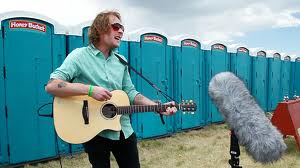
NPR created a bunch of Field Recordings at Sasquatch Music Festival.  I picked this one [Deer Tick Among the Honey Buckets]  primarily because it featured Deer Tick front man John McCauley singing front of a bunch of porta potties.

I actually don’t know much about Deer Tick, so I don’t know if they normally sound folky or what.  But this song, in its acoustic setting is very good.  John McCauley’s voice works great here.  There’s even a nice shout out to MCA.

There’s not a ton to it, and this alone won’t make me a fan, but I’ll certainly check out more by them.  It’s also a nice video to watch, especially for the amusing encore.

[READ: August 1, 2012] “The Use of Myth in History”

Most of the articles in Colonial Williamsburg have to do with, well, Colonial Williamsburg.  This one, however, talks about myths that we as Americans have created and continue to believe, from colonial times to more days.

The article opens by explaining that Patrick Henry’s famous “give me liberty or give me death” speech was written down forty-two years after the fact by William Wirt.  And he wrote it down from memory, so who knows what words Henry actually spoke.  But no doubt Wird got the gist right.  So the Henry speech is a myth–not necessarily wrong but not exactly true either.

Klein explains that some historians would like to remove the myths from history and focus only on the facts, but stories like Henry’s are so popular, so ingrained in our memories, that removing them would do more damage than the beloved myths do.  Indeed, some historians believe that myths are very important.  Micheal Gerson wrote, “We know that myths are not the same as lies” and John Thorn said “Historians have an obligation to embrace myth as the people’s history”

Klein writes that America’s mythology was largely created by writers from the early 1800s.  Pressure was building towards the War of 1812 and they needed support.  The mythology was designed to get people to forget about the ugly Revolutionary War.  And so stories were created just in time for the birth of public education in America to disseminate the stories.  And so mythological stories like George Washington and the cherry tree or the midnight ride of Paul Revere or Plymouth Rock or even Pocahontas became enshrined in textbooks.  Now, most myths are based on facts, but the truths were embellished and made more romantic and given a moral.  So, yes Patrick Henry did give a speech, the Pilgrims settled in Plymouth and Paul Revere did ride into the countryside to warn of the British invasion. but probably not exactly as we think they did.  So nineteenth century writers made George Washington the symbol of our country–a unifying power to embody a nation. (more…)

Read Full Post »

SOUNDTRACK: METRIC-“Synthetica” (Field Recordings, June 20, 2012).

After playing the Sasquatch festival, Emily Haines and James Shaw of Metric went behind the stadium and played a beautiful acoustic rendition of the title song from their latest album.  This Field Recording [Metric In A Non-Synthetic Situation] is just so wide open as to be inconceivable–especially since they’d just played a festival.

Metric make beautiful music which is rocking and usually full of all manner of electronic noises.  To hear Haines’ voice stripped from any effects shows just what a great and interesting voice she has.   It’s always nice to hear the song underneath the song.  This is a great version of the song.  Watch it here.

[READ: July 25, 2012] “Putting the Red in Redcoats”

Have you ever thought about how the redcoats’ coats became red?  No, me either.  Well, amazingly, it came from the Cochineal, the same bug that is still used today to color foods.

Cochineal bugs are pretty bizarre.  The female lives her entire life on a prickly pear cactus.  When she hatches, she clamps onto the prickly pear and starts feeding.  She grows to the size of a head of a pin. but never leaves the spot.  The male flies around, but only lives for a week.  The female lays eggs and the babies continue the process.

Although she is immobile, she is also armed with carminic acid, which predators don’t like.  Carminic acid is a vibrant red colorant.  Aztecs first mined this amazing color, which naturally impressed Spanish conquistadores who wanted to take it for themselves.  And they made a lot of money selling it to Europe.  But the Spanish never told anyone that the color came from bugs–they kept the secret for themselves.

Of course pirates and privateers would often hijack ships (one score captured 27 tons of cochineal!). (more…)

Read Full Post »

SOUNDTRACK: NOW, NOW-“But I Do” (Field Recordings, August 8, 2012).

This is an NPR Field Recording, [Now Now at Graffiti Park]which means they brought equipment to Graffiti Park in Texas and recorded Now, Now playing this song live.  You can watch the video here.

The video opens with the band lugging their gear into the weird little foundation of space.  (This explains why there are no drums, clearly).  And so the band with two guitars and a xylophone (and a shaker) play their song and sound great doing it.  This is something of a stripped down version of the bands usually more shoegazery sound, but even in this format the band sounds great–the song is catchy, the melody is pretty and their harmonies are great.

I haven’t heard the original of this, but this is now the third Now, Now song that I’ve really enjoyed.

[READ: August 1, 2012] “Mecklenburg’s Declaration of Independence”

The previous issue of Colonial Williamsburg surprised me with several articles that I found really interesting.  Although this issue was filled with a little more about current local happenings (bulldozers and updates) they still managed to pack in a number of interesting articles.

According to this article, in 1775 Captain James Jack delivered a document to the Second Continental Congress.  On May 19, 1775, select officers from North Carolina, seeing the kind of fighting that was happening against the British in Massachusetts made up several resolves.  The fist stated:

We hearby absolve ourselves from all allegiance to the British Crown, and abjure all political connection, contract, or association, with that nation, who have wantonly trampled on our rights and liberties, and inhumanely shed the blood of American patriots at Lexington.

This “declaration of independence:” preceded Thomas Jefferson’s Declaration of Independence by fourteen months.  The document never reached its destination in the intended form and it was almost forgotten.

But then in 1819, the editor of the Raleigh Register and North Carolina Gazette wrote about this “Mecklenburg Declaration.”  The news surprised John Adams who had never heard of the document.  Adams praised the document (Adams didn’t really like Jefferson).  But Jefferson called it questionable: “I believe it spurious.”  This led to an intrastate rivalry with Virginia claiming the Declaration of Independence as the true one and North Carolina claiming the Declaration of Independence a plagiarism!  Jefferson even went as far as to question the patriotism of North Carolinians.

The controversy is complicated by a document from May 31 a facsimile of which seems to show signatures cut from court records and imitations of the designer’s handwriting.

It’s all somewhat moot as the Continental Congress applauded the intention of the letter but felt that adopting the Mecklenburg resolves was premature.  And therefore it was not a usurper of the actual Declaration of Independence.  But in North Carolina, the document is held up as official.  It became a page of official North Carolina history in 1831 and in 1861, the state voted  to add the date to the state flag.

American history caught up in 1954 when President Eisenhower acknowledged the men who signed the “Mecklenburg Declaration.”  Who knew?

Read Full Post »

« Newer Posts