Feeds:
Posts
Comments

Archive for the ‘All Songs Considered’ Category

 SOUNDTRACK: JENNY AND THE MEXICATS-Tiny Desk Concert #721 (March 26, 2018).

I had never heard of Jenny and the Mexicats.   Interestingly, the blurb below doesn’t say anything about where they are from.  One assumes Mexico, but Jenny herself has a rather posh British accent when she speaks.  It also turns out that the band is based in Spain…so all preconceived notions are dashed.

Jenny and the Mexicats’ … high energy shows are unforgettable … Mixing flamenco, originally from southern Spain, with Jenny Ball’s jazz trumpet background and a little bit of cumbia has created their one-of-a-kind musical identity.

The grooves these musicians create can be frenetic (as in the first performance here, “Frenético Ritmo”)…

This song is sung in a mix of Spanish and English–the verses are predominantly Spanish but the ends of each verse seem to be in English.  Jenny’s trumpet works perfectly with the music they are playing.  And the electric guitar plays some interesting sounds throughout.  The song slows down to a pretty ballad with the flamenco guitar playing a solo before the song ratchets up again, cumbia all the way.

or slow and luxurious (“The Song for the UV Mouse House”).

Jenny sings in English on this song with a fascinating accent.  She has a diva’s R&B wavering vocal style, and yet she also seems to have some cockney on some of the words. The song is a ballad and the plentiful drums–hand, box, snare and percussion–keep the roots in Mexican music.   The whispered spoken word middle is a nice touch.

In both cases, the group presents the perfect cushion for Ball’s impassioned singing and engaging stage presence. There are no weak points in the instrumentation, and with Ball out front, the songs come to life as the short stories they are — like that of the young lady who appreciates a beer before taking on life’s challenges in “Verde Más Allá.”

Before the song Jenny tells a story about their favorite show: “We did a concert based on airlines.  We came out like pilots, there was a plane crash in the middle of the show, we came back as angels and devils, it was a lot of fun.”  The guy behind her helps out: “it was a Halloween show.”

“Verde Más Allá” is a mellow song about a Caguama (pronounced kawama).  The guitarist asks, “What is a caguama?”  It’s a liter-sized beer, and the song is about a girl who doesn’t like to work and loves her caguama.  It’s a fun song, “no le gusta trabaja!”  After the first verse, right on cue, the percussionist plays the office’s train whistle which makes everyone crack up.  The end of the song features some sing along, and the flamenco guitarist doing one of those high-pitched flamenco laughs.  At the end, Jenny (whose dress is dangerously short), holds down the ends of her dress so she can jump for the conclusion of the song.

Much good fun is had.  Caguama!

[READ: January 31, 2018] “Five Stories”

Here’s five more short short stories from Diane Williams.  And once again, she amazes me with her sentences and aggravates me with her stories.

“Girl with a Pencil”
The first two paragraphs seem like a different story, as the rest of the story seems to flow from paragraph number 3 in which a girl draws a picture of her future: two shoes, a pair of legs and the hem of a skirt on top.  Her mother was mad that there was no head.  I like that this is a formative experience but the resulting brute seems oddly out-sized.

“A Gray Pottery Head”
I enjoyed this story because of the way it ended.  “That night…something exciting a foot.  She has a quarter hour more to live.”  Except that that wasn’t the end of the story (it was the end of the page).  The next several paragraphs are about her death. It’s the first of her stories where I felt it was way too long. (more…)

Read Full Post »

SOUNDTRACK: KATIE VON SCHLEICHER-“Mary” NPR’S SOUTH X LULLABY (March 29, 2018).

I had never heard of Katie Von Schleicher.  I don’t know what the rest of her music sounds like.  But this ballad sounded a lot like Cowboy Junkies.

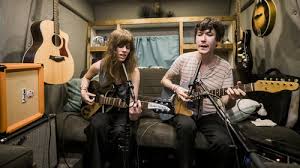
This is a pretty, sad song.  her voice is lovely, but the thing that I enjoyed the most was watching her guitarist Adam Brisbin play high notes and then a cool tumbling style of playing low notes.

This was recorded at the Spire Studio Tour Bus (basically a camper trailer, parked on Cheer Up Charlie’s lot, with brilliant recording gear, amps guitars) It’s the quietest song from Katie Von Schleicher’s magnificent 2017 album, Shitty Hits.

Katie Von Schleicher wrote to me just after this filming to tell me more about “Mary.” “I’ve been teaching a songwriting class and it’s funny now to break these things down into craft and intention,” she says via email, “but I do feel that writing to a person’s name is a really tender practice, one that can unlock kindness and a conversational tone. If speaking to a part of yourself, personifying it, singing warmly, you can spare your faults and self-criticisms by speaking as if to another person [and] maybe even take your own advice. As much as they’re personal, I’m also trying to get close to some of my favorite things, which also include Randy Newman’s ‘Marie’ and Raymond Carver’s short stories (so full of conversation). For me, ‘Mary’ is a place and time rather than a person, childhood and youth and the strange space I’ve found in going back to the house where I grew up in Maryland to make records now.”

[READ: March 28, 2018] “The Intermediate Class”

I really enjoyed the way this story used the set up of the foreign language class as a way to explore feelings and sentiments that are too hard to express.

Kiril’s mother wondered why he would want to take a German class now, why spend his time with “lazy old American housewives.”  His mother didn’t approve of his taking German back in college either.  He majored in computer science and had no time to waste.  Plus, he was a native English speaker (unlike her who was til trying to learn it).

Kiril has shown up to the Intermediate German class a little late, but the class was welcoming.  There were four people in the room: a woman with an Afro, Wanda; a pale thin woman, Morgan; a Latino man, Alejandro; a sunburned, angry white man, Arthur.  There was piano playing from behind a wall in the class.   It stopped and a man and a young woman came out.  The woman was Claire, a student in the class.  The man was the teacher.

He said he would ring a bell and they would only speak in German afterward.  When the bell rang the atmosphere changed.  (more…)

Read Full Post »

CV1_TNY_06_08_15_09.indd

SOUNDTRACK: MAX RICHTER-“Dream 3 (In The Midst Of My Life)” from Sleep– NPR’S SOUTH X LULLABY (March 17, 2018).

This piece is remarkable.  And the except provided here (all 8 minutes of it) is but a teeny fraction of the entire 8 hour work.

I had heard about this piece on Echoes a few months ago and was very interested in it, but figured there was no way I’d hear it.  I never imagined anyone would hear it quite like this:

Right at the start of the 2018 SXSW Music Festival, Max Richter’s eight-hour composition Sleep was performed overnight to an audience tucked into 150 beds. They — the audience, not the tireless group of musicians who performed the piece — slept, dreamed and sometimes snored through this trance-inducing experience.

Richter has described this piece: “Really, what I wanted to do is provide a landscape or a musical place where people could fall asleep.”

In the video here, you’ll see Richter himself on keyboards and electronics, along with the ACME string ensemble and soprano vocalist Grace Davidson.

What I loved about the story of this piece is not that it is a piece to sleep to exactly but that it is based around the neuroscience of sleep.  He says, “Sleep is an attempt to see how that space when your conscious mind is on holiday can be a place for music to live.”

It’s wonderful and I would love to sleep to it some night.

[READ: April 13, 2016] “Old Wounds”

I thought that I had read more by Edna O’Brien but it appears that I’ve read hardly anything by her.

This story was an interesting look at Irish stubborness and the way families can hate each other over small things (or even big things).

The narrator explains that her family had a falling out and for several years there was no communication at all between them.  Even when they attended funerals they did not acknowledge each other.

Finally all of the older people had died off and it was just her and her cousin Edward (both past middle age) they met and put aside the hostilities. They even visited the family graveyard together.  The graveyard was on an island a short boat ride from Edward’s house. (more…)

Read Full Post »

SOUNDTRACK: BECCA MANCARI-“Dirty Dishes” NPR’S SOUTH X LULLABY (March 15, 2018).

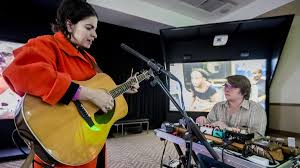
Becca Mancari plays a pretty acosutic guitar melody while Blake’s effects-laden pedal steel guitar soars and echoes around her.

I don’t know the original, but according to the blurb, “Mancari removes the clicking pulse of the studio version to underline the song’s lonely atmospherics.”

The song is simple–one that speaks to a relationship: “‘I can’t face myself,’ Mancari repeats the line like a broken admission spoken through a pinhole camera, a whispered truth so potent it can’t be looked right in the eye. “

At 2:41, the guitarist hits a great effect that turns the soaring pedal steel guitar into a buzzy rocking guitar solo while Becca strums on.  It’s a great interlude that really sells this song.

I also love that the final 30 seconds is just the sound of the guitar(s) fading out.

There are moments in this video where the Nashville-based singer-songwriter turns away from the many faces of the Life Underground installation by Hervé Cohen, which is part of the SXSW Art Program and supported by the Cultural Services of the French Embassy in the United States. What’s being projected onto the screens in the room are interviews with subway passengers from around the world who share their stories and dreams. The installation’s notion is that empathy often comes by just asking a few questions, which, maybe for “Dirty Dishes,” is just too damn hard right now.

[READ: April 12, 2016] “The Tiger’s Wife”

Téa Obreht took the literary world by storm with her debut novel The Tiger’s Wife.  I’ve had a copy of it on my bedside I guess now for 8 years.  I’ve been meaning to read it but other things always jump in first.

So finally I got around to reading this excerpt from the novel.

The excerpt is, I assume, the first few sections of the novel since they are numbered and begin with 1.

The first part is called The Tiger and it talks all about the titular tiger.  The tiger was in a zoo (or a circus) in 1941 when the Germans began bombing the city for three straight days.

The tiger should have died in the concussion and rubble, but he managed to escape and wandered to the village. (more…)

Read Full Post »

SOUNDTRACK: NATALIE PRASS-“Short Court Style” NPR’S SOUTH X LULLABY (March 14, 2018).

I did not enjoy this Lullaby at all.  Prass’ voice is very conventionally poppy and the synth sounds were really cheesy.  I would without question turn this off it was on the radio.

Evidently the original has “a laid-back disco cool and bouncing bassline groove” but then Prass

shows up to her South X Lullaby session with keyboardist Jacob Ungerleider, slows down the tempo just a mood lighting dimmer and turns the song’s breezy funk into the soft murmurs of late-night devotion.

Still doesn’t make me like it.

This version of “Short Court Style” was filmed in an interactive art installation by Caitlin Pickall called FEAST, which is part of the SXSW Art Program and was created as part of the Laboratory Artist Residency program in Spokane, Wash. Prass and Ungerlieder sit at a dinner table set with plates and towers of wine glasses, onto which images and patterns are projected. The projections are triggered by the movements of guests at the table, so the experience changes every time someone sits down.

[READ: March 15, 2018] “No More Maybe”

This story looks at immigrants in the land of trump’s america.  But it also looks at how in-laws can drive us crazy.

The narrator’s in-laws have come to visit them because she is pregnant.

Her mother-in-law has been very busy taking advantage of all that America has to offer (cheaply): blueberries, the clean air, the stars, and English-language classes (which are expensive in China).

She is puzzled by them being free: “America is a capitalist country….  What about so-called ‘invisible hand’s” (She learned about that phrase two days earlier).  The woman is confident (she is a volleyball coach) and is not shy about expressing herself. (more…)

Read Full Post »

SOUNDTRACK: MAL BLUM-“See Me” NPR’S SOUTH X LULLABY (March 13, 2018).

I feel like I was pretty lucky to see Mal Blum just days before they went to SXSW and made a Lullaby.

Without the band, Mal sings more quietly which certainly lets you hear the words more clearly–and Mal is a gifted lyricist.  But Mal also writes catchy tunes.

I love that the verses are quiet and muted, but there’s loud strumming in between.

And as the song nears the end, the intensity ratchets up for a line of “why can;t they see me?”  …before the quiet conclusion: “I was right there.”

Mal performs in front of the Future of Secrets art installation.

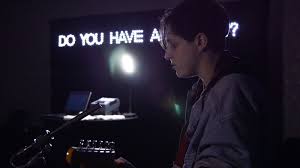
The Future of Secrets was conceived by Sarah W. Newman in collaboration with Jessica Yurkofsky, Rachel Kalmar and metaLAB at Harvard. The installation, which is part of the SXSW Art Program, asks those attending to anonymously type a secret into a laptop and in exchange someone else’s secret is given to you. Those secrets are then projected on a wall, which is the backdrop for this video.

“‘See Me’ is an unreleased song that will be on our next record (sometime next year),” Blum tells NPR. “It’s about the disparity between how one sees oneself, or the struggle of being seen as we are, versus how others view us, which can result in an unintentional hidden self or a perpetual feeling of invisibility. Being transgender informed the song, but it’s not exclusively about that.”

[READ: September 10, 2017] “An Education”

This is a short piece about two girls in school  I assume it is set in Hungary as it is translated from the Hungarian by Len Rix.

The narrator said she was always a hard-working child filled with self-discipline.  But her parents never understood that she did it all for herself–not for them or to make anyone else happy.  Her father was the school principal and was absolutely proud of her–she was hardworking and punctilious like he was.

Her mother, on the other hand, was clearly more loving to her sister Blanka–when she lost her temper with Blanka “there was something frenzied and indiscriminate about the way she pummeled her.”  Her father tried to push her very hard to make her learn more.  Her father was far more proud of the narrator than Blanka, but “no one was ever as proud of me as Blanka [was].” (more…)

Read Full Post »

SOUNDTRACK: RED BARAAT-“100+ BPM” (Live in front of the Brooklyn Public Library) (Field Recordings, June 2, 2014).

Continuing with the fun that is Red Baraat, I stumbled upon this Field Recording [What Happens When 350 Musicians Meet For The First Time In Brooklyn?] from the NPR studios.

As part of the Make Music New York Festival, NPR commissioned new music from Red Baraat and Sunny Jain created “100+ BPM.”  And as the blurb informs us:

“We put out a call and they came — by the hundreds. When we invited wind, brass and percussion players to join us yesterday in Brooklyn to perform a world premiere by Red Baraat‘s Sunny Jain for the annual Make Music New York festival, we were hoping that lots of different kinds of musicians would join us. And boy, did they ever.

On this absolutely gorgeous Saturday afternoon, about 350 musicians assembled on the steps of the Brooklyn Public Library to play Jain’s 100+ BPM. Young, older, professional drumlines, community marching bands, seasoned jazz players, Indian wedding band musicians, Brazilian samba drummers and scads of amateur players came out to play. It was just incredible.

I don’t know how they managed to record the music so perfectly, but it sounds fantastic.  You can really hear the different instruments (well, except maybe the poor violins and that piccolo) as they zoom in on one section or another.

The whole group plays along perfectly.  And there’s even some great sax solos (how did they decide who got to solo?) an excellent trombone solo and lots and lots of drums and percussion.

I love that after the wild soloing everybody joins back in for that great melody once again.

At 6:15, the song stops (and you get to see how psyched Sunny is).  Then after a short pause he starts clapping and selects which group of instruments will keep the beat going.  First it’s drums, then percussion, then the tubas and then the brass comes into play a new staccato riff that is fun and catchy and easy to speed up. Which it does.

He drops out the drums and selective instruments until it’s just the tuba and percussion.  Then the drums come back in and he starts picking up the tempo of that riff again.  Faster and faster do they get to 100BPM? According to this excellent free BPM counter, they make it to 106/107 BPM during the main part.

Then after a breather it’s time to keep going, faster and faster until they reach 126 BPM by the end and Sunny gives an exultant leap to end the song.

What an excellent way to spend a Saturday afternoon.

[READ: February 26, 2018] “Pardon the Intrusion”

Lydia Davis stories are usually really short–a paragraph or two or three.

This one is very different.

It is a series of posts–requests and thanks for various items.  And that’s it.

It’s hard to tell if a story can be constructed from these requests–at times it seems like you can follow a narrative.  But mostly it just seems to be people requesting goods and services. (more…)

Read Full Post »

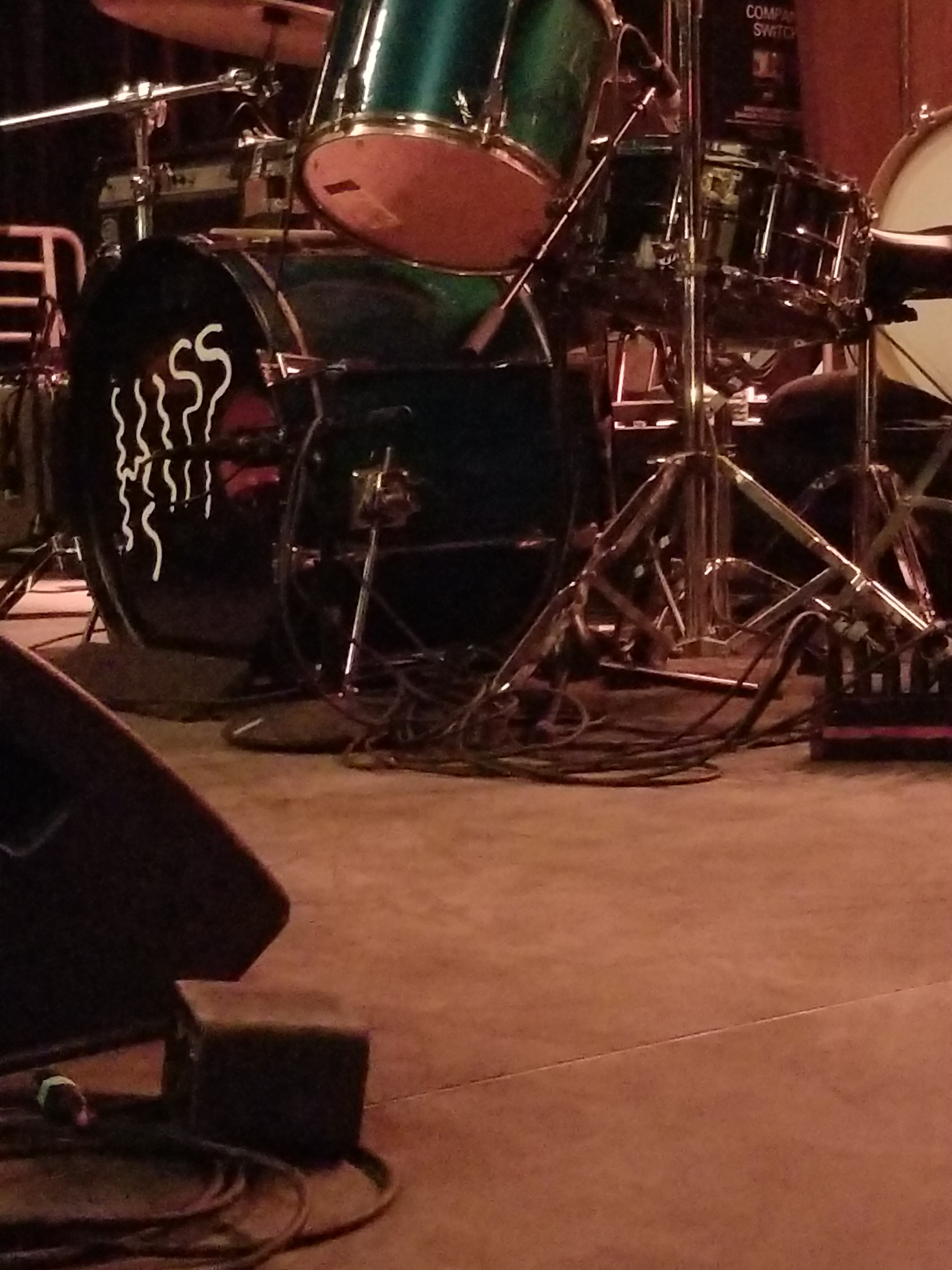
[ATTENDED: August 26, 2017] Purling Hiss

I know Purling Hiss from NPR’s All Songs Considered.  Last year they played the band’s “3000 AD” which I instantly fell in love with.  There was a cool shoegaze feel to it with a bunch of noisy elements that I really enjoyed.

I knew that the bulk of the band’s catalog was basically Mike Polizze making music for himself.  It was pretty noisy and abstract with lots of jam moments.  They are now a band–I’m not sure who the other two guys in the band were (based on the latest album, I’m assuming Ben Hart on drums and Dan Provenzano on bass)–and they have gotten more musical since then.  But thy are still noisy.  So I expected a lot of squalling feedback and pummeling sounds.

I was quite pleased with how melodic the band’s songs were (no idea what songs they played, but I assume most of it came from their newest album).  (more…)

Read Full Post »

SOUNDTRACK: JOHN PAUL WHITE-Live at the Newport Folk Festival (July 29, 2017).

I don’t really know all that much about John Paul White, except that he was in the fabulous duo The Civil Wars, and that he writes intelligent but downbeat folk music.

For indeed, his songs are not cheery by any stretch.  But they are very pretty.

I know the first song, “Black Leaf,” from his Tiny Desk Concert.  I loved it then and I love it now. After the song, he asks, “How are you?  Are you well?  You should be well.  No one should be complaining, least of all me in this black suit.”

And, despite his tone, he is not above making jokes with his audience.  Like when he introduces the second song, “Martyr,” he says, “We’ll be doing  while lot of death metal covers. I figured this would be the place. This song is by a band called Sepultura.”  [Nervous titters from the crowd before he starts playing a pretty JPW song that sounds not unlike a contemporary Barenaked Ladies song, especially his delivery of it].

“The Once and Future Queen,” is a slow, quiet song with a big chorus full of pretty harmonies.  When it ends, he says:

I guess it’s probably my duty to warn you….  You came to a folk festival so you probably weren’t looking for happy songs anyway…  If you came to this set looking to be cheered up, you’re screwed.  Let’s get that out of the way.

I loved “Hate the Way You Love Me,” during the Tiny Desk Concert, but when the backing singers accompany him on the chorus and the gorgeous fiddle from Kelli Jones fills the song, it’s really wonderful.

He jokes, “Glad you’re enjoying the death metal.  I didn’t think it would go over as well as it has.”  But he then plays “Fight for You,” a fairly rocking song–with some rocking distortion on his guitar and a snarl in his voice (and a pretty heavy chorus).

I tend to think of JPW as kind of a mellow singer with a great voice, but he really lets loose in the middle of “Hope I Die.”  In addition to a really powerful singing section, there’s a pretty wild solo going on (violin or guitar or both).  He introduces Adam Morrow over here on the guitar, so I assume he had something to do with it.

He says, “I’m not gonna pretend that all of you have any idea who I am.” [cheers]  He jokes, “That’s called fishing for a compliment.”  But he continues,

To those of you who do I apologize.  It’s been awhile.  it took a lot to get me out of the house.  I was incredibly happy sleeping in my bed and going to dance recitals and football games and the lot. And then these melodies started coming back in my head.  And if I gave into it I’d be back out here doing this.  I and I didn’t want that at all.  No.  No offense, but I didn’t want of see any of your faces.  But once I wrote these songs I wondered if people would connect with them…  and I still doesn’t know why I did that.  So thank you.

In introducing the slow ballad “I’ve Been Over This Before,” he says “This is one of the first songs that came to me. I was obviously listening to a lot of old country music, because that’s where it all starts for me.”

He continues, “I promise you I won’t bore you with song meanings because most of the time I have no idea what they mean most of the time.  But this one is personal for me.”  He says “Simple Song” is indicative of the folk spirit of telling stories and passing them down to further generations.

This came from my grandmother.  When my grandfather passed away he was battling many demons that everyone was having to battle alongside him.  She was raising 14 kids because of those demons.  So… I thought he was perfect, I though that he was always happy, but that was not true and when he passes away, she didn’t cry.  I asked her why  and she said ‘I cried so much for your grandfather when he was on this earth, there’s no way I’m gonna cry for him now that he’s better off.’  And so I thought, ‘Number 1, I want to punch you  in the face.  And then 2 much later in life, that that is a song waiting to happen.’  So this will also cheer you up.

The song and sentiment are beautiful with plaintive lap steel guitar: “I will remember I will remember I will remember you… but I will cry for you no more.”

He continues, “So it’s said that festival crowds… this quiet does not happen.  This is beautiful I really do appreciate it.  I’m a very dynamic performer and I need this kind of environment so…  Festivals scare the shit out of me.  I have to thank you from the bottom of my heart.  This is an unbelievable atmosphere to play in.

before the final song, the rocking “What’s So,” which I also know from Tiny Desk, he says “This is the first time Newport for all of my band so they’re geeking out pretty hard.”  In addition to Jones and Morrow, there’s Reed Watson on drums and Matt Green on bass.

“I need more band members so I have time to tune.”

“What’s So” has an aching descending chorus line that is just terrific.

I really like John Paul White’s music and I’d love to see him live in a quiet sit down club..

[READ: June 24, 2017] “It’s a Summer Day”

I know Andrew Sean Greer from a few McSweeney’s books.

This was a simple story but told in a really cool style.  It concerns Arthur Less, a writer, who has been called to an international conference where he is in the running to win a prize.  But the prize is minor and no one–not he nor his agent–thinks he has a chance.  In fact, the only reason he went was to get out of going to a wedding of an old flame, Freddy.

Freddy had once given him advice about international flights: “They serve you dinner, you take your sleeping pill, they serve you breakfast, you’re there.”

I love the narrator’s voice in this story.

He had been to Italy before. Once when he was 12.  And the second time with Robert Brownburn (Yes, that Robert Brownburn, the famous poet).  They had been dating for a while and were at a good point in their relationship.

He did as instructed with the pills, but woke up in the middle of the night–only two hours having passed!  He takes out another pill and then it’s time for breakfast.  He is in a fog and the first few pages are an amusing comedy of him possibly going the wrong way.  He barely makes his local flight (and is shocked to see ashtrays in the airplane seats–charming or frightening?) And then… was it a mistake to get in the car marked for Sr. Ess?  The driver speaks no English and it sure looks like he is heading in the wrong direction. (more…)

Read Full Post »

SOUNDTRACK: JOSEPH-Live at the Newport Folk Festival (July 29, 2017).

 Every year, NPR goes to the Newport Folk Festival so we don’t have to.  A little while afterwards, they post some streams of the shows (you used to be able to download them, but now it’s just a stream).  Here’s a link to the Joseph set; stream it while it’s still active.

Joseph is a band of three sisters and their sound is a little like Indigo Girls–if there were three of them.

When Natalie, Meegan and Allison Closner shout together to the heavens, accompanied only by Natalie’s acoustic guitar, it’s a joyful noise that intrinsically celebrates their bond.

So yes, Joseph is all about harmonies.  They play six songs from their recent album I’m Okay, No You’re Not which is a pretty great release (with a few songs that go a little too commercial).  For the most part, it is just one guitar and three voices.

Their first song “Stay Awake” starts off quietly with one of the sisters (Natalie, I assume) singing and plucking a spare melody on the guitar.  And then about a minute and fifteen second in, all three sisters sing and suddenly the song is magical.

 “Canyon” has a number of amazing moments, but especially when they sing along with one of the sisters taking lead and the other two doing some great harmonies.  When the lead sings “I wanna feel it,” all three singers soar to the rafters in a gorgeous harmony (around 7:25 of this set).

They get applause for “S.O.S.” before playing it.  This is their poppiest song and the one that verges closest to a sound I don’t like (especially for them).  But it’s hard to deny it when they sound so good live.

For “Planets” they ask if anybody wants to sing and they give the audience a mildly complicated melody to sing.  I can’t really tell if the audience is any good at it, but the sisters seem to like it.  And “I Don’t Mind” has a terrific melody even without the harmonies, but when they come in it’s even better.

They describe “Sweet Dreams” as like a lullaby that they used to say to their mom ” Sweet dreams, I love you, good night.”  But this song is anything but a lullaby.  The melody is sophisticated and their voices are powerful.  It’s quite something,.

They have time for two more.  We’ll sing one from our old record and…maybe our single.  That single, “White Flag” finds a stellar balance of pop and folk.  It hits just the right edges of pop to make the song insanely catchy but with an almost aggressive folksiness that is undeniable.  And live it’s almost breathtaking.

Their voices are just amazing.

[READ: June 20, 2017] “I Have Fallen in Love with American Names”

Earlier this month I posted a piece from Roth about names.  I assume that this excerpt comes from the same source.

Roth’s parents were born in New Jersey at the start of the twentieth century.  They were at home in America even though “they had no delusions and knew themselves to be socially stigmatized and regarded as repellent alien outsiders.”  And that is the culture that Philip grew up in.

Butt the writers who shaped his sense of country were born in America some thirty to sixty years before him.  They were mostly small town Midwesterners and Southerners.  None were Jews.

What shaped those writers was not mass immigration from the Old Country and the threat of anti-Semetic violence, but the overtaking of farms and villages  values by business culture.

He says what attracted him to writers like Theodore Dreiser, Sherwood Anderson, Ring Lardner, Sinclair Lewis, Thomas Wolfe and Erskine Caldwell was his own ignorance of everything North South and West of Newark, New Jersey.  And the way that America from 1941 to 1945 was unified: (more…)

Read Full Post »

« Newer Posts - Older Posts »