Feeds:
Posts
Comments

Archive for the ‘All Songs Considered’ Category

SOUNDTRACK: WILD FLAG-SXSW April 1, 2011 (2011).

Wild Flag has released one of the best albums of 2011.  I can’t stop listening to it.  So, it’s funny that this show has been sitting on NPR’s download page for months without me checking it out because I didn’t know who the band was until the album came out.  Wild Flag is Carrie Brownstein, Mary Timony and Janet Weiss (and a keyboardist who I will never remember because I never heard of the band she was originally in). 

This show at SXSW is one of their earlier shows.  It’s so early that one of the songs in the setlist appears on the album with a different title.  And the band is full of raw energy and passion. 

Although research shows that they’d been touring since November, Mary Timony seems somewhat hesitant in a few songs.  But Carrie Brownstein seems fired up to be playing again, and she rages and jumps around the stage, her voice as aggressive and fun as it was in Sleater-Kinney.  Janet Weiss, as ever, kicks massive ass on the drum kit.  man can she wail–she is a vastly underrated drummer. 

The band has great cohesion and they seem like they’re really enjoying themselves. 

 In many respects this band sounds like Sleater-Kinney (2/3 of the band are here).  But the addition of Timony’s lyrics and more gentle voice bring a cool change.  And the keyboards flesh out the songs in wonderful ways as well–for a band with no bassist, it’s funny that the most pronounced keyboards riffs are at the high end of the register.

There’s a few flubs during the set, in one of the more pronounced keyboard riffs, there’s a pretty major gaffe.  And sometimes it seems like they don’t know exactly how they should be harmonizing with each other (not true on the record at all).  And during the extended soloing of “Glass Tambourine” (6 minutes), I’m not really sure what Mary is up to.  But that’s okay.  The band is all about rawness, so that can be forgiven. 

While the album is better, this live show is a good introduction to the band. 

Since Carrie Brownstein worked for NPR I almost expect all of their shows to be available here.  But for now, watch the whole show here.

[READ: January 17, 2012] “Old Mrs. J”

Stephen Snyder translated this story that was originally written in Japanese.  It’s interesting to me when a work is translated from another culture.  Does the translator intend to keep the other culture obvious or does the translator try to make the story, in this case, more European or American.  There’s some inevitability in that, since the language is changed, and yet the sensibility of the original often remains.

I bring this up because I tend to think of Japanese writing as being very distinctive.  And yet this story didn’t really “read” very Japanese to me (Kiwi fruit aside).  It did read a little bizarre, but that was the fun part.

The story starts out simply enough: a young writer (who is a woman, although you don’t find that out until very late in the story unless, unlike me, you assume the main character is a woman because the author’s name is Yoko).  The author works late and sleeps in til noon or so.  It’s a quiet, peaceful place.  The landlady is older and somewhat feeble.  Until, that is, she gets into her garden and then she seems possessed by a fire. 

The landlady hasn’t really talked to the writer.  Then one day the writer hears the landlady in the garden cursing at a stray cat.  The landlady hates cats and curses them up and down.  Finally the writer tells her to put pine needles down, that cats hate prickly things on their feet.  This I did not know.

And they strike up a friendship.  The landlady reveals that her husband was no good and that he left her.  She also reveals that she gives massages.  And she begins leaving the writer vegetables from her garden.  Then one day, the landlady brings her a strange carrot with 5 “fingers” coming off of the central stalk.  The carrots are quite special.  And she keeps them a secret until sure enough, she begins growing lots and lots of them.  Even the newspaper comes to take a picture.

This idyllic story is interrupted in the last few paragraphs.  First by what seems like metaphorical scariness and then, ultimately, with reality.  It is a wonderfully realized story, wonderfully told and with enough hints of magical realism throughout that the ending isn’t totally unbelievable–even if it is quite unexpected.

Read Full Post »

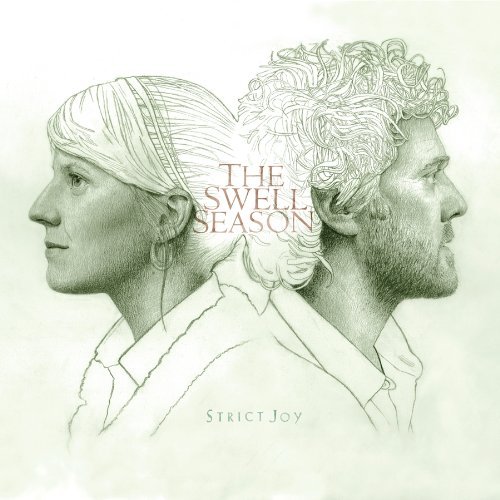
SOUNDTRACK: THE SWELL SEASON-Strict Joy (2009).

I bought this disc for Sarah after it came out.  I didn’t think that I would enjoy it that much because while I loved the movie Once, I wasn’t sure if I needed more from Glen and Marketa.  But then I found a whole slew of free concerts from NPR and I became hooked on the band.

The disc opens with “Low Rising” (what I think of as the “Van Morrison” song).  It gets better with each listen.  It’s a slow ballad which is followed by “Feeling the Pull,” a more up-tempo song that really highlights Marketa’s beautiful harmonies.  “In These Arms” is a gorgeous song.  The verses are downbeat and somber “if you stay…with that asshole…it will only lead to harm” but again the harmonies are gorgeous.  “The Rain” is a more rocking tune (within reason, of course).  It has an interesting middle section that quiets down, but it’s a solid folk rocking song.

“Fantasy Man” is Marketa’s first lead vocal song on the disc.  I like her voice but sometimes I find her lead songs to be a bit too wispy, too quiet.  I like this song, but it feels long (and at 5 minutes, it is).  “Paper Cup” is one of Glen’s quiet ballads.  It’s a pretty song.  “High Horses” is one that I didn’t know from the live sets, I guess it’s not too popular with the band, but I think it’s strong.  It runs a little long but that’s because it has a cool middle section that keeps building and building with more instruments and voices.  “The Verb” is another song that I didn’t know.  It has a cool intensity to it and while it doesn’t stand out as a hit, it’s certainly an enjoyable song.

“I Have Loved You Wrong” is another pretty Marketa song, but again it’s very slow and very long.  I don’t think I could buy her solo album because although her voice is lovely and her melodies are nice, they’re just so ephemeral I can’t really get into them.  “Love That Conquers” is an interesting song.  It sounds nothing like The Swell Season (must be the banjo).  It’s a nice addition to the album and should maybe have been placed a little earlier to break up the sound style a bit more.  “Back Broke” ends the disc very strongly.  Although I think the song works better live (with audience participation), the melody and tone of the song are somberly beautiful.

There are moments of this disc when it turns out to be what I feared the whole disc would be–bland folkiness. But overall this is an enjoyable album for a rainy day.  And Hansard really has an amazing voice.  However, I really like them better live.

[READ: December 26, 2011] Third Reich

I was pretty excited when I heard about this book, although I must admit I was a little concerned by the title.  Bolaño has a kind of weird Nazi fascination.  There is Nazi Literature in America and then a whole section of 2666 is given over to Nazi Germany.  He doesn’t like Nazis or anything but he writes about them a lot and it can be a little exhausting.  So it was with some relief that I learned that Third Reich is the name of a game that the main character plays.  It is a kind of historical reimagining kind of game (I guess like Risk but more specific and with more at stake).  It is set during the time of the Third Reich and the players represent various countries (or perhaps even powers).

I am giving up on explaining the game from here on because a) there’s a lot about the game in the book and b) I’m not sure if it wasn’t explained very thoroughly or if I just missed out on exactly what was happening.  During the book he talks about Hexes 65 through 68 and so on.  So I assume the map of the world is a hex grid.  But he never gives any context (or even a picture!–and this makes sense as it’s written as the diary of a well-regarded player who is not trying to teach us the game).  So while I understand the general tenets and play of the game (there’s a die (or dice) and tokens that reside on the board), the specifics are completely nebulous.  But that’s okay.  Because the game specifics don’t impact the book, but the game overall is at the heart of the book.  I think it’s neat that Bolaño invented a game (and several others games are named, but no details are given).  He is clearly very gifted at inventing people, games, things.

But as I said, the game is only a part of the book and in fact, the game details don’t enter into the book until about half way through. (more…)

Read Full Post »

SOUNDTRACK: JOHN ZORN-“Have Yourself a Merry Little Christmas” (2011).

Wild skronking horns, screamed vocals, chaos chaos cha–.  No.

Piano and vibraphones with some gentle guitars thrown on top.  This is a beautiful, gentle jazz rendition of this song.  What makes this so strange is well, frist, because John Zorn loves death metal and all things noise.  But also because John Zorn revels in Jewish culture.  So what’s up with this holiday album?

Evidently he always wanted to make a holiday album.  And he’s using most of the same guys who have played with him for years. 

That’s a real Christmas miracle! Read more about it here.

[READ: December 16, 2011] Children, Gender, and Social Structure

Our director sent us a link to this article to get us in the holiday spirit (you have to subscribe to JSTOR to read it).  Although he spoiled it in his email (boys and girls are different), I still enjoyed reading the contents here.  At least somewhat.  The article was really quite dry and relied on some scientific terminology which I found confounding.  Nevertheless, the results were easy enough to follow, and that’s what really matters.

The most interesting thing was the setup.  They read all of the letters mailed to Santa that were received in the Seattle post office in 1978.  (I wondered why it was so long ago before I confirmed that this was written in 1982, so that makes sense).  They received 855 letters that year.  And I found this breakdown as interesting (if not moreso) than the rest of the article: 63% were from within the state; 29% were from out of state (how did they get there??); and 8% were from out of the country (what?? how, why?–no answer is given, sadly).  31 letters were illegible, so they were out.  The rest were assessed by gender of the names based on a baby naming book (from 1966!).  This yielded 359 from boys, 391 from girls, 46 gender ambiguous (what percentage would there be today??) and 28 with no name. 

I was also fascinated by  the age breakdown: 24%: 5 or under; 41% 6 or 7; 29% 8 or 9 and 7% were ten or older! (more…)

Read Full Post »

SOUNDTRACK: LONDON PHILHARMONIC ORCHESTRA-Angry Birds Theme (2011).

My son, Clark, loves Angry Birds.  I’ve played it a few times and found it enjoyable, but he is obsessed.  He is absolutely the target market for this song.  And who knows maybe it will get him to like classical music.

I wasn’t sure if I’d recognize the tune, but it is already ingrained in my head.

This version is wonderful.  It sounds like it might be from a Tim Burton movie. 

The full CD is a collection of video game themes.  We don’t have a console, so I don’t know any of the other songs on the disc. But I do rather like this one.  I can’t wait to see his face when he hears it.

Check it out on NPR!

[READ: December 15, 2011] “What We Talk About When We Talk About Anne Frank”

This story went from being a (rather) funny piece about Hasidic Jews to being a (rather) emotional story about marriage, religion and self-preservation.

As the story opens, Mark and Lauren are visiting the narrator and Deb.  Deb and Lauren grew up together.  But after school Lauren met Mark and they moved to Israel where they became Hasidic (and took the new names Shoshana and Yerucham).  As the story opens, the narrator (a non-observant Jew) is trying to hold his tongue while these religious folks are well, kind of judging  them.  It’s wonderfully summed up by this comment:

“Jewish to you?” I say.  “The hat, the beard, the blocky shoes.  A lot of pressures, I’d venture, to look jewish to you.  Like, say, maybe Ozzy Osbourne or the guys from Kiss, like them telling Paul Simon, ‘You do not look like a musician to me.'”  [Is there a joke in there since the guys from Kiss are indeed Jewish, or no?]

The narrator and Deb has a son, Trevor, who is sixteen.  The scene where he comes into the room to discover the Hasidic couple is hilariously subtle (very well written).  Then we learn that Shoshana and Yerucham (which Deb calls them) have ten children–all girls.  Yikes.  But the narrator continues to refer to them (at least in his story) as Mark and Lauren.  And the more questions he asks the more we find out that although they keep Holy the traditions, they are a bit lax about some of the rules (maybe?)  I actually don’t know the rules so I don’t know if what they’re doing is “wrong” or not.  And, amusingly there’s a bit in the story in which Yerucham complains about non-Jews giving them shit for what they do–“Can you eat in there?” kind of questions.

So, when the narrator asks if they can drink, Yerucham says he can make the whiskey kosher.  And that starts them on their way. (more…)

Read Full Post »

SOUNDTRACK: COLIN STETSON-Live at All Tomorrow’s Parties, October 4, 2011 (2011).

In addition to playing SXSW, Colin Stetson also played All Tomorrow’s Parties, and NPR was there.  Unlike with SXSW, this set appears to be full length (about 50 minutes–which is a pretty amazing amount of time for him to blow that horn).  Like SXSW (and the album) Stetston starts with “Awake on Foreign Shores” and “Judges.”  What I love about this recording is that after Stetson finishes “Judges” a guy in the audience shouts (in a voice of total amazement) “That shit was off the hook!”  And he is right.  It’s not even worth me going into how amazing Steston is once again (check previous posts for  that), but man, just look at the size of that horn he’s playing (seriously, click on the link to see it bigger).

Stetson plays a few more songs from New History Warfare, Vol. 2: Judges like “The Righteous Wrath of an Honorable Man” (which is outstanding) and “A Dream of Water” (which works without Laurie Anderson, although he does say he’s sorry she’s not there).  He also introduces two news songs “Hunted 1” and “Hunted 2” which show new levels and new styles that Stetson employs.

This is a remarkable set, and Steston is clearly in his element (and the crowd is rapt).  The only problem I have is the recording level.  It must be very difficult to maintain recording levels for Stetson’s brand of noise–his louds are really loud–but you can’t hear him talk at all.  And most of the time, the introductions to his songs are worth hearing.  I’m sure if they tried to get the speaking level a little louder the music would have sacrificed though, so I think they made the right choice–I only wish there was a transcript available.

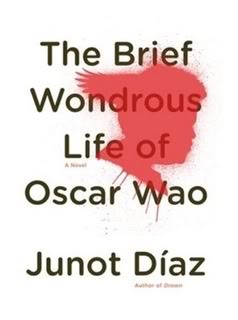
[READ: October 31, 2011] The Brief Wondrous Life of Oscar Wao

Apparently it’s pronounced, “Wow”, by the way.

Because of my new job, I don’t have a  full hour of lunch-time reading like I used to.  And so this book took considerably longer than I intended.  However, once I set aside some time to read it, I flew through the book.

I’m going to get this part out of the way because I was thinking about it throughout the book and I want to mention it without having it bog down the post.  This story reminded me a lot of Roberto Bolaño.  On the surface, sure this is because they are both writers from “Central America” (Diaz is originally from the Dominican Republic but moved to the US, while Bolaño is originally from Chile but moved to Mexico and then Spain).   But I’m not really talking about their origins so much as the style of storytelling.

Without going into a lot of Bolaño here, I’ll just say that Bolaño tends to write very detailed character studies–stories that follow one person throughout his whole life on something of a fruitless quest.  And the details of that person’s life include information about family members and distant relatives.  Further, Bolaño has written about the brutalities of both Chile and Mexico and how a person can survive in such a place.  Similarly, Díaz follows the life of Oscar and his extended family and he talks about the brutalities of the Dominican Republic.

This is in no way to suggest that there is any connection between the two writers. I mean, The Savage Detectives came out in the States in 2007 (same years as Oscar Wao) and while he certainly could have read it in Spanish, I have no evidence that he did (and as I recently found out, the first draft of the Oscar story was written in 2000).  Again, the parallels are only from my reading and have nothing to do with Díaz himself.

Okay, now that that’s out of my system…

This is the story of Oscar de Leon.  But more than that, this is the story of a fukú–a curse that befalls the de Leon family and follows them through several generations.  Oscar is the youngest member of the family and the person whom the narrator knows best.  So we see this fukú as it impacts Oscar.  And although the book is ostensibly about Oscar, it is about much more.

Oscar was born in Paterson, NJ (the town next to where I grew up!) and went to Don Bosco Tech High School (where many of my friends went).  Oscar is Dominican (his mother is from the DR, but he and his sister were born in NJ), but unlike every other Dominican male, Oscar is totally uncool, into geeky sci-fi and D&D and is clearly destined to be a virgin because he is fat with terrible hair and no social skills.

And, (no spoiler), as the title states, his life will be short. (more…)

Read Full Post »

SOUNDTRACK: NADA SURF-“When I Was Young” (2011).

This is a new song from Nada Surf’s new album (due out in January 2012).  Nada Surf aren’t changing much from their tried and true sense of pop hooks, but this is a slower, statelier song (with strings!).  It features a challenging-to-sing-along-with chorus (“I wonder what was that world I was dreaming of”).

It’s a bit longer and slower than my preferred Surf songs, although I can see it working well in the middle of an album.  About two minutes in, the guitars kick in and the song really comes to life.  It’s catchy and fun and has me excited for their new disc.

[READ: October 23, 2011] “Memory Laps”

This article came around the same time that our tickets for Sedaris’ upcoming performance at Raritan Valley Community College arrived in our mailbox (nicely timed, that).

It did make me wonder if I shouldn’t be reading anymore of these pieces, since I don’t want to spoil the humor of Sedaris live (although I think Sedaris is funniest when delivering his pieces–his monotone is just wonderful–even if I have heard them before).  And plus, the show is not until April, so chances are I’ll have forgotten about it by then.

This essay is all about young David when he was on the swim team (this guy has done so much in his life–who knew he was a swimmer too?).  The crux of the essay is that David’s father never praised him for his swimming; instead, he heaped tons of praise on David’s teammate Greg Sakas (I wonder if names have been changed in these essays). 

True, Sakas was pretty great, and he won every meet, but even when, on that one freakish instance when David beat Greg, David’s father was unimpressed, saying that Greg must have been ill or something. (more…)

Read Full Post »

SOUNDTRACK: COLIN STETSON-Live at SXSW (2011).

NPR has made available three songs from Stetson’s SXSW performance.  I’m not sure why there’s only three songs as surely his set was longer than 15 minutes.

He opens with the first two songs of New History Warfare Vol. 2: Judges, “Awake on Foreign Shores” which segues into the masterful, noisy “Judges.”  It’s a wonderful 7-minutes of music. True, it is not as dynamic as the album (how could it be?), but hearing him play this stuff live, unaccompanied, is amazing.

The final track, “The Righteous Wrath of an Honorable Man” is a beautiful short piece that really shows off his ability to keep these riffs going more or less continuously.  Unlike the other songs, this one is more tenor than bass-sounding (although I believe it is all the same instrument) and it sounds equally impressive.

This is just a taste of what Colin can do, and I do wish there was more from this show available online (the sound is pristine, and you can actually hear him talking, which you can’t do at the All Tomorrow’s Parties show).  The NPR page says that there were four songs.  I’m not sure why the fourth isn’t here, but I’m happy to get at least these three.

[READ: October 10, 2011] “Oubliette”

This was a strange story for me because, really, nothing happened.  Well, that’s not true.  Something happened, but it was told in such a straightforward manner, in such a non-inflected way, that it seemed more like a news account than a story.

It is the brief account of a girl whose mother began treating her worse and worse as she got older.  It seems like a fairly natural deterioration of the relationship between mother and daughter, but then her mother’s behavior becomes more erratic and more violent.  Then one incident causes everything to change.  Her mother is diagnosed with Huntington’s. 

Both the girl and her father visit their mother, knowing that there’s very little they can do for her except to try to keep her calm.  So they hold their tongue and try to be nice.  (more…)

Read Full Post »

SOUNDTRACK: COLIN STETSON: “Horn of Plenty” (interview, NPR’s All Things Considered) (2011).

I’ll be mentioning some recordings by Stetson shortly, but as an introduction to this man and his bass saxophone, this ten minute piece from NPR is absolutely essential.  I had listened to his recent album and NPR has two concerts from him that are downloadable.  I enjoyed the music, but after listening to this interview it gave me so much more appreciation for what the man is doing.

For a lot of classical and jazz, knowing what the author “meant” can help.  Knowing that The Moldau is a river makes Bedřich Smetana’s piece all the more interesting and moving.  Similarly, knowing that “Judges” is about horses… well, holy crap yes it is.

More importantly, knowing how he does what he does–circular breathing: taking air in through your nose while breathing out through your mouth (try it…it’s not possible) allows Stetson to essentially never have to stop playing.  (Tenacious D has a very funny version of this called “Inward Singing,” although it lacks the gravitas of Stetson.)

Also, the bass saxophone weighs twenty pounds nad is almost as tall as him.  The picture is preposterous.  Who even thinks of making music with such a thing.  And yet he does.  Unsettling music, sure, but music nonetheless.   Listen to this interview and be amazed.

[READ: 2010-2011 and beyond] Natasha Wimmer

Many readers don’t read anything that was written in a different language.  And those of us who do probably give little thought to the translator.  Until recently I didn’t give much thought about them either.  Often I assumed that if I didn’t like a book, it was the author not the translator.  And that could be true, but it may also not be so easy a judgment.

Natasha Wimmer has translated many of Roberto Bolaño’s English publications (she has not translated them all–see below–and, she has also translated other writers).  But she has famously translated The Savage Detectives which rocketed her to prominence, and then she managed his unwieldy 2666.  She has also recently translated Between Parentheses, the book I am currently reading.

Between Parentheses is a collection of newspaper columns, essays and pseudo-fictions.  It is a far cry from the convoluted masterwork that is 2666 and yet Wimmer has made this collection of essays utterly readable (I’ll review the book proper when I finish it).  Again, obviously the work is Bolaño’s and he deserves the credit.  But as I’m reading these newspaper articles, I am aware that they were written in Spanish.  And yet the word choices that Wimmer uses, from idioms to real seventy-five-cent words make the essays flow, give them real impact and really convey the kind of writer that Bolaño was.  Let’s take just one example picked not at random but because it uses a real seventy-five-cent word and it mentions David Foster Wallace (can I go a week without mentioning him?).  In “All Subjects with Fresán”, Bolaño states that he and Rodrigo Fresán spend much of their time talking about various subjects;  he lists 30.  Number 22 is “David Lynch and the prolixity of David Foster Wallace.”  I have no idea what word Bolaño used in Spanish (he has an amazing vocabulary, so I’m sure it was a Spanish 75 cent word) but how many translations would have used the word prolixity?  [Okay I had to look it up, he uses “palabrerío” which Collins translated as “verbiage, hot air.”  How much more outstanding is “prolixity”!–Oh, and as if Bolaño wasn’t prone to palabrerío himself]. (more…)

Read Full Post »

SOUNDTRACK: TOM WAITS-Live Glitter and Doom tour, Atlanta GA, July 5, 2008 (2008).

I downloaded this concert–which was recorded at the Fox Theater in Atlanta Georgia from NPR.  In the introduction, Bob Boilen says the concert is over two hours, but the page says (and the download comes in) at about 1 hour and 45 minutes, which is still plenty of Tom Waits.

This is a great show.  Although it focuses on the more recent albums, the show covers quite a span of his career: from Real Gone (“Hoist That Rag”) and Bone Machine (the album that introduced me to Mr Waits), all the way back to Heartattack and Vine (“On the Nickel”) and even three songs from Rain Dogs.

His band sounds great, tight as a drum, even playing Waits’ off musical assortments with no problem (is Casey Waits on drums Tom’s son?). There’s clearly some visual stuff going on that we are not privvy to here–the band has a good time towards the end of the set with some musical jokes.  And there’s some fun vamping and a number of good Waits stories (including the “pastika” one from the live album, see below).  He doesn’t play “Day After Tomorrow,” one of the most moving war songs I’ve ever heard, which I think is good.  It is so emotionally charged (unlike his other ballads which are moving but not quite so powerful) that I thin it would bring the whole set down.  Rather, this is more of a rumpus-filled show.  And we’re all the better for it. 

All in all, this is a great document of Waits’ live shows.  His voice sounds great and the band (including a few special guests) is fantastic. 

Later in 2009, Waits released Glitter and Doom Live, a document from this tour.  What’s nice in terms of this show is that the setlist is different for this show than it is for the album.  The album has songs from various venues on the tour, so you get different performances anyhow, but quite a lot of the songs are new here.  So even if you have the album, this is a unique experience.

Also, check out this amusing video interview:

[READ: September 20, 2011] “Dear Life”

This kind of piece is one of the reasons I don’t write about nonfiction that much.  How do you review someone ‘s life?  More specifically, how do you review a short excerpt about someone’s childhood (is this leading to a full length memoir?).  Nevertheless, I love Alice Munro, and this look into her childhood in Wingham, Ontario is fascinating.  I never really conceptualized that Munro is 80 years old.  She grew up with an outhouse and what seems like a one room schoolhouse.

What’s more interesting is that the town where she grew up more or less disappeared once people started building houses on the other side of the river (higher up the hill).  All but the poorest people moved to the new higher elevations, thereby evacuating the town and leaving only the tiny school left (the school she was so excited to get away from!).  Munro remembers many of the bad things in her life–getting whipped by her father for disobeying, walking to school and being teased and even not being allowed to go to a new friend’s house because the friend’s mother was prostitute!  But unlike in a full length memoir, Munro is able to skip past these memories pretty quickly by talking about how when she got older things were smoother (and the room where the whippings took place was converted into something else). (more…)

Read Full Post »

SOUNDTRACK: PEPPER RABBIT-“Alison” (2011).

Pepper Rabbit had NPR’s Song of the Day on September 19th.  “Alison” opens with a kind of circus organ pumping out a steady, thumping beat.  The beat continues until the quieter stated chorus: “You will know my name.”  The song is, as circuses are, light and bouncy with an air of the sinister floating all around it.  By the second chorus, we learn that “it’s all a game to get you to learn my name.”

The vocals are done in a kind of 70’s piano pop style–a bit high-pitched, a bit echoey– and they help to obscure exactly what’s going on.  But it’s the music that is so charming. 

Even if it’s unclear to me what the intention of the song is (stalker or just lost love) it’s a poppy ditty that will keep your toe tapping.  I’m looking forward to hearing more from them. 

[READ: September 14, 2011] Into the Gauntlet

And so the series ends. 

Or, actually, it doesn’t.  This isn’t really a spoiler because there are more books out in the series.  And I’m not going to say what happens at the end of this book, but for those of you wondering just what the heck is going on here with a Book Eleven coming out eight months after Book Ten, I’ll summarize (with no spoilers).  Book Ten ends the hunt for the clues–the goal is reached.  But at the end of the book, it is revealed that there’s another group, another family, who is also hunting for the Answer.  They hadn’t been hunting alongside the Cahill families, they were apparently watching alongside them waiting to see what would happen before setting their plan into action.  And thus….  Series Two.  

Book 11 is a kind of transitional book that fills in some back story on each of the families and shows Grace’s life.  I’m intrigued to read it, especially since most of the writers from the series contribute to it.

So Book Ten was written by the excellent author Margaret Peterson Haddix.  And this book comes in at 326 pages (over 100 pages longer than any other book in the series).  But Haddix earns her extra pages.  She totally breaks with the set-up of the series so far by following not just Dan and Amy but all of the branches of the family.  We actually get into the heads of all of the competitors (including Eisenhower Holt–who has feelings after all, Natalie Kabra–who is not quite as dim as she appears, and Ian Kabra–who might just be as evil as his mom).  Haddix also introduces a huge surprise in the beginning of the book–a surprise that may not have been such a surprise if I’d been reading the books close together but with this much remove from the early books, I was shocked!  And later on, when she doubles up on the surprise, it’s even more shocking! (more…)

Read Full Post »

« Newer Posts - Older Posts »