Feeds:
Posts
Comments

Archive for the ‘Native Americans’ Category

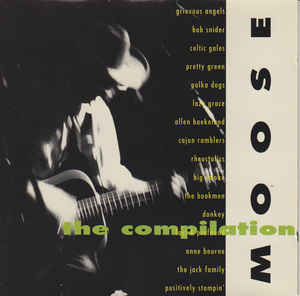
SOUNDTRACK: DONKEY-“Memory Haunts Me” (Moose: The Compilation, 1991).

Back in the 1990s, it was common to buy a compilation or soundtrack or even a band’s album based on one song.  Only to then find that you didn’t really like anything else on it.

Maybe that single sounded like nothing else on the album.  Maybe the movie was almost entirely one genre, but they had that one song that you liked over the credits.  Or maybe the compilation was for something you didn’t know, but a song you really wanted was on it, too.

With streaming music that need not happen anymore.  Except in this case.

I bought this compilation, used, recently exclusively for one song, Rheostatics’ “Woodstuck.”  It’s a goofy song and this is the only place you can get the studio version.  The actual compilation was not well documented, so I didn’t know what the other bands on it might sound like.  It turns out to be a compilation for Ontario based Moose Records which specialized in Rock, Folk, World & Country.  They put out another compilation in 1992 and that’s all I can find out about them.

Donkey is NOT the Donkey from Atlanta.  This is a band from Toronto founded by Alex Radeff (the band now goes by Alex Radeff & Donkey). It’s a shame this song is buried so far down on this album, because it’s really great.  It’s got a cool Byrdian sound, but with a slightly darker feel.  This song sounds mildly sinister.  And then with chorus of “memory haunts me every single day,” you can tell why the tone works.

It’s got a guitar solo that sounds like it was recorded in a tinny room, with the rest of the band dropped down somewhat so it really stands out.  It’s certainly a peculiar song.  Like his website says: Founded by singer/songwriter/guitarist Alex Radeff as a vehicle for his eclectic songs.  The song even ends with a bit of backwards guitar solo.  Cool stuff.

[READ: July 20, 2019] “Indian Country” 

This is a story about Low Man Smith, a Coeur d’Alene Indian and successful writer.

He was returning to the Reservation (which he said was always horribly monotonous until some horrible violence interrupted the monotony) to meet up with Carlotta.

But when he arrived, she had sent someone to meet him because she had just run off and gotten married to Chuck.  She wasn’t planning on it, but Chuck showed up a couple days ago, eleven years sober and they ran off together. (more…)

Read Full Post »

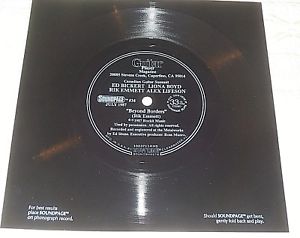
SOUNDTRACK: CANADIAN GUITAR SUMMIT (RIK EMMET, ALEX LIFESON, LIONA BOYD, ED BICKERT)-“Beyond Borders” (Guitar Player Magazine, July 1987).

I was not familiar with this recording and just happened upon it this weekend while looking up Rik Emmet.  So it turns out that back in 1987, around the time of the release of the final Triumph album with Rik Emmet, Rik had created this instrumental composition.  It features four superb Canadian guitarists.  I didn’t know Liona Boyd (classical) or Ed Bickert (jazz), but if course I know Rik and Alex.

Evidently Rik wanted to do something which fused genres together (Rik plays all manner of guitar quite successfully).

Fusing different musical forms is hardly new in the guitar world: The marriage between jazz and rock has survived nearly two decades, while jazz and classical get together fairly often. Of course, the more styles you try to blend, the less probable success becomes and the greater the risk of producing something whose sum is smaller than each individual element.

Rik Emmett, leader of the rock power trio Triumph and the author of Guitar Player’s Back To Basics column, was fully aware of the artistic hazards involved when he proposed a Sound page recording to Editor Tom Wheeler in late 1986 that would fuse rock, jazz, and classical. While such a project promised to be the most complex one of its nature since the Sound page’s debut in the Oct. ’84 issue, after hearing Emmett’s concept and who he had in mind to fill out his guitar quartet-Alex Lifeson, Liona Boyd, and Ed Bickert-the go-ahead was given.

The resulting composition-Emmett’s masterful “Beyond Borders” -succeeds in melding its various elements on a number of levels. Although brilliant playing abounds, the piece is more than a vehicle for virtuosic displays as it integrates various styles and weaves in and out of different moods, textures, tones, rhythms, key centers, and time changes. The players receive ample solo space; however, the emphasis clearly is on interaction-a surprising outcome, considering the ever-present temptation to fall back on excessive blowing (Emmett discusses “Beyond Borders” on page 80; the Sound page and musical excerpts are on page 82).

It’s a really lovely piece with each musician playing to his or her strength but also doing some unexpected things.  I feel like Alex has the most fun with th epiece as he seems to create a lot more textural stuff that actual solo material.

This recording is available on line in many places, but I chose this one because the sound quality is quite good.

During this lengthy piece in Guitar Player, there’s an interview with all four guitarists as well as some background information about the piece itself.

There’s also this explanation from Rik about who plays what, so you can follow along:

“Beyond Borders” is basically 120 bars long, and it begins with an adagio section with a tempo of 72 beats per minute. I do the lead guitar off of the top, and Alex plays the atmospheric stuff in the background, which includes low weird things and floating sound effects. Ed comes in with a little melody that lasts from bar 4 into measure 5, and then Liona’s little melody enters at bar 6. The lead that comes in at measure 8 is Alex. In measure 15 Liona plays a little classical lick that Richard Fortin wrote. At bar 17 I play a long feedback melody that continues to measure 26.

Liona begins her classical tremolo solo at measure 22; in the background you’ll notice the feedback guitar part. Liona’s and Ed’s parts cross at bar 28, as Ed takes over with a rubato chord-melody solo. At measure 33 he kicks into an allegro tempo of 140 beats per minute. That’s where I back him up with a simulated bass guitar part that I play on my Yamaha arch-top. For the warm bass sound I rolled the treble back and played with the fleshy part of my thumb. Ed does a cadenza at measure 64, and Alex plays an atmospheric technique where he holds a chord and brushes the strings quickly with the fleshy pads of his right-hand fingers; Lenny Breau was the first person I saw use that.

Bar 65 has an adagio tempo of 70 beats per minute. I play the lead guitar, and Alex adds the arpeggiated electric guitar part behind it. That continues to bar 76, where Liona plays her Lenny Breau octave harmonic lick. That’s also where I begin using the Coral Electric Sitar, with echo repeats on it. Bar 77 is semi-country acoustic fingerpicking with an andante tempo of 90 beats per minute. I play the acoustic steel-string, and Liona plays nylon-string in unison, all the way to bar 102; sometimes I break into harmony, but it’s a unison part essentially. During that same section I also play the Dobro part and all of the electric fills that have a Pat Metheny-esque sound. Alex did the violin sounding swells in the background with a volume pedal.

Where measure 101 crosses over to 102, I did a little lap steel thing with a volume pedal and echo that goes up from a fifth to an octave; it’s kind of a Steve Howe cop. Measure 102 is the beginning of the end. Liona plays the little classical part, and then I break into the harmonies above it. During this section I did all of the wire choirs, which are triads with some of the voices doubled, and I also played the 6/ 8 melody lead guitar fills on the tag right near the end.

It’s really great.

[READ: June 4, 2019] “Javi”

This was a wonderful, slowly evolving story that was one thing on the surface, but had so much more roiling underneath.

As it opens, Javier has knocked on the house of a “lady” in the middle of nowhere, New Mexico.  The person who answers the door doesn’t like that word and to Javi’s mind he’s not sure if the person is even a woman.  He clarifies that he’s looking for the painter.  She concedes that she is the only painter in the area.  He says that his moms heard she needed help.  She asks how old he is.  He replies “I’m four– I’m sixteen.”  The painter says she is 82, how can a young boy help her?  He lists the various things he can do for her–cook, clean, drive etc.  She is concerned that people are talking about her but he assures her it was for his benefit, not hers.

He explains that he walked the twenty miles from Pueblo.  If she’s impressed by this it’s hard to tell.  She is rather inscrutable.  She is supposed to go to an old age home, but if Javi can help her, she can delay that for a year or so.

There’s plenty of wonderful details that unfold slowly, because that is how she is: ‘watching her work is calming, hypnotic.” (more…)

Read Full Post »

SOUNDTRACK: LULA WILES-NonCOMM (May 16, 2019).
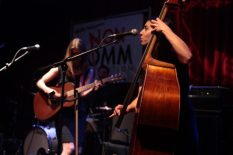
I thought Lula Wiles was a person, but they are a trio.

Contemporary roots trio Lula Wiles shined brilliantly on Thursday night. The young band, consisting of Eleanor Buckland, Isa Burke and Mali Obomsawin — joined by Eli Cohen on drums — [played] a passionate mix of bluegrass, country rock and folk music.

All four members of the group grew up in Maine, and they met while taking lessons at Maine Fiddle Camp, “which I know is, like, disgustingly adorable,” Buckland remarked during the show.  All three singers are also songwriters and instrumentalists, and they displayed impressive group chemistry in several different instrumentations throughout their performance. The trio has always sounded stellar in a traditional bluegrass format — like fiddle, guitar and upright bass — but they added new dimensions to their set when they chose to break out of that format and explore other sounds.

They opened with a traditional country-sounding song, “Hometown”

Lula Wiles’ opener, the poignant “Hometown,” found Burke playing an electric guitar with plenty of added fuzz, which propelled the song forward on top of Cohen’s steady backbeat. Buckland sang three verses from the perspective of an adult returning to her beloved hometown to find her friends and family struggling to make ends meet; the song’s lens gradually moved from personal to historical. “Flip a coin and call it pride or shame / Red and white and the working blues / Welfare, warfare, laying the blame / No matter who wins, someone’s gonna lose,” she proclaimed in her third verse.

“Nashville Man” is even more country, but a more stompin’ country with lots of fiddle from Burke and old-fashioned harmonies.

The album, What Will We Do, which follows their self-titled 2016 debut, fits within the stylistic paradigms for American roots music, but the songwriters also bring personal specificity and a modern edge — they pose questions about identity, history, and the principles of justice. In a statement on Lula Wiles’ website, Obomsawin explains, “We wanted to make an album that reflected, in a current way, what we are all staying up late thinking about and talking about over drinks at the dinner table […] What is everyone worried about, confiding in their friends about, losing sleep about?”

The first two songs seemed kind of fun (musically at least), but things get more serious when Burke introduced “Shaking as It Turns,”

She explained that she had written the song following the violent neo-Nazi rallies that took place in Charlottesville, Virginia in 2017.

She says it’s about how she felt that summer and how I feel about what it’s like to be a person in America today.  Do you all have feeling about that.  We only have a 20-minute set or we’d expound on that longer–you’ll have to pay attention to the lyrics.

“Is this land yours? Is this land mine?” Burke solemnly wondered between plucks on her banjo. “Baby, do you know just who your enemies are?”

Musically, this was the most interesting with its percussion heavy banjo and loping beat.

Up next is the most powerful and affecting song of the night, “Good Old American Values.”

It is a country waltz on which Obomsawin sang and played a touching upright bass solo. Obomsawin, who is Native American and belongs to the Abenaki Nation, wrote the song “about growing up in a country that was built on the genocide of your people,” she explained.  She was inspired to write the song when protests against the construction of the Dakota Access Pipeline occurred on the Standing Rock Reservation in North Dakota in 2016.

She doesn’t hold back on the lyrics, and the slow melody allows the words to stand clearly.

“Indians and cowboys and saloons / It’s all history by now, and we hold the pen anyhow / drawing good old American cartoons.” Then, after a verse about “American tycoons kicking their feet up in Cancún,” the chord changes took a dark turn, leading into a steely fiddle solo by Burke. “On those good old American values / There’s a fortune to be made,” Obomsawin concluded at the end of the song.

Obomsawin also told the crowd that she has been working on an essay for the Smithsonian Center’s Folklife Magazine about her experiences growing up as a Native person in Maine — I spoke with her for a few minutes after the show about her writing. Obomsawin explained that Native people are the “most invisible” of any ethnic group in the United States, and that she wanted to write about the many ways in which she sees Native peoples’ history and culture being made invisible in the twenty-first century.

When she was growing up, she and her family were the only Native people in their community, which was predominantly white. Although she did not remember experiencing explicit discrimination, she remembered times when she felt alienated by other people in some ways that were “fetishizing” and other ways that were “just ignorant.” As she became involved in the folk music community as a young person, she realized that the culture of American folk music bears a legacy of using Native tropes in songs and performances — especially Native clothing and images of Native people. These forms of cultural appropriation by white musicians are sometimes so ubiquitous, she noted, that many people don’t even notice they are happening. Obomsawin concluded by saying that when Smithsonian Folklife publishes her piece later this year, she hopes people will “read it with an open mind,” because sometimes Native peoples’ critiques of American culture are “so fundamental,” and they lead so deep down to the core of our country’s history, that they challenge our deepest notions of American identity.

The final song of the night is “Love Gone Wrong” the first track on the new record.  It’s a more rocking song with a nice guitar sound a great harmonies that reminds me of I’m With Her.  This song is a

vulnerable reconciliation about an imperfect romance. “What you got left when the flicker dies out? / Tell me what we’re gonna do now?” Burke and Buckland asked together. After the second chorus, the song suddenly turned slow and brooding as Cohen’s drums began to thunder. “There’s never gonna be a right time,” all three singers cried out together, their close three-part harmonies at their boldest and brightest.

That shift in tempo makes the song so much more dramatic.  It is a great set-ender.

[READ: May 22, 2019] “Enough”

This is a short story of a woman’s life.

The story begins with her as a young girl, the youngest of six, whose job it was to clean the plates after Sunday meals.  Each Sunday was a feast topped off by dessert. Every fourth Sunday was ice cream, the day she loved best.

She would bring in two dishes at a time (it was the good china) and proceed to lick the bowls clean from rim to rim.  She also delighted in the ice cream in her own bowl, but was always told not to be so unladlylike in her enjoyment.

When she got older, she developed “the problem with the couch.”  The problem was that she kept getting caught with a boy on it.  First when she was fourteen, both children blushing brightly. (more…)

Read Full Post »

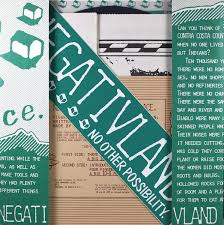
SOUNDTRACK: NEGATIVLAND-A Big 10-8 Place (1983).

After the cut-and-paste craziness of the first two Negativland albums, this third one was a bit more thought through as a whole.  It’s still a bizarre pastiche of samples and sounds, but there’s a more unifying theme.  And a lot of cursing.

There are six tracks on the disc.  It opens with “Theme from a Big 10-8 Place.”   Many of the sounds that you’ll hear throughout the disc are sampled here, but the main point of this song is a simple drum beat and David speak/singing “very stupid, very stupid” as well as some other thematically appropriate lines.

One two stupid
Three four dumb
Five six idiotic
Seven eight seat bee sate
Very stupid very stupid very stupid very stupid!
I like Concord
And 180-G
I like Pleasant Hill
No other possibility

The track ends with fascinating instructions like, “I want you to put parakeet feathers into your television set if you’re watching MTV” and “I want you to trip over your grocery cart if you’re shoplifting from Safe Muffins.”

The bulk of side one is “A Big 10-8 Place –Part One”: 13 and a half minutes of samples placed back to back.  These include: A woman screaming “Tommy?”; a clip from what sounds like a butchering video (“the second thing that happens is that the butcher loses control”) ; car commercials (“then the door closes behind you in safe and secure comfort”) ; house shopping commercials and the piano from “Clowns and Ballerinas.”  After about 6 minutes the bad language comes in–insults from what sounds like a CB radio.

“Clowns and Ballerinas” is 90 seconds of a little girl singing the song “Clowns and Ballerinas” to a simple piano accompaniment.

“Introduction” brings David out as he prepares us for him to talk about 180 and the Letter G.  “In a few moments we’re going to be 10-8.”

“Four Fingers” is a surprisingly catchy song played on an acoustic guitar with a whistling solo.  The vocals are smooth and clean and the lyrics are almost creepy but are actually funny:

I am a man, a man with two fingers
A man with two fingers on my hand
I am a man, a man with two fingers
But that doesn’t count my middle finger, my index finger, or my thumb.

Then comes “180-G: A Big 10-8 Place –Part Two” a 16 minute pastiche of David telling us how to get to 180 and the Letter G.  There’s cut up music behind them with choice lines like this:

Okay people we are 10-8 and the number is 180 and the letter is G.  There is no other possibility.

But before you get onto the bridge, around one big turn, you’ll come up to the place where the sex chemicals burned up.

First of all it’s very important that you turn on your AM radio. Set it to 1010 on your dial, and let the radio frequency energy from K-101 overload your little tuner until it distorts very highly [crazy extreme distortion] . And right at the point of that extreme distortion, there’s the big chairs. I’m not exactly sure, but I think that’s where all the sewer water from Oakland goes.

my favorite ham radio repeater station — that’s WR6 Automatic Bowel Movement.  And any of you who are into jamming, keep talking, keep jamming, because I’ll be listening on my scanner radio, and just maybe…you’ll be on the next album.

And just before you get to the top of the hill, you’ll notice the green slime oozing out from under the house at 180 and the letter G.

I repeat, you’re gonna have to shoplift the HR Steam Cleaning System from Safe Muffins.

About half way through it turns more jazzy (with guitars and bongos)

The door opens automatically, and the first thing you see is the orange carpet inside 180…and you’ll see the dog juice, the horrible dog juice all over the orange carpet at 180 and the letter G.

And then comes another well-known section from Negativland, a lengthy argument between David and his mother about where he put her cigarettes.

“I think I’d like to have a cigarette now. Where are my cigarettes, David?”
“They’re on top of the refrigerator.”
“I looked on top of the refrigerator. They aren’t there. will you please tell me what you did with my cigarettes?”
“Maybe you left them in the car.”
“I haven’t been in the car all day. You must have put them somewhere and I can’t find them. You better tell me now or I’m going to really get mad.”
“Oh yeah, I think I know where they are. They’re in back of the TV set, where all the parakeet feathers are.”

It’s all crazy and bizarre, but it’s kind of fun as a fractured narrative.

[READ: April 19, 2019] “Le Mooz”

This story is set in Ojibweg land.  Margaret has survived three husbands.  Nanapush has survived six wives.  They got together, “they were old by the time they shacked up out in the deep bush.”

They were both heated and passionate–both in love and in anger, “they made love with an amazed greed and purity that astounded them.  At the same time it was apt to burn out of control.”

To survive their passions, they rarely collaborated on any task, finding solitary work was more productive for both of them.  One day Margaret came swiftly home.  She beached the boat and was running up shouting “Le Mooz!”

Nanapush was sleeping and was irritated to be awoken by the yelling.  But if there was a Mooz, a moose, that would be meat for them for a long time. (more…)

Read Full Post »

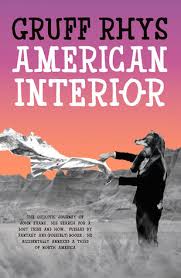
SOUNDTRACK: GRUFF RHYS–American Interior (2013).

Gruff Rhys was (is?) the singer and composer in Super Furry Animals, a fantastic indie-pop band from Wales.   After several years with SFA and several solo albums, Gruff decided to do something a little different.  Actually, everything he does is a little different, as this quote from The Guardian explains:

“The touring musician can feel like the puppet of consumer forces,” he writes, bemoaning the way that “cities have now been renamed ‘markets’ and entire countries downgraded to ‘territories'”. So, over the last five or so years, he has come up with the idea of “investigative touring”: combining the standard one-show-a‑night ritual with creative fieldwork. In 2009, he went to Patagonia to trace the roots of a disgraced relative called Dafydd Jones, and the Welsh diaspora in South America more generally, and played a series of solo concerts, as well as making a film titled Separado!. Now, Rhys has reprised the same approach to tell another story, and poured the results into four creations: an album, another film, an ambitious app, and this book – all titled American Interior, and based on the brief life of John Evans: another far-flung relative of the singer, who left Wales to travel to North America in the early 1790s.

So yes, there’s a film and a book and this CD.  This album is a delightful blend of acoustic and electronic pop and folk.  Rhys’ voice is wonderfully subdued and with his Welsh accent coming in from time to time, it makes everything he sings somehow feel warm and safe (even when it’s not).   Rhys creates songs that sound like they came from the 1970s (but better), but he also explores all kinds of sonic textures–folk songs, rocking songs, dancing song, even songs in Welsh.

“American Exterior” is a 30 second intro with 8-bit sounds and the repeated “American Interior” until the piano and drum-based (from Kliph Scurlock) “American Interior” begins.  It’s a catchy song with the repeated (and harmonized) titular refrain after each line and it’s a great introduction to the vibe of the record.  It’s followed by the super catchy stomping “100 Unread Messages” which just rocks along with a great chorus.  You can see Gruff “composing” the lyrics to this in the book.

“The Whether (Or Not)” introduces some electronic elements to this song.  It’s basically a great pop song with splashes of keys and some cool stabs of acoustic guitar.  “The Last Conquistador” and “The Lost Tribes” are gentler synthy songs, as many of these are.  “Liberty (Is Where We’ll Be)” returns to the acoustic sound with some really beautiful piano.

“Allweddellau Allweddol” (English translation: Key Keyboards) is the only all-Welsh song on the record and it romps and stomps and is as much fun as that title suggests it would be.  There’s even a children’s choir singing on it (maybe?).

“The Swamp” is a simple electronics and drumming pattern which leaps right into “Iolo” one of the most fun songs on the record.  It’s a nod to the Welsh poet who inspired but backed out of Evans’ expedition at the last-minute but also a rollicking good time with the chanted “yoloyoloyoloyolo” and great tribal drums from Kliph.

The end of the album slows things down with “Walk Into the Wilderness” a slow aching ballad and the final two animal-related songs.  “Year of the Dog” is kind of a mellow opus when it is joined by the instrumental coda “Tiger’s Tale.”  Both songs feature goregous pedal steel guitar from Maggie Bjorklund.

Gruff Rhys is an amazing songwriter.  He could write the history of an obscure Welshman and still get great catchy songs out of it.  And that’s exactly what he’s done here.

[READ: December 2018] American Interior

How to explain this book?

I’ll start by saying that I loved it.  I was delighted by Rhys’ experiences and, by the end, I was genuinely disappointed to read that Evans’ trip didn’t pan out (even though I knew it didn’t).  The only compliant I have about the book is that I wish he had given a pronunciation guide for all of the welsh words in there, because I can’t even imagine how you say things like Ieuan Ab Ifan or Gwredog Uchaf or Dafydd Ddu Eryri (which is helpfully translated as Black David of Snowdonia, but not given a pronunciation guide).  But what about the contents?

The subtitle gives a pretty good explanation but barely covers the half of it.

Here’s a summary from The Guardian to whet one’s appetite for Rhys himself and for what he’s on about here:

[John] Evans was a farmhand and weaver from Waunfawr on the edge of Snowdonia, who was in pursuit of something fantastical: a supposed tribe of Welsh-speaking Native Americans said to live at the top of the Missouri river, who were reckoned to owe their existence to the mythical Prince Madog, a native of Gwynedd who folklore claimed had successfully sailed to the New World in 1170. In 1580, this story was hyped up by Elizabeth I’s court mathematician and occultist John Dee (born of Welsh parents), in an attempt to contest the Spanish claim to American territory. Two centuries later, with the opening of new frontiers, talk of a tribe called the Madogwys and “forts deemed to be of Welsh origin” began to swirl anew around Wales and North America, and became tangled up in the revolutionary fervour of the time, along with a radical Welsh spirit partly founded in nonconformist Christianity.

All this was moulded into a proposal made by a self-styled druid named Iolo Morganwg (“a genius”, but “also a fraud of the highest order”, says Rhys), who “called for the Americans, in the light of Madog’s legacy, to present the Welsh with their own tract of land in the new country of the free, so that the Welsh could leave their condemned royalist homeland”. Morganwg stayed put in Cowbridge, near Cardiff (the site of his “radical grocery” shop is now occupied by a branch of Costa Coffee), but Evans was inspired by his visions, and eventually set sail.

Rhys goes on a “journey of verification”, following Evans’s route from Baltimore, through such cities as Pittsburgh and Cincinnati, and then up the Missouri river to the ancestral home of the Mandan tribe of Native Americans, who had been rumoured to be the Welsh-speakers of myth, and among whom Evans lived, in territory argued over by the British and Spanish. Along the way, he does solo performances built around music and a PowerPoint-assisted talk about Evans’s story, keeps appointments with historians, and also tries to glimpse the America that Evans found through the cracks in a landscape of diners, what some people call “campgrounds”, and Native American reservations.

The Guardian’s review also talks about why the book works: (more…)

Read Full Post »

SOUNDTRACKAMANDA PALMER-“The Ride” Tiny Desk Family Hour (March 12, 2019).

These next few shows were recorded at NPR’s SXSW Showcase.

The SXSW Music Festival is pleased to announce the first-ever Tiny Desk Family Hour showcase, an evening of music by artists who have played NPR Music’s Tiny Desk Concert, at Central Presbyterian Church on Tuesday, March 12 from 8-11pm.

This show is the most interesting visually because Palmer is sitting at her piano and the camera is at all angles–so you can see the crowd and how close they are to the performers.

The blurb is also interesting because I had no idea the performers only played for about 15 minutes.

When Amanda Palmer heard she’d have around 15 minutes for her Tiny Desk Family Hour performance, she assumed there wouldn’t be time for most of the songs on her new album, There Will Be No Intermission, a sprawling masterwork with epic tracks clocking in at 10 minutes or more. So, she showed up with just her ukulele in hand, prepared for a stripped-down, abbreviated set. But when we wheeled out a grand piano just for her – and after I gushed to the crowd about Palmer’s brilliant new opus on the nature of humanity called “The Ride” – she decided she had to play it.

Like many of the tracks on There Will Be No Intermission, “The Ride” is a deep, existential dive into fear, death, loneliness and grief, with the tiniest glimmer of hope or comfort at the end. This is Palmer’s first album in seven years and it documents all she’s been through in that time. It’s also an album she says wouldn’t have been possible if she hadn’t decided to make it on her own, with crowdfunding support from fans. “It’s a very intense record. It’s been a very intense seven years of my life since I put out my last one,” she told the crowd at Austin’s Central Presbyterian Church. And without having a label to answer to, she said she was able to “write an entire album with songs that are really long and about miscarriage and abortion and about the kind of stuff I don’t want to take up to ‘Steve’ in marketing to try to explain why this record should exist.”

It’s a powerful song–simple and mostly unchanging–where the focus is on the words.  But those few times when the vocal melody changes or she adds that circus melody it’s a jarring change from the story she’s presenting.

Though she’s played abbreviated versions of “The Ride” in past shows, this is one of her earliest performances of the full, album-length song. Two days after her Tiny Desk Family Hour set, Palmer returned to the Central Presbyterian Church for an epic, two-and-a-half hour concert with just her ukulele and piano.

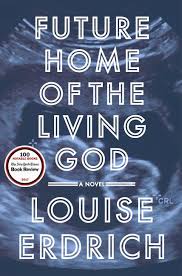
[READ: February 2019] Future Home of the Living God

I’m not sure what drew me to this book. I have read (and enjoyed) many short stories by Erdrich, so I assume her name stood out.  The title is also pretty cool.

But I really had no idea what was coming.  I also didn’t know that Erdrich is Turtle Mountain Chippewa, which obviously lends weight to her Native American depictions.

This story is about Cedar Hawk Songmaker, an adult woman who was adopted by “Minnesota liberals” as a baby.  When she went to find her Ojibwe parents, she learned that she was born Mary Potts.

The book is written as Cedar’s diary.  It begins August 7 (year unstated).  The book is set in the future.  A cataclysmic event has happened and I absolutely love that since this book is written from Cedar’s point of view, she doesn’t know what happened.  She will never learn what happened, and neither will we.  It is just understood that evolution as we know it has stopped.  People seem to be devolving. Or more specifically babies are being born in a state of devolution.  Again, no more details are given. (more…)

Read Full Post »

SOUNDTRACK: KING GIZZARD AND THE LIZARD WIZARD-Eyes Like the Sky (2013).

King Gizzard and the Lizard Wizard clearly didn’t set out to top the charts. After the frenetic fun of 12 Bar Bruise, their follow up is this–a spoken word “Western” musical.  Stu Mackenzie says that after recording “Sam Cherry’s Last Shot” with Broderick Smith, he wanted to try a “multi-song, read-along, narrative based western musical” and Brod was keen to write a story and narrate it.

The music is impressively “Western.”   Right out of the gates, you feel the reverbed guitars and sound effects of gun shots.  Repeating motifs abound and there is an amazing amount of restraint.  Plus, the songs (which don’t really follow the story chapters) are quite different from each other (all within the same Western motif). “Year of Our Lord” builds some real suspense.  While “The Raid” adds some surf guitars.

You can also hear his parents’ dogs barking in “The Killing Ground” and his dad banging on a rusted saw blade, which you can hear in “The Raid.”

“Drum Run” is, indeed, very drum heavy with distant echoing harmonica.

And then there is the story.  A story of a man who is feared as a legend.

The bad white men call him the devil the Yavapai call him Eyes Like the Sky.

Miguel O’Brien was kidnapped from his white family when he was five years old.  He became a fearless Yavapai Apache warrior.

The American Civil had not encroached on Apache territory.  But ten years later, the Americans brought their war to Apache land.  They were

Led by a man holding a leather book with a cross stamped in the leather.  An evil man who did terrible  things to people in the name of a god that looked upon the man himself with revulsion

The music for this track is called “Evil Man” and between the Western riff and the backing “ahahas,” it’s got gunslinger all over it.

The Americans killed the Apache, but he was spared because of his blue eyes.  But once more family he loved had been killed–this time by Americans.

The god man thought he might be from the O’Brien family or maybe the Jebsen family.  So they named him Jebsen O’Brien but they called him “blue” because of his eyes and his expression.  A trapper taught him white man’s ways so that he could read and write and also learned to use a gun.

The god man was a truly evil man–“satisfying his goat lust with a Yavapei girl.”  Seeing this defilement, Blue swiftly killed him. Then he took guns, money and the defiled girl and fled from the Fort.  The two of them happened upon a scene of death–white men killing white men but disguised as Apache.

I’ll not spoil the ending but the final two songs are “Dust in the Wind” (not that one) and “Guns & Horses.”   “Dust in the Wind” is a stomping song that presages death–of many.  “Guns & Horses” ends the story–all too early in my opinion.  While Eyes Like the Sky’s story comes to a satisfying conclusion, I want to hear more.

With a cool soundtrack.

Incidentally, the soundtrack is far more grown up than the graphic novel.

[READ: February 5, 2019] Knife’s Edge

I didn’t realize that these two books made up the Four Points series (I didn’t know there was a series title until I looked this book up].  But it is nice to see that this book ends the story.  And it ends it very well.

This book opens with the explanation of what happened to Alex and Cleo’s father when he left them on their own.  He went off to do a (supposedly) simple job down at the docks.  But while he is aboard a ship he is attacked by Lucky Worley.  Turns out Worley knew that Mr Dodge had the pocket watch and pocket knife–the clues that will lead him to the treasure he wants so badly.  It also turns out that he doesn’t know about Alex and Cleo.  So he hijacks Mr Dodge and takes him aboard his ship.   We also learn that Dodge isn’t their father–which we knew from how young the babies were when he received them, but the kids didn’t.  He doesn’t know who their real father was.

Worley had caught word of them through their involvement in the Black Hook gang and he deduced that they had the map pieces.  So their lives were now in danger.  And that’s pretty much where book one began. (more…)

Read Full Post »

SOUNDTRACK: NPR: The All Songs Considered Holiday Cruise 2018 (December 19, 2018).

Every year Bob Boilen and Robin Hilton “try to do something special for the holiday and it never works out.”  This year’s Christmas special sees them taking a cruise to Bermuda.  What could go wrong?

Every year I have loved the Christmas special–the fun music, the silly story, the guests. But this year’s was my least favorite so far.  And this is mostly because of the music and the guests.  The story was absurd and funny which I liked, but they really didn’t have any artists I was excited about.

Robin is of course unimpressed and concerned (given that they are sailing on Calamity Cruises) and Bob is as ever a gleeful optimist.  And there’s a strange recurring joke about rooms and cabins.

The show opens with a nice (unattributed) version of “Christmas on Christmas Island.”

There were some fun guests for sure, though.  They arrive at their cabin and find Mickey Dolenz (whose Paypal joke is quite funny, but he laughs a bit much at himself).  Most of the artists have a Christmas album out.  The Monkees-“What Would Santa Do” is a fun little ditty and it was written by Rivers Cuomo, so you can hear the Weezer in it.

Things kind of go south as soon as they look at the newspaper and see that William Shatner is lost at sea.

They meet Aloe Blacc on deck who says he created an album of new Christmas songs which were fun and dancey.  The song “Tell Your Mama” is okay.  Nothing special.  It is a little dancey, but maybe it’s not the best track on the disc.  I don’t know.

Robin goes on a journey and meets Steve Martin and the Steep Canyon Rangers.  “The Strangest Christmas Yet” is a fun song, but it came out in September so it’s not new or anything (which is what I tend to think this show is about).  But it’s enjoyable to hear Steve tell the crazy story.

Then Bob & Robin zipline along the ship where they run into Lucius.  They play the Lucius version of “Christmastime is Here,” which is pretty as most of their songs are but not very festive.  The story by Holly afterwards about hearing actual jingle bells is a highlight of the show.

Rodney Crowell also tells a funny story about playing basketball on the road.  Although his album is pretty dark, he says his album is about being Scrooge and looking for redemption.  They play “Let’s Skip Christmas This Year,” a bluesy romp that’s more fun than the title lets on.

The guys find themselves caught in the Bermuda Triangle and Shatner makes his appearance, “singing” “Blue Christmas” with Brad Paisley.  Shatner can’t overpower Paisley’s twang.

Up next is John Legend.  What I like about this is they try to talk to him about being lost and Legend is talking about his Christmas album–a funny spliced interview.  They play John Legend singing “Have Yourself a Merry Little Christmas” with Esperanza Spalding. It’s pretty good but they do too much vocal acrobatics at the end.

As the show ends, the final joke is revealed thanks to a grant (great joke).  Although the show ends with another Shatner song, an over the top “Feliz Navidad.”

So no one terribly exciting for this journey, but there are a few good Christmas songs to add to your favorites.

[READ: December 21, 2018] “The One Who Is”

Once again, I have ordered The Short Story Advent Calendar.  This is my third time reading the Calendar (thanks S.).  I never knew about the first one until it was long out of print (sigh).  Here’s what they say this year

Fourth time’s the charm.

After a restful spring, rowdy summer, and pretty reasonable fall, we are officially back at it again with another deluxe box set of 24 individually bound short stories to get you into the yuletide spirit.

The fourth annual Short Story Advent Calendar might be our most ambitious yet, with a range of stories hailing from eight different countries and three different originating languages (don’t worry, we got the English versions). This year’s edition features a special diecut lid and textured case. We also set a new personal best for material that has never before appeared in print.

Want a copy?  Order one here.

Like last year I’m pairing each story with a holiday disc from our personal collection, although today’s soundtrack is an NPR special.

This story shows the conflict between native culture and white culture.  It’s unclear when it is set, but at least the white doctor does sterilize his instruments.

Nona is about to give birth and she is having a very hard time. Her water broke, but she has been pushing for days with no luck–the baby is breached. (more…)

Read Full Post »

SOUNDTRACK: MUMU FRESH Feat. Black Thought & DJ Dummy-Tiny Desk Concert #765 (July 11, 2018).

I recognized Mumu Fresh from when she appeared at a Tiny Desk with August Greene a few months ago.  Mumu Fresh was a true highlight of that show–her rap was political and personal and powerful.

Here she’s got her own concert (and DJ Dummy is back with her for this as well).

A regal combination of black power and Native American pride, Mumu Fresh — also known by her birth name Maimouna Youssef — is an abundantly gifted singer and emcee who prances between genres and styles. The Baltimore native fuses her rich multi-octave range and ferocious rap delivery with spiritually inclined lyrics so potent and mindful they precipitated a wellspring of emotion throughout the room.

Mumu began her own Tiny Desk in her native Lakota tongue with “Ink Pata,” signaling a call to prayer in a sacred ritual. Looped tribal chants of her own harmonies set the mood as delivered a stirring spoken word performance that journeyed through her ancestral lineage to the struggles of the present day.

Her looping is outstanding–she harmonized with herself perfectly.  After a minute and a half she speak/raps/reads a lengthy piece that is really powerful.

With a buoyant and thoughtful spirit, Mumu and her band transitioned into the classic-sounding “Miracles” from Vintage Babies, her collaborative album with group mate DJ Dummy. Declaring it a celebration of soul music, she mixed sweet tender melodies with lyrics to empower those devoid of hope.

She introduces “Miracles” by saying, we are always waiting for something to happen.  But what if your miracle is waiting for you to be prepared: “the teacher arrives when the student is ready.”  It was great having live strings on this track: Chelsey Green (violin), Monique Brooks-Roberts (violin), Kevin Jones (cello) and the backing singers (Amber Harmon) gave an excellent soul sound.

This song segued into the awesome “Work in Progress.”  Accented by the feel-good chords of The Roots keyboardist Ray Angry, and Chris Dave (drums) and Romier Mendez (bass), Mumu speaks t he truth.  With some of my favorite lyrics:

I wanna be a good role model to girls coming after
but sometimes I slip up and say some shit that’s wretched
Forgive me, I’m a work in progress

I don’t give a fuck about what you’re saying to me.
If I’m too big for my britches then give me a sheet.
I need room to grow I’m still figuring it out,
If you say you ain’t, you lying–what you talking about?

and my personal favorite

I’ve been through so much shit I’m surprised I’m still standing
so every time I see a mirror I pose dammit!

The set concludes with a new version of “Say My Name,” a song Mumu wrote about Sandra Bland, who died in police custody in 2015, and the impact it had on her. Starting off with a 1950s doo-wop circle, she blends traditional soul elements with politically relevant lyrics.

It opens with doo wop vocals and lovely pizzicato strings:

If I should die tomorrow at the hands of the policeman
and the papers say, hey, we’re going to call it as suicide
would you even question why?

We watched a woman get drug out and beaten
filmed on a highway
and all y’all could say was black women too mouthy
I’m vexed searching my timeline
See if people find time to criticize and villainize, call that shit a suicide.
What if Sandra Bland was your child

Audacity of hope
to believe you can succeed when everybody and their momma say no
Well fuck y’all. I’m different descendant of the fittest
I’ve been reincarnated just so i can handle business.

Black Thought comes out for a final verse, but it’s hard to hold a candle to what Mumu just laid down.  His flow is great though.  And she even tacks on an extra verse after the credits.

[READ: February 1, 2018] “The Requirement”

I rather enjoyed this simple story, told simply.  It begins with the narrator talking about how when you get older, you lose people.  You don’t care about people who have died until people your own age start leaving.

He says that when people who mattered to him died, he began to feel something was required of him. If he could do it, he did, but sometimes he didn’t know what the requirement was.

When his good friend Bog Ellis got sick he felt a requirement but had no idea what it could be or how to do it.

She tells us some great Big Ellis stories. (more…)

Read Full Post »

SOUNDTRACK: FROM THE TOP-Tiny Desk Concert #758 (June 22, 2018).

From the Top is a radio show (and podcast) which showcases young, talented classical musicians.

For over 20 years, From the Top (distributed by NPR) has built an impressive platform to celebrate the music, lives and stories of youngsters playing classical music. That’s right. Young people in this country love classical music.  We invited three talented From the Top musicians to the Tiny Desk. No squeaky violins here. These kids are terrific players.

From the Top alum Derek Wang is our good-natured emcee, in addition to serving as a sensitive accompanist for two of the pieces.

The first piece is played by 12-year-old violinist Kaia Selden–sparks fly (and bow hairs, too) when  she tears into

  • Henryk Wieniawski: “Scherzo-Tarantelle, Op. 16”

A bouncy piano opens up this amazingly fast violin piece.  Selden plays with fire and passion as her fingers fly over the fretboard for these incredibly fast notes and runs.  It’s stunning how composed and confident she is.

She explains that the song is a tarantel, a kind of dance, named after when you are bitten by a tarantula–you have to dance really fast and crazy to get the venom out of your system.

Up next is cellist Noah Lee who uncovers fascinating new sounds on his instrument

  • Mark Summer: “Julie-O”

The piece opens with plucked notes and strummed chords.  He pays what sounds like rock riffs and then after a minute or so he picks up the bow and begins playing the instrument conventionally–with some quick runs and cool sounds.  Then he adds new sounds–slapping the strings with just his left hand and then using his right percussively.  There’s some more plucking notes and full chords before ending with more bowed music.  It’s a mesmerizing solo piece.

The third musician is Javier Morales-Martinez who makes his velvety clarinet sing in elegant music:

  • Francis Poulenc: “Clarinet Sonata, II. Romanza”  The

The juxtaposition of piano and clarinet is quite lovely and Javier greats some amazing sounds out of the instrument,.

Javier says that when he was 7 or 8 he used to play music with his dad from Mexico.  He was later introduced to classical music and has been playing it ever since.

It’s an inspirational set from amazing young musicians.

[READ: February 9, 2016] “The Flower”

Erdrich had a short piece in the previous issue of the New Yorker, and here she gets a full short story.

I was really surprised to find this story set in 1839 in Ojibwe country (although I see that Erdrich has written extensively about Okibwe country, so that’s my bad, clearly).

The story is a fairly simple one.  There is an older Ojibwe woman, Mink, who is wailing and carrying on, demanding the trader’s milk –a mixture of raw distilled spirits, rum, red pepper and tobacco–from Mackinnon.  It was driving Mackinnon crazy, but Mink was from a family of healers and could not be denied.

The other man in the tent was Mackinnon’s clerk, Wolfred Roverts who was trying his best to get the sound out of his ears. Wolfred aged 17 was from Portsmouth New Hampshire.  He missed his home terribly but there was no life for him back there. (more…)

Read Full Post »

« Newer Posts - Older Posts »