Feeds:
Posts
Comments

Archive for the ‘Mystery’ Category

SOUNDTRACK: My Volkwagen Jetta hates The Beatles.

Lately, I have been playing some Beatles discs in my car.  And my Jetta clearly hates them.

First it was Please Please Me, when the entire CD player shut off mid-song.  It had lost all power.  I had to bang on it for about 5 minutes before it came back on.

The player played other discs fine after that.  Then, last night I played A Hard Day’s Night and half way through the disc it shut itself off again.  This time I was able to power it back on, but it wouldn’t play the disc anymore.  I ejected it and put in a new disc which worked fine.  When I put A Hard Day’s Night back in, same spot on the disc (“Can’t Buy Me Love”), and the player was totally off: no power at all.

A bit more pounding on the face and it came back on, and today played a Rheostatics disc with no trouble.  I guess I’ll not be listening to The Beatles in the car again.  Is it because the Beatles recorded versions of their songs in German but they weren’t included on the disc?

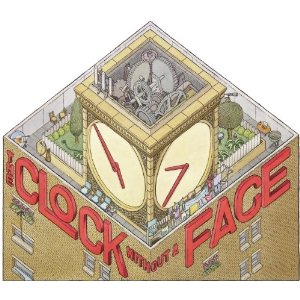
[READ: May 8, 2010] The Clock Without a Face

This review is about my first read of this book.  When I get to the end you’ll realize why there will have to be a second read and updated review.

This is an amusing tale.  And also a confounding (and evidently very real–see the bottom paragraph!–) mystery. (more…)

Read Full Post »

SOUNDTRACK: THE DEAD MILKMEN-Soul Rotation (1992).

And lo, the Milkmen grow up.

This disc is not funny (well maybe, a little funny); mostly it is  “thoughtful” (and sometimes absurd).  But what is most striking about it is how mature (mellow) it is.  For this is the first album by The Dead Milkmen on Hollywood Records (a subsidiary of Disney).  This combination raises far more questions than is worth looking at.  But suffice it to say that even though this disc is the Milkmen, its a very different Milkmen.

The most obvious difference is that the majority (10 out of 13) of the songs are sung by the artist formerly known as Joe Jack Talcum, now known as Butterfly Fairweather (perhaps Hollywood knew that “”Punk Rock Girl” was their big hit?).  Past DM records were mostly sung by Rodney Anonymous (who goes by H.P. Lovecraft on this disc).  And his were the heavier, weirder, funnier, absurdist tracks, for the most part.  So, when the first four songs here are sung by Butterfly, you know something different is afoot.  Oh, there’s horns on the disc as well!

The disc feels like a pretty typical alt-rock band from the 90s.  But it’s missing the sass, it’s missing the vulgarity.  Basically, it’s kind of dull.

That’s not to say there aren’t good songs on here, because there are.  “If I Had a Gun” is a great screamy Butterfly song, and “Wonderfully Colored Plastic War Toys” is full of Lovecraft’s snark. As is “The Conspiracy Song” a lengthy rant of absurdity.

The rest of the songs drift between mellow and alt-rock rockers.  And it works as a product of the alt rock 90s.  It’s just not much of a DM album.

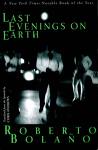
[READ: April 8, 2010] Last Evenings on Earth

I have been reading Bolaño’s short stories for a while now.  And so I have read a couple of the stories in this collection already. The stories in this collection were taken from his two Spanish collections of short stories: Llamadas telefônicas (1997) and Putas aseinas (2001).  And I have looked at about a dozen sources but I can’t find which stories came from which original collection (I like  to know these hings).  I can’t even find a table of contents for the original books.  Anyone want to help out?

I enjoyed these stories more than I expected to.  I have read some of his stories in The New Yorker and elsewhere, and I’ve been okay with them, but this collection blew me away.  Whether it’s being immersed in his writings or just having them all in one place, I was thrilled by this book.

There so many delightful little things that he does in his stories that I find charming or funny or something.  Like that his narrators are usually two or three people removed from the details.  Or if they’re not, they act like its been so long they doesn’t need to get all the details right:  “U insults and challenges him, hits the table (or maybe the wall) with his fist” (“Days of 1978”).

I also get a kick out of all the stories with the protagonist named B.  Which seems a not so subtle way of saying he’s the narrator (even though I ‘m sure these things never happened to him quite like it says (despite all the biographical consistencies with his own life).

The opening story “Sensini” has the narrator working as a night watchman at a campground (much like Enric in The Skating Rink…a bit of biography perhaps?).  A number of his stories are simply biographies of interesting characters (something he went to extremes with in Nazi Litearture in the Americas): “Henri Simon LePrince” a failed writer in Post-WWII France.  “Enrique Martin” a delightfully twisted story about jealousy (aren’t they all, though?) and acting impulsively and foolishly (aren’t they all though?).  This one featured  a riddle that I’m not even sure we’re meant to get:

3860+429777-469993?+51179-588904+966-39146+498207853

which the narrator thinks is a word puzzle. (more…)

Read Full Post »

SOUNDTRACK: RUSH-Permanent Waves (1979).

When my friend Doug and I were hanging out back in the 80s, we both were getting into Rush at the same time.  And because this album was in black and white this was the last Rush LP we bought.  Imagine our surprise when it turned out to contain “The Spirit of Radio” one of the best hard rock anthems ever.

The cover art also featured a newspaper that read Dewey Defeats Truman.  But the band got in trouble for it from the Chicago Tribune!  I’ve never actually seen an actual cover with that headline (or the proposed fix: Dewei Defeats Truman).  Huh, thanks internet, here’s a picture of it.

The disc  also contains some (more) of my favorite Rush tracks.  “Freewill,” a fantastic “smart” song features some insane guitar and bass work in the middle sections.  And side one ends with “Jacob’s Ladder,” a 7 minute mini epic with precious few words that really evokes the simple concept of the sun’s rays bursting through clouds.  It’s surprisingly moving.

Side two features two more short tracks: Entre Nous suffers from side two syndrome: it would have been a hit if it was on side one.  While “Different Strings” is probably the last mellow song the band would write until the acoustic tracks on Snakes and Arrows.

For me, the best song is “Natural Science.”  A three-part mini 9 minute mini epic that features very cool lyrics, acoustic and electric guitar, a mid-song (short) drum solo and an incredibly intense heavy metal section.  And I have been really really psyched that they play this live again.

This disc marks an interesting transition from the prog rock heyday to the poppier commercial side that would soon arrive.  It’s a great mix of truly classic classic rock, real virtuoso performances and a couple of nice pretentious epics.  You’ll but it for Spirit of Radio, but you’ll get hooked by Natural Science.  “A quantum leap forward, in time and space….”

[READ: Week of March 29, 2010]  2666 [pg 565-633]

Before I start with the final week of the Crimes, I wanted to acknowledge everyone else who has been doing a great job in the endurance-o-rama that is the winter/spring 2666 online readathon.  I have been terribly remiss in mentioning (and even reading) as many of these posts as I would have liked (oh where does the time go).  But there’s some folks who have been doing a great job bringing up issues and suffering through The Part About the Crimes with me.

Obviously our friends at Bolanobolano are hosting this event and keeping wonderful track of details that I’m too exhausted to do myself.

And of course, the cohosts in Crimes, Infinite Zombies, are keeping tabs on all manner of thoughtful aspects of this book.

Steve, who I often read on IZ, also posts at his own site: A Solipsist’s 2666.

The Daily Snowman has been offering interesting thoughts, as well as a Paragraph of the Week (often from 2666).

Naptime Writing always offers thoughtful comments as well as a quote of the week.

Bleakonomy offers brief summaries and ideas, as well as non-2666 related thoughtful ideas.

Alone with Each Other offers that rarest of birds: someone who really likes The Part About the Crimes.

I haven’t been reading these blogs as much as I would have liked (and maybe someday I’ll post a comment to one of them long after we’ve all finished reading), but what I’ve read, I’ve appreciated.  So thanks for keeping me company out here.

And on to the last (and best) section of the Part About the Crimes.

I don’t know if the slow plodding death after death was like climbing a hill, but these last 68 pages were like speeding downhill with the top down.  So much was packed into it.  I was totally rejuvenated, thrilled to meet new (!) characters and totally unsurprised when the Part ended and absolutely nothing was resolved. (more…)

Read Full Post »
SOUNDTRACK: TORI AMOS-“Juarez” (from To Venus and Back) (1999).

This song was the first that I had heard of what was happening in Juarez, Mexico.  In AP Magazine (Oct 99) Tori Amos said:
“I read an article about several hundred women in Juarez, Mexico, who had been taken out to the desert and brutally raped and murdered. When they didn’t come home, their brothers would go and look for them, and many times they’d find nothing. Sometimes they’d find a hair barrette or a sock or something they knew was their sister’s. The authorities haven’t really done anything about it…they get into this serial-killer theory. I mean, how much serial can one man indulge in? So as the song started to develop, I really began taking the voice of the desert, singing in that perspective.”

The song is very abstract, with references to Juarez, but overall the meaning is oblique (in typical Tori Amos fashion).  Sonically it is claustrophobic and creepy, and the repeated line “No angel came” adds to the intensity of it.  It has never been a favorite song, although I think as a commentary on the situation it is delightfully eerie.  It doesn’t really add anything to 2666, but at least it provided me with some context.

[READ: Week of March 8, 2010] 2666 [pg 404-465]

Week 6 picks up much where Week 7 left off.  There are a lot more deaths (Nicole at bolanobolano has the dubious honor of tallying them)in this reading.  And you’ll have to look at bolnobolano for the details, as I’m not up to keeping the records straight.

Juan de Dios Martínez is ordered to stop working on The Pentitent, so that his officers can be freed up for other duties.

And the first dead woman of this section is an American, Lucy Anne Sander.  She and a friend came down from Huntsville, Arizona.  While her friend, Erica, was parking the car, Lucy got out to walk in the wet grass.  She was not seen again for three days when her body turned up, raped and murdered.  This was the first instance in the book where someone aggressively looks for a missing woman.  Erica befriends a local nurse (and they from an intense bond in the short time they know each other) and has an Arizona sheriff come down to investigate on her behalf. (more…)

Read Full Post »

SOUNDTRACK: BARENAKED LADIES-Snacktime (2008).

The Barenaked Ladies have always been like naughty kids.  So, it seems almost too obvious for them to make a kids’ album.  But almost as if they want to continue being naughty, this kids album is quite smart, not just a collection of cute kids songs.

There’s a wild mix of very specifically kiddie-aimed tracks and other amusing pop cultural commentary (or jokes from kiddies past).  For instance, the opening track “789” plays on the wonderful joke of why was 6 afraid of 7.

There’s also a lot of the more delicate sounding BNL songs that came to dominate their later albums: “Pollywog in a Bog” is a cute upbeat little ditty, “Here Come the Geese” is a pretty typical Kevin Hearn track (even his adult songs sound like children’s songs).

But I think the highlight comes from when Ed Robertson and Steven Page join forces.  Robertson is the king of the goofy guys and Steven Page’s songs are always wonderful, but typically less silly.  So “I Don’t Like” is a serious look at things we don’t like (salmon, heights), while the fantastic “Crazy ABCs” is a funny and clever look at words that start with silent letters: “D is for djinn E is for Euphrates F is for Fohn etc.”

I also enjoy Roberston’s solo songs like “There’s a Word for That.”  Robertson is clearly a fan of wordplay, and this song highlights that: “There’s a word for that…little dented skin between my upper lip and nose.”

My favorite song of the disc is “The Canadian Snacktime Trilogy.”  All kinds of famous (and non famous) people tell us what their favorite snacks are.  The contributors are listed here, and they include: Geddy Lee, barbecue potato chips; Lyle Lovett, watermelon; Martin Tielli, olives; Gordon Downie, peanut butter & crackers; “Weird Al” Yankovic, honey roasted peanuts and Gordon Lightfoot, pasta.  What fun!

It’s an overall enjoyable album for kids, full of mostly hyper songs and sounds quite a lot like a typical BNL effort.

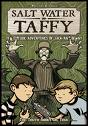
[READ:February 27, 2010] Salt Water Taffy: The Truth About Dr. True

I have yet to mention the website for this series.  So, now I’m mentioning it, and I’m also mentioning Matt Loux’s page too.  It’s a great resource for all of the books and has many sample images and pages.

I adore this children’s graphic novel series.  Each story adds amazing depth to this seemingly quaint seaside town.  Eleven year-old Jack and 8-year-old Benny are on vacation at a boring seaside town.  But mysterious things are always coming up when the kids go snooping.

In this case Benny uncovers an ancient (empty) bottle of Dr. True’s magic elixir.  (I love that Jack sneers at Benny for digging in a garbage pile, when he would have really loved to be digging in it, too).  Dr True is the ancestor of True’s Taffy shop.

While this history of the island is unfolding, we also hear the history of another famous island resident: Captain Holister.  The captain is Chowder Bay’s real hero, with a statue of him erected in the town square and everything.  The boys’ favorite new friend, fisherman Angus is directly related to him.  (more…)

Read Full Post »

SOUNDTRACK: lions.chase.tigers: To Their Blood EP (2009).

I learned about lions.chase.tigers from the Dromedary compilation Make The Load Lighter.  When I looked them up online I found this site, where you can download their debut EP.  (Normally I’d encourage purchasing the CD to give the band some £, but it ships from the UK and would probably take weeks and cost a fortune in shipping.  So, download and spread the word).

lions.chase.tigers play a fascinating mix of noisy shoegazey guitar rock combined with very delicate quieter ballady bits.  There are only four guys in the band.  I was sure there were at least five maybe six.  They have  one guitar which plays beautiful picked guitar chords (high notes), and another which plays harmonized lower notes and sometimes big power chords.  The drums and bass complement perfectly.  And the vocals offer this great understated focus to these dramatic songs.  I imagine Sigur Rós jamming with Mogwai with vocals by Bob Mould.

All of their songs work to a dramatic climax; the tension builds like a mini epic.  The title track is the most dramatic (with that crazy screaming in the background!), and I think it’s the best track on the EP, but with each listen I hear more in the other songs to like, too.

I’m also delighted that one guy’s last name is the same as another guy’s first name: Fraser Sanaghan (guitar/vocals) and Seoridh Fraser (bass/vocals) [and no I can’t pronounce his first name but I love Gaelic names like that].  There’s also Iain Thomson (vocals/guitar), David Watson (drums).  There’s a live video on their myspace page, which shows that they sound amazing (possibly better?) live.

Scotland has been producing some amazing indie bands over the last few years, and lions.chase.tigers sis definitely a great one to add to that list.

[READ: February 5, 2010] “William Burns”

This was the first short story I’ve read since beginning 2666, (before I decided to find everything I could Bolaño).  I saved this story for last because it is the most recent release.  I initially noted: I’m in the midst of 2666, and lo, here’s a Bolaño story to read (and to hopefully not confuse matters).  It didn’t confuse matters, but I was a little concerned when I saw that it was set in the same town (Santa Theresa) as the bulk of the 2666 action.

One of the things I have grown to like about Bolaño is his multiple layers of removal from the action of the story.  So in this one, William Burns tells the story to a guy named Pancho Monge who tells the story to the narrator who tell it to us.

After that brief introduction, the rest of the story (in Burns’ own words, mind you) come in one long passage with no paragraph breaks.

Burns is living in Santa Theresa and is bored.  (Is there any other state of mind in Santa Theresa?).  He is living with two women and their dogs.  They asked him to stay with them for protection from a man who is coming to kill them.  (And, of course, they are each his lover as well). (more…)

Read Full Post »

SOUNDTRACK: ELFIN SADDLE-Ringing for the Begin Again [CST059] (2009).

This is a fascinating disc from our friends at Constellation Records. It defies ready classification and offers elements of folk music, eastern instrumentation, klezmer and Asian influences.

The most obvious Asian influences come from Emi Honda who sings in Japanese.  In a most misunderstanding, on “The Procession,” which sounds Middle Eastern, I actually thought she was singing in Israeli or something until I realized it was Japanese.

Jordan McKenzie, the other half of the band, sings in English and has a variety of vocal styles. He also plays accordion banjo and xylophone, which complements Emi’s own accordion and singing saw (!).  There is also a feeling of random percussion (or as the Constellation website puts it: junk percussion).

The opening track, “The Bringer” begins quietly, building in a gentle staccato with both members singing until it reaches its full height of intensity.  “Running Sheep” sung in Japanese, actually feels like a running song, while “Hammer Song” is almost, almost, a straightforward folk song (in which Jordan sounds Scottish) except for perhaps the tuba accompaniment.  Yet for all of these disparate elements, the disc holds together amazingly well.  These are not nine individual track  glued together, they all work together to create a very solid composition.

It should also come as no surprise that Jordan and Emi are visual artists.  The cover depicts a sculpture of theirs (and the liner notes are beautifully illustrated).  Lyrics are included and the Japanese is translated for us.

The disc doesn’t feature the dramatic highs and lows of some other Constellation releases, but as a solid, slightly avant garde folk release, it’s quite terrific.

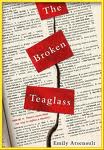
[READ: February 14, 2010] The Broken Teaglass

[UPDATE: Sarah just reviwed the book here.  We don’t often read the same books, so this was fun.]

Sarah’s friend Denise said I would really like this book.  Upon hearing that this book was right up my alley I had to investigate immediately (I always wonder what people think I would like).  And she was totally correct.

So what makes this book perfect for me?  Well, it is set in a dictionary.  Actually, it is set in the editorial department of the offices of the Samuelson Dictionary, one of the premiere dictionaries in the world.  The protagonist is Billy, a recent college graduate (in philosophy) whose first job comes at Samuelson.  The offices are located in the small town of Claxton, Mass.  Billy moves away from home (although it is still driving distance) to a small apartment in this very small town.

I have no idea if the descriptions of working in a dictionary office are in any way accurate, but it certainly is enticing.  Essentially, everyone works in silence all day.  They are assigned several magazines to read to see if there are any new words that are coming into common usage which might wind up in future editions of the dictionary.  Eventually they are assigned words to define as well (for future supplements to the dictionary).

They are also responsible for correspondence with dictionary users.  People write (or call) with questions about word usage, misusage and even suggestions for additions to the dictionary.  How fascinating is that? (Oh and these correspondences were absolutely hilarious!). (more…)

Read Full Post »

SOUNDTRACK: SAM COOKE-Portrait of a Legend 1951-1964 (2003).

After reviewing Colin Meloy Sings Sam Cooke, I decided to check out Sam Cooke himself, since I said I didn’t know anything about him.  Well, it turns out that I was totally wrong about that.  I checked out this disc from the library and was rather surprised to realize that I knew at least a dozen songs by Cooke.  And not just that he sang songs which I knew–they were his versions that I knew.

Granted some of my knowledge comes from Animal House, but that’s neither here nor there.

I’m not even sure what to classify Cooke’s music as, and maybe it’s not necessary to do so.  Back in the day it would have been played on oldies stations (but they seem to play songs from the 60s and 70s now).  Is it soul, R&B, rock?  I dunno.

So, Sam Cooke sang “You Send Me” (darling, you) “Cupid” (draw back your bow); “(What a) Wonderful World” (don’t know much about history); “Chain Gang” (that’s the sound of the men working on the).  And later songs like “Twisting the Night Away.”

And big surprise, who knew he wrote the great Cat Stevens hit: “Another Saturday Night” and the party anthem “Having a Party” (hey mr dj keep those records playing).

This disc has 30 song and runs about 80 minutes, and I admit that at least half of them were just okay.  The genre really doesn’t appeal to me all that much (although I can clearly tell that he was a pioneer writer (with a great voice to boot)).  I could see myself listening to (and enjoying) this disc as background music, and little else.

Nevertheless, it was really cool to learn that it was the same guy who sang all those songs, and I can now put a name to the songs in Animal House and other 50’s era movies.

[READ: Week of February 8, 2010] 2666 [pg 163-228]

This week’s read is all about Amalfitano.  In fact, this week’s read was an entire “Part” and to learn all about Amalfitano in one go.  This Part exists irrespective of the previous part, although there will be one single item that we saw in Book 1 that indicates that this Part is set before the action of Part 1.  Well, actually, it is all clearly set before Part 1, but there is one detail that carriers over from there.

As the book opens, Amalfitano wonders what the hell he is doing in Santa Teresa.  And that question is never really answered satisfactorily for him or for us (we learn why he is currently there, but he seems to dislike it so much there’s no really compelling reason why he stays). (more…)

Read Full Post »

SOUNDTRACK: MUSE-The Resistance (2009).

If someone were to create a band that tickled all of my fancy spots, on paper it would be Muse.  Vocals like Thom Yorke from Radiohead.  Heavy heavy guitars.  And yet, not afraid to have prog rock keyboard sections.  On top of that, throw in pretentious titles (how about a subtitle in French?), or, just for kicks, a three part suite called “Exogenesis: Symphony.”  Oh, sure and let’s just throw in a clarinet solo in one of the songs too.  Okay, so that’s Muse.
I’ve been a fan of Muse for quite a few years, before they really broke in the U.S. (Origin of Symmetry being a particular favorite).  I’m still amazed that they’ve had success here, given their proclivities towards excess.  But more power to them.

For some reason, this disc (despite all the pros in the first paragraph) didn’t really grab me that much at first.  The first single “Uprising,” is awesome: heavy, rocking, over the top choruses, everything you could want in a pseudo political rebellion type song.  But somewhere after that I felt the disc drifted a bit.

Further listens changed my mind though, and I think that “United States of Eurasia” is great while “Guiding Light” (which could easily be mistaken for Queen) is fantastic.  In fact the entire end of the album, “MK Ultra,” “I Belong to You/Mon Coeur S’Ouvre a Ta Voix” and the symphony are a wonderfully decadent 25 minutes of music.

Clearly Muse isn’t for everyone, but I’m really pleased that they’re finding their fans.

[READ: Week of February 1, 2010] 2666 [pg 102-159]

This week’s reading contains a lot of dreams and it often felt like a dream while reading it.

We pick up right where we left off, with El Cerdo telling our friends about his visit with Archimboldi.  We learn a little about why Archimboldi called El Cerdo, but nothing about what he was doing in Mexico City. It turns out that El Cerdo knows Archimboldi’s publisher Mrs Buber. (And Dieter Hellfield speculates that she, herself, may be Archimboldi. [I secretly wondered if he might be a woman given that earlier in the book, it was mentioned that [part of what was so unusual about Archimboldi’s name was that it was a feminine form of the name.]  However, his incredible height has definitely thrown me. And of course, since El Cerdo reports to have talked to him, it seems very unlikely at this point.) (more…)

Read Full Post »

SOUNDTRACK: THURSTON MOORE-Trees Outside the Academy (2009).

Thurston Moore is a founding member of Sonic Youth.  He’s put out several solo albums over the year, although I feel like only two really “count,” Psychic Hearts and this one.

Anyone familiar with Sonic Youth knows that the band has pop sensibilities but that they bury their poppiness under layers of guitars or noise or other things.  And everyone knows that Thurston is one of the main noisemakers (you don’t put screwdrivers under you guitar strings and expect to break the top 40).  So it may come as some surprise just how accessible and poppy this record is.  In fact, I first heard one of the songs on a Radio compilation (true it ‘s an awesomely hip radio station…88.5 WXPN Philadelphia), but I couldn’t get over how supremely sweet the song “Fri/End” was.

And, although there are a few noisy moments on the disc (Thurston loves his feedback squalls), the large majority of the disc is really catchy almost folky indie music (acoustic guitar and violins!).  But it’s important to mention that Dino Jr’s J. Masics is also on hand and that he plays some wild solos on about half of the tracks (most of the longer instrumental pieces).  Like on the the title track, a nearly 6 minute instrumental that has a great melody; the middle section just screams with a great Mascis solo.

Okay, so technically that’s not the final track.  “thurston @13” is a home recording from when the man was 13 years old.  It’s him recoding various things around his house (spraying Lysol, dropping coins) with hilariously pompous 13 year old narration.  It reminded me of me when I was kid and got hold of the family tape recorder–I used to record myself doing all kinds of weird kid things (I wish I still had those tapes).  It’s just silliness, but I really enjoyed it.

Even if you’re not particularly a fan of Sonic Youth, this is a worthwhile addition to any record collection.

[READ: Week of January 25, 2010] 2666 [pg 52-102]

As this second section opens, we see Norton and Morini still together during his visit.  She takes him to an area of London that has become trendy, and features great restaurants.  She relates the story of the first famous person to move there, a painter named Edwin Johns.  Johns is famous mostly for one painting but its notoriety led it to sell for a ton of money.

As this week’s reading draws to a close, we get a wonderful parallel story about this very painter.  Espinoza, Morini and Pelletier travel to the sanitarium where the painter is currently residing.  Morini is compelled to ask the man one very specific question.

For in the story that Norton related, she revealed that Johns chopped off his hand, had it embalmed, and placed it at the center of his one masterpiece painting.  This painting became the centerpiece of a very successful exhibition.  Morini is queasy during Norton’s story and when he later confronts Johns at the sanitarium, he demands to know why Johns cut off his hand.  As this section draws to a close, Johns reveals to Morini that the answer is, simply, money.

But fear not, Archimboldi fans, the man is not forgotten, and the next revelation about him comes from an unlikely source.  A Serbian writer reveals some tactile information that sheds light on Archimboldi himself.  One of the details is that he bought a plane ticket flight but never showed up for the flight.  The Serbian writer believes it was because he canceled the flight under the pseudonym and then rebooked the flight under his real name.  Although Pelletier published the article in his journal, further scrutiny by himself and Espinoza lead them to doubt its credibility or use. (more…)

Read Full Post »

« Newer Posts - Older Posts »