Feeds:
Posts
Comments

Archive for the ‘Tom Waits’ Category

bolano

SOUNDTRACK: OS MUTANTES-“Fool Metal Jack” (2013).

Iosmut have known about Os Mutantes for years.  I never knew anything about them (and never really understood their name–although now that I have been working with Brazilian books at work I realize that their name is Portuguese for The Mutants (it was the Os that always threw me off).  I had no idea that a) they’d been around since the 60s and were part of the psychedelic scene or b) that they were still around (after some breakups and with a largely new lineup) or c) that they sang in English (which they do on several songs on this album) or d) that their new album kicked so much ass.
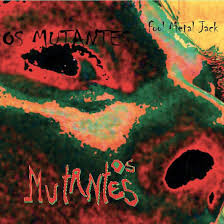
The album is called Fool Metal Jack and it is a fantastic mixture of fast heavy rock, Brazilian traditional sounds, what I assume are Native Brazilian chants and a heavy dose of weirdness.  All wrapped up in an anti-war stance, like on this track “Fool Metal Jack.”

A creepy, distorted  bassline introduces this song which sounds like the guy from Gogol Bordello singing a Tom Waits march.  It’s about a soldier in the middle of a war.  The bridge means more voices come in, bringing in an even more disorienting sound.  And the chorus chanted “Yes.  No More War” completes the song.  By the time the wailing guitar solo comes in the chants of “This is the war of hell” have even more impact.

This stomping song was a great introduction to this band who I now need to explore further.

[READ: April 18. 2013] The Last Interview

I enjoyed Kurt Vonnegut’s “Last Interview” and since I had always intended to read Bolaño’s I was delighted to see that our library had it.  Bolaño is a fascinating interview subject because you never really know what he is going to say.  There are even serious questions about the veracity of his life story which many people believe he fabricated for more dramatic effect.

But the one thing that is absolutely consistent about Bolaño is that he always praises writers whom he respects (and will trash those he doesn’t, although that seems to come more from the interviewer’s  instigation (not that he needs a lot).    So the last interview that he did is the one from Mexican Playboy which has been collected in Between Parentheses.  But the other three are earlier and, it seems, a little more “truthful” or at least less naughty-seeming.

What’s fascinating about this book is that the introduction by Marcela Valdes (“Alone Among the Ghosts”) is over 30 pages long!  The article originally appeared in The Nation on Dec 8, 2008 (read it here).  As such it’s not an introduction to this book, it’s introduction for English readers to Bolaño circa 2666.  And it’s a great read.  It is primarily about 2666, which Valdes has read many times.  She goes into interesting depth about the story but mostly she relates it to Bolaño’s own experiences while writing the book.  It focuses especially on his research about the real murders.  His interest was genuine and he sought help from a reporter who was doing genuinely decent work (ie. not accepting the word of the state about what was going on).

Bolaño has said he wished he was a detective rather than a writer, which explains The Savage Detectives and Woes of the True Policeman.  But Valdes also points out how almost all of his shorter novels have some kind of detective work involved–seeking someone who is lost or hiding.  The article was really great and is worth a read for anyone interested in Bolaño, whether you have read him or not. (more…)

Read Full Post »

dtmaxSOUNDTRACK: TOM WAITS & KEITH RICHARDS-“Shenandoah” (2013).

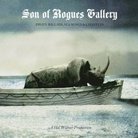
roguesgallery-f8be47f3887d51de57ea842a129f0a722e53ef74-s1This tune comes from the album Son Of Rogues Gallery.  The album is, of all things, a sequel to the album Rogues Gallery.  The full title is Son Of Rogues Gallery: Pirate Ballads, Sea Songs & Chanteys.  The first album was a kind of novelty–I can’t even say novelty hit as I don;t know if it was.  But it must have had some success because here’s a second one (and there’s no Pirates of the Caribbean movie to tie it to).

The album has 36 songs (!) by a delightful collection of artists, including: Shane MacGowan, Nick Cave, Macy Gray, Broken Social Scene, Richard Thompson, Michael Gira and Mary Margaret O’Hara (among many others).  I enjoyed the first one, but I think the line up on this one is even better.

“Shenandoah” is not a song that I particulalry like.  Because it is traditional, I have a few people doing versions of it, but I don’t gravitate twoards it–it’s a little slow and meandering (like the river I guess) for me. And this version is not much different.  What it does have going for it is Waits’ crazed warbling along with even crazier backing viclas from Keith Richards (there;s no guitar on the track).

[READ: January 7, 2012] Every Love Story is a Ghost Story

I had mixed feelings about reading this biography.  I’m a huge fan of David Foster Wallace, but I often find it simply disappointing to read about people you like.  And yet, DFW was such an interesting mind, that it seemed worthwhile to find out more about him. Plus, I’ve read everything by the guy, and a lot of things about him…realistically it’s not like I wasn’t going to read this.  I think I was afraid of being seriously bummed out.  So Sarah got me this for Christmas and I really really enjoyed reading it.

Now I didn’t know a ton about DFW going into this book–I knew basics and I had read a ton of interviews, but he never talked a lot about himself, it was predominantly about his work.  So if I say that Max is correct and did his research, I say it from the point of someone full of ignorance and because it seems comprehensive.  I’m not claiming that he was right just that he was convincing.  And Max is very convincing.  And he really did his research.

It’s also convenient that DFW wrote a lot of letters–Max has a ton of letters to quote from.  And DFW wrote to all kinds of people–friends, fellow authors  girlfriends, colleagues….  Aside from old friends, his two main correspondents were Don DeLillo, whom he thought of as a kind of mentor, and Jonathan Franzen, whom he considered one of his best friends and rivals.  I guess we can also be thankful that these recipients held on to the letters. (more…)

Read Full Post »

SOUNDTRACK: COLIN STETSON-New History Warfare, Vol. 2: Judges [CST075] (2011).

When you learn that Stetson played saxophone for Tom Waits, it makes perfect sense.  The middle of the second song, “Judges” sounds like the instrumental break for any of Waits’ newer songs.  Of course, once Stetson starts really wailing you realize that Stetson doesn’t need Waits’ lyrics to tell a story. With just one big-assed bass saxophone, Steston can say quite a lot.  He plays with circular breathing, meaning that he doesn’t have to stop to take a breath, he breathes in through his nose and out through his mouth at the same time (this is of course impossible).  The bass saxophone weighs some 20 pounds and is massive and Stetson makes it sound like everything from an oil tanker to a field of runaway horses.  Oh, and he also has pretty melodies and songs that sound longing.

This disc is part two of a trilogy, but this is the first of his records that I bought (thanks to a release via the folks at Constellation–I wonder if they will redistribute Pt 1).  There is a story that runs through these discs, although honestly, I’m not entirely sure what it is.  But that doesn’t matter to me, what matters is Steston’s amazing skills.

There are evidently a couple of overdubs on this disc, but for the most part it is just him and his saxophone (and 24 microphones).  The microphones were placed all over the room, on the instrument itself (to pick up the clacking of the keys) and even on his throat (when he makes those “voices muffled by a pillow” sound, that’s the throat mike picking up voice–singing while he is playing (which is impossible)).

The album features a couple of spoken word sections by Laurie Anderson, whose clipped, non-inflected voice gives this otherworldy music an even more otherworldy feel.  And there’s two songs sung by Shara Worden.  Other than that, it’s just the man himself.

Prepare to be amazed by this man’s talent.  But also prepare to be a little frightened by what you hear.  This is not timid music by any stretch.  There’s some scary stuff on this record, especially if you listen in the dark.  More especially if you listen loud (which you absolutely must do to hear all the nuances).  On first listen, this may sound like a noisy jazz record, but the more you get into it, the more amazing it becomes.

[READ: October 11, 2011] Moby Dick-in Pictures

Matt Kish has accomplished an amazing thing.  He has drawn a picture a day (more or less) to accompany every page of the 552 page paperback version of Moby-Dick.  He takes a small passage from each page and renders an image for it.  One thing this book is not is an illustrated version of Moby-Dick.  It doesn’t purport to be.  You won’t get the whole story from this book.  It’s not a cheat sheet for high school students.  If you haven’t readMoby-Dick, this will give you a taste for the story–almost like a preview for a movie.  And hopefully it will compel people to read the original.  If you have read Moby-Dick, this is a wonderful companion.  Not only will the pictures give you fascinating insights into the story (and into Kish, of course), but seeing sentences excised from the book to stand alone makes you aware of the book in ways you just aren’t when you’re reading it as a novel.

Kish admits he is not an artist, which while not false modesty, is certainly selling himself short.  He has an awesome style of illustration.  I am especially excited by his vast pictures with small details (lots of pages where there are small circles with lines in them or, for instance, the details on Queequeg’s face) and when he uses bold lines to create vast, weighty iconic pictures.  Here’s one example of his awesome use of multiple straight lines.  I mean, it’s gorgeous.

But I also love the whole conceit that an artistic shortcoming for him has turned out to be an absolute boon.  Kish says he cannot render the human form and so he made the conscious decision to make the seamen more like avatars than people.  It’s daring and a little odd, but it works wonders.  I admit that I was a little less than excited by the very first page of the book–I was disconcerted by Ishmael and his utter lack of features. (I actually like the way he is rendered later in the book better–call it an artistic growth).  But by the time her gets to Queequeg, or the  gorgeous Tashtego  it’s obvious that his decision was genius.  Just take a look at the marvel that is is Ahab (left).  First off, the colors are amazing.  As are the details of the whale in the corners.  But look at him–he’s a metal machine–shiny and tough–part ship, part whale.  Look at the awesome shading and detailing of the blue “coat” that he’s wearing.  He’s even got the badge of Moby-Dick on his belt!  And then there’s the pegleg–the most beautifully drawn pegleg ever.  It’s really stunning.

Now you’re also noticing that there’s all kinds of diagrams behind Ahab.  Kish used to work at a bookstore and he hated seeing old pages of books thrown away (he has since become a librarian, which makes sense–although as I librarian I learned that librarians are actually quite cavalier about throwing away old books once they are beyond use).  So he brought these pages home.  And, given the density of the layers of meaning in Moby-Dick, he decided to draw his pictures on these old pages.  So on virtually every page you can see something in the background.  Most of the time they are these circuital diagrams, which are wonderful. But there are several drawings where the found pages are pages of text from books.  And I have to say if these were serendipitous findings then he has amazing fortune.  Some of the pages tie in so perfectly it is wonderful.

Like the page that is headed “Cetology” and is from what, a textbook on whales?  Or several other pages that I wish I had taken notes on, because they were really wonderfully chosen.  He even has a drawing on a title page of Moby-Dick. I have to ask, did he really find that or did he buy it for the project? (more…)

Read Full Post »

SOUNDTRACK: TOM WAITS-Heartattack and Vine (1980).

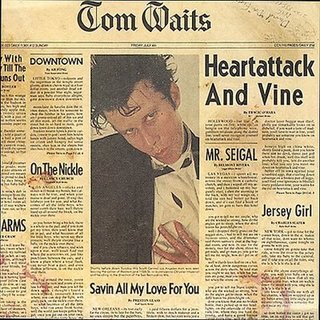
This is the final album Waits made before switching labels and starting over as a new, far more artsy artist.  The album cover is crazy, it looks like a newspaper (with all the lyrics to printed like articles on the cover).  And there’s a picture of Waits in a tux, hair askew, looking like the most stricken man alive.  It’s not a pretty cover, but it sure conveys a lot.

“Heartattack and Vine” is agreat noisy bluesy song.  It’s very simple and focuses on Wait’s lyrics and delivery: “I bet she’s still a virgin, but its only 20 after nine”).  Oddly, after that great vocal delivery song, we get the instrumental “In Shades.”  This has a lot of organ (which is a fairly new instrument in his repertoire) that he shows off his skills on, but it’s nothing that spectacular (and it’s recorded live apparently).

“Saving All My Love for You” is a sloppy kind of ballad (not as nice as most of his ballads), but then judging by the cover image, this is not going to be a sweet album.  See also “Downtown,” another rough track like the title song.

Of course, all of the talk of gruff nastiness is rendered false by the beauty of “Jersey Girl.”  Most people know the Springsteen version of this song, but (aside from the strings, which may be a bit much) I think this version exudes more real emotion.   “Jersey Girl” is a really wonderful song (especially if you’re married to a Jersey girl).  But what’s really great about it is that despite all of the sappy emotion (“My little girl gives me everything, I know that some day she’ll wear my ring,” there’s some great reality as well: “I see you on the street and you look so tired, I know that job you got leaves you so uninspired, When I come by to take you out to eat, You’re lyin’ all dressed up on the bed baby fast asleep, Go in the bathroom and put your makeup on, We’re gonna take that little brat of yours and drop her off at your mom’s.”

Sonically the shift from the guitar based blues noise of “‘Til the Money Runs Out” to the string laden ballad “On the Nickel” is pretty jarring. “On the Nickel” is one of Waits’ lullabies that’s not quite a lullaby.  But it’s got that mournful permanence that is hard to beat from Waits (he even performed it in the 2009 concert from NPR).  “Mr Siegel” is a barsy blues song (although it doesn’t sound like his earlier albums at all) and the album ends with the mournful ballad “Ruby’s Arms,”  which Waits sings in his best downtrodden voice. 

This album really showcases the breadth of his talents at this stage of his career.

[READ: September 24, 2o11] “The Ring Bin”

Who could even imagine what the title of this story means?  It’s weird, and it has so many possibilities.  By the time the answer is revealed, the story has gone in so many directions, you almost forget that you cared what the title meant in the first place.

First off, the tone of the story is bizarrely cool.  After a brief, confusing introduction (we’re at a celebrity gala of some sort), the story gives us this: “That’s when our heroine’s cellphone rings.”  It’s a kind of jarring intrusion by the narrator.  But before we can muse on this, the crowd is appalled at her break in etiquette.  And the story continues, “If these people knew the whole truth, they’d be more than annoyed.”  What is going on here?

And then the narrator gives up any pretense of disinterestedness: “I should step back a moment and describe for you the big picture.”  By now, as a reader you are reeling from all oft he broken rules.  

And then we find that this wonderful setting, this gala, is attended only by white people (which makes them all a little uncomfortable) but that the people onstage are a veritable United Nations and that the topic of the gala is tolerance.  Well, who knows what to think. (more…)

Read Full Post »

SOUNDTRACK: TOM WAITS-Blue Valentine (1978).

Waits begins to morph into his later stage persona with this album,  although you wouldn’t know it from the opener, “Somewhere,” yes from West Side Story.   It’s a pretty straightforward Louis Armstrong-style cover, and I wonder what people thought of it.  “Red Shoes by the Drugstore” on the other hand foreshadows some of his crazier songs from later on–it’s kind of a like his beatniky work, but it’s a bit scarier and has less of a jazz feel.  Of course, he hasn’t completed eschewed melody and songwriting with the wonderful “Christmas Card from a Hooker in Minneapolis”–a slow piano ballad.

There’s also the amazing “Romeo is Bleeding” (the inspiration for the title of the movie).  There’s some more wild bluesy songs like “$29.00.”  In fact, Waits seems a bit looser overall (if that’s possible)–his voice is less clipped and beatniky, he’s more wild and perhaps even off beat

“Wrong Side of the Road” merges into later territory although he’s got enough scat style vocals to keep it sounding cool instead of crazy.  “Whistling Past the Graveyard” is one of his most uptempo bluesy songs;  it’s fun and a little crazy.

And yet for all of these forays into the unusual, he still stays firmly footed in what you expect from 1970s Waits: “A Sweet Little Bullet from a Pretty Blue Gun” and “Blue Valentines” are jazzy, smoky, lounge songs, keeping us on solid Waits ground.  He hasn’t stepped far enough away from his original style to alienate listeners yet, but he’s definitely pushing the boundaries of what might be comfortable.

[READ: September 25, 2011] “Starve a Rat”

This story is a sad and lonesome tale (not unlike Torres’ other story that was recently published in the New Yorker–it’s like these two magazines are linked by some kind of fictional umbilicus).

In this one, a 19-year-old boy hooks up with an older man.  The man asks the boy to wear a diaper on their first encounter.  The boy doesn’t but rather, he tries to satisfy him in other ways.  This pickup becomes something more when the man, who initially asked the boy to leave, relents and talks with him through the night.  The boy finds himself being more honest with the man than with anyone else ever.

The leads to some flashbacks about the boy’s history.  Back when he had a girlfriend, what his girlfriend’s parents were like (her mother knew that he was gay) and how much he loved the girl, even though he always knew she was just a beard.

The strange thing about this story is that I couldn’t decide when it was set.  It has a kind of dark tone that makes me think it is a 1970s story, although there is talk of clinics, so maybe it’s the 80s?  He mentions something about albums being not so out of date that they’d be making a statement–so that could be early 90s? (more…)

Read Full Post »

SOUNDTRACK: TOM WAITS- Foreign Affairs (1977).

This album is kind of a split between Waits’ bluesy songs and his “poetic rants.”  The only problem with the album per se is that he’s been doing this kind of stuff for five albums now and while he’s still good at it (great at it, actually), it’s probably time for a change (which he does on the next album).  This is not to say that the songs themselves are weaker than others, or that they are not at least slightly unexpected (the eight minute “Potter’s Field” is quite unexpected), just that when you know what he’s going to be doing,  this album feels like a pre-transition, one might even say a rut.

The disc opens with a pretty piano waltz (“Cinny’s Waltz”) that segues right into his jazzy nightclub sounding (ie. piano and sax) track “Muriel.”  The third track, “I Never Talk to Strangers” is a duet with Bette Midler (which I think makes sense given her persona, but I have simply never liked her–maybe that’s why I don’t like this album as much as I could).

“The Medley of Jack & Neal (about Kerouac and Cassidy) is a long rambling story about the two beats, it ends with a riff on “California Here I Come.”  In a similar vein–alluding to appropriate music–“A Sight for Sore Eyes” opens with the music from “Auld Lang Syne” before turning into one of Waits’ weepy ballads.

The second half of the disc is more storytelling as song.  “Potter’s Field” tells a lengthy story with occasional blasts of saxophone.  About midway through, it begins to sound like more of a musical–with the music adding dramatic effects to the lyrics–this may be a kind of foretelling of his more operatic music from Swordfishtrombones.  “Burma-Shave” is another long story (over 6 minutes).  This one is much darker (a fairly straightforward story of meeting a bad guy and going for a drive), but it’s a pretty good story for all of its noirishness.  “Barbershop” has a great bassline, but it is indeed about getting a haircut.  The album ends with the title cut, a sung ballad.

His next album, Blue Valentine, features electric guitars and keyboards and will change the sound of his songs quite a bit.

[READ: September 25, 2011] “Beatrixpark: An Illumination”

I don’t think I have read too many contemporary Italian authors (Italo Calvino is the only one who springs to mind).  Realistically, this shouldn’t make any difference to anything but this story seemed so off to me that I have to wonder if it’s something about Italian authors or if it is Voltolini is particular.  This story was translated by Anne Milano Appel.

The story begins by explaining that the main character is a man from the south.  Being very conscious of the fact that the author is Italian, not American, I worked hard to think of the bottom of the boot as opposed to Alabama.  Of course, being from Southern Italy doesn’t mean anything to me really, but I kept it in mind.   Then I find out the story is set in Amsterdam.  And then several paragraphs in, we learn that he is from Southern Europe somewhere.  Sigh.  To quote the story, “Gimme a break, provincial middle-aged man from the south!  Fuck off, why don’t you?” (more…)

Read Full Post »

SOUNDTRACK: TOM WAITS-Small Change (1976).

Half-naked woman on the cover and all (Wikipedia say that this might be Elvira, before she was “Elvira”), this is what people thing of when they think Tom Waits: That gravelly voice is in full form here, with poetic rants and bluesy, drunken musings.

The opening track, “Tom Traubert’s Blues (Four sheets to the wind in Copenhagen)” (I love that many of these titles have parenthetical additions) features the repeated chorus from “waltzing Matilda” which is kind of cheating, but which certainly makes this song potent and memorable.  “Step Right Up” is a skit and scat sales pitch for a miracle product.  It’s a wonderful piece of snark aimed at hucksters (this actually makes sense given that nearly 40 years later he still hates advertising (according to this interview on NPR)).

“Jitterbug Boy” is a mournful piano ballad.  It makes me think of William Kennedy’s Ironweed (of course, Waits was in the film of Ironweed, so maybe that’s got something to do with it).  “I Wish I was in New Orleans (In the Ninth Ward)” has a very Louis Armstrong feel to it (I never noticed how close this early style is to Armstrong until I started playing “What a Wonderful World” for my kids (no Tom for them yet). And of course, the Ninth Ward was really devastated by Hurricane Katrina, so maybe they should have used this as their anthem.

“The Piano’s Been Drinking” is forever etched in my mind from Mystery Science Theater 3000–Tom Servo does a wonderful Tom Waits impersonation.  Incidentally, Waits himself had been drinking, quite heavily at the time.  The track “Pasties and G String” is a scat-fueled description of the lady on the cover, more or less.  It’s accompanied by simply drums and a cymbal and is not too dissimilar from “Step Right Up.”  “Bad Liver and a Broken Heart” begins and ends with the melody of “As Time Goes By” and ends with a confession to drinking too much.

A song like “The One That Got Away” is Waits rambling around with his poetry in his gravelly, slurry followed by a sultry saxophone.  It sets a mood faster than anything I know.  Of course, if you don’t want that mood, you won’t want this album.

Of his first four albums, this one is my favorite (just ahead of Closing Time).  I’m not a huge fan of his early work, and I don’t listen to it all that often, but it’s a perfect treat when the mood strikes.  Waits also was beginning to get into something of a rut.  Despite his varied styles per album, all of the albums were beginning to blend a little.   There are still some great songs coming, but it would take until Swordfishtrombones before he went really far afield from this comfort zone.

[READ: September 21 2011] “Dog Run Moon”

This is one of those stories that seems so pointless that you can’t stop reading.  The good thing is that it was so well-written and engaging that its pointlessness is part of its charm.

As the story opens, Sid is running stark naked through a desert landscape–his feet are bleeding, he is covered in the red dust from the ground and there is a white Spaniel running alongside him.

Essentially, the entire story is that Sid has stolen this dog from Montana Bob and his friend Charlie Chaplin.  They caught him and he ran away with the dog through the desert.  As I say, it’s kind of pointless because he’s running naked and barefoot and they are chasing him on ATVs–he’s obviously not going to escape.  But what makes the story worth reading is the way the plot is irrelevant (except that it tells you a lot about Sid), because it’s really the impetus for his actions that comprises the story. (more…)

Read Full Post »

SOUNDTRACK: TOM WAITS-Nighthawks at the Diner (1975).

This is Waits’ third album, a live recording (!) which was actually recorded live in the studio. But not the way most bands record live in the studio. The producers brought in tables and chairs and created a bar-like atmosphere into the (evidently rather large) studio.  Then they invited fans in to watch the performance. Wild, man.

Just as wild is the bebopping and scatting that Waits does here. The opening “Emotional Weather Report” is all kinds of comical phrasing and silliness about himself.  It’s funny and quite enjoyable.  And it makes it feel like a nightclub.  He also introduces mos of his sings with a story, and for most of the songs, the introductions are almost longer than the song.  The two-minute intro to “On a Foggy Night” is full of Tom’s storytelling–but in a much more improv jazzy style.  Indeed, it’s not entirely clear when the intro ends and the song begins.

The intro to “Eggs and Sausage” has the very funny conceit that the food he has eaten in some greasy spoon is pretty frightening.  The veal came down to beat the shit out of his coffee, but the coffee wasnt strong enough to defend itself.  Nice.  “Better Off Without a Wife” he talks about having an evening just to yourself, you know, for pleasure.  We all do it, he says, but I’m not weird about it; I don’t tie myself up or anything.

Overall, this is a fun album.  It’s loose, the crowd is at ease and so is Tom.  It’s long album–about 70 minutes, which might be a little too long, but you get the whole vibe of a night out–good stories and good music.

[READ: September 21, 2011] “Starlight”

This story is four short pieces.  The titles should tell you everything you need to know about the content: “Mrs. Nixon Joins the Final Official Photograph,” “Mrs. Nixon reacts to RN: The memoirs of Richard Nixon,” “Brownie,” and “Mrs. Nixon’s Thoughts, Late-Night Walk, San Clemente”

So, clearly these are four short pieces that delve into the mind of Richard Nixon’s wife, Pat.  I don’t know a lot about her or about Nixon himself, really (I know all the highlights or low lights but I haven’t really ever looked into the man aside from what the sitcoms say about him).

So when I was reading the first excerpt I just couldn’t get into it.  I didn’t know who the people were for sure.  I assumed Ollie was Ollie North, but who knows.  I almost didn’t read any more, I was so uninspired by the first one.  But the next day I decided to try again.  (more…)

Read Full Post »

SOUNDTRACK: TOM WAITS–The Heart of Saturday Night (1974).

What would be more shocking–hearing this and then going to Bone Machine, or listening to Bone Machine and then hearing this. Holy cow. Tom’s voice is so NOT Tom Waits on this record. It kept me thinking of The Eagles or something. The tone, the pacing, I kept expecting him to bust out “Desperado.”  He also has some crazy beat-inspired poetry (what the kids today call spoken-word pieces)  Indeed, these spoken pieces would stay with him in one form or another for his whole career.  But seriously, how much a man can change in thirty years!

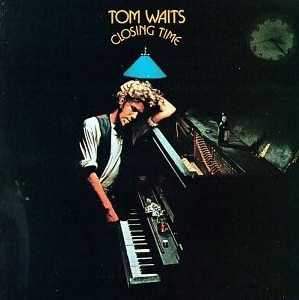
Like Closing Time, this album has several different styles.  Primarily, it has a sloppy, bar sound, the sound that Closing Time‘s cover conveyed.  And that sound is all over “New Coat of Paint.”   But there’s also piano ballads.  And those ballads, combined with Waits’ non-gravelly voice, give “San Diego Serenade” and “Shiver Me Timbers” that Eagles’ ballady sound.  And then “Semi Suite” brings back that muted trumpet. 

“Diamonds on My Windshield” is a beat poem set to a walking bass.  It’s clichéd, except that no one actually does it as well as Waits.  And although I don’t really like the blues in general, I enjoyed “Fumblin’ with Blues” quite a bit.  There’s something about Waits’ sloppy (but not) style  that makes the song interesting.  Even though this is considered a classic, this album is just not really my style and it’s one I listen to quite infrequently.

[READ: September 21, 2011] “An Anonymous Island”

This story is translated from Korean by Heinz Insu Fenkl.  

I felt like the heart of this story was completely unoriginal in content; and yet I can’t tell if it is a common story, if it is a kind of folklorish story, if it’s sort of a story from ancient writings or if it’s just something that happens.

The beginning of the story shows a woman listening to her husband.  He is watching the television,bemoaning the fact that anyone can be anonymous these days (this struck me as a funny sentiment given how much everyone in America bemoans the lack of privacy or the fact that everyone is on the internet).  You can get off at one bus stop past your own and no one knows you.  Back when he was a kid everyone knew everyone else, a village was a family.  And as the woman listens, she flashes back.

The flashback is to when she was a teacher in a small village.  A village where everyone is related.  Everyone treats each other with respect and deference.  Except for one man, Ggaecheol.  Ggaecheol is a bum–he has no job, he has no home.  The village tolerates him because he is an idiot and he is impotent.  But whenever he wants a meal, he simply walks into someone’s house and sits down and says, feed me.  Which they do.  Typically he sleeps outside, but when it’s cold, he walks into someone’s house and sits at the foot of their bed.  He says he wants to keep the woman warm, so the men, amused by his impotence, allow this.

There’s an old Monty Python skit in which the town idiot, despite being mocked by all, does great with women.  The punch line, showing the idiot with a couple of hot girls in bed with him: “I may be an idiot, but I’m no fool.”  And so it is with this story.  The bum is sleeping with everyone in town.  (more…)

Read Full Post »

SOUNDTRACK: TOM WAITS-Closing Time (1973). 

This is the first official Tom Waits release.  There’s a couple “Early Years” collections which are really fascinating for how much he doesn’t sound like the 21st century Tom Waits, but these at least show glimpses of the man to come.  There are some songs on here that I knew of from different artists, and had no idea TW had written them  (Tim Buckley covered “Martha” the same year this came out (that’s pretty amazing), The Eagles covered “Ol’ 55” on their album the following year.  However, Van Halen’s “Ice Cream Man” is not a cover of Tom’s song). The funny thing about the record is how much he sounds like a late 70s lounge singer. How can an album as stripped down as this sound of an era? I don’t know, but it does. It’s also nice to know that his opening song “Ol’ 55” has had such a long life.

My wife does not like Tom Waits, but I think I could sneak this album past her.  You can tell that it’s Tom (before years of abuse to his vocal chords).  His voice is in fine non-gravelly form, just a little bass heavy.  And he is crooning to us.  He even has one of his sweet songs (“Midnight Lullaby”).  It’s hard (but not impossible) to imagine that this man would have turned into the man from Bone Machine.

As I was saying about the mid 70’s, the style of songs here could easily have been played on the same radio station as Springsteen (this album came out the same year as Greetings from Asbury Park–and Springsteen made famous “Jersey Girl” one of Tom’s early songs).  Indeed, many of these songs were covered by other artists.  The funny thing to me about the album is that although Tom is the pianist, I feel like the album is more focused on the trumpet (that muted trumpet seems to be everywhere (giving the album more of a jazzy feel than a rock feel).  And yet, despite this overall jazziness, “I Hope That I Don’t Fall in Love with You” and “Old Shoes (& Picture Postcards)” is a pretty straight-ahead folk song.  There’s also the beautiful ballad “Martha” played only on piano–such a gorgeous melody.  Perhaps the least exciting song is the instrumental ballad “Closing Time.”  It’s a simple piano melody with more trumpet.  There’s nothing wrong with it, it’s just not that inspirational.

I find that as I get older I like this album more (which is somewhat ironic since he recorded it when he was 24).  It’s tempting to say that the album–with its many styles–is unfocused, but Waits’ albums all seem to follow in this multiple-styles vein.  He’s not afraid to try something new (see his entire output since 1983).  But this one is a surprisingly straightforward album.  I can’t wait to see if Sarah likes it.

[READ: September 21, 2011] “Town of Cats”

Murakami is (in my limited experience) a master of the surreal. And yet for his more recent short stories, he seems to be switching into more of a story within a story conceit.  And that’s fine too, because the stories and the stories within the stories are clever and creative and still a bit surreal.

This story starts out a little awkwardly: at Koenji Station, Tengo boards a train with absolutely no destination in mind.  He can get off anywhere that he wants, he decides. He imagines going to the beach and enjoying a nice day.  But then he realizes that all along he has ben heading in one specific direction: to visit his father in a nursing home.  This is especially surprising for Tengo as he has not visited his father in over two years (and Tengo is his only relative).

As Tengo thinks back to his childhood, it is full of nothing but anger.  Anger that his father took him on his work (collecting fees for Japanese TV) every Sunday and that Tengo never had any chance for fun.  In fairness to Tengo’s father, Tengo’s mother died when Tengo was just a baby and his father had to take care of him as best as he could.  But there was no love, no warmth, no emotion.  And the more he thought about his father he realizes that that’s what his father was like–no intellectual curiosity of any kind.  Just work work work.

And yet Tengo can’t shake a memory from when he was only a year and a half or so of his mother standing near hs crib with a man who wasn’t his father kissing her naked breasts.  This memory has always been with him and he can’t help but wonder if his father really isn’t his father at all.  (more…)

Read Full Post »

« Newer Posts - Older Posts »