Feeds:
Posts
Comments

Archive for the ‘Radiohead’ Category

SOUNDTRACK: FEIST-“Femme Fatale” (2011).

The funny thing about The Velvet Underground is that it seems like it would be very hard to fail at covering them.  Their songs are pretty open to interpretation.  But, it’s even more true if you wanted to do it pretty straight.  I mean, while Lou Reeds voice is unique, Nico’s isn’t really.  It’s slow and languorous, sexy and distant.  I would never have thought to describe Feist that way and yet she fits into the Nico mold very nicely.

This cover comes from the Velvet Underground Revisited show from 2011, with a band comprised of members of Radiohead, Air and Supergrass.  Feist did vocals for this one.  It’s not an earth-shattering cover.  In fact it’s pretty spot on.  Maybe everyone who hears this will start a band too.

You can hear it here.

[PLANNED: Summer 2012] #OccupyGaddis

I had my books all planned out for the summer.  A series of smaller books to get through before trying to tackle any really big books that are on my shelf (and there are plenty).

And then came #OccupyGaddis.

William Gaddis is an author, like Thomas Pynchon, who writes large, unwieldy novels which are something of a bedrock for contemporary American fiction–like The Velvet Underground–not many people have read him, but those who have all went on to write wonderful books.  And he forms a kind of continuum of (among many many others) Joyce>Gaddis>Pynchon>Wallace which means that I ought to be reading him.

I read JR about a decade ago.  I remember a few things about it–basic plot details and the fact that you never know exactly who is speaking.  I wasn’t keeping this blog then, so I didn’t exactly take notes on it or anything.  It’s kind of a blur.

So Lee Konstantinou is running #Occupy Gaddis this summer.  It is meant  to be an Infinite Summer type-deal.  Unlike Infinite Summer which was weekly, he’s planning on posting every two weeks.  I’ll try to do my weekly post (work permitting), by picking a midpoint as a Spoiler Line.  Since my recollection is that JR is like one large block of text with no breaks anywhere, my spoiler line will be pretty arbitrary.   But here’s his:

June 29: pp. 150

July 15: pp. 300

July 31: pp. 460

August 15: pp. 610

August 26: done!

(more…)

Read Full Post »

SOUNDTRACK: EFRIM MANUEL MENUCK-Plays “High Gospel” [CST078] (2011).

Efrim Manuel Menuck was a co-founder of Godspeed Your Black Emperor and the main force behind A Silver Mt. Zion.  In some ways it seems odd that he would release a solo album, but I guess Silver Mt Zion is enough of a collective for him to want to do his own thing.  Efrim has been singing a lot more on Silver Mt Zion records, and I find his voice to walk a fine line between interesting and annoying–well, not so much annoying as inappropriate to the music he makes.  For this solo disc, though, there’s something different about the music that works well with his voice.  There’s eight songs on the disc.  Some of them are pretty much unlistenable, but others are really enjoyable.  The opener “our lady of parc extension and her munificent sorrows” is 7 minutes long and has the kind of epic feel of his previous bands, but there’s a lot more keyboard (making cool space sounds).  Meanwhile, “a 12-pt. program for keep on keepin’ on” is described as a “hauntingly processed field recordings and ominous tape-delayed sound-sculpture.”  That’s true for the first minute or so, but after that it’s mostly just an unpleasant cacophony…that lasts nine minutes!  And while it’s great that it was all done with analogue equipment, that doesn’t make it any more listenable.

“august four, year-of-our-lord blues” is a much more enjoyable instrumental, slow vibrated notes, a real western sound.  Efrim sings again on “heavy calls & hospital blues” and his angsty, hesitant voice works very well on this piano ballad.  “heaven’s engine is a dusty ol’ bellows ” is a 2 minute instrumental/introduction that sounds a lot like the guitar opening from Radiohead’s “Electioneering.” “kaddish for chesnutt” is a slow, mournful dirge.  It’s quite moving.  It’s 7 minutes long, and the length is saved by the second half where the chanted vocals bring the song back from the edge.

“chickadees’ roar pt. 2” is mostly feedback noises and squeaks.  It’s less unpleasant than other instrumentals, but it’s not something you’d seek out.  Although it does work as an introduction to the closer: “i am no longer a motherless child.”  After about 2 minutes of dissonant introduction, the group begins singing an uplifting ending hymn.

So this boils down to a self-indulgent solo project, with a few tracks that are among his best.  You can stream it here.

[READ: May 22, 2012] “Mrs Blue”

I really enjoyed Joshua Ferris’ first novel.  So I thought I’d see what else he had written. He has a number stories published but most of them are unavailable for free reading at this time.  Thanks to my JSTOR account I was able to read this one from The Iowa Review.

This was  pretty confusing story–and since its one of his first, I don’t really know what else to compare it to in his work.  There’s all kinds of disturbing images and as you delve more deeply into the story, the images turn more disturbing but in different ways.

It opens with a youngish boy being seduced by Mrs Blue, a teacher in his school.  He warns her about the dangers of unprotected sex and she says that she’s the one who convinced the PTA to hire the guy who gave the lecture, so she knows all about it.  He’s 13 and he keeps telling her he doesn’t want to (her locations of choice include under a railroad car and in a burned out building).  Each paragraph or so is set off by a star, indicating a new section.  So section 2 has the narrator and Gus (friend? brother?) go to the track where Mrs Blue runs laps. Gus walks his dog, Mr Yackley, while the narrator (whose name is Woodrow Williams) talk about Cole Porter and how she’s looking for a new “daddy.” (more…)

Read Full Post »

SOUNDTRACK: RYAN ADAMS-“Like a Fool” from Score! 20 Years of Merge Records: The Covers (2009).

I don’t particularly like Ryan Adams’ songs, so I was surprised how much I liked this cover of a Superchunk song.  The cover has an interesting vibe, a kind of Pearl Jam (in the guitars) meets Radiohead (in the vocals) sound.  It’s not too different from the original, although, as with many of these covers, I like the recording quality better.  I know I love my lo-fi world, and I love Superchunk but these newer versions just sound better.

Adams has a good voice, and he adds just enough orchestration to make the song a wee bit more interesting than the original.

[READ: March 15, 2012] “Department of Deportment: Stances and Dances Made the Eighteenth-Century Man–and Woman”

This article was intriguing but wasn’t quite about what I wanted it to be about.  Also, what was weird about this article–not so much with the others in the magazine so far, is that the photographs look simply too modern.  Usually for period pieces there is a hint of aging done to the film.  Obviously for the magazine they want the best possible quality photo, but it just looks really…fake?  Obviously modern people in old homes and dress.

The other thing that is odd to me about this article is that it begins with the idea that the reader doesn’t know what deportment means, or  that we misunderstand its meaning.  The true meaning–upright behavior and moral uprightness–doesn’t seem that hard to grasp.

However, despite these criticisms the article has some interesting history to impart.  The idea was that Gentlemen and Ladies were educated and would act with honor.  And part of that honor was the way one stood and acted.  Thus, Gentlemen had to maintain deportment.  Etiquette books also taught how to treat people of equal–and lower–standing.  Some people tried to appear gentlemanly by quickly learning deportment–but rules were complex and fakers were easily caught.  And those who were caught were punished by being thrown out of  a party or by public ridicule. (more…)

Read Full Post »

SOUNDTRACK: RADIOHEAD-“Supercollider”/”The Butcher” (2011).

These two songs came out some time after The King of Limbs.  They were available from a number of sites, like Stereogum and were also released as a 12″ vinyl.

I liked these when they came out (it’s Radiohead after all), but listening again now, sort of out of the Radiohead mindset, I’m a little more critical.

“Supercollider” is 7 minutes long and, surprisingly for a Radiohead song, it doesn’t really deviate from itself very much in all that time.  And I know that that’s the point, it’s a moody piece–much of King of Limbs was like that.  It’s an enjoyable song for its mood, but it’s not a very interesting song.  For many groups that’s a minor criticism, but for Radiohead I think it’s pretty big.

“The Butcher” on the other hand has my favorite thing about new Radiohead: skittery drum beats.  And while the bass line (which is all the melody you’ll get here) isn’t super complex, Yorke’s voice more than complements it by really nailing an interesting, slightly menacing tune.  And when you can finally get a grip on the lyrics at the end of the song, it all gels nicely.

Neither one of these songs would be out of place on Limbs, but then again, neither one would really stand out on Limbs either.

[READ: December 30, 2011] “Things I Learned from My Friend’s Dog”

Of all of the blog posts on Max Barry’s blog, this was the shortest.  But, given that it’s about dogs by a guy who has never owned a dog before I thought it would be fun to include it here.

The dog he’s watching is two years old (named Snow).  And Snow has taught Max what any dog owner knows:

There are smells (often bad) and sounds (surprisingly loud) that are specific to dogs.  Dogs have even worse selective hearing than people.  And my favorite, which I will quote: “If you step backwards (at any time), you will stand on Snow.” (more…)

Read Full Post »

This is not the right cover for the issue. I couldn't find it online!

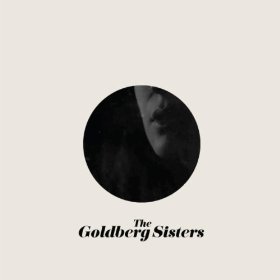
SOUNDTRACK: THE GOLDBERG SISTERS-The Goldberg Sisters (2011).

I don’t often make lists of “Best” records or anything like that.  But I’m making an exception for this.  This was easily the best album that I had low expectations for.  That sounds like half a compliment but it’s not.  I really didn’t expect much from this album when Adam Goldberg promoted it on Craig Ferguson’s show.  But when I checked out the video for “Shush” I was really impressed.  So I bought the CD.

And I have to say that it is really, really good. 

I need to get this out of the way because it will influence the whole write up otherwise.  Adam Goldberg is an actor, a very good, very funny actor.  And this is just one of his music projects.  It was not an entirely solo affair, but Goldberg plays guitar, piano, harmonium, keyboards, key sitar and melodica.  And of course, he sings as well.  I was more or less expecting an at-home-sounding demo, maybe, or some standard rock-n-roll like many other side projects.  But the album is lush and full, complete with cool psychedelic effects on certain tracks and there’s even clever wordplay. 

Goldberg has a soothing, slightly feminine singing voice (I would not have expected that from his speaking voice).  And his backing vocalists really complement him well. 

The disc opens with “The Room” a simple acoustic guitar and a very nice complementary piano (which reminds me of some of Radiohead’s acoustic moments).  The long instrumental ending is quite intense.  “Mother Please (The World Is Not Our Home)” has questionable lyrics, but a really great sound.  There’s cool spoken words deep in the mix, which bring a creepy effects to the song.  It runs very long, but there’s lots of parts and a cool coda.

“Shush” is still outstanding after all of these listens.  It has a kind of Bowie/Beatles/90’s revival of same feel.  This kind of song only works if the production is right, and Goldberg’s is perfect.  “Don’t Grow” opens with cool fiddle strings and Goldberg’s slightly sinister whispered vocals.  It’s 7 minutes long (see, psychedelic) and features a really pretty denouement with tinkling pianos and everything.

“You’re Beautiful When You Die” is a weird little interlude–muffled piano and dark, dark lyrics.  I could probably do without it, but it’s only 2 minutes so I’ll deal.  It’s made up for by “Erik Erikson” a great rocking acoustic number that reminds me of The Smashing Pumpkins (in vocal style). 

“Third Person” returns to that Beatles-y style with a folk song with full instrumentation.  And “The Difference Between” has some cool backing vocals which elevate this simple piano based song into something more.  “Skin of the Patriot” is a slow piano ballad.  It’s not my favorite song on the disc, but it leads into the wonderfully upbeat ender “The Heart Grows Fonder” (which features a surprising and surprisingly effective melodica solo).  It runs about five minutes (of an 11 minute track).  The ending 90 seconds are a goofy riff on The Beatles’ “Revolution.” 

So overall this album is really enjoyable.  There’s one or two misfires and it could use a wee bit of editing, but man, am I glad I bought this.  And I can’t wait to see what Goldberg does next.

Watch the Ferguson bit here (wait for the hilarious awkward pause at 10:30)

Find out more at his wonderfully named website: Adam Goldberg Dillettante.

[READ: January 6, 2012] “Two Midnights in a Jug”

This is the final individual story that Karen Carlson recommended to me (the rest are all in anthologies that I’ll have to check out).  She writes: “Because it’s a grim, tough read, it might take a second read to get past the oppressive weight and find the delicate art. And it doesn’t hurt to look into the background of the writer a bit; he isn’t writing about these people by accident. A little Willie Nelson might work [for the soundtrack].”

Karen’s comments sound a little defensive!  But I admit I was pretty turned off in the beginning of the story.  I’ll also admit a personal bias of mine is that I don’t really like to read stories about the rural poor or folks in the Ozarks.  I know, it’s not very nice, but it’s true. 

So, this story is set there.  And it opens with just about every stereotype I hate about the region: single wide trailer that borders a hog farm, neon orange muumuus, coon hunting and a repossessed house.  Things are even worse than my stereotypes though, because the plumbing is unconnected and their toilet sits over a bucket.  Which they cover with lime after every use and which they have to empty daily.  Good god.

Oh and the hog farm?  They had so much hog shit that they decided to burn it.  Well, the fire has been raging for a month.  And the only thing worse than the smell of hog shit is the smell of burning hog shit.  And the only thing worse than burning hog shit is having the ashes from the hog shit fall onto your property and into your trailer every day for a month. 

Oh yeah, and Cordell, the man of the trailer, accidentally shot their hound, Trixie last time he was hunting.  She’s okay but had to have a leg removed.  Jee.  Sus.

I seriously almost stopped reading. (more…)

Read Full Post »

SOUNDTRACKART OF TIME ENSEMBLE WITH STEVEN PAGE-A Singer Must Die (2009).

According to their website, “Art of Time Ensemble is one of Canada’s most innovative and artistically accomplished music ensembles. Their mandate is to give classical music the contemporary relevance and context it needs to maintain a broader audience to survive.”

So what you get is a modern orchestra playing contemporary music.  It’s not a unique idea, but in this case, it works very effectively.  And what you also get is Steven Page, former singer of the Barenaked Ladies as the vocalist.  Page has an awesome voice.  I’ve often said I could listen to him sing anything.  And here’s a good example of him singing anything.

The great thing is that the song choices are unusual and wonderful–not immediate pop hits or classic standards–it’s a cool menagerie of songs with great lyrics and equally great compositions.  This is no heavy metal with strings, this is majestic songs with orchestral scoring.  The orchestra includes: piano, sax/clarinet, cello, violin, guitar and bass.

And the song choices are fascinating.  And with Page’s amazing theatrical voice, the songs sound quite different, mostly because the original singers don’t have powerful voices.  They all have interesting and distinctive voices, but not operatic ones.  So this brings a new aspect to these songs (I knew about half of them before hand).

THE MOUNTAIN GOATS-Lion’s Teeth.
This is a very dramatic reading of this dramatic song.  It pushes the boundaries of the original song.

ELVIS COSTELLO-I Want You.
I had never heard this Costello song.  With Costello you never know what the original will sound like–punk pop, orchestral, honky tonk?  It’s a fascinating song, though and Page hits some really striking and I would say uncomfortable notes.

RUFUS WAINWRIGHT-Foolish Love
I don’t know Rufus’ work very well, although I immediately recognized this as one of his songs.  Page plays with Wainwright’s wonderful theatrics and makes this song his own.

BARENAKED LADIES-Running Out of Ink
Covering one of his own songs, this is fascinating change.  The original is a fast, almost punky song, and it seems very upbeat.  This string version brings out the angst that the lyrics really talk about (Page is definitely a drama queen).

LEONARD COHEN-A Singer Must Die
This is one of the great self-pitying songs and the lyrics are tremendous.  Page takes Cohen’s usual gruff delivery and fills it with theater. It’s a great version.

JANE SIBERRY-The Taxi Ride
Coming from her early album The Speckless Sky, this is a wonderfully angsty song with the premise that is summarized: “it’s a long, long, lonely ride to find the perfect lover for your lover.”  Page hits one of the highest notes I’ve heard from him here.  Very dramatic.

THE DIVINE COMEDY-Tonight We Fly
This is one of my favorite Divine Comedy songs.  Of course it is already string filled, so this version isn’t very different.  But its wonderful to hear it in another context.

THE WEAKERTHANS-Virtute the Cat Explains Her Departure
I love this song.  This is a guitar filled pop punk song, so the strings add a new edge to it.

THE MAGNETIC FIELDS-For We Are the King of the Boudoir
I know the Magnetic Fields but not this song.  It’s quite clever and funny (as the Fields tend to be) and Page makes some very dramatic moments.

RADIOHEAD-Paranoid Android
I recently reviewed a covers album of OK Computer, wondering how someone could cover the record.  The same applies to this song.  A string orchestra is a good choice for it, as there is so much swirling and crescendo.  And while nothing could compare to the original (and they don’t try to duplicate it), this is an interetsing choice.  As is Page’s voice.  He has a much better voice than Thom Yorke, but that actually hinders the song somewhat when he gets a little too operatic in parts.  Nevertheless, it is an interetsing and enjoyable cover.

The whole record is full of over the top drama.   It’s perfectly suited for Page and it’s a side of him that has peeked out on various releases but which he really gets to show off here.  As an album, the compositions all work very well–they are, after all, trying to make classical pieces out of them–not just covering them.  And the choices of songs are really inspired.  Dramatic and interesting and when the music slows down, the lyrics lend to a wonderfully over the top performance.

If you like Page or orchestral rock, this is worth tracking down.

[READ: November 28, 2011] “Leaving Maverly”

For some reason I was under the impression that Alice Munro was no longer writing.  I’m glad that’s not true, and really, what else would she do with herself–she has so many more stories to tell.

I think of Munro’s stories as being straightforward, but this one was slightly convoluted and actually had two things going on at once.  It opens by discussing the old town of Maverly.  Like many towns it once had a movie theatre.  The protectionist and owner was a grumpy man who didn’t deal well with the public, and that’s why he hired a young girl to take the tickets and be the face of the theatre.  When she got in the family way, he was annoyed, but immediately set out to hire someone else.  Which he did.  The new girl, Leah, came from a very religious family.  She was permitted to work there under the stipulation that she never see or hear a movie or even know anything about them.  And that she get a ride home.  The owner balked at this second idea–he surely wasn’t going to drive her home.  So instead, he asked the local policeman Ray, to walk her home.  Which he agreed to do.

The next section of the story looks at Ray.  And although the story is ostensibly about Leah, we get a lot more history of Ray.   He was a night policeman only because his wife, Isabel, needed help at home during the day.  We learn about the scandalous way he met his wife and how they managed through the years until she became ill.

Ray talks with Leah on their walks home, something he found terribly awkward because of how cloistered she was.  Then he would get home and talk with Isabel about Leah. This young girl who meant nothing to him was suddenly a significant part of his life.

And then one day the theater owner came to report that Leah was missing.  They went to see her father at the mill, but she wasn’t there.  And there was really no other place where Leah went, so they were at a loss.  It was winter and they feared the worst. (more…)

Read Full Post »
SOUNDTRACK: OKX: A Tribute to Ok Computer (2010).

OK Computer is one of the best records of the 90s.  Every time I listen to it I hear something new and interesting.  So, why on earth would anyone want to cover the whole thing?  And how could you possibly do justice to this multi-layered masterpiece?

I can’t answer the first question, but the second question is more or less answered by this tribute which was orchestrated by Stereogum.

The answer is by stripping down the music to its bare essentials.  When I first listened to the songs I was really puzzled by how you could take a such a complex album and make Doveman’s version of “Airbag,” which is sort of drums and pianos.  Or gosh, where would you even begin to tackle “Paranoid Android?”  Well Slaraffenland create a bizarre symphonic version that excises many things–in fact half of the lyrics are missing–and yet keeps elements that touch on the original.  But it’s an interesting version of the song and shows  a bizarre sense of creativity.  And that is more or less what this tribute does–it makes new versions of these songs.

Mobius Band make a kind of Police-sounding version of “Subterranean Homesick Alien.”  Again, it radically changes the song, making it a fast and driving song (although I don’t care for the repeated “Uptights” and “Outsides” during the verses).

Vampire Weekend, one of the few bands that I actually knew in this collection (and whom I really like) do a very interesting, stripped down version of “Exit Music, for a Film.  The “film” they make is a haunted one, with eerie keyboards.  Again, it is clearly that song, but it sounds very different (and quite different from what Vampire Weekend usually sound like).

“Let Down” (by David Bazan’s Black Cloud) and “Karma Police” (by John Vanderslice) work on a similar principle: more vocals and less music.  The music is very stripped down, but the vocals harmonize interestingly.  Perhaps the only track that is more interesting than the original is “Fitter Happier” by Samson Delonga.  The original is a processed computer voice, but this version is a real person, intoning the directives in a fun, impassioned way.  There’s also good sound effects.

Cold War Kids take the riotous “Electioneering” and simplify it, with drums and vocals only to start.  It’s hard to listen to this song without the utter noise of the original.  “Climbing Up the Walls” is one of the more manic songs on this collection, with some interesting vocals from The Twilight Sad.

There are two versions of “No Surprises” in this collection.  Interestingly, they are both by women-fronted bands, and both treat the song as a very delicate ballad.  Both versions are rather successful.  Marissa Nadler’s version (the one included in sequence) is a little slower and more yearning, while Northern State’s version (which is listed as a B-Side) is a little fuller and I think better for it.  My Brightest Diamond cover “Lucky.”  They do an interesting orchestral version–very spooky.

Flash Hawk Parlor Ensemble (a side project of Chris Funk from The Decemberists) do a very weird electronic version of the song (with almost no lyrics).  It’s very processed and rather creepy (and the accompanying notes make it even more intriguing when you know what’s he doing).

The final B-side is “Polyethylene (Part 1 & 2),”  It’s a track from the Airbag single and it’s done by Chris Walla.  I don’t know this song very well (since it’s not on OK Computer), but it’s a weird one, that’s for sure.  This version is probably the most traditional sounding song of this collection: full guitars, normal sounding drums and only a slightly clipped singing voice (I don’t know what Walla normally sounds like).

So, In many ways this is a successful tribute album.  Nobody tries to duplicate the original and really no one tries to out-do it either.  These are all new versions taking aspects of the songs and running with them.  Obviously, I like the original better, but these are interesting covers.

[READ: November 5, 2011]  McSweeney’s #8

I had been reading all of the McSweeney’s issue starting from the beginning, but I had to take a breather.  I just resumed (and I have about ten left to go before I’ve read all of them).  This issue feels, retroactively like the final issue before McSweeney’s changed–one is tempted to say it has something to do with September 11th, but again, this is all retroactive speculation.  Of course, the introduction states that most of the work on this Issue was done between April and June of 2001, so  even though the publication date is 2002, it does stand as a pre 9/11 document.

But this issue is a wild creation–full of hoaxes and fakery and discussions of hoaxes and fakery but also with some seriousness thrown in–which makes for a fairly confusing issue and one that is rife with a kind of insider humor.

But there’s also a lot of non-fiction and interviews.  (The Believer’s first issue came out in March 2003, so it seems like maybe this was the last time they wanted to really inundate their books with anything other than fiction (Issue #9 has some non-fiction, but it’s by fiction writers).

This issue was also guest edited by Paul Maliszewski.  He offers a brief(ish) note to open the book, talking about his editing process and selection and about his black polydactyl cat.  Then he mentions finding a coupon in the phonebook for a painting class  which advertised “Learn to Paint Like the Old Masters” and he wonders which Old Masters people ask to be able to paint like–and there’s a fun little internal monologue about that.

The introduction then goes on to list the 100 stores that are the best places to find McSweeney’s.  There are many stores that I have heard of (I wonder what percentage still exist).  Sadly none were in New Jersey.

This issue also features lots of little cartoons from Marcel Dzama, of Canada. (more…)

Read Full Post »

SOUNDTRACK: RADIOHEAD-The King of Limbs: From the Basement (2011).

The TV channel Palladia has been showing this BBC production since it became available.  And it’s scheduled to be broadcast a few more times in the next couple of months. 

From the Basement is a show in which (very cool) bands play in this recording studio (presumably in the basement of wherever it is recorded).  The show is filmed in HD and the sound is fantastic.   The Wikipedia page gives some context for the show–it was originally designed as a program to showcase several bands playing a few songs.  Several of these episodes aired (the Wikipedia page gives details).  The show was created by Nigel Godrich, Radiohead’s producer.  Thus, it makes sense that Radiohead have now done live sessions shows for their last two albums.

So this is a recording of The King of Limbs.  I’m not sure if the album had come out by then, but this is basically the complete album and two extra songs: “The Daily Mail” and “Staircase.”

The session sounds amazing.  There’s a brass section for a number of songs, there’s two drummers (both completely bald, which is kind of neat to see), and you get to see Thom Yorke up close (sometimes a little too close) on all kinds of instruments.   I feel a little bad for Jonny Greenwood as it seems like Thom plays most of the guitar parts (unless Jonny is on keyboards too–it’s not always clear who is playing what).

I liked King of Limbs, but I must say that this live recording brings much more depth to the album.  While the band sounds tight as a drum, paradoxically, they also seem looser in their overall feel.  They seem like they’re really enjoying themselves.  It doesn’t have the same vibe as a concert (they’re not playing off the crowd or improvise at all), rather it has a feeling of jamming with friends–trying to get a perfect take, without the tension of fretting about the perfect take.  It’s really a great show and worth watching for any fan of Radiohead.

[READ: September 5, 2011:] ” What Have You Done”

I had a hard time getting into this story.  It’s about a man named Paul.  Paul is headed home to visit his family in Cleveland and he is more than a little apprehensive about it.  He deliberately hasn’t been home in about ten years, so this is quite a chore for him.  And it is quite clear from the outset that Paul is something of an asshole.  We don’t really learn why in the beginning (and that’s why the story was hard for me to get into–more on that)–he’s just sort of accepted as an asshole and that his family will give him shit.

And that’s what families do, this idea is in no way new.  But what’s is odd about the story is that we don’t really have any context for Paul’s attitude.  We seem to jump into the story with him feeling like an asshole and assuming that his parents will treat him like crap.  That they won’t believe anything he says and that they’ll give him a hard time.  Indeed, when he finally gets to his parents’ house (and his sister and her husband are there) he is so aggressively defensive that he’s quite unlikable.  And yet we still don’t know if he is defensive or if they are nasty.  Paul seems to flare up at anything anyone says and yet we don’t know if he has a right to.

The crazy thing is that Paul’s major fault seems to be that he’s fat.  Quite a bit is made of the fact that he is fat.  And he seems to be so very lonely–hateful of his family and resentful of his sister’s happiness–that when we finally learn the truth about him and what he’s been up to these last ten years, it’s hard to believe it’s really true.  His family doesn’t believe him, and the only reason we do is from a phone call that comes in to him.  But he’s so paranoid, it’s hard to know what to believe. (more…)

Read Full Post »

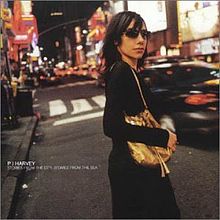
SOUNDTRACK: PJ HARVEY-Stories from the City, Stories from the Sea. (2000).  

When this disc came out it was greeted with rounds of praise.  And it’s easy to see why.  It’s a mature album and it seems very New York City (or, perhaps, more specifically, it seems very Patti Smith–“Good Fortune” practically has Smith singing–I mean the way she says “Little Italy” could have been sampled from Smith).

And after the somewhat wispy Is This Desire and the stopgap Dance Hall at Louse Point, it was great to hear PJ back in full swing. These songs are stripped down (but not raw like her early albums) and most of them pack a punch.  And I just read this quite from PJ  in Q Magazine:

I want this album to sing and fly and be full of reverb and lush layers of melody. I want it to be my beautiful, sumptuous, lovely piece of work.

And it is.  It’s very commercially successful. And it was commercially successful without compromising herself.

“Big Exit” and “Good Fortune” are wonderful rockers, catchy without being predictable.  “A Place Called Home” continues in this vein, with a somewhat slower, moodier piece.  It also exhibits some of her higher register (in the bridge), but for the most part she sings in the deep voice she’s been known for (Uh Huh Her came next, and then she switched over to the higher pitch on White Chalk).

“One Line” even made it on the Gilmore Girls (paragons of good musical taste).

“Beautiful Feeling” is a slow brooding number.  Typically, I find that I don’t like these songs from PJ, but this one is fantastic.  It’s followed by the noisy “The Whores Hustle and the Hustlers Whore” which is very dark lyrically.

Midway through the disc, we get a surprise Thom York from Radiohead sings the lead vocals on “This Mess We’re In” (PJ does backing vocals) and it shows that Yorke sounds great doing anything.  It’s a great song.  “You Said Something” is the first real upbeat moment on the disc, with some nice acoustic guitars.  And it’s followed by the absolutely rocker, “Kamikaze” which harkens to some of the noisier aspects from her earlier records (especially her screaming vocals).

The back half of many PJ albums seem to lose momentum, but not this one: “This is Love” is another great single, catchy with some simple but cool sounding guitars.

“Horses in My Dreams” is one of long (5 minute), slow numbers.  It is a kind of languid piece, which I admit I don’t like all that much.  (I find that PJ’s slow pieces aren’t dynamic enough).  But the album closer “We Float” (at 6 minutes, I think the longest track she’s done) is the kind of moody piece that Harvey does right.  There’s some simple drums and piano that comprise the verses, but when she gets to the chorus, the song perks up with her gorgeous singing “We Float.”

Confusingly, the whole album seems like it is more from the “City” than the “Sea” (“We Float” being the exception), but that’s okay.  It’s a wonderful album and the start of another great decade for PJ.

[READ: late March 2011] discussing The Turing Test

Occasionally things converge in my reading life. And sometimes things converge rapidly.  I had just read an article by Adam Gopnik in the New Yorker that discussed machines becoming (or surpassing) humans.  The timing of this coincides somewhat with the appearance of Watson on Jeopardy! so it’s not entirely surprising to see it.  Watson proved to be very good on Jeopardy!, but that seems mostly because it can buzz in more quickly.  The real test for a computer’s “humanity” is what has been termed “The Turing Test.”

Gopnik’s summary of the Turing Test:

If a program could consistently counterfeit human language in an ongoing exchange, then, many theorists have argued, the threshold of language would have been crossed, and there would be no need for more games to conquer. This is the famous “Turing test,” named for Alan Turing.

The next night I read a story by Ryan Boudinot (in The Littlest Hitler).  The story is not current at all, and yet he also mentions the Turing test.

The third article is another book review.  The subtitle is “What will happen when computers become smarter than people?”  Again, given everything that’s happening in the world technology-wise, it’s not a total surprise, and yet the items are all quite different and it was interesting to read them all so close together. (more…)

Read Full Post »

SOUNDTRACK: RADIOHEAD-The King of Limbs (2011).

I finally had a chance to really listen to this CD and I have some mixed feeling about it.  It doesn’t excite me as much as previous Radiohead releases have and yet, at the same time I can’t stop listening to it.  But I find that I’m listening to it a lot as background music, so I haven’t been able to fully appreciate what’s happening on all the tracks.  Now that I’ve really listened, my appreciation for the disc is higher, although I don’t find it as overall exciting as In Rainbows.

The opener, “Bloom” is a really spare song.  And although I like it, there’s a part of me that wonders almost what’s the point of making an electronica song that is so spare when many others have done much the same.  (It’s interesting to me that iTunes declares that this album is in the genre Electronica).  Of course, with some closer listening, there are some interesting Radiohead things happening, but for me the album doesn’t really start until “Morning Mr. Magpie,” a wonderful weird little song with a great opening guitar riff and excellent use of noisy drumming.  The drumming is really amazing.  It seems to be off-beat and then it speeds up to get on the beat–in every line!  Disorienting and compelling.  But it’s the guitar, I think, that was really missing from the opener.  (Of course, having said that I did like Radiohead’s previous forays into electronica that was sans guitar).

“Little By Little” proves that you can make a weird electronica song that is full of crazy noises and still have a supremely catchy chorus too.  “Feral” is, as far as I can tell, an instrumental (there are lots of sounds that could be voices, but I’m not sure).  It also features one of the great spooky keyboard type sound in a Radiohead song.  Its pretty cool.

“Lotus Flower” is the “obvious” single from the disc (and the radio by me is actually playing it!).  Even though it’s not radically different from the rest of the album, it stands out as the most melodic, the most catchy, the most, well, “single.”  It’s really great.

“Codex” slows things down with, if not a traditional piano ballad, something of a traditional Radiohead piano ballad.  My 5-year-old son made his first venture into music criticism when this song came on.  He said: “Why are you listening to a sad song?”  And when I asked if he liked sad songs he said, “No, sad songs make me feel sad.”  This is a pretty sad song, but it has Thom Yorke’s vocals of redemption pulling through at the end, even while the song retains its sadness.

My son really liked “Give Up the Ghost” though.  He said it sounding like the music at the end of a film, in fact, he was certain it was the music from the end of The Land Before Time movies. (That song is actually a James Horner song, sung by Diana Ross called “If We Hold On Together”).

The final song is a more drum filled track.  Yet despite the manic percussion, the song itself is actually kind of mellow and slow.  It’s pretty much a quintessential late Radiohead song.  Clark’s final review came with this song: “I love this song!  It sounds like someone bonking bananas on your head.”  So there ya go.

So overall, I enjoy the album, but I don’t think it will have as much staying power for me as their other discs.  It’s also surprisingly short (about 35 minutes–although just the other day they released two more tracks).  However, having said that, I’ve since listened again, and I find that I notice something new with each listen, so maybe it will continue to grow and grow on me.

Two of the more interesting things on the album though are the liner notes.  I can’t imagine what inspired, “A big thank you very much indeed to Drew Barrymore”.  And I’m intrigued at “Fluegelhorn on “Bloom” and “Codex” performed by Noel Langley and Yazz Ahmed.”  I’m intrigued that a) there is a fluegelhorn and b) that they needed two people!

[READ: April 10, 2011] The Universal Sigh

This “newspaper” was distributed at some record stores around the world as a tie-in to the new Radiohead album’s release in hard format.  I found out about it from my friend Lar.  He comments that he is too old to be hanging around in the streets waiting for this kind of titbit, and I couldn’t agree more.  He is too old.  As am I.  So it’s nice that there’s a digital version of the paper available.  (Remember when Radiohead snuck little things like this into the backs of their CD cases?)

Now just what is this thing?  Well, it is a newspaper of sorts.  There is a tenuous connection to Radiohead (in other words if you didn’t know they made it, you wouldn’t find out from looking at it). But the main focus seems to be environmental causes.  (Which means that since I printed out the PDF, I have undermined the band’s intention of producing a low carbon footprint product–but hey at least I printed it double-sided). (more…)

Read Full Post »

« Newer Posts - Older Posts »