 SOUNDTRACK: LOVE-Da Capo (1967).
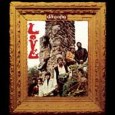 A few years ago, my friend John gave me Love’s Forever Changes. I’ve enjoyed that disc very much and decided to get some other Love music. I chose Da Capo (their second album, and the one just prior to Forever Changes) for two reasons. One: Rush did a cover of “Seven and Seven Is” on their Flashback CD and two: there’s an 18 minute song on it, and I love me an eighteen minute song.
The first side is a bunch of shorter songs; each one is quite charming. In fact, “Orange Skies” is so sweet, complete with flute solo, that you can pretty much hear Arthur Lee smiling all the way through it. The song is borderline cheesy, and yet I can’t help but find myself walking around singing “orange skies, carnivals and cotton candy and you….and I love you too.”
“Stephanie Knows Too” is kind of angular with a weird jazzy interlude. And “Que Vida” is just a poppy little number that is fun and interesting. It fits well with “The Castle,” another stop/start song that has a beautiful guitar melody at the opening. The side ends with a classic psychedelic track “She Comes in Colors.”
The only oddball of the side is, paradoxically, the single “Seven and Seven Is.” It’s a fast rocking number with the fascinating chorus of “Oop ip ip Oop ip ip, yeah!” Perhaps the only line that’s stranger is “If I don’t start crying it’s because I have got no eyes.” And this was the single? Clearly Arthur Lee liked his psychedelia.
Then we move to the 18 minute gem. Well, in fact, “Revelation” (the first song ever to take up an entire side of an album) is something of a disappointment to me. It is basically a jam that sounds like it was done in one take, although since Arthur Lee was a taskmaster I doubt very much that it was one take.
It’s starts promisingly enough with a rapid harpsichord intro, but it moves into a fairly mundane jam session. There’s a great line from a Paul F. Tompkins skit, in which he says that jazz is just music of solos: “everybody gets one, it’s not like regular music where only the best dude gets one, in jazz everybody gets one.”
And that’s the case with this song. The solos go: guitar, harmonica, vocals (Arthur Lee improvising some pretty lame segments (Mostly about how he feels good), and let me tell you, he’s no Jim Morrison when it comes to this sort of thing), another guitar solo, a clarinet solo (!), then a bass solo and finally a drum solo, rounded all out with a harpsichord outro that mimics the beginning. The problem is that none of the solos (excepting the guitar) is particularly noteworthy, and it’s not recorded especially well. It’s all rather flat. In particular the sing along part, where Lee is screaming and whatnot, it’s just not convincing, especially since the band doesn’t seem all that excited about the proceedings. I got tired of it at after about 5 minutes (although the opening of the clarinet solo which sounds an awful ot like a flock of geese is pretty cool). It’s a shame really, because I wanted to like this track a lot. Nevertheless, it hasn’t put me off of Love.
[READ: March 3, 2009] “Wiggle Room”
This week’s New Yorker featured not only a story by David Foster Wallace but also a sort of biography/obituary of him. D.T. Max, a name straight out of Wallace’s imagination, writes a moving and depressing epilogue to the story of DFW. (It’s available here) The main thrust of the article is that DFW had a hard time writing fiction after Infinite Jest, but that he had been working on a new book (which, although unfinished, is due to be published sometime this year). (more…)
Read Full Post »
 [ATTENDED: December 12, 2017] Groovy Movies


 I Just Read About That...