Feeds:
Posts
Comments

Archive for the ‘Jimmy Buffett’ Category

SOUNDTRACK: BORIS-Archive Volume One “Live 96-98” (2005/2020)
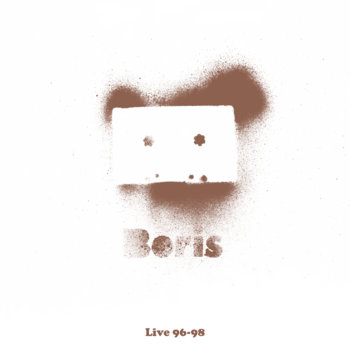
In early August, Boris digitally released six archival releases.  Volume One is called “Live 96-98” and that’s what it contains.  There’s eight songs all recorded in the same place Koenji 20000V, once a year or so.

Originally released in 2005 from the US label “aRCHIVE”, limited to 600 copies which sold out immediately. Compiled from live recordings during Boris’s “Power Violence” period 1996 – 1998, including songs from the 1998 studio album “Amplifier Worship” and Archive Volume Zero “Early Demo”.  (Reissued as part of Archive 1 on March 5, 2014. Limited to 1,000 copies).

The first two songs were recorded in December 1996.  They are not for the faint of heart.

“Huge” is a ten minute drone.  It’s full of feedback and slow chord progressions that repeat until after five minutes, when Wata hits a high note and Atsuo starts screaming along with the thumping drums.  It segues into “Hush” which is 53 seconds of thrash: pounding guitar and drums, including something of a drum solo by the end while someone sings to it.

The next chunk of songs were recorded six months earlier.  “Soul Search You Sleep” is nearly 9 minutes of crashing chords with lots of screamed vocals.  There’s a brief fast section before the slow drones return.  Wata takes a guitar solo near the end which segues into “Vacuuum” which is a minute and a half long.  It starts with that wailing guitar solo until the pummeling drums and screamed vocals take over.  It ends with feedback that segues into “Mosquito” a slower song that has chanted vocals from both Atsuo and Takeshi.

“Mass Mercury” was recorded almost a year later.  Things aren’t radically different, but they allow some of the noise to drop away a bit more.  It opens with feedback and fast riffing guitars.  After a minute and a half everything drops out but some pulsing bass and guitar effects from Wata. The pulsing runs through to the end after a middle section of growls and drums.  It segues into “Scar Box,” which is a big slow riff.  Unexpectedly, mid song it briefly turns into a crushing hardcore song with shouted growly vocals until it slows back to crashing heavy chords.

The final track is the newest of the bunch.  It’s 8 minutes long and starts as a fast hardcore song.  Then a bass and drum rumble takes over and things slow down while Wata makes some airplane-like sounds it her guitar.  The solo loops and phases through to the end until about a minute left when both singers start shouting through to the crashing end.

I’m not sure if they are singing in Japanese or just growling, but it’s a pretty intense 45 minutes of live music.

[READ: August 12, 2020] A Very Punchable Face

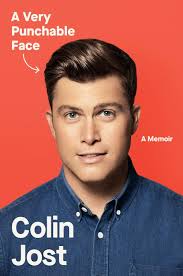
I wasn’t really sure how I felt about Colin Jost.  I like him on Saturday Night Live’s Weekend Update and yet as the title of his book says, he has a very punchable face.  And, as I say every time I read a memoir–I don’t really care about memoirs all that much.  And yet here’s another one I’ve read.  And it’s yet another one from a cast member of Saturday Night Live–a show that I don’t think is all that great (but the memoirs are usually quite good).

There was an excerpt form this book in the New Yorker and it made me laugh at loud, so I looked forward to reading the rest of the book.

The beginning is interesting in that he says he had a hard time learning to speak–an odd thing for a TV news presenter.  But really the most fun part starts when he tells us about the astonishing amount of bad fortune he has had–his delivery about it all is hilarious.

The chapter “You’re Gonna Need Stitches” lists the six times (throughout his life) that he has had to get stitches–one was from getting a surfboard to the face!  Indeed there are two stories of surfing –not something I expected from a guy from Staten Island.  The second one involves being saved by Jimmy Buffet (and how much Jost enjoys eating at Margaritaville restaurants–I can’t get over how much alcohol must be consumed at a this franchise).  There’s also a crazy story about him visiting Google and getting injured by the VR machine.  He even somehow managed to possibly have insect eggs laid under his skin.  Ew! (more…)

Read Full Post »

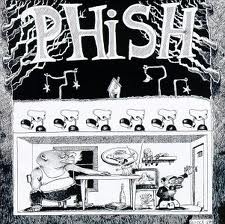
harper septSOUNDTRACK: PHISH-Junta (1989).

juntaI’ve been listening to a lot of live Phish as of late and thought it would be interesting to see if there was truth to the adage that Phish is great live but not so great in the studio.  So here is their first official album.  It was released as a double album, and when it was reissued on CD some bonus material was added.  Incidentally, I just found out that the album if pronounced “juhnta” and not “hoonta” because of the engineer they worked with.

The album starts with “Fee” which is a fun song (the lyrics are wonderfully weird) and they don’t play it all that much so it’s a treat to listen to.  I enjoy the way the verses sound compressed and distant but the choruses are nice and full.  There’s also some funny and interesting sound effects (some of which accentuate the action) throughout the song. This sound effects and noises processing has been with Phish from the beginning and they kept it up through many of their earlier, less mature albums. “You Enjoy Myself” is a live favorite so it’s fun to hear it in this version.  As with a lot of their earlier records, this song sounds a little stiff, especially if you’ve heard the wild live versions. It’s not bad at all, indeed, it has a perfectionist quality to it—the time changes are perfect, the solos are flawless.  Indeed, it’s quite an achievement (and in this more polished version it sounds more like Yes than their live versions ever did).  Interestingly when we finally get to the lyrical section (about 5 minutes in) it’s quite a bit slower than they play live.

“Esther” sounds much more theatrical here.  The music is gorgeous and there are lots of effects and backing vocals which bring a bit more menace to the song than the live version possesses. This also had a very prog rock sensibility to it.  “Golgi Apparatus” has a lot more in the way of backing vocals than the live version.  And “Foam” has some changes: the bass is especially loud and funky and yet the pace is so much slower than I’m used to.  The odd thing is the kind of stiff way that the lead vocals enunciate everything.  And the deep voice (Mike?) is quite amusing at the end of the song.  “Dinner and a Movie” is a fun and silly song and this version is especially enjoyable because of the backing voices and chatter and laughter which illustrate the dinner (and presumably the movie).

“Divided Sky” has a beautiful melody and it’s nice to hear it played so pretty and simply here.  But again the remarkable thing is how much slower the song is here.  “David Bowie” also sounds great (there’s all kinds of weird sounds effects in the background of the (very long) soloing section—I have no idea why or what they might be).  The solo sounds like it was maybe done in one take as there’s a couple spots where it’s not “right,” (whether flubs or intentional is hard to say) but it still sounds terrific.  In fact a number of tracks have some little flubs which makes it seem like they either didn’t mind or tried for a more live feel.

“Fluffhead” sounds solid and like the live versions.  What I never realized until I actually paid attention is that the bulk of the music (the extended jam session) is called “Fluff’s Travels.”  “Flulfhead is only 3 and a half minutes, while “Fluff’s Travels” is over 11 minutes (it opens with the beginning of the guitar solo–the catchy riff that starts the lengthy jam).  “Contact” is a delightfully silly song about tires and cars that I’ve always enjoyed and find myself singing often because the melody is so simple.

What’s funny is that the end of “Contact” kind of bleeds into “Union Federal” which is listed as a live song (and clocks in at over 25 minutes long).  This “Union Federal” is an improvisational jam (or an Oh Kee Pah Ceremony—where the guys would get together with instruments (and other things) and jam for a time.  This song is weird with many layers—and is rather typical of one of Phish’s weirder jazz –flavored improv sections (meaning that there is a lot of dissonance and noise).  It’s quite jarring especially after all of the melodies and prettiness of the album proper.  And I can see a lot of people not being happy about its inclusion.  “Sanity” on the other hand is a fun song.  In the intro, they keep claiming the song is by Jimmy Buffett. They are clearly very silly in this setting, especially at the end of the song.  The final track is a live version of “Icculus” the song which is pretty much all buildup.  In the intro they quote U2 “This is red rocks, this is the edge.”  But the “joke” of this version is that Trey keeps postponing the name of the person who wrote the name of the Helping Friendly Book–stalling in any way he can.  As the song gets louder and louder and more absurd, the guys are even more frenetic.  It takes over 3 and a half minutes to get to the proper lyrics of the song.   And then the song itself is about 15 seconds.  Absurd nonsense.  But very amusing.

So this is quite a solid debut album, and the amount of songs that they still play live shows how fond everyone is of it.

[READ: October 2, 2013]  “Wrong Answer”

I didn’t hate Algebra.  I rather like solving puzzles so I enjoyed solving for x.  Algebra II I recall being more daunting and less fun with lots of formulae to memorize.  And, unlike everything promised, I have never used any of it in my adult life (geometry and angles, sure, but not logarithms).  According to this article the new United States CORE curriculum (which I know my son is dealing with already in 3rd grade) says that high school graduates must have Algebra II.

The reasons for this intensification in the studying of math are many (starting around the time of Ronald Reagan) but the current push comes from Arne Duncane, the U.S. secretary of education.  He believes that “algebra is a key, maybe the key to success in college.  Students who have completed Algebra II in high school are twice as likely to earn degree as those who didn’t.”  Whether or not that is true, those of us who earned a degree in nonmathematical  subjects certainly were not aided by this class.  But Nicholson Baker explains that the reason this might be true is that for most colleges, Algebra II is a prerequisite.  Ergo: if you don’t take Algebra II you can’t get into college because colleges require Algebra II.  That, for those who may not have taken logic–a far more useful course than Algebra II in daily life–is called a tautological fallacy.  [Indeed, I maintain that all high school students should have to take a course in logic because they would then be able to see through all of the builshit that politicians spill and claim to be logic.  Like the current (as I type this) government shutdown in which Republicans are claiming they didn’t want to shut down the government when they in fact signed papers saying they were going to shut down the government).]

The real problem with Duncan’s postulate that everyone should take Algebra II (“airplane mechanics do complex measurements and work with proportions and ratios…X-ray technicians calculate time exposures to capture the cleanest possible image.  Most factory workers need to understand Algebra II or even some trigonometry to operate complex manufacturing electronic equipment”) is that even if that were true (I don’t have any idea of it is or not), most people do not do those kinds of jobs.  And even if they did know higher math, they would still be salesmen, graphic artists, librarians, preschool teachers, custodians and many many other jobs that in no way require math. (more…)

Read Full Post »