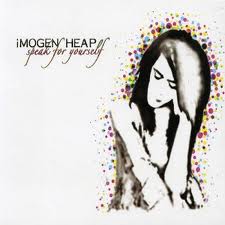
SOUNDTRACK: iMOGEN HEAP-Speak for Yourself (2005).
I really liked Heap’s first album i Megaphone, but I didn’t really think to much about her after that. Sometime last year I heard a track she was in with Frou Frou, which I liked. So I thought I’d get this album which was highly regarded.
The problem with it is that I have listened to it a bunch of times, often several times in a row and it really just never sticks with me. I keep relistening to see if it ever does but it’s just a kind of nebulous dancey pop. Heap has an interesting voice–she can hit major highs, but she can also do a raspy voice that is unusual and intriguing. But I suppose the problem is that there’s so much going on that she is effectively lost in the sound.
The standout track is “Hide and Seek” but that’s because her voice is manipulated by a vocoder, making her sound like a machine. It’s a very cool effect, especially when she hits a very high note, but it can’t really be a good sign that the most memorable track on the album is the one where you sound like a machine.
This is not to say that the album is bad–there are a number of interesting moments on it, unfortunately there aren’t a lot of great songs. When I was looking this disc up to see other comments about it, I see that it was very highly regarded in the dance genre. And maybe given those parameters I should revise somewhat as well. As dance music this is more interesting than your average four on the floor stuff. I can see how it led to the duet of Frou Frou. And yet, compared to i Megaphone, I fear that it’s a lot less exciting.
[READ: January 12, 2013] The Dangerous Animals Club
I don’t often read autobiographies or memoirs. I really never even look for them. But I was waiting online at the library and this book jumped out at me. I don’t really know why. The title is kind of interesting and catchy. And the author’s named seemed, if not familiar, then at least compelling in a very-long-and-Polish-or-Russian way. So I started flipping through it. And it sounded interesting.
But who the hell is Stephen Tobolowsky? Well, if you have seen just about any movie or TV show, you have seen him. He has been in a ton of things. He was in GroundhogDay, he was in Heroes, he is in Glee, he was in The Mindy Project briefly. Community? yup. The New Adventures of Old Christine? you bet. Deadwood for a lot of the show. That 70’s Show for one episode. He was in the unaired pilot of Buffy the Vampire Slayer. He was even in a 1976 movie called Keep My Grave Open!
I didn’t know anything about Frank Ocean until I started looking at all of the Best Albums of 2012 lists. He was on everyone’s list and was pretty near the top of all of them. So it was time to check him out.
It turns out that he’s affiliated with the Odd Future collective, whom I’ve talked about in the past. But he’s also been on a lot of big name records. Channel Orange is his debut album (that’s not a mixtape) and the big surprise seems to be that this song (which he sang live on Jimmy Fallon) is about a male lover. And I guess that’s progress.
So Ocean sings a slow R&B style, and I have to say his voice reminds me of Prince a lot. Which is a good thing. I really like this song. It has gospelly keyboards (but in that Purple Rain kinda way). And a really aching vocal line. It’s really effective and it’s really simple. And I think that’s what I liked best about this song and others that I’ve heard–he’s really understated. Crazy, I know.
Now I do not like R&B, it’s one of the few genres that I just don;t get. And yet there’s something about this album (the tracks I’ve listened to) that is really compelling. It’s not awash in over the top R&B trappings, and it doesn’t try too hard. It’s just Frank (not his real name) and his voice over some simple beats. A friend of mine recently said that all of a sudden she “got” this album, and I think I may have to get it as well.
[READ: December 30, 2012] McSweeney’s #12
At the beginning of 2012, I said I’d read all of my old McSweeney’s issues this year. I didn’t. Indeed, I put it off for quite a while for no especial reason. Now as the year draws to an end, I’m annoyed that I didn’t read them all, but it’s not like I read nothing. Nevertheless, I managed to read a few in the last month and am delighted that I finished this one just under the wire. For those keeping track, the only issues left are 13, 14, 15, 16, 20, 10, 38, (which I misplaced but have found again) and 42, which just arrived today. My new plan in to have those first four read by Easter. We’ll see.
So Issue #12 returns to a number of different fun ideas. The cover: It’s a paperback, but you can manipulate the front and back covers to make a very cool 3-D effect (by looking through two eyeholes) with a hippo. The colophon/editor’s note is also back. Someone had complained that he missed the small print ramble in the beginning of the book and so it is back, with the writer (Eggers? Horowitz?) sitting in Wales, in a B&B, and hating it. It’s very funny and a welcome return.
As the title suggests, all of the stories here are from unpublished authors. They debate about what exactly unpublished means, and come down on the side of not well known. And so that’s what we have here, first time (for the mos part) stories. And Roddy Doyle.
There are some other interesting things in this issue. The pages come in four colors–each for a different section. The Letters/Intro page [white], the main stories [pink], the Roddy Doyle piece (he’s not unpublished after all so he gets his own section) [gray] and the twenty minute stories [yellow]. There’s also photographs (with captions) of Yuri Gagarin. And a series of drawing that introduce each story called “Dancewriting”–a stick figure on a five-lined staff. They’re interesting but hard to fathom fully.
SOUNDTRACK: PHINEAS AND FERB-“I Really Don’t Hate Christmas” (2009).
I have grown to love Phineas and Ferb ever so much in the past year. Holy cow it makes me laugh so much that I would totally watch it even without the kids around.
This song, sung by the evil Dr Doofenshmirtz, explains how he has a backstory that makes him hate every holiday except Christmas–he just has a burning indifference to it. The song is catchy and funny.
Of course since he is an evil scientist, he finds a reason to hate Christmas and launch his naughtyinator. When carolers come to his door and repeat over and over that they want figgy pudding, he begins to get quite annoyed. And we get this hilarious exchange:
CAROLERS: (singing) We won’t go until we get some, we won’t go until we get some….
DR. DOOFENSHMIRTZ: What? Are you threatening me? How dare you! No one barges into my home and demands desserts! What sort of plan is that anyway? “Let’s go to a stranger’s house, sing songs to him, and refuse to leave unless he hands us a food dish no one’s prepared since the 16th century!”
Just in time for the holidays:
[READ: December 20, 2012] Diary of a Wimpy Kid: The Third Wheel
Clark was more excited for this book than I was! As soon as he saw it, he grabbed it and ran into his room to read it (for which I was both proud and a little annoyed as I wanted to read it). I’m not sure how much he could have enjoyed it as it is all about going on a date, but he seemed to like it.
It’s not all about a date though. It begins with Greg reminiscing about his time in the womb (a very odd thing for Clark to read, I’m sure). rtHis mom listening to Mozart and just how much he could hear while in there. Then he talks about his life as a wee one, which is very funny–he learned how to take the batteries out of the remote so his mom couldn’t put the educational shows back on (he’s also annoyed that Manny gets to watch whatever he wants now–no educational TV for him).
But Manny doesn’t come out on top all the time–there’s the boy who acts like a vampire at Sunday School and scares Manny to bits. This may be why Manny only has imaginary friends (well, that and the fact that their mom reads Manny the children’s book she wrote about the boy who used to bite Greg–it terrifies Manny). Of course, the imaginary friends get in trouble for all the things Manny does (maybe Manny does come out on top all the time after all).
One of the funnier aspects of the Wimpy Kid series is the locations that they go to. Like Corny’s, the family restaurant where the key is fun (not food), and the first time they went Greg almost sat on a PB&J sandwich that was never cleared away. (And wait till you see what the family next to them are doing!). (more…)
SOUNDTRACK: SWANS-Live at All Tomorrow’s Parties, October 2, 2011 (2011).
Before Swans released this year’s amazing The Seer, they toured supporting their previous album (with a number of songs from The Seer included). This set has two songs from The Seer, “The Apostate” and “The Seer, Pt 1” together they comprise 50 minutes of the nearly two hour show. The set also includes “No Words No Thoughts” (24 minutes) and “Jim” (a teeny 6 minutes) from 2010’s My Father Will Guide Me Up a Rope to the Sky. The final track is an eleven minute version of “I Crawled” which goes all the way back to 1984’s Young God EP.
I would never have thought of Swans as a jam band, and yet here they are, with 5 songs in 2 hours. Although unlike jam bands, they aren’t showing off their musical chops or noodling solos, they are created expressive and moody soundscapes–not as scary as in days of old, but very intense nonetheless.
The set sounds great, although I imagine this would be more enjoyable to watch than to listen to (there a great swaths of music where there’ s not a lot happening). I wonder what Gira is doing during these stretches. My friend Phil (or Phillipe Puleo as Gira calls him here) plays drums on the album and on this tour, and I have to say he must be exhausted–man he hits the drums hard.
I listened to this show before I heard The Seer, but it didn’t prepare me for what the album would contain. Now having heard that album, I appreciate this live show even more–they really master these long songs. I am going to have to try to see them the next time they swing by. I admit I used to be afraid at the thought of seeing them because their early music was so intense, but this seems to be a different Swans now, one that an old man like myself could even handle.
The set is no longer available on NPR.
[READ: December 10, 2012] McSweeney’s #41
The cover of this issue has a series of overlapping photographs of lightning. I didn’t really look at it that closely at first and thought it was an interesting collage. Indeed, Sarah said it looked like a science textbook of some kind. But when I read the colophon, I learned that Cassandra C. Jones finds photographs of lightning and (without manipulating them digitally) places them together so that the lightning bolts create shapes. And indeed, that is what is going on. And it’s amazing!
The cover’s pictures create a greyhound running (front and back covers show different stages of the run). There’s also circles and a rabbit running. It’s incredibly creative and very cool. You can see some of her work at her site.
The feature of this issue is that there are four stories from Australian Aboriginal Writers, a group that I can honestly say I have never read anything from before. There’s also beautiful art work accompanying most of the longer stories, three gritty non-fiction pieces and some letters, most of which aren’t very silly at all.
SOUNDTRACK: THE DIVINE COMEDY-BANG goes the Knighthood (2010).
I’ve really enjoyed The Divine Comedy since their earliest Michael Nymanesque music. I loved the orchestral pop that Neil Hannon seemed to effortlessly create. His last few records have been less exciting to me. He has toned down the orchestration and made his songs more subtle. They’re still beautiful but they’re not always as immediately arresting. I thought that was true of this album as well, although I found that when I sat down and really listen to the music and words together (what a novel idea) the music played so well with the lyrics that the album overall is easily one of his best. Although I still prefer the pomp and full orchestration of the earlier music, this newer stuff is very interesting. An artist has got to grow, right?
The new sound is more Tin Pan Alley. It’s piano with guitars and occasional horns–very limited strings are present at all. And, as any fan knows, Neil writes wonderful songs about love, and the songs on here are some more great love songs. The non-love songs span the gamut of ideas–from emotionally wrenching to downright silly. Neil is definitely a “get to know him” kind of songwriter. And it’s rewarding when you do.
“Down in the Street Below” is a piano based song that morphs into a jaunty little number after some quiet verses. It features yet another of his great melodies. “The Complete Banker” is a jaunty piano song that mercilessly mocks the banking industry. Not terribly original but certainly fun and lyrically it’s quite clever. “Neapolitan Girl” is a faster song (reminds me of a Broadway musical or movie instrumental) which is (as they all are) very fun to sing along to). “Bang Goes the Knighthood” is a musical hall song that is really quite funny despite the somber sound of the music (it’s about a knighted man who indulges in certain proclivities that might cost him what he has).
“The Indie Disco” is the exact opposite, it’s bouncy and shuffly and yet understated as only an indie disco can be (this may be the softest, least excited “yea!” in any song ever. Name checking Morrissey may not be original but it would be a less real picture without him. The songs he mentions are kind of dated, but are probably pretty accurate to what gets played in an indie disco these days. “Have You Ever Been in Love” could be used in any rom-com film montage. Although maybe it’s too obvious? Sweetly filled with strings (yes strings).
“Assume the Perpendicular” is a slightly faster song, as befits lyrics, “I can’t abide a horizontal life while “The Lost Art of Conversation” is another bouncy tune with a whistle for an ending!
“Island Life” is one of the first duets I can think of from the Divine Comedy–it sounds like something out of the movie Brazil. “When a Man Cries” is an emotionally wrenching song. It seems somewhat out of place for Hannon’s usual topic, but it’s quite beautiful. The silly fun of “Can You Stand Up on One Leg” is the perfect antidote. Each verse provides something that’s harder to do than you think. The final verse offers, “can you hold a singing note for a stupidly long time…. Let’s see how long you can hoooooooooo….oooold on to a note.” For the record, Neil’s note is 29 seconds long….stupidly long! Is that really him holding that high note for 29 seconds?
The final song “I Like” is a wonderful poppy ditty, in which the full band rocks out (more or less) to another great melody. It’s a perfect love song (even modernized to include a kind of rhyme with sexy and texting).
Initially I was a little disappointed by this disc, but it really proved to be fantastic. More, Neil, more!
[READ: December 28, 2011] Is Everyone Hanging Out Without Me?
Is Mindy Kaling a big enough celebrity to write a book (memoir or otherwise?). To use her own in-book comparison, she’s nowhere near Tina Fey’s level of fame, right? (although I actually think she is funnier). I mean, she’s a minor character on a popular show. True, she’s also a writer and producer, but that’s not going to lead you to fame or anything. The more I read about her in the book, the more I wondered exactly who would know her aside from fans of The Office.
None of that is to say that Kaling isn’t awesome. She is. She’s funny and talented and I am thrilled she wrote a book–sometimes within an ensemble your individual voice will get lost. But I have to wonder how much name recognition she has. And the book doesn’t do a lot to dispel this sense for me. I mean, she tells about everything she’s done, and really all she had done was write Matt & Ben (which sounds awesome and which I remember hearing about back in the day) and work (a lot) for The Office. Not minor accomplishments by any stretch, but not a fame-inducing resume. Nevertheless, good for her that someone was interested in letting her write a book. And good for us who read it. If you are amused by the use of the subtitle of the book (which I am) you will like enjoy the humor here.
I had read some excerpts from the book so I assumed it was all funny essays and whatnot, but it’s not. It’s actually a memoir with funny essays mixed in. Of course, Mindy’s life before Matt & Ben isn’t really very “interesting” (the book is very funny during this time of her life, even if she really didn’t do much more than babysit for rich folks and watch Comedy Central).
In the Introduction, Mindy provides a FAQ about the book. One of the questions is if she is going to offer advice and she says yes. And here’s the thing, Mindy’s advice is outstanding. She offers advice about many topics and I don’t think I disagreed with her about anything (except maybe pea coats). She’s like the voice of reason in a world gone mad and an excellent role model for anyone. (more…)
Pearl Jam records (and sells) most of their shows and they occasionally videotape them as well. But they don’t do TV all that much (excepting the recent Late Late Show episodes). There seemed to be something special, or at least different, about Pearl Jam on Austin City Limits. Think of it almost like Unplugged Updated.
It opens slow with Eddie on an acoustic guitar and strings behind him. In fact, the whole set seems less heavy than many of their sets. But that’s not to say that the band doesn’t rock out, because they do.
The first six songs of the set come from Backspacer. And then they bust out “Army Reserve” (which makes sense given who is in the audience, see below). Then there’s a wonderfully raucous version of “Do the Evolution” (one of my favorite PJ songs).
After that riotous track, they bring the strings out for one more song. It’s a rather funny little joke because it’s just the strings and Eddie on acoustic guitar playing “Lukin,” the 80-second song that is so fast you can barely hear the words.
For an extra treat, touring mate Ben Harper comes out to play slide guitar on “Red Mosquito” (which is always a treat). And the set ends with an amazing version of “Porch” with a super long guitar solo in which Mike McCready really shows off his chops. There’s even a moment where Mike and Stone are riffing off each other, classic rock style.
The set ends the Eddie talking about playing for the wounded veterans in the audience and how it was quite moving for him given all they have done for us. Over the closing credits you see the band mingling with the veterans (including a guy who has lost a leg). It’s all surprisingly touching for a rock show.
[READ: November 20, 2011] “Perchance to Dream”
A while back I read all of the Jonathan Franzen articles that were published in The New Yorker. I thought I had read everything he’d published until I realized I had forgotten to read this piece (possibly his most famous) that was published in Harper’s. It fits in well with this weekend’s theme because it was mentioned in Evan Hughes’ article that I talked about yesterday and because David Foster Wallace is mentioned in it.
As with most of Franzen’s non-fiction, it’s not easy to write about critically unless I want to argue with him, which I don’t necessarily want to do. So instead, I’ll try to summarize. Of course, this is a long and somewhat difficult article, so let’s see what we can do with it.
The first surreal thing is when you see the byline: “Jonathan Franzen is the author of two novels, The Twenty-Seventh City and Strong Motion, and is writing a third.” It’s hard to imagine he got a huge article in Harper’s before he wrote The Corrections.
The second surreal thing comes in the text: It opens with “The country was preparing for war ecstatically, whipped on by William Safire (for whom Saddam Hussein was ‘this generation’s Hitler’) and George Bush, whose approval stood at 89 percent.” And it is only a few paragraphs later when he mentions Patriot missiles that it clicked that this was written in 1996 and not 2001 and that he was talking about the 1991 Iraq invasion. He mentions this as a prelude, saying that he was trying to sequester himself in order to start writing again.
Then he talks about Paula Fox’s novel Desperate Characters as a benchmark in terms of insight and personal conflict, even if it is so crazily outdated (that someone would throw an inkwell!). He talks about this book quite a bit. I’m, not sure I found it compelling enough to want to read, but it’s always interesting to hear a fan write about a book I’ve never heard of. He will return to this book throughout the essay. (more…)
SOUNDTRACK: BOOKWORM-Jeffrey Eugenidies: The Marriage Plot (December 1, 2011) (2011).
Since “Just Kids” mentions Eugenides’ book, and since Eugenides happened to appear on Bookworm at around the same time as I read this article, it seemed like a good pairing.
Obviously, from the title of the episode you can tell that this is all about Eugenides’ new book, The Marriage Plot. Michael Silverblatt raves about this book like no other book I have heard (granted I haven’t listened to all that many episodes of Bookworm, but still). In fact while listening to this episode, I put The Marriage Plot on hold at the library. I always planned to read it but figured I’d just get around to it some day. Now I feel more of a sense of urgency.
They talk at length about the state of marriage in the 21st century. Not as in its decline but in how it differs so much from classic literature in which women had to get married by 21 or risk spinsterhood. Eugenides set out to write a book about people getting married without having the trappings of classical literature.
It sounds wonderful.
The reason I mention this interview at all is because in the article below, Hughes talks about contemporaries of DFW using DFW as the basis for a character in their books. So, in Franzen’s Freedom, there is character who is very much like DFW (I haven’t read Freedom yet so I can’t say).
And in The Marriage Plot, there is a character who resembles DFW. When I read the excerpt of this story in The New Yorker, I had to admit he did seem an awful lot like DFW–a tobacco chewing, bandanna wearing philosopher. Eugenides had been mum about it for a while, but now, under the gentle nudging of Michael Silverblatt, he comes clean.
He admits that there are some characteristics of DFW in the character. However, he says that he didn’t know DFW all that well and the character has been kicking around since he went to college (long before he knew DFW). Tobacco chewing was rampant at Brown in the 80s apparently. But it’s a nice revelation and it ties in very well with the article.
I have always grouped together certain authors in my head. When there were a bunch of Jonathans publishing, I kind of lumped them together. I think of Mark Leyner and Bret Easton Ellis in the same breath. It’s fairly common, I suppose. But I never really thought of David Foster Wallace in terms of a group of authors. He seems so solitary that it’s funny to even think of him as having friends. But according to Hughes, many of today’s established authors prove to have been a part of a kind of nebulous writer’s circle. A kind of 1990’s update of Dorothy Parker’s vicious circle. But more insecure.
The article bookends with Jeffrey Eugenides. In 1983 he and Rick Moody drove to San Francisco with the intent of being writers. Five years later with no written works, Eugenides moved to Brooklyn, alone. In that same summer, Jonathan Franzen was in Queens, also feeling alone (even though he was married–unhappily) and desperate for friends and peers. And then Franzen got a fan letter from David Foster Wallace (that’s after he had written Broom of the System, but before Girl with Curious Hair) praising The Twenty-Seventh City.
Franzen and DFW became friends. To this friendship was added William T. Vollman, and David Means, also Mary Karr (whom DFW dated) and Mark Costello (who co-wrote Signifying Rappers with DFW). Later they would connect with Eugenides, Rick Moody and Donald Antrim. (more…)
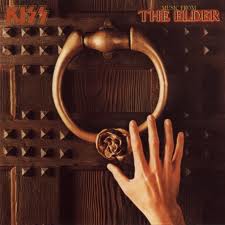
Kiss lost me on this one. I had been a faithful fan for several years, even putting up with all of the haters in fifth grade. But once I heard that Kiss was releasing an “opera,” well the heck with that noise.
Now, granted, I had no idea it was a rock opera or that Tommy was a rock opera. I heard the word “opera” (thanks newspaper review that my grandmother showed me) and said, Nope. Of course, I wasn’t the only one who said Nope. This record tanked. It tanked so bad that the band almost went bankrupt.
But the album wasn’t just an album. It was mean to be a film (there’s even film dialogue on the record!) and Chris Makepeace (Woody the Wabbit from Meatballs) was meant to star in it–I love that the film credit info is left on the record packaging). What could this film have been like….if only it were made!
At some point I decided to buy the LP (Who even knows where I found it on vinyl) and I was surprised by how much I liked it. In fact, I find it much more preferable to Dynasty and Unmasked. It’s less pop oriented, and some of the tracks rock harder than anything since Love Gun. True, there’s weird pretensions on it, but even those are just experiments.
This album also features Eric Carr on his first Kiss record (what a strange place for such a heavy rocking drummer to start).
So yes the album does open with horns and fanfare (like an opera perhaps?), but the first song, “Just a Boy” is a gentle ballad sung by Paul. It’s certainly wimpy, but I rather like it (as I’ve said many times, I love Paul and his swelling choruses). And there’s some nice guitar work from Ace here.
“Odyssey” has strings and strings galore. It’s a pompous swelling song that harkens to Destroyer, yet goes in a very very very different direction. As a fan of epic pretentious music, I rather like it, but as a Kiss song it’s a disaster. Of course, I have always enjoyed the jokey “Once upon….not yet” line.
“Only You” is Gene’s first foray on this album. And I will state categorically that this period was not good for gene’s songwriting. His songs are really quite dull and boring (when you think of the crazy, complicated bass lines and things he was throwing on songs just a few years back, dull songs like this are a shock). What’s also a shock is that this song is a kind of gritty guitar song, again, much less wimpy than anything on Unmasked–fickle fans turned on the band without having heard the songs–sure they weren’t good songs, but they weren’t disco either.
“Under the Rose” is the exception to gene’s malaise. It begins softly with Gene’s whispered vocals not unlike “Man of 1,00 Faces” but the chorus is heavy and chanted, foreshadowing what they would do on Creatures of the Night (although Creatures was heavier and faster). The riff is also pretty solid, too.
“Dark Light” is Ace’s contribution to the disc. It has a pretty heavy opening riff as well. And the verse reminds me a lot of the kind of verse Ace has been writing for a while–simple chords with lots of words. The solo is pretty much literally a solo–very little in the way of backing music while Ace wails away. Shame it’s not a very interesting solo.
“A World Without Heroes” is a very gentle ballad by Gene. There’s a great commercial for this album in which you get to watch Gene sing this song.
The crazy thing of course is that he’s in demon make up. If this were Kiss without makeup no one would think it was weird, but I mean, look at him, why is he singing songs like this? It is once again an impressive display of Gene’s range though. Nice guitar solo, too.
“The Oath” is actually one of my favorite Kiss songs, no irony intended. I used to laugh at the lyrics, which yes are silly (but this is Kiss, come on). True, it’s an odd mix of really heavy guitars and pretentious falsettos (along with a bizarre keyboard/swirly third part). But there’s a bitching guitar solo and as I said, the guitars sound great. And Paul manages all of those different parts very well. It’s vastly underrated and worth checking out (especially if you like unexpectedly weird music).
“Mr. Blackwell” feels like a song from a movie. It tells a bit of a story of a bad guy. The music is incredibly minimalist (one note bass bits and very sparse guitars during the bridge and chorus). Lyrically it’s dreadful–“You’re not well/Mr. Blackwell/Why don’t you go to hell”, but at least Gene sounds like a demon delivering it. The solo is an amazing bit of noise though.
“Escape from the Island” is another high point on the record. It’s an instrumental, it’s fast and it’s heavy. And it’s got another great solo from Ace–it’s funny that Ace was dissatisfied with the direction of Kiss at this time because he gets to really show off on this disc.
“I” is another solid anthem from Kiss. It ends the album in an upbeat way and if it weren’t on this dismissed album it would be on any Kiss anthems collection. Paul and Gene both take turns singing and the chorus is chantworthy and fist pumpable. They should release it on a new album. They’re so into it in the recording that Paul even shouts “you feel it too, don’t you?”
There’s an interesting review of this album at Popdose. The bad thing is that the site has links to lots of MP3 demos from the album, but they’re all broken links. I’d like to hear those.
[READ: October 30, 2011] “Homecoming, with Turtle”
This is an amusing piece of non-fiction from Junot Díaz. I’m grouping it with the Oscar Wao stories because it actually bears an impact on them. It’s about a visit that Junot took eleven years ago (from 2004) back to his homeland of the Dominican Republic.
He hadn’t been there in nearly twenty years and he decided to go with his girlfriend. Of course, like Yunior in the novel, Junot cheated on his girlfriend before their trip and one of her friends told her. This put some tension on their trip (and one even wonders why he persuaded her to go along after that).
Their trip began with a week volunteering in the DR for a kind of Doctors without Borders (but for Dentists)–they assisted dentists with extracting thousands of teeth. It’s a strange thing to do and a strange (but generous) way to start a vacation, but the exhaustion and camaraderie at least kept them from killing each other. (more…)
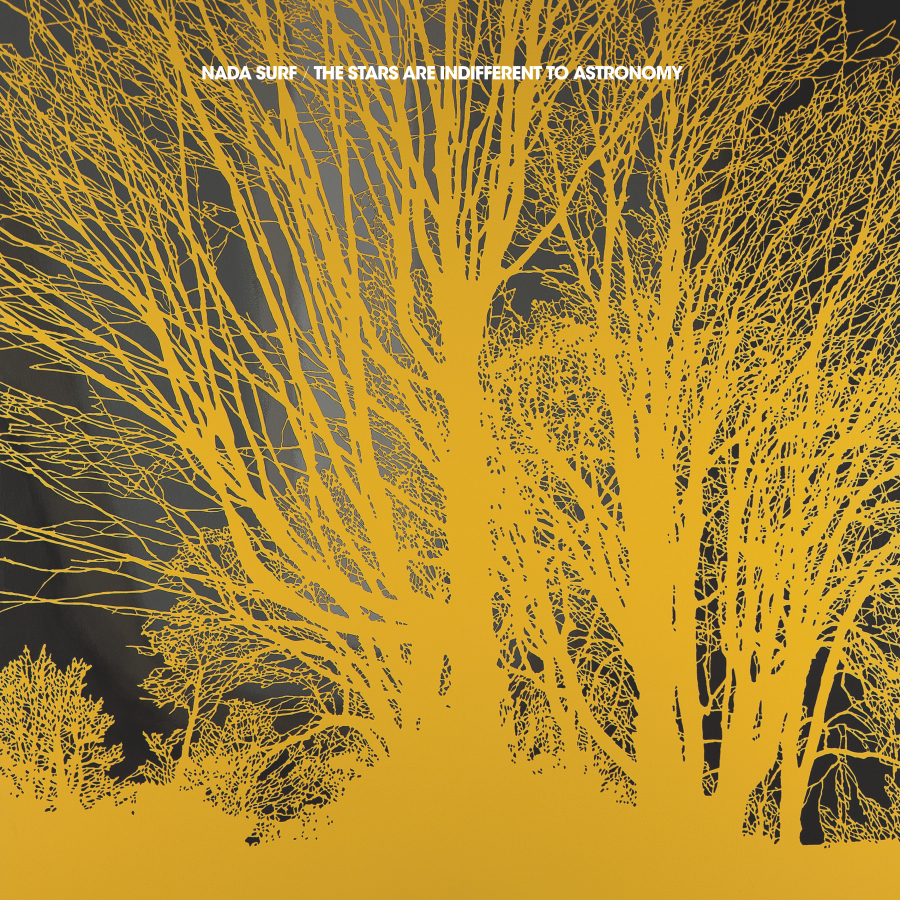
SOUNDTRACK: NADA SURF-Plays Covers on World Cafe (May 13, 2010).
I didn’t even know that Nada Surf had released a covers album (sometimes things slip through the cracks), but when NPR previewed their new song, I learned that they played some covers for World Cafe (not downloadable, sadly) to promote the album.
So I’m going to be investigating that covers album shortly. In the meantime, we get this very enjoyable four-song set (three covers and one of their own tracks).
The band chats with David Dye briefly (about 5 minutes) before busting into the songs (a wonderful explanation of Bill Fox and a mention of reading about him in The Believer). Their own track is “Whose Authority” one of their many wonderful songs.
The three covers are “Love Goes On” (by the Go-Betweens), “Enjoy the Silence” (by Depeche Mode) and “Electrocution” (by Bill Fox). I didn’t recognize the first song until the Ba-ba-ba chorus kicked in, although I admit I’m not terribly familiar with it. Similarly, the final song by Bill Fox is very obscure (as is Fox himself). Both of these two songs are played with jangly guitars and are poppy and quite enjoyable.
The Depeche Mode song is the one that I already really knew well. And boy do they make it their own. They turn it from a somber dirge (catchy but somber) into a more upbeat almost poppy folk song. It will probably be a polarizing cover (if anyone cares enough about Nada Surf to listen) and while I don’t think it’s as good as the original, it works so well in the context of a Nada Surf show, that it’ hard to argue with it.
Nada Surf is one of the great unsung bands and it’s hard to believe they aren’t more successful.
[READ: October 21, 2011] Mission Street Food
With Lucky Peach, McSweeney’s entered into the world of food publishing. I was surprised by how much I enjoyed Lucky Peach. But when I received Mission Street Food, I was no longer in the frame of mind to get excited to read this book, which, as the subtitle says, promises recipes and ideas. And when I first flipped through it, I got to the recipes pages and said, well, when will I ever read this?
Then one night recently I couldn’t sleep and Mission Street Food was there, so I read the Preface. And Anthony Myint has a great writing style, a great flair for telling a story and a wonderful story to tell. Needless to say, I read almost the whole first section before falling asleep. And I was excited to tackle the rest of the book.
I hate to sound like I think that McSweeney’s has changed the way food book publishing is done, because that would be unfair. I don’t read food publishing as a rule. I can’t even enjoy looking in my wife’s cooking magazines. Seeing names of foods and recipes for preparing them just doesn’t do anything for me. But maybe the narrative of those books is more interesting than I give them credit. Maybe I should sit down with another foodie book and see what it’s all about. (more…)
This is a new song from Nada Surf’s new album (due out in January 2012). Nada Surf aren’t changing much from their tried and true sense of pop hooks, but this is a slower, statelier song (with strings!). It features a challenging-to-sing-along-with chorus (“I wonder what was that world I was dreaming of”).
It’s a bit longer and slower than my preferred Surf songs, although I can see it working well in the middle of an album. About two minutes in, the guitars kick in and the song really comes to life. It’s catchy and fun and has me excited for their new disc.
[READ: October 23, 2011] “Memory Laps”
This article came around the same time that our tickets for Sedaris’ upcoming performance at Raritan Valley Community College arrived in our mailbox (nicely timed, that).
It did make me wonder if I shouldn’t be reading anymore of these pieces, since I don’t want to spoil the humor of Sedaris live (although I think Sedaris is funniest when delivering his pieces–his monotone is just wonderful–even if I have heard them before). And plus, the show is not until April, so chances are I’ll have forgotten about it by then.
This essay is all about young David when he was on the swim team (this guy has done so much in his life–who knew he was a swimmer too?). The crux of the essay is that David’s father never praised him for his swimming; instead, he heaped tons of praise on David’s teammate Greg Sakas (I wonder if names have been changed in these essays).
True, Sakas was pretty great, and he won every meet, but even when, on that one freakish instance when David beat Greg, David’s father was unimpressed, saying that Greg must have been ill or something. (more…)
 SOUNDTRACK: iMOGEN HEAP-Speak for Yourself (2005).
 I really liked Heap’s first album i Megaphone, but I didn’t really think to much about her after that. Sometime last year I heard a track she was in with Frou Frou, which I liked. So I thought I’d get this album which was highly regarded.








 I Just Read About That...