After Eddie Vedder released an album of ukulele songs, it seemed like perhaps he was putting aside his heavier ways. Well, nothing could be further from the truth.
This new song (album out in October) plays up their faster side, with short fast chords (think “Spin the Black Circle”). It starts out heavy, and when the verse proper starts the band really kicks in. The chords are heavy, but the bridge is fairly light and breezy.
The end features some chanted vocals (seldom used by Pearl Jam but effective here). But to me the real standout moment comes from Mike McCready’s solo. It is noisy and weird–he seems to be experimenting with all kinds of sounds in these 20 seconds or so. It’s unexpected from him and very interesting.
I do not like how the song ends, which seems almost abrupt by accident. Perhaps the released version gets cut off a few seconds early. Nevertheless, I’m pretty excited about the new album (and tour).
[READ: July 11, 2013] “Other Types of Poison”
This is credited as memoir. It is three short “stories.” All of which I enjoyed immensely–but especially the first.
The first is called The Ink. In this tale, Makkai’s ancestors were hiding out in a little lake house when soldiers came to the door. I loved that no one can remember the details of whether the soldiers were German or Russian or if that even mattered. The important part is that the soldiers hung around and made themselves at home. (The old lady was too old and scary to try anything with and the boy was too young).
Then they ran out of booze and one of the soldiers, noticing an inkwell, said he would drink that. The inkwell was a gift to the boy, because the old woman was a writer. And although the cost was dear, the soldier drank the whole thing. Then he stumbled out of the house, face completely blackened. From then on, the old woman claimed that had she killed a soldier with ink.
I love Makkai’s ending: She says she doesn’t of the details are correct, but “If this were your family legacy—this ridiculous assertion of the might and violence o ink , this blatant and beautiful falsehood—could you change it? Would you dare?” (more…)
I had listened to most of the preview of this album, and I was mixed about it. But I have to say that of all the songs “Turtle Neck” is my favorite. It begins as most of these songs do with a very simple melody. There’s an easy vocal melody, accompanying guitars and interesting keyboard notes dropped in. As with most of these songs it has a very 80s feel to it. The big difference with this song is that it is 6 minutes longs and allows Omar Rodriguez-Lopez some wiggle room to goof off. Like the weird little noises (effects, guitars what have you) that sprinkle the ends of the verses.
But it’s at the 3 minute mark that Omar really takes over—the song turns kind of sinister with a great dark bassline. And then comes the guitar solo—screaming, noisy, more or less out of control, while wailing notes and off-kilter scales litter the one-minute instrumental section. Then Teri joins the tone with a wholly new vocal section that compliments what Omar is doing. The wildness kind of wears itself out until the end of the song recreates the beginning sweetness.
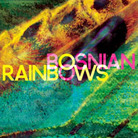
It’s probably the best encapsulation of the combination of pretty and wild that Bosnian Rainbows put together.
[READ: June 18, 2013] “Pedigree”
This is a Personal History, so I assume it is true. I don’t know Walter Kirn at all, and really I only read this because the main person he talks about is named Clark. Of course, the Clark in this story, Clark Rockefeller, is an unmitigated fraud.
It turns out that the story of Clark Rockefeller, and his real name Christian Gerhartsreiter, is fairly well-known in popular culture (there was even a Lifetime movie made about him. Of course, I don’t watch movies on that network, so this whole story passed me by. I wonder if this narrative is more or less interesting if you already know the truth.
This narrative begins with Walter explaining how he got to know Clark. Clark had signed up to take a dog who had been injured and rehabilitated (it was a Gordon setter who had been hit by a car and now used a wheelchair for its back legs). Clark had been vetted and talked to Walter, who was supposed to transport the animal. Things were complicated and the trip from Montana to Manhattan was more difficult and costly than Walter imagined. But Clark was there with an envelope and an offer of a place to stay and fabulous people to meet and a tour of all of Rockefeller Center. When asked about his source of income, Clark explained his job as “a freelance central banker for Thailand.” And Walter accepted it all.
Later, the envelope proved to hold a check for $500 (not even half of what Walter spent). None of the famous people showed and the tour didn’t materialize. Nevertheless, the ruse was surprisingly complex–like the man who claimed to be from MOMA authenticating the Mondrians and Rothkos that Rockefeller had on his wall. (more…)
The cover of this album gives you an idea of what lies within–and yet the complexity in this one song alone makes me wonder just how much is hidden by those clouds.
The song opens with delicate bells and a persistent pinging metronome. Then come a series of complex notes—seemingly rando…but not. Add to this some watery sounds. And then some buzzing percussion. That’s the first minute of this six-minute instrumental.
The song begins with a very delicate vibe, and yet once the tribal drums come to the fore the song takes on a very different feel.
By the middle of the song that original sound is more or less gone, replaced by a more classic “new age” sound. But again, things change around 3:45 when the song quiets down a bit, allowing new percussion to enter and giving it a kind of world music feel.
I enjoy how at the end, when the drums stop it actually sounds like real drumsticks clattering together—as if the whole song were played by a drummer and not a machine.
[READ: June 17, 2013] “From the Diaries of Pussy-Cake”
This is labelled as a memoir, so I assume it is true (and I wonder if he is writing his memoirs, or if this is just an amusing story for this issue). Gary talks about his life a teen when he was in love with a girl named Pamela (not her real name). She was an urban hermit and an unreformed shoplifter.
She was totally in control of the relationship because he was utterly smitten. He sums up their relationship with a typo that he sent her. He left out the “at” and wrote: “I am your disposal.” (HA). And so their relationship was very much like that.
She had an ex-boyfriend whom she couldn’t (or wouldn’t) finish it up with–his parents loved her and she wanted to keep up pretenses, so she would be with him quite often. Although the rest of the time she was with Gary, and that’s because she was always in charge with when she was with him. I loved this description: (more…)
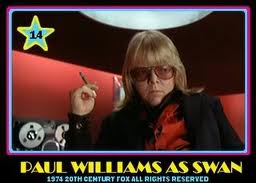
SOUNDTRACK: PAUL WILLIAMS-“The Hell of It” (1974).
I learned of this song because the guys in Daft Punk said it was one of their favorite songs. I don’t know all that much about Paul Williams except for a few things:
He wrote a bunch of songs that you don’t know he wrote, like: “Rainbow Connection,” “Rainy Days and Mondays,” “We’ve Only Just Begun,” and “An Old Fashioned Love Song.” And, back in the 80s a random customer at the grocery store that I worked at said I looked like him (which I did not consider a complement). I have since been told I look like Philip Seymour Hoffman, so I’ve got that going for me.
So this song starts with a rather dark and dramatic guitar riff. When Williams starts singing, the lyrics are really dark and mean:
Winter comes and the winds blew colder
While some grew wiser, you just grew older
And you never listened anyway,
And that’s the hell of it.
But then the bridge comes in and it’s bright and uplifting (with chipper backing vocals and bouncy pianos). Although the lyrics remain dark dark dark:
Good for nothing, bad in bed
Nobody likes you and you’re better off dead
Goodbye, we’ve all come to say goodbye (goodbye)
Goodbye (goodbye)
Born defeated, died in vain
Super-destructive, you were hooked on pain
Though your music lingers on
All of us are glad you’re gone.
And then there’s another very short section section that is even more musically uplifting. And yet the lyrics: are the most ruthless:
If I could live my life half as worthlessly as you
I’m convinced that I’d wind up burning too.
The music returns to that sinister guitar riff and the verses continue:
Love yourself as you loved no other
Be no man’s fool and be no man’s brother
We’re all born to die alone, you know, that’s the hell of it.
The last minute of the song is all instrumental with that dark guitar sound underpinning a bright vaudevillian piano. And since the song was from a movie, I wonder if the end if all closing credits?
This song was written for the movie Phantom of the Paradise. I have never heard of the film. But I see that it was made by Brian DePalma, is a musical, starred Williams and was a mixture of of The Phantom of the Opera, The Picture of Dorian Gray and Faust, with hints of Frankenstein, Psycho and The Cabinet of Dr. Caligari. Who would have guessed why it flopped (or why it now has a cult following).
Joyce Carol Oates has the final True Crimes story in this weeks New Yorker. And her story is quite different from the others. Indeed, it was quite delightful how varied the topics of this special series were.
This piece concerns JCO’s historical family. Back in 1917, her mother’s father was killed in a bar fight (he was Hungarian and prone to violence). This devastated their family because he was the primary source of income. Her mother’s mother had nine children. Most of JCO’s siblings already worked (long hours for little pay, because immigrant kids didn’t go to school and there were no labor laws at the time).
And then came the shocking thing: JCO’s mother’s mother gave JCO’s mother away. She was none months old, they couldn’t afford to feed her, so they gave her to newlywed relatives who desperately wanted a child. They were John and Lena Bush (the Americanized version of Bùs). She was raised by them–given some school and some farm work and basically treated as their own. (more…)
Tegan and Sara have been making interesting folkie pop music for years. While they’ve toiled in indie-land for years, their last album had a couple of songs that fell squarely into the pop world.
Well, “Closer” says, hey pop world, here we are. It’s got everything that Tegan and Sara do well–catchy melodies and great harmonies–and it adds all manner of treacly delights to it. There’s little keyboardy sound effects that sprinkle around the song. There’s a big swirling keyboard chorus, and the song even slows down briefly so that it can build back up.
It’s frankly hard to swallow. Aalthough I can appreciate just how well written it is. And I hope they can make some cash off of it.
[READ: June 17, 2013] “The Crime of Our Life”
Roger Angell’s True Crimes story talks about crime in New York City in the 70s and 80s. I recall growing up and being afraid of the City (and for all that we complain that it has been Disney-fied and cleaned up, it is nice to not be worried about getting mugged on every dark street). And Angell, who lived through it, has some less than cheery anecdotes to relate.But he opens with the good news: burglaries and street robberies are down 80% since 1990! And, as he puts it, “even lifelong Manhattanites like me have almost forgotten the mixture of anxiety and scary anecdote we all shared back in the seventies and eighties.”
He gives some examples: leaving any place at night and immediately walking in the street if you saw someone even remotely suspicious on the sidewalk. The friend of his who heard “Sorry, Mister, you’re going down” just before he did go down. The friend who took karate lessons–and then wound up in the E.R. And the other friend who took to carrying a sword/umbrella and had a chance to use it (with much success it turns out–“Yow–a fuckin’ sword”). Even the Angells were broken into (their door taken off the hinges and leaned against the wall. (more…)
Bosnian Rainbows are the collaboration of Omar Rodriguez-Lopez (At The Drive In, Mars Volta) and Teri Gender Bender (Le Butcherettes). Interestingly, I normally think of Omar as being the dominant force in the music he makes, but for this song, it seems to be all Teri. Teri is a Latina singer who takes no shit. In her Tiny Desk concert, she is fierce and intense, and that comes across here as well.
Perhaps the biggest surprise is how synthy this song is. It has a very retro feel–like a lot of 80’s bands (Missing Persons and ’til Tuesday’s darker moments and of course, there’s an element of Siouxsie in her voice as well). But there is something especially intense that Teri brings to this song that takes it out of the realm of safe synth pop (perhaps it the dark bridge). Omar peeks through a bit during the instrumental break which has a pretty wild guitar solo and some intriguing effects that I wish were more prevalent.
I’m fascinated by this song (although I wish I could hear the vocals more).
NPR is streaming this whole album as I write this, although I’m not sure if it will still be available as of this posting.
[READ: June 17, 2013] “The Ripper”
The second in the “True Crimes” series is from David Peace (an interesting name, hmmmm). In this one, the year is 1977 and young David is obsessed with Sherlock Holmes (and I would assume Encyclopedia Brown, but he doesn’t mention the boy detective). Peace was ten years old and set up his own detective agency, intent on solving all local small crimes.
And then he learned of the Yorkshire Ripper. In the piece he says “I was a lonely ten-year-old boy who found the Yorkshire Ripper” which proves to be untrue. That was a real bummer because that would have made a great story. As it turns out, he thinks he has found the Yorkshire Ripper, but he hasn’t.
For those of us not following English serial killers, the Yorkshire Ripper was a man who killed dozens of women from 1977 to 1979. Peace spent his time poring over clues, certain that he could find what the police could not. And then came the breakthrough—a tape sent in to the local police station stating “I’m Jack. I see you are still having no luck catching me.” Peace listened to that tape (which was available at the local police station for the public to see if they could identify the voice) dozens of times. And his prime suspect became his science teacher “Jock” Carter. (more…)
It’s probably hard to like a song with a title like that, but there’s something strangely compelling about the whole proceeding–the great intricate percussion and drums that start the song, the ponderous pipe organ that lays down the melody, and then Anna’s voice which has a country-ish feel (kind of like Neko Case), but also has a kind of Dead Can Dance vocal style. Or perhaps that’s just because she is Swedish.
By the time the chorus comes around, the ache of the song is apparent. And the end has more of that amazing percussion. I rather like the beginning and the end of the song more than the middle, which I guess doesn’t say a lot for it, but it is intriguing.
Evidently this album is primarily full of pipe organ, an interesting choice for a rock album. I’d be curious to hear more.
[READ: June 17, 2013] “Twisted”
As if anticipating that I would not be able to write posts this week, the New Yorker has supplied me with a series of very short “True Crimes” pieces. In fact, the whole issue is a fiction issue, which means a half a dozen or so stories as well. But it’s these “True Crimes” that will keep me posting this week.
The first is from George Pelecanos, and it’s a story of his own crimes. He explains that when he was younger, he did all manner of illegal things but had never been caught (aside from a few minor infractions). He broke into houses and stole records from someone he didn’t like. He rode in a stolen car, stole wallets from strangers at stores (at this point I really don’t like this guy). But he doesn’t try to make excuses for himself. He was a boy and he was having fun.
But the crimes continues long past adolescence. In 1985 he was 28 and got involved in a high-speed chase. He was drinking and smoking pot at a wedding. He and his fiancée stopped at a convenience store where he backed into someone’s car. A gang of people came out and the threat of violence was imminent. But he hopped in his car, drove on the sidewalk and sped off with the police in pursuit. (more…)
We were looking for a good audio book for the kids and I stumbled upon this, an autobiography from Jon Scieszka. We love Scieszka’s books (Stinky Cheese Man and the Time Warp Trio among others) and figured that this autobiography had to be good for a few laughs too. And we were very much correct.
This is a funny book about what it was like to grow up as the second oldest of six brothers in Flint, Michigan. It’s not really about being an author (although he does talk about where he gets ideas), it’s really about his childhood. Most of the anecdotes in the book are things that he and his brothers got up to and how his father used to affectionately call all six of them knuckleheads.
The book has almost 40 chapters, all of them very short (as befitting the author of books for reluctant readers). And each one has a pretty good set up and punchline. Like how the older brothers used to tease the youngest ones or how Jon and his brother burnt a dry cleaning bag because it dropped little plastic bombs onto a battlefield–in the basement. Or how he and his brother peed on the space heater because they thought that would put it out (that seems suspect, but it could have happened. (more…)
Parts & Labor have changed t heir style over the years going from noisemakers who have a melody to being melodious noisemakers. This album is one of their earlier releases when noise dominated. Right from the opening you know the album is going to be a challenge. The first song has pounding drums (electronics that sound like bagpipes) and heavy distorted shouty vocals. By the end of the songs there is squealing feedback, punk speed drums and screaming distorted vocals (complete with space sound effects). It’s an aggressive opening for sure. Song two opens with a long low rumbling and then “Drastic Measures” proves to be another fast-paced song.
“A Pleasant Stay” is 5 minutes long (most of the rest of the album’s songs are about 3 minutes). It continues in this fast framework, although it has a bit more open moments of just drums or just vocals. The way the band plays with feedback in the last minute or so of the song very cool.
“New Buildings” has a hardcore beat with a guitar part that sounds sped up. “Death” is a thumping song (the drums are very loud on this disc), while “Timeline” is two minutes of squealing guitars. “Stay Afraid” has a false start (although who knows why–how do these guys know if the feedback sounds are what they wanted anyhow?). The song ends with 30 seconds of sheer noise). The album ends with the 5 minute “Changing of the Guard” a song not unlike the rest of the album–noisy with loud drumming and more noise.
The album is certainly challenging, it’s abrasive and off putting, but there;s surprising pleasures and melodies amidst the chaos. Indeed, after a listen or two you start to really look forward to the hooks. If you like this sort of thing, this album s a joy. It’s also quite brief, so it never overstays its welcome.
[READ: April 15, 2011] McSweeney’s #13
I have been looking forward to reading this issue for quite some time. Indeed, as soon as I received it I wanted to put aside time for it. It only took eight years. For this is the fabled comics issue. Or as the cover puts it: Included with this paper: a free 264 page hardcover. Because the cover is a fold-out poster–a gorgeous broadside done by Chris Ware called “God.” And as with all Chris Ware stories, this is about life, the universe and everything. On the flip side of the (seriously, really beautiful with gold foil and everything) Ware comic are the contributors’ list and a large drawing that is credited to LHOOQ which is the name of Marcel Duchamp’s art piece in which he put a mustache on the Mona Lisa. It’s a kind of composite of the history of famous faces in art all done in a series of concentric squares. It’s quite cool.
So, yes, this issue is all about comics. There are a couple of essays, a couple of biographical sketches by Ware of artists that I assume many people don’t know and there’s a few unpublished pieces by famous mainstream artists. But the bulk of the book is comprised of underground (and some who are not so underground anymore) artists showing of their goods. It’s amazing how divergent the styles are for subject matter that is (for the most part) pretty similar: woe is me! Angst fills these pages. Whether it is the biographical angst of famous artists by Brunetti or the angst of not getting the girl (most of the others) or the angst of life (the remaining ones), there’s not a lot of joy here. Although there is a lot of humor. A couple of these comics made it into the Best American Comics 2006.
There’s no letters this issue, which makes sense as the whole thing is Chris Ware’s baby. But there are two special tiny books that fit nearly into the fold that the oversized cover makes. There’s also two introductions. One by Ira Glass (and yes I’d rather hear him say it but what can you do). And the other by Ware. Ware has advocated for underground comics forever and it’s cool that he has a forum for his ideas here. I’m not sure I’ve ever read prose from him before. (more…)
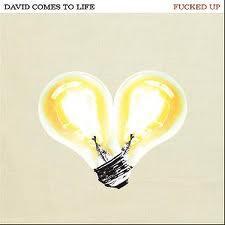
For a band named Fucked Up, they make music that is surprisingly catchy. Of course, as befits their name, they also have a pretty aggressive punk sound with lots of drums and loud guitars. But many of the guitar lines and choruses are surprisingly melodic. And then comes singer Pink Eyes. He screams in a gravelly, rough, cookie-monster type voice (although he is mixed lowish in the mix so he doesn’t often overpower the music). Despite the fact that most of the words are indecipherable, he also have a good sense of melody.
So how does a band that plays distorted hardcore punk with a barely comprehensible singer decide to make a 78 minute concept album? Beats me. But guitarist 10,000 Marbles has written a pretty solid collection of songs. Of course, it also beats me exactly what the concept is. According to allmusic the plot is: In the fictional town of Byrdesdale Spa UK, David has a humdrum life working at a light bulb factory, and finds an escape by falling in love with a communist rebel rouser, only to find out later that she has died in a terrorist bombing and that he has a lot of emotional turmoil to face.
I’ve listened to the disc a dozen or so times and never got that plot. I even followed along with the lyric sheet and never got that plot. Part of the reason may be that Pink Eyes sings all of the parts in the same way, so it’s really hard to notice that there are different characters (like Veronica) in the story. While it is fascinating to hear a really catchy choruses sung by someone who is kind of scary, it doesn’t do a lot for the story. The other odd thing is when Mustard Gas provides female backing vocals–they are sweet and pretty–a drastic counterpoint to the noise that Pink Eyes makes. But she only comes in on a few songs. I wish she did more.
There are some really great songs on this disc. Song two, “Queen of Hearts” has some incredibly catchy sections. And the “dying on the inside” harmony in “The Other Shoe” compliments the grizzly “It can’t be comfortable when you know the whole thing is about to fall” very nicely. The b vox are also great in “Turn the Season.” I find myself singing the “Hello my name is David, your name is Veronica. Let’s be together. Let’s fall in love” section over and over. It’s surprisingly sweet when sung by such a voice.
Since this is a concept album (or rock opera I suppose), there’s things like the nearly two-minute instrumental intro to “Remember My Name” which doesn’t fit with the rest of the song but is really catchy. There’s also a kind of introductory “theme” that crops up in the album. Fucked Up confound you at ever turn with beautiful melodies that morph into noisy punk.
By the middle of the disc (where I gather David is a low point), there’s some really loud heavy songs. Amid the pummeling noise, there’s some nice acoustic guitar in “A Slanted Tone” and some very cool rumbling drums and bass that propel “Serve Me Right.” These songs help to break up the flow nicely. “Life in Paper” which is near the half way point opens with the same staccato notes as the disc itself, and it proves to be a very catchy song in which David asks “Who can I trust?”
The second half of the disc continues with the more catchy style with “Ship of Fools.” But as the story nears the end, it starts to feel very samey. There’s a few breaks, but it’s a hard row to hoe. There is redemption in the end, but you still feel exhausted. Perhaps 78 minutes of Fucked Up is too much. For some listeners even 5 minutes will be too much. Despite the accolades (and they received a lot), you won’t be hearing this one the radio (and not because the DJs couldn’t say their name).
And yet amid all of the noise, there are some really shiny gems. They have even released four music videos for the album! The first one, “Queen of Hearts” is especially cool as the video is set in a classroom and the kids sing all the parts (after a nearly two-minute spoken intro of the song. I admit to not having any idea what’s actually happening in the video, but it’s still cool.
[READ: January 26, 2013] An Extraordinary Theory of Objects
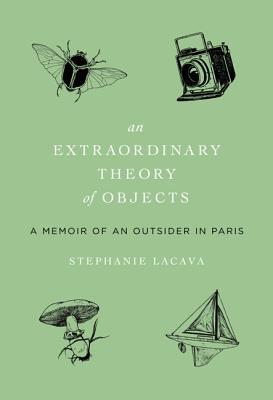
This is a strange little book. It was another one that I saw while waiting online at the library. I was attracted to the cover (I know, don’t judge… but honestly, you can tell a little bit about a book by the way it is marketed. And this was marketed at me.) It’s a small book with a stark cover and interesting drawings on it. And then there’s the unusual title.
The book was only 180 pages (plus notes and a bibliography) and it was chock full of pictures. I mean, this thing can be polished off in an afternoon.
And here’s what it’s about. Well, let me modify that. Here’s what’s in the book. Stephanie is a young girl when her family moves to France (for her father’s work). She has always felt like an outsider and now feels even more so in France. She is introverted and spends a lot of her time in books. Then she moves back to America and reflects on her childhood.
Yeah, that’s about it. For here’s the thing, Lacava isn’t famous and she hasn’t done anything that you might have heard of. She’s just a person who went to France as a kid. The introduction kind of gives you some reason as to why you should read the book. Lacava was a sad and miserable child and she took refuge in objects–not as a collector so much as an admirer. On her windowsill she has collected various geegaws that she treasured (and which she brought from America in her carry on, they were so precious). And she has this interesting relationship with objects. Although, as with many things in the book, that relationship is not really delved into very much. (more…)
 SOUNDTRACK: PEARL JAM-“Mind Your Manners” (2013).
 After Eddie Vedder released an album of ukulele songs, it seemed like perhaps he was putting aside his heavier ways. Well, nothing could be further from the truth.











 I Just Read About That...