Feeds:
Posts
Comments

Archive for the ‘McSweeney’s’ Category

endofloveSOUNDTRACK: BECK/RECORD CLUB-LEONARD COHEN: Songs of Leonard Cohen (2010).

leonardcohenI won’t say anything because no one ever listens to me anyway. I might as well be a Leonard Cohen record.

-Neil from The Young Ones.

This second recording from Beck’s Record Club is, indeed, a Leonard Cohen record.  I like Cohen and have a bunch of his stuff.  Although he’s never been a huge favorite, I find his songwriting to be top notch.  And, since his arrangements are usually pretty sparse, it’s easy to cover his songs in a myriad of ways, which these artists certainly do.

But just to catch you up to speed about this whole Record club business:

According to the Beck/Record Club website:

Record Club is an informal meeting of various musicians to record an album in a day. The album chosen to be reinterpreted is used as a framework. Nothing is rehearsed or arranged ahead of time. A track is put up here once a week. As you will hear, some of the songs are rough renditions, often first takes that document what happened over the course of a day as opposed to a polished rendering. There is no intention to ‘add to’ the original work or attempt to recreate the power of the original recording. Only to play music and document what happens. And those who aren’t familiar with the albums in question will hopefully look for the songs in their definitive versions.

Introducing this second recording, Beck explains:

This time around the group includes Devendra Banhart, Ben, Andrew and Will from MGMT, Andrew from Wolfmother, Binki from Little Joy, and Brian and Bram returning from the first Record Club.  ‘Songs Of Leonard Cohen’ by Leonard Cohen was chosen by Andrew from MGMT. For those interested, our close second choice was Ace Of Base, which we’ll keep on the list for next time.

So, here we have Cohen’s debut.  I own it and am familiar with about half of the songs, but I didn’t want to listen to it before hearing their covers.  And so, the track listing and comments:

Suzanne (4:54)–A classic song, here given respectful treatment.  And yet they’re not afraid to play around with it, so they give it a dance beat and group vocals, all of which sound great.
Master Song (6:37).  I don’t know this song, and I don’t recognize it from this cover which is perhaps the greatest twist of a Leonard Cohen song ever. They sample Metallica’s “Master!” every time they sing the chorus.  The song is done as a rap with the voices pitched differently in every verse, there’s also a great funky bass throughout.  I assume the lyrics are the original, but I’m not sure.  The only problem with it is that it goes on for way too long.  But otherwise this is what record Club is about–having fun experimenting with songs.
Winter Lady (2:46). This is done as a pretty folk song, the way Leonard intended.
Stranger Song (5:26). This song is also dancey (with MGMT, that makes sense).  It has big drums and cool harmonies.
Sisters Of Mercy (4:36).  This is also pretty, done on an acoustic guitar with multiple singers taking turns.
So Long, Marianne (6:54).  This is also pretty faithful (of another classic).  There’s a group chorus which again sounds great.  The one difference is buzzy guitar solo.
Hey, That’s No Way To Say Goodbye (4:27).  This has a cheap Casio vibe, yet it still sounds good.  Beck sings and the whole things is quite nice.
Stories Of The Street (5:06).  The songs starts with a simple bass and xylophone, but it gradually builds into a full band song which sounds great.
Teachers (4:04).  This is an insane punk version of the song.  It is super fast with a crazy guitar section and shouted vocals.  It shows just how adaptable Cohen’s music is
One Of Us Cannot Be Wrong (5:42).  This is a pretty, slow version of this song with keyboards as the main instrument.  It’s a very nice song until it nears then end when the singer just starts screaming and going nutty  Which is okay, but that goes on for too long at the end.

So overall, this is a very enjoyable collection of covers.  The faithful ones sound wonderful and the silly songs are, yes, silly, but they are not just tossed off (except maybe Master Song.  This must have been a lot of fun to record.

[READ: March 14, 2014] The End of Love

The End of Love is four long short stories.  Each one is about the end of a relationship.  Even though I enjoyed all four stories quite a lot, the book was a lot slower to read than I would have anticipated from its scant 163 pages.  And surprisingly, the stories weren’t sad or mopey–rather, they looked at the relationships via a slightly distant narrator who was engaged and engaging.

I have been reading a lot of Latin American writers, but this book, which was written in Spanish and translated by Katherine Silver, was written by a Spanish writer.  So that’s a little bit different in feel.

“We Were Surrounded By Palm Trees”
This story is not set in Spain. It is set on an island in the Indian Ocean off the coast of Africa.  It is about a man and his girlfriend, named Marta.  They have gone to this remote island for some secluded time alone.  But it turns out that they have to share the small boat (and therefore the small island) with another couple.  Christine and Paul are a German couple who are not outgoing and friendly as the narrator fears (he doesn’t want to spent his romantic vacation with those two), but are cordial and looking to share some of the troubles of their vacation.  One such trouble is meeting with the village elder and the chief, which Paul offers to do.

The details of the island were a little unclear to me.  I think that is somewhat intentional, but there is some confusion about the nature of the power structure on the island and what exactly people get up to there.  So when Christine goes missing, Marta is instantly concerned.  And then when Paul and Christine don’t turn up for dinner, they decide to go and find them.  Christie and Paul are involved in something that I found a bit confusing, but which involved elders of the island.

As the story draws to a close and there is yet more confusion as to where the Germans are, Marta and the narrators are at odds with each other about what to do.  And the strain begins to form between them.   Even though the details of what happened with Paul and Christine are vague, the details of Marta and the narrator are very powerful and really tell the story.  It was wonderful. (more…)

Read Full Post »

topsySOUNDTRACK: BECK-Mellow Gold (1994).

mellowAnd then “Loser” happened and because of this preposterous song, over a million people have purchased a very peculiar album.  After listening to Soulmanure and One Foot, you can really see that Mellow Gold is a sort of greatest hits, or perhaps a most-commercial-potential collection from that period.  What’s especially strange about the album is that it includes scenes from the photo shoot for Soulmanure in the booklet.  I have also learned that “Loser” was done as something of a one-off, a goof that Beck threw together on the day of the recording–while the lyrics sure seem like it, the music is pretty spectacular–that slide guitar is instantly memorable.

The album does some very interesting things with stereo recording, which I never really noticed until I was listening with one earphone in–it rather changes the song, and that one channel may have more of the out of tune guitar noises too.

“Pay No Mind” has some crazy lyrics, although they do work, and, frankly, it’s a great acoustic folk song.  The noises and weirdness in the song make it more fun, but the melody is great on its own.  I can’t tell if his voice is slowed down or not, but the harmonica sounds great and raw.  “Fuckin’ with My Head” has a great garage rock sound (with more harmonica, this time distorted beyond all reason).  The verses are noisy but the chorus is so delicate.  “Whiskeyclone, Hotel City 1997” has a guitar which sounds decidedly out if tune.  It is probably the most anti-folk song on a major label album.

“Soul Suckin Jerk” has a cool funky bass line over a crazy noisy beat and weird effects.  It is also super catchy despite the crazy out of tune guitars and excessive feedback.  “Truckdrivin Neighbors Downstairs (Yellow Sweat)” opens with a fight (“c’mon motherfucker”).  Despite the chaos and vulgarity, it’s a very catchy song–the downward melody of “Shit kicking, speed taking, truck driving neighbor downstairs” is hard to resist.  That song is followed by one that opens with, of course, a music box and is called “Sweet Sunshine.”  It is the most distorted and unpleasant song on the album–as far from catchy as you can get and yet it still sounds completely Beck.

“Beercan” is a surprisingly awesome single tucked at the bottom of the album (even if it does have ear-splitting feedback in the middle. “Steal My Body Home” slows things down incredibly, a technique Beck would use a lot over the years–making a song sound very different by spacing it out more.  Especially when the solo comes in and there’s more out of tune guitars and a kazoo.

“Nightmare Hippie Girl” is a funny folk song (the lyrics are great), and again the melody is catchy and boppy.  It’s followed by one of my favorite songs on the album “Mutherfucker” which is a noisy piece of nonsense with the screeched chorus “Everyone’s out to get you motherfucker”.  It would get annoying really fast, but at 2 minutes, it’s an amusing and kind of fun to sing along to.  The album ends with “Blackhole” a slow and somewhat epic (5 minutes) acoustic song.  It feels big and the melodies evoke an epic song.  It’s quite pretty.  Naturally, there’s an obligatory piece of nonsense as a “bonus” track (apparently titled “Analog Odyssey”).  It’s just a minute or so of noise and is not worth mentioning).

Although this album is much more polished than the other to (the production is very clean which really lets all those weird elements stand out) it still shows Beck as a weird, freakish musician–extremely talented with a great ear for melody but someone who is not afraid to be loud and noisy just for the heck of it.  Mellow Gold is still an interesting listen twenty years later.

[READ: March 1, 2014] Topsy Turvy

Topsy Turvy came as a separate book with my copy of Lemony Snicket’s 29 Myths.  It was originally an insert in McSweeney’s 40.  At the time I said this:

This is an inserted graphic novel.  It has very simple illustrations, which I liked, although I didn’t really follow the story at all.

Since it is now its own entity, I’ll give it a bit more.

The book has a drawing per page.  Most pages have one word or  a few words.  Like “Nighttime” and “Some Are Awake” and “Size is Uncertain.”  The story invites us to see the people who are awake making potions to turn things into other things. (more…)

Read Full Post »

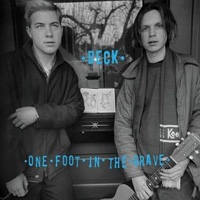
29mythsSOUNDTRACK: BECK-One Foot in the Grave (1994).

beckoneIt’s pretty well established that Beck’s Mellow Gold came out before One Foot in the Grave, although the recordings for Grave may have been earlier.  This is Beck’s other indie label release that came out just as he was selling millions with DGC (One Foot in the Grave is another one that has barely sold 100,000 copies).

I have the earlier release with 16 songs, but it has since been re-released with 16 bonus tracks.  The album was recorded with Calvin Johnson at his Dub Narcotic studios.

In contrast to the chaos of Soulmanure, this album is a lot more focused on Beck’s anti-folks style.  And while there are some silly freakouts, the disc is largely a straightforward indie folk release.  The disc even opens with a traditional track.  And he has another song that sounds traditional (with slide guitar) but isn’t.

Sometimes the guitars are out of tune or overly twangy, but the songs are all serious and real, not noisy freakouts or nonsensical whaling.  That’s not to say there’s aren’t a few silly songs. “Cyanide Breath Mint” is certainly weird  and “Ziploc Bag” is a cacophonous blues song.

But this album is more consistent.  Calvin Johnson sings vocals on the album with him (I don’t actually know which voice is his as there are a number of people credited with vocals).  There’s a deep voice doing backing vocals on some tracks and there even a duet, on “Forcefield” in which Beck does not do lead vocals.

Probably the best song is “Asshole” which has a good melody and has lyrics that are somewhat surprising given the title: “She’ll do anything to make you feel like an asshole.”

It’s tough to say that the album is a precursor to Sea Change, because it is so lo-fi and under-produced and because the lyrics are more absurdist/funny, but the vibe is strong enough to make Sea Change a possibility rather than something that came out of left field.

[READ: March 1, 2014] 29 Myths of the Swinster Pharmacy

In continuing with the McSweeney’s McMullen’s children’s books series, this one is yet another weird book that my kids didn’t really like.  I enjoyed it, but felt that the ending lacked somewhat.

Lemony Snicket books are often peculiar, and it seems like he’s really pushing the levels of what counts as a story with some of his books.

I love the conceit of the story–these two kids just don’t understand what is up with this building–what do they sell? And in trying to learn more about it, they have come up with all of these notions.  Some of them are funny, some are absurd, some are serious, some are even true.  But there’s no real sense of completion at the end, which is kind of a bummer. (more…)

Read Full Post »

tomboSOUNDTRACK: ZEE AVI-Tiny Desk Concert #36 (November 23, 2009).

zeeZee Avi is a Malaysian born singer songwriter who was discovered via YouTube.  After a few videos were forwarded around, she was signed and then released an album full of simple, delicate guitar driven acoustic songs.

“Honey Bee” is a very pretty, sweet song in which she accompanies herself on guitar.  The second song is a cover of a Morrissey’s “First of the Gang” and while it is far slower than the original, Zee sings it perfectly—her voice is very well suited to Morrissey’s style.  (I enjoyed that she swooned a little when she said his name).  She doesn’t play guitar on this one and there’s a funny moment where the guitarist doesn’t end when she does and she says thanks for giving me the heads up (he says was going to text her but…).

She plays the final song “Just You and me” on ukulele and as with anyone who plays the uke well, this song sounds great.  I don’t know much more about her but I’d be interested to hear what an album of hers sounds like.

 Check it out here.

[READ: February 12, 2014] Tombo

This is the sixth book in the McSweeney’s poetry series.  Even though the series descriptors talk about the beautiful covers on the books, this one is resolutely not beautifully covered, although it is a handsome volume.

Di Piero is a prolific author, with ten books of poetry, a column on the visual arts and several collections of essays.

This collection of poems seems to be about place.  There’s a lot of descriptors of locations and places, but none of them grabbed me strongly.  I enjoyed the last few poems in the collection much more than the early ones.

In particular I thought that the title poem “Tombo” was quite enjoyable because it was so concrete.  And the sequence with the hawk in the poorly named “So It Goes” was visually arresting as well.  (more…)

Read Full Post »

momentSOUNDTRACK: NICK BUZZ-Circo (1996).

nickbuzzNick Buzz is a side project of Rheostatics singer/lead guitarist Martin Tielli.  This album was reissued in 2002, when I bought it  But it came out in 1996, right around the time of the concerts I’ve been posting about.  Martin says that this album is pure pop, and that he is genuinely surprised that people don’t see this.  Of course, when your album has screeching monkeys, cars honking and circus music, pop is not the first thing that comes to mind.  There are certainly pretty songs on here, but it is an album that resists easy entrance.  There are short manic pieces, slow, languorous, almost lounge music pieces, and an improved cover of Joni Mitchell’s “River.” And then there’s the instrumentation: piano, violin, guitar, voice (no drums, although there is percussion on some tracks) and other weird sound effects.

“Step Inside” opens the disc.  It seems like a normal, mellow song (with slightly falsettoed vocals).  But 34 seconds in the circus music starts—a deviant and unsettling circus that pushes its way into the song briefly then vacating and allowing the pretty melody to return.  It’s like a mild form of Mr Bungle (with more actual circus).  It’s unsettling at first but then strangely catchy after a few listens.  There is fanfare as the song ends, interrupted by the sound of a tape speeding up (or going backwards) until song two bursts in.

“That’s What You et for having Fun” is less than three minutes and while weird, it is certainly accessible and funny.  The guitar sounds like he is slapping the strings rather than strumming them.  The refrain of “there’s a monkey in my underwear” gives a sense of the absurdity (especially when the President of Canada (sic) says he has one too).  “Just Because” mellows things out a lot—simple guitar with a kind of lullaby feel (it’s a bout wishing on stars).  It’s so slow after the craziness of the first two songs.  After  3 minutes of a lounge type song, it ends with a distant radio sound of an even more loungey song which melds into the live version of “River.”

The mellow “River” is followed by a raucous bass clarinet solo and wild guitar solo that is interrupted by the long (nearly 6 minutes) “Sane, So Sane.”  This is the most conventional song on the record—a simple piano melody with repeated lyrics (conventional aside from the weird distant music in the background of course).  Although it does gone on a bit long.  “A Hymn to the Situation” is an eerie two-minute wobbly song.

“Fornica Tango” is indeed a tango presumably sung in Italian. This song features a crying baby, an interesting sounding “Italian” chorus and the screeching monkey at the end.  “Love Streams” is a pretty, slow ballad.  “Aliens Break a Heart” is another pretty song.  Although this is the song that ends with traffic sounds.  “The Italian Singer/Just Because I’m Nick the Buzz” has a kind of Kurt Weill atmosphere to it with spoken words and falsettos.

It took me several listens before I could really find purchase with these songs.  I find that I really enjoy most of them now–some of those slow ones are a little too meandering for my liking.  But it seems like a fun outlet for Tielli’s songcraft.

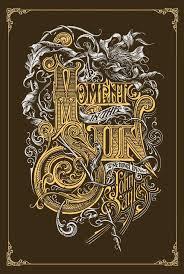
[READ: October & November 2013] A Moment in the Sun

I read this book last year…finished it just before Thanksgiving, in fact (I was proud of my pacing).  But it was so huge that I didn’t want to write about it until I had a good amount of time.  And now here it is four months later and I probably have forgotten more details than I should have and the post will be nowhere near as in depth as I was saving time for in the first place.  Bah.

When people see this book, they say, “That’s a big book.”  And it is a big book.  It’s 955 pages (and they are thick pages, so the book itself is nearly three inches thick–see the bottom of this post for an “actual size” photo); it’s got three “books” and dozens of characters whose stories we read about in full.  It is about the United States, racism, The Gold Rush, the assassination of a President, the Spanish American War, a World’s Fair and even the exploration of moving pictures.  This is a fairly comprehensive look at the Unites States from the 1890s to the early 1900s.  And, man was it good.

John Sayles is known more for his movies than his books (18 films directed, nearly as many different ones written and only 4 novels), but the cinematic quality that is clearly in his blood comes through in this book as well. (more…)

Read Full Post »

   judySOUNDTRACK: EDWARD SHARPE AND THE MAGNETIC ZEROS-Tiny Desk Concert #32 (October 26, 2009).

I haedve recently begun to really enjoy Edward Sharpe and the Magnetic Zeros (watch those e’s people).  Interestingly, I have gotten into their song “Home” which is actually from 2009 and is included in this Tiny Desk Concert.

There is no Edward Sharpe. Sharpe is the alter ego of singer Alex Ebert.  Ebert and Jade Castrinos form the core of this expansive ensemble.  There are ten people in the band making this the largest (and judging from their appearance, smelliest) Tiny Desk Concert to happen yet.  There are a few guitars, accordion, bongos, drums, keyboards and lots and lots of singing

Everyone seems very happy in the band, especially Castrinos, whose bliss is either delightful or disturbing to watch here.

“Janglin'” opens with the whole lot of them bopping along to the janglin song.  Alex Ebert has a folky, husky voice.  There’s lots of shouted “heys” and a fun, nearly-bass vocal section where they all sing “Mag-ne-tic-zeros.”  “Home” is a wonderful song with a catchy whistle and a fun horn section.  The catchiness of the chorus is undeniable.  And this live version is infectious.  The final song, “40 Day Daydream” is a big rambling piece.  There’s a moment near the end that allows Ebert to sing unaccompanied and you can hear that his voice is quite nice.

I always enjoy seeing performers having fun and it’s clear that these Zeros are doing just that.

[READ: January 3, 2014] Judy Blume and Lena Dunham In Conversation

I considered the idea of writing only about tiny books in February.  (I have a number of tiny books that have come along recently and I thought February would be a good time to read them all).  Of course, it’s already the 11th, so there goes that.  But I can still do some, right?

So this little book (6.5 x 4.5 inches, 77 pages) is the full (and enhanced) interview with Judy Blume and Lena Dunham.  The excerpted version appeared in the January 2014 issue of The Believer.  For this book we have the full interview (I assume) and the authors were given a chance to add comments to the interview afterward.

What we get here is Dunham, more or less a fangirl of Judy Blume, talking to her idol.  But Dunham is not just fawning, she is direct and inquisitive and they seem to hit it off immediately, which makes for a great interview.  Blume talks about her phobias (thunder, loud noises).  And their fear of the blank page.  And we also learn of Blume’s writing and daily routines (which are very different from Dunham’s). (more…)

Read Full Post »

  grantland8SOUNDTRACK: RALPH STANLEY-Tiny Desk Concert #31 (October 13, 2009).

ralpRalph Stanley is apparently a living bluegrass legend, although I’ve never heard of him.  He plays a clawhammer banjo (and apparently has for 63 years).

The concert lasted only 6 minutes, but in that time he sang three a capella songs: “Gloryland,” “Turn Back, Turn Back” and “Amazing Grace.”

It’s hard to assess a legend based on this performance.  I’ve no idea how good his voice was back in the day.  He sounds fine here, albeit understandably quite old.  I’d have liked to hear his banjo.

[READ: January 3, 2014] Grantland #8

It is becoming apparent to me that Grantland loves basketball.  Like, a lot more than any other sport.  This issue had a ton of basketball in it.  And, I have to admit I was a little tired of it by the end–there was a lot less pop culture stuff, too.  So, it felt especially basketball heavy.  I realize of course that the time frame covered was the playoffs, but still.

BILL SIMMONS-“Searching for a Superman”
A lengthy article about Dwight Howard, discussing the pros and cons of signing him again.

MARK TITUS-“How Did He Get So Good?”
A look at Paul George and Danny Green doing better than expected in the NCAA playoffs.

CHARLES P. PIERCE-“A Dark Day in Boston
Pierce wonders about Boston after the Boston Marathon bombing–he says the city will come back stronger. (more…)

Read Full Post »

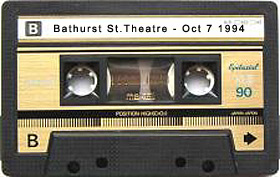
CV1_TNY_11_25_13Viva.inddSOUNDTRACK: RHEOSTATICS-Bathurst Street Theatre, Toronto, ON (October 7, 1994).

07Oct1994This show was broadcast on the radio, and indeed, this is an encore broadcast that you can download from Rheostatics Live.

Anyhow, it begins with people raving about the Rheos on the radio.  And then the band kicks in.  The set is 45 minutes, although I assume the original must have been longer.  Why?  most of their shows are longer and this feels like it might have some cuts for commercials and whatnot.

They play ten songs, and it’s alike a highlight reel of their earlier music: “Take Me in Your Hand,” “King of the Past,” “Queer,” “California Dreamline,” “Soul Glue,” “Claire,” “Northern Wish.”  But it’s also got its far share of goofiness: some improvs and the resolutely silly “Full Moon Over Russia” and “Alomar” (which sounds really tight here).  It’s a great set and a great introduction to early Rheos live music.

[READ: January 29, 2014] “My Man Jeremy”

Everyone mostly knows Cera as an actor (who I’ll see in anything).  But he’s also a writer.  His previous piece in McSweeney’s was very funny.  And so is this one.  Although now the two published things I’ve read by him were both about being an actor, so maybe its time to broaden the range a bit.

Anyhow, this is basically a set up about text messaging.  He opens by explaining that people ask him is he has any funny stories about texting (this part is in italics).  Then he tells us this tale about Jeremy.  The text messages are written straightforward, with interjected comments by Cera as he “studies” the exchange.

It begins with a text from an unknown number “Sup you coming to this thing?”

Michael writes back.  “Hi oops I don’t know this number.  I’m Michael, who is this?”

Now, this isn’t especially funny, but it did make me smile to think that anyone would respond to a wrong number this way.  At any rate…. (more…)

Read Full Post »

wpeSOUNDTRACK: An open letter to the Rheostatics (2014).

rheosTo Dave, Martin, Tim and assorted drummers:

I’ve been a fan of the Rheostatics for a long time.  I recall traveling to Toronto from New Jersey back in the 90s and tracking down Introducing Happiness at Sam the Record Man.  And then later driving around the Niagara Falls region listening to the strange and wonderful album. I’ve enjoyed all of the subsequent albums.

You were a unique band with a unique sound.  I was sad when you split up, even if that meant that now there were three solo projects to enjoy.  Of course, there’s been a lot of bands that have broken up, it’s just part of being a fan.  But the thing about the Rheostatics breakup is that you three (or four or five or six) have remained friendly.  You’ve done a few reunion shows since the breakup, which I think that’s super cool.  It’s especially cool because RheostaticsLive tends to post them after a while so that those of us who don’t make the shows can hear them.

I’ve never seen you guys live, and I imagine I never will.  And I’m okay with that.  What I’m mostly bummed about is that there will be no more new music from you.  You put out approximately ten albums (there’s a few miscellaneous things that are hard to qualify).  Those records include soundtracks and live albums and all manner of things, so there’s really seven proper albums (the others are great, don’t get me wrong).  Anyhow, my gut feeling is that there needs to be some new Rheostatics music.  I know you’ve all been doing solo stuff (and I have it), but sometimes the sum is greater, etc.

Clearly I’m getting at that it’s time for a new album from the Rheostatics.  Before you scoff, I’m not talking reuniting for a grand tour, or even any tour, I’m not even talking a live show.  Heck, I’m not even talking about you guys hanging out for more than a couple weeks.  Just an album of new songs.  A decade ago it would have been unthinkable that you would get together for the expense of an album without major label support.  But now, the cost is so much lower and with your fan base expanding, I assume it would be easy to recoup the expenses.

So what do you say?  Since it seems like everyone is still friendly and creative, maybe you can throw some ideas around in the email, see if there’s anything magical happening.  Obviously, if there’s nothing there or you just can’t work together, then don’t continue.  No one wants to hear a crappy Rheostatics album.  But if there’s even a chance that you guys can throw some ideas together and pull out another “Horses,” or “Northern Wish” or “CCYPA,” or holy cow, “King of the Past,” or, hell, anything you’ve done, then it’s absolutely worth it.

I don’t imagine any of you will read this, but maybe if you google yourselves, Tim Vesely, Dave Bidini, Martin Tielli, you’ll see this and think that, yes, dammit, seven records of Rheostatics music is not enough.

Thanks for the music, Paul Debraski.

[READ: January 26, 2014] Worst. Person. Ever.

I told myself that I wanted to read this book before anyone requested it.  And I did.  In fact, I wanted to finish it before the weekend was up, which I did as well.  It’s nice to meet a minor goal.

The last few Coupland books that I read (see last week) were very dark.  Since those books, he has broadened his palette somewhat, including writing a  children’s book and some more non-fiction.  And then we get this.  A vulgar, very funny sendup of modern culture.  The introduction to the book says that it was based on a short story that he wrote for McSweeney’s #31 called “Survivior.”  That story was written in the style known a biji which they described as

Biji is sort of a notebook, which contains legends, anecdotes, scientific notes and local wisdom.  Accounts of everyday life mix with travel narratives as well as lists.  It is meant to represent a picture of the culture at the time of writing.

I thought that this style was well suited to Coupland, because he includes all of that stuff anyway.  And so he has taken that story and fleshed it out into this full novel.

The worst person ever is named Raymond Gunt.  He thinks he’s Jason Bourne, but he’s really just a metaphorical extra in a Bourne movie (one who probably gets killed).  Gunt is a cameraman working in England.  He is divorced.  His wife is a raging harpy (at least from his point of view, which is all we see).  Since their divorce, she has become wildly successful in television production.  He calls in on her at work and she tells him about a job working as a B cameraman on a show called Survival.  He knows that the job must suck or she wouldn’t give it to him, but he needs to work.  Of course, he is most upset at the thought of having to work with Americans (Americans are majorly abused in this story).  Although by its very nature a B cameraman position is not as good as an A cameraman, Ray needs the work, so he agrees to fly to some godforsaken tropical island to watch beautiful people starve and try to have sex with each other.

On his way out of the building he sees a homeless guy.  And since Ray is the worst person ever, he kicks him. But the homeless guy is no pushover and he chases after Ray.  He catches Ray in an alley and pummels him, ultimately pushing his face into some garbage. The man is Neal and although he acts crazy, he’s actually quite sharp (why he is homeless is not addressed).  After forcing Ray to sing the female verses of “Don’t You Want Me,” Neal gives him this sage advice:

“Stop being a cunt to the world and the world will stop being a cunt to you.”

Advice which Ray simply cannot follow.

When ray learns that he needs a personal assistant, um, slave, he immediately thinks of Neal.  So he tracks him down, cleans him up and gives him a job.  And off they jet to make some TV.

In the course of the book, a series of crazy things–the kind of things only Coupland thinks of–sidetrack them from Ray’s goal.  (His real goal is to get laid, naturally).  First, it turns out that Neal, despite being homeless, is a total babe magnet.  And throughout the story, as he gets cleaner and fresher, he becomes irresistible  This, of course, ruins Ray’s plans of bedding hot women.  And as Neal gets cleaner, he becomes less and less Rays assistant and more and more Ray’s equal.

They jet to L.A., (he was supposed to be in first class, but was bumped and is super angry).  He also gets in trouble with the airport bartender, Lacey, who comes back to haunt him in ways one could never predict.  He gets first class seats on the way to Hawaii and he abuses the privilege.  Then, because of unforeseen circumstances, they have to stay in Honolulu (with lots of Spam jokes).  And because of those unforseen circumstances, they need to recast the show, which means Ray’s wife has to jet down and be around them.  And Ray’s wife, Fiona, is delighted to make Ray’s life miserable.  Eventually, they head to their intended island and prepare to set up for the show.

In the meantime, the U.S. has decided to destroy the Great Pacific Garbage Patch–in a very imaginative way.  And ray is on hand to witness the destruction.  This plan causes all manner of trouble with shipping and airplane traffic.  Which has the effect of isolating everyone on the Survivor island–causing a literal survival situation.

Raymond Gunt may not be the worst person ever, but he is pretty darn close. He tries to sleep with anyone.  He tries to screw over everyone else (but never seems to get anywhere).  And he genuinely likes to torment others.  And all the while he repeats his mantra, “I consider myself a reasonable enough citizen.”  Despite Gunt’s personality, he (or at least the story) is funny enough that you want to keep reading (and maybe even to succeed in some of his designs).  And that made this story a major page turner.  And it was very funny as well.

Coupland really gets the feel for writing a British story.  It doesn’t read like any of his other books and while it’s not full of crazy accents or overt Britishisms, his main character is defiantly not American. As I said, all Americans are fat, sweaty, stupid and prudish in Ray’s mind.

This is also the worst person that Coupland has ever written. He is such an abominable person with an incredibly filthy mouth.  The above quote is just one of just many curses in the book.  In fact there’s a whole subplot about how prudish Americans are about people saying “fuck” despite their cavalier acceptance of violence and other things (we say friggin, when everyone knows we mean fucking).

I have to assume Coupland had a ton of fun writing this.  And it really comes through.  I’m also going to guess that a lot of people’ won’t like this book because Gunt is so reprehensible.  But if you can get past that, the story is funny, and makes some pointedly humorous observations about a lot of contemporary life.  Like “Survival [sic] is a popular reality TV show… You’re either into this show or you’re not.  It’s binary.”  or “‘Come on Eileen’ was a single in 1982…What’s weird about this song is that it was so huge at the time and now you listen to it and wonder, what the hell was everyone thinking?  Well, that’s pop culture for you.”  It even has what seem like Wikipedia entries of things throughout in the book (and a YouTube link which is bizarre to see in print).

I really enjoyed this, and I’m thrilled that Coupland has unleashed his inner black humorist.

Watch him talk about the book with Jian Ghomeshi, a great interviewer

Read Full Post »

holoSOUNDTRACK: SIGUR RÓS-() (2003).
rosAfter a staggeringly successful tour, Sigur Rós took some time off. They returned about four years after their successful album with ().  I like to think they were trying to make it easier for English speakers to not have to pronounce their Icelandic words, but perhaps they were just being more difficult.  For they have made an album title that is hard to search for and hard to say.  To make it worse, there are no song titles on the record either.  (Although the band did have I guess unofficial titles for them):

  • 1.”-” (“Vaka”) 6:38
  • 2.”-” (“Fyrsta”) 7:33
  • 3.”-” (“Samskeyti”) 6:33
  • 4.”-” (“Njósnavélin”) 6:57
  • 5. “-” (“Álafoss”) 9:57
  • 6. “-” (“E-Bow”) 8:48
  • 7. “-” (“Dauðalagið”) 12:52
  • 8. “-” (“Popplagið”) 11:43

While looking for these song tracks, I learned that a lot of people think this album is mopey and depressing.  And I couldn’t disagree more.  I find the songs to be wonderful builders of drama.  Track 1 opens with lovely piano and vocals.  It’s a pretty melody that is punctuated with odd, squeaky voices.   Track 2 is slower, with a nice guitar melody instead of pianos. Track 3 opens with organs and more lovely pianos.  The pianos are slow which I usually don’t like, but there’s something about the simplicity and solitariness of their pianos that I find really captivating.  I love that it is repetitive and building, edging towards a dramatic conclusion.  Track 4 has low drumming that propels the echoing song.

Each of these 4 songs is around 7 minutes long.  And while they are not vastly different from Ágætis byrjun, they show the band experimenting within the form.  Also, Ágætis byrjun contained several different styles mixed between their epics, whereas this album is all epic.

After the 4th song there is 30 seconds of silence.  Which signifies something of a change for the second half of the album.

Track 5 is the slowest, saddest music on the album.  But it builds slowly, growing out of that sadness with a cathartic explosion at the end.  Track 6 opens with very loud drums (the percussion is spectacular on this album) and drones.  It builds and builds with more catharsis at the end.  Track 7 is the 12 minute epic that opens with organs and washes of guitars.  The opening is slow but you get the sense that it is building towards something–there is tension in the music, especially when it shifts to a minor key around 3:30.  It takes over 4 minutes to get to the chorus.  And then the song repeats and builds again.  The end is an unholy racket until Jonsi is left singing by himself.  It’s incredibly satisfying.  The final track is 11 minutes long and opens with an upbeat guitar sound.  It’s a good song and then the drums kick in around 6:20 and the song gets even better.

So yes, this is a long album full of long songs.  And none of it is in English.  Not exactly a pop seller, and yet there is something magical about the music on it.

[READ: October 10, 2013] A Hologram for the King

I had been putting off reading this book because I didn’t really like or get the title.  Sarah laughed at me when I said this, because the title is very explicit, but I honestly didn’t know what it was supposed to mean.  My mind reeled with the metaphorical possibilities.  So imagine my surprise when the title is indeed very literal.

The book is about a man named Alan Clay who is an IT sales person.  He will be doing a presentation–which will include an interactive hologram–to Saudi Arabia’s King Abdullah.  So, a hologram for the king.  Simple.

And indeed, the story is quite simple.  I had read an excerpt from it in McSweeney’s 38 and enjoyed it quite a bit–not realizing that it was from this book, of course.  The excerpt has been changed since then but most of the elements have been incorporated.  About the excerpt I said:

a man named Alan is on a flight to Saudi Arabia for business.  We learn through the course of the chapter that he has very little money left, that he is divorced and that his daughter is now fighting with her mother (his ex-wife).  He composes letters in his head to her trying to figure out the best way to placate the scenario.  But he also knows how important this deal is, both for him and for his daughter who needs money for school.  So he tries to put everything out of his mind so he can sleep.  There’s a lot of wonderful details in this chapter.

None of those details have changed, except we don’t really see as much of the flight.

Alan has landed in Saudi Arabia after not sleeping for 60 hours.  He misses the shuttle bust to KAEC (pronounce cake) the King Abdullah Economic Center.  So he calls for a taxi.  Instead, he gets a young man name Yousef who drives him the 60 or so miles to KAEC.  Along the way, Alan and Yousef talk a lot and they hit it off. Yousef has been to America (he studied for a year there) so he understands Americans.  He also has no hope for the future of the KAEC.  Alan likes Yousef and is dismayed by his attitude about KAEC, but finds him to be enjoyable company (Yousef enjoys jokes and, as a salesman, Alan is full of them). (more…)

Read Full Post »

« Newer Posts - Older Posts »