Feeds:
Posts
Comments

Archive for the ‘McSweeney’s’ Category

SOUNDTRACK: TAME IMPALA-Innerspeaker (2010).

Tame Impala are from Australia, and their sound is majorly retro.  They remind me a lot of Dungen, including the fact that I would have guessed (from the way the words are sung) that English wasn’t their native language (which makes this already trippy album feel even more trippy).

Fuzzy guitars over a cool bassline introduce this album.  “It is Not meant to Be” is something of  statement about the sound of this album.  And when the vocals come in (fuzzier still), it’s retro all the way.  “Desire Be, Desire Go” continues the fuzzy guitar with a slightly faster pace.  The chorus comes in a little cleaner which is nice as it breaks up the fuzz somewhat (but only somewhat).  “Lucidity” ups the noise and pace with a great catchy riff and a strong chorus.  I think of this as the “hit” based solely on the fact that I heard it first, but when they played KEXP in studio sometime after the release of the album, they didn’t play this song .

They did play “Why Won’t You Make Up Your Mind” which is probably the real single–the cool reverbed riff and the soaring guitars sound great.  “Solitude is Bliss” has become my favorite song on the album lately.  The vocals remind me of early songs by The Who (maybe from Sell Out), but again, the music is all reverbed and hippie sounding, it’s a nice pairing and the chorus is once again, really catchy.  “Jeremy’s Storm” opens with a cool riff. It turns into a wild jam instrumental.  “The Bold Arrow of Time” sounds like a song from the 70s.  The guitar sound as it opens could come from Jesus Christ Superstar and when the riff finally kicks in, it could be a Cream song.  And yet the vocals (always soaring) don’t sound like anything from that time).

I love any song with a good bassline (especially one that’s not just repeating the guitar riff)–so I love the cool bassline that runs through “Runway, Houses, City, Clouds”–high and kind of obtrusive.  A perfect way to keep pace.  And when the bass gets a little “solo” at the end, it’ s a nice payoff.  The final song is “I Don’t Really Mind.”  It’s the most conventional and not dreamy sounding album on the album.  There’s even a break from the wall of guitar where we get just some drum beats–it’s very p0ppy.  It’s a good ending, upbeat and catchy and makes you want to start the whole shebang over again.

The album is a little long-feeling overall (it’s about 55 minutes), and some of it can be a little samey, but there’s enough diversity and great songwriting to make this album really enjoyable.

[READ: July 2012] At Home on the Range

Another frickin cookbook?  For a guy who doesn’t do cookbooks, there’s certainly a lot of cooking-based items on this blog.  Blame McSweeney’s who put out this book, too.

As everyone knows Elizabeth Gilbert wrote Eat, Pray, Love.  I’ve never read it (although I have read some of her earlier books (Pilgrims and Stern Men) which I liked quite a bit–I was into her before she was cool, man).  But this book is actually a cookbook that her great-grandmother wrote and had published in 1947.  Gilbert’s contribution is slim, but engaging.  She gives a lengthy biography of her Gima.  She was born rich (Main Line Philadelphia rich) and loved to travel.  Gilbert says that you can sum up Gima with a Jazz Age sensibility and one word: Enjoy!  By the time she was married (to an “impossible” man) much of their money was gone–indeed, she slipped out of a few foreclosed homes as the sheriff was coming for them.

Gilbert also points out how far ahead of her time Gima was.  The 1940s saw food moving towards prepackaging and processing.  So this cookbook came out right around frozen dinners to try to re-introduce women to the kitchen (although not in a retrograde way) and to be proud of what you can accomplish there.  But more than just a cookbook, Gima tried to introduce Americans to Brains with Black Butter, Eels, Tripe and Calves’ Head Cheese.  She was also unafraid to try things in different neighborhoods (the story of how she first encountered pizza is wonderful).  Gilbert wonders what might have become of her in a different time place or circumstances and it’s true for she was really a remarkable woman.

And the remarkable nature of this cookbook is not the recipes (which are remarkable and I would like to try some of the simpler ones), but the prosaic nature of the book.  Gima is telling a story with each recipe.  Indeed, the recipes aren’t even given in standard annotated form: they are written in the prose.   Gilbert’s other contribution is to take ten of their family’s favorite recipes from the book and write them out in conventional cooking style for ease of cooking.  I enjoyed this book a lot–Gima is a fascinating woman with a delightful taste for life.  The question is what to try first? (more…)

Read Full Post »

SOUNDTRACK: WILD FLAG-Wild Flag (2011).

For reasons unclear to me now, I wasn’t psyched when I heard about this band.  Despite the fact that it was 2/3 of Sleater-Kinney and the force behind Helium joining together, I didn’t jump for joy.  But now that I have listened to the album a million times, I can say that it is one of the best albums not only of that year, but of many years.  Man is it good.

Sleater-Kinney was a great band, they were melodic and tuneful but also abrasive and occasionally off-putting.  Who knew that the majority of the adhesiveness came from Corinne Tucker (well, she was the screamer, admittedly).  It’s pretty clear that Carrie Brownstein is bringing a ton of melody (and a wee bit of amativeness) to the mix.  Mary Timony always included trippy imagery and a weird kind of whispered/loud singing voice.  The tunes are so catchy so strong, so singalongable.

There’s little moments in each song that are amazing.  The backing vocals (and the pitch shift in the chorus) in “Romance”.  The way “Something Came Over Me” sounds so different from “Romance” (and is clearly a Timony-sung song).  I absolutely love the guitar “solo” that begins each verse and how it stands out but fits in so nicely as a baritone guitar sound (I assume from Carrie?)  “Boom” is just a full-on rocker with some great guitar pyrotechnics and Carrie’s more extreme vocals.  And man is it catchy.

“Glass Tambourine” is a cool trippy psychedelic workout  that’s still catchy and interesting.  “Endless Talk” has a strange British retro vibe.  (Carrie seems to be singing with a kind of punk British voice).  And there’s lot of keyboards.  It’s great that the album has so many different sounds, but still sounds cohesive.  “Short Version” has some great guitar soloing in the front and back.  “Electric Band” is like a perfect pop song–great backing vocals, great poppy solos and a cool video to boot.  “Future Crimes” is another amazing tune, with a keyboard solo!

“Racehorse” is probably my least favorite song on the disc.  It’s got some cool parts and some interesting swagger (and I like the live versions where they really jam) but the album version feels a little dragged out (although the chorus is really hot).  The disc ends with the wonderful “Black Tiles” which could easily be a Helium song, but which still sounds very Wild Flag.

And, I can’t say it enough, Janet Weiss is amazing on drums.  I feel badly because I tend to leave out the keyboardist–because I don’t know who she is or the band that she came from.  But her keyboards play an essential role in the music.  They fill out the spaces that the two guitars don;t always fill.  They even introduce the opening of the album.

If you go back through previous posts you’ll see I’ve mentioned them 3 times already because they have special bond with NPR and three of their concerts are available there.  I can’t wait for more from them.

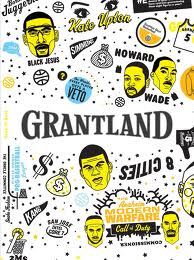
[READ: May 8, 2012] Grantland 2

I was surprised at how much I enjoyed Grantland #1.  So I was pretty excited to get Grantland #2.  #2 has all of the elements that I loved about #1–non-sports articles about entertainment (video games, music, TV), and sports articles that are short and digestible for a non-sports fan.  This issue also features a number of really long articles about basketball.  I like basketball fine, but I can’t say I paid any attention to the lockout.  Thus, much of this was lost on me. It probably doesn’t help that I don’t know any sports people either.

I may have said this last time, but I will reiterate for Issue #3–for those of us who don’t follow sports, or those of us who may not remember back to September when most of these articles were written, or heck, for people who are going to read this in ten years’ time:  For certain articles, can you give us an epilogue about what happened after the article was written.  If you speculate about  the lockout. Have an epilogue to say about how the lockout turned out.  If you talk about a game 5 of a series and the series didn’t end, have an epilogue that tells us how the series ended.  It doesn’t have to even fit the style of the article, just a few words: so and so ended like this. It can show how prescient the writers were.  And it can help us complete the stories.

So, despite a few articles that I thought were too long, (although probably aren’t if you love basketball) I really enjoyed this issue of Grantland, too. (more…)

Read Full Post »

SOUNDTRACK: GOGOL BORDELLO-Super Taranta! (2007).

I’ve heard a lot of live music from Gogol Bordello (from NPR and on Live at Axis Mundi).  And quite a lot of those songs come from this album (they had a few years of down time between this record and their release from 2010).  It’s always fun to hear an album for the first time when you know live versions of the songs pretty well.    And of course, it’s always weird to hear the songs that you don’t know  (I guess they weren’t popular?)

But even if I didn’t know most of the songs already, this is a great album and a great introduction to the manic energy that is Gogol Bordello.  While it’s true that they are best represented live, this album is very well produced and mixed and really showcases the kind of insanity that Eugene and crew can get up to.

And there’s not a bum song on the record.

When I first played this in the house, Sarah  found it way to hyper, and I can appreciate that.  Gogol Bordello literally never stop.  Their songs are full of a combination of punk and gypsy–a ton  of energy.  And mostly, it is directed at fun and overcoming difficulties.  Eugene Hütz is not very angry although he certainly has things to complain about.  But mostly he is  singing for justice (and alcohol).

The album opens with Hütz singing a somewhat quiet intro before HA! and the punk comes rumbling  in.  There’s a prominent violin, fast acoustic guitars, and accordion and some really intense drums.  I never noticed the drums as much as I did on this record.  In a couple of tracks the drums seem to never stop, even as the melody slows down–and it still sound s good.

There’s some screaming elements, some gypsy keening  and a tribute to “Alcohol.”  In most  live versions of “Alcohol,” I find the ace too slow, but it sounds great here.   Some other highlights are “American Wedding,” “Wonderlust King,”  “Harem in Tuscany” (which has some great gypsy stylings).  And for a change of pace (as if there weren’t enough interesting things on this record), “Dub the  Frequencies of Love” introduces some reggae into the mix.

Hütz  is a great front man.      He is full of energy and excitement and his accented singing style is really great–passionate if not very conventional.

Oh, and the cover shows the band’s backing vocalists with fire buckets on their feet because he plays them live.  A tuneful racket indeed.

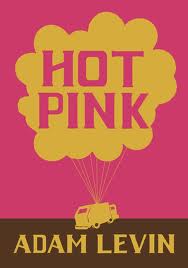
[READ: April 13, 2012] Hot Pink

I have yet to read Adam Levin’s The Instructions (it’s over 1,000 pages, so I’ve been putting it off).  But I was glad to get this collection fo short stories so I could see what his writing is all about.

Hot Pink is a collection of ten short stories.  I really enjoyed a couple of them.  I was a little confused by a couple of them and one or two I had a hard time getting through.

“Frankenwittgenstein” reminded me a lot of a George Saunders story although it goes in a very different direction.  In the story the narrator’s dad sees a special on bulimia and decides to build a doll. Bonnie: The Beautiful Body-Action Doll for the Self-Body Image-Enhancement of Toddling and Preadolescent Girls at Risk.  The dad is quite clever and makes a digestive system that actually works!  And so he markets the doll to a toy company.

They want changes made.  Over and over.  For years.  And the dad makes them and goes slowly insane.  It’s funny but not crazy funny (like George Saunders), and the conclusion is fairly satisfying. (more…)

Read Full Post »

SOUNDTRACK: MATANA ROBERTS-COIN COIN Chapter One: Gens de couleur libres [CST079] (2011).

This is an abrasive album.  Not only does it has some massively skronking free-jazz, but it is also aggressively political, dealing with slavery and race.   So, if the heart-rendered screams of Roberts don’t make you uncomfortable, the description of a woman on the auction block will do it.

I listened to this album a number of times and kept thinking that it would probably work much better live than on record.  Lo and behold, if I’d read the liner notes more closely I would have known that it was performed live.   (The final song has an introduction and cheers at the end, but none of the rest of the album indicates that it’s live).

I like free improv jazz (when I’m in the mood of course) and I also like noise jazz (John Zorn mostly).  So I’m not averse to a lot of the genre.  But there was something odd about this recording to me.  And this is where that whole “live” recording comes into play.  This music felt like it was being performed for an audience.  I don’t know what the difference is, but it’s one I heard.  I can imagine images going along with the show.   And because of that, I feel like I was missing a crucial element.

The liner notes don’t explain anything about the show itself, nor how this person apparently named Coin Coin relates to her (it seems vaguely autobiographical, but I’d love to know more).

There are moments of rather conventional beauty on this recording.  The song that contains the “Bid ‘Em In” section is a great singalong (of course, when you realize what you’re singing about, you’re horrified).  And there are some other sections where Robert’s voice melds perfectly with her band and with Gitanjali Jain’s backing vocals.

The final song is a very moving song written for her mother.

The only thing I really don’t like about the album is Roberts’ poetry-slam-type singing.  I have complained before about this type of sing-song delivery, which just irks me.  I can see that there are times on the album where it works, but for the most part it feels arbitrary (as it always seems to me).  And when you have crazy improv jazz you need something to hold it down.  The poetry slam lyrics don’t do that.

This is not for everybody, but it is certainly a powerful album.

[READ: January 16, 2012] Vicky Swanky is a Beauty

McSweeney’s has gotten me to like a lot of things that I never thought I would–a cooking magazine, a sports magazine, long out of print unheard of titles.  But they simply cannot get me to like flash fiction.  Okay, that’s not entirely true.  Deb Olin Unfurth is quite a master of the genre.  But man, I just cannot get into Williams’ short short stories.

The majority of these stories are two pages long.  This means 12 lines on the first page and anywhere from a quarter to a full-page on the second.  But there are also some stories that end after one page (12 lines).  So here’s the little drinking game I invited.  Since Williams’ stories end so arbitrarily, try to guess which ones end after those first twelve lines and which ones continue on to the next page (it’s not really a fair game because some stories end in ten lines or so, but you get the idea).

Take “Cockeyed” (more…)

Read Full Post »

That’s right, I hopped on a meme bandwagon.  I like most of the Ryan Gosling “Hey Girl” pictures, but this one was particularly amusing.  Thanks, Feminist Ryan Gosling.

Last year I had started a post called “Things to expect in 2011.”  I never finished the post and never published it.  I looked at the draft the other day and was intrigued that not only didn’t I finish what I prepared to read, but as I was prepping this post I wound up with many of the same goals for 2012.  One thing I realized was that it takes longer to read than I think it does.  I have ten McSweeney’s issues left that I want to read.  It won’t take me a month to read one, but it could take upwards of two weeks.  So, that’s almost half a year.   Astonishing. (more…)

Read Full Post »

SOUNDTRACKBABE THE BLUE OX-“Basketball” (1998).

This was the first song I’d ever heard from Babe the Blue Ox, and I was hooked (sadly, The Way We Were, where this song is from was their last album).  This is also my favorite songs about sports (and it will never be played in an arena).

It opens with this great funky keyboard over a cool walking bass line.  And after a verse about playing basketball, we get the gorgeous bridge: “pass it to me, I am free, look there’s no one guarding me) sung by one of the women in the band (who sounds vaguely like Edie Brickell).  When the chorus kicks in “And when she gives it to me, I am as high as can be” both singers harmonize wonderfully.

There’s even a cool instrumental break.

Everything about this song is catchy and wonderful.  And it should have been huge.

[READ: December 21, 2011] Grantland

McSweeney’s seems to keep trying to push me away.  Or maybe they are just trying to push me out of my comfort zone.  First they publish Lucky Peach, a magazine about cooking (with recipes that contain ingredients that I couldn’t find anywhere).  I don’t read cooking magazines, but I loved this one.  Now they publish Grantland, a book about sports.  I don’t follow sports.  At all.  I used to play sports and I used to watch sports, and then when I got out of college, I did neither.  I have a very good knowledge of most sports (so I can still follow any game that’s on), but as for actual people playing the games right now–I’m ignorant.  So, why on earth would I want to read this book about sports?

I was pretty sure I would finally not be getting this book until I read the author list: Chuck Klosterman, Colson Whitehead (!), Malcolm Gladwell (?)  I knew this was going to be no ordinary sports book.

So it turns out (and I didn’t know this until just now) that the book is a collection of works from the website Grantland, which is created and run by Bill Simmons.  I haven’t explored the site but it sure looks interesting enough–longish articles about sports and culture and all kinds of interesting things.  And evidently this issue is a sort of best of the website.  The whole Grantland experience, including this book, are connected to ESPN, indeed, ESPN gets a copyright for the book, McSweeney’s is just the publisher.

And this volume was wonderful.  I couldn’t put it down.  I even wound up putting aside a book I was in the middle of to read it.  None of the articles are terribly long and, despite the basketball textured cover (which is very cool–no one can walk by and not touch it) the variety of sports covered is wonderful: from boxing to cricket!  And there are short stories and essays about the entertainment industry as well (articles on Shia LeBeouf and Amy Winehouse (!)).

If I had one complaint about the book it’s that many of the articles don’t give a time from when they were written.  I assume they are all fairly recent but since I don’t follow sports I can’t say for sure.  The other problem is that several of the stories end with a game/match unresolved.  Clearly they have been resolved since then, but even one line saying what happened would be comforting for those of us not glued to ESPN. (more…)

Read Full Post »

SOUNDTRACK: THE COLIN McENROE SHOW-The Life & Legacy Of David Foster Wallace (December 5, 2011) (2011).

This NPR show features an interesting discussion about David Foster Wallace:  his fan base, his cronies and his archive.   The guests were Donald Brown (New Haven Review), Evan Hughes, Ryan Walsh (who created the David Foster Wallace Audio Project) and Maria Bustillos.  Evan Hughes recently wrote a piece in New York that I’ll look at tomorrow and Maria Bustillos wrote the main piece for today’s post.  The other two guys I admit I don’t know.

This show looks at some interesting aspects of DFW’s life in the wake of his suicide and the release of The Pale King.  Although really the impetus seems to be Hughes’ article (which was published in Oct).  McEnroe asks him about the state of literature today and how both Jonathan Franzen and Jeffrey Eugenides have created characters that “resemble” DFW in some way.

They talk about the cult of DFW and play some audio clips.  Brown is an older reader and so does not embrace DFW as much as others.  He is of the same age as DFW and so loves the people DFW loved more than DFW himself.  I get the feeling that he is a curmudgeon.

But they can all agree that fans of DFW feel that he was their buddy.  Super-intelligent but very human, almost speaking like they would (if they were that smart).  They conclude that the Kenyon commencement speech is something of the pinnacle of his project of earnest warmth in humanity.

At the half way point, Maria Bustillos comes in to talk about going to the archive (which you can read about below).  She explains her own interest in self-help books and how DFW was a person who needed help.

The end of the episode has them talking about DFW’s voice.  They wonder why DFW has an “audio project” but other writers do not.  They talk about DFW’s voice and his presence during interviews and how he is very warm, even when he’s being cold (it’s an odd clip they choose). I’ve mentioned the Audio Project before.  It’s wonderful.

For anyone interested in reading books that are in a similar vein to Infinite Jest, Bustillos recommends Under the Volcano (Malcolm Lowry) and wholeheartedly recommends The Last Western (Thomas Klise).

A fascinating thing about this show was finding out that McEnroe was the author of a pretty funny piece in McSweeney’s many many years ago called “I Am Michiko Kakutani.”  He offers an anecdote about originally mentioning DFW in the story but that the McSweeney’s guys asked him to change it to someone else.

But I have to say that the show seems a bit too much about Colin McEnroe (the McSweeney’s anecdote was just one of many involving McEnroe).  He talks a lot about himself and about how he’s “afraid” that the Awl will make fun of him or that Franzen (who was with McEnroe in a green room backstage at some show) will put him in his next book (because he was discussing Neti Pots).  But I’m just not sure that Colin McEnroe rates enough to warrant the concern. 

It’s an enjoyable show, although unlike other interviews by people like Charlie Rose or Michael Silverblatt, McEnroe’s questions and comments aren’t very well informed.  If you know a lot about Wallace, this show is a bit frustrating because it takes a tone that Wallace is basically a “postmodern ironist” or that he sees everything as “a big dark joke.” And even when the guests are showing that that is not the case, he seems to try to keep reverting back to this trope.

Oh well, it led to some interesting articles at least.  Like the one below.

[READ: December 7, 2011] “Inside David Foster Wallace’s Private Self-Help Library”

For no reason in particular, I’m devoting this weekend to articles that are specifically or tangentially about David Foster Wallace (it’s been awhile, and I have yet to finish my Consider the Lobster project, so, why not). 

I actually read this because of the above radio show.  I know Maria Bustillos because we’re both in a newsgroup.  “Newsgroup” is so 90s, I wonder what they’re called these days).  Anyhow, Maria has always proven to be smart, funny and very articulate.  And the only reason I didn’t read this article when it came out was because I wasn’t sure I wanted to dive into this topic. 

After listening to the above radio show, however, I felt that this would be a very interesting article. And so it was.  It’s available at The Awl.

As it opens, Bustillos lets us know that she visited the DFW Archives Ransom Center at the University of Texas at Austin and pored over all of the materials they have there (undergrad papers, drafts of fiction and non-fiction, syllabi, tests and quizzes, and juvenilia among other things). 

Wallace was a major note-taker.  And he loved to take notes in a book as he was reading.  Just look at some of these books

But what surprised Maria (and me) is that among Wallace’s collection of wonderful fiction was a collection fo self-help books which were equally annotated and marked up. 

Much of the set up of the article concerns why DFW had self-help books at all.  The answer is, of course, because he was a depressed person (obviously) and because he had been in rehab for a pretty long time.  None of this background information is new, but Maria offers insights into DFW and his life that I had never heard before (Maria and DFW had corresponded, although I don’t know if they were “friends” or not).  (more…)

Read Full Post »

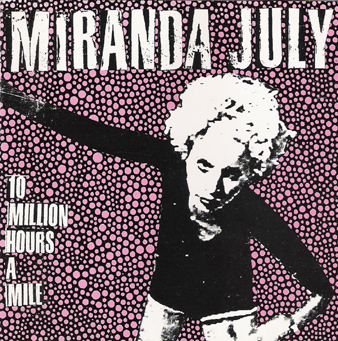
SOUNDTRACK: MIRANDA JULY-10 Million Hours a Mile (1997).

I only listened to this again after mentioning it below (I wrote about the book before the CD).  I vaguely recalled this CD, but I recall buying it mostly because it came from the unquestionable Kill Rock Starts and must have gotten a good write up in some alternative rag that I read.

Basically, this is a series of performance pieces, most of which are set to music (the music is spare and basic if it’s there at all).  She has multiple characters, most of whom are having a rough time. 

The one thing that is overwhelmingly noticeable to me is that just about all of her characters seems to have some kind of stutter or vocal tic, which I have to say may bring verisimilitude but is also rather irritating to listen to.

Indeed, I think this is where my opinion of July stems from (see below).  These are artsy pieces that were kind of the rage back in the late 90s– riot grrl takes of one-woman shows.  They were interesting and maybe good for one listen, but not much else. 

In hindsight, and seeing the kind of work that July has done since, it is easy to see that this is a collection of character studies like the ones that would inform her later work.

The rather strange thing is that the titles of the songs don’t match up to the performances (at least on Spotify or allmusic), I wonder what’s up with that. 

There are some interesting scenes laid out here, although I find July’s delivery to be off-putting–it’s in that sPOKEn WOrd styLE where THINGS are inFLECted in a TERRibly deLIBerate MANneR.  I KNOW that that KIND of emPHASis is meant to be…

….draMATic, but I’m rather glad that people have stopped doing it.

The eleven minute “How’s My Driving” is a decent example of the kind of things she does (although most of the pieces are more like 3-4 minutes).  In this piece, a man (July’s voice) goes to a peep show and talks to “Penny.”  Their plot line is a bizarre story in which the details of each reveal disturbing similarities until the ending is a Twilight Zone twist.  This is interspersed with a girl named Penny who talks about how she first started lying, although she says driving.  It’s an interesting although somewhat forced metaphor, but it’s enjoyable.  The stories intertwine, growing more and more intense.   Although it could probably be a bit shorter.

In “Hotel Voulez-Vous” a young girl (or boy) goes back in time to the titular hotel to convince her parents not to have her.  The execution is interesting but flawed.

“The F-A-T-E” is a cool story about letting fate be your guide, but the crazy voice-noises she makes are very off-putting and kind of take away from what could be a cool twisted tale.

I guess my opinion of this album work hasn’t changed all that much.  It’s got moments of interest but seems to be a little too coffee shop/navel gazing and being weird rather than good.  But hey, she was young then, right? 

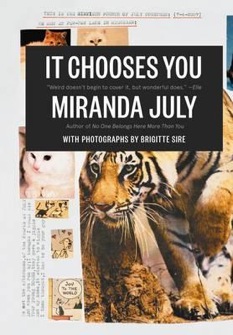
[READ: December 6, 2011] It Chooses You

I have this weird kind of relationship with Miranda July’s works.  I am hesitant to read/view something, but I seem to enjoy it in the end.  I’m not sure why I am so hesitant, there just seems something off-putting about, if not her, then maybe the “fame” that surrounds her.  Like if she hadn’t earned her accolades.

I first found her back in 1997 when her 10 Million Hours a Mile CD was released on Kill Rock Stars.   So she was kind of indie cool.  And I guess she still is indie cool, but I guess it was the quality of the CD–it seems goofy at best, that makes me question the quality of her art.

But that may have finally changed with this book.

I began reading this book with that same sense of trepidation about her art–that I wouldn’t really like it.  Why?  Because, as with the CD, it’s seems to be all about her.  And I feel like a lot of her work is about her.  Nothing wrong with that, but sometimes you think, aw who cares. 

What she’s talking about is her upcoming film, The Future (which has since been released).  She is stuck in massive writer’s block .  She hates her script and doesn’t want to look at it anymore.  So, as many people do, she starts flipping through the PennySaver(more…)

Read Full Post »

SOUNDTRACK: WILD FLAG-World Cafe, November 10, 2011 (2011).

I’ve been really enjoying Wild Flag’s debut album.  Wild Flag consists of Carrie Brownstein and Janet Weiss of Sleater-Kinney, Rebecca Cole, who I don’t know but who has been in a few different indie bands, and Mary Timony from Helium.

This World Cafe episode is a brief interview (mostly with Carrie, although all four women are present), in which they talk about the origins of the band and what it’s like to play as a foursome. 

There are three songs and the band sounds tight and perfect.  In fact they sound so perfect I almost wondered if they were really playing live (but there’s one keyboard flub that proves that humans are involved).

It’s a great sample of the record, which is all great, and it’s a good chance to get caught up with these rocking women. 

[READ: November 15, 2011] “The First Venom”

This is an excerpt from Marcus’ forthcoming novel, The Flame Alphabet.   I’ve read a number of Marcus’ things in the past and I realized that most of his McSweeney’s pieces I do not like.  Some of the short stories in the New Yorker I have enjoyed, although usually not right away.  So, clearly Marcus and I don’t see eye to eye on fiction.

And that’s the case with this excerpt.  It’s hard for me to say I wouldn’t read a longer piece based just on an excerpt because who knows what else the rest of the book contains (this could be a small fraction of a much different story), but this excerpt absolutely didn’t make me want to read any more.

In the excerpt, a married couple is sickened by their daughter.  Literally.  All of the words that she says and whispers and scribbles wash a sickness over her parents.  They cringe and try to get away but she keeps talking and talking.

At first this seemed like a metaphorical sickness–who hasn’t grown tired of their kid’s incessant chatter, but it soon becomes clear that this is very real. (more…)

Read Full Post »

SOUNDTRACK: SUFJAN STEVENS-The Age of Adz (2010).

Sufjan Stevens has released a bunch of albums of beautiful orchestral rock.  It is multi-layered and complex with classical elements and all kinds of cool instruments.

And this album starts out with a beautiful acoustic guitar melody and Sufjan’s delicate vocals.  Although it is a far more stripped down song than usual, “Futile Devices” seems like it is heading in the standard direction.  But anyone who heard Sufjan’s Christmas album number VIII knows that he has been having some fun with electronics.  And they show up with a vengeance on track two, “Too Much.”

All of the multilayered noise that was once orchestral and (some might say) precious has been replaced by a cacophony of gorgeous electronic noises.  The beginning of the song reminds me of the sounds in Skinny Puppy’s “Stairs and Flowers” (how many Sufjan Stevens reviews mention Skinny Puppy?).  The song is nothing like Skinny Puppy once the vocals kick in–it’s catchy and delicate–but those electronics underpin the whole thing, bringing his pastoralia into the twenty-first century.  When I first reviewed this song I didn’t like it but once you get absorbed by Sufjan’s world, it’s an enticing place to be,

“Age of Adz” takes this electronic nonsense even further with an 8 minute brew of strange sounds and choral voices.  But he always manages to throw in some catchy parts, no matter how strange the song gets.

For me one of the highlights of the disc is “I Walked” it features one of my favorite Sufjan things–falsetto vocals in a beautiful but unexpected melody.  And this song has them in spades.  “Now That I’m Older” has a very disconcerting sound–his voice is slowly warbled and mournful.  It’s a beautiful melody that is alienating at the same time.

“Get Real Get Right” returns to his earlier style somewhat (there’s more layers of music, although the electronica is still in place).   “Vesuvius” is a beautiful song and “All for Myself” is another of those great falsetto tracks that I like so much.

“I Want to Be Well” eventually turns into a manic electronic workout in which he repeats the chorus “I’m not fucking around.”

But nothing compares  to “Impossible Soul” a twenty-five minute (!) multi-part suite of electronic chaos.  It’s a fantastic song complete with autotune (used to very cool effect), repeated swelling choruses (it’s like a Polyphonic Spree tribute), electronic freakouts, and acoustic comedowns.  All in a positive, happy message.  I can’t stop listening to it.  “It’s not so impossible!”

Sufjan continues to impress me.

[READ: November 10, 2011] McSweeney’s #9

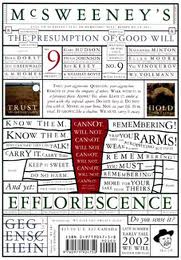
After the excesses of McSweeney’s #8, I was excited to get to the brevity (and urgency) of McSweeney’s #9.  This one is a paperback and looks like the first couple of issues.  The cover is mostly text with a hodgepodge of phrases and pleas.  You get things like: Thankful, Emboldened, The (Hot-Blooded/Life-Saving) Presumption of (Perpetual/Irrational (or More Likely, Irreducibly Rational) Good Will, Efflorescence, Our motto this time: We Give You Sweaty Hugs,” Alternative motto: ” We Are Out Looking,” GEGENSCHEIN (no more), and the promise: “We will Do Four This Year.”

This is the kind of issue that makes me love McSweeney’s.  There are some wonderful short stories, there are some nice essays and there are some dark moments all centered vaguely and tangentially around a theme.  There are some great authors here, too.

The back cover image is called Garden Variety by Scott Greene and it’s a fantastic painting.  You can see it here (navigate through the 2000-2004 paintings, but I have to say I really like the style of all of his work.

There are no letters and no nonsense in this issue.  So let’s get to it. (more…)

Read Full Post »

« Newer Posts - Older Posts »