Feeds:
Posts
Comments

Archive for the ‘Marriage Trouble’ Category

SOUNDTRACK: CALLA-Calla (1999).

I got this album when a patron donated it to the library.  I had never heard of this band, but the other CDs he donated were really cool so I grabbed this one, too.  This is an almost entirely instrumental album (vocals are whispered when present) that feels like a soundtrack to a futuristic Western.  “Tarantula” opens with some creepy, ghostly sounds and then what sounds like spurs walking across the landscape.  When the guitar comes in it sounds like an old Western.  In many ways this album reminds me of a great band called Scenic, although this one makes more use of electronics, which gives it a more eerie feeling.

“Custom Car Crash” has a very Western feel.  Over creepy scraping sounds, a clean guitar plays very simple guitar lines and chords.  When the keyboard lilts over the noise, it’s quite eerie.  This song has vocals; deep, almost whispered vocals, and I can’t really make them out,  There’s also a live bonus version at the end which really captures the studio version, but which I think is better.  “June” has a slow droney sound: more atmospheric than anything else–it seems maybe ten years ahead of its time).  The 8 minute “Only Drowning Men:” introduces more guitars and a lit of tension.   From the noise a delicate guitar pattern emerges for the last minute of the song.

“Elsewhere” is full of buzzy guitars; there’s a live version at the end of the disc as well.  “Truth About Robots” is my favorite track, a real melody over the noise.  Despite its length (just over 2:30), it tells a full story.

“Trinidad” comes a surprise because it opens with bass (you don’t hear much bass on this album).  But “Keyes” is so quiet as to be almost not there.  “Awake and Under” on the other hand has a great guitar and bass sequence with spoken lyrics (reminiscent of many indie bands of the 90s) but which is very effective here.  There’s a live version as a bonus track and it is a highlight.

This is more interesting music for creating atmosphere, but not something I’d listen to a lot.  I was surprised to find out how many albums they had out.

[READ: March 2, 2012] “A Prairie Girl”

I’ve enjoyed Thomas McGuane stories before, but I wasn’t sure if I’d like this one as it opens with a brothel.  Since I’m thinking about the implications of sex in Gravity’s Rainbow, the last thing I needed was a hooker-with-a-heart-of-gold story.  But this isn’t that.  And it has a brothel with a very funny name: The Butt Hut .  The Butt Hut closes down when the madam dies.  Most of the women moved away (either with local men (to the dismay of many) or on their own).  But one girl who stayed was Mary Elizabeth Foley.

Mary Elizabeth attended church weekly, but most of the people gave her a wide berth—literally an empty pew.  It was finally decided that someone should speak to her since she wasn’t going away.  And so Mrs Gladstone Chandler, wife of the town’s bank owner and all around respected individual, sat near her during the mass.  Afterward, she asked Mary Elizabeth: “Where are you from?”  Mary Elizabeth answered “What business is it of yours?”  And she soon had her pew back. (more…)

Read Full Post »

SOUNDTRACK: RED BUDDHA-Raindance (2007).

My Aunt Marg gave me this disc for Christmas a few years ago.  She said that she knew it from a spa that she went to.  And I can totally tell. I don’t know anything else about the artist, and it’s even hard to find stuff about him online.

The disc has an Indian (Eastern) vibe (which surprises me given the name of the artist and the African-looking person on the cover).  It also has a real world music feel.

Sarod

Overall, I like the music quite a lot.  It’s certainly new agey, but not treacly new age or anything.  It showcases some cool world music without resorting to clichés.  However, I admit to not caring much for the spoken lyrics of the opening track,  “Sometimes.”  His voice is deep and distracting, especially over such mellow music.  Despite the very Indian feel of “Sometimes,” the rest of the disc explores other sounds as well.  “Kokou” has a 70s kind of organ and bongos (with more appropriately world musicy chanted vocals).  “Raindance” has a cool flute over some bongo beats (all very soothing…with crickets).

Veena

I really like “Girl from Orissa” with its cool Eastern instrumentation.  There’s a sarod, a veena and a sitar on the disc.  (Orissa is located on the eastern side of India).  “Khali Gandaki” also features this cool instrumentation. (The Khali Gandaki valley is in Nepal).

“Mswati” opens with some percussion. But this track differs because of the interesting riff that plays throughout the song (whether guitar or keyboard, I can’t tell).  “Touba” has a nice bassline, which really stands out on a disc with minimal bass. It also has some neat wah-wahed guitars.  And “Preaching of Buddha” has a kind of Dead Can Dance feel to the vocals (they’re my go-to band for world music).

Sitar

“Katarajama” (a pilgrimage site for Sri Lankans and South Indians) has a great riff to it, and it’s even better when the other instruments play along.  “Patan Part 1” also has a cool sitar riff.  Although if Part 1 is 8 minutes, how long is  the whole song?

The final song, “Sufi Kalaam” has a somewhat more sinister or perhaps just movie soundtracky sound (low bass chords underpin the beginning of the track).  There are chanted vocals and lead vocals in another language.  I rather like the song, but it doesn’t really fit on the disc.

The whole disc is definitely a background/new agey kind of deal.  I can hear it all (except the first and last songs) working well for a relaxing evening of massage.  Just don’t listen to it while driving!

[READ: February, 17 2012] “Lorry Raja”

“Lorry Raja” won Narrative magazine’s “30 Below” contest for 2011.  After the wonderful stories that came in second and third place I expected something pretty amazing to win.  And I was maybe a little disappointed by this story because of it.  And I think I have to blame a cultural disconnect for that.

This story is set in Karnataka, India, a poor state in the south of the country.  People there are so poor that they live in tents and work in the mines–smashing up rocks to get at the iron ore inside.  The children can’t afford to go to school, there’s no electricity and everyone is covered in a red dust from all of the dirt in the mines.

Madhuri Vijay is able to create a compelling story out of this harsh environment.   The story concerns one family as they struggle to survive under these conditions.  The father (I had a really hard time keeping the names straight, so I’m not going to include them here) had an accident and cannot work to his full capacity, so he is stuck working less lucrative jobs. The mother works smashing up iron ore.  The middle son, 12, works and plays around the mine (collecting a few rupees each day).  They put some money aside for his eventual education.  The older brother has just gotten a job as a lorry driver for the mines–he takes the ore out to the port cities.  He is only 14, and, being 14, he takes especial care of his lorry–cleaning it from all the red dust and driving it in a very proud manner.  So much so, that everyone starts calling him Lorry Raja.  There’s also a baby brother who doesn’t play much of a part except (in the way I read it) to show off how hopeless things are (the boy is playing in the dirt and when it is time to feed him, his mother just takes her breast out in front of everyone).

The story is narrated by the middle son.  And we watch as he grows jealous of his brother–the Lorry Raja.  We see the narrator break up rocks, spy on his mother, spy on his father (who is lowered by a rope in to a deep mine (!)).  And we see him talk to the owner of the mine (who has a car, a generator and drinks Pepsi).  And finally we see him spend some time with his brother’s ex-girlfriend (they broke up more or less once he started driving his lorry).

When the girl casually remarks that the narrator should get his lorry license and then he could drive her to China, that sets a new part of his life in motion.  (They are thinking about China because the “Lympic Games” (“Whatever they are” he says) are being played there this year). (more…)

Read Full Post »

SOUNDTRACK: PAT JORDACHE-Future Songs [CST076] (2011).

I love this Constellation release. It is one of my favorite releases of theirs in a long time.  This album sounds like a kind of TV on the Radio demo/tribute.  I don’t mean that in a knock-off way, but there are many elements about TV on the Radio that I recognize here (voice and musical style).  But the fact that a) Jordache plays all of the instruments himself and b) he keeps things simple, makes this an impressive release.

It opens with “Radio Generation,” which has a really cool bouncy guitar riff and bassline.  It doesn’t quite display the signature sound that I think of this album as having but it certainly points to it. “Get It (I Know You’re Going To) is where I hear the first signs of TV on the Radio.  Jordache sings with two voices at the same time–with his deep voice underpinning his higher voice.  It’s a great effect.  And the fiddly guitar bits are really interesting.

“Salt on the Fields” opens with some “wee ooh” vocals in a fairly high register but when the main vocals come in, they are processed and sound not unlike an old radio (and a singer who I can hear but whose name I can’t place) and then midway through, the song introduces a great guitar riff.  “Phantom Limb” features drums and looping from Merrill Garbus who I didn’t know when I first heard this album but who I now know is tUnEyArDs. And, heh, a little browsing tells me that they are in a band together called Sister Suvi.

“Gold Bound” feels more like a demo than the other tracks, it’s a very simple guitar melody with some echoed vocals.  It’s also the shortest song on here and it’s a nice change of pace.  It also ends with a strange excerpt from something else, a vulgar, rocking little piece advising you to run mother fucker.

“Song for Arthur” returns to that cool high-pitched ooo-ooing.  But “The 2-Step” changes things quite a bit.  An interesting processed guitar and loud echoey drums, but that voice is recognizably his.  There’s also more guitars than on other songs which brings a new texture to this album.

The final song “ukUUU” is a slow meandering piece. There’s some interesting sounds going on (reverse vocals and such) and a lengthy spoken piece about love, but it lacks the punch of the rest of the disc.

Nevertheless, this album is interesting, intriguing and a lot of fun.  I’m looking forward to more from him.

[READ: February 12, 2012] “Liability”

I recently saw that Narrative magazine picked three “30 Below” winners for 2011.  So I thought I’d see just what kind of short stories win their prizes.  This is the third place finisher.

I admit I was a little less than excited when I started reading the story.  It was written in second person, which I liked, but it seemed like a pedestrian story about “you ” and your wife.  How she is so beautiful and you feel you have let her down.  But my misgivings soon gave way.  And I think it was with this little section that won me over:

You crave energy and excitement, and to this end you have bought a beautiful condo downtown in the “bohemian quarter,” as the realtor pitched it, which means that it’s cheap enough for artists and poor black people.  That’s okay.  You love art and hate racism.”

By the middle of the next page, after the explanation of your wife’s job (guidance counselor in a poor school) we get to what turns out to really propel the story: “Although, to be honest, she has a small drinking problem.”  He diffuses this bold statement with a qualifier in the next paragraph: “But the drinking problem is only a problem sometimes, and the drinking problem is not a problem tonight.” (more…)

Read Full Post »

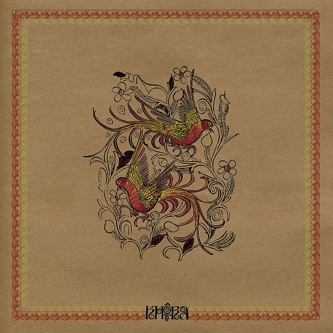
SOUNDTRACKKHÔRA’s-Silent Your Body Is Endless [CST071] (2011).

This is the third and final disc from Constellation’s MUSIQUE FRAGILE 01 collection.  Khôra is Matthew Ramolo doing solo work on the guitar.  But unlike any other guitar album you may have heard, this one is processed and manipulated so that much of the album sounds nothing like a guitar.

Most of the sounds on the disc are washes and waves of guitars that grow and fade.  Although the opening track “Natura Naturans” has a recognizable acoustic guitar melody, the washes are all processed guitar sounds.  This sound also has an echoing church bell, the kind of sound that would bot be out of place on a black metal album although this is as far from black metal as you can get.

The church bell, by the way is a field recording, and in addition to the guitars there are plenty of field recordings on the disc.

He generates a wonderfully expansive amount of moods as well.  There are haunting melodies like on “Body Aperbut also beautifully upbeat ones like on “Hushed Pulse of the Universe”

I find the artwork that accompanies the Khora album to be the most satisfying of all three.

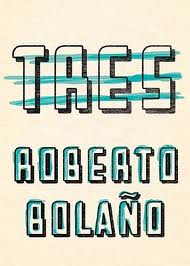
[READ: February 15, 2012] Tres

Another month, another posthumous Roberto Bolaño release.  Tres is so-called because there are three pieces in it.  They are described as poems, although I have a hard time seeing them as such.  It has the Spanish title because it was originally published as Tres and the English version is actually a bilingual version with facing Spanish and English pages (translated by Laura Healy–I guess if Laura Healy translated it, it must be poetry as she is Bolaño’s poetry translator).

Tres is also amusing to me because it is so clearly a way to make a very small book seem bigger.  In addition to the facing pages of the text, most pages have a paragraph or two at most (short ones at that).  So it’s total 173 pages is really half that and then, given how much white space there is, it’s easily half that as well.  None of this is a complaint, it’s just an observation.

The reason I’m confused about calling it poetry is because of the three pieces only one “looks” like poetry (with line breaks and what not).  Indeed, the first piece, “Prosa del otoño en Gerona” literally translates as “Prose from Autumn in Gerona.”  The second piece (the one that looks like poetry) is called “Los neochilenos” or “The Neochileans” and the final one is a series of numbered paragraphs (again, with no poetry conventions) called “Un paseo por la literatura” or “A Stroll through Literature.”  I read each of these pieces three times primarily because I found them hard to follow and wondered what I was missing.  Multiple readings did help, although I find with Bolaño’s longer short pieces, the details are exquisite while the overall picture is a bit confused. (more…)

Read Full Post »

SOUNDTRACK: THE FEELIES-Crazy Rhythms (1980).

Not too many albums start out with clicking blocks and quiet guitars that build for a minute before the actual song kicks in.  Not too many albums sound like early Cure sung by Lou Reed and not too many albums are called Crazy Rhythms when the thing that’s crazy about them is their vocals and guitars.  But that’s what you get with The Feelies debut.

In addition to the blocks, the opening song also features some sh sh sh sounds as a rhythm (techniques used by The Cure on Seventeen Seconds, also 1980).  There’s two guitar solos, each one vying for top spot in different speakers and, yes, the rhythms are a little crazy.

The album feels like it is experimenting with tension–there’s two vocalists often singing at the same time, but not in harmony.  There are oftentimes two guitars solos at the same time, also not in harmony.  The snare drum is very sharp and there’s all manner of weird percussion (all four members are credited with playing percussion).

That early-Cure sound reigns on “Loveless Love” as well, a slow builder with that trebly guitar.  There’s a lot of tension, especially with the interesting percussion that plays in the background.  And there’s that whole Lou Reed vibe in some of the vocals.

But not every song sounds like that, “Fa Cé-La” is a punky upbeat song with two singers trying to out sing the other.  “Original Love” is another short song, it’s fast and frenetic and fairly simple. It’s as if they couldn’t decide if they were going to be The Velvet Underground or New Wave punks.

The next surprise comes from their choice of covers: “Everybody’s Got Something to Hide (Except for Me and My Monkey”).  It goes at breakneck speed with some surprising pace changes after the chorus.  And a wonderful ringing percussion that makes the song sound even more tense than it is.  “Moscow Nights” is a more traditional song (although the backing vocals seem very spartan.

“Raised Eyebrows” is almost an instrumental, until the last-minute when the seemingly random vocals kick in.  And the final track, “Crazy Rhythms” seems to combine the speed of the faster tracks with the insanity of the other tracks.  It’s a pretty amazing debut, really heralding an age of music.

  It’s a shame it took them 6 years to make another (very different sounding) record.

[READ: February 8, 2012] “To Reach Japan”

I love Alice Munro’s stories, but I found this one a bit confusing.  Now, I admit that i read this under poor circumstances (while I was supposed to be attending a company-wide presentation), so that may have led to my confusion. But it felt like there was some questionable juxtapositions of the timeline in this story.

It opens simply enough with Greta and her daughter Katy waving goodbye to Peter (the husband and father) as they pull away from the train station.

The story immediately jumps back to Peter’s mother and how she fled on foot from Soviet Czechoslovakia into Western Europe with baby Peter in tow.  Peter’s mother eventually landed in British Columbia,where she got a job teaching.

The second time jump comes a few paragraphs later.  It seems like we’re back in the present, but the section opens, “It’s hard to explain it to anybody now–the life of women at that time.”  This describes how it was easier for a woman if she was a “poetess” rather than a “poet.”  But I’m not exactly sure when that was.  Presumably when Greta (who is the poet) was younger, but how long ago was that?  In Toronto, even?

The story jumps back to the present to say why Greta and Katy are on the train and Peter isn’t.  They are going to housesit for a month in Toronto while Peter goes to Lund for a summer job.

Then it jumps back to when Greta was a poetess and actually had poems published.  The journal was based in Toronto, but there was a party in Vancouver for the editor.  So she went.  And she had a lousy  time among the local literati.  She gets drunk and sits in a room by herself, but soon enough a man approaches her and offers to take her home. There is the potential for something more to come of it but it never materializes.  But she never forgot the man’s name: Harris Bennett, journalist. (more…)

Read Full Post »

SOUNDTRACKTV ON THE RADIO-New Health Rock (2004).

I was not aware that this EP existed (I guess technically it’s a single).  It came out after their original EP but before their first full-length.

The title track is a rocking number with all kinds of cool keyboard noises strewn about.  This is clearly early template TV on the Radio.  “The Wrong Way” will appear on Desperate Youth, Blood Thirsty Babes and it shows a new noisy sound for the band–lots of horns and a reluctance to allow silence appear, there’s sound filling up every space.  The final song, “Modern Romance” feels like a B-side.  It is kind of slow and meandering.  There are a few interesting sonic bits but mostly they are overshadowed by a kind of monotony.

Not essential listening for the TV on the Radio fan.

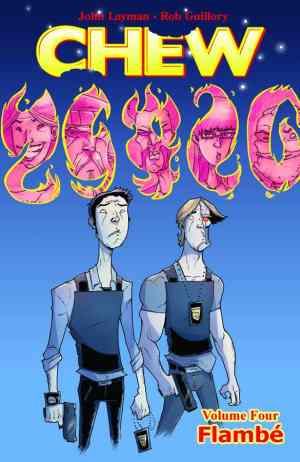
[READ: December 29, 2011] Chew: Volume Four

It was delightful to get volume four of this series so quickly after finishing volume three!

As with previous issues, this one starts out with a quirky opening.  A series of shots of a chicken restaurant (Mother Clucker’s) thirty-five years ago, then twenty-five, then fifteen and then five (nice clientele drawings over the years).  And then finally we see it today, after the ban on chicken–a wasteland.

But this story introduces an entirely new element (which goes through the arc of the book.  Lights from (presumably) an alien life form fill the skies.  They spell out words in a language that absolutely no one can understand.  And it is so vexing that money is taken away from the FDA (the people who are fighting the chicken war) and put into NASA.

This first chapter also introduces a new kind of character: a man who is voresophic–if he is eating he is unbelievably intelligent. Of course, if this was your gift, how long would you be able to stay slim?

Chapter Two jumps us right into a NASA space station.  Just as it explodes.  A quick cut to a school (where Tony Chu’s estranged daughter goes) reveals a more down to earth problem.  Since the letters have appeared in the sky people have been acting weird.  And one technologically savvy boy, who has been picked on most of his school life is looking for revenge.  But is he responsible for the space station explosion as well?

Chapter three is wonderful for a couple of reasons.  First, Chu and John Colby are getting assigned increasingly dangerous missions (because their boss wants them dead).  It culminates in a hilarious scene at the USDA (a furious female army). Chu and Colby are the last resort.  If everyone else fails, they have a fall back so dangerous that it is classified.

Chapter four is amazing for opening with a series of scenes that are gruesome and awful and, as the narrator boxes keep repeating, never actually happen.  And that is because Tony Chu has been assigned to work with his twin sister Toni Chu–NASA bigwig and (unknown to anyone else, fellow Cibopath–she doesn’t tell anyone so she’s not treated like a freak like her brother).  It’s great to see the two of them work their magic.  And while I wouldn’t want it to replace the Chu/Colby team, it would be fun to see future pairings of these two.

Chapter five (this is the first book with five chapters!) opens with a wonderfully long sequence of Agent Mason Savoy (he never went away, he’s always in the background) sampling something amazing.  And we get several wordless pages of him processing what he has just ingested.

But the more amazing thing is that suddenly the letters in the sky simply disappear.  And there seems to be a cult leader who predicted this, right down to the minute.  The cult leader ingested scads and scads of gallsaberries when she was adrift at sea and it led her to the Truth.  And she has lots of followers who are willing to drink her Kool-Aid.

The book ends with two wonderful cliffhangers.  The first one is (mild spoiler, but not really since it will be dealt with in the next book) that their actions lead Chu and Colby to get fired.  The second one is that Mason Savoy has learned a special secret about one of Tony Chu’s relatives (remember we saw them all in that cool scene from the last book?).  And he takes advantage of that knowledge.

The series isn’t over by a long shot.  Awesome.

A couple other things, first off–welcome back Poyo!  I loved the faux story they created about his background and then the negation of said story.  Also, this books reintroduces the vampires that were mentioned early in the story and then kind of hidden.  I love when stories pick up threads like this.  And a final quick nod to all of the excellent little jokes in the margins of the pictures.  I read them all and I love them…keep them up!

For ease of searching I include: flambe

Read Full Post »

SOUNDTRACK: TV ON THE RADIO-Nine Types of Light (2011).

I loved most of TV on the Radio’s releases.  On this one they scaled back some of their sound and they really highlight their assets, namely the vocals of Tunde Adebimpe and Kyp Malone.  This album feels like something of a continuation of the style from Dear Science.

Indeed, some of the songs are downright simple. “Second Song” is completely straightforward; I really enjoy the falsetto vocals on it.  “Keep Your Heart” is so straightforward it has almost no music in the verses.  It’s very much back to basics. “Killer Crane” is also very simple, with a gorgeous melody.

But don’t count uberdude Dave Sitek out of the game, he throws in some very interesting sounds and textures on a number of tracks.  “No Future Shock”  introduces all kinds of wonderful sounds and repeated lyrics which work as a mantra.  One of my favorite songs is the weird and wonderful “New Cannonball Blues” great synth sounds, cool harmonies  (that falsetto is on fire here!) and a nice staccato chorus.  “Repetition” has some cool repetitions (it’s in the title after all) that really becomes a mantra, with some great musical accompaniment.  And the drums sound amazing.  And “Caffeinated Consciousness” has some more cool sounds: orchestral hits and the like followed by a very mellow bridge.

And then there’s “Will Do” a perfect blend of the two styles–rich melodies, cool effects and great vocals (which is why it was the single).

The simple songs are a good introduction to the kind of stuff TV on the Radio is capable of, but it’s clear they have a love for the unexpected and that’s why I enjoy them so much.

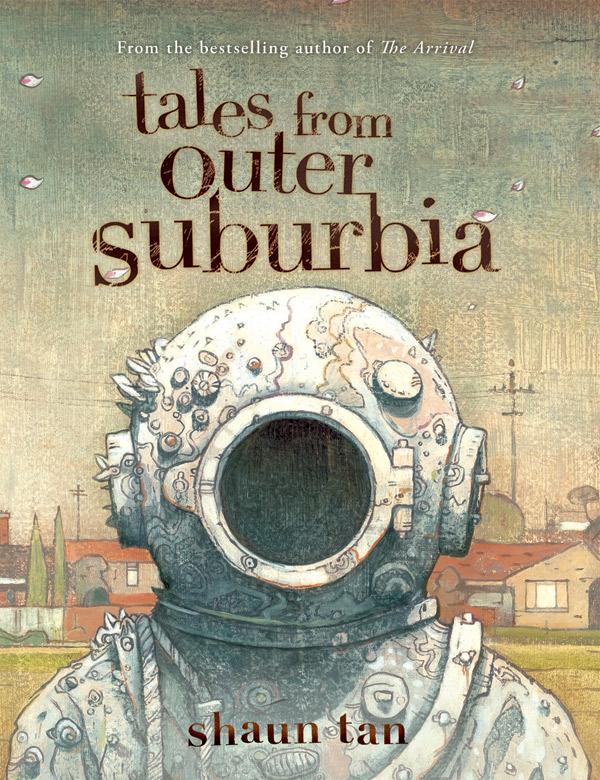
[READ: February 5, 2012] Tales from Outer Suburbia

Shaun Tan is an Australian author/artist who drew the amazing wordless The Arrival (it is stunning!).

This book is a collection of fifteen (very) short stories that come chock full of drawings.  Some drawings add to the story, some drawings tell the story and some drawings tell a kind of parallel story.  As with The Arrival, his artwork is weird and wonderful.

The library filed this book under YA Graphic Novels.  I’m not sure it’s either of those (The Arrival was filed under kids picture books).  While there are pictures, it is certainly not a conventional graphic novel.  And while the themes and idea aren’t risqué or anything, I feel like the ideas are more adult than teen oriented.  Of course, having said that, most of the protagonists are young, so maybe teens do enjoy stories about existential confusion! (more…)

Read Full Post »

SOUNDTRACK: YUCK-Yuck (2011).

If you’re like me, you love alt-rock from the 90s, however that may be described.  Typically, we’re talking loud guitars, but we’re also talking shoegazer music and alt folk and basically anything that might have appeared at Lollapalooza.

Yuck is like comfort food for anyone starved for new music from that ear.  There’s hardly anything new or original in it, but it sounds great.  It’s fun to play spot the influences (Dinosaur Jr. Nirvana, melodic Sonic Youth), but it’s more fun to just sit back and listen.

When the first song, “Get Away” opens up with that phased, distorted guitar I’m instantly transported back to the 90s.  And then when the solo begins (before the verse) it’s like adding screaming punk to shoegaze.  Blissful.

“The Wall” sounds like yet another style of 90s alt rock, with some more screaming guitars.  Then comes “Shook Down” in which the band slows down with acoustic guitars (think Teenage Fanclub).  It’s a little slow, but there’s a surprise third part which adds some wonderful distorted guitars to the song.

“Holing Out” brings a more punk edged guitar sound to the album (still distorted just edgier).  “Suicide Policeman” is a pretty straightforward folk rock song: acoustic guitars and whatnot and it never really rocks out.  The nice part is when the second, electric guitar plays slow wobbly chords over the top (think The Smiths).

“Georgia” rips right into a My Bloody Valentine song (female harmonies over washes of guitars).  This is the first song that I don’t love.  It’s got something to do with the chrous.  The verses are great, but the chorus is just a little too…blah.  But I love the sound of the song.

“Suck” is probably my least favorite song on the disc.  It’s really really slow and drags a bit.  Although, amusingly this song stays in my head the longest, especially the line “did you see the fire briagde.”  Maybe I secretly like it best

“Stutter” continues this slow mood–I think I like these songs individually, but they drag down this section of the album when played together like this.

Because when “Operation” bursts back, the album picks up (more great use of little guitar solos-think Smashing Pumpkins).  “Sunday” does the My Bloody Valentine thing much better–great chorus on this one.  Amusingly the verses are not very MBV-sounding at all, but it’s a nice blend.

“Rose Gives a Lilly” is an instrumental and, although it’s nothing amazing, it’s still nice.  The disc ends with “Rubber” a 7 minute retro blast.  It’s a slow builder, with big distorted guitars (the vocals are almost inaudible).  Just add more and more layers of guitar over the melody and you’ve got a great album ender.

It’s nice to see a band absorb influences rather than just aping them.

[READ: January 27, 2012] “Underbrush Man”

Once I saw Mohsid’s story in The Guardian, it was just a quick look to see that Margaret Atwood had a story there too!

I really enjoy Atwood’s stories, and this one is no exception.  But this one was rather unexpected for me because it begins with the point of view of a dog.  There are actually four points of view in this story.  I was delighted that the first two were more or less the same, that the third one was unexpectedly unrelated to the action and then the final one cleared everything up.

But we start with a dog. (more…)

Read Full Post »

SOUNDTRACK: LES MOMIES DE PALERME-Brûlez de Coeur [CST070] (2011).

This is the second disc from Constellation’s MUSIQUE FRAGILE 01.  Les Momies de Palerme, comprised of Marie Davidson and Xarah Dion, create ethereal music that would not be out of place on NPR’s Echoes (wonder if John Diliberto knows about the album).

There is a female vocalist who has qualities of Cocteau Twins’ Elizabeth Fraser (big surprise there) as well as early Lush.  But while the music is often swirling and intriguing, it is also sometimes odd.  There are moments in “Solis” which remind me of Pink Floyd’s “Several Species of Small Furry Animals Gathered Together in a Cave and Grooving with a Pict.” (That’s the second time I’ve mentioned this song in just over a month).

“Incarnation” has a vaguely middle eastern feel and works more in a Dead Can Dance kind of vein and “Le Cerf Invisible” has some really cool sound effects that spring up throughout the song.

The title track has a spoken word section that reminds me of the spoken word part in Sinéad O’Connor’s “Never Get Old” from The Lion and the Cobra (probably because it’s spoken by a woman and is in a foreign language, although on Sinéad’s album it’s Gaelic (spoken by Enya(!) and on this one it’s French).  I rather like it.

Most of the songs are longer than five-minutes, but there are two short ones: “Médée” is just under three and “Outre-Temps” is just under two, but they retain the same style of music, although “Médée” introduces acoustic guitars.

“Je T’aime” ends the disc with a bit more acoustic instrumentation.  The album kind of becomes more grounded as it goes along.  But it’s always ethereal.  It’s a neat experience.

Their website has a great front page, too.

[READ: January 23, 2012] Five Dials Number 22

Most Five Dials issues are chockablock with different ideas: contemporary issues, flashbacks to the past, fiction, poetry, ethics, music.  A wonderful melding of interesting ideas.  But Number 22 is entirely different.  Simon Prosser and Tracy Chevalier co-edited this issue and as they say in the editor’s note, they asked a group of contributors “to write grown-up fables about nineteen trees native to the UK.”

This issue is also promoting trees by highlighting the work at http://www.woodlandtrust.org.uk, an organization with three aims:

1 Work with others to plant more native trees…

2 Protect native woods, trees and their wildlife for the future…

3 Inspire everyone to enjoy and value woods and trees…

Simple but noble goals.  You can even buy a copy of this book in print from them at their store.

Even though I love nature and like being in the woods, I don’t know a lot about different kinds of trees.  I’m always stumped when it comes to tree identification.  So this issue was kind of enlightening for me.  Each fable has a picture of a leaf (presumably from that tree) which were painted by Leanne Shapton.  The fables also create backstory for what tree-lovers know about their favorite trees, and so this was also helpful just to learn what people know about trees.

But at the same time, it makes me uniquely unequipped to really talk about these fables.  So I’m just going to list the authors and their trees and say a word or two about their style. (more…)

Read Full Post »

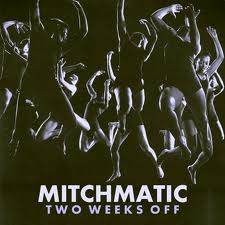
SOUNDTRACK: MITCHMATIC-“D-Bags” (2011).

On the show New Girl, my favorite joke in the pilot (which was brought back in a recent episode) is the douchebag jar.  Every time someone in the house (well, Schmitt, really) says something a douchebaggy, money goes in the jar.

This song has a crazily simple bass line–which sounds like “Another Bites the Dust,” but isn’t.  It’s unclear from the beginning exactly what the song is about.  But once the chorus comes in, the song is just perfect: “D-Baaaaaags: Hey I’m calling from a handicapped stall, dude; D-Baaaaaags:oh I’m a jerkwad? I’m a jerkwad?  D-baaags, Don’t tell me how to carb load, I know how to carb load.”

There are three rappers in the song.  Mitchmatic takes the first verses.  Mikey Maybe gets the best line: “say irregardless while trying to seem smart.”  The Joe has a really fast delivery that reminds me of Paul Barman (in lyrics and style).

I’m really enjoying Mitchmatics’s beats.  You can download Two Week Off for free.  Or you can watch the video (which seems to have the studio version of the song over a live video)

The video goes on a little long after the song, but the song is pretty great.  It might actually do to give it a proper video.


[READ: January 24, 2012] “Shore Ting”

When I signed up to receive Narrative magazine, I also signed up for their emails.  And the January 9 email contained this story (as well as many other things).  This story was chosen as their Story of the Week.

I really wanted to not like this story.  There were so many things about it that seemed like they should be red flags to me: a tourist getting entwined with a local urchin; the tourist “doing good” for the urchin when none of the locals want anything to do with him; a wife who is very Christian; and the implication of forthcoming violence throughout the story.  Not to mention a piece of foreshadowing that I assumed gave away the ending (although it doesn’t).

The story opens with an interesting scene.  The tourist, Dale, gives the urchin (named Sammy, although this was obviously a name for tourists) a cigarette and then realizes that he has personally started this boy on a lifetime of smoking. And he feels bad about that.

Sammy hits up Dale for work.  Dale doesn’t have work, but since he is looking into renting a sailboat, he more or less hires Sammy to help him on the boat.  Dale asks Sammy if he can do various things and whatever he asks, Sammy replies, “Shore Ting.” (more…)

Read Full Post »

« Newer Posts - Older Posts »