Feeds:
Posts
Comments

Archive for the ‘Marriage Trouble’ Category

SOUNDTRACK: PHISH-The Man Who Stepped Into Yesterday (1987).

This record was created by Trey Anastasio as his senior project at Goddard College.  The thesis included an essay piece and this collection of songs (recorded by Phish) relating this epic tale from the band’s fictional land of Gamehendge.  It was never officially released, but since Phish is so free with the tape trading, it is pretty widely available online (heck, even Wikipedia has a link to the Lossless SHN download of the album).

This release is legendary in the band’s history because they have played all of the songs from this album many times in their live shows (some much more than others, of course).  And while they have more or less played the Gamehendge saga a few times in concert, I’d always wondered what the original story was all about (many songs have since been added to the saga as it grew larger).

So here in all its tape-hissy glory is the original.  My first thought is that I guess it was hard to get good sound recording equipment in 1987 (or else this is a multi-generational copy—the “white cassette” from a year earlier sounds better).  And there seems to be a few flubs in the narration (which could be from copying).  I actually surprised he didn’t use a more authoritarian voice for the narration.

For fans, this is fun to hear because of that narration.  Live, the narration varies all the time, not always explaining what is going on the same way (some live narrations are far better and much more interesting).  But here you get it straight from the source.  The narration is accompanied by rather pretty instrumental music (which varies depending on who he is speaking about).  But for those of us who know all of these songs, the biggest surprise is finding out that “AC/DC Bag,” “The Sloth,” and “Possum” were part of the story (or maybe the biggest surprise is learning from the narration what the hell an AC/DC bag is (a robotic, mechanized hangman, of course).

The story is pretty interesting (Wilson and the Helping Friendly Book and all that), although by the end it loses itself a bit.  And I’m not really sure that “The Sloth” and “Possum” fit into the story at all.   But hey, he was a college senior when he wrote it, one can forgive a little sophomoric nonsense, right?

[READ: June 11, 2012] “The Republic of Empathy”

This is the first fiction I’ve read of the sci-fi issue.  I’m not sure if it’s supposed to be sci-fi, because it’s not really, at least not in terms of genre (I’d say sci-fi fans would object to the designation of sci-fi for this).  But it is futuristic and neat.  I especially enjoyed the humor and the construction of the story—Lipsyte is usually good for both of these.

It begins with William.  Williams is married to Peg.  Peg wants to have a second child as a gift for their first child (who has just grown out of the new baby smell).  William thinks this is crazy, but Peg says it’s a dealbreaker.  The next day William, who works for a flip-flop company, smokes a joint with an ex-cop friend, Gregory on the roof of their building.  On the roof across from them, they see two men fighting. And then one falls of the roof—splat.

Gregory says he’s seen this before but that William will be traumatized.  And he is in his dreams, but he’s even more traumatized when he dreams that his wife is pregnant and they already have two kids.  Oh, and that the neighbors, the Lockhorns, masturbate each other in the living room with the windows open.

Section two is from Danny’s point of view.  Danny is Gregory’s son.  Every few weeks Gregory is dating a new, younger lady.  This one is only a few years older than Danny.  It’s gross (and Danny feels like a bad YA narrator as he relates the story).  This is all before (I assume) Gregory comes out of the closet.  Because William knows that he’s gay in the above scene. (more…)

Read Full Post »

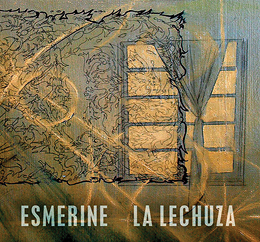
SOUNDTRACK: ESMERINE-La Lechuza [CST080] (2011).

This album is a wonderful surprise.  I had not heard of Esmerine before this CD (they have put out two previous records on a different label).  All I knew about them was that violinist Becky Foon (who is all over the Montreal scene and who is really good) was one of the founders of this band.  So I expected some epic instrumentals ala all of the Constellation Recordings bands that she has played with (Godspeed, Silver Mt Zion, etc).

I was delighted by the opening fast marimba notes of “A Dog River”.  I’m not sure if the marimba can play minor key notes, but the melody that co-founder Bruce Cawdron plays is uplifting and mesmerizing.  When Becky adds her strings, it takes on a new element–a kind of wistfulness.  Then at nearly 3/4 of the way in, some loud guitars come in to give the whole song a feeling of urgency.  And all the while it is very filmic.  It’s a wonderful opening.  “Walking Through Mist” is a much slower piece, and the marimba adds contextual pacing–they’re still not minor key or sad marimba notes, but they are not as uplifting as on the first track.  “Last Waltz” introduces a vibrato’s piano as the primary instrument.  It is at once unsettling.   It’s also the first of three songs with vocals.  The vocals work well on this song–they fit the mood perfectly–especially the wordless singing at around 4 minutes.  But I have to admit that I like the instrumentals better.  The same can be said for “Snow Day for Lhasa” (another song with vocals) which I find a little too slow to be impactful (it actually reminds me of a very slow version of Broken Social Scene’s “Lover’s Spit”).

“Trampolin” introduces a harp and some vibrant percussion.  It’s uplifting and feels like a perfect song for a theatrical dance company to perform to.  “Sprouts” is an uplifting new-agey sounding track.  By itself it might veer uncomfortably into the new age scene, but amidst the songs of the album it works very well.  “Little Streams Make Big Rivers” returns to that slower sound from earlier.  But this song is short and feels like a slow building march.  By the half way mark when the drums kick in, the song is unstoppable.  The album proper ends with “Au Crépuscule, Sans Laisse” a slow filmic song that returns the album to the quiet sound it was toying with earlier.

I mentioned Lhasa earlier.  Lhasa was a Canadian singer who had international fame (from my own experience, I know that X-Files creator Chris Carter wanted to go see her live–I know this because I was friends with his assistant and she told me the tale of trying to find tickets for this show).  I checked out her stuff but it wasn’t for me.  Anyhow, Beckie and Bruce were supposed to tour with Lhasa for her 2010 album, but sadly, she died of breast cancer (at 37, Jesus), right after the album came out.  So this album is dedicated to her.  The final song “Fish on Land” is a previously unreleased version of a Lhasa song that was made with Bruce and Beckie.  I wish I liked it more, but as I said, she’s not my thing.

I absolutely love the instrumentals on this album and I’m going to have to check out their earlier releases, too.

[READ: May 24, 2012] “Referential”

This story is like a kick to the stomach.  When you’re lying on the floor.  After you’ve thrown up.  And I mean that as very high praise indeed.

You know you’re in for trouble when the story opens: “For the third time in three years, they talked about what would be a suitable gift for her deranged son.”  We quickly learn that the woman’s son was fine until he was about twelve years old when he stopped brushing his teeth and began muttering to himself.  By then Pete had been dating the woman for about six years.

Pete and the woman had been coping with her son’s placement in the institution for over three years now.  There were so many rules they had to follow when visiting the boy–almost nothing could be brought in for fear of its being used as a weapon–even the homemade jam was taken because it was in glass.  Similarly, the woman has stopped wearing accessories, as a kind of solidarity–she would just have to remove them anyway.  She is now aging naturally and (she fears/admits) not very prettily.  An amazing slap in the face comes at the end of the first section with this amazing sentence:  “‘To me, you always look so beautiful,’ Pete no longer said.”  [Ouch!].

Pete has lost his job and is clearly unable to handle the strain of her son any longer (there’s a wonderfully painful scene where the boy asks Pete why he hasn’t come to visit lately). (more…)

Read Full Post »

SOUNDTRACK: HELLBENDER-Con Limón (1997).

Con Limón was Hellbender’s final CD.  It shows a lot more depth and variation than one would have expected from the debut.  “Fake I.D.” opens really really quietly for two verses so that you have to turn it up loud.  And then the song kicks in and explodes your speakers.  There are more such dynamics on this song, including the verse ending on a high guitar note and pause that adds a bit of quiet punch to the otherwise fast song.  “You Gutted Me with a Switchblade Shaped Like a Telephone” opens with some quietly spoken words (which I have not as yet been able to understand), but the verses and chorus have quite an emo feel.   “Long Distance Phone Bill Runner” has a catchy chugging riff with some screamy vocals.  “Untrusted You” introduces acoustic guitar (and a cool off-key note).  The vocals sound like Bob Mould.  Indeed the whole thing has a kind of Hüsker Dü feel to it.  “I-95 is Tattooed on My Brain” also opens slowly, with dark, quiet lyrics and a cool riff once the guitar kicks in.  The guys clearly have a way with song titles.

“Song About Some Girls” is perhaps one of the cheesiest songs I’ve heard in a long time (although as one reviewer points out, it does anticipate radio friendly emo by about a decade).  Coming from Hellbender it is super-cheese.  I’m surprised they allowed it to be released (and I’m surprised it wasn’t a huge hit).  Check out the lyrics (and this coming from a band with two lyricists who are currently published authors): “This is a song that I wrote about some girls/That I met at the beach back when I had the Jeep.”  Really.  And the chorus is a series of staggered “Right” “Right” “Right” “Right.”  It is so insanely catchy–I hate myself for liking it so much.  (The lyrics to their other songs are much better).

“Graveyarded” returns to the more angry type of song, dark with interesting riffs.  It’s a fitting ending to the last release by this under appreciated (they don’t even have an entry in allmusic?) band.  Oh wait, there’s a bonus song on the disc.  After a few seconds of silence, there’s a strange bass-heavy riff (and kind of dancey drums).  The lyrics are all spoken (I won’t say rapped).  It sounds nothing like them, but I’ll bet they had fun making it.

[READ: May 21, 2012] “Fun Won”

Sometimes a title confounds you until you see it in the context of the story.  I couldn’t even figure out how to say the title (which isn’t hard, but looks so peculiar) until I read it from one of the characters.  I also had no way of anticipating what this story might be about.

Imagine my surprise that it was about the 90s, and about a woman who worked for Conde Nast, when money and drugs were plentiful and the fun never stopped.

It’s funny how context is everything.  If I had read this story in the 90s, I would have hated everyone in it for their glamorous life, their quarter pound of weed, their expense accounted fancy dinner and even the fact that they work for a fashion magazine (Gaultier and Naomi Campbell are name-checked).  And yet now that the bubble has burst and the fun has stopped and I never got to be a part of it (not that I would have…but still), I read this story almost wistfully.

This story is set up in a tricky way.   Meaning that it starts out by talking about marriage but then shifts gears.  The marriage discussion is all about how her friends married such squares in the 90s (while now women marry interesting men who have job but are defined by their hobbies).  And it is a nostalgia piece for the 90s (“when you could still dream of being a writer, when writing for magazines and then writing books and all of that added up to a good life.”) [Sigh].

For background we learn that the narrator, her brother and their father were big dopers (their mother abstained–from the dope and the family).  Her brother Ed is visiting from California with a quarter pound of awesome pop (this was before everyone had access to awesome pot).  The bulk of the story concerns this visit.  Ed and the narrator get high, then they share the pot with Marni (who is famous, although whose actual title is unstated–she’s the one who calls Gaultier).  They end up all going for dinner at a fancy restaurant (with shaved truffles).

They also meet the narrator’s boyfriend who is a real estate mogul–he sells building for tons of money (and yes, is likely the reason the bubble burst).  And then they go to a record studio to hear a famous singer make her album and watch it get mixed. (more…)

Read Full Post »

SOUNDTRACK: TED LEO & PHARMACISTS-“The Numbered Head” from Score! 20 Years of Merge Records: The Covers (2009).

 I really like the guitar sound that Leo creates for this song—angular and reminiscent of late 80s alt rock.  It’s not that different from the original, but it really grabs you.  By the time the big chorus kicks in, there are big vocals and big guitars,  It’s a nice pairing with the noisy solo and more aggressive verses.

Once I realized it was a Robert Pollard cover it made complete sense—it sounds exactly like a Guided By Voices song. Pollard’s version is about thirty seconds longer and I think that makes the difference.  I’ve always been kind of eh about Pollard.  I think some of his songs are awesome and some are just okay—he needs a serious editor (which is a funny thing to say about someone who has so many songs that are about a minute long).  I’ve also never really gotten into Ted Leo, although everything I’ve heard by him I like.  And this is no exception.

I prefer the Ted Leo version, and maybe it’s time to see what else he and Pharmacists have done.

[READ: April 4, 2012] “Hand on the Shoulder”

Its funny how different writers handle pacing so differently.  It’s kind of amazing in general how writing can have such different pacing.  Typically, Ian McEwan’s pacing is slow.  Not dull, but slow.  His stories evolve, they don’t just happen.

And that’s why it takes a little while to read this story.  It’s not especially long, but the pacing is very detailed (as befits who the main character becomes).  It also turns out that this is an excerpt from a novel (New Yorker, you fooled me again—although I kind of assumed this was an excerpt because I don’t think of McEwan as being a short story writer).  Knowing it’s an excerpt means the pacing makes even more sense.  This is a story that will unfold—there’s no hurry.

Serena Frome was recruited by the British security service forty years ago in 1972.  She was attending Cambridge and had just started dating a boy named Jeremy Mott.  Jeremy was an amazingly selfless lover—lasting for hours but never seeming  to reach orgasm himself.  We twenty-first century types know what this probably means about Jeremy, but Serena (and presumably Jeremy) didn’t find out until after they had broken up and he was then dating a man. (more…)

Read Full Post »

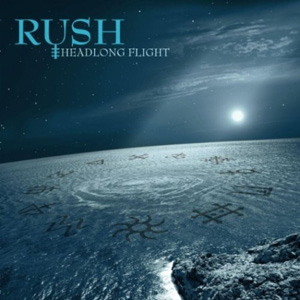
SOUNDTRACK: RUSH-“Headlong Flight” (2012).

A new single from Rush came out on Thursday.  And it’s seven minutes long!  Yeeha!  It’s also really heavy.

It opens with a cool bass riff and then thundering guitars.  This song continues in the heavier, grungier sound from Vapor Trails.  The middle section sounds distinctly Rush (late 80s style), and Geddy’s voice hits some pretty high notes.

There’s a brief extra section with a spoken word part–I’ve not been able to make out what it says, but the instruments (especially the great guitar sound) is fantastic behind it.  That’s followed by a great solo from Alex (that hearkens back to his wild solos from the 70s).  Geddy throws some cool bass fills–although he’s not showing off as much as he might).  And, of course, Neil is doing some cool drum things through the song–little fills and whatnot–and he sounds like he’s pounding the hell out of the drums.

Here’s the video

[READ: April 14, 2012] Squirrel Seeks Chipmunk

As I mentioned yesterday, I bought a book to have David Sedaris sign it, but decided the wait wasn’t worth it.  This is the book I bought.  It very excitedly claims to “with one new story” which I thought was funny both in itself and also because I hadn’t read any of the other ones (I gather they are from This American Life, although they’re mostly too vulgar to have read on the radio).  It also has illustrations from Ian Falconer, who is the guy behind Olivia, the children’s book series.

Anyone who has read David Sedaris essays knows what to expect–funny, presumably exaggerated stories about his family and loved ones.  Indeed, the stories that he read from during the show were just that–dark and funny and about his loved ones.  So imagine my surprise to find that these were all short fictional stories about animals!  No Sedaris’ are harmed in this book.

All of the animals are behaving like people, so Sedaris’ caustic wit and attacks on hypocrisy are all in play.  However, because they are animals, Sedaris can go much much further with them.  Matt Groening said that he could get away with a lot more social criticism because The Simpsons were cartoons; the same applies here.  Indeed, these are some of the darkest stories that I have ever read from Sedaris.

Some of them are kinda funny, but most of them left me mildly bemused at best.  Because while they seem to be a kind of laugh-at-the-recognition-of-our-foolish-behavior (as done by animals), really they are preachy and seem generally disappointed in us.   And who wants to read that?  It basically seemed like an opportunity for Sedaris to make fun of things that he doesn’t like about people.  But he knew it would be obnoxious to makes stories about people acting that way, so he made them animals instead.  And perhaps he thought that would make it funnier.  At times this was true, but not very often. (more…)

Read Full Post »

SOUNDTRACK: THE SHINS-“Plenty is Never Enough” from Score! 20 Years of Merge Records: The Covers (2009).

The Shins have taken this song and completely turned it into a Shins song.

It is bouncy and poppy with some nice tempo changes.  It could easily fit onto any Shins album.

The original (I’d never heard of Tenement Halls) is very similar to The Shins’ version.  The big difference is that it doesn’t have The Shins’ vocals and musical sensibilities.  The original feels kind of flat, the highs just aren’t as high.  But it serves as a good stepping off point for the cover.

[READ: March 30, 2012] “Chapter Two”

This story is about A.A.  But, amusingly, Hil is tired of telling her own stories at A.A., so she starts telling the story of her fifty-something alcoholic neighbor (with the wonderful name of), Bergeron Love (the story is set in Houston).

Interestingly, no one at A.A. complains that she is talking about someone else (in fact the blind guy just seems to smile politely).  This is just as well because Bergeron’s story is pretty funny.  Bergeron arrives at Hil’s door, stark naked and invites herself in.  This is not atypical for Bergeron who crashes neighborhood parties and plays ridiculous pranks.  But not everything she does is funny: she also reports overgrown lawns and loose dogs.

Hil lives with her son and a roommate, Janine.  Janine is a very fat woman (see my diatribe about fat characters yesterday).  But Janine is not the victim or the pity-case in this story (well, maybe a little).  Hil figures Janine must eat all day to be as big as she is, but she has never seen her eat.  But then Hil’s son, Jeremy, a shy teenager enjoys playing video games with Janine more than going out with his peers (and more than being with his mom, I believe). (more…)

Read Full Post »

SOUNDTRACK: ULVER-Shadows of the Sun (2007).

I really wanted to like this album because of the cover–which is striking.  I know, I know, never judge…  My initial reaction to the disc was kind of poor.  I’ve followed Ulver’s progress through their many incarnations, and it’s not entirely surprising that they should make an entirely ambient record.  It just strikes me as an odd release–mellow and almost lullaby-ish but also a little creepy (the voice mostly).

But at the same time, musically it’s quite pretty.  And while it wasn’t a very good listen for a car trip to work, it was actually really perfect for listening to at work–where headphones allowed for hearing so many nuances.

There’s not much point in a song by song listing, as the songs are similar–washes of music with slightly distorted, deep vocals.   But there are some interesting musical choices that make each song unique, and consequently better than a lot of ambient in which all of the songs use the same musical palette.  “All the Love” employs piano and come cool electronic sounds near the end.

“Let the Children Go” is a much darker song (with drums!).  “Solitude” is the most melodic song of the bunch.  It reminds me of Black Sabbath’s “War Pigs” (which should tell you something about the overall tone of the album).  It has a noticeable vocal line (and really audible lyrics, which are quite melancholy and more emotional that I would have expected: “You just left when I begged you to stay.  I’ve not stopped crying since you went away.”

Another observation.  At times when he actually sings, the vocals sound a bit like XTC–“Shadows of the Sun” in particular.  And since that song has pianos it’s not inconceivable that this could sound like XTC (although not really).

With the right atmosphere, this record proves to be a very impressive listen.  Kristoffer Rygg’s vocals really suit the mood and, all in all, it does reflect the album cover rather more than I initially thought.

[READ: March 18, 2012] The Marriage Plot

I had put this book on hold a few months ago.  And I was ninety-something on the list, so I didn’t think too much about it.  I looked the other day and I was 10.  Yipes.  How was I going to read this 400 page book  in three weeks while also reading Gravity’s Rainbow??

Well, amazingly, The Marriage Plot worked as a nice foil to GR. It is a supremely easy read.  It is completely uncomplicated.  And, it actually has some unexpected parallels to GR–specifically, two of the characters travel to Europe, one on a pilgrimage the other on a honeymoon, and they travel to Paris, Geneva, Spain, Zürich, and even Nice.  There is literally no connection between these two books (although Mitchell does bring Pynchon’s V along with him), but it was fun to see new people go to the cities that Slothrop has been traveling to for very different reasons.

I powered through the book, reading large chunks and staying up way too late both because I liked the book and because I wanted to get it back on time (beware the library police!).  And there really is something about finishing a book quickly, it really keeps the story and characters fresh and makes the experience more enjoyable.

But on to the book.

This book centers around three people in a kind of lover’s triangle.  The woman at the center is Madeleine (and yes there are wonderful tie-ins to Madeline the children’s book series). The two men are Leonard and Mitchell.  All three of them are graduating from Brown in the mid 80s.

I identified with the book immediately because Madeleine is an English major (as was I).  She studies the Victorian era [and I had just read the piece by Franzen about Edith Wharton] and is on track to write her thesis on this era.  The title of the book comes from this section–novels written at that time were especially focused on marriage–if a woman did not marry, she was more or less doomed, and so the plots centered around her quest to find a suitable mate.  As Franzen noted in the above article, Wharton and some of her predecessors sounded the death knell for the “marriage plot” and Madeleine was going to do her thesis on that.

As the pieces of the triangle fall into place we learn (skeletal at first with much detail added later) that Madeleine and Mitchell were very good friends initially.  So good, in fact, that she invited him back to her parents house for a vacation.  He was head over heels in love with; however, out of fear (mostly) he never acted on the opportunities she gave him, and she thought that he wasn’t interested in anything more than friendship.  Basically, he blew it (although he doesn’t learn this until much later–I can relate to this all too well). As the story opens, she has just woken up, hungover, smelling of a party, with a mysterious stain on her dress.  She knows she did something with someone last night but she’s not sure what.  Not atypical college behavior.  But the kicker is that it is graduation morning and her parents are ringing the doorbell of her dorm right now. (more…)

Read Full Post »

SOUNDTRACK: CLOUD NOTHINGS-“Stay Useless” (2012).

This was the song of the day on NPR on March 14th.  While NPR describes it as like 90s indie rock, I find it to be much more like early 2000s indie rock (think The Strokes or Arctic Monkeys).  True, those bands were playing in the spirit of 90s rock, but they had a slightly different take on things–cleaner, perhaps.

So, while the guitars are buzzy and distorted, the vocals are up front and clear (even if the words aren’t entirely understandable–a neat trick that).  The song is under three minutes and has a catchy, powerful chorus.  I’ll bet it’s a lot of fun to hear live, although honestly I don’t think it’s anything all that special.

[READ: March 9, 2012] “Ever Since”

I’ve enjoyed many of Antrim’s stories in the past.  And, I rather enjoyed this one as well.

This was a fairly simple story of a man who has not let go of the woman who broke up with him a year earlier.  And how she haunts him and his current relationship still.

The opening of the story is really quite wonderful.  It didn’t really have an impact on me at first but when I reread it, I realized it’s a wonderful precis of the story:

Ever since his wife had left him–but she wasn’t his wife, was she? he’d only thought of her that way, had begun to think of her that way, since her abrupt departure, the year before, with Richard Bishop [I’m interrupting to say wow, has he packed a lot into a dependent clause.  And then he continues with the rest of the powerful descriptor]–Jonathan had taken up a new side of his personality, and become the sort of lurking man who, say at work or at a party, mainly hovers on the outskirts of other people’s conversations, leaning close but not too close, listening in while gazing out vaguely over their heads in order to seem distracted and inattentive waiting for the conversation to wind down, so that he can weigh in gloomily and summarize whatever has just been said.

Now, THAT, dear readers, is a SENTENCE!

To make him even more pathetic, when he summarizes an idea he often claims that his ex-wife felt a certain way about it…and then explaining that she wasn’t really his ex-wife.

The crazy thing is that Jonathan has a new love in his life: Sarah, the kind of woman who  appears by his side at a party (a work party for her) and says, “Hey Buster, lets’ go fuck in the bathroom.”  It’s unclear whether she was joking, which makes it even more fun. (more…)

Read Full Post »

SOUNDTRACK:SUPER MORRISSEY BROS (2012).

This is, as the title implies, a Smiths song done in the musical style of Super Mario Bros.  And, why yes, it certainly is.

This song is especially amusing to me as we just got a Wii for Christmas so I am now far more familiar with the Super Mario Brothers musical style than I ever expected I’d be.  The opening notes are spot on and while it is a bit long for something of a joke, at under 3 minutes it never wears out its joyousness..

The little sound effect of scoring points at about the 2 minute mark is as wonderful of a surprise as when you get the unexpected point in the game and it easily sustains the song until the end.

It doesn’t honestly warrant repeated listens, but two or three will certainly make you smile.

Check it out

[READ: March 6, 2012] The Great Gatsby

I knew I’d be reading Gravity’s Rainbow for a while so I wanted some shorter, easier works that I could use as occasional diversions.  I’d read The Great Gatsby in college and really enjoyed it, but clearly, as I learned by reading it again, I didn’t remember anything about it and what I remembered, I’d remembered wrong.

The other thing I was thinking about is that I didn’t read this in high school.  In fact, I didn’t read many books that I know people are supposed to read in high school.  I don’t think it’s because I didn’t feel like reading it (that;s possible), I think it wasn’t assigned to us.  My high school, as I recall, has a weird selection of texts that we read.  For instance, I recall reading Táin bó Cúailnge (and hating it).  Who is reading The Tain (which is an Irish epic) and not Gatsby?  Kids in Ireland, that’s who!

Anyhow, this book is considered number 2 in The Modern Library’s 100 Best Novels of the 20th Century (Ulysses is #1–that’s a 1 and 2 that couldn’t be much more different!) and, as I said it’s on virtually every high school curriculum.

As I was reading it I wondered how well high school students could relate to this story.  There are two cases of infidelity, there’s murder and suicide, there’s bootlegging alcohol and false identities.  I mean, sure they should love it, but how well can they relate to it?

The novel opens with Nick Carraway reciting advice that his father gave him: “Whenever you feel like criticizing anyone, just remember that all the people in this world haven’t had the advantage that you’ve had.”  This is an interesting quote to open with since the quote both applies and does not apply to the great Gatsby who is Nick’s neighbor. (more…)

Read Full Post »

SOUNDTRACK: BIDINIBAND-The Land Is Wild (2009).

Dave Bidini was a driving force behind Rheostatics.  Although when I think of the band, I think of Martin Tielli’s wackiness and Tim Vesely’s hits, which kind of makes Bidini the sort of stable, middle of the road guy.  But I don’t think that’s right either as Bidini has both a wacky side and a hit-making side.  But this “solo” project focuses mainly on Bidini’s storytelling skills.  Most of the songs are little narratives, which is always enjoyable.

“Desert Island Poem” is actually a story of the dissolution of the Rheostatics–when they survived a plane crash in Drumhella and ate the drummer.   “Memorial Day” surprises because of the clarinet solo (which works wonderfully).  “We Like to Rock” and “Song Ain’t Any Good” are the other kind of song that Bidini writes–songs about playing music.  These kind of songs are always dopey and “We Like to Rock” is no exception–I think I ‘d like it more if it weren’t so tinny sounding.  “Song Ain’t Any Good” is kind of funny, especially if you get through the whole song, although I don’t know if multiple listens are rewarded.

On the other hand, “The Land is Wild” is a great song about Bidini’s other passion: hockey.  This is a lengthy (nearly 7 minute) story about Bryan Fogarty, a young hockey player who was a star at 21 but a forgotten addict by 31.  It’s a sad, cautionary tale about how the hockey establishment all but ignored him as he wasted away.   “How Zeke Roberts Died” is a very similar song,  it’s an 8 minute biography of Liberian singer Zeke Roberts.  This song has lead vocals by a variety of singers.

“Last Good Cigarette” is a delightful ditty about smoking with famous people (and it is super catchy–ha-cha!).  “Pornography” is a funny political song about George W. Bush that is also quite catchy.  And the wonderfully titled, “The Story of Canadiana and Canadiandy” is about living close to America.

Although the album is mostly folky and kind of mellow, “Terrorize Me Now” shows some of Bidini’s more wild guitar noises.  And the final song, “The Ballad of 1969” is a great song that is reminiscent of the kind of highs that the Rheos would hit.  There’s a bonus untitled song [later called “The List (Killing Us Now)”] which is a simple song of people who have aggrieved him.  It’s funny, especially in the live context it is given.

While not as great as a Rheostatics album, this release is like an extension of the band.  Bidini has a new album out which I haven’t heard yet, but I’ll certainly be checking it out.

[READ: March 5, 2012] “Haven”

Munro is back (talk about prolific!) and she has created a darkly claustrophobic house in which to place the young protagonist of this story.

The story is set in the seventies.  The protagonist is from Vancouver, but her parents are heading off to Africa for a year so they have sent her to live with her Uncle Jasper and Aunt Dawn.  Despite this mission to Africa, they are not going there for a missionary purpose, they are going there to teach (and haven’t come across many heathen).  They’re also Unitarian.  Uncle Jasper, on the other hand, insists on saying grace before meals and gets on the protagonist when she starts eating before the prayers.

It turns out that Uncle Jasper is the man of the house.  Aunt Dawn does not begin eating her meal until the discussion of grace is over (after receiving an invisible nod from Jasper).  More examples of her deference are given, but the quote that sums up Aunt Dawn (whether she said it or not) is “A Woman’s most important job is making a haven for her man.”  Although, given that, Jasper does show her some affection: a gift and some closeness towards the end of the story. (more…)

Read Full Post »

« Newer Posts - Older Posts »